

Deep beneath the ocean’s surface, where sunlight barely penetrates and pressure would crush most living things, one remarkable marine mammal reigns supreme. The Cuvier’s beaked whale (Ziphius cavirostris) has earned its title as the world’s deepest-diving mammal, capable of descending to astonishing depths while holding its breath for durations that seem to defy biological limitations. These elusive creatures can plunge nearly 10,000 feet (3,000 meters) below the surface and remain submerged for over two hours—a feat that has stunned marine biologists and challenged our understanding of mammalian physiology. As humans struggle to hold their breath for even a few minutes, these ocean giants navigate the abyss with apparent ease, hunting in darkness and withstanding crushing pressures that would instantly kill a human. Their extraordinary adaptations represent one of the most remarkable evolutionary solutions to deep-sea living in the animal kingdom.
Meet the Record-Breaking Cuvier’s Beaked Whale

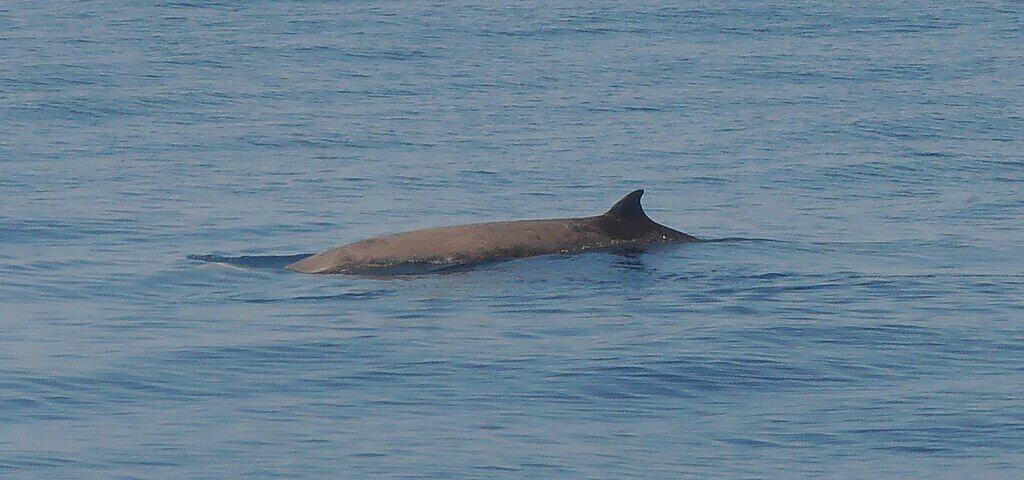
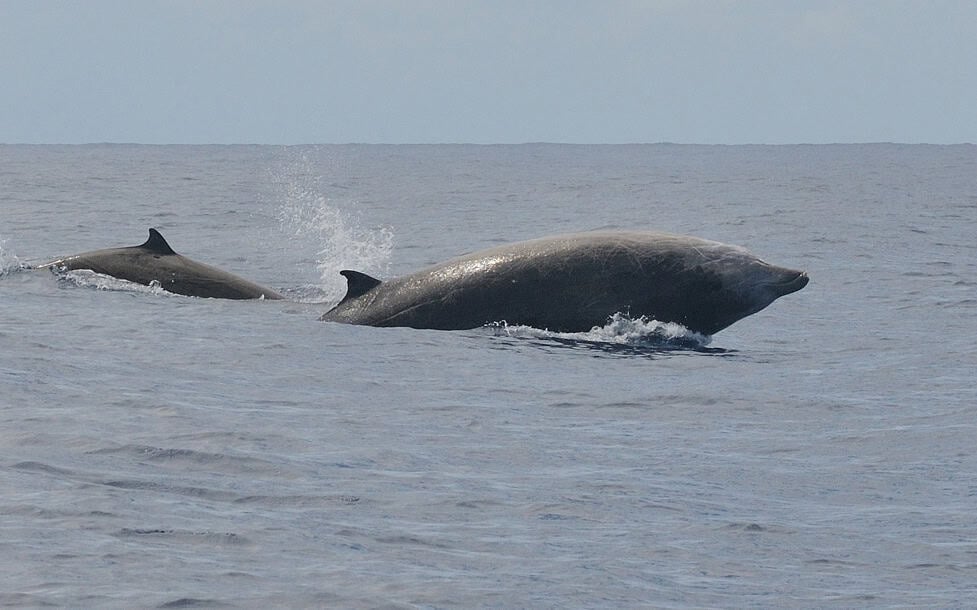
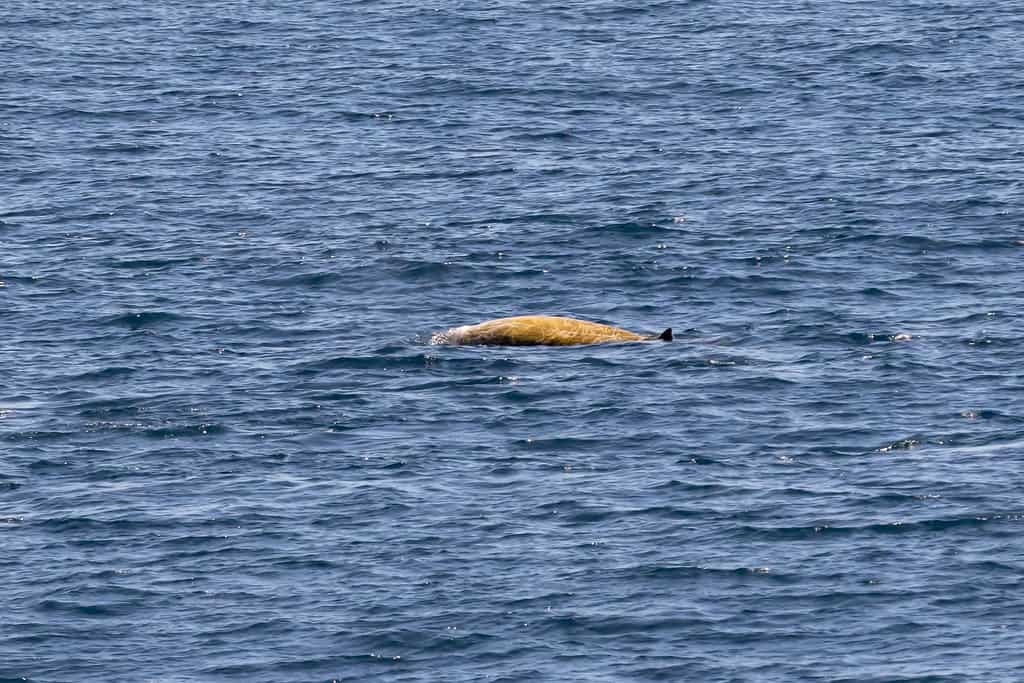
The Cuvier’s beaked whale, named after French naturalist Georges Cuvier who first described the species in 1823, doesn’t immediately stand out among cetaceans. With a relatively modest length of 15-23 feet (4.5-7 meters) and weight of 5,500-8,500 pounds (2,500-3,850 kg), it’s neither the largest nor the most visually striking whale species. These medium-sized toothed whales have a stubby beak, a curved forehead, and a brownish-gray coloration that darkens with age. Males develop two visible teeth that protrude from their lower jaw, while females’ teeth remain hidden within the gums.
What makes this species extraordinary isn’t its appearance but its diving capabilities. In 2014, scientists from the Cascadia Research Collective documented a Cuvier’s beaked whale diving to a depth of 9,816 feet (2,992 meters) and staying underwater for an astonishing 137 minutes (2 hours and 17 minutes). This shattered previous diving records and established the species as both the deepest-diving and longest breath-holding mammal on Earth. These whales routinely perform dives exceeding 3,000 feet (1,000 meters) and regularly stay submerged for over an hour, making them true masters of the deep ocean realm.
Evolutionary History and Distribution

Cuvier’s beaked whales belong to the family Ziphiidae, an ancient lineage of toothed whales that diverged from other cetaceans approximately 34 million years ago. This family includes 22 known species of beaked whales, all specialized for deep diving, though none match the extreme capabilities of the Cuvier’s. Fossil evidence suggests that beaked whales evolved their distinctive diving adaptations gradually over millions of years as they specialized to exploit deep-water food resources unavailable to other marine mammals.
These remarkable creatures have a cosmopolitan distribution, inhabiting all the world’s oceans except the polar regions. They prefer deep offshore waters where the continental shelf drops away into depths exceeding 3,300 feet (1,000 meters). Despite their global presence, Cuvier’s beaked whales remain one of the least observed cetaceans due to their deep-diving lifestyle, remote habitat preferences, and tendency to avoid vessels. Most scientific knowledge about the species comes from stranded specimens, limited tagging studies, and rare surface sightings, making each new observation particularly valuable to researchers.
Physiological Adaptations for Extreme Diving

The ability to withstand crushing pressures and oxygen deprivation for over two hours requires extraordinary physiological adaptations. Cuvier’s beaked whales possess several specialized features that enable their remarkable dives. Their muscle tissue contains significantly higher concentrations of myoglobin—an oxygen-binding protein—than terrestrial mammals or even other whale species. This allows them to store more oxygen in their muscles for use during dives. Additionally, their blood volume is proportionally larger, with a higher concentration of red blood cells to maximize oxygen carrying capacity.
Perhaps most impressively, these whales have evolved the ability to collapse their lungs entirely during deep dives. This counterintuitive adaptation prevents nitrogen from dissolving into the bloodstream under pressure, which would cause decompression sickness (known as “the bends” in human divers) during ascent. By collapsing their lungs, they direct oxygen from the air they’ve breathed at the surface to their blood and tissues rather than keeping it in their respiratory system. Their rib cages are also specially hinged to accommodate this extreme compression without damage. During dives, they reduce their heart rate dramatically—from 30-50 beats per minute to just 3-10 beats per minute—conserving oxygen for vital organs like the brain and heart.
Hunting in the Abyss

What drives Cuvier’s beaked whales to such extreme depths? The answer lies in their specialized feeding ecology. These deep-diving predators target squid, deep-sea fish, and various benthic (bottom-dwelling) creatures that inhabit the ocean’s twilight and midnight zones. Using echolocation, they can locate prey in complete darkness, emitting focused clicks that bounce off objects and return to the whale, creating a sonic “image” of their surroundings. Their distinctive beaked snout allows for highly directional sound production, crucial for precise hunting in the deep sea.
Research using digital acoustic recording tags (DTAGs) has revealed fascinating insights into their hunting behavior. Upon reaching their target depth, typically between 3,300-6,500 feet (1,000-2,000 meters), the whales engage in a feeding technique known as “suction feeding.” They create negative pressure by rapidly retracting their tongue and expanding their throat pouch, effectively vacuuming prey into their mouths. This specialized feeding method, combined with reduced dentition (they primarily use only two teeth), allows them to efficiently capture soft-bodied prey like squid. A single successful deep dive can yield multiple feeding opportunities, making the physiological extremes worthwhile from an energy investment perspective.
The Diving Cycle: Surface, Descent, Hunt, Ascent

The diving pattern of Cuvier’s beaked whales follows a predictable cycle that scientists have documented through tagging studies. Before a deep dive, the whale performs a series of preparatory actions at the surface. It will typically take several deep breaths over 2-3 minutes, loading its tissues with oxygen and expelling carbon dioxide. This brief surfacing period is critical, as it provides all the oxygen the animal will have access to for the next two-plus hours. Unlike some diving mammals that hyperventilate before submerging, beaked whales appear to take measured, deliberate breaths.
The descent phase is remarkably rapid, with Cuvier’s beaked whales plummeting at speeds of up to 6 feet (2 meters) per second—equivalent to about 4 miles per hour in a vertical direction. During this phase, physiological changes begin immediately: heart rate slows, blood is shunted away from non-essential organs, and the lungs collapse progressively as pressure increases. Upon reaching their target depth, they transition to hunting mode, which may last 30-60 minutes depending on prey availability. The ascent is typically more gradual than the descent, perhaps to manage the physiological transitions back to surface conditions. After completing a deep dive, the whales will typically perform a series of shorter, shallower dives before attempting another marathon plunge.
Breaking Human Understanding of Mammalian Limits

The diving capabilities of Cuvier’s beaked whales have repeatedly forced scientists to reconsider what was thought possible for air-breathing vertebrates. For context, the most accomplished human freediver, Herbert Nitsch, reached a depth of 702 feet (214 meters) and held his breath for just under 10 minutes—impressive feats that nonetheless pale in comparison to the beaked whale’s abilities. Even specialized diving mammals like elephant seals, which can reach depths of 5,000 feet (1,500 meters) and stay submerged for up to 2 hours, don’t match the extremes achieved by Cuvier’s beaked whales.
What makes these records particularly astonishing is our understanding of mammalian brain physiology. Typically, mammalian brain tissue begins suffering irreversible damage after just 3-5 minutes without oxygen. Somehow, Cuvier’s beaked whales have evolved mechanisms to function cognitively during extended oxygen limitation that would be fatal to other mammals. These adaptations aren’t just quantitative improvements on standard mammalian physiology—they represent qualitatively different biological solutions that have evolved over millions of years. Studying these mechanisms could potentially inform human medical applications, particularly for conditions involving oxygen deprivation such as stroke or cardiac arrest.
Social Structure and Behavior

Despite their solitary deep-diving habits, Cuvier’s beaked whales maintain complex social structures. They typically live in small groups of 2-7 individuals, though larger aggregations have occasionally been observed. Group composition appears fluid, with individuals associating and separating over time rather than maintaining permanent bonds. Adult males often bear extensive scarring on their bodies, particularly around the head and flanks, suggesting competitive interactions during mating periods. These scars come from the teeth of other males during competition for females or territory.
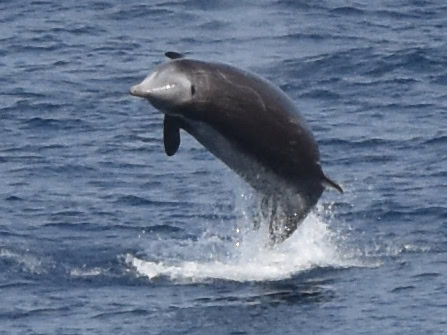
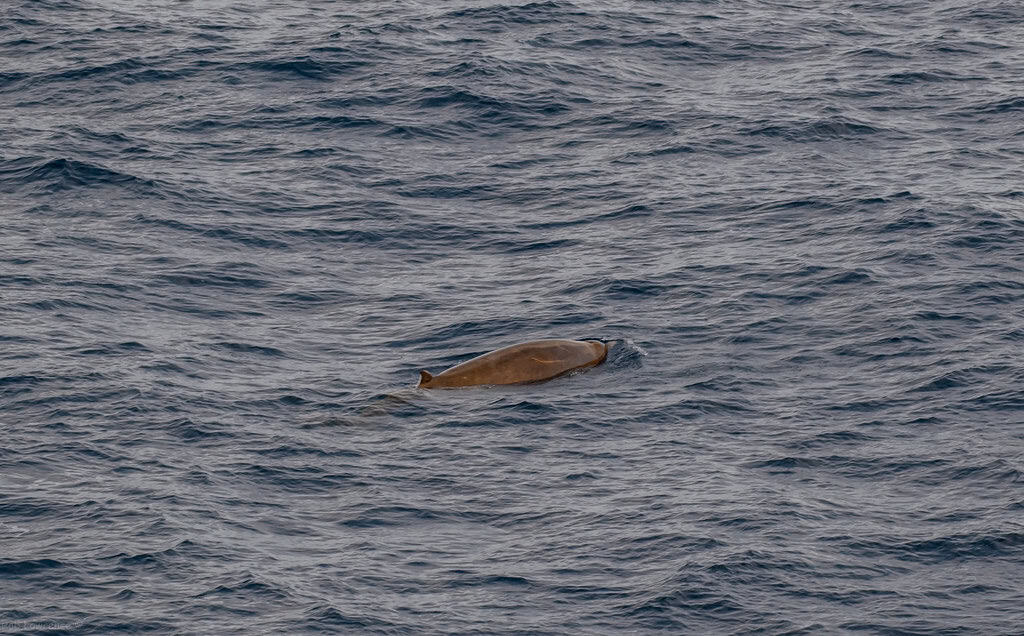
Surface behaviors are relatively subdued compared to more acrobatic cetaceans like dolphins or humpback whales. Cuvier’s beaked whales rarely breach completely and typically surface at a shallow angle, showing little more than their blowhole and dorsal fin before diving again. This inconspicuous behavior, combined with their offshore habitat preference, contributes to their mysterious nature and the difficulty in studying them. When startled at the surface, they typically respond with a “panic dive”—quickly submerging without the usual preparation sequence, which may explain some stranding events associated with acoustic disturbances like naval sonar.
Conservation Challenges and Threats
While Cuvier’s beaked whales are currently classified as “Least Concern” on the IUCN Red List, they face several significant threats that could impact their long-term survival. Perhaps most concerning is their unusual sensitivity to anthropogenic noise, particularly mid-frequency active sonar used in naval exercises. Multiple mass stranding events involving Cuvier’s beaked whales have been temporally and spatially correlated with naval activities. Scientists hypothesize that intense sonar may disrupt their normal diving behavior, possibly causing rapid ascents that lead to decompression sickness-like symptoms.
Other threats include ocean plastic pollution, with numerous beaked whales found stranded with plastic debris in their digestive systems. Climate change poses additional challenges through potential shifts in prey distribution and abundance. As deep-sea specialists, these whales depend on specific food webs that may be disrupted by changing ocean temperatures and chemistry. Entanglement in fishing gear, though less common for this offshore species than for coastal cetaceans, remains another potential threat. Conservation efforts focus on establishing marine protected areas in key habitats and implementing restrictions on activities like military sonar exercises in regions where these whales are known to concentrate.
Scientific Research Challenges
Studying creatures that spend over 90% of their lives in the deep ocean presents extraordinary challenges for researchers. Traditional observation methods are largely ineffective for animals that surface briefly and unpredictably in remote offshore waters. Most research relies on sophisticated tagging technology, including digital acoustic recording tags (DTAGs) that record depth, movement, and vocalizations. Deploying these tags requires getting close enough to a briefly surfacing whale to attach the device—a feat requiring immense patience, specialized vessels, and often a measure of good fortune.
Genetic studies have provided valuable insights through analysis of tissue samples from stranded individuals or rare biopsies from free-swimming whales. These studies have helped clarify population structures and evolutionary relationships. Future research will likely depend on increasingly sophisticated remote sensing technologies, including environmental DNA (eDNA) sampling that can detect genetic material shed by whales into seawater, and autonomous underwater vehicles programmed to track and record beaked whale vocalizations. Despite technological advances, the secretive nature of these extreme divers ensures they will remain among the most challenging marine mammals to study comprehensively.
Comparing to Other Deep-Diving Champions
While Cuvier’s beaked whales hold the current records for both depth and duration, several other marine mammals have evolved impressive diving capabilities. Sperm whales (Physeter macrocephalus) routinely reach depths of 3,280 feet (1,000 meters) and can dive to at least 7,380 feet (2,250 meters), staying submerged for up to 90 minutes. These larger relatives use their massive reserves of spermaceti oil—a specialized waxy substance in their distinctive heads—to regulate buoyancy during deep dives. Southern elephant seals (Mirounga leonina) are the pinniped diving champions, reaching depths of around 5,000 feet (1,500 meters) with dives lasting up to 2 hours.
Other beaked whale species also display remarkable diving prowess, though none match Cuvier’s extremes. Baird’s beaked whales (Berardius bairdii) and Blainville’s beaked whales (Mesoplodon densirostris) both perform regular deep dives exceeding 3,300 feet (1,000 meters). What makes these comparisons particularly interesting is the different evolutionary paths these animals have taken to solve similar ecological challenges. While all deep divers share certain adaptations—increased blood volume, collapsible lungs, and higher myoglobin concentrations—each species has developed unique physiological specializations based on their evolutionary history, body size, and specific ecological niche.
The Mystery of How They Avoid “The Bends”
One of the most perplexing aspects of the Cuvier’s beaked whale’s diving ability is how they avoid decompression sickness. In human divers, nitrogen gas dissolves into the bloodstream under pressure and can form dangerous bubbles during ascent if decompression is too rapid—a potentially fatal condition known as “the bends.” Given the extreme depths and rapid ascent rates of beaked whales, they should theoretically be highly susceptible to this condition, yet they appear to have evolved mechanisms to prevent it almost entirely.
Scientists believe a combination of adaptations protects these whales. First, their lung collapse prevents nitrogen from being absorbed under pressure. Second, their circulatory system appears specially adapted to manage gas exchange during pressure changes, potentially with specialized regions that can selectively filter or process dissolved gases. Third, their slow metabolic rate during dives minimizes the movement of gases between tissues. Some researchers also hypothesize that beaked whales may have unique biochemical adaptations that prevent bubble formation or help dissolve microbubbles before they become problematic. Understanding these mechanisms could potentially revolutionize human diving practices and treatment for decompression illness, making these whales’ adaptations valuable not just as biological curiosities but as models for biomedical applications.
Conclusion: Masters of the Deep
The Cuvier’s beaked whale stands as one of nature’s most extraordinary evolutionary achievements—a mammal that has conquered the ocean depths in ways that continue to astonish scientists and challenge our understanding of biological limits. Their ability to hold their breath for over two hours while diving nearly two miles beneath the ocean surface represents one of the most extreme physiological adaptations in the animal kingdom. These remarkable capabilities didn’t evolve overnight but rather through millions of years of specialization that has transformed a terrestrial mammalian physiology into one capable of withstanding crushing pressures, extended oxygen deprivation, and complete darkness.
As we continue to explore and impact the world’s oceans, the future of these deep-diving specialists remains uncertain. Their sensitivity to human-generated noise and other anthropogenic stressors makes them potentially vulnerable despite their global distribution. Protecting these mysterious masters of the deep requires not just traditional conservation approaches but a deeper understanding of how our activities—from naval operations to climate change—affect the hidden realms where they spend most of their lives. The Cuvier’s beaked whale reminds us that even after centuries of scientific inquiry, the natural world still holds profound mysteries and capabilities that exceed our expectations and imagination.

- The Story of the Arctic Fox’s Incredible Seasonal Transformation - July 18, 2026
- 10 Most Venomous Snakes in US National Parks - July 18, 2026
- The Moth That Drinks Blood - July 18, 2026