

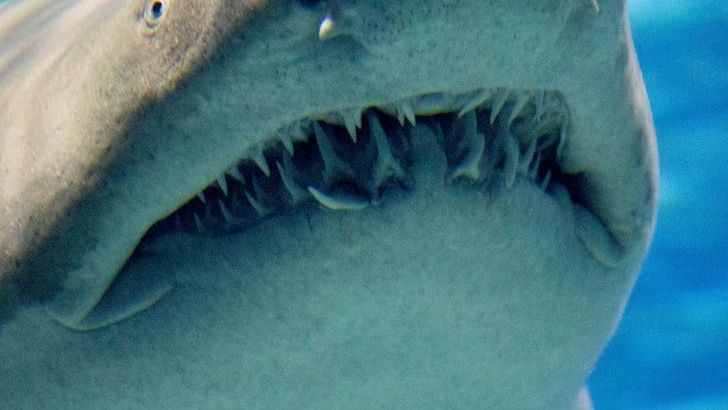
Picture this: you’re swimming peacefully in crystal-clear ocean water when you get a small cut on your foot. Suddenly, panic sets in as Hollywood’s most terrifying images flash through your mind. Will dozens of razor-toothed predators come racing toward you from miles away? Should you frantically swim to shore? The truth about sharks and blood might just surprise you more than any blockbuster movie ever could.
For decades, popular culture has painted sharks as bloodthirsty monsters capable of detecting a single drop of human blood from impossible distances. Yet science tells a remarkably different story. Let’s dive into the fascinating world of shark sensory abilities and separate the shocking facts from the persistent fiction.
The Hollywood Horror That Started It All

The myth of sharks being irresistibly drawn to human blood largely began with Steven Spielberg’s 1975 masterpiece “Jaws.” Movies such as Jaws and the ludicrous Sharknado have ingrained in our minds that sharks are attracted to human blood. These bloodthirsty swimmers of the sea never pass on a chance to eat a human, at least according to Hollywood.
This cinematic portrayal became so ingrained in popular consciousness that it transformed from entertainment into perceived fact. Unfortunately, sharks get a bad rap based off beliefs people have formed from popular culture and a lack of understanding, while growing environmental threats continue to put sharks in danger. The image of sharks as mindless killing machines has persisted for nearly five decades, despite mounting scientific evidence to the contrary.
The Science Behind Shark Senses
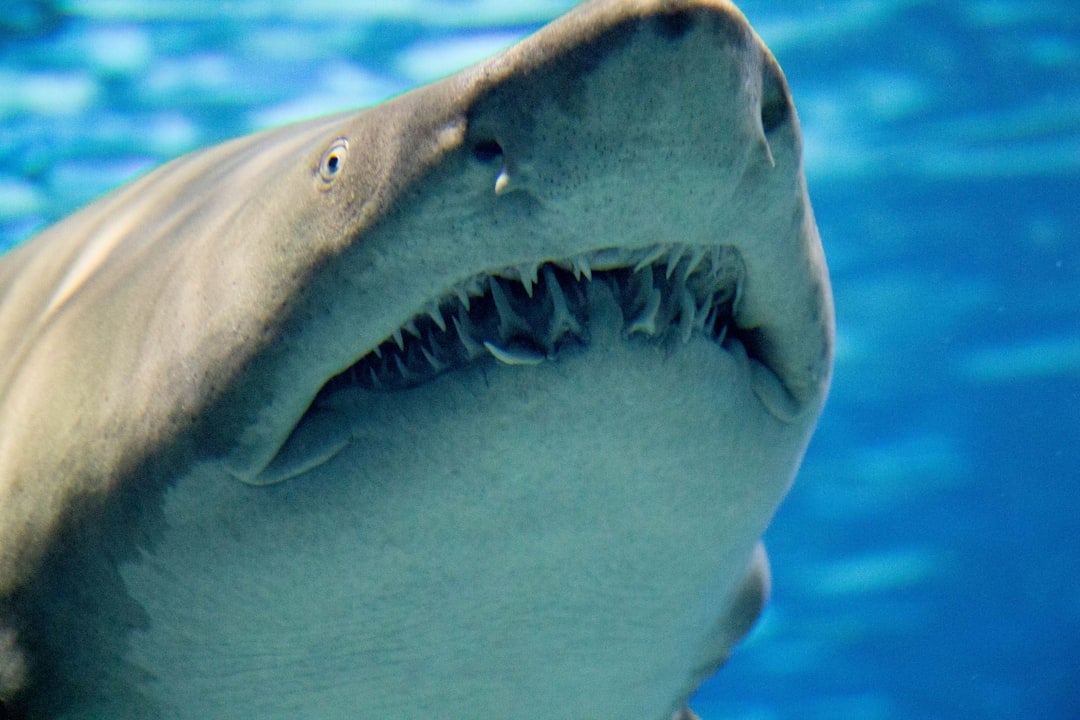
Sharks are equipped with one of the most finely tuned olfactory systems in the animal kingdom. Their sense of smell allows them to detect blood in concentrations as low as one part per billion, equivalent to a single drop in an Olympic-sized swimming pool. This extraordinary ability comes from specialized organs beneath their snouts that work exclusively for smelling.
Water enters these sacs through external nostrils, or nares, which are entirely separate from the mouth and are used exclusively for smelling. Inside the sacs, water passes over folded epithelial structures known as lamellae. These are lined with millions of olfactory receptor neurons – cells equipped with proteins that bind to specific chemical compounds. Think of it as nature’s most sophisticated underwater nose.
What Sharks Actually Want to Smell
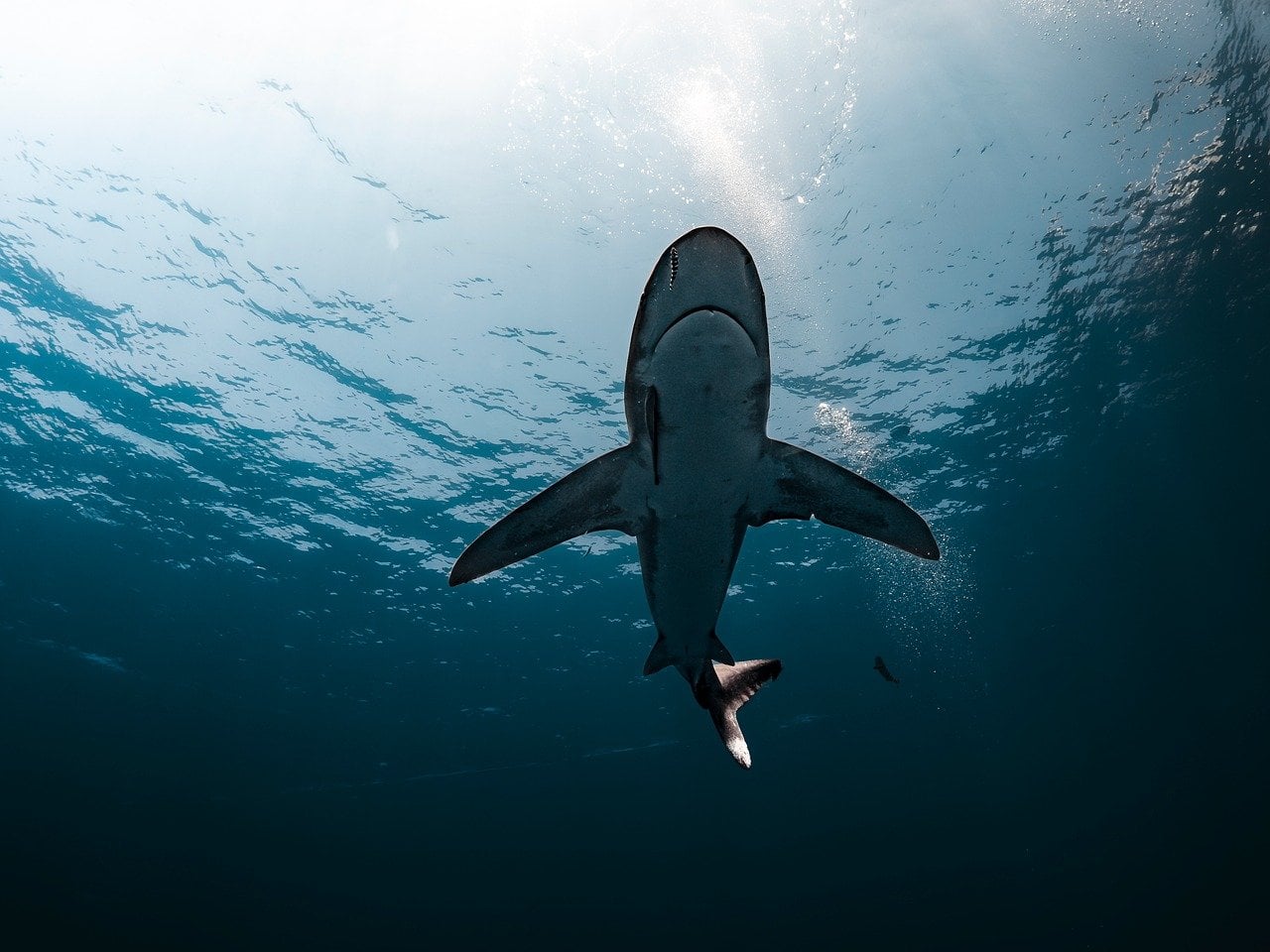
Here’s where things get interesting. What they want to detect are the amino acids from the blood, guts, and gooey bits of marine animals – the creatures sharks evolved to eat. Our blood, sweat, tears, pee, and cervical mucus are just static noise. It’s like the difference between smelling your favorite pizza restaurant versus a garbage dump.
The other important thing to think about when we think about how sharks are smelling human blood is that our blood is really different in our chemical composition than that of a fish blood or a squid blood or something like that, which sharks are actually keyed in on. So even though they may be smelling our blood, they’re not necessarily attracted to it the same way they would be to the chemicals in fish blood.
Real Experiments Debunk the Mile-Away Myth

Mark Rober, an ex-NASA engineer and now a science YouTuber, conducted an interesting set of experiments to test whether sharks prefer human blood or fish blood. He attached pumping devices filled with either cow blood (which mimics human blood), fish blood (tuna fish), or seawater to three surfboards and then released them into the ocean. The pumping devices would release the fluid into the water as they moved. Over an hour, with the help of a drone, they observed the number of shark visits to each surfboard.
The results were eye-opening. First, Rober pumped different liquids, seawater, fish oil, urine and cow’s blood, into the ocean water of the Bahamas, just to make sure that sharks actually preferred the smell of blood. At first, none of the liquids attracted mass amounts of attention, but about 20 minutes in, sharks started to notice the blood. With about 15 minutes left of the one-hour mark, sharks started swimming along the trail of blood and then turning away when they realized it only led them to a surfboard.
Human Blood Gets Little Interest
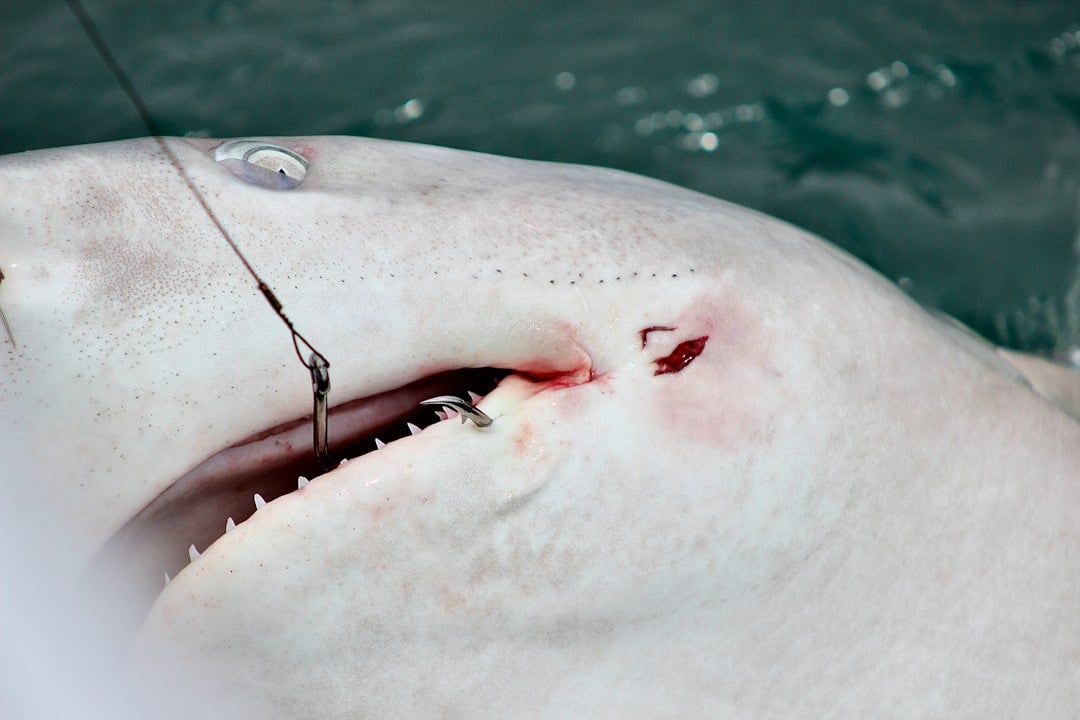
Adam Savage and Jamie Hyneman first released fish blood and found the sharks were attracted to it. However, when they pricked a finger and released human blood in the water, they found the lemon sharks had little interest. This finding from MythBusters over a decade ago has been repeatedly confirmed by subsequent research.
This one used two surfboards with human blood, and one with seawater as a control. One of the surfboards pumped blood quickly, and the other pumped slowly. In that test, they found that the sharks weren’t interested in either, despite the blood being within a hundred yards of them. The conclusion is that sharks either can’t detect small amounts of blood far away, or that they simply don’t care about it.
The Truth About Detection Distance

Research conducted by experts in shark behavior and sensory biology suggests that sharks can detect blood in water at concentrations of about one part per million, which is still impressively sensitive. However, this detection ability diminishes rapidly with distance. Under ideal conditions – with perfect water clarity, favorable currents, and no competing odors – some shark species might potentially detect blood from considerable distances, though the exact range varies significantly based on conditions. This is impressive but significantly less than the “miles away” often claimed in popular media.
However, for a shark to detect these from miles away, the fluid must be strong enough to not be diluted by the enormous amount of water around it. One drop of blood in flowing water would be diluted from 10-6 to 10-21 in the space of one kilometer. That’s as good as the drop never having existed. Ocean dilution works faster than any cleaning product ever could.
Period Blood and Shark Myths

Scientific research and experts in the field have debunked the myth that sharks are specifically attracted to period blood. In a report by Popular Science, it was concluded that period blood does not attract sharks. This longstanding fear has kept countless women from enjoying ocean activities unnecessarily.
Menstrual blood does not attract sharks; sharks are more interested in the amino acids from marine animals’ blood and guts. Menstrual blood does not attract sharks; sharks are more interested in the amino acids from marine animals’ blood and guts. Scientific studies and expert opinions confirm that there is no evidence to support the myth that menstruating women are more vulnerable to shark attacks. The composition of menstrual blood simply doesn’t trigger sharks’ hunting instincts like marine animal blood does.
Conclusion: Fear Less, Learn More

The scientific evidence overwhelmingly shows that sharks are not the blood-crazed monsters Hollywood made them out to be. Shark attacks on humans typically cause fewer than ten deaths globally each year. Only about 7% of unprovoked shark bites resulted in death globally between 2000 and 2009. This roughly translates to 4.6 fatal bites per year. You’re statistically more likely to be struck by lightning than attacked by a shark.
Understanding the truth about sharks helps us appreciate these magnificent apex predators for what they really are: highly evolved marine animals with incredible sensory abilities perfectly tuned to their natural environment. They’re not mindless killers lurking in wait for human blood, but sophisticated hunters focused on their actual prey. Next time you get a small cut while swimming, remember that science has your back. The sharks? They’re probably too busy hunting fish to even notice you’re there.
What do you think about it? Tell us in the comments.

- The Best Hack For Pulling Poison Ivy From Your Garden Without Touching It - July 27, 2026
- 10 Ways to Keep Your Pets Safe During the Holiday Season - July 27, 2026
- 3 North American Snakes That are a Garden’s Best Friends - July 26, 2026