
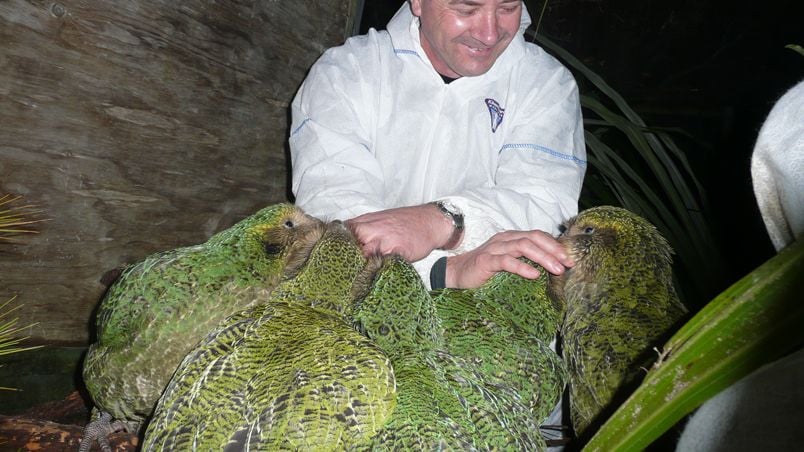
Picture a bird that waddles like a penguin, has the face of an owl, and smells like a musty violin case. Throw in the fact that it can’t fly and weighs roughly as much as a house cat. Sounds impossible, right? Welcome to the world of the kakapo, one of nature’s most delightfully bizarre creations.
This extraordinary parrot from New Zealand has captured hearts worldwide, not just for its quirky appearance but also for its harrowing brush with extinction. Once abundant across New Zealand’s forests, the kakapo now clings to survival on predator-free islands, each individual named and monitored around the clock. Let’s dive into the remarkable world of this nocturnal oddball.
They’re the World’s Heaviest and Only Flightless Parrot
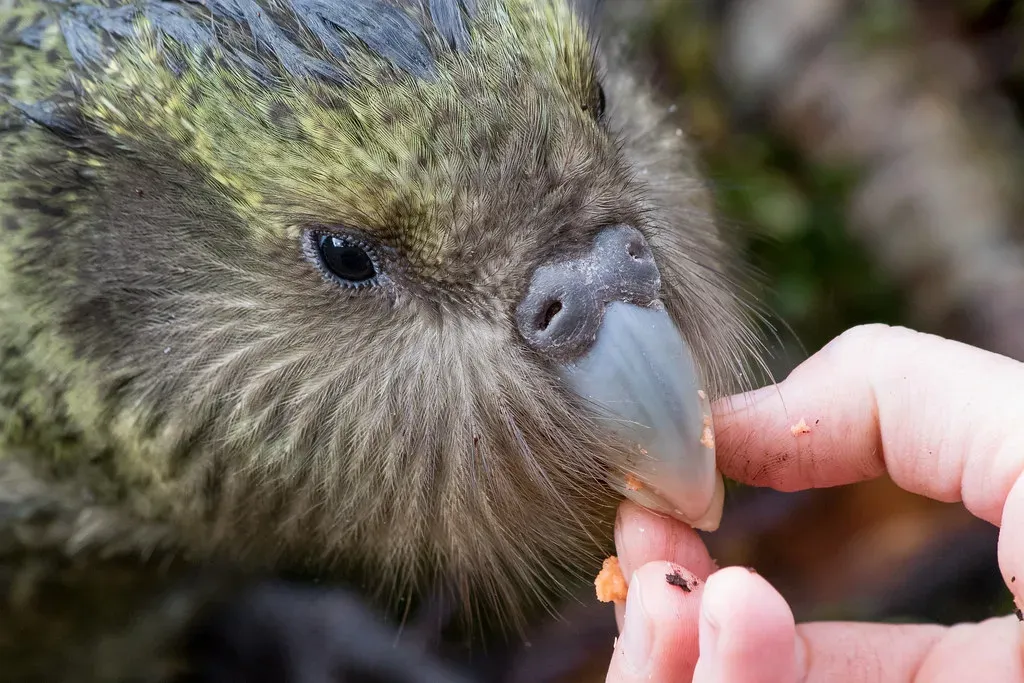
Males can measure up to 25 inches long and weigh nearly 9 pounds, making the kakapo an absolute heavyweight in the parrot world. To put that in perspective, most parrots you’d see in a pet store weigh less than a pound. The kakapo is built more like a bowling ball with feathers than a typical bird.
With only 3.3% of its mass made up of pectoral muscle, it’s no surprise the kakapo cannot use its wings to lift its heavy body off the ground. Evolution took away their ability to fly when they had no natural predators on the ground. The skeleton differs from other parrots in several features associated with flightlessness, including the smallest relative wing size of any parrot.
Those stubby wings aren’t completely useless, though. The kakapo is an excellent climber, ascending to the crowns of the tallest trees, and can “parachute” by leaping and spreading its wings, traveling a few meters at an angle less than 45 degrees. Think of it as controlled falling rather than actual flight.
Their Population Stands at a Precarious 237 Birds
Let’s be real, this is one of the most endangered birds on the planet. The total known population of living individuals is 237 as of 2025. That’s fewer kakapos than students in most high schools. Every single one has a name, a tracking device, and essentially a team of dedicated scientists monitoring its every move.
Before humans arrived it was common throughout New Zealand’s forests, but predation by introduced mammals brought it to the brink of extinction with a low point of about 50 birds only in the mid 1990s. The situation was so dire that conservationists literally had to count on their fingers how many birds remained. All conservation efforts were unsuccessful until the Kakapo Recovery Programme began in 1995.
Known individuals are named, tagged and confined to four small New Zealand islands, all of which are clear of predators, however in 2023 a reintroduction to mainland New Zealand was accomplished. The fact that they’re making a comeback at all is nothing short of miraculous, honestly.
Each breeding season is watched with bated breath by conservationists worldwide. After bumper breeding seasons in 2019 and 2022, the population reached a high of 252 and as of October 2025 sits at 237. Small setbacks like this remind us just how fragile their recovery remains.
They’re Strictly Nocturnal With an Owl-Like Face
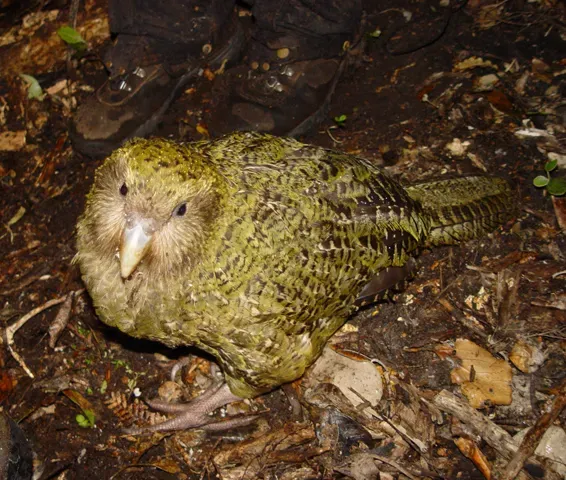
The name “kakapo” means “night parrot” in the Maori language, a reference to the birds’ nocturnal habits. While most parrots are squawking at sunrise, kakapos are just settling down for a long day’s sleep. During the day, kakapo sleep in ground or tree-top roosts, and at night they forage for food.
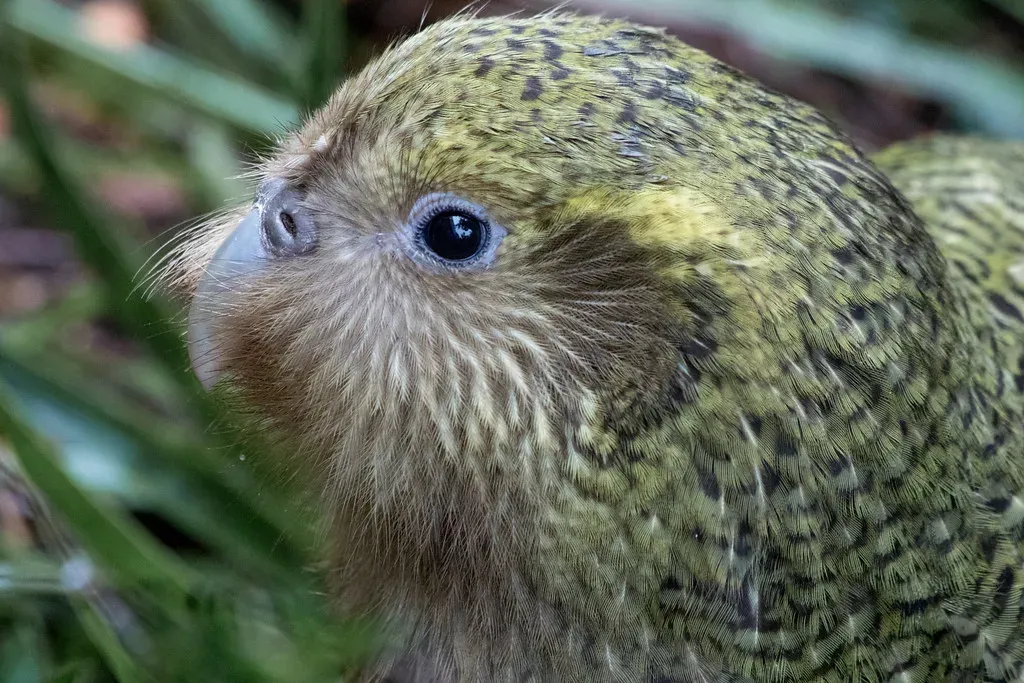
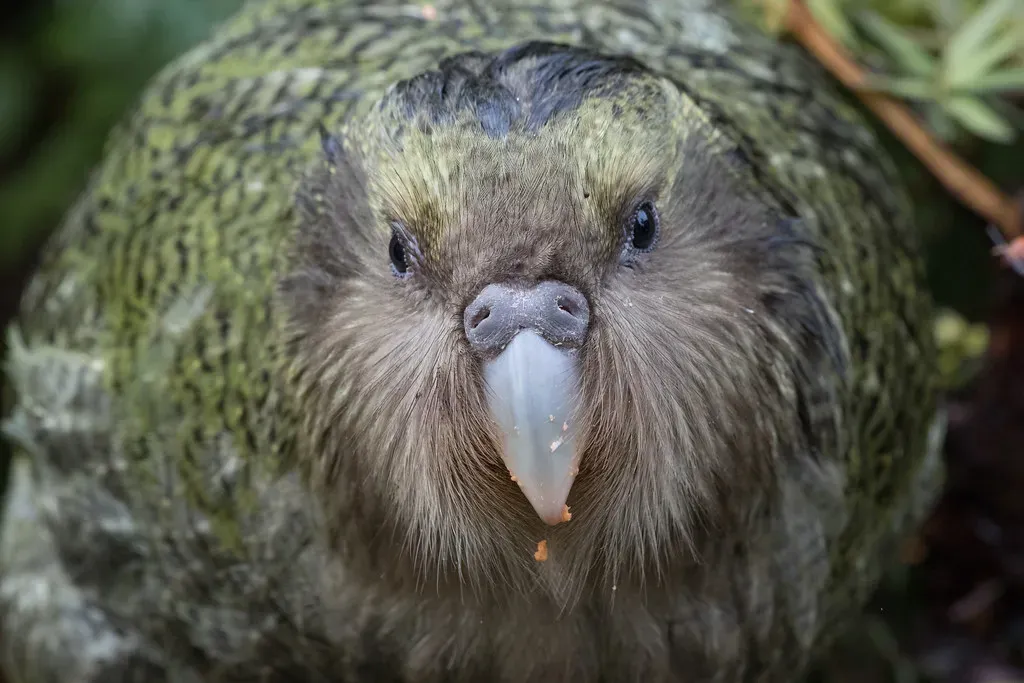
Their appearance matches their nighttime lifestyle perfectly. The kakapo is a large green parrot with a distinctive owl-like face and a waddling gait. Those whisker-like sensory feathers around their face aren’t just for show. Using the whiskers around its face to feel in the dark, the kakapo uses those large feet to climb trees to search for food.
Here’s the thing about being nocturnal in a place with no natural mammalian predators: you don’t need to be particularly alert or quick. The kakapo evolved a leisurely, ground-based lifestyle that worked brilliantly for thousands of years. Then humans showed up with cats, rats, and stoats that hunt by smell, and suddenly freezing in place wasn’t such a great defense strategy anymore.
Their moss-green plumage provides excellent camouflage against the forest floor during the day. Kakapo are moss green mottled with yellow and black above, and similar but more yellow below. It’s like wearing the perfect ghillie suit, except it does nothing against predators that track by scent.
Males Perform One of Nature’s Most Extreme Mating Displays
Kakapo are the only flightless bird that has a lek breeding system. If you’re wondering what that means, imagine a bizarre avian talent show where males compete for female attention without ever forming pair bonds or helping raise their offspring. Males loosely gather in an arena and compete with each other to attract females who listen to the males as they display, choose a mate based on the quality of his display, and no pair bond is formed.
The preparation alone is exhausting. Each male finds a prominent ridge, rock or hilltop with low-growing vegetation, then forms a track-and-bowl system with a network of tracks radiating from a shallow bowl-like depression in the earth, with the primary bowl usually having a clear area of ground around it. They’re basically landscaping architects.
Then comes the booming. These low grunts or “booming” calls last 6 to 8 hours every night for more than four months. Imagine sitting in a dirt bowl, inflating your chest like a balloon, and making deep resonant sounds that can travel several kilometers, night after night, for months. Males boom with low-frequency calls that travel 3 miles.
Not all males get lucky, though. Some males are clear favorites and will attract many females, while others are not selected at all. It’s the avian version of a popularity contest where the stakes are literally the survival of your genetic line.
They Only Breed When Specific Trees Fruit Heavily
They only breed when rimu trees mass fruit, which happens once every two to four years. This might seem like terrible reproductive strategy, and honestly, it kind of is for an endangered species. But it made sense historically when kakapo populations numbered in the hundreds of thousands.
Rimu trees are thought to play an important role in their relationship to kakapos as the parrots only reproduce when there is a large yield of crop, breeding slower than any other bird, mating once every four to five years. The kakapo essentially waits for a feast before committing to the energy-intensive process of breeding.
When breeding does occur, the female does all the work. Female kakapo lay between one and four eggs, slightly smaller than chicken eggs, which hatch after about 30 days, and as a solo parent the female must leave her nest unattended at night to find food, with chicks fledging after about 10 weeks. Imagine being a single parent with no help while also having to leave your babies alone every night to hunt for dinner.
This infrequent breeding cycle creates massive challenges for conservation. You can’t just wait around hoping for a good rimu year. That’s why conservationists now provide supplementary feeding to encourage breeding more consistently.
They Can Live Nearly 100 Years
Kakapo are also one of the longest-lived birds in the world, estimated to reach 90 years. Some estimates even suggest they might make it to a full century. The oldest known bird in the world is at least 74 years old and as of the 2024-2025 breeding season she is still laying eggs. Imagine a grandmother bird who remembers when there were thousands of her kind, still trying to contribute to the species’ survival.
This longevity creates both advantages and disadvantages for conservation. On one hand, individual birds have many potential breeding seasons ahead of them. On the other hand, kakapo are long-lived and don’t start breeding until they’re at least five years old, often older. That’s a long adolescence when you’re trying to rapidly increase population numbers.
The slow maturation rate means conservationists play the long game. A chick hatched today won’t contribute to the population for at least half a decade. There’s no quick fix when your species takes this long to reach reproductive maturity.
Their extended lifespan also means they’ve evolved a slower metabolism and laid-back lifestyle. Because of its flightlessness, it has very low metabolic demands in comparison to flighted birds and is able to survive easily on very little or very low quality food sources. They’re the tortoises of the parrot world, built for the marathon rather than the sprint.
They’re Completely Herbivorous and Leave Distinctive “Browse Signs”
Unlike most other bird species, the kakapo is entirely herbivorous, feeding on fruits, seeds, leaves, stems, and rhizomes. Most parrots will happily munch on the occasional insect or grub, but not the kakapo. They’re strict vegetarians who’ve carved out their own ecological niche on the forest floor.
When foraging, kakapo tend to leave crescent-shaped wads of fiber in the vegetation behind them, called “browse signs”. They have a unique feeding technique where they chew plant material and extract all the nutrients, leaving behind fibrous balls hanging from plants. It’s like they’re juicing their vegetables before that was trendy.
Kakapo often browse tough foliage by passing it through their bill from bottom to top using their feet to pull it through, chewing and compressing the foliage against the roof of their finely ridged upper mandible and sucking out the nutrients, leaving only a fibrous ball hanging off the plant. This specialized feeding behavior is so distinctive that researchers can track kakapo presence just by spotting these telltale signs.
Among its favorites are the seeds of the rimu tree, a large coniferous evergreen, also endemic to the forests of New Zealand. The relationship between kakapo and rimu trees goes beyond just food, triggering their entire breeding cycle when conditions are right.
Conservation Efforts Use Cutting-Edge Technology Including “Smart Eggs”
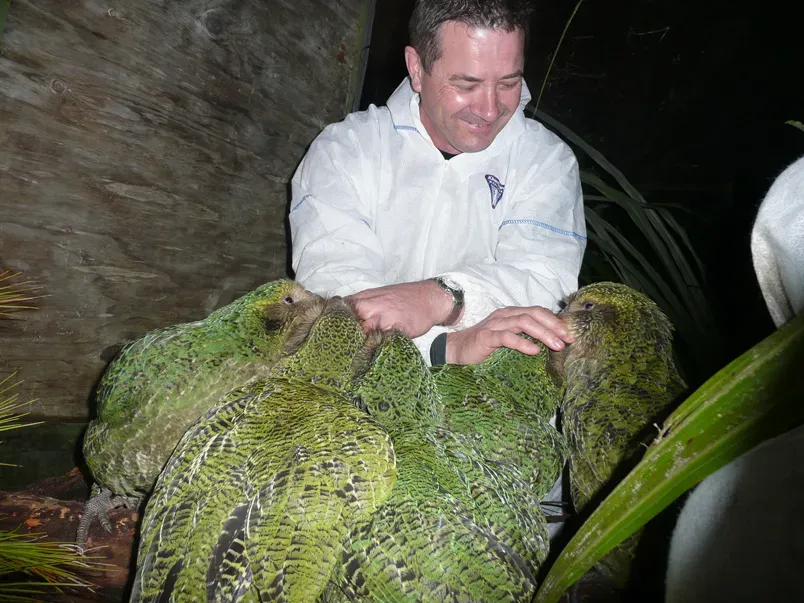
All conservation efforts were unsuccessful until the Kakapo Recovery Programme began in 1995, but since then the approach has become incredibly sophisticated. Every single kakapo has a story, a team rooting for them, and technology monitoring their health and breeding success.
One innovation is the Smart Egg, a 3D-printed egg that helps with the incubation process, where once a kakapo lays an egg it is removed from its nest and hatched in an incubator with a dummy egg put in its place, with Smart Eggs mimicking the sound and motion of a real egg ensuring the mother is prepared for the arrival of the chick. It sounds like something from a science fiction movie, doesn’t it?
Each kakapo is named and tagged with a smart transmitter so scientists know their whereabouts and can collect data on their behaviour, and the birds receive supplementary food during breeding seasons to make sure they are healthy enough to breed and raise chicks. The level of individual attention each bird receives is unprecedented in conservation work.
The challenges remain formidable, though. Kakapo have very low genetic diversity and as a consequence low fertility, with much recent conservation management focused on managing matings and using artificial insemination to minimize further genetic loss. When your entire species descends from around 50 individuals, genetic diversity becomes a critical concern.
Conclusion
The kakapo’s story is one of both tragedy and hope. These peculiar parrots evolved in splendid isolation, developing traits that made perfect sense in their predator-free paradise. Then came humans, and the kakapo’s world turned upside down almost overnight. Their freeze response, which worked brilliantly against aerial predators, became a death sentence when faced with mammals hunting by scent.
Yet here we are in 2025, with more than 230 kakapos alive and breeding. Each bird represents countless hours of dedication from conservationists who refused to let this species slip into extinction. From Smart Eggs to artificial insemination, the kakapo has become a test case for what’s possible when we throw everything we have at saving a species.
The kakapo reminds us that evolution doesn’t prepare species for sudden, human-caused changes. These birds had millions of years to perfect their lifestyle, only to have it rendered obsolete in mere decades. Their survival now depends entirely on our commitment to protecting them. What do you think about the lengths we’re going to save this unusual bird? Is it worth the massive investment of time, money, and resources?
