

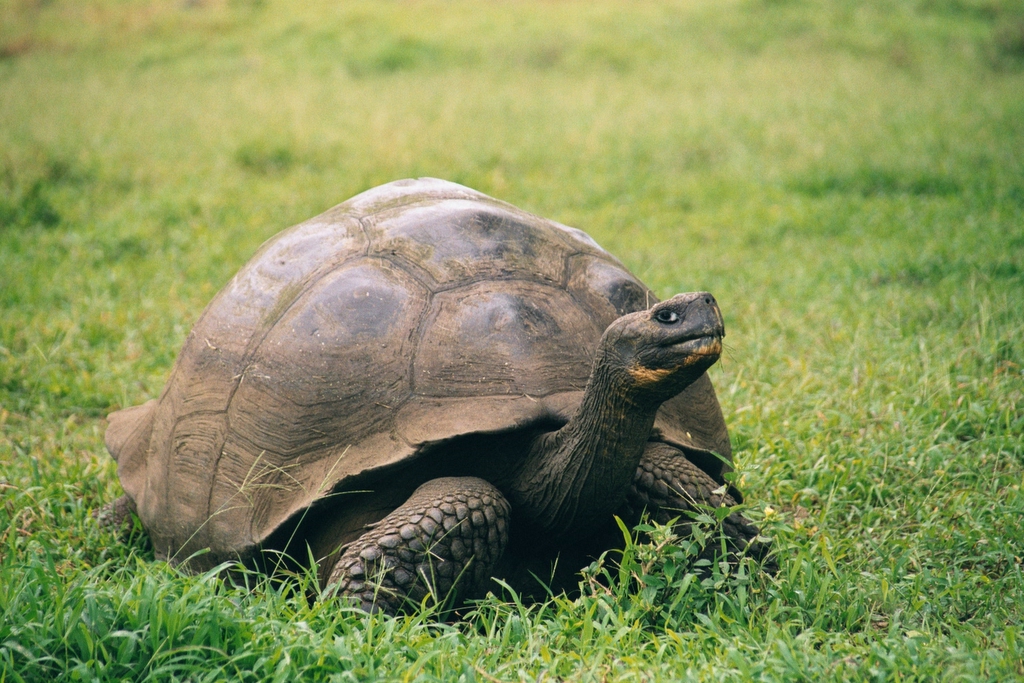
A Lineage Thought Gone Forever Resurfaces (Image Credits: Upload.wikimedia.org)
Conservationists released 158 young tortoises onto their native island, reintroducing a genetic strain long believed extinct and igniting hopes for broader ecological recovery.
A Lineage Thought Gone Forever Resurfaces
Researchers once feared certain tortoise populations in the Galápagos had vanished completely. Years of dedicated surveys uncovered surviving individuals carrying these rare genetic traits. That breakthrough allowed scientists to initiate a captive breeding program tailored to preserve the lineage’s unique characteristics.
The effort culminated in the careful rearing of 158 juveniles ready for wild release. Each tortoise represented not just a number, but a bridge to the archipelago’s evolutionary past. This step reversed decades of decline driven by habitat loss and invasive species.
From Nursery to Wild: The Release Milestone
Teams transported the young tortoises to the island under strict protocols to ensure survival. Upon arrival, experts monitored initial acclimation, noting promising signs of adaptation. The release site matched historical habitats where ancestors once roamed freely.
Local conditions favored the newcomers, with ample vegetation and minimal immediate threats. Early observations showed the tortoises exploring terrain, a vital behavior for establishing territory. This phase marked the transition from human care to natural independence.
Tortoises as Ecosystem Architects
These giants play outsized roles beyond simple existence. They graze selectively, preventing overgrowth and maintaining open landscapes. Their movements inadvertently till soil, enhancing nutrient cycles.
Seed dispersal forms another cornerstone of their influence. Tortoises consume fruits and vegetation, then deposit seeds across wide areas via dung. This process fosters plant diversity essential for island stability.
- Grazing controls invasive plants.
- Seed spread regenerates native flora.
- Trampling creates microhabitats for smaller species.
- Waste enriches soil fertility.
- Path-making aids water flow and erosion control.
Connecting Terrestrial and Marine Worlds
The tortoises’ activities ripple outward, linking island interiors to surrounding waters. Healthier vegetation traps sediments, reducing runoff that clouds coastal zones. Clearer seas benefit coral reefs and fish populations dependent on light penetration.
Restored plant cover also stabilizes shorelines against erosion. This chain sustains marine food webs, from plankton to larger predators. Conservation leaders highlighted how such interconnections amplify the tortoises’ impact far beyond dry land.
Key Takeaways
- 158 juveniles from rediscovered genetics now bolster Galápagos biodiversity.
- Tortoises engineer habitats, dispersing seeds and shaping terrain.
- Land restoration indirectly supports fragile marine ecosystems.
These slow giants embody resilience, turning extinction’s shadow into renewal’s promise. As they grow and multiply, the island’s full transformation unfolds over decades. What role do you see for such species in global conservation? Share your thoughts in the comments.

- Urban Coyotes Show Remarkable Adaptability, Learning to Thrive in City Environments - July 22, 2026
- Beavers Are Nature’s Engineers, Creating Vital Habitats for Other Wildlife Species - July 21, 2026
- The Recovery of the California Condor Offers Hope for Other Critically Endangered Birds - July 21, 2026