

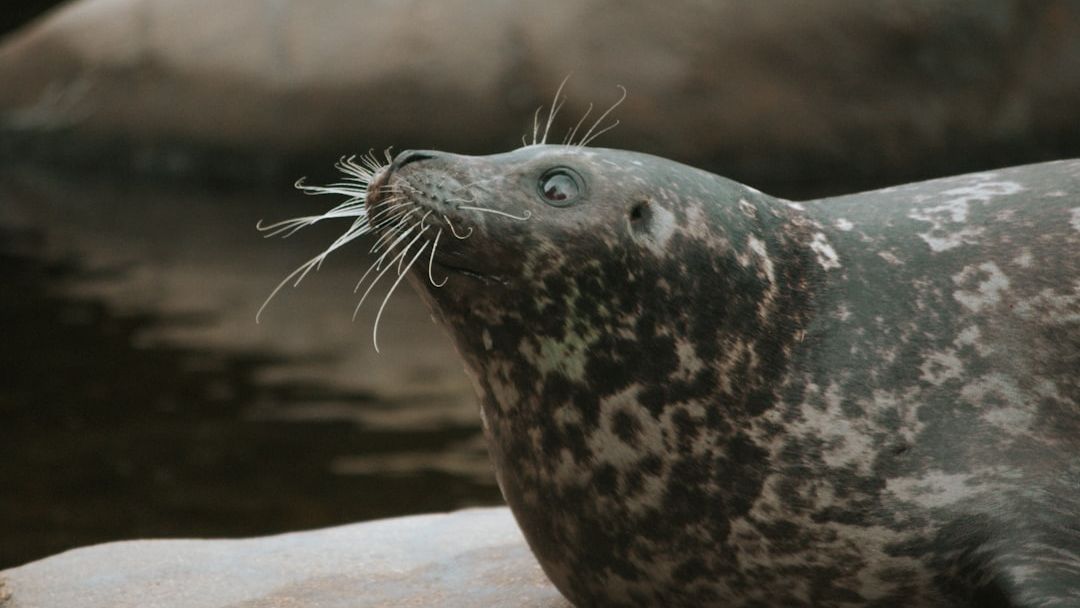
Glacier seals have full bellies – Image for illustrative purposes only (Image credits: Unsplash)
In the Arctic’s shifting seascapes, where climate pressures reshape marine life, scientists have gained rare insights into ringed seals’ diets. Researchers examined stomach contents from seals harvested by Inuit hunters, revealing how proximity to tidewater glaciers influences what these animals eat. The findings, drawn from summers in 2022 and 2023, highlight a key food source that could face threats as glaciers retreat.
Teamwork Yields Stomach-Level Data
Marine mammals like ringed seals dive deep for meals, evading direct observation by scientists. To overcome this, researchers partnered with local Inuit hunters, who provided access to 42 freshly harvested ringed seals, known scientifically as Pusa hispida. The team dissected the stomachs during the brief Arctic summers, cataloging prey remains and noting each seal’s distance from nearby tidewater glaciers – those that flow directly into the sea.
This hands-on method delivered detailed samples that remote monitoring could never match. The study appeared in Communications Earth & Environment, underscoring the value of blending Indigenous knowledge with scientific analysis. Such collaboration not only boosted data volume but also ensured cultural sensitivity in a region where hunting sustains communities.
Clear Dietary Divide by Distance
Seals taken nearer to glaciers showed a marked preference for polar cod, or Boreogadus saida, a fatty fish central to Arctic food webs. Those farther out, by contrast, carried more traces of zooplankton, smaller prey that dominate open waters. The pattern held across the sampled seals, pointing to glaciers as hotspots for nutrient-rich feeding.
Researchers measured distances precisely, linking closer hauls – within a few kilometers – to cod dominance. This suggests tidewater glaciers foster conditions that concentrate polar cod, perhaps through nutrient upwelling or sheltered habitats. The distinction grew statistically significant, offering a snapshot of how landscape features guide foraging choices.
| Proximity to Tidewater Glacier | Dominant Stomach Contents |
|---|---|
| Closer | Polar cod |
| Farther | Zooplankton |
Glaciers as Lifelines Under Threat
Polar cod packs essential energy for ringed seals, supporting growth, reproduction, and survival in harsh conditions. Tidewater glaciers appear to enhance this bounty, possibly by releasing sediments and nutrients that fuel plankton blooms and, in turn, fish populations. Yet the researchers cautioned that glacier retreat – driven by warming – could disrupt these dynamics.
Diminished ice fronts might lower overall marine productivity, forcing seals to rely more on less nutritious zooplankton. While the study captured a specific moment, it raises questions about long-term shifts in seal health and hunting yields for Inuit communities. Ongoing monitoring will clarify if these patterns persist amid environmental change.
What matters now: As Arctic glaciers melt faster, preserving access to cod-rich zones could prove vital for seals and the predators, including humans, that depend on them.
Lessons from an Unlikely Alliance
The project’s success rested on mutual trust between scientists and hunters. Inuit expertise guided sample collection in remote areas, yielding insights unattainable otherwise. Lead author Monica Ogawa of Japan’s National Institute of Polar Research captured the spirit: “By working together with Inuit communities, we could obtain data – both in quality and quantity – that scientists alone could never achieve.”
Ogawa added that the partnership made the work rewarding beyond results. This model holds promise for future Arctic studies, where local voices amplify global research. As challenges mount, such bridges may define effective conservation.
These revelations remind us that Arctic ecosystems hinge on delicate balances, now tested by a warming world. Protecting glacier-influenced habitats could safeguard not just seals’ full bellies, but the web of life they anchor.

As a little kid, I fell in love with nature, wildlife, and animals. Living in the USA, South Africa, Italy, China and Germany gave me the opportunity to discover the world's Wildlife. My favorite animals are Mountain Gorillas, Siberian Tigers, and Great White Sharks.
I'm a certified PADI Open Water Diver, went to Everest Base Camp and Trekked Gorillas in Uganda. I hold a Master of Science in Economics and Finance.
Please send any feedback to feedback@animalsaroundtheglobe.com
- The Best Ways to Introduce New Fish to an Existing Aquarium - July 30, 2026
- 10 Creatures With the Strongest Jaws on Earth - July 30, 2026
- 14 Animals Endangered in the U.S. And Whats Being Done - July 30, 2026