

There’s something that stops you in your tracks when a dog quietly pads into a room, lies down next to someone who’s unwell, and simply refuses to leave. No commands, no training cues. Just a still, steady presence. People who’ve witnessed it often struggle to explain it, and the ones who haven’t tend to be skeptical. Yet accounts of dogs behaving this way go back centuries, across almost every culture on earth.
Dogs sensing death is nothing new. In fact, dogs have been sensing death, alerting people to oncoming death, and even sniffing out those already dead for centuries. What makes this topic so fascinating isn’t the folklore alone. It’s the growing overlap between ancient observation and modern biology. The closer researchers look, the harder it becomes to dismiss what dog owners have quietly known all along.
#1. The Science Behind the Sensing: What’s Actually Happening

Most people assume there’s something almost supernatural at work when a dog detects approaching death. The reality is arguably more impressive. Because of their acute sense of smell, dogs may be able to pick up on biological and chemical changes in scents from a person or animal who is nearing death. It’s less about mysticism and more about a nose that operates on an entirely different level than our own.
The nose of a dog is a complex sensory organ with approximately 300 million olfactory receptors. That’s roughly four times the amount that we have. In proportion to their total brain size, the olfactory bulb in dogs is about 40 times larger than ours. When you factor in that a dying body undergoes measurable chemical shifts, releasing compounds through breath and skin, it becomes clear that a dog may simply be smelling what we cannot yet see.
When a person is ill or nearing death, their metabolism and body chemistry can shift, releasing different compounds through breath, sweat, and skin. Dogs can pick up on these changes long before humans notice any visible symptoms. This ability is the same one that allows trained medical detection dogs to identify conditions such as cancer, diabetes, or seizures. It’s a biological talent, not a miracle, though it can feel like one.
Scientific studies have shown that dogs can detect changes in human cortisol levels, heart rate, and even their scent. These keen senses allow them to act as emotional mirrors, sometimes reflecting what we are feeling, other times being aware of it, and providing companionship. The sensing of death, in this light, sits on a continuum of sensitivity that dogs exercise every single day.
#2. The Golden Retriever: Warmth at Life’s Final Door

If any breed embodies the idea of instinctive compassion, it’s the Golden Retriever. Known for their trademark smile and gentle nature, Golden Retrievers are deeply emotionally responsive and tend to absorb the energy of their environment. If their owner is joyful, they mirror that excitement with wagging tails. When they sense sadness, they quietly rest their heads on their owner’s laps. They are unique for their empathetic natures, which is why they are often chosen as therapy and emotional support dogs.
Golden Retrievers are renowned for their friendly and tolerant attitude, but it is their sensitivity that truly sets them apart as family companions. These dogs are eager to please and highly perceptive, making them responsive to both the overt and subtle emotions of their owners. Their intuitive nature is one reason they are frequently chosen as service dogs for people with disabilities and as therapy dogs in various medical settings. Goldens have a calming presence and a tendency to provide comfort when they sense distress.
Breeds known for their strong bond with humans, such as Golden Retrievers and Labrador Retrievers, may be more likely to exhibit behavioral changes in response to grief. In hospice settings, Golden Retrievers are consistently among the breeds observed gravitating toward patients closest to the end of life. Their willingness to simply be present, without agenda, is a form of emotional intelligence most humans take a lifetime to develop.
#3. The Labrador Retriever: The Quiet Guardian

Labradors are often used as therapy and service dogs due to their ability to sense emotional shifts. Their calm demeanor helps people dealing with anxiety, grief, or trauma. It’s their compassionate nature that has earned them worldwide admiration. That same composure is exactly what makes a Labrador so effective around people who are dying.
Labradors have an uncanny ability to sense stress or sadness, often offering gentle reassurance through quiet presence or affectionate nuzzles. This empathetic behavior has made them one of the most sought-after breeds for therapy and service dog roles, including supporting individuals with anxiety or PTSD. Their steadiness becomes a kind of anchor when the emotional atmosphere in a room becomes almost unbearable.
Hospice workers and veterinarians have observed consistent patterns in dogs’ behavior around the dying. Therapy dogs often gravitate toward patients who are closest to death, lying quietly beside them or resting their heads on their laps. Researchers believe this is due to the dogs detecting changes in scent and body temperature, as well as responding to the subdued energy in the room. A Labrador doing this isn’t performing. It’s responding to something it genuinely perceives.
#4. The Border Collie: Intelligence Meets Intuition
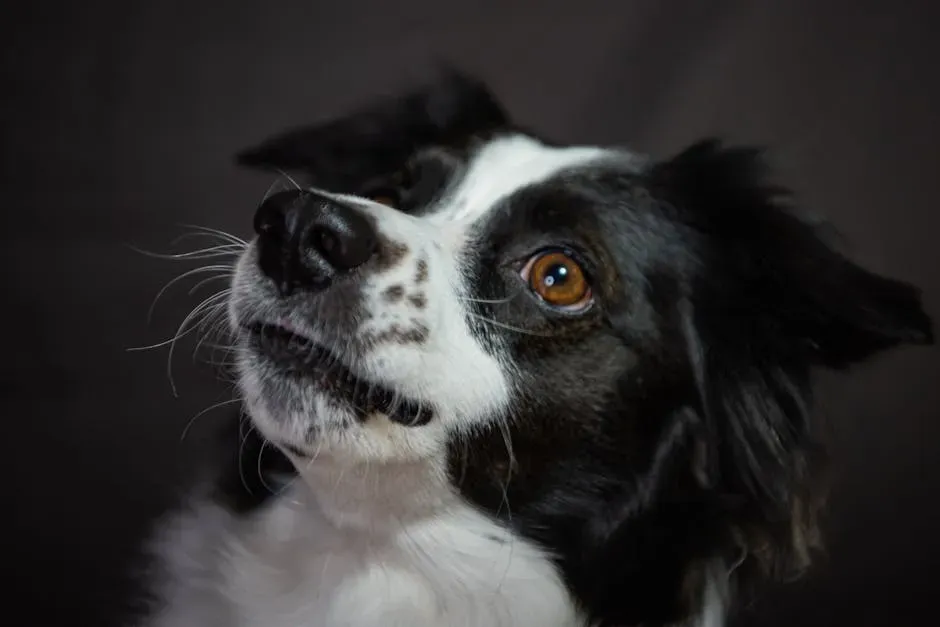
Border Collies are widely known as the most intelligent dog breed, but their emotional depth is equally remarkable. Border Collies possess an acute ability to detect subtle changes in their owner’s mood and environment. This breed’s sensitivity is closely tied to their herding heritage, where they needed to react swiftly and sensitively to both the animals they were herding and the commands of their handlers. This makes them extraordinarily attuned to human emotions.
Border Collies are among the most emotionally responsive and intelligent breeds in the world. Originally bred for herding, their strong sensitivity to movement and emotion extends beautifully to human interaction. They read subtle cues, like tone and posture, faster than most dogs. When someone’s body begins shutting down, those cues change in ways barely visible to the human eye. A Border Collie picks up on all of it.
Border Collies are often called the most emotionally sensitive dogs, bred to read subtle cues from shepherds and sheep. This natural attunement makes them quick to sense your stress, posture, or even changes in tone. Combine this with the breed’s intense focus and relentless observational drive, and you have a dog that’s virtually built to detect when something is profoundly wrong. Their presence at a deathbed isn’t unusual. It may well be inevitable.
#5. The Cavalier King Charles Spaniel and the Broader Canine Bond

The Cavalier King Charles Spaniel might be small in stature, but its emotional range is anything but. The Cavalier King Charles Spaniel is gentle, affectionate, and emotionally intuitive. This small dog breed has a natural gift for tuning in to its owner’s moods, offering comfort through quiet companionship. Their expressive eyes and soft temperament make them beloved among families and seniors alike.
What truly sets the Cavalier apart is its remarkable emotional sensitivity. These dogs are deeply attuned to their owners’ moods and can sense when something feels off. They’ll quietly curl up beside you on difficult days or eagerly join in your joy when spirits lift. In end-of-life settings, this breed’s instinct to press close and remain still makes it a remarkably soothing companion during some of the most difficult human moments.
What’s worth noting is that this sensitivity is not exclusive to any single breed. A dog’s breed, personality, training, and relationship with the deceased can all influence their behavior. The Cavalier, the Golden, the Labrador, the Border Collie – each brings something slightly different to these final moments, but all of them seem to share a common thread: an awareness that something important is shifting, and a drive to respond to it with presence and warmth.
While scientific research on dogs’ ability to sense death is still in its early stages, the anecdotal evidence and expert opinions suggest that dogs may indeed have this extraordinary ability. Their acute senses, combined with their empathy and deep emotional bond with humans, enable them to detect changes that signal the approaching end of life. Across breeds and across centuries, dogs keep showing up at the hardest moments. That pattern is difficult to ignore.
Conclusion: What Dogs Know That We’re Still Learning

Honestly, the science here is still catching up to what dog owners have observed for generations. Though science has not outright confirmed that dogs can sense death, it has not been ruled out either. As there is no true way to understand what goes on in the minds or noses of a dog, researchers still continue to explore what animals can actually perceive.
Dogs may not possess supernatural powers, but their ability to sense death stems from a remarkable combination of biology, empathy, and shared experience. Their acute senses allow them to detect changes in scent, sound, and behavior that accompany the dying process, while their emotional intelligence drives them to respond with compassion. This blend of instinct and empathy gives rise to the impression that dogs can foresee death, when in reality they are perceiving the subtle signs of life’s final transition.
There’s something quietly profound about that. Dogs aren’t predicting death like some kind of omen. They’re simply paying attention better than most of us do. The breeds covered here, the Golden Retriever, the Labrador, the Border Collie, the Cavalier King Charles Spaniel, each demonstrate that the closer a dog is bonded to humans, the more finely tuned that awareness becomes. In the end, perhaps the most human thing about dogs is their refusal to look away when life gets hardest. They don’t leave. They stay. And sometimes, that’s more than enough.
