

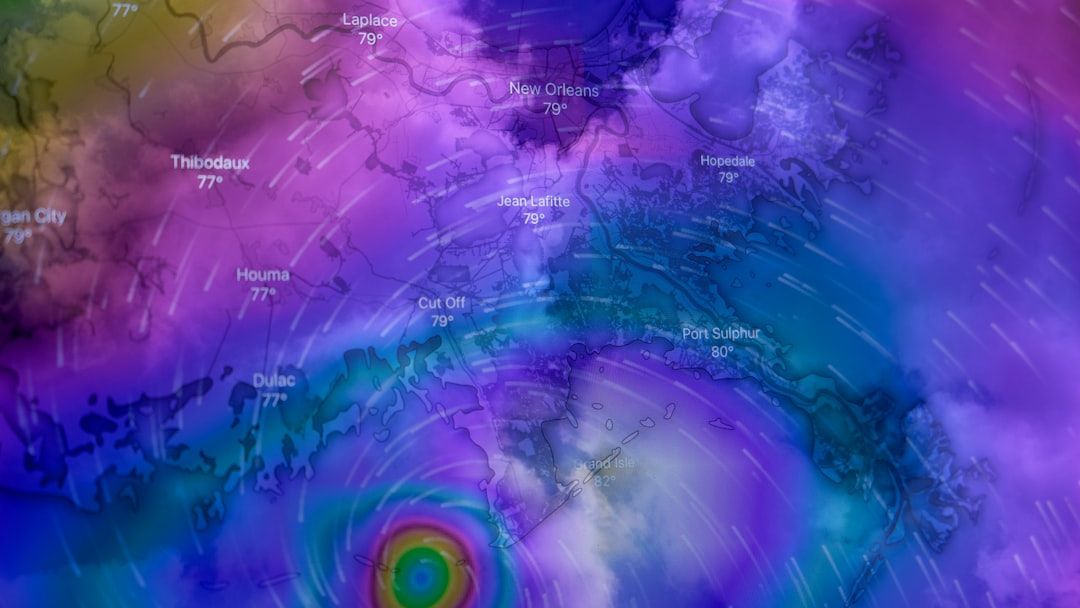
Forecast calls for below-normal Atlantic hurricane season amid El Niño conditions – Image for illustrative purposes only (Image credits: Unsplash)
The National Oceanic and Atmospheric Administration issued its seasonal outlook on Thursday, pointing to a likely below-normal Atlantic hurricane season in 2026. Forecasters tied the reduced activity to a strengthening El Niño pattern across the equatorial Pacific, where sea surface temperatures are already running well above average. The announcement arrives as coastal communities prepare for another round of potential threats, even as overall storm counts are expected to drop.
Numbers Behind the Outlook
NOAA assigns a 55 percent chance that the season will finish below normal, a 35 percent chance it will land near normal, and just a 10 percent chance it will exceed normal levels. The agency projects between eight and 14 named storms, of which three to six would reach hurricane strength and one to three would become major hurricanes rated Category 3 or higher. Those figures sit well below the long-term averages of 14 named storms, eight hurricanes, and three major hurricanes per season.
Officials emphasized that totals alone do not determine risk. A single powerful storm can still produce widespread destruction, and the agency noted that Category 5 hurricanes have struck the United States during seasons that ultimately ranked below average.
El Niño’s Role in Suppressing Activity
El Niño develops when waters in the central and eastern equatorial Pacific warm significantly above normal. Current readings show temperatures about 2.5 degrees Celsius higher than average in the key development region, a signal that points to a potentially strong event this year. The warmer water strengthens upper-level winds over the Atlantic basin, which tend to shear apart developing thunderstorms and limit hurricane formation.
At the same time, the pattern shifts rainfall patterns across North America. Wetter conditions often settle over the southern United States while drier weather prevails farther north. Winters across much of the country also tend to run milder under El Niño influence. NOAA Administrator Neil Jacob added that the same warm Pacific waters could fuel an above-average number of tropical storms and hurricanes in the eastern Pacific basin during 2026.
These atmospheric changes do not eliminate risk along the Atlantic coast. They simply tilt the odds toward fewer overall systems, though any that do form could still intensify rapidly if local ocean temperatures remain high.
Context From the 2025 Season
Last year’s Atlantic season produced 13 named storms and five hurricanes, totals that already fell short of average. Despite the lower count, the season stood out for generating three Category 5 hurricanes, including Hurricane Melissa, which struck Jamaica with devastating force and claimed dozens of lives. The contrast between modest totals and extreme individual storms illustrates why forecasters continue to stress preparedness regardless of seasonal predictions.
What matters now: Residents in hurricane-prone areas should review evacuation plans and insurance coverage early. Even a below-normal season can deliver major impacts if one or two storms track close to land.
Looking Ahead
NOAA will continue to monitor Pacific temperature trends and issue updates as the season approaches. The current forecast reflects the best available science, yet it remains subject to change if El Niño evolves differently than expected. Coastal states and emergency managers are already using the outlook to guide resource allocation and public awareness campaigns ahead of what could still prove to be an active period for any single storm.

As a little kid, I fell in love with nature, wildlife, and animals. Living in the USA, South Africa, Italy, China and Germany gave me the opportunity to discover the world's Wildlife. My favorite animals are Mountain Gorillas, Siberian Tigers, and Great White Sharks.
I'm a certified PADI Open Water Diver, went to Everest Base Camp and Trekked Gorillas in Uganda. I hold a Master of Science in Economics and Finance.
Please send any feedback to feedback@animalsaroundtheglobe.com
- 13 Most Independent Cat Breeds - July 21, 2026
- 13 Animals That Can Kill Without Venom or Claws - July 21, 2026
- 15 Bear Survival Skills You Need to Know - July 21, 2026