
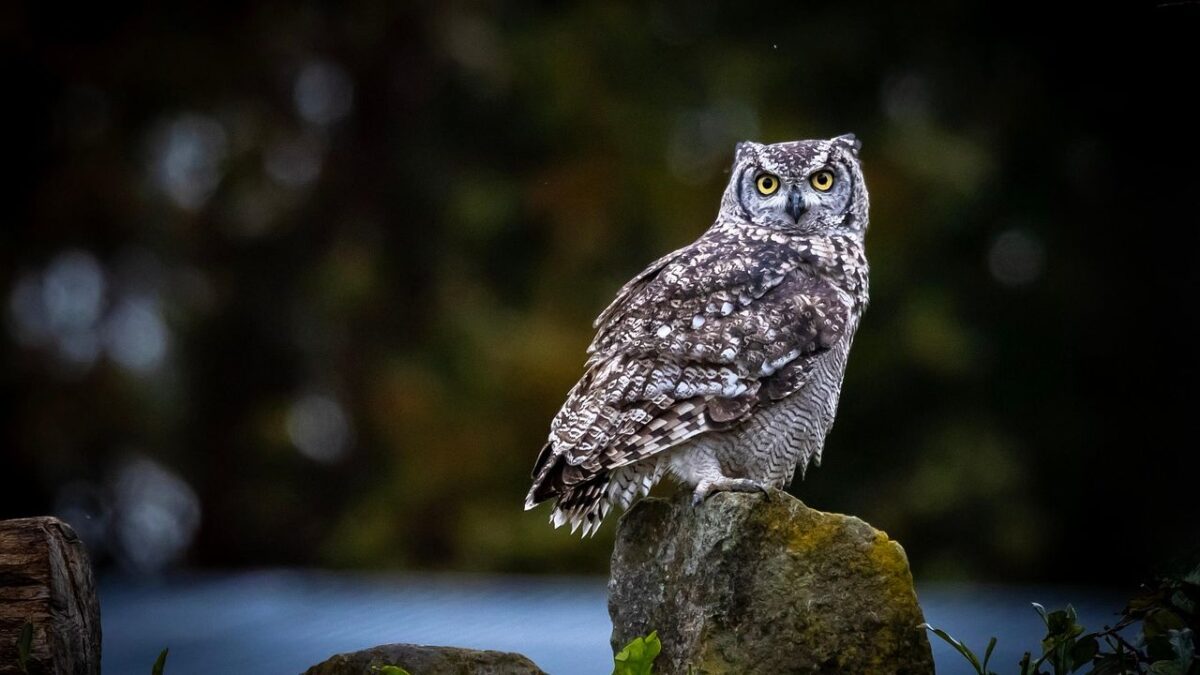
There’s a moment, just after last light fades from the sky, when most animals go still. Humans reach for a lamp. Mice retreat under leaves. The world, from our perspective, simply closes down. For an owl, that same moment is the start of everything.
These birds have spent tens of millions of years refining a set of biological tools so finely tuned for darkness that no piece of human technology quite replicates what their bodies do naturally. It’s not magic. It’s anatomy, and it’s genuinely extraordinary.
#1. Tube-Shaped Eyes That Act Like Living Telescopes
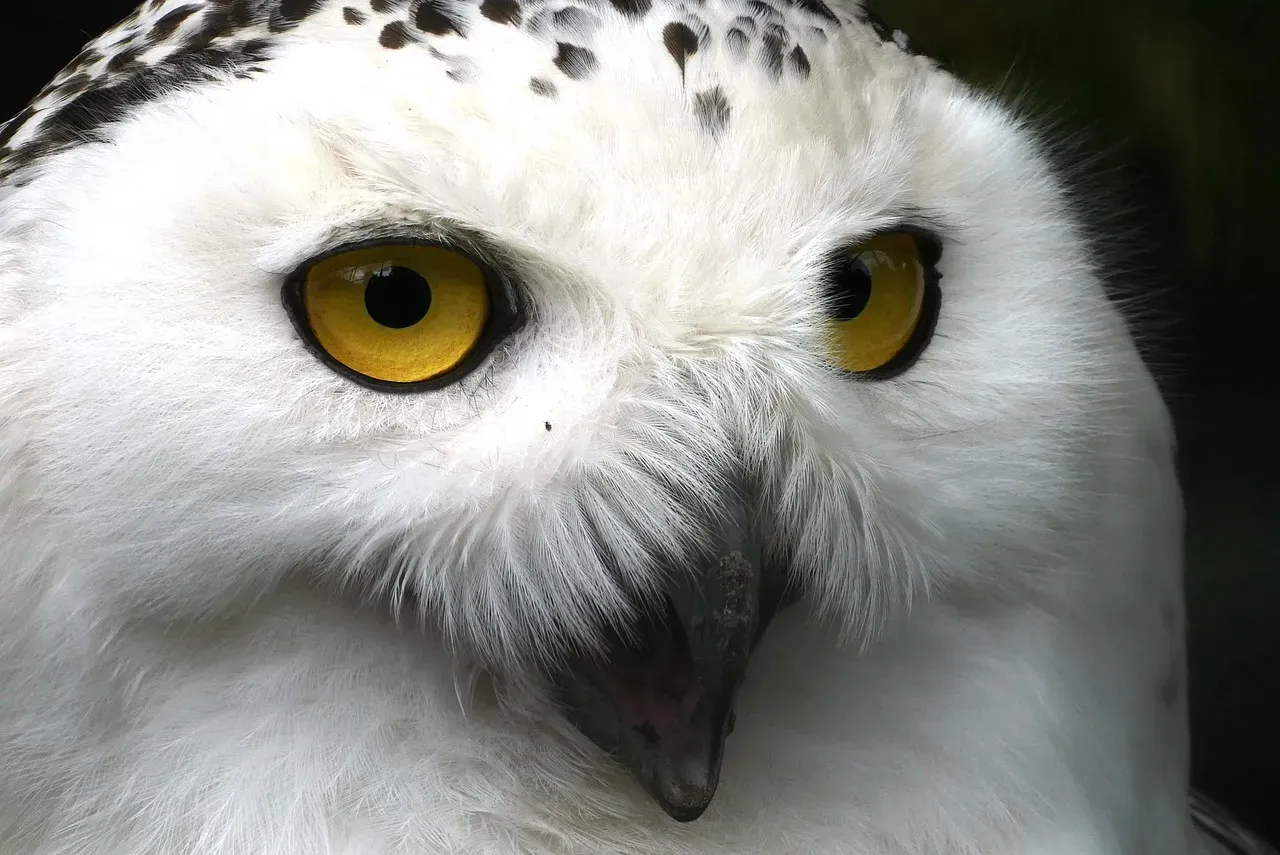
Most animals, including humans, have spherical eyeballs. Owls don’t. One of the most unusual facts about owl vision is that their eyes are not spherical like human eyes. Instead, they are elongated and tube-shaped. This might sound like a minor detail, but the implications for low-light vision are enormous.
Owl eye anatomy is defined by a unique tubular shape held in place by bony sclerotic rings, preventing eye movement but maximizing light sensitivity for nocturnal hunting. The trade-off is rigid but deliberate. Large eyes can collect more light, which is essential for seeing in dim environments such as forests at night. Because of this structure, owl eyes act almost like powerful telescopes, gathering faint light that would be nearly invisible to many other animals.
Owl eyes are significantly larger than those of other birds, with some species having eyes that are up to 60 percent larger than their head size. This is because owls need to gather as much light as possible in order to see in the dark. Because their eyes are locked firmly in place, owls can’t glance sideways the way you or I can. Their solution to that problem is just as remarkable, and we’ll get to it shortly.
#2. A Retina Packed With Rod Cells Beyond Human Comparison
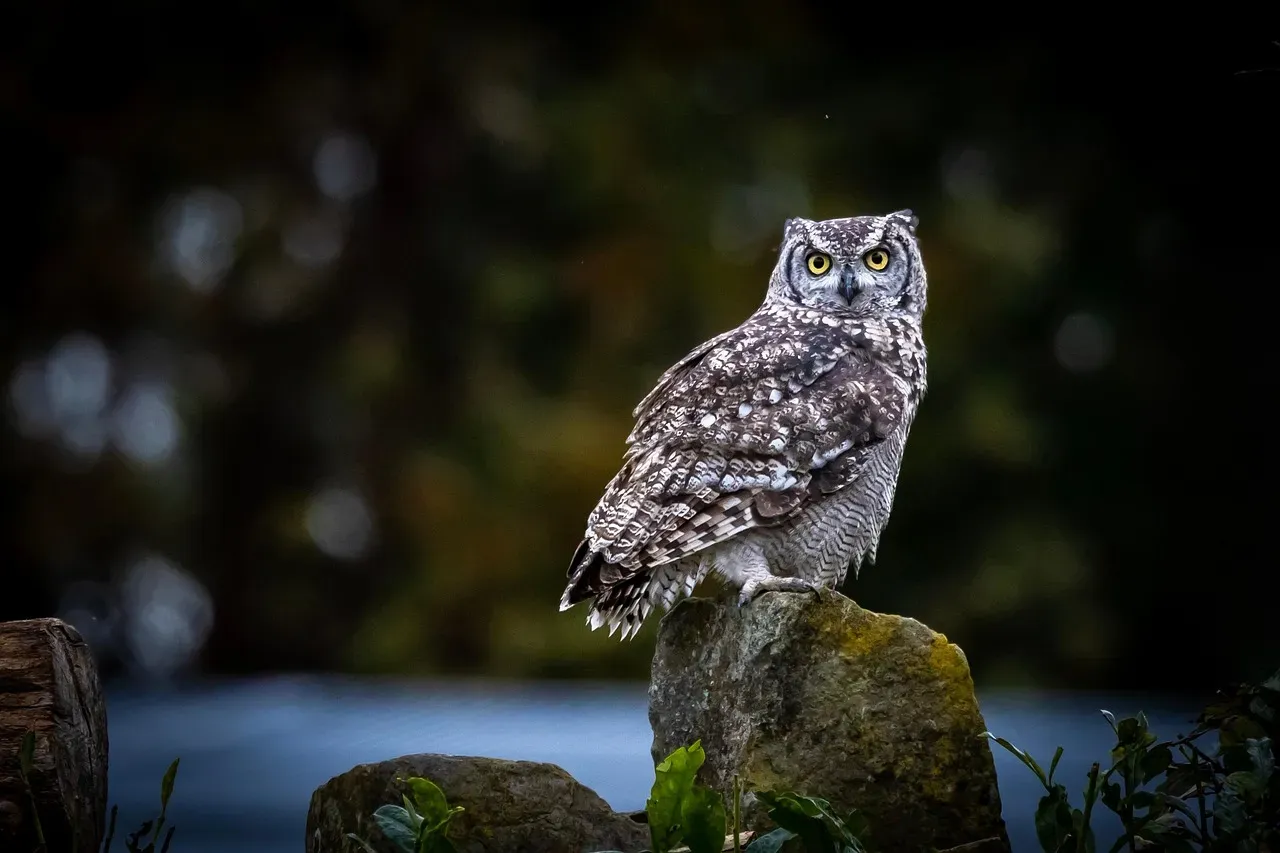
Cells called photoreceptors turn light into electrical signals which travel through the optic nerve to the brain. There are two types of photoreceptors in the retina: cone-shaped cells and rod-shaped cells. Cones handle color in bright light. Rods handle low-light sensitivity. Owls have made a very clear evolutionary bet on one over the other.
Owl retinas have 30 times more rods than cones, meaning they have excellent night-time vision but can’t see much color. That’s not a small edge over human eyesight. It’s a completely different category of visual experience. The retina is specialized for dim-light vision, possessing more rods than cones, up to 56,000 per square millimeter in the tawny owl, and the rods contain high levels of rhodopsin, a light-absorbing pigment.
Owls primarily see in shades of gray, meaning their vision is essentially monochromatic or black and white. Their retinas are overwhelmingly dominated by rod cells, which are highly effective for detecting movement and functioning in low-light conditions. They possess very few cone cells, which are required for detailed color perception. The world an owl perceives at night is not the rich, colorful scene we’d imagine. It’s a precise, high-contrast map of movement and shape, built for one purpose: finding prey.
#3. The Tapetum Lucidum: A Built-In Mirror for Capturing Light Twice
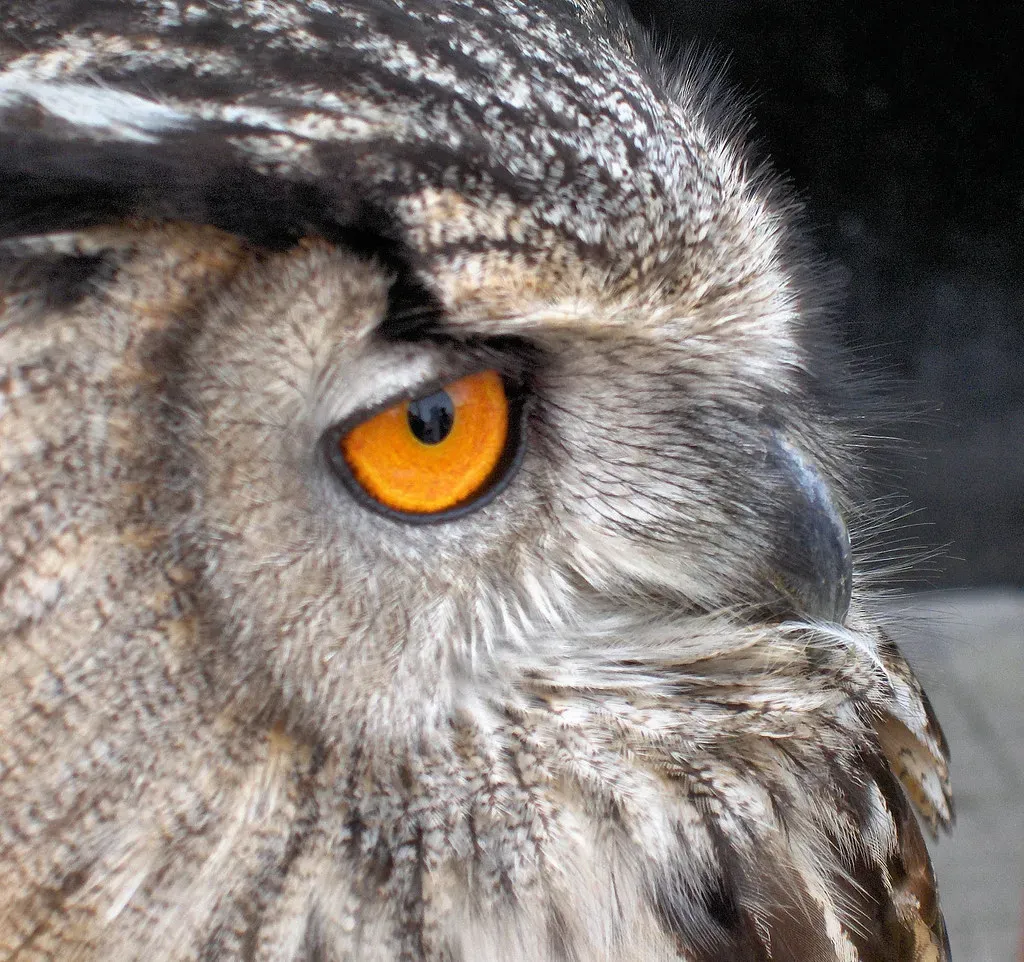
Even with all those rod cells, owls don’t stop there. Many species carry an additional adaptation that effectively gives every photon of light a second chance to be useful. The tapetum lucidum is a specialized structure in the eyes of many nocturnal animals, including owls. It is a reflective layer located behind the retina that allows light to pass through the retina twice. This double exposure to light enhances vision in low-light conditions, making animals like owls excellent nighttime hunters.
The owl’s ability to navigate the nocturnal landscape is further enhanced by a biological mirror located behind the retina: the tapetum lucidum. This reflective layer acts as a retroreflector, bouncing light that passes through the retina back into the photoreceptors for a second opportunity at detection. This mechanism effectively doubles the light-gathering efficiency of the eye, providing the eye shine often seen when an owl is caught in a beam of light.
By reflecting photons back through the rods, the tapetum lucidum ensures that even in near-total darkness, the owl can distinguish the subtle contrast of a rodent moving against the forest floor. It’s worth noting that not all owl species possess this layer. Their eyes are highly specialized to amplify existing light through a dense concentration of rod cells and a reflective layer called the tapetum lucidum. However, they still require at least a trace amount of ambient light, such as starlight or distant lunar glow, to navigate. Even owls have their limits.
#4. Asymmetric Ears and a Facial Disc That Maps Sound in 3D
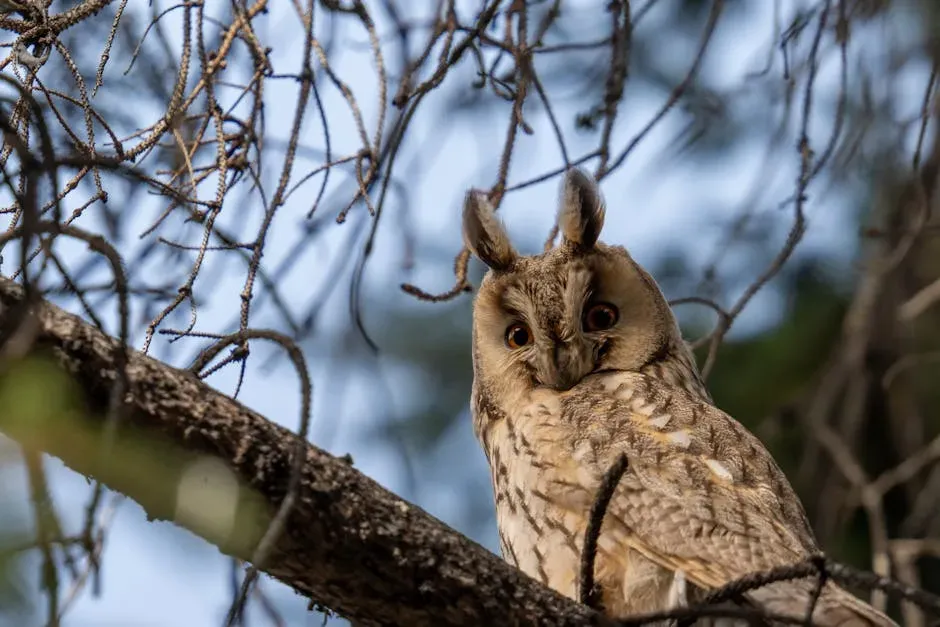
Here’s where it gets genuinely strange. In truly total darkness, even the most sophisticated eye reaches its limit. Owls have a solution that bypasses vision entirely. While owl vision receives much attention, their extraordinary hearing capabilities work in concert with their visual system to create an unparalleled hunting apparatus. The distinctive facial disc that characterizes most owl species isn’t merely decorative; it functions as a sophisticated sound-capturing parabolic dish. Composed of stiff feathers arranged in a concave shape around each eye, the facial disc funnels sound to the ear openings, which are asymmetrically positioned on either side of the head.
Several owl species have ears that are asymmetrical in size and location, which enhances this ability. These species include barn owls, northern saw-whet owls, and long-eared owls. The reasoning behind that asymmetry is precise. Owls have asymmetric ears, where one ear is higher than the other. The difference in the heights of the ears helps them to more easily locate prey in complete darkness because the sounds coming from prey are received by the ears at slightly different times.
This asymmetry allows owls to triangulate the precise location of sounds in three-dimensional space with remarkable accuracy. Barn owls can locate prey by sound alone in complete darkness, pinpointing small mammals with an accuracy of less than one degree in both horizontal and vertical planes. A human ear, by comparison, is reasonably good at telling left from right. An owl’s hearing system tells it exactly where in three-dimensional space something is moving, to within a fraction of a degree, in pitch-black silence.
#5. Head Rotation and Fixed Eyes: The Evolutionary Trade-Off That Makes It All Work
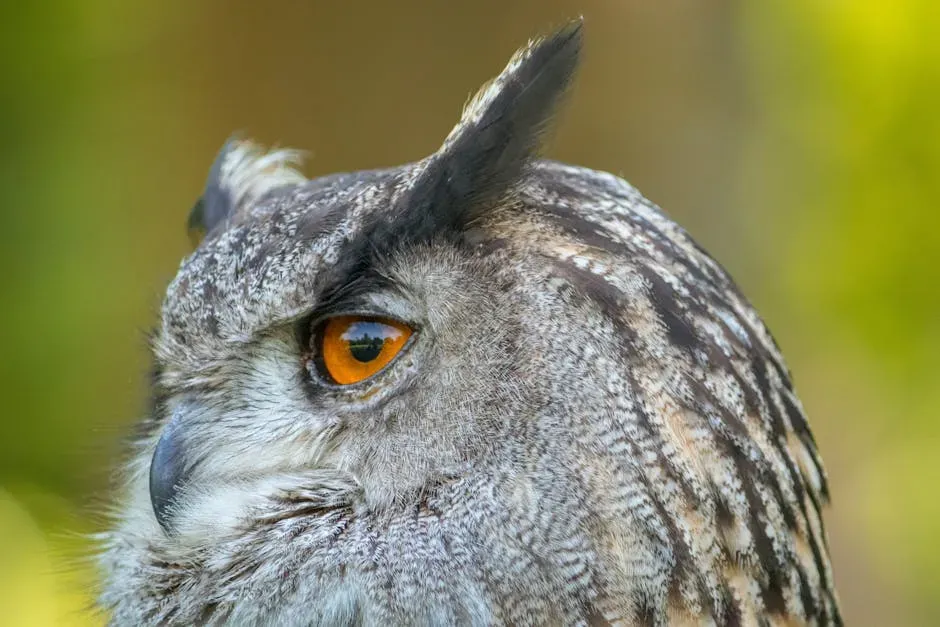
There’s an interesting constraint buried inside all these visual superpowers. Because owl eyes are tube-shaped and locked in place by bony rings, owls cannot roll or move their eyes independently. Their tubular-shaped eyes, optimized for gathering light in darkness, are held rigidly in place by sclerotic rings, bony supports that stabilize vision but eliminate eye mobility. This immobility necessitates an alternative method of scanning the environment: rotating the entire head.
An owl possesses an extraordinary range of motion, allowing it to rotate its head up to 270 degrees in either direction. This capability compensates for fixed eye movement. It’s a clean evolutionary solution. Rather than evolving moveable eyes that might compromise the tubular light-gathering structure, owls evolved a neck that does the work instead. Their facial discs collect and focus sound waves toward their asymmetrically positioned ears, allowing them to triangulate the exact location of prey with astonishing precision. Once a sound is detected, the owl can quickly rotate its head to align its visual field with the sound source, confirming the prey’s location visually before striking.
The combination of immobile eyes and hyper-mobile necks represents a perfect evolutionary trade-off: stability for precision hearing and vision, compensated by unmatched rotational capability. The whole system, from the tubular eyes to the reflective retina to the asymmetric ears, works together so seamlessly that the separation between sight and sound almost disappears. What results is something closer to a unified spatial awareness than anything humans possess in the dark.
What This Tells Us About Night, Perception, and Evolution
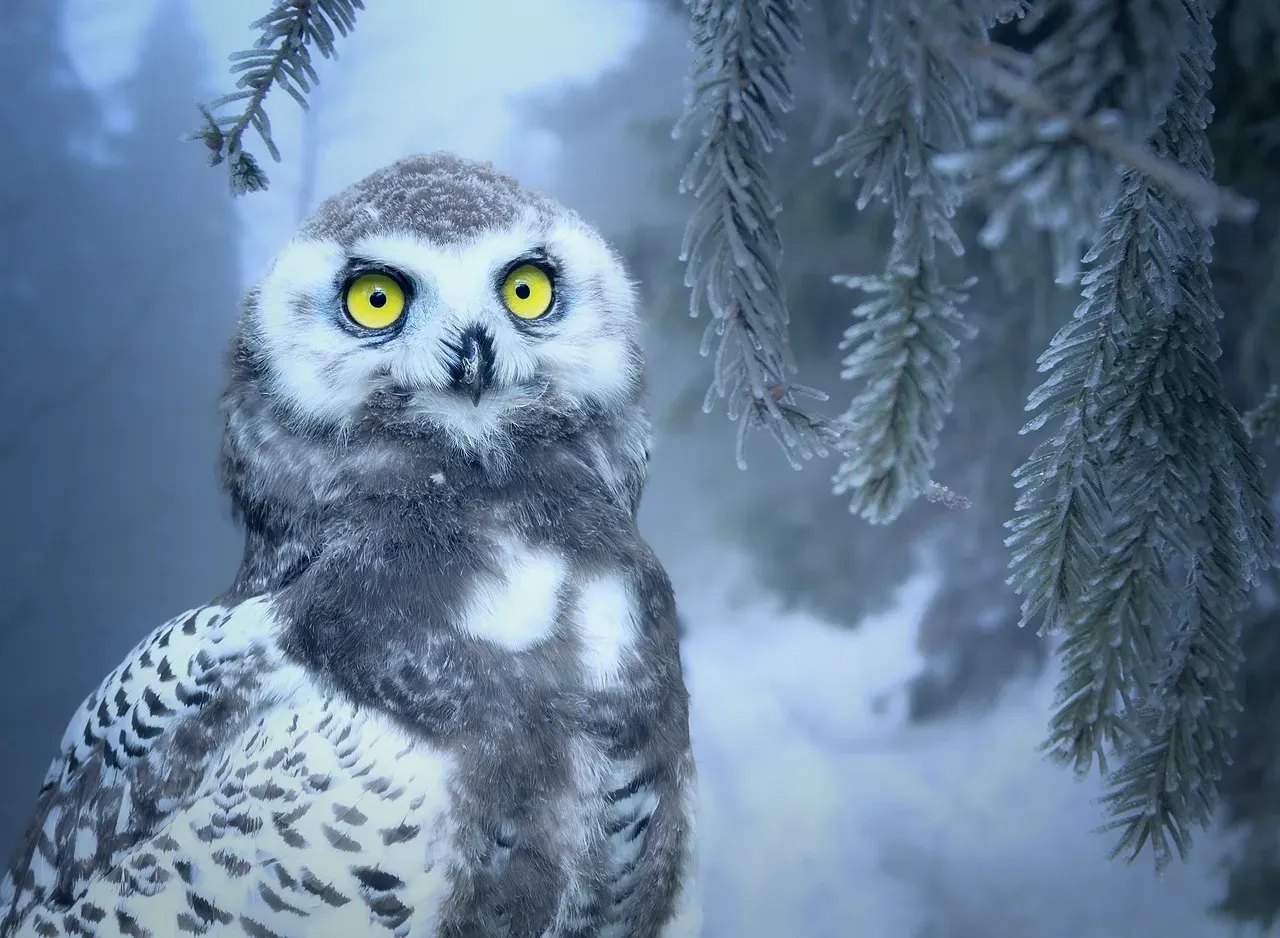
Owls remind us that darkness is not a uniform condition. What feels like total blackness to human eyes is actually a landscape full of information, provided you have the right tools to read it. Their night vision is not just good; it is the result of several remarkable biological adaptations that allow them to capture and process even the tiniest amount of light. From unusual eye shapes to specialized cells in the retina, owl vision is one of the most impressive sensory systems in the animal kingdom.
The real takeaway isn’t that owls are exceptional by accident. Every feature, the tubular eye, the rod-packed retina, the reflective backing layer, the offset ears, the rotating neck, exists because each small improvement made survival slightly more likely over thousands of generations. In low-light conditions, owls generally have better vision than humans. Their eyes are specifically adapted for nocturnal hunting. That’s not a competition we were ever in.
There’s something quietly humbling about it. The darkness we close our eyes against every night is, for an owl, a fully legible world. We share the same planet and the same darkness, just not the same version of it.

- 14 Ways a Dog Shows You Are the Center of Its Whole World - July 21, 2026
- 15 Quiet Habits That Show a Senior Dog Adores the Person It Chose - July 21, 2026
- The 13 Small Ways an Old Dog Says It Chose You and Only You - July 21, 2026