

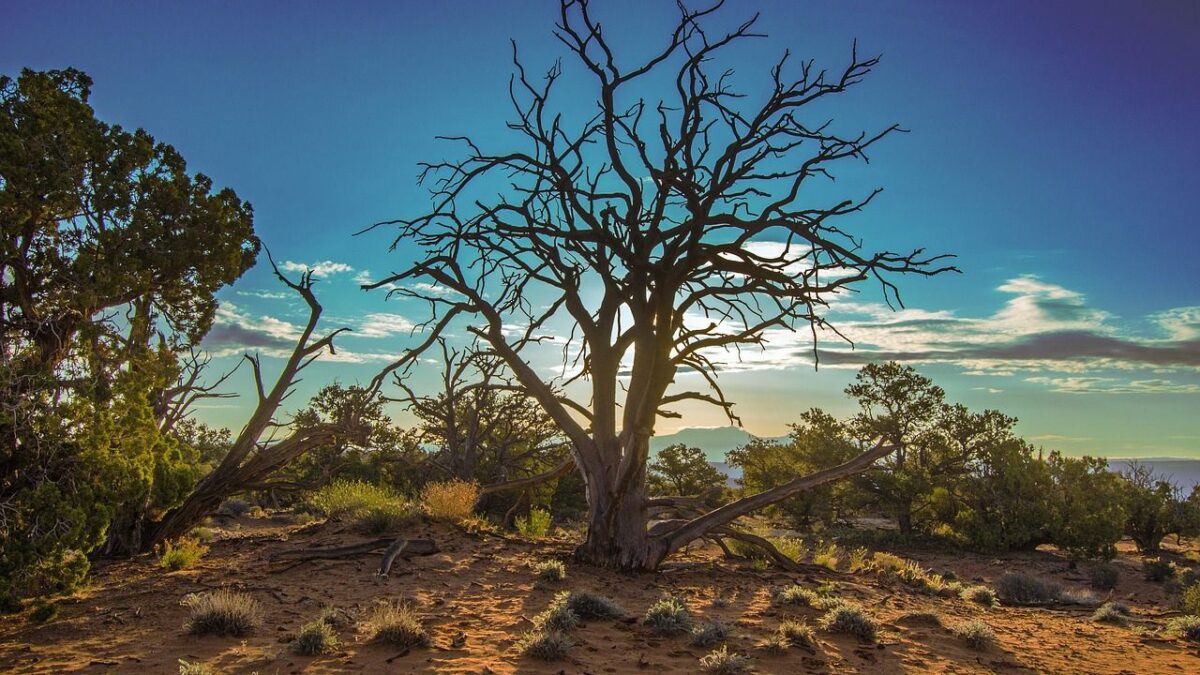
The Southwest's drought is shrinking wildlife's suitable habitat, with predators hit hardest – Image for illustrative purposes only (Image credits: Pixabay)
The southwestern United States continues to grapple with prolonged dry conditions that affect both human communities and native animals. A recent study led by researchers at the University of Michigan examined how these arid spells alter the landscape available to wildlife. The analysis found measurable reductions in suitable habitat across multiple feeding groups, with carnivores experiencing the most pronounced losses.
Study Maps Changing Ranges
Researchers assessed habitat suitability for herbivores, omnivores, and carnivores under current drought patterns. They compared areas that historically supported viable populations with those that remain viable today. The results showed consistent contraction for all categories, though the scale differed by diet and behavior.
The work focused on the region’s distinctive ecosystems, where water availability shapes vegetation and prey distribution. By tracking these shifts, the team highlighted how even modest changes in moisture can ripple through food webs. The findings add to a growing body of evidence that climate-driven aridity is reshaping wildlife distributions in real time.
Why Carnivores Face Greater Pressure
Predators often require larger territories and depend on stable prey populations that themselves need adequate forage and water. When drought reduces plant cover and concentrates remaining resources, both prey and the hunters that rely on them lose ground. The study indicated that these layered dependencies leave carnivores more vulnerable to habitat compression than species lower on the food chain.
Herbivores may adapt by shifting to remaining patches of vegetation, while omnivores can sometimes switch food sources. Carnivores, however, have fewer options when their primary prey declines or moves. This pattern suggests that conservation planning may need to prioritize connectivity for wide-ranging species in drought-prone areas.
Looking Ahead for Regional Wildlife
The University of Michigan findings underscore the need to monitor how ongoing dryness interacts with other stressors such as development and temperature rise. While the study documents current habitat losses, it also points to the value of protecting remaining refugia and restoring corridors that allow animals to move as conditions change.
Wildlife managers and land agencies can use such data to refine protection strategies before further contraction occurs. Continued research will help clarify whether these trends accelerate or stabilize under different drought scenarios. The core message remains that habitat suitability is not fixed and requires active attention as aridity persists across the Southwest.

As a little kid, I fell in love with nature, wildlife, and animals. Living in the USA, South Africa, Italy, China and Germany gave me the opportunity to discover the world's Wildlife. My favorite animals are Mountain Gorillas, Siberian Tigers, and Great White Sharks.
I'm a certified PADI Open Water Diver, went to Everest Base Camp and Trekked Gorillas in Uganda. I hold a Master of Science in Economics and Finance.
Please send any feedback to feedback@animalsaroundtheglobe.com
- 13 Animals That Can Kill Without Venom or Claws - July 21, 2026
- 15 Bear Survival Skills You Need to Know - July 21, 2026
- 9 Strategies Wolves Use in Winter And 3 That Do Not Work - July 21, 2026