
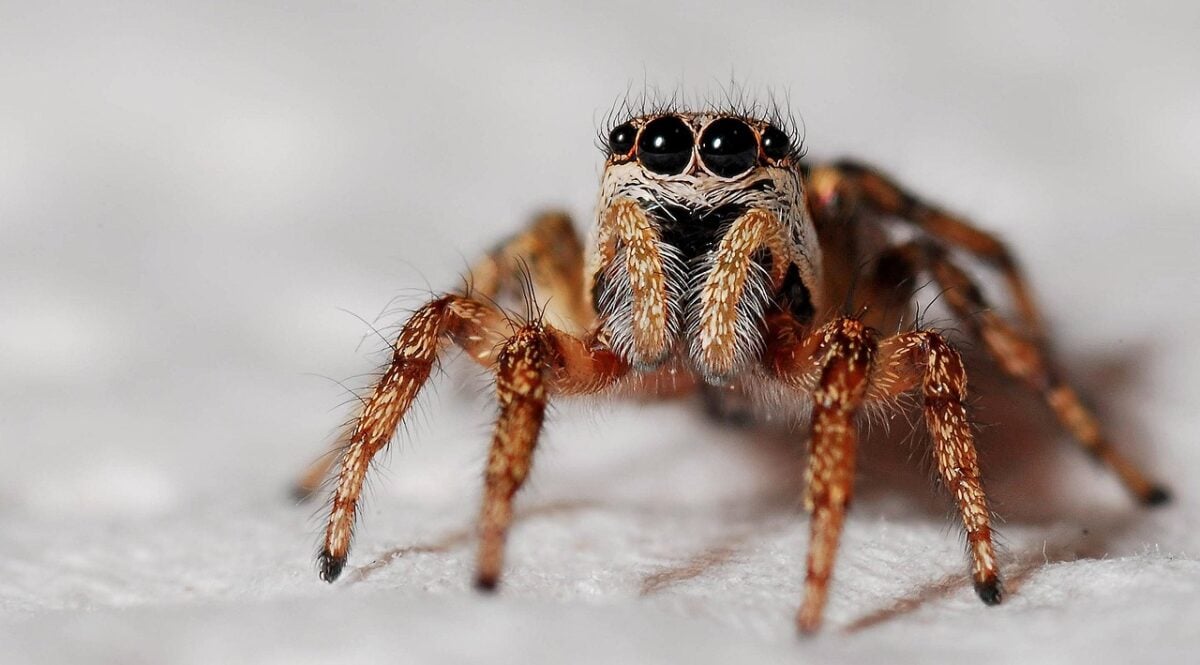
If you’ve ever brushed a tiny spider off your arm without a second thought, you probably did not assume it had anything like a “plan” in its head. Yet a growing body of research on jumping spiders is quietly rewriting what we think small brains can do. These thumbnail-sized hunters are not just reacting on instinct; in many cases, they appear to be strategizing, weighing options, and even committing to a route they can no longer see.
The idea that a spider can plan a detour before it moves sounds almost absurd at first, like saying a paper airplane is secretly doing physics. But that is exactly what careful experiments in animal cognition suggest: jumping spiders can inspect a maze from a vantage point, pick an effective path to prey, and then follow that route even when the prey disappears from view. Once you start looking at them this way, those big round eyes stop being “creepy” and start looking disturbingly thoughtful.
The tiny predators with outrageously big eyes
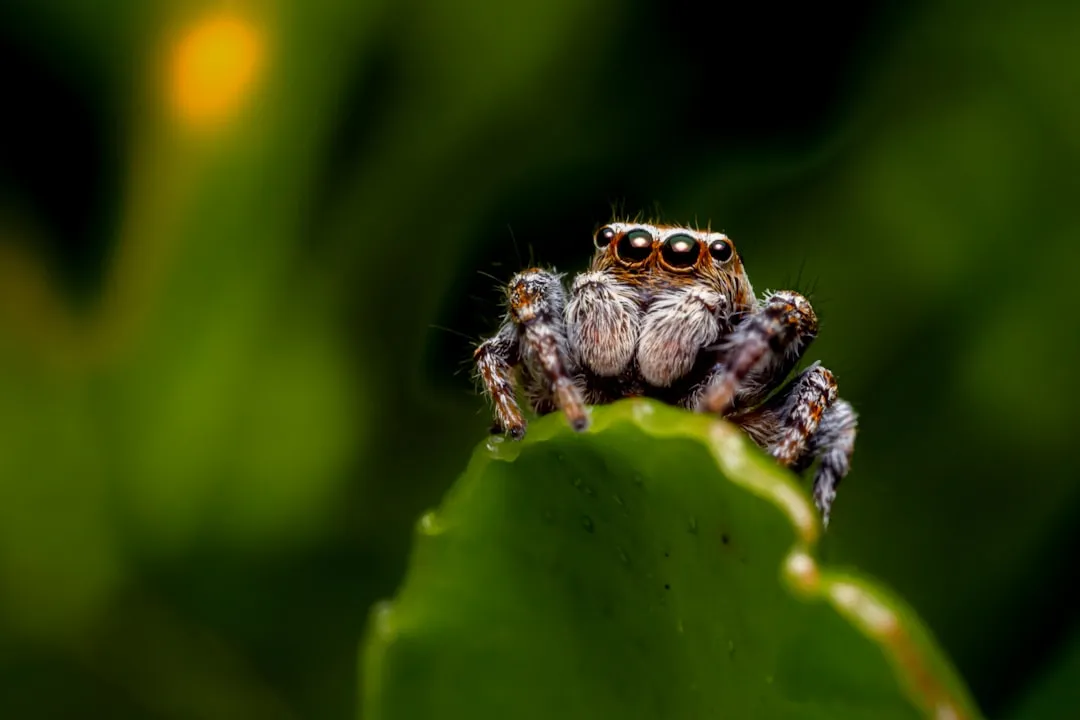
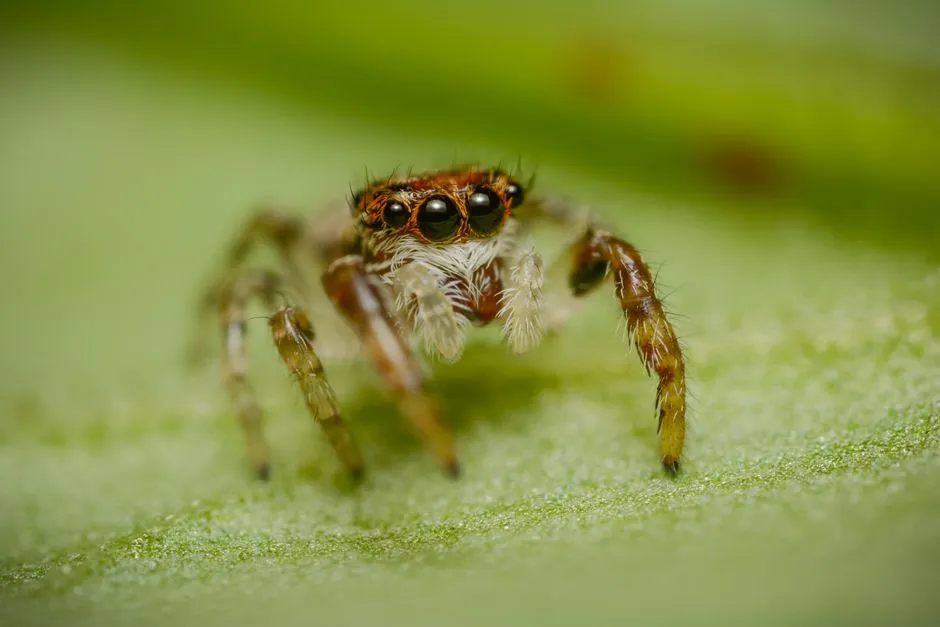
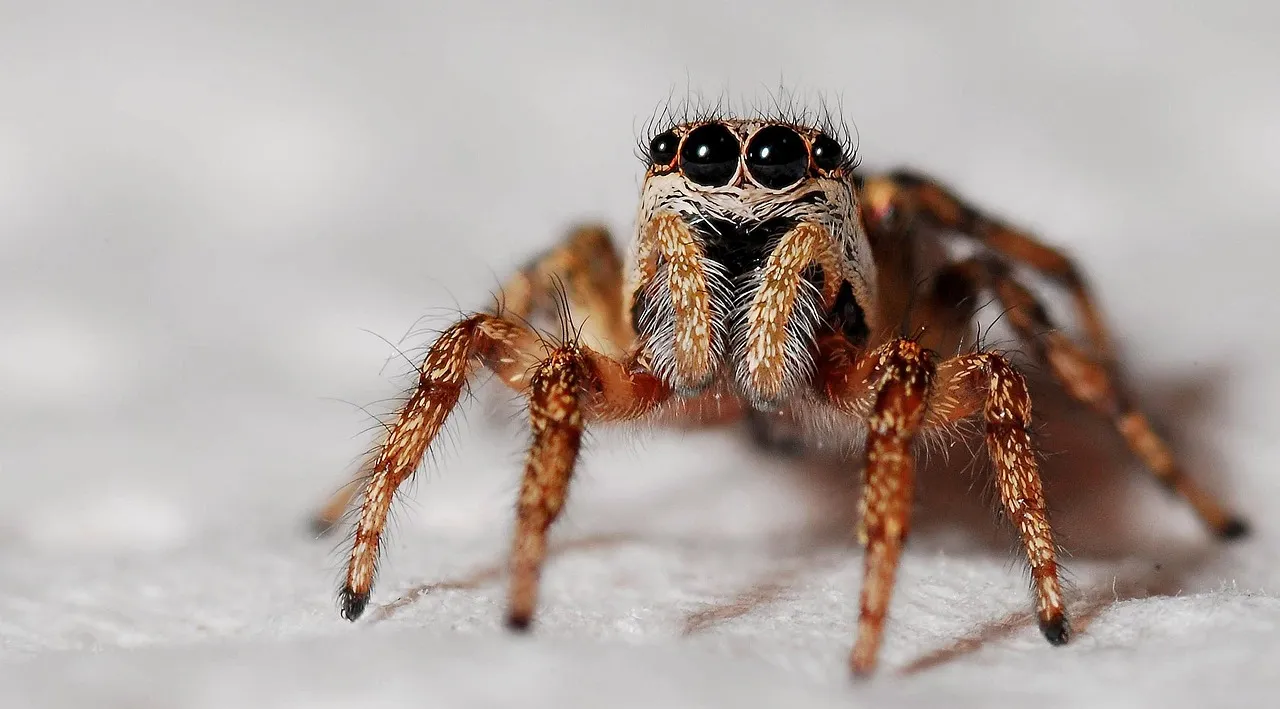
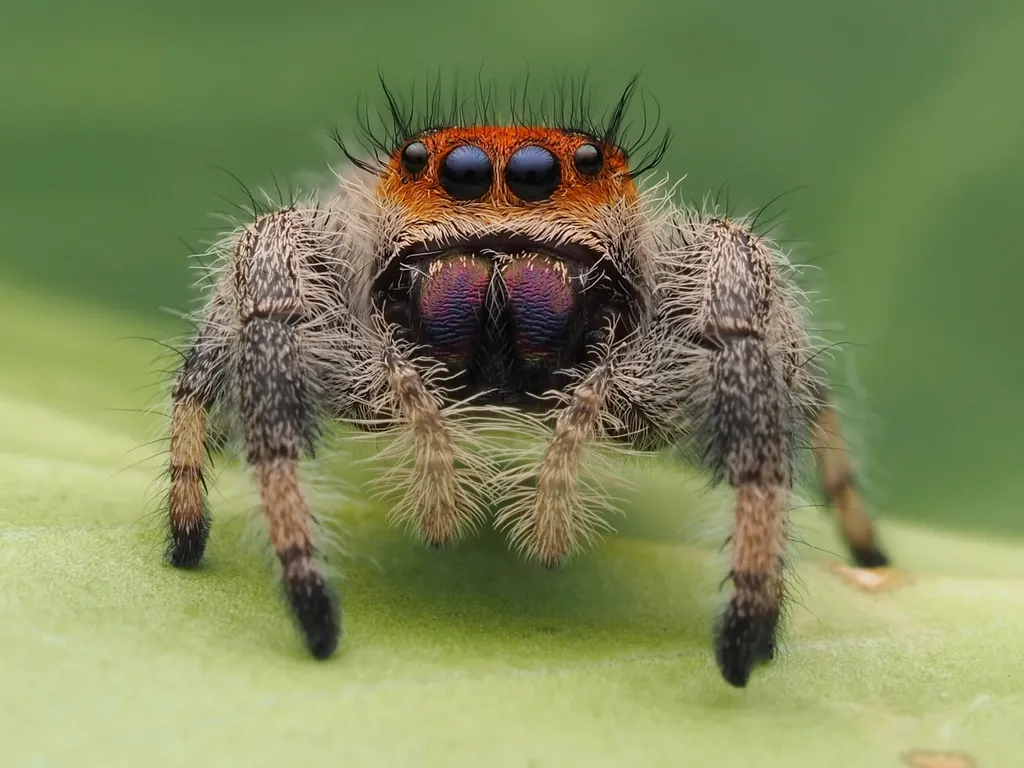
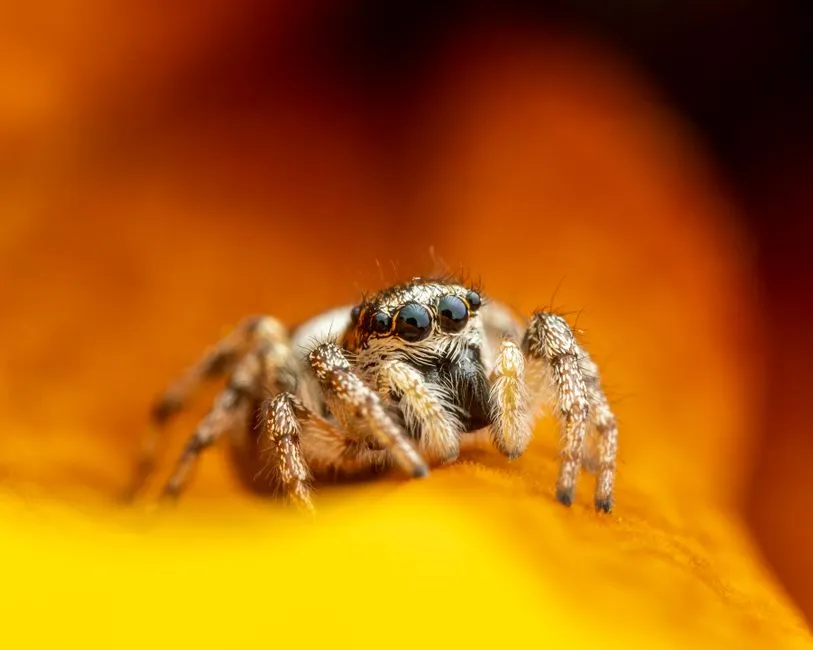
Jumping spiders belong to a family called salticids, and they look more like tiny, fuzzy cats than the classic long-legged spider stereotype. They do not build webs to catch their food; instead, they stalk and pounce on prey with a kind of miniature feline swagger. Those oversized front eyes that make them look cartoonishly cute are not just for show, either. They provide sharp, forward-facing vision that is unusually detailed for such a small creature.
Most spiders are basically living motion detectors, but jumping spiders can pick out specific targets, track them, and adjust their approach on the fly. In lab studies, they have been able to distinguish between prey, mates, and even different kinds of spiders simply by sight. This visual superpower is a key part of why researchers even suspected they might be capable of advanced planning in the first place. If you can see the world in detail, you can start to mentally “play” with it before you move.
How scientists test a spider’s ability to plan detours
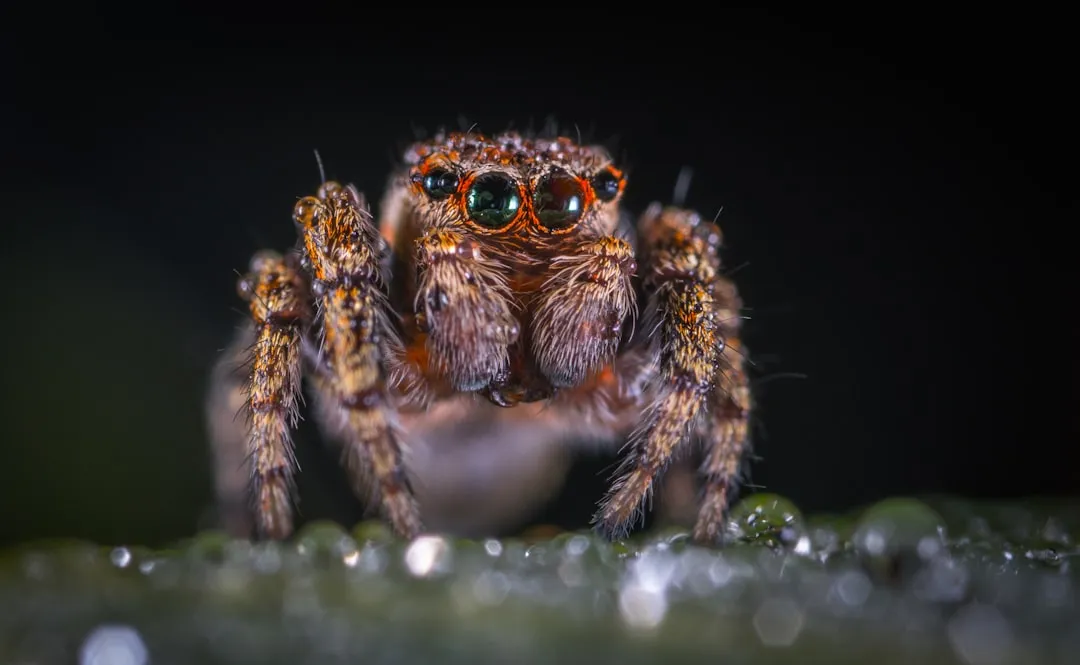
So how do you prove that a spider is planning instead of just bumbling around until it gets lucky? Researchers design controlled detour tasks, a bit like obstacle courses in miniature. A jumping spider is placed on a starting platform and sees a juicy prey item or lure on a separate platform. The catch is that the direct route is blocked, and the only way across involves taking an indirect path that may lead temporarily away from the prey, sometimes including bridges, ramps, or side corridors.
In some setups, the spider gets a clear overhead view of the whole layout at the beginning, but once it starts moving it can no longer see the prey. What fascinates scientists is that many jumping spiders still choose the correct route right from the start, walk it steadily without obvious trial and error, and end up at the platform where the prey was, as if they had a mental blueprint. They do not keep turning back to check, they do not systematically try every branch like a robot; they just commit, which strongly hints at planning rather than pure reflex.
Seeing first, moving later: mental maps in a spider brain
Planning a detour means more than “go around the obstacle.” It suggests that, during that initial view from the starting point, the spider is building some kind of internal representation of the environment. You could call it a mental map, even if it is a very simple one compared with what a human or a rat might use. The spider appears to evaluate different possible pathways, select one that will eventually get it to the prey, and then store that choice before it moves.
The wild part is that once the spider is on the move, that visual target can be taken away or hidden, and it will still continue along the same route it seemed to choose at the start. That persistence is hard to explain as mere “follow the brightest thing you see” behavior. Instead, it looks more like the spider has decided, in advance, “this is the path,” and is now executing a remembered plan. For a creature with a brain smaller than a poppy seed, that is astonishingly sophisticated.
Planning versus instinct: what’s really going on?
Of course, scientists are careful not to throw around words like “intelligence” or “planning” lightly. There is always the question: could simple rules explain this behavior? Maybe the spider is just following a built-in program like “always go along the longest platform” or “turn toward the last place you saw prey.” To untangle that, researchers tweak the layouts so that simple rules would push the spider toward the wrong route, while a genuine detour plan would lead it toward the right one.
When spiders still tend to choose the path that actually leads to the prey, even when it goes against these simple rule predictions, it strengthens the case that something more flexible is at work. That does not mean the spider is sitting there pondering like a tiny philosopher, but it does suggest its brain can integrate visual information, hold it briefly in memory, and select between alternatives. In other words, this is not just an insect-scale reflex; it is closer to goal-directed problem-solving.
Why detour planning in spiders matters for animal minds
At first glance, jumping spiders might seem like a footnote compared to studies on dogs, crows, dolphins, or primates. But the fact that such elaborate behavior shows up in an animal this small forces us to rethink how intelligence is distributed in nature. Planning detours used to be something we mostly associated with vertebrates like birds and mammals, animals with comparatively large, layered brains. Seeing similar abilities in spiders hints that sophisticated cognition can emerge in very different brain designs.
This matters for more than just curiosity. It challenges the old assumption that brain size alone tells you much about cognitive potential. If a spider can handle detours with a speck of neural tissue, then the relationship between brain volume and mental complexity is clearly not a simple straight line. It suggests that evolution can pack surprisingly powerful algorithms into tiny packages, and that many creatures we casually overlook might have inner lives far richer than we once believed.
Spiders, robots, and what engineers are quietly learning
There is another, more practical reason people care about jumping spider cognition: inspiration for technology. Engineers working in robotics and artificial intelligence pay close attention to how animals solve complex problems with minimal hardware. The way jumping spiders visually survey a scene, pick a path, and then execute it using a small brain and low energy budget is basically the dream for small, efficient robots that need to navigate cluttered environments.
Instead of throwing massive computing power and heavy sensors at every navigation problem, robotic designers can ask: how does a spider do it with so little? That question leads to new ideas for streamlined visual processing, simple but effective “mental map” representations, and decision rules that look more like clever shortcuts than heavy-duty calculations. In a way, every jumping spider creeping across your wall is a reminder that nature has been doing small, efficient AI for hundreds of millions of years.
Rethinking fear and respect: a personal take on tiny planners
I have to admit, I used to be one of those people who instinctively flinched at any spider, especially the jumpy ones. Learning that they can actually plan detours before they move weirdly changed that for me. It is hard to crush a creature once you realize it has just “looked” at a scene, weighed options, and committed to a route the same way you might plan how to weave through a crowded room to the snack table. Suddenly, it feels less like a mindless bug and more like a very alien, very tiny person with a job to do.
There is also something quietly humbling about knowing that sophisticated problem-solving is not a human invention, or even a mammal invention. It is everywhere, hiding in the grass, perched on windowsills, waiting on plant stems. In my opinion, the fact that jumping spiders can plan detours should push us to treat small animals with a bit more respect and a lot more curiosity. If a creature this small can prepare a mental route before it takes a step, what else is out there thinking in ways we have not even begun to recognize?
Conclusion: when a spider’s jump changes how we see minds
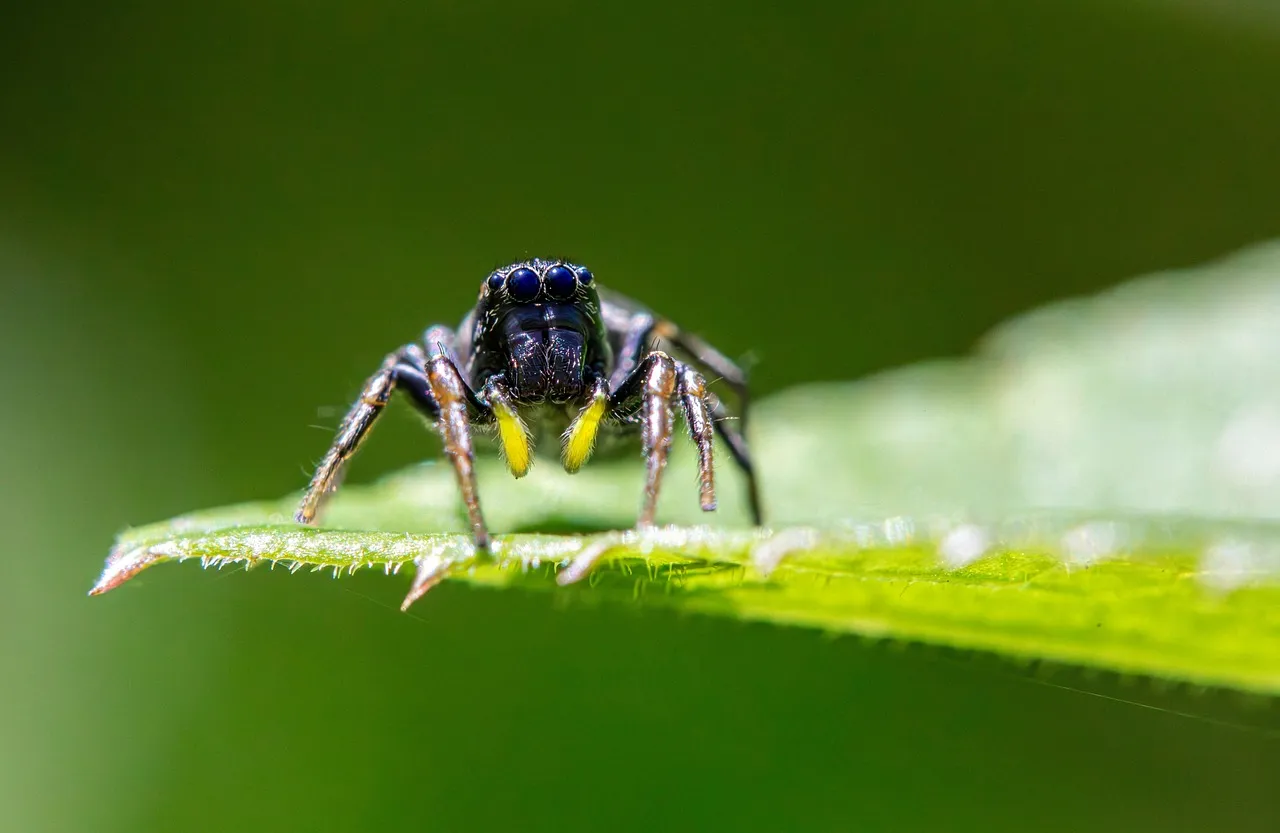
The idea that jumping spiders can plan detours before they start moving may sound like a quirky science headline, but it carries a serious punch. It chips away at the comfortable story that advanced planning belongs mainly to big-brained animals and puts a surprising little arachnid on the same conceptual map as clever birds and problem-solving mammals. For me, the evidence is strong enough to say that calling their behavior “mere instinct” is selling them short; these spiders are running a compact, efficient version of something we should fairly call cognition.
Does that mean they are conscious in the way we are, or that they “know” they are making a plan? We honestly do not know, and pretending otherwise would be hype. But we do know this: a brain does not need to be large to be capable, and a life form does not need to be familiar to be impressive. Next time you see a tiny jumping spider pausing, turning its head, and then confidently walking off in a seemingly odd direction, it might not be lost at all. It might just be following a plan you cannot see – would you have guessed that from something that small?

- Animal Cognition Says Jumping Spiders Can Plan Detours Before They Start Moving - August 16, 2026
- Ornithologists Say Clark's Nutcrackers Can Remember Thousands of Seed-Hiding Locations - August 16, 2026
- Animal Cognition Says Parrots Can Understand More About Quantity Than Simple Mimicry Explains - August 16, 2026