


When you talk to your dog, asking if they want to go for a “walk” or tell your cat it’s “dinner time,” you’ve likely noticed their excited reactions. But is this true comprehension of human language, or simply a response to familiar sounds, your tone of voice, or other contextual cues? This question has fascinated animal lovers, pet owners, and scientists alike for generations. Recent advancements in neuroscience, cognitive psychology, and animal behavior research have shed fascinating new light on animals’ capacity to understand human words and language. From dogs that appear to know hundreds of object names to birds that can grasp basic grammar, the latest research reveals that animal language comprehension may be more sophisticated than we previously thought.
The Evolution of Animal-Human Communication Research
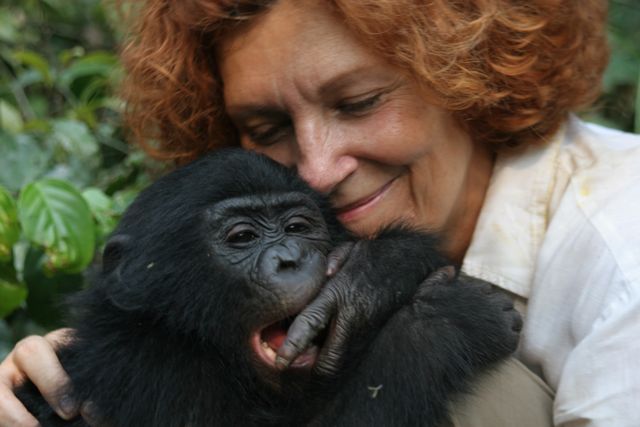
Scientific investigation into animal language abilities has evolved dramatically over the past century. Early behaviorists like B.F. Skinner viewed animal responses to human words as simple conditioning—animals learned to associate certain sounds with rewards or actions. This perspective minimized any cognitive understanding, attributing responses to training rather than comprehension. However, beginning in the 1960s with pioneering studies teaching sign language to great apes, researchers began questioning these limited views. Today’s research employs sophisticated brain imaging techniques, carefully controlled experiments, and observational studies in natural settings. Modern animal cognition research has moved beyond asking if animals can respond to words to exploring how and what they understand about human language, revealing cognitive abilities far more complex than previously acknowledged.
Dogs: Our Most Studied Language Partners

Dogs represent the most extensively studied animals regarding human language comprehension, partly due to their long coevolution with humans spanning at least 15,000 years. Research from Dr. Brian Hare’s Duke Canine Cognition Center suggests that this shared evolutionary history has uniquely positioned dogs to understand human communication. The breakthrough study of Border Collie Rico in 2004 demonstrated his ability to learn over 200 object names and even apply “fast mapping”—the ability to infer the name of a new object among familiar ones, a skill previously thought unique to human children. More recently, researchers in Hungary used fMRI brain scans to reveal that dogs process meaningful words in the left hemisphere of their brain (similar to humans) while processing intonation in the right hemisphere, suggesting they analyze both what we say and how we say it. Studies also show the average pet dog can learn to recognize about 165 words, with exceptionally gifted dogs recognizing up to 1,000 words—comparable to a 3-year-old child.
The Remarkable Word Learning of Border Collies

Border Collies have consistently demonstrated exceptional language abilities in research settings. Beyond Rico, another Border Collie named Chaser, trained by psychologist John Pilley, learned more than 1,000 distinct words for different toys and could respond to commands involving these objects with the correct actions. What makes these findings particularly significant is that Chaser demonstrated understanding of both nouns and verbs, and could combine them in novel ways—showing rudimentary grammar comprehension. In a more recent ongoing project called the “Genius Dog Challenge,” researchers are studying several Border Collies worldwide who can learn new toy names after just a few repetitions. Dr. Claudia Fugazza’s research at Eötvös Loránd University shows these dogs can remember new words for months without additional training and can learn through social inference—picking up word meanings by observing human interactions rather than through direct training, which suggests deeper cognitive processes than simple association.
Cats: More Attentive Than We Think

While cats have the reputation of being more independent and less responsive to human language than dogs, recent research suggests they understand more than they let on. A 2019 study from the University of Tokyo found that cats can distinguish their names from other similar-sounding words, even when spoken by strangers. Research led by Dr. Atsuko Saito demonstrated that cats displayed recognition behaviors such as ear and head movements when hearing their names, suggesting they’ve learned to identify this specific word pattern. Unlike dogs, cats typically don’t show obvious behavioral responses to human language, which has historically made their cognitive abilities harder to study. However, new research methods focusing on subtle attention cues rather than overt responses are revealing that cats recognize not only their names but potentially dozens of words related to their routine, including “treat,” “dinner,” and “play.” The difference appears to be not in comprehension but in motivation to respond—cats understand but choose when to acknowledge that understanding.
Primates and Language: Our Closest Relatives
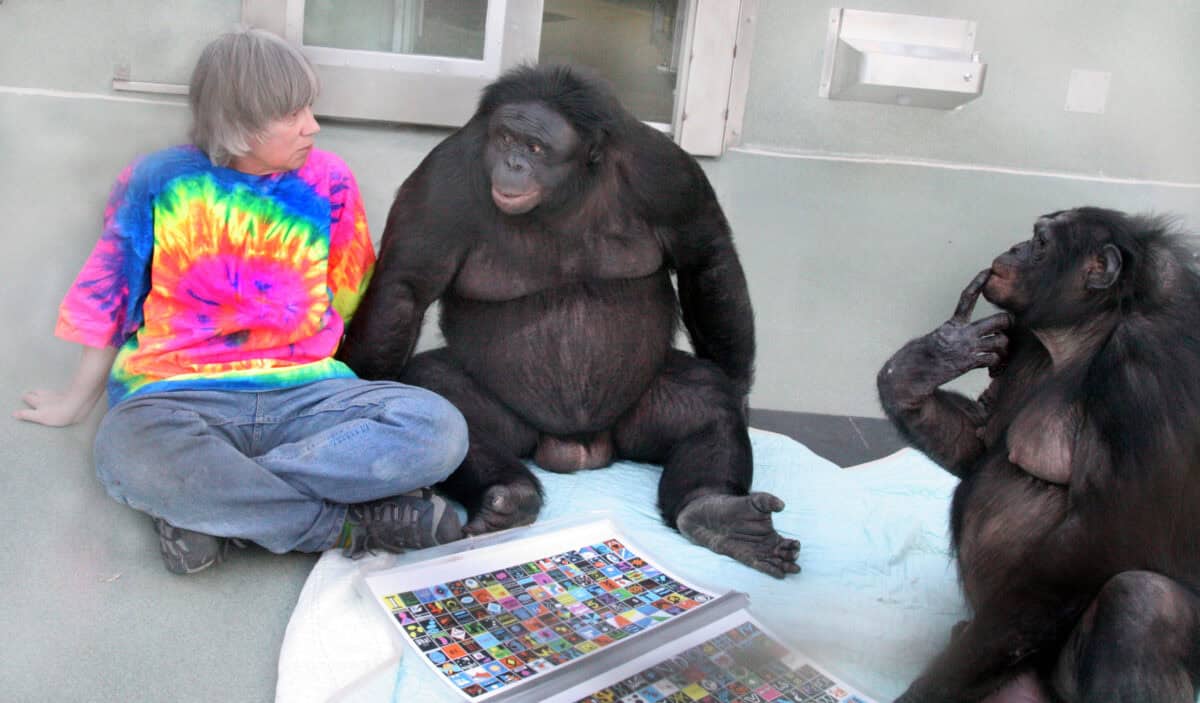
As our closest evolutionary relatives, non-human primates have demonstrated significant capacity for human language comprehension. Kanzi, a bonobo at the Great Ape Trust, has shown understanding of approximately 3,000 English words and can respond to spoken sentences, even when they contain novel combinations of familiar words. Koko, the famous gorilla who passed away in 2018, mastered over 1,000 signs in American Sign Language and understood approximately 2,000 spoken English words according to her long-time trainer Dr. Penny Patterson. While some linguists have questioned the extent of true language use versus imitation in these cases, recent controlled studies support genuine comprehension abilities. Research by Dr. Klaus Zuberbühler at the University of St. Andrews demonstrates that even wild primates like Diana monkeys can distinguish between different predator alarm calls, suggesting natural language processing abilities. The distinction between human and non-human primate language abilities appears to be one of degree rather than kind, with syntactic complexity and generative grammar remaining primarily human domains.
Birds: Surprising Linguistic Capabilities

Birds, despite their evolutionarily distant relationship to mammals, display remarkable linguistic abilities. Alex, an African grey parrot studied by Dr. Irene Pepperberg for 30 years until his death in 2007, demonstrated understanding of over 100 English words, could identify colors, shapes, and materials, and even grasped simple numerical concepts. What made Alex’s achievements remarkable was not just vocabulary memorization but his apparent comprehension of concepts these words represented. More recent research with ravens at the University of Vienna has shown they can learn to recognize human voice patterns and associate specific sounds with particular trainers or situations. Researchers at the University of Tübingen have demonstrated that some songbirds can recognize syntactic patterns in acoustic signals, suggesting a rudimentary understanding of grammar. The advanced vocal learning abilities of birds are supported by specialized brain structures that, while anatomically different from mammalian language centers, serve similar functions—a fascinating example of convergent evolution that helps us understand the fundamental neurological requirements for language processing.
Marine Mammals: Communication in Aquatic Environments

Dolphins and other marine mammals have demonstrated significant language comprehension abilities despite evolving in environments vastly different from our own. Research at the Dolphin Research Center in Florida has shown that bottlenose dolphins can understand dozens of human gestures and spoken words when paired with hand signals. In groundbreaking work, Dr. Louis Herman demonstrated that dolphins could comprehend artificial languages with different word orders, suggesting they grasp fundamental aspects of syntax. In a 2016 study, researchers at the Dolphin Communication Project recorded dolphins responding appropriately to recorded human voices played underwater, recognizing specific commands without visual cues. Orcas in captivity have shown similar capabilities, responding to specific trainer vocalizations and demonstrating memory for human words over periods of years. The language capabilities of these marine mammals are particularly notable given that they evolved in an environment where visual communication is limited, suggesting that advanced auditory processing and language comprehension may have evolved independently multiple times across different animal lineages.
The Role of Brain Structure in Language Comprehension

Advances in comparative neuroscience have revealed fascinating insights into how animal brains process human language. While humans have specialized language processing areas like Broca’s and Wernicke’s areas, animals process language using different but analogous neural pathways. Research from Dr. Attila Andics at Eötvös Loránd University used fMRI scanning to show that dogs process vocabulary in brain regions similar to humans. These studies revealed that meaningful words activate the left hemisphere of dogs’ brains regardless of intonation, while emotional intonation is processed in the right hemisphere—a pattern strikingly similar to humans. In birds, despite having dramatically different brain structures from mammals, language processing occurs in the nidopallium, which serves functions comparable to the mammalian cerebral cortex. Neuroscientists studying primate brains have identified homologous structures to human language areas, although with less specialization. These findings suggest that while the specific neural architecture differs across species, certain fundamental principles of language processing may be universal, possibly reflecting convergent evolution toward efficient solutions for processing complex communication signals.
Beyond Words: Understanding Context and Tone

Research increasingly shows that animals don’t just recognize individual words but understand contextual and emotional aspects of human speech. Studies at the University of Sussex have demonstrated that dogs can distinguish between happy, neutral, and angry human vocalizations, showing appropriate emotional responses to each. Similarly, horses have been shown to react differently to positive versus negative human vocal tones when being handled. A 2018 study from the University of York revealed that dogs respond differently to the same words when spoken in “dog-directed speech” (similar to baby talk) versus adult-directed speech, showing more attention and bonding behaviors with the former. This suggests animals are processing not just the words themselves but the emotional content and context in which they’re delivered. Research from the Max Planck Institute has shown that some animals, particularly social species, can integrate multiple communication channels simultaneously—processing words, tone, body language, and environmental context to extract meaning from human communication in a sophisticated multimodal way that goes well beyond simple word recognition.
Innovative Research Methods Revealing New Insights

Breakthroughs in animal language comprehension research have been driven by innovative methodologies that overcome previous limitations. Eye-tracking technology has been particularly revolutionary, allowing researchers to measure where animals look when hearing specific words without requiring trained responses. In studies at the University of Lincoln, dogs consistently looked toward objects when their names were spoken, even without commands to do so, revealing passive word knowledge. Another cutting-edge approach involves EEG (electroencephalography) measurements of animal brain activity in response to expected versus unexpected words. Research from the Clever Dog Lab in Vienna using this technique showed dogs develop expectations about which words should follow others in familiar phrases, suggesting they track speech patterns. Functional near-infrared spectroscopy (fNIRS), which measures brain activity through the skull without requiring animals to remain motionless in MRI machines, is enabling studies of conscious animals in more natural settings. These technological advances allow researchers to study animal language comprehension without the confounding effects of training, revealing more natural cognitive processes and potentially identifying far greater language abilities than previously recognized.
The Controversy: True Understanding vs. Clever Association

The scientific community remains divided on what constitutes genuine language comprehension versus sophisticated associative learning in animals. Critics like linguist Noam Chomsky argue that animals lack the recursive grammar and generative capacity that define true language. They suggest what appears to be word understanding may actually be responding to a combination of contextual cues, human body language, and classical conditioning rather than abstract symbol processing. Defenders of animal language comprehension point to studies controlling for such factors. For example, research by Dr. Federico Rossano at UC San Diego uses methodologies where humans are blindfolded or giving commands from another room to eliminate visual cueing. A middle-ground perspective emerging from comparative cognition suggests animals may understand words differently than humans do—not through abstract linguistic systems but through rich associative networks that connect sounds to objects, emotions, and outcomes in sophisticated ways. This debate reflects broader philosophical questions about the nature of understanding itself and whether different types of comprehension might exist across species with fundamentally different cognitive architectures.
Practical Applications: How Research Informs Human-Animal Relationships

Research on animal language comprehension has significant practical applications for animal training, welfare, and human-animal relationships. Service dog training programs have incorporated findings showing dogs process both words and intonation, developing more effective command structures that optimize canine understanding. Veterinary practices are implementing communication protocols based on research showing that calm, positive speech reduces stress hormones in animals during examinations and procedures. Some wildlife conservation efforts have used findings about specific species’ comprehension abilities to develop deterrent systems using human voice recordings that effectively communicate danger to animals without causing harm. For pet owners, this research provides evidence-based guidance for more effective communication—such as using consistent vocabulary, combining words with appropriate tones, and understanding the limitations of animal comprehension. Perhaps most importantly, this research has led to improvements in animal welfare standards by demonstrating that many species understand more about their environment and human intentions than previously recognized, supporting the case for more humane treatment across contexts from laboratories to farms to zoos.
The latest research on animal language comprehension reveals a continuum of abilities across species, with some animals demonstrating sophisticated understanding of human words, tones, and even basic grammar. While no non-human animals appear to process language with the full complexity that humans do, the gap is smaller than many previously believed, with cognitive differences being matters of degree rather than kind. The evidence strongly suggests that many species—particularly those with long histories of co-evolution with humans—have developed specialized neural mechanisms for processing human communication that go beyond simple conditioning. As research methods continue to advance, particularly with non-invasive brain imaging and eye-tracking technologies, we are likely to discover even more impressive language comprehension abilities across the animal kingdom. These findings not only deepen our understanding of animal cognition but also raise profound questions about consciousness, the nature of understanding, and our ethical responsibilities toward the intelligent beings with whom we share our planet.

- How to Attract Pollinators Without Using Sugar Water - July 19, 2026
- Coastal Creatures That Appear at Low Tide in Oregon - July 19, 2026
- How Arctic Wolves Survive in the Harshest U.S. Winters - July 19, 2026