

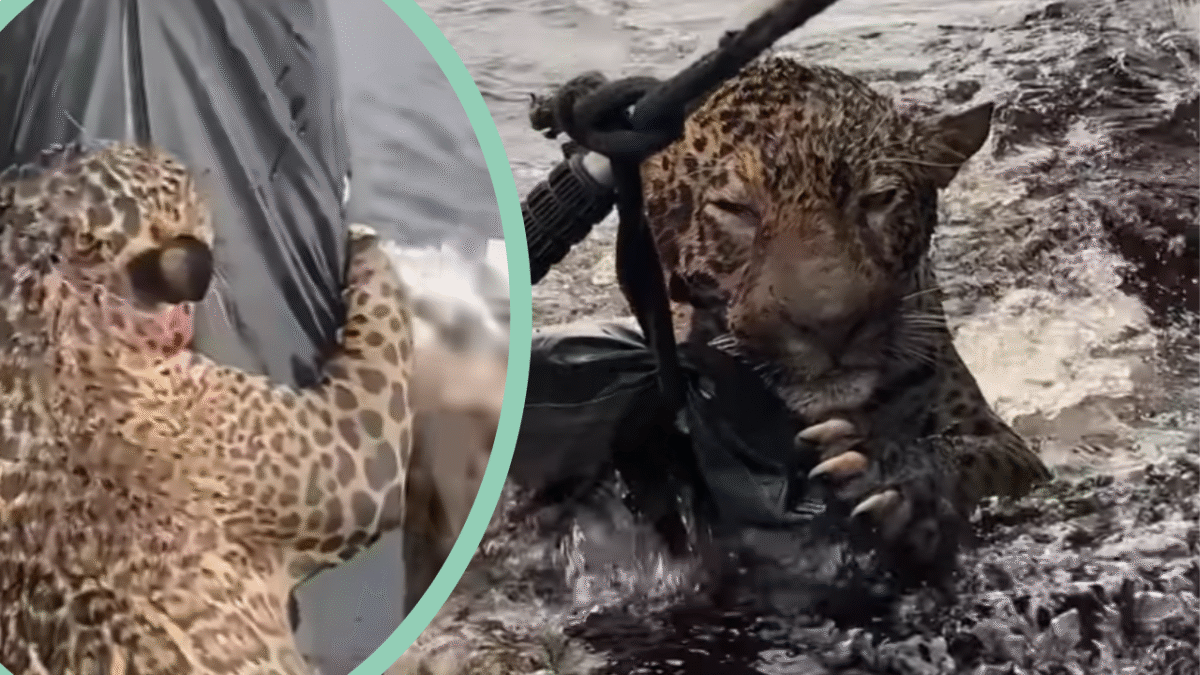
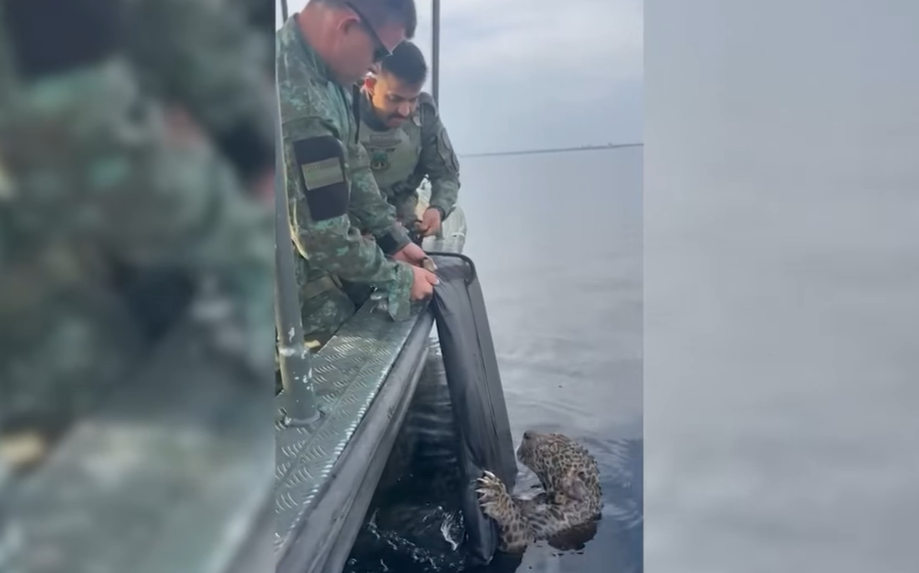
On October 1, 2025, authorities in Brazil launched a tense and emotional rescue operation after spotting a jaguar struggling in the waters of the Rio Negro. The big cat, visibly weak and wounded, swam toward a boat, and officers fashioned a makeshift flotation device so it could rest instead of fighting the current.Jaguar being helped by army. Source: YouTube/AFP
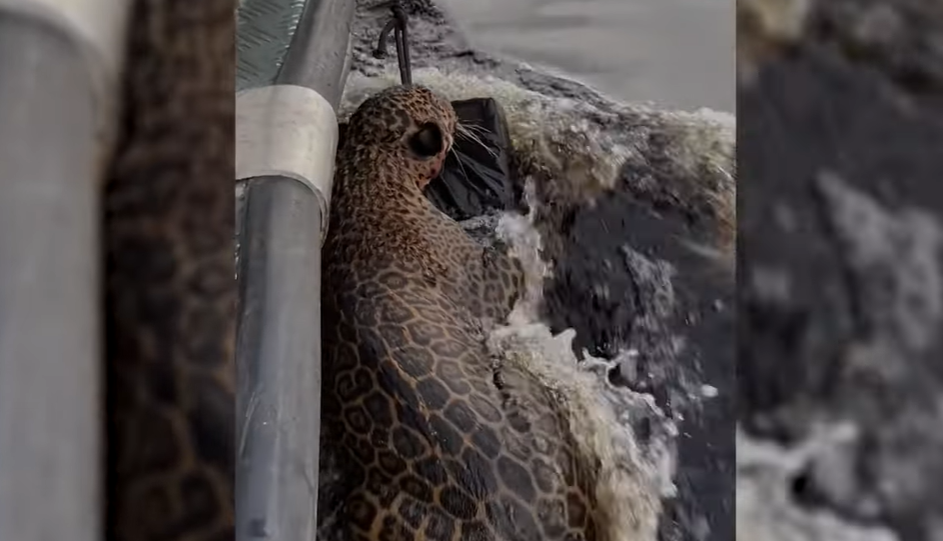
In the eerie but hopeful video footage, you can see the jaguar cling to the device, allowing the rescuers to guide it toward safety.Once the animal was secured, the vessel moved slowly toward land, carrying the exhausted feline. Specialists from the Federal University of Amazonas (UFAM) and the State Secretariat for Animal Protection (Sepet) were waiting, ready to stabilize and transport the jaguar to veterinary care.
What the veterinarians found: wounds, bullets, and broken teeth
After the rescue, examination revealed the jaguar had sustained multiple gunshot wounds, with fragments of bullets lodged beneath its skin.The veterinarians also documented several broken teeth, suggesting that the injuries might have been inflicted some time ago, or perhaps during a struggle.While the animal is now under intensive care, officials have not yet determined who shot it or why.The jaguar remains under close monitoring as specialists try to assess whether it can eventually be returned to the wild.
Jaguars in Brazil: a symbol under threat
Brazil is home to roughly half of the world’s remaining jaguar population, with many of them inhabiting the dense Amazon and adjacent wetlands.
These cats are iconic, powerful predators — yet they face multiple existential pressures.Their habitats are shrinking due to deforestation, agricultural expansion, mining, and infrastructure projects. But perhaps most tragically, jaguars also suffer from direct human threats like poaching and illegal wildlife trade.Poachers sometimes kill jaguars for their skins or body parts; in other cases, cats are killed in retaliation for presumed livestock predation.
In the region around the Amazon, anti-poaching efforts are especially difficult. The remoteness, the vastness of territory, and limited resources for enforcement make it easier for illegal actors to operate. Conservationists have documented jaguar poaching and shootings in various parts of Brazil and its Amazonian neighbors. (While this specific rescue case may not yet be linked to a broader trafficking ring, it underscores how vulnerable such animals are.)
Why this rescue matters — and what comes next
The rescue operation on October 1 reminds us that jaguars, though majestic, are often at the mercy of human actions. This particular animal’s survival hinges not just on medical care, but on whether we can curb the very threats it faces.
First, veterinary teams must stabilize the jaguar and determine whether it can recover fully enough to re-enter the wild. Then comes a harder question: even if released, will it survive in an environment where threats like illegal shooting still lurk? Second, authorities must investigate who shot this jaguar, and whether it’s part of a larger pattern of poaching or illegal wildlife trade. Identifying perpetrators may help deter future crimes.
Finally, stories like this raise awareness. The image of a wounded jaguar clinging for life in a river can galvanize public support, funding, and political will for stronger protection of jaguar habitats and stricter enforcement against poachers.
In a region where half the world’s jaguars roam, every life lost is a blow to the species’ future. Rescues are vital, but preventing the need for rescues in the first place is the ultimate goal.
