


Have you ever gazed into your dog’s eyes while speaking and felt certain they understood every word? Many dog owners swear their pets comprehend human language, from simple commands to complex sentences. This seemingly telepathic connection between humans and their canine companions has fascinated scientists, behaviorists, and pet owners alike for generations. But beyond our anecdotal experiences and heartfelt beliefs, what does science tell us about dogs’ ability to understand human words? This article explores the fascinating cognitive abilities of our four-legged friends, examining what research reveals about how dogs process, interpret, and respond to human language.
The Evolution of Dog-Human Communication

The remarkable relationship between humans and dogs began approximately 15,000-30,000 years ago when wolves were first domesticated. This lengthy coevolution has significantly shaped how dogs interact with humans, including their ability to respond to our communicative cues. Unlike other domesticated animals, dogs evolved specifically alongside humans as companions and working partners, creating a unique interspecies bond.
This evolutionary history has equipped dogs with an exceptional ability to read human gestures, facial expressions, and vocalizations. Research suggests that during domestication, dogs developed specific cognitive adaptations that enhanced their ability to communicate with humans. These adaptations include heightened sensitivity to human vocal cues and an innate tendency to look to humans for information—skills that even their closest relatives, wolves, don’t possess to the same degree.
Word Recognition in Dogs
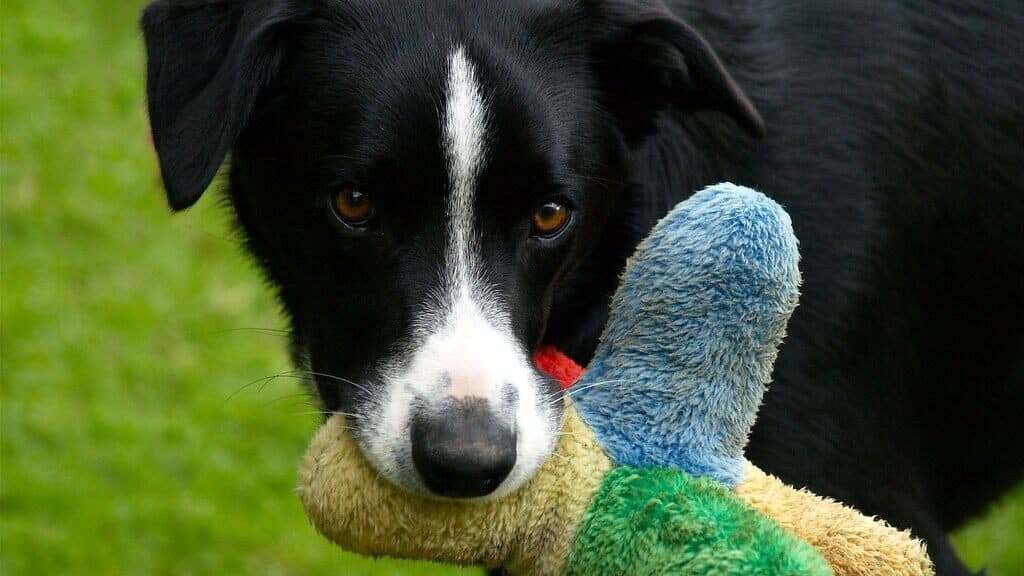
Scientific studies have confirmed that dogs can indeed recognize and respond to human words. Research by Dr. Stanley Coren suggests that the average dog can learn about 165 words, with exceptionally intelligent breeds potentially understanding up to 250 words. This vocabulary size is roughly equivalent to that of a two-year-old human child. Dogs appear particularly adept at learning nouns (especially names of people, toys, and places) and verbs associated with actions they can perform.
In a groundbreaking 2004 study, a Border Collie named Rico demonstrated knowledge of over 200 different words, primarily names of toys. More impressively, Rico exhibited “fast mapping”—the ability to infer the names of new objects by process of elimination, a skill previously thought unique to humans and some primates. This suggests dogs possess more sophisticated word-learning mechanisms than previously believed.
The Science Behind Dogs’ Word Processing
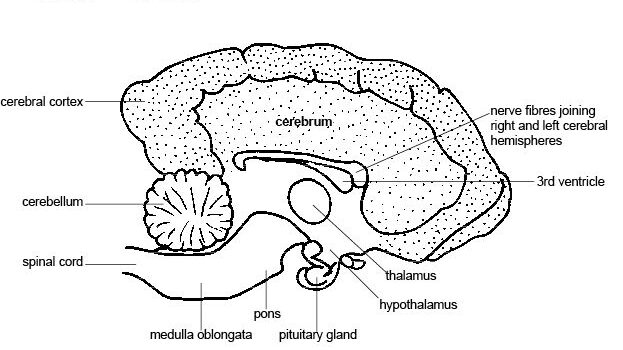
Neuroscience has provided fascinating insights into how dogs process human language. In a 2016 study published in Science, Hungarian researchers used functional magnetic resonance imaging (fMRI) to scan dogs’ brains while they listened to their trainers speak. The results showed that dogs process vocabulary and intonation in different brain hemispheres, similar to humans. The left hemisphere responded to meaningful words regardless of intonation, while the right hemisphere analyzed emotional tone.
This research demonstrated that dogs’ brains distinguish between words they know and gibberish, and between praise and neutral tones. Most significantly, the reward centers in dogs’ brains showed the strongest activation when meaningful praise words were spoken with positive intonation. This suggests dogs process both the content and emotional context of human speech, integrating these aspects for comprehensive understanding.
Do Dogs Understand Grammar?
While dogs can learn impressive vocabularies, their understanding of language structure appears more limited. Research indicates dogs primarily respond to individual words rather than grammatical structure. They don’t seem to comprehend word order or complex sentence construction the way humans do. For instance, dogs typically can’t distinguish between “bring the ball to the toy” and “bring the toy to the ball,” focusing instead on the familiar nouns they recognize.
However, some studies suggest dogs may grasp simple aspects of syntax. They often respond differently to the same words spoken in different orders or with varying intonation patterns. This indicates they may perceive some basic structural patterns in human speech, even if they don’t process grammar in the human sense. Their understanding appears contextual and pragmatic rather than based on formal linguistic rules.
The Role of Tone and Body Language

Dogs rely heavily on non-verbal cues when interpreting human communication. Research consistently shows that dogs pay close attention to tone of voice, facial expressions, gestures, and body posture when processing human speech. In many cases, these non-verbal signals may be more important than the actual words spoken. This explains why dogs sometimes seem to “understand” even when we speak nonsense words with familiar intonation patterns.
A fascinating study demonstrated this phenomenon by having owners give commands to their dogs using either words alone, gestures alone, or contradictory combinations (e.g., saying “sit” while gesturing “lie down”). The results showed dogs prioritized visual cues over verbal ones when the two conflicted. This suggests that while dogs do process human words, they integrate this information with other communicative signals to form a complete picture of what we’re trying to convey.
Breed Differences in Language Comprehension

Not all dogs demonstrate equal facility with human language. Breed differences significantly impact a dog’s ability to learn and respond to words. Working breeds that have been selectively bred for tasks requiring close human cooperation—such as Border Collies, German Shepherds, Poodles, and retrievers—typically excel at learning human vocabulary. These breeds often demonstrate faster acquisition of new words and larger overall vocabularies.
These breed-specific differences reflect both genetic predispositions and the historical purposes for which different dogs were bred. Scent hounds, for instance, were selected for independent tracking rather than responding to human direction, and consequently may appear less responsive to verbal commands. However, individual variation within breeds is substantial, and factors like training methods, environmental enrichment, and the dog-human relationship significantly influence language learning regardless of breed.
How Dogs Learn Words

Dogs primarily learn words through association and conditioning rather than through the grammatical understanding that characterizes human language acquisition. When teaching a dog a new word, we typically pair the sound with a specific object, action, or consequence repeatedly until the association forms. This associative learning differs fundamentally from how humans acquire language, which involves innate grammatical structures and the ability to generate novel sentences.
The most effective word learning occurs when dogs can directly interact with the referenced object or action. For example, dogs learn toy names most readily when they can see and manipulate the toy while hearing its name. Similarly, action words like “sit” or “fetch” are learned in the context of performing or witnessing the behavior. Consistency in word use, immediate feedback, and positive reinforcement significantly enhance dogs’ ability to build these word-meaning associations.
Famous Case Studies of “Word-Smart” Dogs

Several exceptional dogs have demonstrated remarkable word learning abilities that have advanced our understanding of canine cognition. Perhaps the most famous is Chaser, a Border Collie trained by psychologist John Pilley, who learned over 1,000 proper nouns—names for different toys and objects. Chaser could distinguish between these items and respond to various commands involving them, demonstrating both impressive memory and cognitive flexibility.
Another noteworthy example is Rico, the Border Collie who participated in formal studies at the Max Planck Institute. Beyond his 200-word vocabulary, Rico demonstrated inferential reasoning by correctly retrieving new toys with names he’d never heard before. More recently, a dog named Stella made headlines using a soundboard with programmable buttons to “speak” words and simple phrases. While controversial among researchers, these case studies suggest that under ideal circumstances with dedicated training, some dogs can develop language skills that approach those of young children.
Teaching Your Dog New Words

If you’re interested in expanding your dog’s vocabulary, research suggests several effective strategies. First, consistency is crucial—always use the same word for the same object or action. Short, distinct words with different phonetic patterns are easier for dogs to distinguish. Training sessions should be brief but frequent, ideally 5-10 minutes several times daily. Immediate reinforcement when your dog correctly responds to a word significantly enhances learning.
Incorporate play and positive reinforcement rather than drilling or repetitive exercises. Dogs learn best when they’re enjoying themselves and when words are relevant to activities they find engaging. Start with concrete nouns (toys, people, places) and action words before attempting more abstract concepts. Most importantly, be patient—dogs typically need many repetitions before fully learning a new word, and some dogs naturally learn more quickly than others.
The Limits of Canine Language Comprehension

Despite dogs’ impressive word-learning abilities, important limitations distinguish their understanding from human language comprehension. Dogs don’t appear to grasp abstract concepts or categories in the way humans do. They struggle with words representing ideas rather than tangible objects or actions. For instance, concepts like “tomorrow” or “fairness” likely remain beyond canine comprehension, even in the most linguistically talented dogs.
Additionally, dogs show limited ability to generalize words across contexts. A dog might learn “ball” refers to a specific toy but fail to recognize that the word applies to all spherical toys. Their understanding tends to be context-specific rather than abstract or categorical. Finally, dogs don’t appear to use language generatively—they don’t combine known words to create novel meanings or understand recursive structures. These limitations reflect fundamental differences in how canine and human minds process linguistic information.
The Future of Research on Dog Language Abilities

Exciting developments in animal cognition research promise to further illuminate dogs’ language capabilities. Advanced brain imaging techniques, including more dog-friendly fMRI procedures, allow researchers to observe neural activity as dogs process human speech. These studies are revealing which brain regions activate when dogs hear familiar words versus nonsense sounds, providing unprecedented insight into canine cognition.
Comparative studies examining differences between wolves and dogs may further clarify which aspects of language processing evolved specifically during domestication. Meanwhile, research using innovative communication tools—such as soundboards with recordable buttons that dogs can press to “speak” words—is exploring whether dogs can use symbolic communication more actively. While controversial, these approaches may reveal new dimensions of dogs’ language capabilities and further our understanding of the remarkable cognitive bridge between humans and their oldest animal companions.
The science is clear: dogs do understand human words, though not in the same way we do. Their comprehension is based primarily on association rather than grammatical understanding, combining word recognition with sensitivity to tone, context, and body language. Dogs demonstrate a remarkable ability to learn hundreds of words through consistent training and positive reinforcement, with some exceptional individuals showing vocabulary sizes comparable to those of young children.
As research continues to advance our understanding of canine cognition, one thing remains certain: the connection between humans and dogs transcends the limitations of language, creating a bond that speaks volumes about our shared evolutionary journey.

- 21 Scary Creatures You Might Run Into While Hiking In The U.S - June 3, 2026
- The Difference Between Turtles and Tortoises—Explained - June 3, 2026
- What Makes Owls the Silent Predators of the Night? - June 3, 2026