
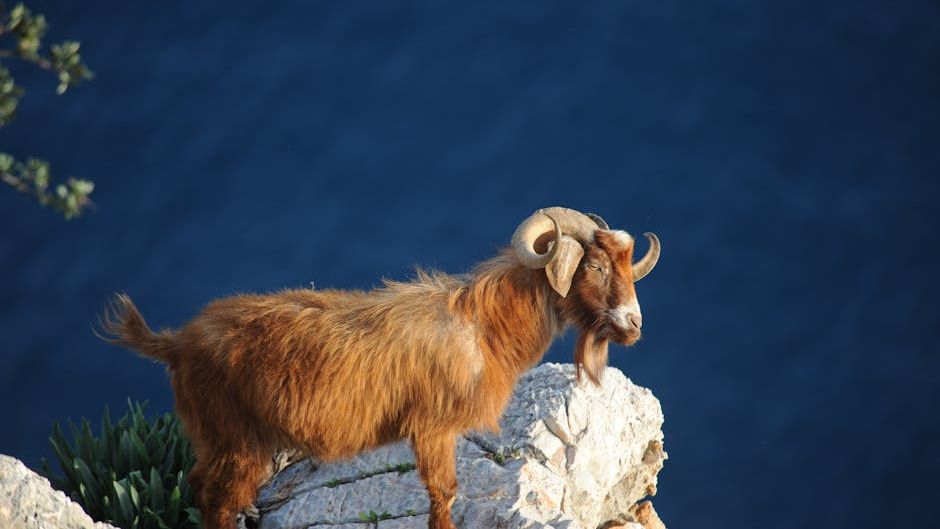
There’s something quietly fascinating about a creature that is half mountain goat, half fish. On the surface, it doesn’t make much biological sense. A goat built for rocky cliffs sharing a body with a tail designed for deep water seems almost absurd. Yet this strange hybrid has persisted in human imagination for thousands of years, across multiple civilizations, and now sits permanently etched into the night sky.
Among all twelve signs of the zodiac, Capricorn stands out with its unique duality: a creature combining the form of a goat with the tail of a fish. This intriguing symbol, known as , is not merely a celestial figure; it carries rich mythology, symbolism, and an enigmatic essence that reflects the complexities of human nature. The deeper you look into its story, the more layers you find waiting underneath.
#1: The Ancient Mesopotamian Roots of
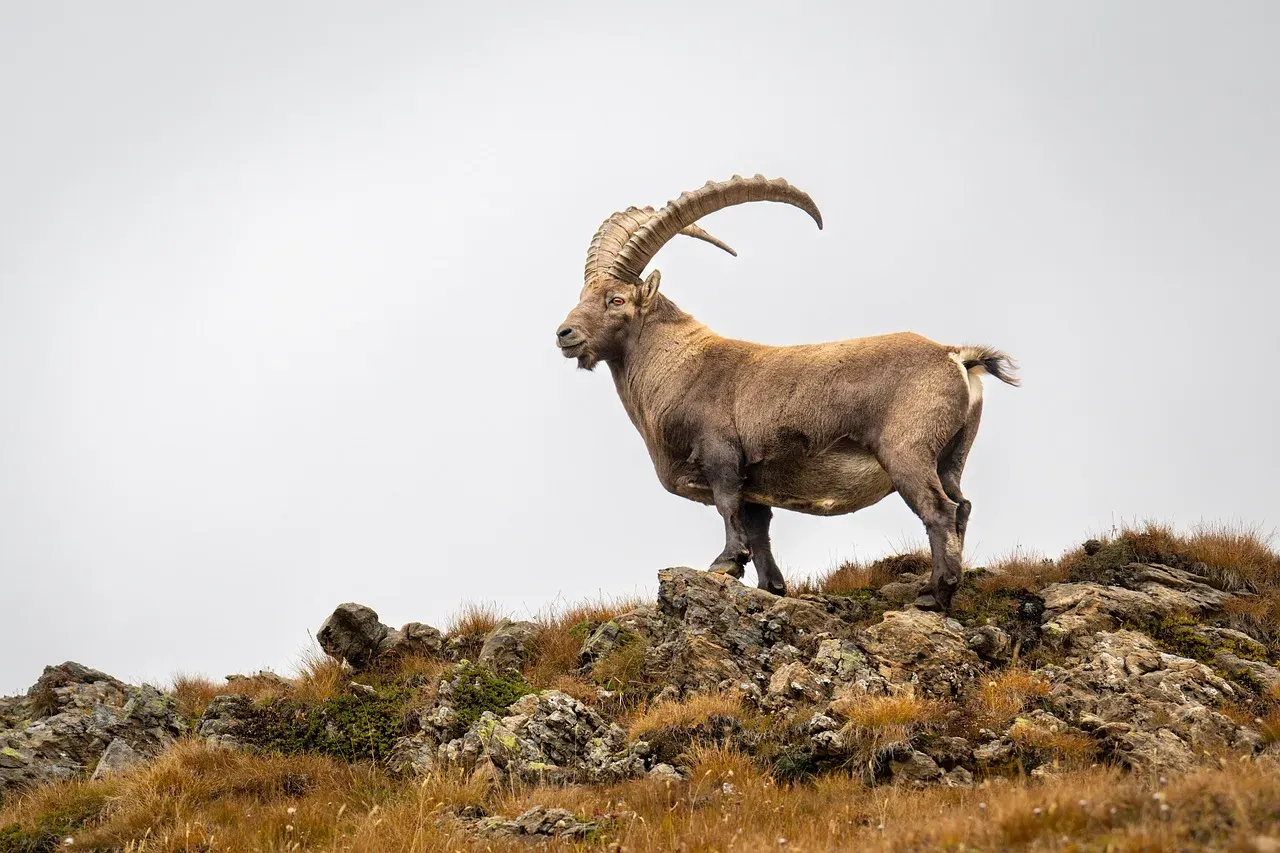
The earliest written records of Capricorn emerge from Mesopotamian clay tablets dating to the second millennium BCE. Babylonian astronomers called this constellation MULSUḪUR.MAŠ, meaning “goat-fish,” and they had already recognized its hybrid form. They associated it with Ea, their god of wisdom and water. That’s not a minor regional myth. That’s a deity tied to creation itself.
The roots of Capricorn’s mythology can be traced back to ancient Mesopotamia, around 5000 years ago. The Sumerians first noted the constellation, associating it with the god Enki, the deity of water, wisdom, and creation. Enki was often depicted with the body of a goat and the tail of a fish. By the 2nd millennium BCE the goat-fish became associated with Enki, god of fresh water, wisdom and magic. The Babylonians knew Enki as Ea and called him the “antelope of the ocean.”
The constellation was first attested in depictions on a cylinder-seal from around the 21st century BCE, and was explicitly recorded in the Babylonian star catalogues before 1000 BCE. What’s striking is the consistency. Civilization after civilization looked at roughly the same cluster of dim stars and arrived at the same image: a creature bridging land and sea. That kind of cross-cultural agreement tends to point toward something deeper than coincidence.
#2: Pan, Typhon, and the Moment That Became a Constellation
One of the most well-known myths surrounding is that of the god Pan. Flamboyant, playful, and half-goat, Pan was often depicted with the body of a goat and the legs of a fish, roaming the forests and shepherding lost souls. As the story goes, Pan transformed into a Sea Goat to escape the monstrous Typhon, a fearsome dragon-like creature sent by Gaia to challenge the gods of Olympus.
In the confusion and panic, Pan jumped into the Nile River, intending to change into a fish, but only his lower half changed while his upper half turned into a goat. When the other gods saw this half-goat, half-fish form, they laughed so much and decided to place an image of it up among the stars, where it became the Capricornus constellation. There’s something very human about that story. Even among gods, transformation under pressure doesn’t always go to plan.
When the gods fled from the monster Typhoeus and hid themselves in animal forms, Aigipan assumed the form of a fish-tailed goat. He later came to the aid of Zeus, stealing back the god’s severed sinews from the giant. As a reward for his service, Aigipan was placed amongst the stars as the constellation Capricorn. The act of courage under chaos, it turns out, earns you an eternal seat in the sky.
#3: Amalthea, Pricus, and the Other Faces of Capricorn
Greek mythology identified the constellation of Capricorn as Amalthea or Amalthia, who was a mountain goat or goat-tending nymph. She acted as a foster mother to Zeus as a baby when his mother Rhea stowed him away in the mountains of Crete, saving him from being eaten by his father Cronos. Legend says that as little Zeus played with Amalthea, he accidentally broke off one of her horns, which he then transformed into the Cornucopia, the horn of plenty.
Pricus was the father of all Sea-Goats, intelligent and honorable creatures who could speak and think as humans. The young Sea-Goats loved to leave the sea and soak up the sun on the beach; the longer they lazed in the sun though, the more they began to resemble regular goats, their fish tails becoming legs, the hot sun addling their brains, causing them to be unable to speak or think.
Realizing that he cannot control the future of his children, Pricus, in his misery, begs Chronos to let him die, as he cannot bear to be the only Sea-Goat left. Taking pity on him, Chronos instead allows Pricus to live in the sky as the constellation Capricorn, where he can see his children from the stars, even on the highest mountain tops. It’s a quieter, more melancholy story than the battle with Typhon. But in many ways, it feels truer.
#4: Saturn’s Rule and the Symbolism of Duality
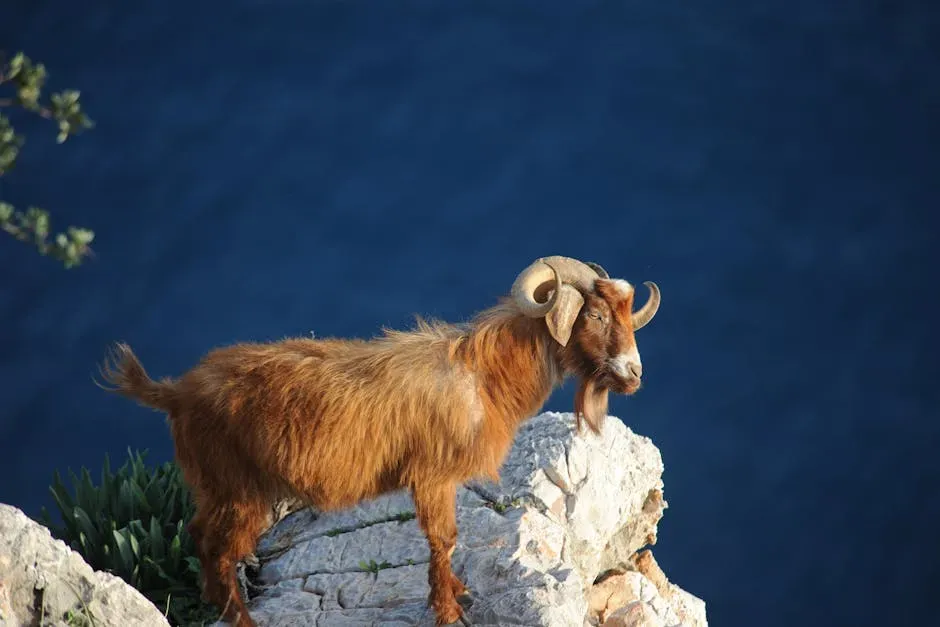
The sea-goat is the symbol for Capricorn, the 10th sign of the zodiac, which is ruled by the stern Saturn, responsible for setting rules and limitations. Torn between land and sea, the half-goat, half-fish needs limits to manage between these two extremes. Symbolizing the dual nature of man and its ability to reach both height and depth, it also reflects the movement of the sun at winter solstice, which appears to plunge into the sea to be reborn.
Some anthropologists suggest the creature represents humanity’s dual nature: earthbound ambitions paired with emotional depths. The goat climbs mountains while the fish navigates oceans, symbolizing mastery over land and sea. When you think about it that way, stops being a strange accident of mythology and starts looking like a deliberately constructed symbol of what it means to be fully human.
Capricorn is also referred to as the “Gateway of the Gods” in both Greek and Roman mythology. This is the portal through which ascending souls free themselves from earthly trappings and pass into the life hereafter. Saturn’s influence on this sign carries real mythological weight: discipline, structure, and the kind of patient persistence that turns ambition into legacy.
#5: Capricorn’s Legacy From the Winter Solstice to Modern Astrology
During the early Bronze Age, Capricornus marked the winter solstice, the day and time of year when the days are their shortest and the nights are at their longest. Due to the rotational axis shift of the Earth, around 130 BCE, the winter solstice no longer occurs in the Capricorn constellation. The solstice still marks the start of the astrological sign of Capricorn in the zodiac.
In modern astrology, the interpretation of Capricorn has evolved but remains deeply rooted in its mythological heritage. The sign has become synonymous with professionalism, leadership, and resilience. Those born under this sign are generally pragmatic, ambitious and disciplined, although they can also be somewhat stoic and pessimistic. Capricorns are typically traditional and serious by nature with an inner state of independence. As masters of self-control, they have the ability to lead the way, make realistic plans, and manage many people who work for them at any time.
The constellation is located in an area of sky called the Sea or the Water, consisting of many water-related constellations such as Aquarius, Pisces and Eridanus. That placement feels intentional in hindsight, even if it was shaped over millennia of observational astronomy. holds its place among the waters of the sky, still climbing, still swimming, just as it always has.
A Final Thought on ‘s Enduring Pull
What makes the mythology of Capricorn so compelling isn’t any single story. It’s the fact that so many independent cultures, separated by language, geography, and centuries, kept returning to the same paradoxical image. A creature of two worlds. A being that refused to be fully categorized.
The mythology of Capricorn, , encapsulates a rich tapestry of meaning beyond the celestial. It speaks to the duality of our existence, reminding us that our ambitions and emotions coexist, often in harmony. That’s not just ancient storytelling. That’s a psychological insight dressed in constellation form.
In my view, Capricorn may be the most psychologically honest symbol in the entire zodiac. It doesn’t promise easy grace or effortless charm. It says: you are built for steep climbs and deep waters at the same time, and you’ll have to learn to carry both. There’s no mythology more honest, or more quietly useful, than that.

- These Endangered Species Are Making Remarkable Comebacks Thanks to Dedicated Efforts - July 17, 2026
- 10 Fascinating Facts About the Badlands: America’s Ancient Fossil Kingdom - July 17, 2026
- 10 Fascinating Facts About Monument Valley: The Ancient Landscape That Shaped the American West - July 17, 2026