

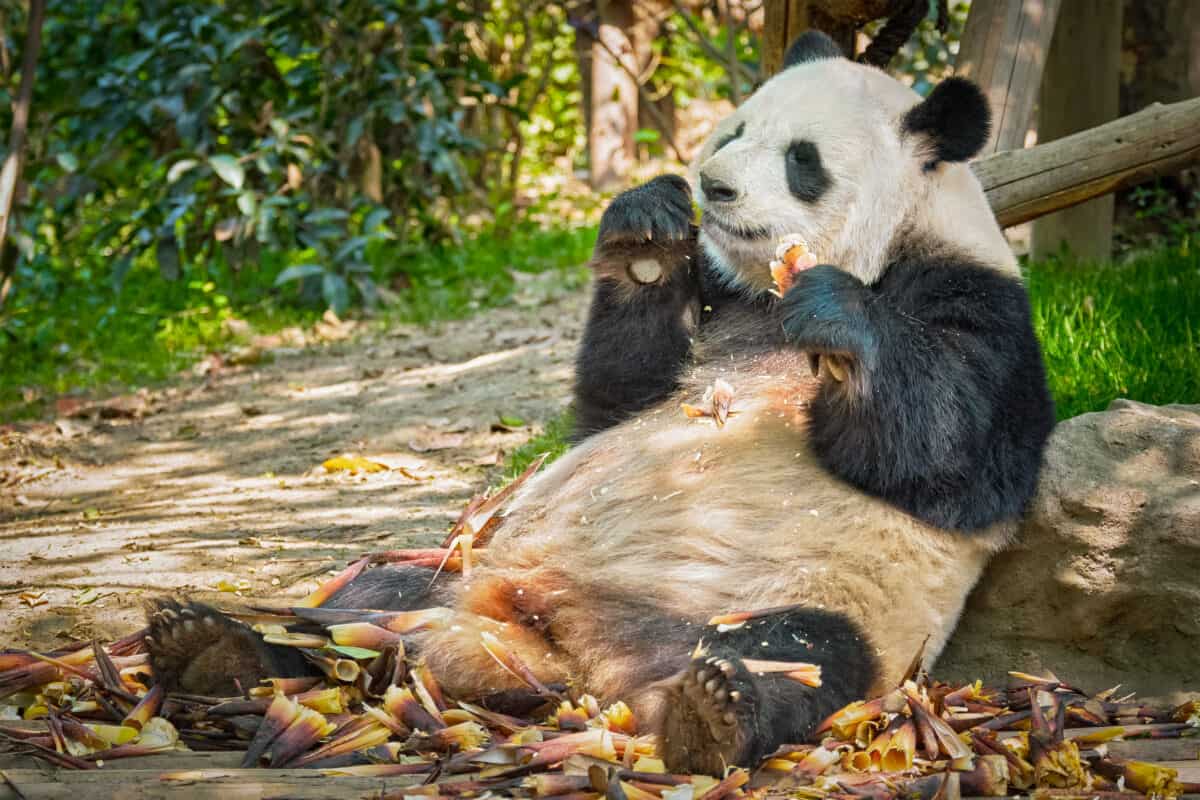
The giant panda, with its distinctive black and white coat and endearing appearance, has become a global symbol of wildlife conservation. While these captivating creatures are adored worldwide, one of their most remarkable behaviors often surprises people: giant pandas spend between 10 to 14 hours each day consuming bamboo. This extraordinary time commitment to eating represents one of the most extensive feeding schedules in the animal kingdom. Their seemingly endless bamboo feast isn’t simply a matter of preference—it’s a fascinating story of evolutionary adaptation, nutritional challenges, and survival. Let’s explore why these iconic bears devote more than half their day to munching on a plant that provides surprisingly little nutritional value, and how this distinctive behavior shapes every aspect of their lives.
The Carnivore That Became a Vegetarian

Despite belonging to the order Carnivora, giant pandas have evolved to subsist almost exclusively on bamboo—a remarkable dietary shift that occurred over millions of years. Taxonomically, pandas are true bears with digestive systems designed for meat consumption, yet approximately 99% of their diet consists of bamboo. This evolutionary U-turn presents one of biology’s most intriguing paradoxes. Scientific evidence, including genetic studies, suggests that pandas began diverging toward herbivory approximately 7 million years ago, gradually losing their taste for meat and developing adaptations for bamboo consumption. Their carnivore ancestry is still evident in their digestive tract, which lacks the specialized bacteria and extended intestines that most herbivores rely on to break down plant matter efficiently.
The Nutritional Challenge of Bamboo

Bamboo presents a significant nutritional challenge for pandas due to its remarkably low caloric density and nutritional value. This woody plant consists primarily of cellulose and other complex carbohydrates that are difficult to digest, containing only about 5-7% protein and minimal fat. Studies show that pandas can digest only about 17% of the bamboo they consume, compared to other herbivores that typically digest 60-70% of their plant food. This inefficient digestion means pandas must consume enormous quantities—between 20 to 40 pounds (9-18 kg) daily—just to meet their basic energy requirements. The panda’s continuous feeding schedule is therefore not gluttony but necessity; they must eat almost constantly to extract sufficient nutrients from their fibrous diet.
Specialized Anatomy for Bamboo Processing

Giant pandas have developed several anatomical adaptations to facilitate their bamboo diet, most notably their distinctive “pseudo-thumb.” This structure, actually a modified wrist bone, works with their five fingers to create a precise grip for manipulating bamboo stems and stripping leaves. Their massive jaw muscles and flat molars are perfectly designed for crushing and grinding tough bamboo fibers, generating forces that can exceed 2,000 newtons—strong enough to potentially crack walnuts. Additionally, pandas possess an esophageal lining that’s significantly thicker than other bears’, protecting them from bamboo splinters. Their enlarged radial sesamoid bone (the pseudo-thumb) stands as one of the most celebrated examples of evolutionary adaptation in mammals, allowing for the specialized manipulation of their challenging food source.
The Daily Feeding Schedule

A giant panda’s day revolves almost entirely around feeding cycles, with their 10-14 hour eating marathon typically divided into periods of intense feeding followed by short rest intervals. They generally begin feeding at dawn, with peak consumption periods occurring in the early morning and late afternoon. Unlike many animals that eat meals at distinct times, pandas’ feeding is nearly continuous throughout their active hours. Between feeding sessions, pandas may nap briefly, typically for 2-4 hours total throughout the day. Their methodical approach to eating involves first selecting appropriate bamboo stems or shoots, then using their pseudo-thumb to strip away the tough outer layers before consuming the more tender interior portions. This time-intensive process contributes significantly to their extended feeding periods.
Energy Conservation Strategies

To compensate for their nutritionally poor diet, giant pandas have evolved remarkable energy conservation strategies. Despite weighing up to 300 pounds (136 kg), pandas maintain a surprisingly low metabolic rate—about 60% of what would be expected for mammals their size. This metabolic adaptation allows them to subsist on their limited caloric intake. Pandas further conserve energy through minimal physical activity beyond feeding, typically traveling less than 0.5 miles per day and avoiding unnecessary exertion. Their largely sedentary lifestyle, punctuated primarily by feeding activities, represents a crucial adaptation to their nutritional limitations. Recent research has also identified specific genetic mutations that help regulate their energy metabolism, enabling pandas to survive on a diet that would be insufficient for most other mammals of comparable size.
Bamboo Selection and Preferences

Despite the apparent uniformity of bamboo, pandas display sophisticated selection behaviors when feeding. They can distinguish between more than 60 bamboo species but typically focus on a handful of preferred varieties in their native range, including arrow, black, and umbrella bamboo. Pandas demonstrate remarkable selectivity, often consuming only specific parts of the plant based on seasonal availability and nutritional content. During spring, they prefer protein-rich shoots; in summer, they focus on leaves; and in autumn and winter, they primarily eat stems which contain more fiber. This strategic rotation helps them maximize nutritional intake throughout the year. Research indicates that pandas can identify subtle differences in bamboo chemical composition, allowing them to select plants with higher protein content and fewer toxic compounds.
Seasonal Feeding Variations

The panda’s feeding patterns undergo significant seasonal shifts in response to bamboo’s natural growth cycles and nutritional changes. During the spring when protein-rich bamboo shoots emerge, pandas may travel greater distances and adjust their feeding schedules to capitalize on this nutritional windfall. These young shoots contain up to three times more protein than mature bamboo and require less processing time, temporarily reducing their feeding hours. Conversely, during winter months when they rely more heavily on fibrous stems, pandas must extend their feeding time even further—sometimes approaching 16 hours daily—to extract sufficient nutrition. These seasonal adaptations often involve altitude migrations, with pandas moving up and down mountain slopes to follow the optimal bamboo growth at different elevations and times of year.
The Bamboo Paradox: Why Not Evolve Further?

Evolutionary biologists have long puzzled over what’s known as the “panda’s paradox”—why haven’t pandas evolved more efficient digestive systems for processing bamboo? The answer likely involves a combination of factors including evolutionary time constraints and genetic limitations. Unlike true herbivores that have co-evolved with plants over tens of millions of years, pandas’ relatively recent dietary shift (within the last 7 million years) means they’re essentially still adapting. Additionally, genetic studies have identified mutations in umami taste receptor genes that diminished pandas’ ability to taste meat, potentially creating an evolutionary “point of no return” toward herbivory. Further research has revealed that pandas lack key genetic components to develop the complex digestive systems seen in other herbivores, leaving them in an evolutionary middle ground—committed to bamboo but without optimal tools to process it efficiently.
Comparing Panda Feeding to Other Bears

The panda’s intensive feeding schedule stands in stark contrast to other bear species. While pandas spend 10-14 hours daily eating, most other bears dedicate only 4-8 hours to feeding activities. Brown bears, for instance, are opportunistic omnivores that consume energy-dense foods like salmon, berries, and nuts, allowing them to meet their nutritional needs more efficiently. Polar bears, specialized carnivores, may gorge for just a few hours when prey is available, then fast for days. The nutritional efficiency difference is dramatic: a salmon-eating grizzly bear can extract approximately 90% of available calories from its food, compared to the panda’s meager 17% extraction from bamboo. This stark contrast highlights how the panda’s specialized diet has forced a complete reorganization of their daily activity patterns compared to their ursid relatives.
Impact on Reproduction and Population

The giant panda’s bamboo-dominated lifestyle significantly impacts their reproductive capacity and population dynamics. Females typically produce cubs only once every 2-3 years, a reproductive rate far lower than most mammals of similar size. This limited reproduction is directly linked to their nutritional constraints—females must accumulate sufficient fat reserves to support pregnancy and lactation, a challenge on their low-calorie bamboo diet. Additionally, the time-intensive nature of bamboo feeding leaves limited energy for mating behaviors, contributing to their famously low reproductive success in both wild and captive settings. The nutritional tightrope pandas walk becomes particularly precarious during pregnancy and nursing, when females must consume even greater quantities of bamboo—sometimes exceeding 50 pounds daily—to support both themselves and their developing cubs.
Challenges of Bamboo Cycles and Die-offs

Perhaps the most dramatic consequence of the panda’s specialized diet is their vulnerability to bamboo flowering cycles. Most bamboo species flower simultaneously and then die off in cycles ranging from 20-120 years, depending on the species. These mass flowering events, while natural, create potential starvation crises for panda populations. Historically, pandas could migrate to areas with different bamboo species when their primary food source died off, but habitat fragmentation now severely limits this adaptation. The 1970s and 1980s saw catastrophic bamboo die-offs in China that caused significant panda population declines, highlighting this unique vulnerability. Climate change poses an additional threat, as it may disrupt traditional bamboo flowering patterns and growth cycles, potentially creating misalignments between panda feeding needs and bamboo availability in their remaining habitat ranges.
Conservation Implications of Pandas’ Unique Diet
The panda’s extreme dietary specialization presents unique conservation challenges. Protected areas must not only contain sufficient bamboo resources but must also include multiple bamboo species to buffer against die-offs. Conservation breeding programs must account for the pandas’ enormous bamboo requirements, with major facilities like China’s Chengdu Research Base cultivating extensive bamboo plantations specifically for their captive pandas. Reintroduction efforts must carefully assess bamboo distribution, quality, and species diversity before releasing pandas. The good news is that by protecting bamboo forests for pandas, conservationists simultaneously preserve habitat for countless other species. Recent conservation successes have increased wild panda populations to approximately 1,800 individuals, demonstrating that despite their dietary challenges, pandas can recover with sufficient habitat protection and management of their essential bamboo resources.
Conclusion: A Remarkable Evolutionary Compromise

The giant panda’s extraordinary feeding schedule—spending up to 14 hours daily consuming bamboo—represents one of nature’s most fascinating evolutionary compromises. This intensive feeding regimen isn’t a choice but a necessity born from adopting a surprisingly challenging food source that their bodies aren’t fully equipped to process efficiently. Through anatomical adaptations, energy conservation strategies, selective feeding behaviors, and seasonal adjustments, pandas have managed to survive on a diet that provides minimal nutrition despite requiring maximum effort. Their story serves as a powerful reminder of both the remarkable adaptability of species and the precarious nature of extreme specialization in the face of environmental change. As we continue efforts to protect these beloved bears, understanding the central role their bamboo diet plays in every aspect of their biology and behavior remains essential to ensuring their long-term survival in the wild.

- What Happens If You Lock Eyes With a Wild Leopard? - July 19, 2026
- 10 Fastest Racing Dog Breeds You Must Know - July 19, 2026
- The Story of the Arctic Fox’s Incredible Seasonal Transformation - July 18, 2026