


Michigan’s North Woods stretch across pristine wilderness where ancient forests meet crystal-clear lakes, creating one of North America’s most biodiverse ecosystems. This vast landscape, spanning from the Upper Peninsula’s rugged terrain to the northern reaches of the Lower Peninsula, harbors an extraordinary collection of wildlife that has thrived for millennia. From the haunting call of loons echoing across morning mist to the thunderous footsteps of moose crashing through dense underbrush, these northern forests pulse with life in ways that continue to surprise even seasoned naturalists.
The region’s complex tapestry of habitats – from old-growth hardwood forests to sprawling wetlands and rocky shorelines – supports species that have adapted to survive harsh winters and flourish during brief but intense summers. Many of these animals represent the last strongholds of their kind in the Great Lakes region, making Michigan’s North Woods a crucial sanctuary for wildlife conservation. What makes this ecosystem truly remarkable isn’t just the diversity of species, but the intricate web of relationships that bind predator to prey, scavenger to decomposer, in an endless cycle of survival and renewal.
White-tailed Deer: The Forest’s Most Adaptable Resident
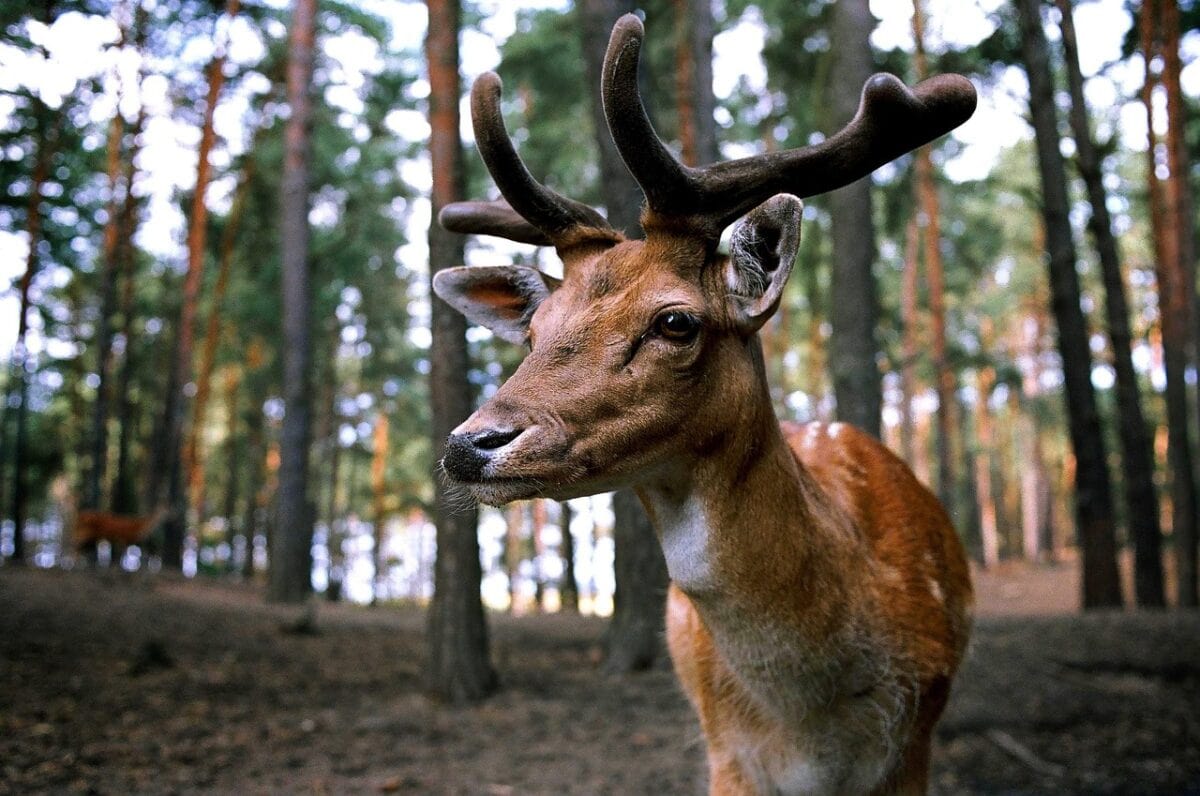
White-tailed deer reign as the most abundant large mammal throughout Michigan’s North Woods, with populations fluctuating dramatically based on winter severity and predation pressure. These remarkably adaptable creatures have learned to thrive in the mosaic of habitats that characterize the region, from dense cedar swamps to open meadows created by logging operations. During summer months, does with their spotted fawns can be observed feeding in forest clearings during the golden hours of dawn and dusk, their white tails flashing like flags when danger approaches.
The deer’s survival strategy revolves around seasonal migrations and behavioral adaptations that have evolved over thousands of years. In winter, they gather in traditional “deer yards” – sheltered areas with dense coniferous cover that provide protection from wind and snow. Their ability to reduce their metabolic rate during harsh weather allows them to survive on limited food sources, primarily browsing on cedar, hemlock, and other evergreen foliage.
Modern deer populations in the North Woods face challenges from both natural predators and human activities, creating a complex dynamic that wildlife managers must carefully balance. Studies conducted by the Michigan Department of Natural Resources indicate that deer density can range from 10 to 40 animals per square mile, depending on habitat quality and hunting pressure.
Common Loon: The Haunting Voice of Northern Waters

The ethereal call of the common loon serves as the soundtrack to Michigan’s North Woods, resonating across pristine lakes during summer evenings with a sound that seems to capture the very essence of wilderness. These magnificent diving birds require clear, deep lakes with abundant fish populations and undisturbed shorelines for nesting, making them excellent indicators of aquatic ecosystem health. Their distinctive black and white plumage and ruby-red eyes make them unmistakable, while their underwater hunting prowess allows them to pursue fish at depths of up to 200 feet.
Loons face significant challenges from human development along lakeshores, as their ground-level nests are vulnerable to disturbance from boat wakes, foot traffic, and predators attracted to human activity. Climate change poses additional threats, as warming water temperatures can affect the distribution and abundance of the small fish that comprise their primary diet. The Michigan Loon Preservation Association has documented breeding pairs on over 200 lakes throughout the northern regions, with population stability dependent on continued protection of nesting habitat.
During winter months, these remarkable birds migrate to coastal waters along the Atlantic and Gulf coasts, where they molt their flight feathers and adopt a more subdued plumage. Their return to Michigan’s lakes each spring signals the beginning of the breeding season and the renewal of their haunting territorial calls.
Black Bear: The North Woods’ Gentle Giant

Michigan’s black bears represent one of the most successful wildlife recovery stories in North America, with populations rebounding from fewer than 3,000 individuals in the 1960s to an estimated 12,000 to 15,000 bears today. These powerful omnivores play crucial roles in forest ecosystems, dispersing seeds through their scat and creating disturbances that promote plant diversity. Despite their fearsome reputation, black bears are generally shy creatures that prefer to avoid human contact, relying on their exceptional sense of smell and hearing to navigate their territories.
The seasonal behavior of black bears reflects their constant search for high-energy foods to sustain them through winter hibernation. Spring finds them emerging from dens weak and hungry, feeding primarily on emerging vegetation, insects, and carrion. Summer brings a bounty of berries, nuts, and other plant materials, while fall triggers hyperphagia – a feeding frenzy that can see bears consuming up to 15,000 calories per day as they prepare for winter dormancy.
Human-bear conflicts have increased as development encroaches on traditional bear habitat, leading to innovative management strategies that emphasize education and coexistence. The Michigan Department of Natural Resources has implemented bear-resistant garbage container programs and works closely with communities to reduce attractants that draw bears into residential areas.
Gray Wolf: The North Woods’ Apex Predator

The gray wolf’s return to Michigan’s North Woods represents one of the most dramatic wildlife comebacks in the Great Lakes region, with populations recovering from complete extirpation in the 1960s to approximately 800 individuals today. These apex predators primarily inhabit the Upper Peninsula, where vast wilderness areas provide the space and prey base necessary for viable pack territories. Wolf packs in Michigan typically consist of 4-6 individuals, with territories ranging from 25 to 100 square miles depending on prey density and pack size.
Wolves play a critical ecological role as keystone species, regulating deer populations and influencing the behavior of other wildlife through what scientists call the “landscape of fear.” Their presence has cascading effects throughout the ecosystem, from vegetation recovery in areas where deer browsing is reduced to increased scavenging opportunities for ravens, eagles, and other species. The complex social structure of wolf packs, with their intricate communication systems and cooperative hunting strategies, continues to fascinate researchers and wildlife enthusiasts alike.
The species faces ongoing challenges from habitat fragmentation, vehicle strikes, and occasional illegal killing, making continued protection efforts essential for long-term population stability. Research conducted by Michigan Technological University’s Wolf & Wildlife Research Center has provided valuable insights into wolf ecology and behavior, informing management decisions across the Great Lakes region.
Moose: The Majestic Monarch of the Forest
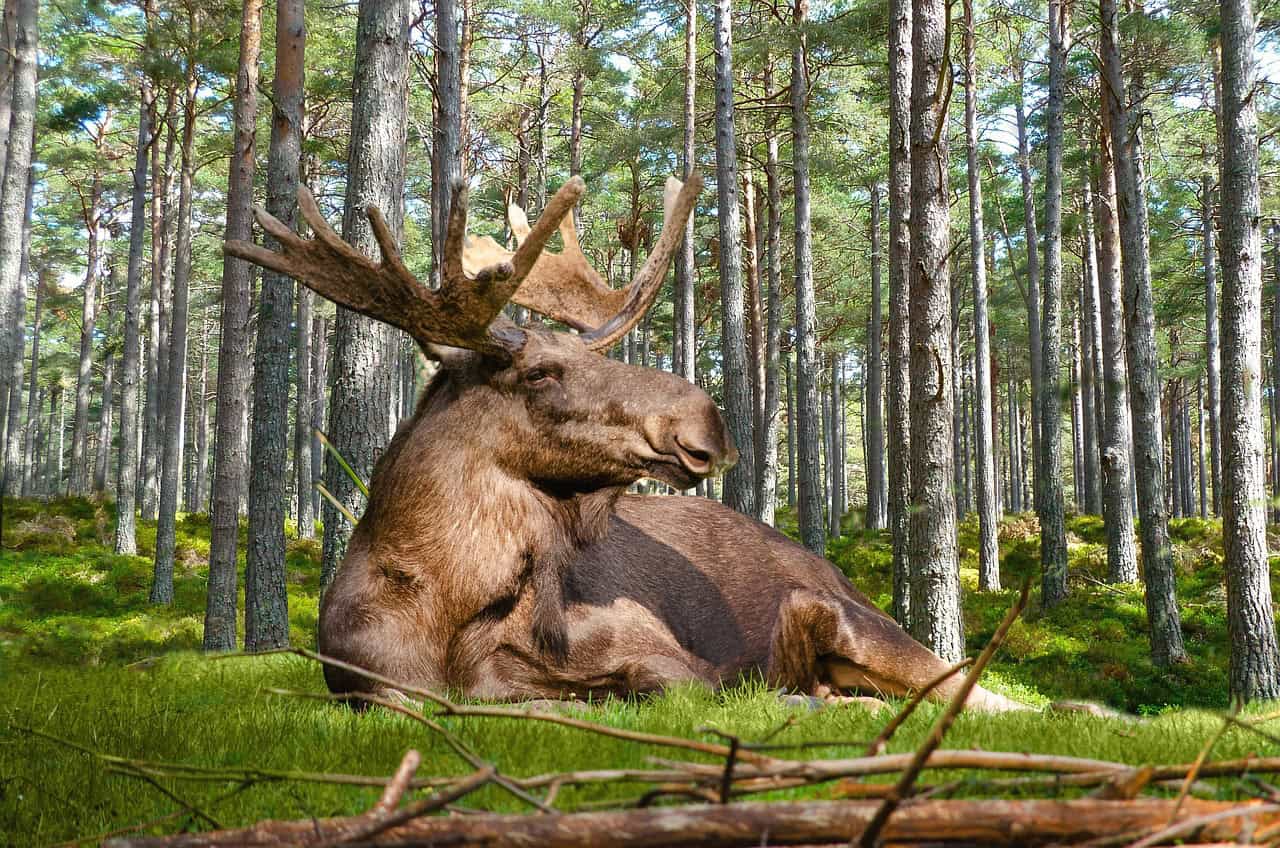
Michigan’s moose population, primarily concentrated in the Upper Peninsula, represents the southernmost extension of these magnificent ungulates’ range in the Great Lakes region. Standing up to six feet tall at the shoulder and weighing as much as 1,500 pounds, bull moose are truly impressive creatures whose massive antlers can span up to six feet across. These gentle giants prefer the wetland habitats that characterize much of the North Woods, feeding on aquatic vegetation, willows, and other browse that thrives in boggy areas.
The state’s moose population has faced significant challenges in recent decades, with numbers declining from an estimated 1,000 individuals in the 1990s to fewer than 400 today. Climate change poses a particular threat, as warming temperatures increase the prevalence of winter ticks and brain worm parasites that can be fatal to moose. The Michigan Department of Natural Resources has initiated research programs to better understand these population dynamics and develop conservation strategies.
Despite their size, moose are surprisingly elusive creatures that require patience and luck to observe in their natural habitat. Their preference for remote wetland areas and their primarily crepuscular activity patterns make encounters with humans relatively rare, adding to their mystique as icons of the northern wilderness.
Pileated Woodpecker: The Forest’s Master Carpenter
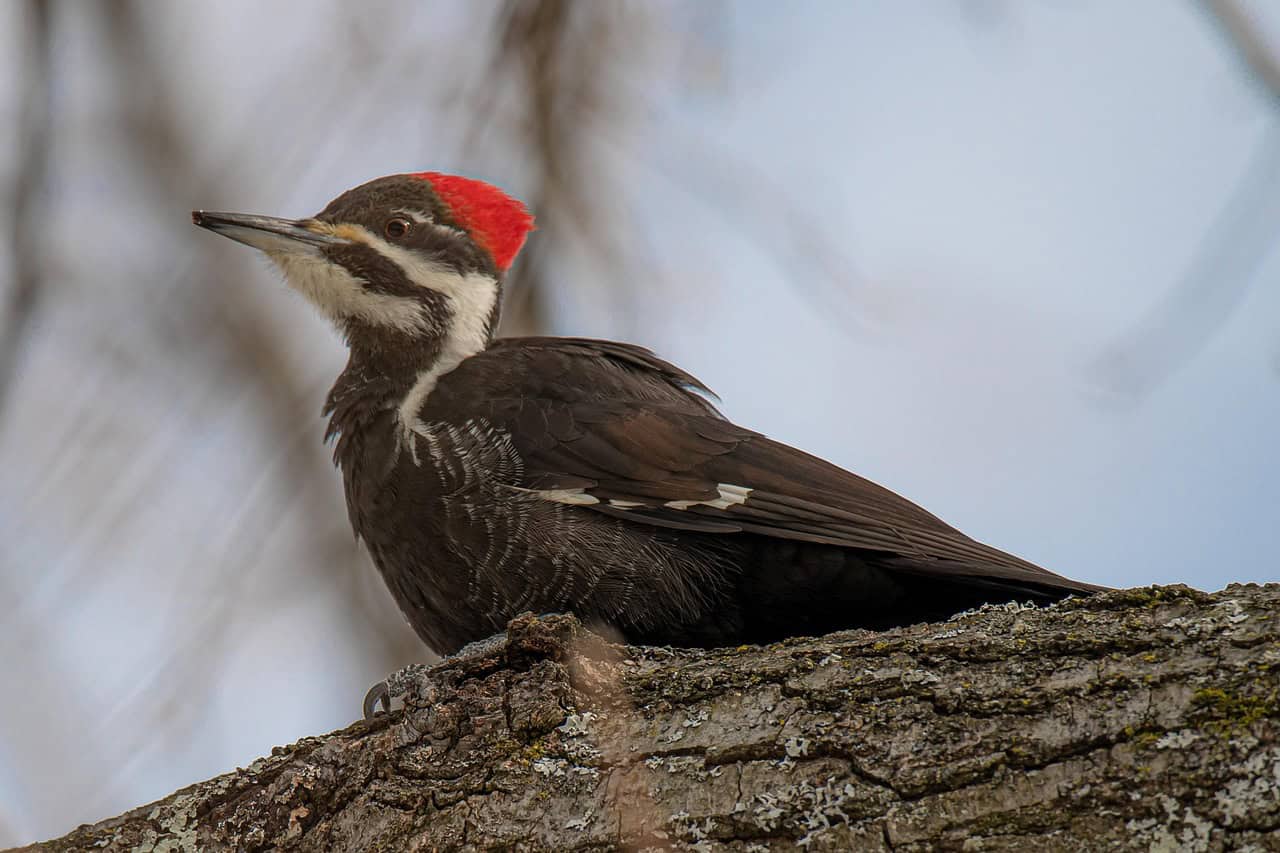
The pileated woodpecker stands as the largest woodpecker species in North America, with its distinctive red crest and powerful drumming serving as unmistakable signs of healthy mature forest ecosystems. These crow-sized birds require large territories containing dead or dying trees for nesting and foraging, making them excellent indicators of forest health and biodiversity. Their powerful beaks and specialized skulls allow them to excavate rectangular cavities in search of carpenter ants and other wood-boring insects, creating nesting sites that are later used by numerous other species.
The sound of a pileated woodpecker’s drumming can carry for miles through the forest, serving as both territorial communication and a method for locating insect prey within decaying wood. Their distinctive flight pattern, alternating between powerful wingbeats and undulating glides, makes them easily recognizable even at a distance. The species has benefited from forest management practices that retain standing dead trees (snags) and promote structural diversity within forest stands.
Recent research has highlighted the pileated woodpecker’s role as a keystone species in forest ecosystems, with their excavations providing nesting sites for wood ducks, flying squirrels, and various small mammals. Climate change and forest fragmentation pose ongoing challenges, making the preservation of large intact forest blocks essential for maintaining viable populations.
Bald Eagle: America’s Soaring Symbol

The bald eagle’s recovery in Michigan’s North Woods represents one of conservation’s greatest success stories, with populations rebounding from just 74 nesting pairs in 1961 to over 900 pairs today. These magnificent raptors require large territories near water bodies where they can hunt fish, waterfowl, and scavenge carrion. Their massive stick nests, which can weigh several tons and measure up to 10 feet across, are typically built in tall trees near shorelines and can be used for decades by successive generations.
The species’ dramatic recovery followed the banning of DDT pesticide use, which had caused eggshell thinning and reproductive failure throughout their range. Today’s eagles face new challenges from lead poisoning, habitat loss, and human disturbance, requiring continued vigilance from wildlife managers and the public. The Michigan Department of Natural Resources monitors nesting success annually, with data showing steady population growth and range expansion into previously unoccupied territories.
Bald eagles demonstrate remarkable longevity, with some individuals living over 30 years in the wild and maintaining the same mate and territory for decades. Their fishing technique, involving dramatic swooping dives to snatch prey from the water’s surface, provides spectacular viewing opportunities for wildlife enthusiasts throughout the North Woods region.
River Otter: The Playful Aquatic Acrobat

North American river otters embody the playful spirit of Michigan’s North Woods waterways, with their streamlined bodies and webbed feet perfectly adapted for life in both water and on land. These charismatic mammals can remain submerged for up to eight minutes while hunting fish, crayfish, and other aquatic prey, using their sensitive whiskers to detect movement in murky water. Their social behavior includes elaborate play activities that serve to strengthen family bonds and teach young otters essential survival skills.
River otters require clean water with abundant fish populations and suitable denning sites along shorelines, making them excellent indicators of aquatic ecosystem health. Their territories can extend for miles along stream corridors, with family groups consisting of a female and her offspring occupying overlapping home ranges. The species disappeared from many areas of Michigan during the early 20th century due to habitat loss and trapping pressure, but successful reintroduction programs have restored populations to most suitable watersheds.
The otter’s diet varies seasonally but consists primarily of fish, supplemented by crayfish, frogs, and occasionally small mammals and birds. Their efficient hunting abilities and high metabolic rates require them to consume approximately 15-20% of their body weight daily, making healthy fish populations essential for their survival.
Great Blue Heron: The Patient Shoreline Stalker

Great blue herons stand as sentinels along the shorelines of Michigan’s North Woods, their statuesque presence adding grace and dignity to wetland environments throughout the region. These impressive wading birds, standing up to four feet tall with wingspans reaching seven feet, demonstrate remarkable patience as they hunt for fish, frogs, and other aquatic prey in shallow waters. Their hunting strategy involves remaining motionless for extended periods before striking with lightning-fast precision, spearing prey with their dagger-like bills.
The species exhibits fascinating colonial nesting behavior, with multiple pairs building large stick nests in the crowns of tall trees, often in mixed colonies with other wading birds. These “heronries” can contain dozens of nests and may be used for decades, with birds returning to the same general area each breeding season. The raucous calls and constant activity around active colonies create a spectacle that draws wildlife enthusiasts from across the region.
Great blue herons face challenges from habitat loss, human disturbance, and climate change impacts on water levels and prey availability. Their sensitivity to pollution makes them valuable indicators of wetland health, with population trends often reflecting broader ecosystem conditions. The species’ adaptability has allowed them to colonize urban areas where suitable habitat exists, demonstrating their resilience in the face of environmental change.
Porcupine: The North Woods’ Prickly Defender
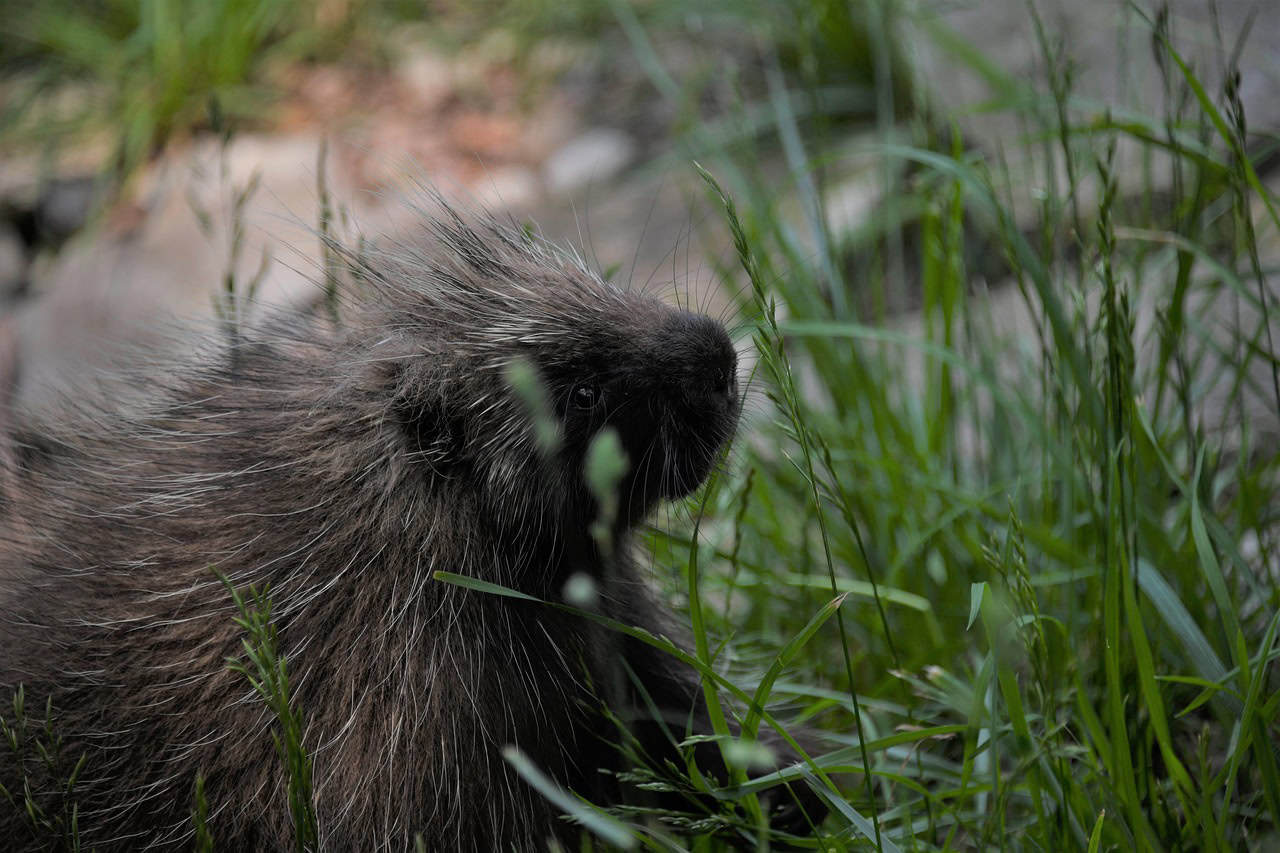
North American porcupines represent one of the most unique and recognizable mammals in Michigan’s North Woods, with their coat of up to 30,000 quills providing unparalleled protection from predators. These primarily nocturnal rodents spend most of their time in trees, feeding on inner bark, leaves, and twigs, with their excellent climbing abilities allowing them to access food sources unavailable to other herbivores. Their slow, deliberate movements and distinctive waddling gait make them easily recognizable, while their defensive posture – raising quills and backing toward threats – serves as an effective deterrent to most predators.
The porcupine’s diet varies seasonally, with summer bringing a preference for herbaceous plants and tree leaves, while winter forces them to rely heavily on inner bark and coniferous needles. Their specialized digestive system allows them to extract nutrients from these low-quality food sources, though they must consume large quantities to meet their energy needs. Salt cravings drive them to seek out mineral-rich substances, sometimes leading to conflicts with humans when they chew on tool handles, car parts, or other salt-contaminated objects.
Despite their formidable defenses, porcupines face predation from fishers, mountain lions, and occasionally wolves that have learned to flip them onto their backs to access vulnerable undersides. Their low reproductive rate – typically one offspring per year – makes population recovery slow following significant mortality events.
Beaver: The Wetland Engineer

American beavers stand as the North Woods’ most influential ecosystem engineers, with their dam-building activities creating wetland complexes that support countless other species. These industrious rodents can transform entire watersheds through their construction projects, creating ponds that provide habitat for waterfowl, amphibians, fish, and numerous other wildlife species. Their powerful teeth continuously grow throughout their lives, allowing them to fell trees up to three feet in diameter and maintain their impressive engineering projects.
The beaver’s social structure revolves around family units called colonies, typically consisting of a breeding pair and their offspring from the current and previous years. These families work together to construct and maintain dams, lodges, and food caches that sustain them through harsh winters. Their ability to modify landscapes has earned them recognition as a keystone species, with their activities influencing water flow, nutrient cycling, and habitat diversity across entire watersheds.
Beaver populations in Michigan have recovered dramatically from near-extinction in the early 1900s, with current estimates suggesting over 400,000 individuals statewide. Their success has led to occasional conflicts with human activities, particularly when their dams affect infrastructure or flood agricultural lands. Wildlife managers use various techniques to balance beaver conservation with human needs, including flow devices and habitat modification.
Lynx: The Elusive Cat of the North
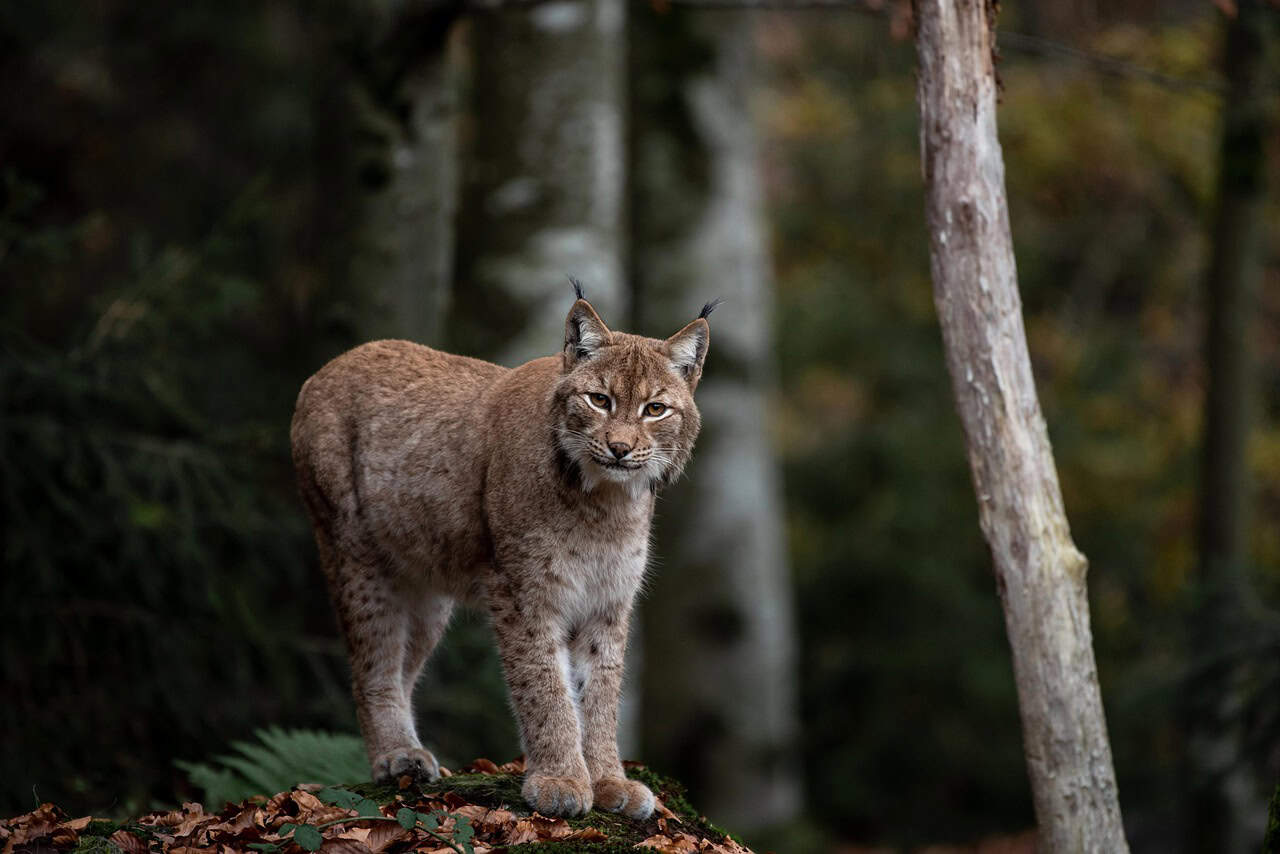
The Canada lynx represents one of Michigan’s most elusive and endangered predators, with a small population persisting in the Upper Peninsula’s most remote wilderness areas. These medium-sized cats are perfectly adapted to life in deep snow, with their oversized paws acting as natural snowshoes and their thick fur providing insulation against extreme cold. Their diet consists almost exclusively of snowshoe hares, creating a predator-prey relationship so intertwined that lynx populations rise and fall in sync with hare cycles.
Lynx require large territories with dense forest cover and minimal human disturbance, making them extremely vulnerable to habitat fragmentation and development. Their secretive nature and low population density make them difficult to study, with researchers relying on track surveys, camera traps, and genetic analysis to monitor their status. The species’ tufted ears, short black-tipped tail, and distinctive facial ruff distinguish them from their smaller relative, the bobcat.
Climate change poses a significant threat to lynx populations, as warming temperatures reduce snow cover and favor competitors like bobcats and coyotes that are better adapted to milder conditions. Conservation efforts focus on protecting large blocks of suitable habitat and maintaining connectivity between populations to prevent genetic isolation.
Ruffed Grouse: The Forest’s Feathered Drummer
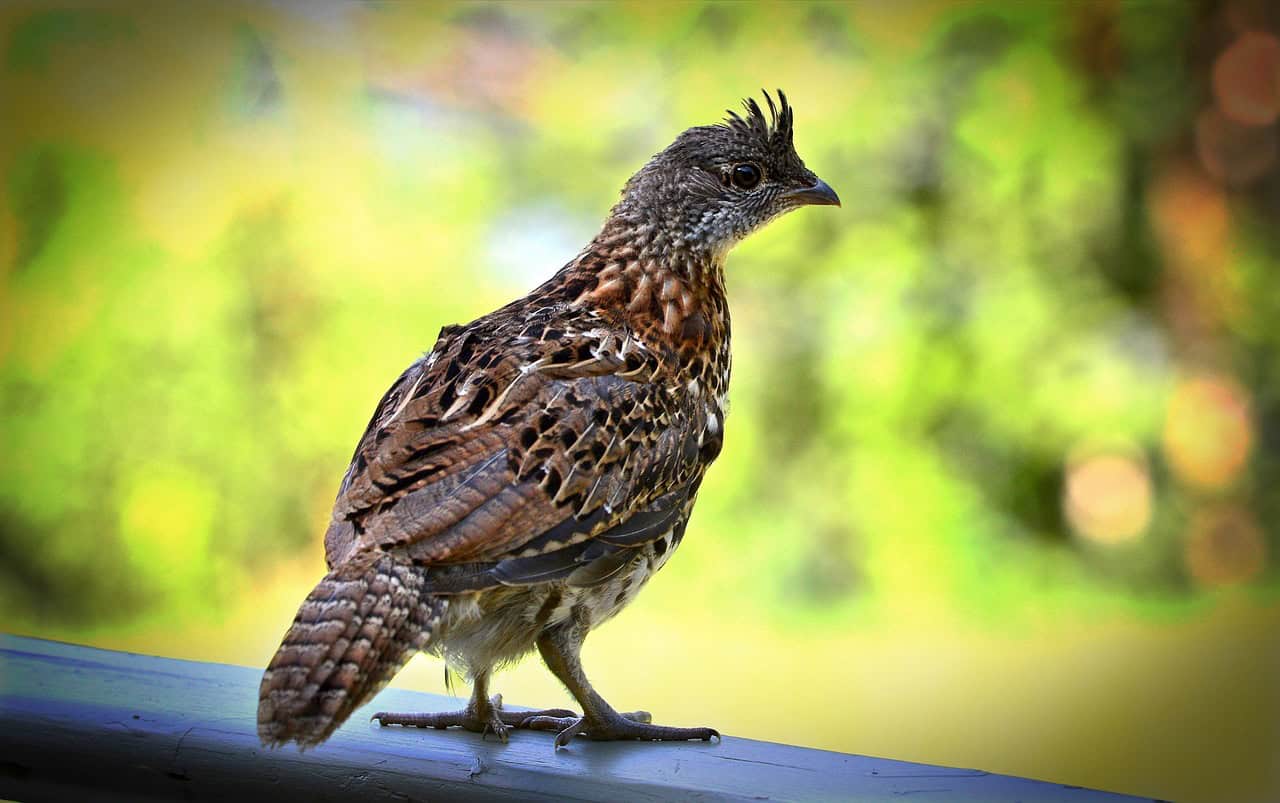
The ruffed grouse’s distinctive drumming sound echoes through Michigan’s North Woods as males perform their courtship displays, creating a rhythmic beating that accelerates like a distant engine starting up. These chicken-sized birds exemplify adaptation to forest environments, with their mottled brown plumage providing perfect camouflage against fallen leaves and forest floor debris. Their ability to flush explosively from cover with a thunderous wingbeat often startles hikers and hunters, demonstrating the lightning-fast reflexes that help them avoid predators.
Ruffed grouse require diverse forest habitats that provide food, cover, and nesting sites throughout their annual cycle. Young forest growth following logging operations provides ideal habitat, with dense understory vegetation offering protection from aerial predators and abundant food sources. Their diet varies seasonally from insects and soft plant material in summer to buds, twigs, and catkins during winter months.
The species exhibits fascinating cyclic population fluctuations that occur roughly every 10 years, driven by complex interactions between predation, disease, and habitat conditions. These cycles have been documented for over a century, providing valuable insights into predator-prey dynamics and ecosystem functioning. Climate change and forest management practices continue to influence grouse populations, making their conservation a priority for wildlife managers.
Fisher: The Acrobatic Predator
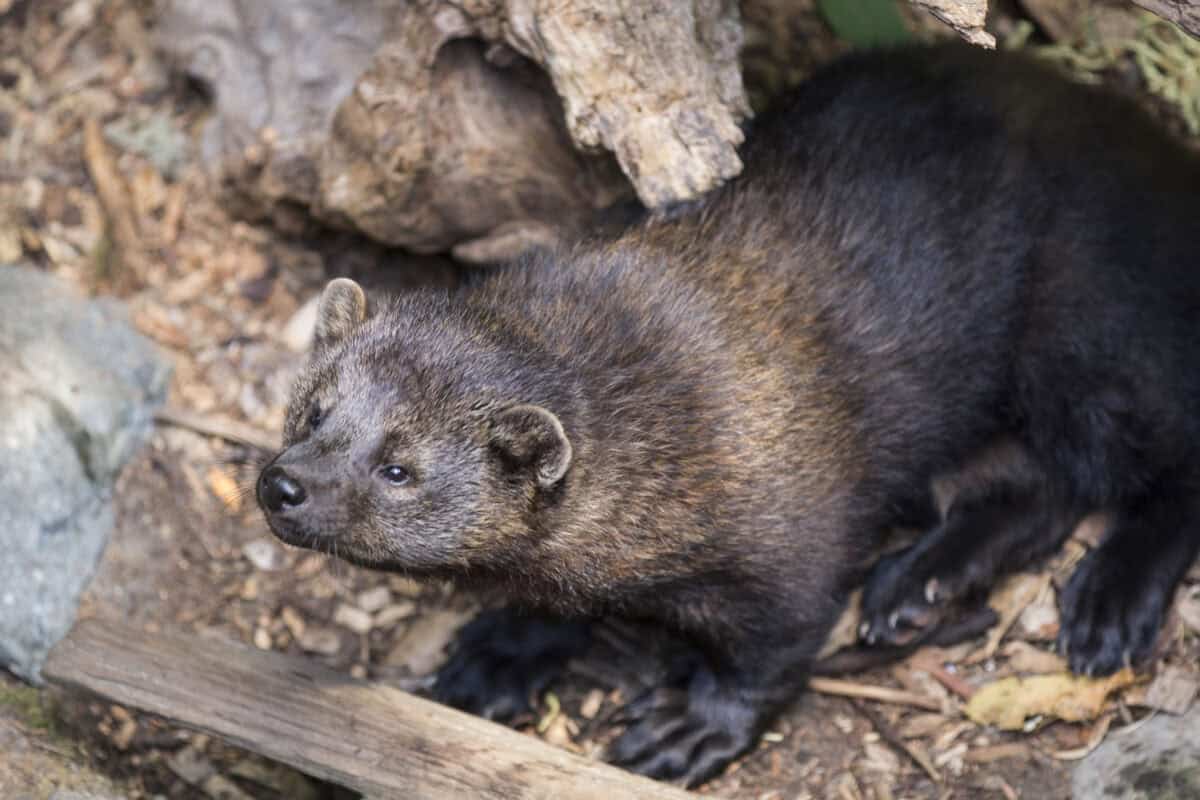
The fisher, despite its name, is actually a member of the weasel family that has earned fame as one of the few predators capable of successfully hunting porcupines. These cat-sized carnivores demonstrate remarkable agility, moving through forest canopies with the grace of a squirrel while possessing the strength and ferocity of a much larger predator. Their dark, lustrous fur and bushy tail make them visually striking, while their bloodcurdling screams during mating season add an element of wildness to North Woods nights.
Fishers require large territories with dense forest cover, typically ranging from 5 to 15 square miles depending on prey availability and habitat quality. Their diet consists primarily of small mammals, birds, and carrion, with snowshoe hares forming a significant portion of their prey base. The species’ ability to hunt in trees gives them access to prey unavailable to ground-dwelling predators, making them important regulators of small mammal populations.
Once extinct in Michigan due to overharvesting and habitat loss, fishers have successfully recolonized the state through natural dispersal and reintroduction programs. Their recovery has been aided by forest regrowth and protective regulations, though they remain sensitive to habitat fragmentation and human disturbance. The species’ role as a predator of porcupines has made them valuable allies in forest management, helping to control porcupine populations that can damage trees.
Wood Duck: The Ornate Waterfowl
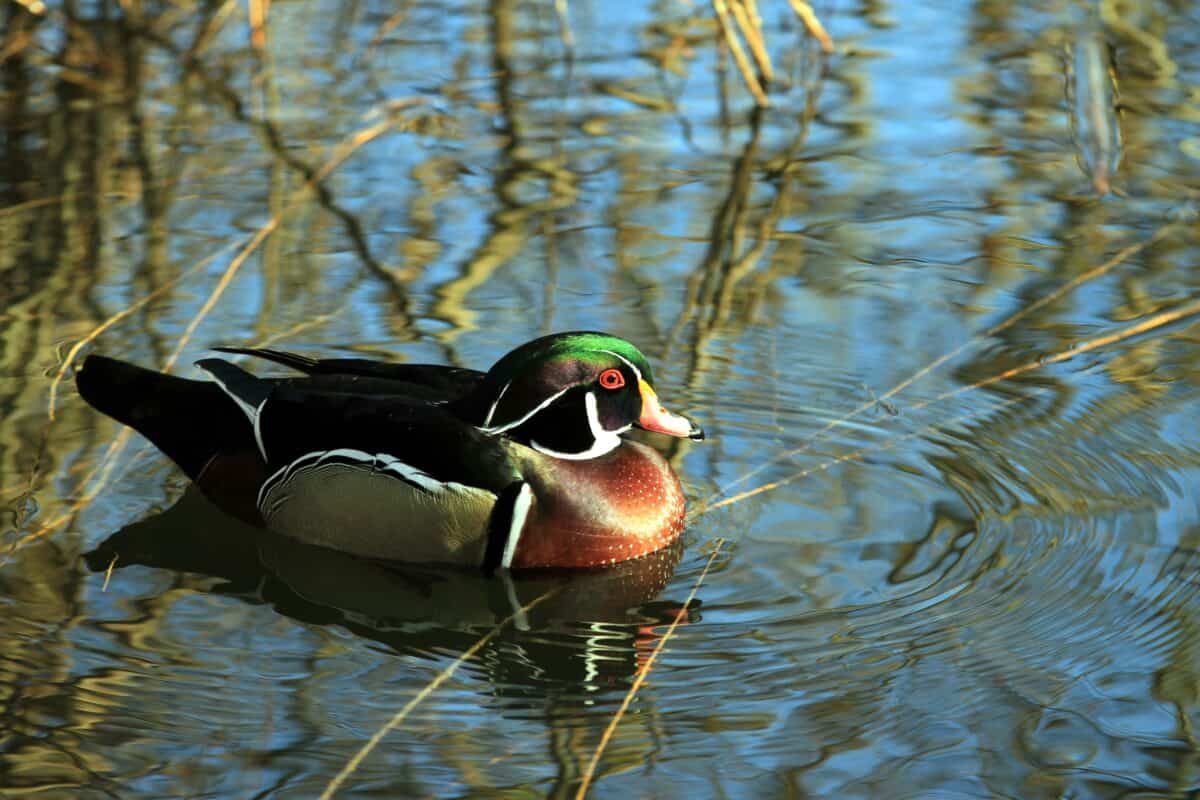
Wood ducks stand among North America’s most beautiful waterfowl, with males displaying an intricate pattern of iridescent colors that seems almost too elaborate for nature. These cavity-nesting ducks require mature forests adjacent to water bodies, where they nest in tree holes and natural cavities up to 65 feet above ground. Their young must make a dramatic leap from nest to water within 24 hours of hatching, guided by the calls of their mother waiting below.
The species’ recovery from near-extinction in the early 1900s represents one of wildlife conservation’s success stories, achieved through habitat protection, hunting regulations, and extensive nest box programs. Wood ducks have adapted well to artificial nest structures, with thousands of boxes installed throughout Michigan’s North Woods providing secure nesting sites where natural cavities are limited. Their diet consists of acorns, seeds, and aquatic invertebrates, making them dependent on diverse wetland and forest habitats.
Wood ducks face ongoing challenges from habitat loss, nest predation, and climate change impacts on water levels and food availability. Their dependence on specific habitat features makes them vulnerable to forest fragmentation and wetland destruction, requiring continued conservation efforts to maintain stable populations. The species’ beauty and ecological importance make them flagship species for wetland conservation efforts.
Barred Owl: The Vocal Night Hunter
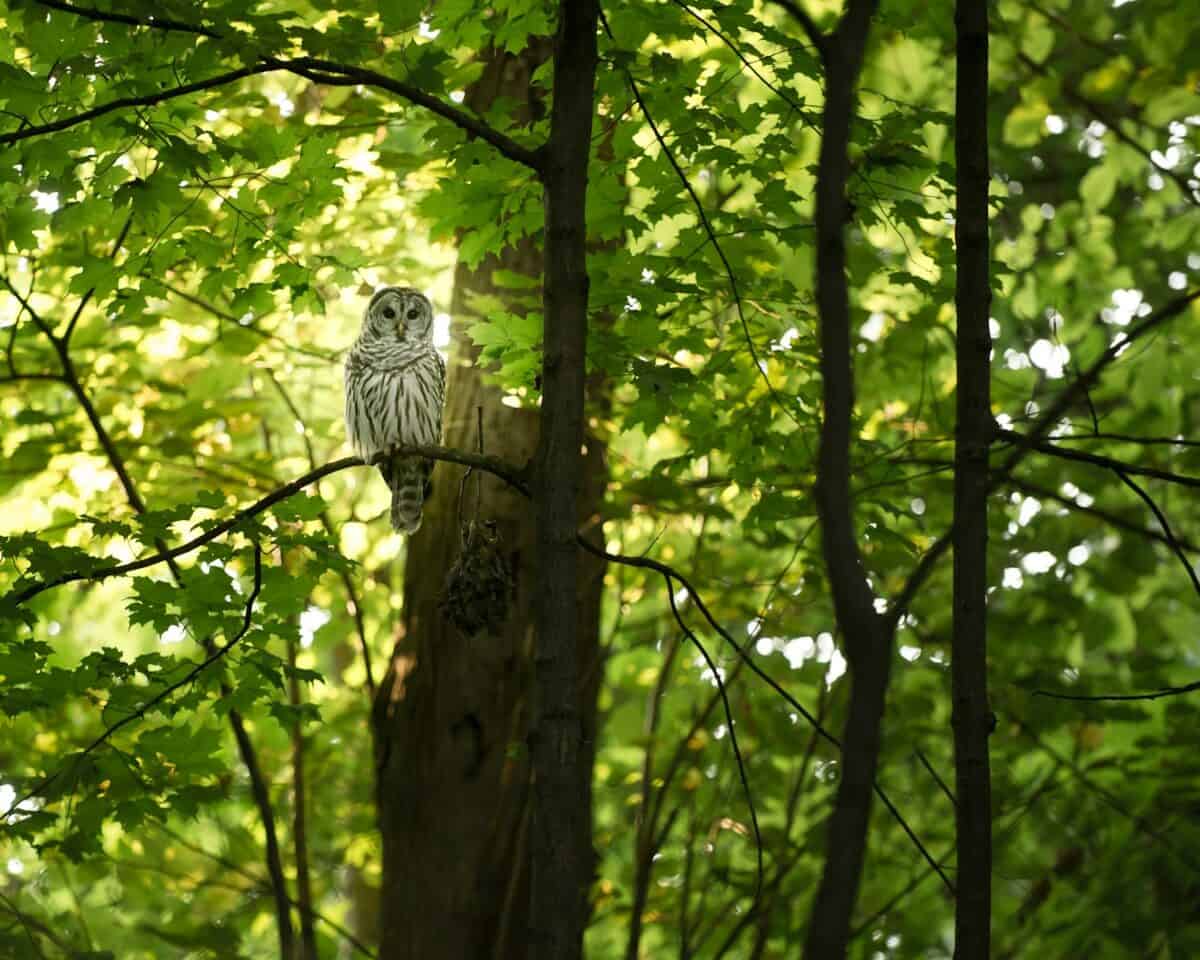
When night falls over Michigan’s northern forests, a haunting sound rises from the treetops—deep, rhythmic, and unmistakable. It’s the call of the barred owl, echoing through the pines like a question carried on the wind: “Who cooks for you? Who cooks for you-all?” This distinctive hoot is more than a nighttime soundtrack; it’s the voice of one of the region’s most skilled predators. The barred owl, with its large, dark eyes and soft feathered face, is built for twilight. Its plumage—striped in brown and white—helps it vanish against the bark of trees, while its broad wings carry it through the woods in near silence.
Unlike many birds, the barred owl thrives in the dark. It hunts with lethal accuracy, relying on exceptional hearing to detect even the slightest movement beneath the forest floor. From frogs and squirrels to the occasional small bird, its diet is as varied as the ecosystem it inhabits. Found in mature forests near wetlands and rivers, this owl is a vital part of the North Woods’ nocturnal food web. Its presence not only signals a healthy woodland habitat but also reminds us that in the quiet hours of the night, life in the forest is far from still.
Conclusion
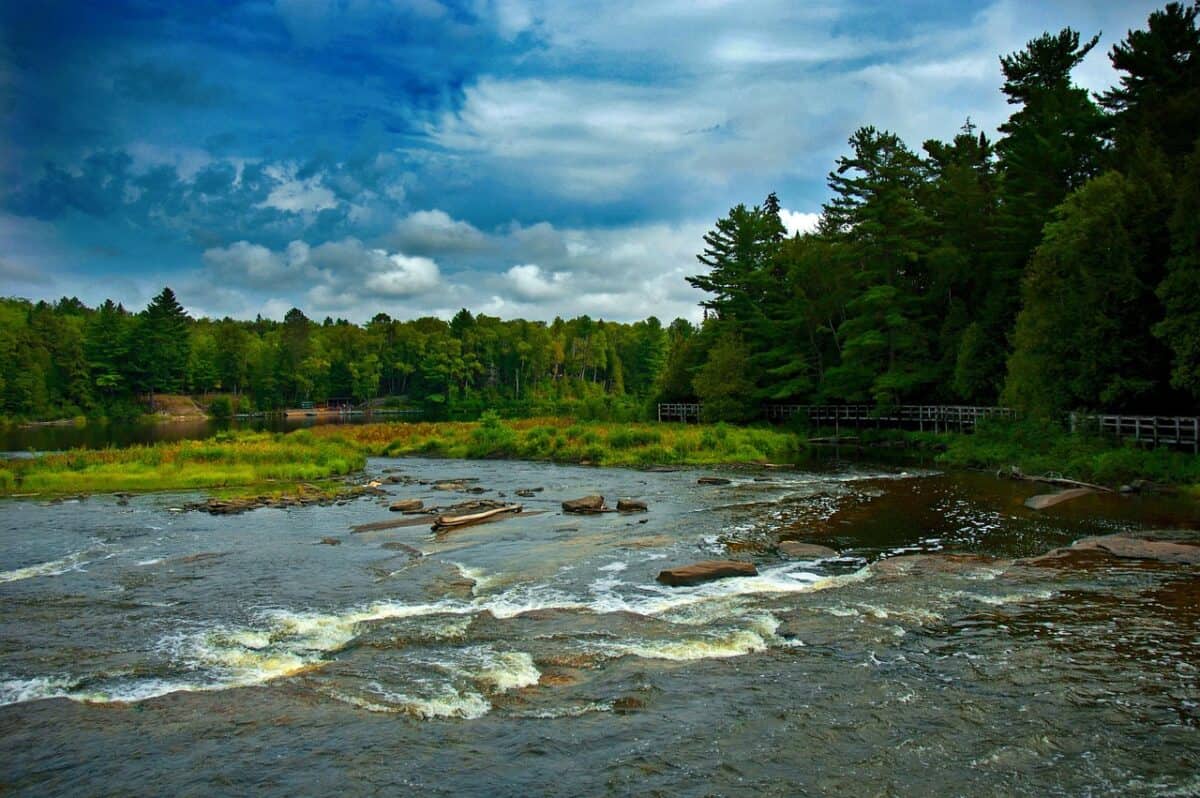
Michigan’s North Woods remain a timeless haven where nature unfolds in its rawest, most authentic form. Here, wolves still howl beneath starlit skies, bears forage through berry-laden thickets, and the deep woods echo with the ancient rhythms of life. These forests, rivers, and wetlands support not just iconic species, but the delicate balance that sustains entire ecosystems. As we face an uncertain environmental future, the North Woods remind us of what’s still worth protecting. What stories of survival, beauty, and wonder are waiting to be discovered on your next walk through this northern wild?

- The Animals That Inspired Mythical Creatures in Movies - May 10, 2026
- Why Orcas Teach Their Young to Beach Themselves While Hunting - May 9, 2026
- How Raccoons Use Their Tiny Hands to Explore - May 9, 2026