

Worried about unexpected vet bills?
Pet insurance can cover thousands in unexpected vet costs. Get a free quote from Lemonade in under 2 minutes.
Get My Free Quote →Sponsored · Opens Lemonade.com
Georgia’s diverse ecosystems harbor a variety of wildlife, including several venomous species that demand respect and caution. From the coastal plains to the Appalachian Mountains, the Peach State is home to creatures that use venom as a defense mechanism or hunting tool. While encountering these animals can be concerning, many dangerous species have harmless lookalikes that are often needlessly feared. Understanding the differences between venomous creatures and their non-venomous doppelgängers is crucial for Georgia residents and visitors alike. This knowledge not only helps prevent unnecessary panic but also fosters appreciation for these important members of Georgia’s ecological communities. Let’s explore ten venomous animals found in Georgia and five harmless creatures that are commonly mistaken for their dangerous counterparts.
Eastern Diamondback Rattlesnake

The Eastern Diamondback Rattlesnake (Crotalus adamanteus) reigns as North America’s largest venomous snake and Georgia’s most dangerous serpent. Growing up to 8 feet long, this imposing reptile is instantly recognizable by its distinctive diamond-shaped pattern outlined in cream or yellow against a brownish-gray background. The characteristic rattle on its tail serves as a warning to potential threats, while its triangular head houses powerful venom glands.
Found primarily in Georgia’s southern pine flatwoods, coastal areas, and palmetto thickets, Eastern Diamondbacks possess hemotoxic venom that destroys tissue and disrupts blood clotting. A bite without medical treatment can be fatal, with venom potent enough to kill several adults. Despite their fearsome reputation, these rattlesnakes prefer avoiding human contact and typically strike only when threatened or cornered. Their population has declined significantly due to habitat loss and indiscriminate killing, making them increasingly rare despite their important role in controlling rodent populations.
Timber Rattlesnake

The Timber Rattlesnake (Crotalus horridus), also known as the Canebrake Rattlesnake in parts of Georgia, is a formidable venomous serpent found throughout the state, particularly in forested areas of the Piedmont and mountain regions. This large, heavy-bodied snake typically reaches 3-5 feet in length and displays distinctive dark chevron-shaped crossbands on a yellowish, grayish, or brown background. Southern Georgia specimens often show a rusty or pinkish dorsal stripe, earning them the “Canebrake” nickname.
Timber Rattlesnakes possess potent hemotoxic venom that can cause severe tissue damage, internal bleeding, and without treatment, death. However, these snakes are generally reserved and rarely bite humans unless directly threatened. They prefer remote, rocky outcroppings and dense woodland habitats, making encounters relatively uncommon despite their wide distribution. Conservation efforts have become increasingly important as Timber Rattlesnake populations face pressure from habitat fragmentation and deliberate killing, despite their valuable ecological role as controllers of rodent populations that can carry disease.
Copperhead
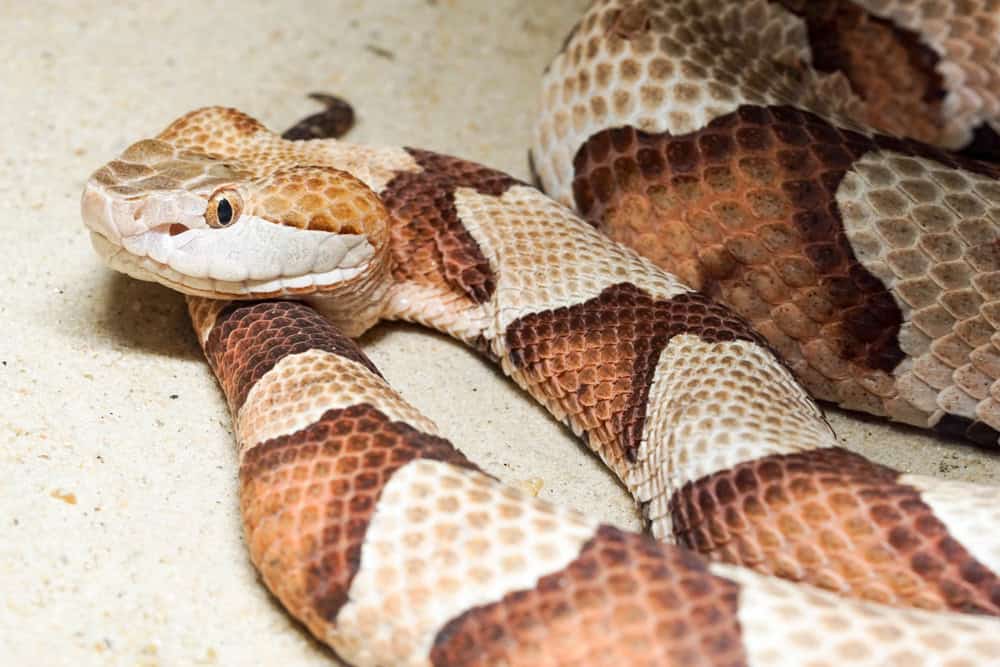
The Copperhead (Agkistrodon contortrix) stands as Georgia’s most frequently encountered venomous snake, responsible for the majority of venomous snakebites in the state. This medium-sized pit viper, typically reaching 2-3 feet in length, is instantly recognizable by its coppery-red head and distinctive hourglass-shaped crossbands on a light brown or tan body. These “Hershey’s Kiss” patterns make the Copperhead one of Georgia’s most identifiable snakes, though their exceptional camouflage among fallen leaves makes them easy to overlook.
Found throughout Georgia except in parts of the coastal plain, Copperheads thrive in diverse habitats including forests, rocky areas, suburban neighborhoods, and even well-maintained parks. Their venom, while less potent than rattlesnakes’, still causes intense pain, swelling, and tissue damage. Unlike other pit vipers, Copperheads often freeze when threatened rather than fleeing, increasing the likelihood of accidental encounters. They frequently deliver “dry bites” without venom as warnings, but medical attention should always be sought after any Copperhead bite. Despite their venomous nature, these snakes play a crucial role in controlling rodent populations and rarely cause human fatalities.
Cottonmouth (Water Moccasin)

The Cottonmouth (Agkistrodon piscivorus), often called the Water Moccasin, is Georgia’s only venomous water snake and one of North America’s most feared serpents. Reaching lengths of 3-4 feet, these robust-bodied pit vipers are instantly recognizable by their large, triangular heads, dark olive-brown to black coloration, and the distinctive white mouth lining they display when threatened—earning them their common name. Juvenile Cottonmouths exhibit more vibrant patterns with reddish-brown crossbands that darken with age, often becoming nearly uniform black as adults.
Primarily inhabiting Georgia’s swamps, marshes, lakes, and slow-moving streams, Cottonmouths are excellent swimmers that can be found both in water and basking on logs or banks nearby. Unlike Georgia’s non-venomous water snakes that flee when confronted, Cottonmouths typically stand their ground with their signature defensive display—coiling, vibrating their tails, and gaping their white mouths. Their cytotoxic venom causes severe tissue damage and can be life-threatening without proper medical treatment. Found throughout the southern two-thirds of Georgia, these snakes are vital components of wetland ecosystems where they feed on fish, amphibians, and other aquatic prey.
Coral Snake
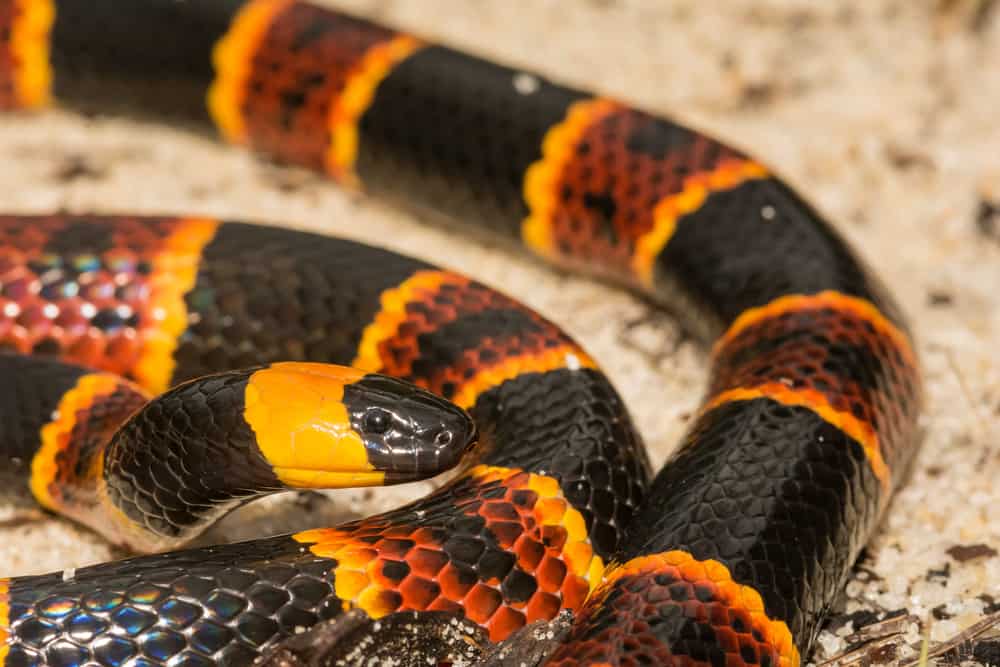
The Eastern Coral Snake (Micrurus fulvius) stands apart from Georgia’s pit vipers as the state’s only venomous snake from the Elapidae family—related to cobras and mambas. This slender, medium-sized snake rarely exceeds 30 inches and is instantly recognizable by its brilliant pattern of red, yellow, and black bands that completely encircle the body. The critical identification feature is the sequence of these bands: in the venomous coral snake, red bands touch yellow bands (remembered by the rhyme “red touch yellow, kill a fellow”), distinguishing it from harmless mimics like the scarlet kingsnake.
Unlike Georgia’s pit vipers, coral snakes possess neurotoxic venom that attacks the nervous system rather than destroying tissue. Their small, fixed fangs deliver less venom than rattlesnakes, but their bite can be potentially fatal without antivenom treatment. Found primarily in sandy regions of Georgia’s Coastal Plain, these secretive snakes spend most of their time underground or hidden in leaf litter, making human encounters exceedingly rare. Coral snakes are generally non-aggressive and responsible for fewer than 1% of venomous snakebites in the United States, despite possessing one of the most potent venoms of any North American snake. Their shy nature and reluctance to bite make them dangerous primarily when handled or accidentally stepped on.
Black Widow Spider

The Southern Black Widow (Latrodectus mactans), instantly recognizable by its glossy black body and distinctive red hourglass marking on the underside of its abdomen, ranks as Georgia’s most dangerous spider. Females, which pose the greatest threat to humans, typically measure about 1.5 inches long including leg span, while males are significantly smaller and rarely bite. These arachnids construct irregular, tangled webs in dark, undisturbed locations such as woodpiles, outdoor toilets, meter boxes, crawl spaces, and garden debris throughout Georgia.
Black Widow venom contains powerful neurotoxins that affect the nervous system, causing immediate sharp pain at the bite site followed by severe muscle cramping, abdominal rigidity, sweating, and elevated blood pressure. While rarely fatal to healthy adults, their bites can be particularly dangerous to children, the elderly, and those with compromised immune systems. Despite their fearsome reputation, Black Widows are not aggressive and typically bite only when directly threatened or accidentally pressed against the skin. In Georgia, they remain active year-round, though they’re most frequently encountered during warmer months when outdoor activities increase human-spider interactions. The good news is that effective antivenom exists, and most victims recover fully with proper medical treatment.
Brown Recluse Spider
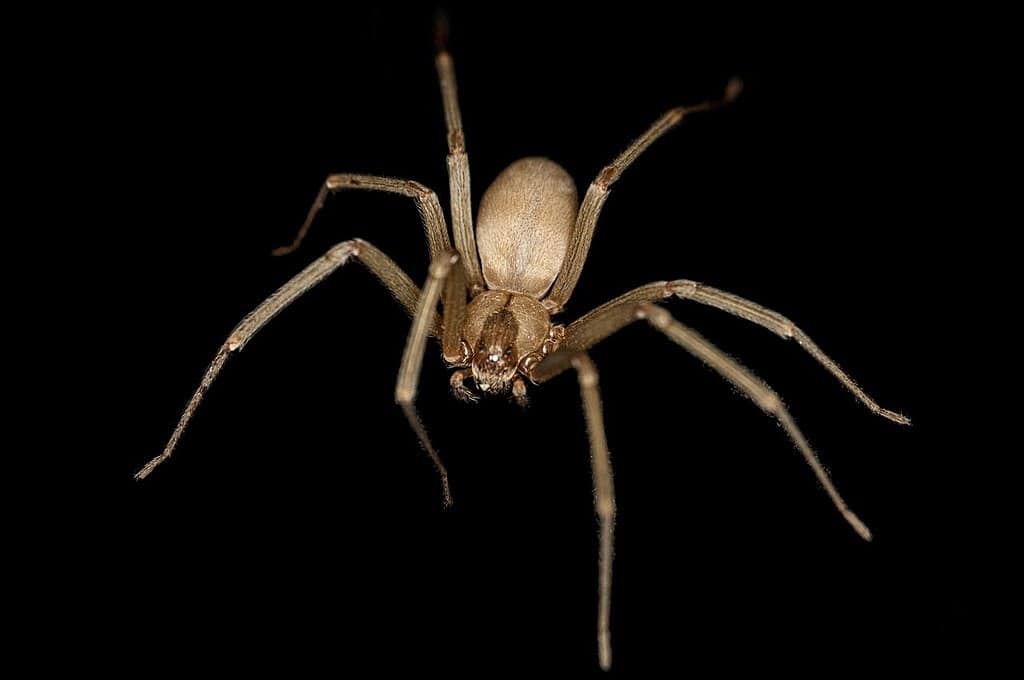
The Brown Recluse spider (Loxosceles reclusa) is one of Georgia’s most medically significant arachnids, though its presence in the state is limited primarily to the northwestern counties. This medium-sized spider, measuring about a quarter-inch in body length (leg span around an inch), is distinguished by its violin-shaped marking on the cephalothorax—earning it the nickname “fiddleback spider.” Their uniform light to medium brown coloration and arrangement of six eyes in three pairs (rather than the eight eyes of most spiders) provide additional identifying features for these nocturnal hunters.
What makes Brown Recluse spiders particularly concerning is their cytotoxic venom, which contains enzymes that destroy tissue. Bites often go unnoticed initially but may develop over hours or days into painful lesions with potential for significant tissue death (necrosis) in a process called loxoscelism. Contrary to popular belief, Brown Recluses are not aggressive and bite only when pressed against the skin, typically when people disturb their hiding places in closets, attics, stored clothing, or cardboard boxes. While confirmed Brown Recluse populations exist only in northwestern Georgia, occasional specimens may be transported to other areas of the state. Many suspected Brown Recluse bites in Georgia are actually misdiagnosed infections or bites from other arthropods, as these spiders are far less common in the state than widely believed.
Southern Yellowjacket
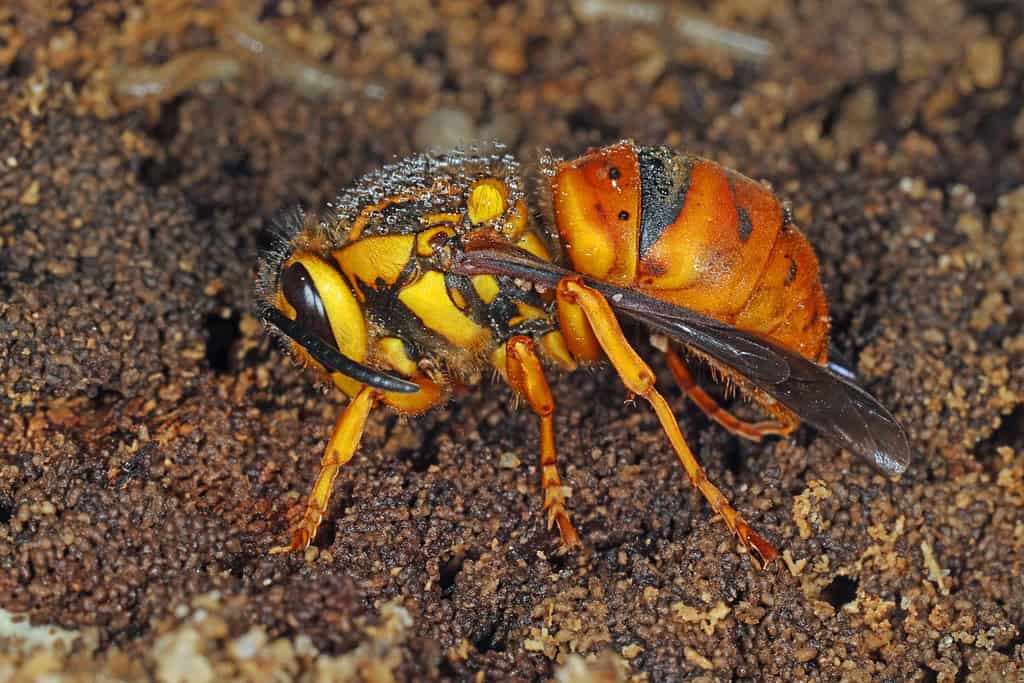
The Southern Yellowjacket (Vespula squamosa) ranks among Georgia’s most aggressive venomous insects, notorious for its painful stings and territorial behavior. These social wasps measure approximately half an inch long with distinctive black and bright yellow banded patterns. Unlike honeybees, yellowjackets can sting repeatedly without losing their stinger, making encounters potentially more dangerous. Throughout Georgia, these insects build paper-like nests in underground cavities, hollow logs, building voids, and occasionally aerial locations, with colonies reaching peaks of several thousand individuals by late summer.
What makes Southern Yellowjackets particularly hazardous is their aggressive defense of nest sites and their attraction to human food during late summer and fall. Their venom contains proteins that cause immediate sharp pain, swelling, and redness, with some individuals experiencing severe allergic reactions including potentially life-threatening anaphylaxis. In Georgia, yellowjacket activity increases dramatically during August through October when colonies reach maximum size and food sources become scarcer. During this period, they become particularly problematic at outdoor gatherings involving food. While their ecological role as predators of pest insects benefits Georgia’s ecosystems, Southern Yellowjackets cause more medically significant stings in the state than any other venomous insect, making awareness of their habits and identification crucial for avoiding painful encounters.
Scorpions

Georgia hosts three species of scorpions, with the Southern Devil Scorpion (Vaejovis carolinianus) being the most widespread throughout the state. These relatively small arachnids, typically measuring 1-3 inches in length, display coloration ranging from yellowish-brown to darker brown. Unlike their deadly desert relatives found in the southwestern United States, Georgia’s native scorpions possess venom comparable to bee stings in severity—painful but rarely medically significant for most individuals. They prefer rocky habitats, forests, and woodland edges where they can find shelter under logs, stones, and loose bark.
The Southern Unstriped Scorpion (Centruroides hentzi) and the Striped Scorpion (Centruroides vittatus) also inhabit limited areas of Georgia, primarily in the southern regions. All Georgia scorpions are nocturnal predators that feed primarily on insects and other small invertebrates. While encounters with humans are relatively uncommon, scorpions occasionally enter homes, particularly in rural areas and during construction that disturbs their natural habitat. Stings typically cause localized pain, swelling, and numbness that resolves within hours without treatment. Despite their intimidating appearance with prominent pincers and curved tails tipped with venomous stingers, Georgia’s scorpions are non-aggressive and sting only when directly threatened or accidentally pressed against the skin, such as when reaching into woodpiles or putting on shoes where they may be hiding.
Fire Ants
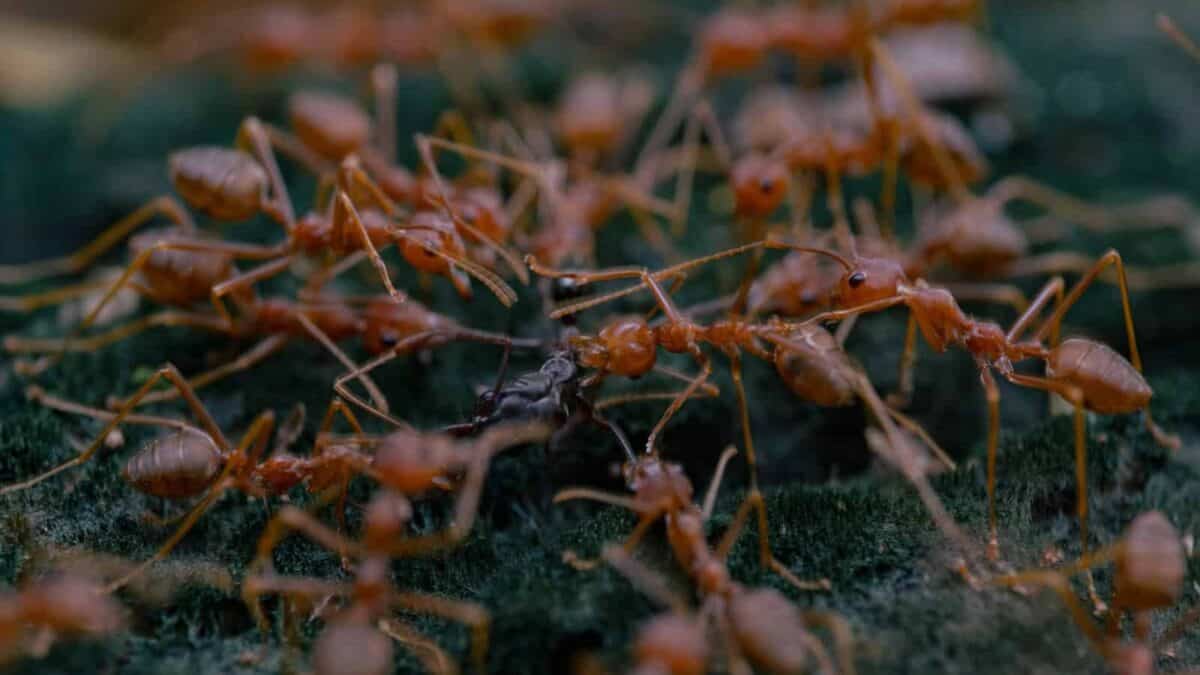
The Red Imported Fire Ant (Solenopsis invicta), an invasive species from South America, has become a ubiquitous venomous threat throughout Georgia since its introduction in the 1950s. These small but aggressive ants, measuring just 1/8 to 1/4 inch long, construct distinctive dome-shaped mounds that can reach 18 inches in height and contain up to 500,000 individuals. What makes fire ants particularly problematic is their defensive behavior—when their mound is disturbed, hundreds of workers rush out and simultaneously sting the perceived threat, a coordinated attack triggered by pheromone signals.
Fire ant venom contains alkaloid compounds that produce an immediate burning sensation (hence their name), followed by the formation of characteristic white pustules within 24 hours. For approximately 1% of the population, these stings can trigger severe allergic reactions requiring emergency medical attention. Throughout Georgia, fire ants thrive in open, sunny areas including lawns, parks, agricultural fields, and roadsides, with higher populations in the southern regions of the state. Beyond their impact on humans and pets, these invasive ants have significantly altered Georgia’s ecosystems by displacing native ant species and affecting ground-nesting wildlife. Their economic impact is substantial as well, damaging crops, livestock, electrical equipment, and necessitating ongoing control measures costing millions of dollars annually in Georgia alone.
Harmless Lookalike: Eastern Hognose Snake

The Eastern Hognose Snake (Heterodon platirhinos) is perhaps Georgia’s most dramatic serpent, often mistaken for venomous species due to its impressive defensive display. This medium-sized non-venomous snake, typically reaching 20-33 inches in length, is distinguished by its upturned snout (used for digging) and extremely variable coloration—ranging from yellow, orange, brown, and gray to nearly black, sometimes with bold blotches or patterns. When threatened, the Eastern Hognose puts on one of nature’s most remarkable performances: it flattens its neck like a cobra, hisses loudly, and strikes repeatedly (usually with closed mouth).
If this initial intimidation display fails to deter a predator, the Hognose escalates to its signature behavior—playing dead. The snake will roll onto its back, open its mouth, hang out its tongue, and may even release a foul-smelling musk while appearing completely lifeless. This dramatic behavior has earned it nicknames like “puff adder” and “spreading adder,” causing many Georgians to mistake it for dangerous species despite being completely harmless to humans. Found throughout Georgia in sandy woodland areas, these beneficial snakes feed primarily on toads and frogs. The Eastern Hognose’s theatrical defensiveness and variable appearance make it one of Georgia’s most frequently misidentified snakes, often leading to unnecessary killing of this fascinating and ecologically important reptile.
Harmless Lookalike: Northern Water Snake
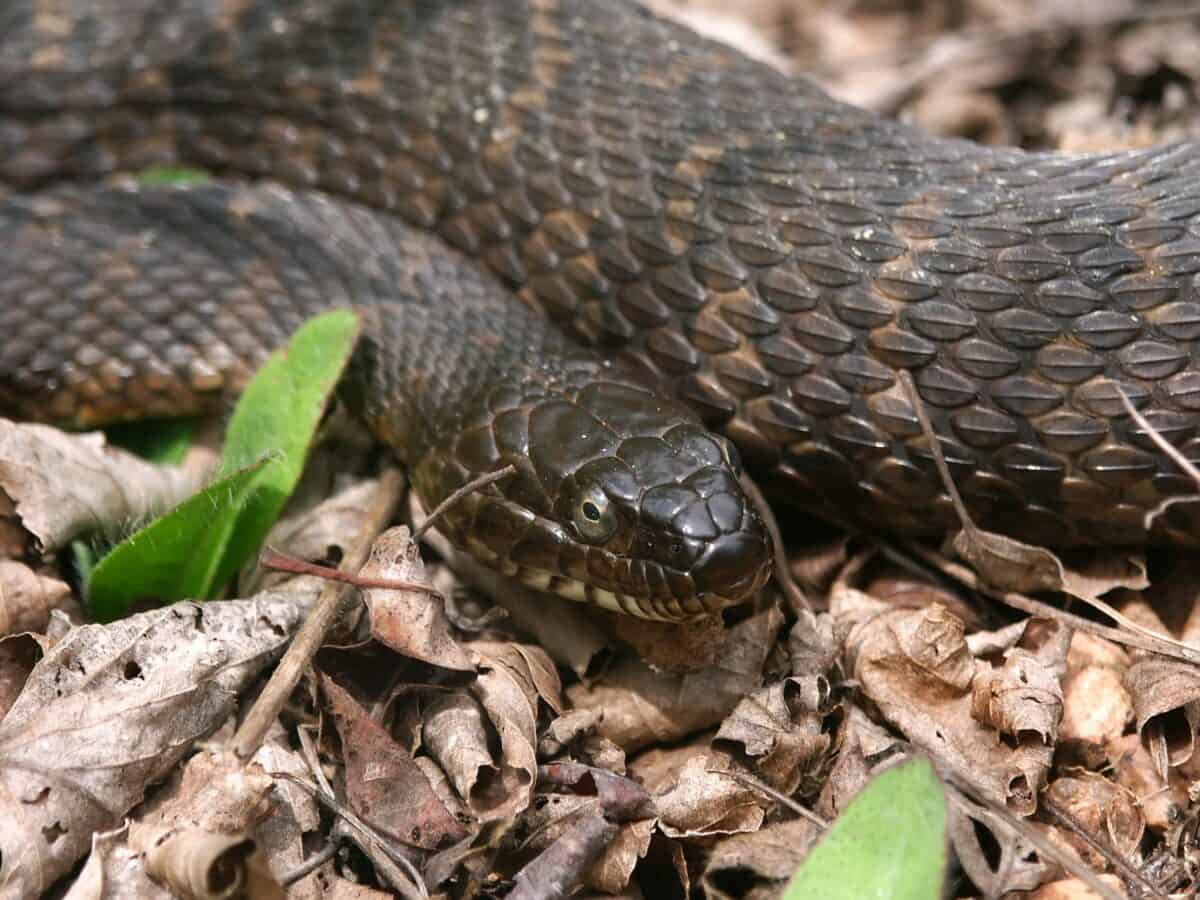
The Northern Water Snake (Nerodia sipedon) is frequently and tragically misidentified as the venomous Cottonmouth throughout Georgia, leading to countless unnecessary killings of this beneficial reptile. This substantial non-venomous snake, which can reach up to 4.5 feet in length, displays dark crossbands on a background color ranging from brown to grayish, which darken with age until older specimens appear almost uniformly dark. Their heavy-bodied appearance and tendency to flatten when threatened further contributes to confusion with Cottonmouths, though Northern Water Snakes lack the triangular head, vertical pupils, and facial pits of venomous pit vipers.
Found in nearly every aquatic habitat across Georgia, from mountain streams to coastal swamps, Northern Water Snakes are excellent swimmers that feed primarily on fish and amphibians. Unlike Cottonmouths that often stand their ground when threatened, Northern Water Snakes typically flee into the water at the first sign of danger. However, when cornered, they may hiss, flatten their bodies, and strike defensively—behaviors that unfortunately reinforce public misidentification and fear. These defensive displays, while dramatic, are harmless, as the snake lacks venom and poses no real threat to humans.
Promoting awareness and understanding of species like the Northern Water Snake is crucial for both public safety and conservation. These snakes play a vital ecological role in controlling populations of fish and amphibians, and their presence is a strong indicator of healthy aquatic ecosystems. By learning to distinguish them from truly dangerous species, residents and visitors alike can contribute to more peaceful human-wildlife coexistence. Education is the first step in replacing fear with respect—and in ensuring that beneficial, misunderstood animals are protected rather than persecuted.
Conclusion: Know What to Fear—and What to Respect

Georgia’s wild spaces are home to an impressive range of venomous creatures, including copperheads, cottonmouths, eastern diamondback rattlesnakes, black widow spiders, and fire ants, among others. While these animals can pose a threat, they typically avoid human contact and only bite or sting in self-defense. Most incidents occur when people accidentally surprise or mishandle them, making education and awareness your best tools for prevention and safety.
At the same time, not every intimidating creature is dangerous. Harmless lookalikes—like the non-venomous eastern milk snake or the bold but benign wolf spider—often get misjudged due to their resemblance to more dangerous species. Learning to tell the difference helps reduce unnecessary fear and promotes a healthier relationship with the local wildlife. When we understand who we’re sharing the land with, we’re better equipped to stay safe, protect biodiversity, and foster a deeper respect for Georgia’s natural world.
Worried about unexpected vet bills?
Pet insurance can cover thousands in unexpected vet costs. Get a free quote from Lemonade in under 2 minutes.
Get My Free Quote →Sponsored · Opens Lemonade.com

From exploring the marine wonders in the Azores and witnessing the vast savannas of Kenya, to delving deep into the rich biodiversity of South Africa and traversing iconic landscapes in Australia and the US like Yellowstone, Chris's experiences are vast.
With a penchant for diving alongside sharks, the ocean holds a special place in his heart.
Through his academic insights, he champions wildlife conservation, striving with 'Animals Around The Globe' to cultivate a profound connection between humans and animals, enhancing our mutual appreciation.
Connect with him at Feedback@animalsaroundtheglobe.com.
- The Most Common Backyard Wildlife in Pennsylvania - June 9, 2026
- The Surprising Way Sea Otters Use Rocks as Tools - June 9, 2026
- Squirrels Adopt Orphaned Babies Like Their Own - June 9, 2026
Leave a comment
You must be logged in to post a comment.