


In a remarkable testament to America’s prehistoric past, construction workers made an astonishing discovery while upgrading an ordinary roadway – mammoth tusks buried beneath the asphalt. This finding represents not just a fascinating glimpse into North America’s Ice Age megafauna, but also highlights how our modern infrastructure often lies directly atop ancient landscapes. The discovery of these mammoth remains provides scientists with valuable data about these magnificent creatures that once roamed the continent and offers insight into the ecological conditions that existed thousands of years ago. Let’s explore this extraordinary find and what it reveals about our planet’s fascinating past.
The Unexpected Discovery

The remarkable find occurred during routine road construction work when heavy machinery operators noticed something unusual protruding from the soil beneath the roadbed. What initially appeared to be oddly shaped logs turned out to be the distinctive curved tusks of a woolly mammoth, preserved for thousands of years under layers of sediment and, more recently, under the pavement of a modern American roadway. Construction was immediately halted as experts were called in to properly excavate and preserve these prehistoric artifacts. The discovery highlights how our everyday world is built upon layers of history, with ancient treasures sometimes lying just feet below our daily commutes.
Location and Context of the Find

The mammoth tusks were discovered during infrastructure improvements on a roadway in the American Midwest, an area known to have been home to numerous Pleistocene megafauna. This region, which experienced significant glaciation during the last Ice Age, created ideal preservation conditions for such remains. The specific geology of the area, with its fine sediments and gradual deposition processes, contributed to the exceptional preservation of the tusks.
This particular location adds to a growing map of mammoth discoveries across the United States, helping paleontologists better understand the distribution and movement patterns of these ancient elephants throughout North America during the late Pleistocene epoch, approximately 126,000 to 11,700 years ago.
Physical Characteristics of the Tusks

The recovered tusks measured approximately 9 feet in length, exhibiting the characteristic spiral curve distinctive of mammoth species. Preliminary examinations indicated they belonged to a mature Columbian mammoth (Mammuthus columbi), a species that stood up to 14 feet tall at the shoulder and could weigh up to 10 tons.
The tusks displayed excellent preservation, with intact layers of dentin that will allow researchers to conduct growth ring analysis. Unlike modern elephant tusks, mammoth tusks often grew in a more pronounced spiral pattern and could reach extraordinary lengths. The tusk material consisted primarily of dentin surrounded by a thin layer of cementum, with the internal structure revealing annual growth patterns similar to tree rings. These growth patterns offer scientists valuable data about the animal’s life history, including details about its diet, health challenges, and the climate conditions it experienced during its lifetime.
Age Determination and Dating Methods
Scientists employed multiple dating techniques to determine the age of the mammoth tusks. Radiocarbon dating, which measures the decay of carbon isotopes, indicated the remains were approximately 13,000 years old, placing them toward the end of the Pleistocene epoch. This timing coincides with a period of significant climate change in North America as the last Ice Age was ending.
Researchers also utilized amino acid racemization, which analyzes the conversion rate of amino acids in organic material, to confirm the radiocarbon results. Additionally, stratigraphic analysis of the soil layers surrounding the tusks provided contextual dating evidence. The combination of these methods offered a comprehensive age assessment, placing the mammoth in a crucial period of North American prehistory when many megafauna species were facing extinction pressures from both climate change and human hunting activities.
Woolly Mammoths in North America

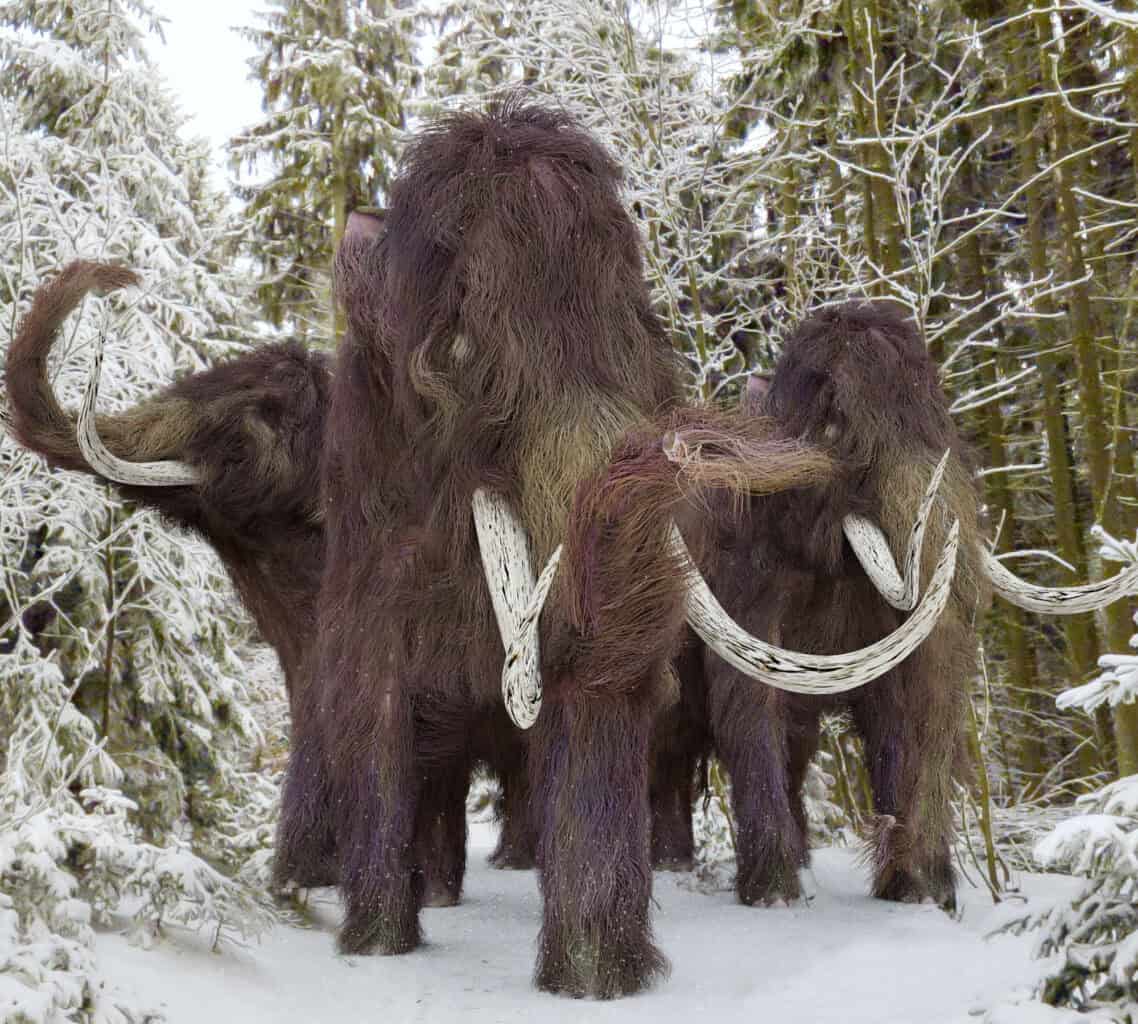
Woolly mammoths (Mammuthus primigenius) arrived in North America around 100,000 years ago, crossing from Asia via the Bering Land Bridge. However, the tusks in this discovery likely belonged to a Columbian mammoth (Mammuthus columbi), a related species that evolved in North America and was adapted to somewhat warmer conditions than its woolly cousin. These magnificent creatures were widespread across the continent, from Alaska to Mexico and from California to the East Coast.
Mammoths were integral components of the Pleistocene ecosystem, serving as ecosystem engineers that maintained grassland habitats through their feeding behaviors. Their presence influenced vegetation patterns and supported numerous other species that depended on the open environments they helped maintain. Fossil evidence suggests mammoths lived in North America until approximately 10,000 years ago, with their disappearance coinciding with the end of the last Ice Age and the increasing presence of human hunters.
Scientific Significance of the Discovery

The discovery of these mammoth tusks beneath a U.S. road represents a significant scientific opportunity. The exceptional preservation quality allows researchers to conduct detailed analyses of the tusk structure, including isotope studies that can reveal information about the animal’s diet, migration patterns, and the climate it experienced throughout its life. Growth rings within the tusks function similarly to tree rings, recording seasonal changes and potential periods of stress.
DNA analysis may also be possible if organic material within the tusks has been adequately preserved. This genetic information could contribute to ongoing research into mammoth populations, their genetic diversity, and their evolutionary relationships with modern elephants. Additionally, the discovery provides valuable data points for mapping the distribution of mammoth populations during the late Pleistocene, helping scientists understand their habitat preferences and population densities prior to extinction.
Excavation Challenges and Techniques

Extracting the mammoth tusks from beneath the roadway presented numerous challenges requiring specialized techniques. The excavation team employed a methodical approach, first carefully removing the road surface and then proceeding with fine tools to expose the tusks without causing damage. The brittle nature of fossilized tusks required the application of hardening compounds to prevent fracturing during removal.
The team constructed a custom plaster jacket around each tusk before extraction, a technique commonly used in paleontological excavations to protect fragile specimens. Environmental controls were also implemented to maintain consistent humidity levels, as rapid drying could cause the tusks to crack or deteriorate. The entire process was meticulously documented through photography, 3D scanning, and detailed notes regarding the position of the remains and surrounding soil composition. This careful approach ensured maximum preservation of both the physical specimens and the scientific data they contained.
Preservation Efforts and Museum Preparation

Following excavation, the mammoth tusks underwent an intensive preservation process to ensure their long-term stability. Conservation specialists carefully cleaned the specimens using specialized tools to remove sediment without damaging the delicate surfaces. The tusks were then treated with consolidants to strengthen their structure and prevent further deterioration. Maintaining proper humidity levels was crucial during this phase, as fossil ivory can crack if it dries too quickly.
The preservation team also created detailed molds of the tusks before any invasive sampling occurred, ensuring their form would be recorded even if samples were taken for scientific analysis. Once stabilized, the tusks were prepared for museum display through the creation of custom mounts designed to support their weight without placing stress on vulnerable areas. The entire preservation process took several months, requiring collaboration between paleontologists, conservators, and museum specialists to ensure these ancient artifacts would be available for both scientific study and public education for generations to come.
Similar Discoveries Across the United States

The discovery of these mammoth tusks is not an isolated incident but part of a broader pattern of Ice Age megafauna remains being uncovered during construction and infrastructure projects across the United States. In 2022, workers discovered mammoth bones during the expansion of Los Angeles’ Purple Line subway. Michigan has yielded numerous mammoth discoveries during farming and construction activities, including the famous “Bristle Mammoth” uncovered on a farm near Chelsea in 2015. Nebraska, South Dakota, and Colorado have all reported similar finds during road construction projects. The frequency of these discoveries highlights how widespread these animals once were across North America. It also emphasizes the importance of protocols for construction companies when potential paleontological resources are encountered. Many states now have procedures requiring construction to pause when significant fossils are discovered, allowing scientific documentation before work continues. These policies help balance infrastructure development with the preservation of America’s prehistoric heritage.
What Caused Mammoth Extinction?

The extinction of mammoths in North America approximately 10,000 years ago remains a subject of scientific debate, with evidence pointing to multiple contributing factors. Climate change at the end of the Pleistocene brought warming temperatures and shifting vegetation patterns that disrupted the grassland ecosystems mammoths depended upon.
This environmental transformation coincided with the arrival and expansion of human populations across North America, with archaeological evidence suggesting early humans hunted these massive creatures. The “overkill hypothesis” proposes that human hunting pressure, even if moderate, could have pushed already-stressed mammoth populations toward extinction. More recent research has also identified potential contributions from infectious diseases and even a possible cosmic impact event that may have triggered abrupt climate changes around 12,900 years ago.
The tusks discovered beneath the roadway come from this crucial time period, potentially offering new clues about the stresses these animals faced in their final millennia. Most scientists now favor a multi-causal explanation for mammoth extinction, with climate change, human hunting, habitat loss, and potentially other factors combining to eliminate these magnificent animals from the landscape.
Public Interest and Educational Impact

The discovery of mammoth tusks beneath an American roadway captured significant public attention, sparking renewed interest in North America’s prehistoric past. News of the find spread quickly through media outlets and social media platforms, with many people expressing amazement that such remarkable remnants of ancient life could be found in such an ordinary location. Local museums reported increased visitation following the announcement, with particular interest from families and school groups.
Educational institutions leveraged the discovery to develop new curriculum materials about paleontology, prehistoric North America, and climate change, connecting these ancient remains to contemporary environmental discussions. Public lectures by scientists involved in the excavation drew large audiences, indicating substantial community interest in understanding the significance of the find. This public engagement highlights how paleontological discoveries can serve as powerful educational tools, connecting people with scientific concepts through tangible, fascinating objects from the distant past.
Conclusion: Bridging Past and Present

The discovery of mammoth tusks beneath a U.S. road stands as a powerful reminder of the deep history beneath our modern world, where ancient ecosystems and extinct species once flourished in landscapes we now traverse daily. These magnificent remains offer scientists valuable data about mammoth biology, ecology, and the environmental conditions that existed during the late Pleistocene, potentially providing new insights into the complex factors that led to their extinction.
The careful excavation, preservation, and study of these tusks demonstrates the importance of protocols that balance infrastructure development with the protection of our paleontological heritage. Perhaps most significantly, this discovery serves as a tangible connection between our present and the ancient past, allowing us to envision a time when these majestic creatures roamed across the very ground where we have built our modern civilization.

From exploring the marine wonders in the Azores and witnessing the vast savannas of Kenya, to delving deep into the rich biodiversity of South Africa and traversing iconic landscapes in Australia and the US like Yellowstone, Chris's experiences are vast.
With a penchant for diving alongside sharks, the ocean holds a special place in his heart.
Through his academic insights, he champions wildlife conservation, striving with 'Animals Around The Globe' to cultivate a profound connection between humans and animals, enhancing our mutual appreciation.
Connect with him at Feedback@animalsaroundtheglobe.com.
- The Anatomy of a Spider: What Makes It So Unique? - July 19, 2026
- The Largest Wolf Pack Ever Tracked in the Wild - July 19, 2026
- Saving Manatees in Florida’s Warming Waters - July 19, 2026