

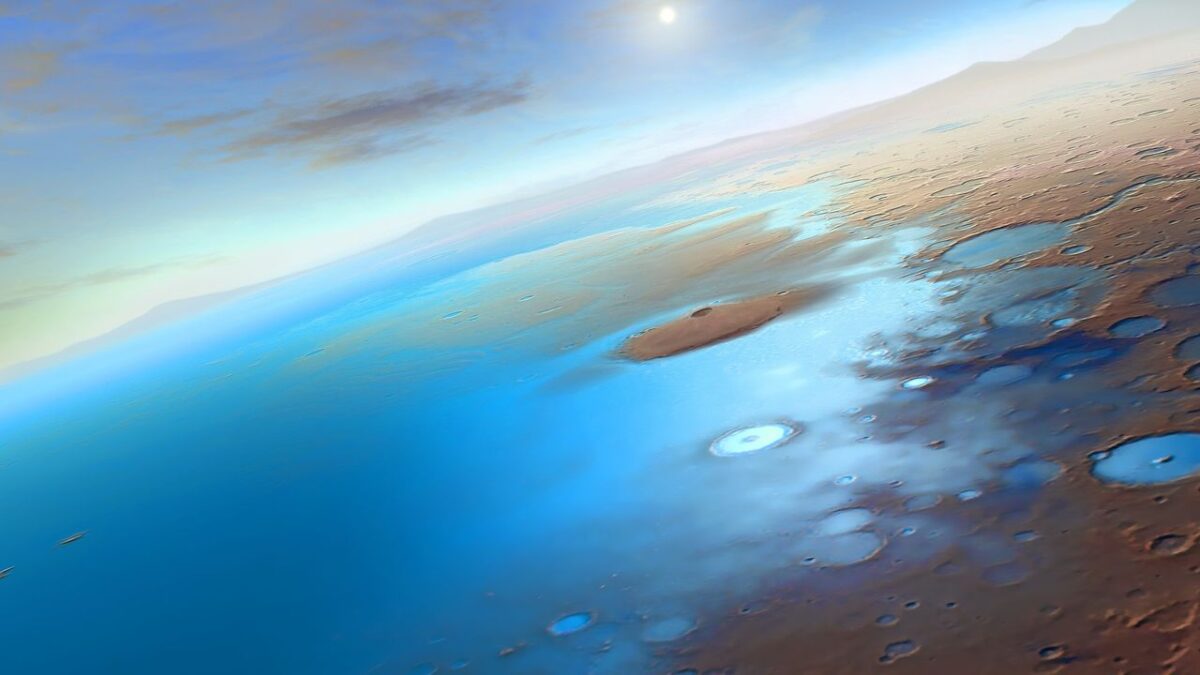
A Glimpse into Mars’ Blue Epoch (Image Credits: Cdn.mos.cms.futurecdn.net)
Recent high-resolution images from Mars have uncovered geological features that suggest the planet once hosted vast bodies of water, transforming our understanding of its early environment.
A Glimpse into Mars’ Blue Epoch
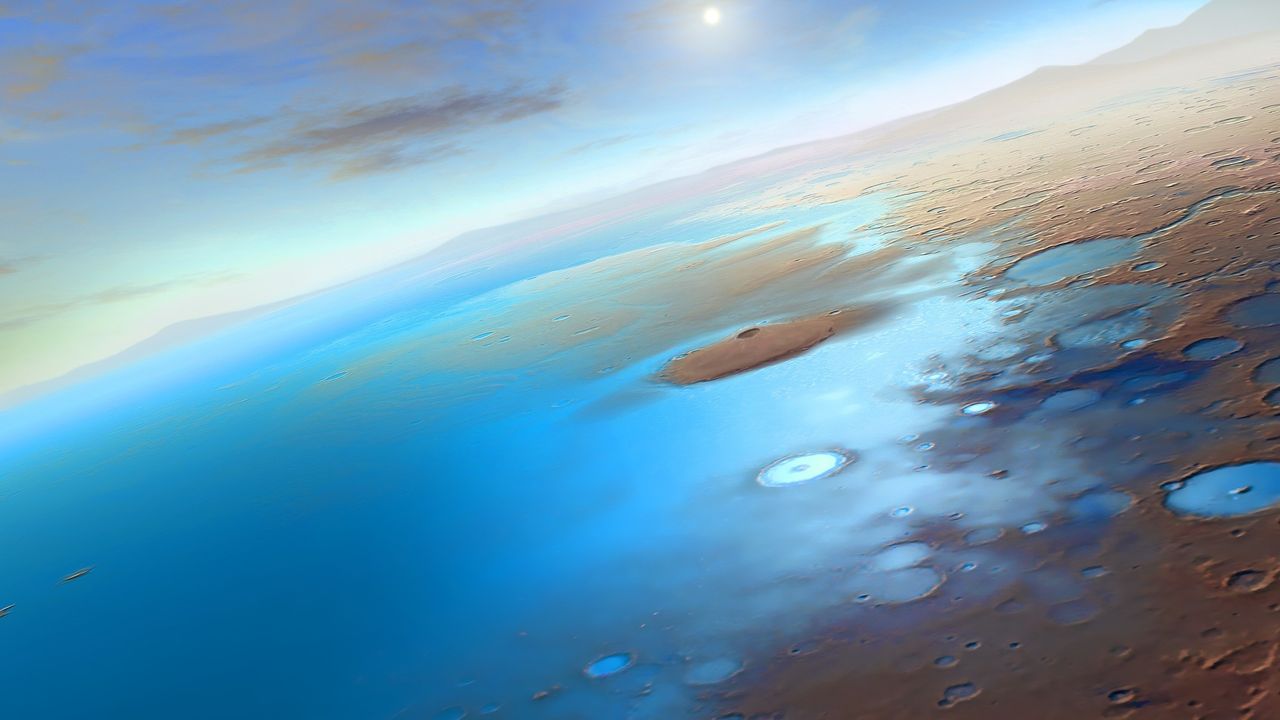
Scientists have long suspected that Mars harbored liquid water in its distant past, but new data provides some of the strongest confirmation yet. Around three billion years ago, the Red Planet likely supported rivers and oceans that shaped its surface in ways reminiscent of Earth. Researchers from the University of Bern analyzed images from the European Space Agency’s CaSSIS instrument, which revealed delta-like formations in the Valles Marineris canyon system.
These structures, known as scarp-fronted deposits, indicate sediment buildup from flowing water emptying into standing bodies. The findings, published in early 2026, point to a coastline that encircled much of the northern hemisphere. This evidence challenges previous models that downplayed the extent of Martian water coverage.
Decoding the River Deltas
The discovery hinges on detailed topographic maps that show ancient shorelines at elevations consistent with a global ocean. In Valles Marineris, the Solar System’s largest canyon network, researchers identified features rising from what would have been sea floors. These deltas formed as rivers deposited materials into the ocean, creating layered sediments preserved over eons.
High-resolution imaging allowed the team to trace these formations along potential coastlines, spanning thousands of kilometers. The consistent elevation of -3,650 meters below the Martian datum aligns with a water level that covered nearly half the planet’s surface. Such patterns mirror terrestrial river mouths, like those in the Nile Delta, but on a planetary scale.
Earlier missions, including NASA’s Perseverance rover, had hinted at water activity through mineral signatures, but these new visuals offer direct morphological proof. The absence of wind or volcanic explanations for the deposits further bolsters the water hypothesis.
Key Pieces of Evidence
Multiple lines of inquiry converge to paint a picture of a once-wet Mars. From orbital surveys to rover data, the accumulating clues build a compelling case.
- Subsurface radar from China’s Zhurong rover detected dipping reflectors in Utopia Planitia, suggestive of prograding shorelines up to 35 meters thick.
- Topographic maps from Penn State researchers in 2022 indicated sea-level rise patterns, implying a warmer, wetter climate.
- Chemical analysis of Martian soil reveals hydrated minerals, remnants of prolonged water exposure.
- Gullies and channel networks across the northern lowlands resemble eroded riverbeds, spanning continents-sized areas.
- Isotopic studies from NASA suggest Mars lost an ocean equivalent to 20 percent of its surface area through atmospheric escape.
These elements, combined with the latest delta observations, discount alternative origins like dust accumulation or lava flows.
Implications for Habitability
The presence of ancient oceans raises profound questions about life’s potential on Mars. A water-rich environment would have provided the necessary conditions for microbial organisms to thrive, much like early Earth. Scientists now view these coastal zones as prime targets for future sample returns.
Understanding how Mars transitioned from blue to red informs models of planetary evolution. The denser atmosphere required for liquid water stability likely dissipated due to solar wind and a weakening magnetic field. Yet, subsurface reservoirs may persist today, shielded from the harsh surface.
Comparative studies with Earth’s ocean history highlight parallels, including possible cycles of flooding and drying. This watery past underscores Mars’ role as a key analog for exoplanet habitability assessments.
Charting the Path Forward
Upcoming missions will refine these discoveries. NASA’s Mars Sample Return program aims to analyze delta sediments for biosignatures, while ESA’s Rosalind Franklin rover targets similar sites in 2028. Ground-penetrating radar and spectroscopic tools will probe deeper into the subsurface for hidden water ice.
| Feature | Description | Implication |
|---|---|---|
| River Deltas | Sediment layers in Valles Marineris | Evidence of river-ocean interactions |
| Shoreline Contours | Elevations at -3,650 m | Global ocean extent |
| Hydrated Minerals | Detected in soil samples | Long-term water presence |
These efforts promise to unlock more about Mars’ climate history and guide searches for extraterrestrial life.
Key Takeaways
- Mars likely hosted an Arctic-sized ocean three billion years ago, covering half its surface.
- River deltas in Valles Marineris provide morphological proof of ancient water flows.
- These findings enhance prospects for past habitability and inform future exploration sites.
As we peel back the layers of Mars’ rusty exterior, the vision of a blue world emerges, reminding us that our cosmic neighbor may hold echoes of life’s beginnings. What aspects of Mars’ watery past intrigue you most? Share your thoughts in the comments below.

- South Texas Eyes U.S. Record for Hottest Winter Temperature With 106°F Inferno in February - May 9, 2026
- Bats Play a Crucial Role in Controlling Insect Populations Across the United States - April 30, 2026
- The Recovery of the California Condor Offers Hope for Other Critically Endangered Birds - April 30, 2026