


In the frigid waters of the Arctic, a mystical creature that seems plucked from fairy tales actually exists. The narwhal, often called the “unicorn of the sea,” captivates our imagination with its most distinctive feature: a long, spiraling tusk that protrudes from its head. Despite appearing in artwork and literature for centuries, many people are surprised to learn that narwhals are real animals—not mythical beings. Even more fascinating is the revelation that what appears to be a horn is actually an elongated tooth that has evolved for specialized purposes. This remarkable marine mammal stands as a testament to nature’s extraordinary adaptations and continues to intrigue scientists and nature enthusiasts alike.
The Narwhal: A Living Legend
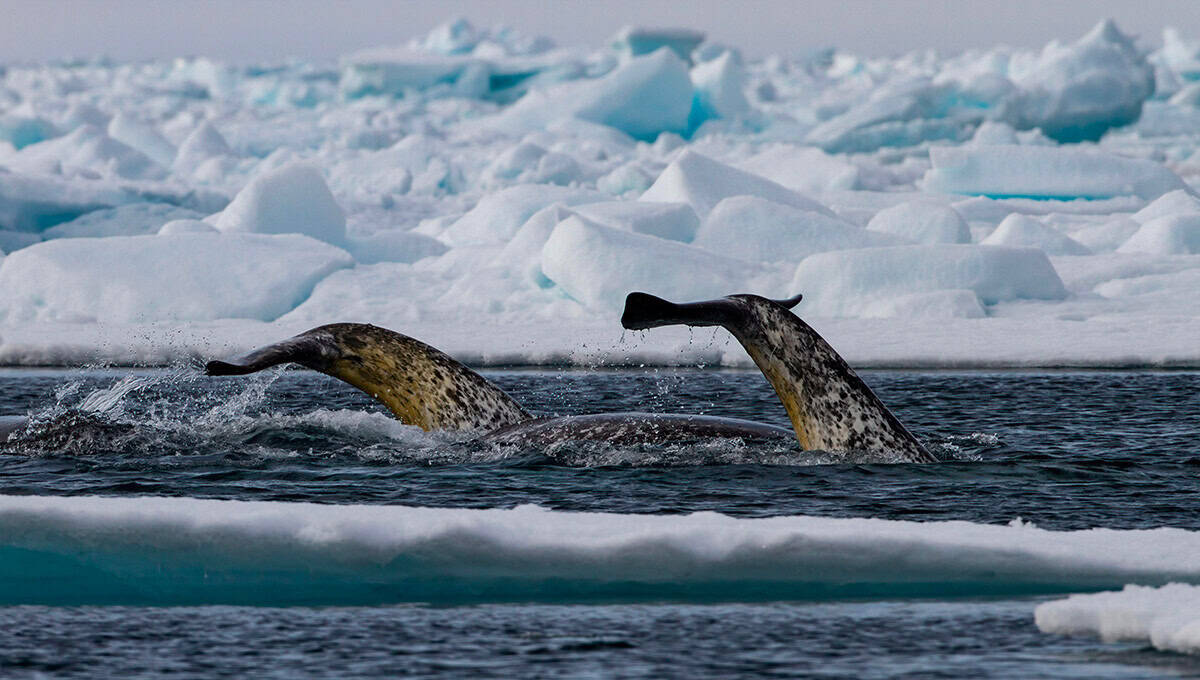
Narwhals (Monodon monoceros) are medium-sized whales that belong to the family Monodontidae, which they share with their close relative, the beluga whale. Their scientific name translates to “one-tooth, one-horn,” a perfect description of their most famous feature. These marine mammals primarily inhabit the Arctic waters around Greenland, Canada, and Russia, where they navigate through pack ice and open waters throughout the year.
Unlike other whale species that migrate to warmer waters during winter, narwhals remain in the Arctic year-round, adapting to the harsh, ice-covered environment. Their bodies have evolved to withstand temperatures that would be lethal to most mammals, with a thick layer of blubber that can reach up to 4 inches (10 cm) thick. This adaptation not only provides insulation but also stores energy for times when food may be scarce, allowing these remarkable creatures to thrive where few others can survive.
The Extraordinary Tooth: Not Actually a Horn
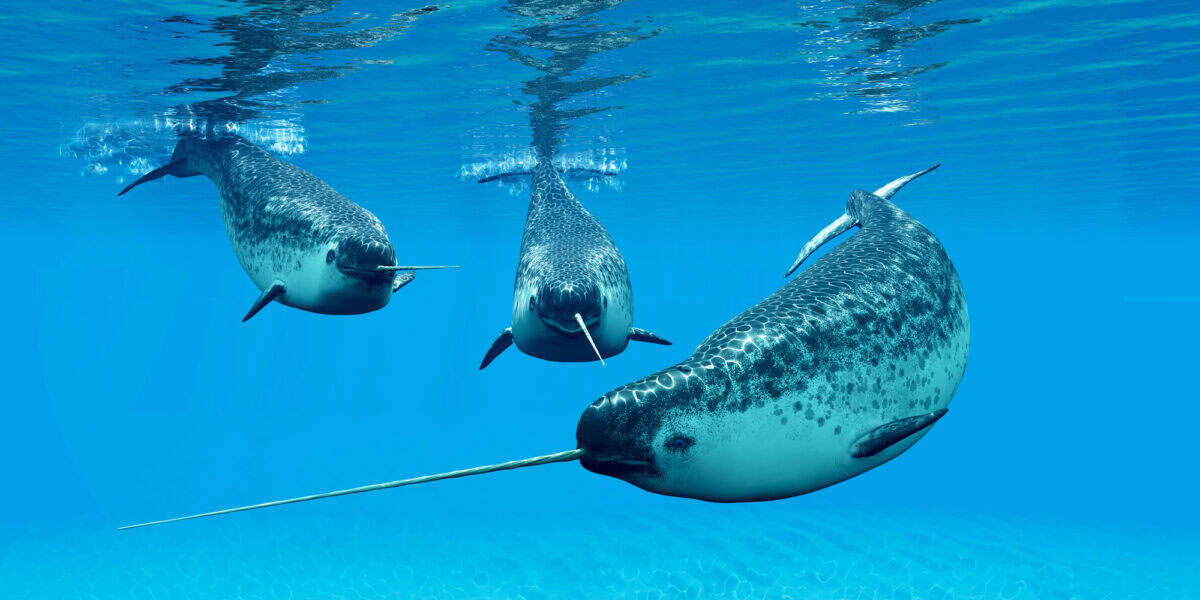
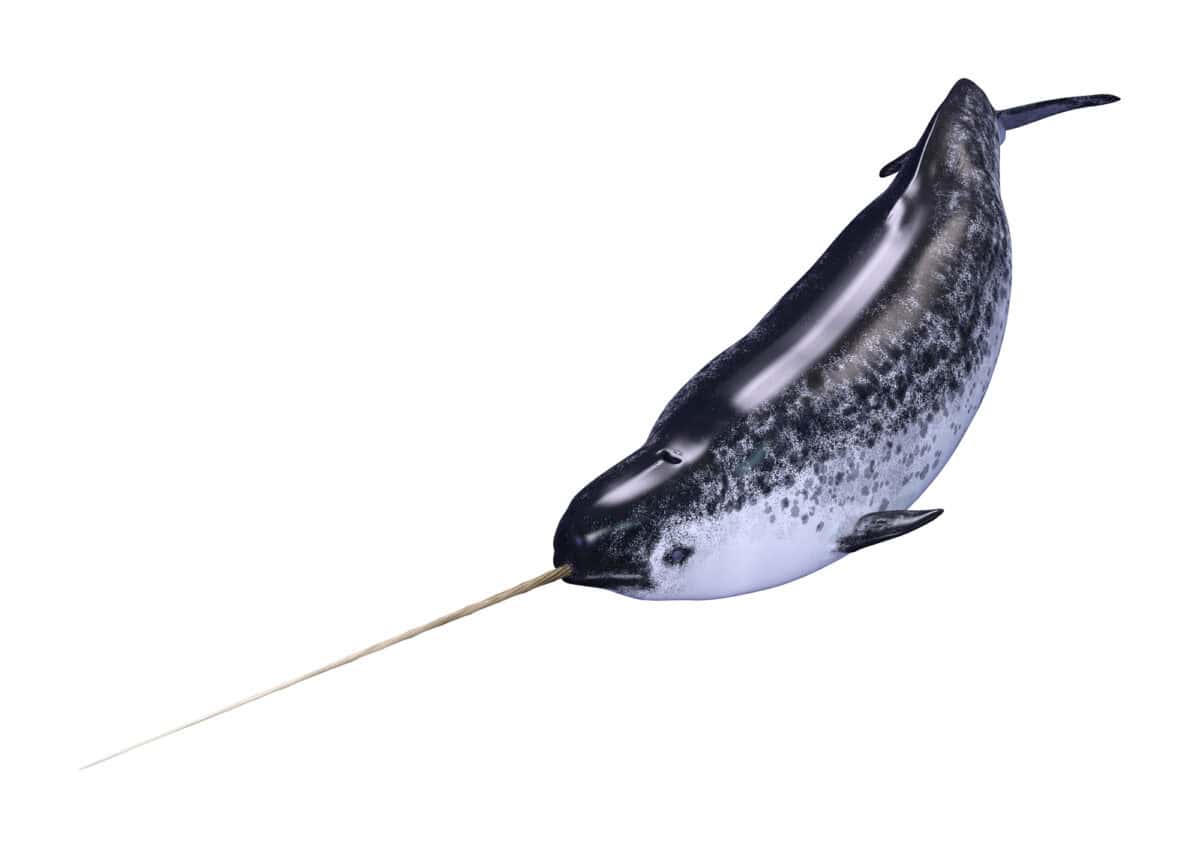
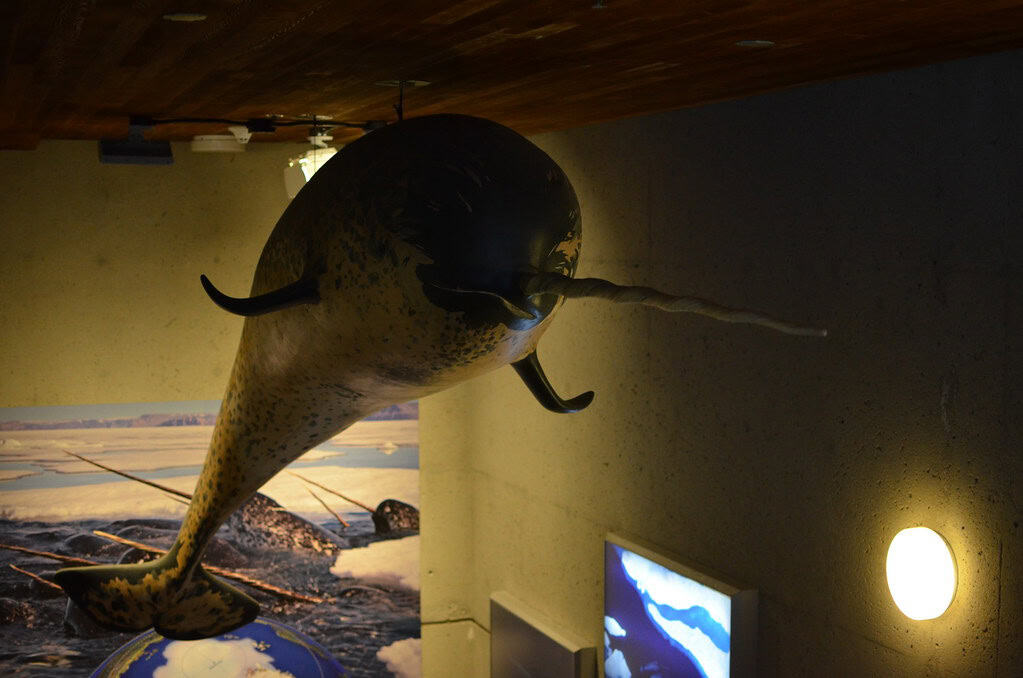
The narwhal’s most iconic feature—its “horn”—is actually an elongated tooth that spirals counterclockwise and can grow up to 10 feet (3 meters) in length. This specialized tooth erupts through the upper left lip of the narwhal, creating the illusion of a unicorn-like horn. What makes this adaptation even more remarkable is that it’s almost exclusively found in males, with only about 15% of females developing a tusk. In extremely rare cases, some male narwhals may develop two tusks.
The tusk is actually the narwhal’s left canine tooth that grows throughout its lifetime, spiraling outward through the animal’s upper lip. Unlike normal teeth that have a hard external layer of enamel covering a bony interior, the narwhal tusk is inside-out: its soft, nerve-filled interior is surrounded by a hard, dentin exterior that forms the distinctive spiral pattern. This unique structure contains millions of nerve endings that extend from the narwhal’s brain to the outer surface of the tusk, making it an extraordinarily sensitive organ.
Evolution of a Marine Unicorn

Evolutionary biologists believe the narwhal’s tusk developed as a specialized adaptation over millions of years. Fossil records show that the early ancestors of narwhals had normal teeth, but around 3.9 million years ago, selective pressures began favoring the elongation of the left canine tooth. This unique evolutionary path has resulted in what may be one of the most specialized teeth in the animal kingdom.
The narwhal’s closest living relative, the beluga whale, has a completely different dental arrangement with numerous small, uniform teeth designed for catching fish. This dramatic difference between such closely related species highlights how evolution can produce vastly different adaptations even within the same family. Scientists believe that the development of the tusk represents a case of sexual selection, similar to the elaborate antlers of deer or the colorful plumage of certain birds—features that evolved primarily to attract mates and establish dominance.
Functions of the Tusk: Scientific Discoveries

For centuries, the purpose of the narwhal’s tusk remained a mystery, giving rise to numerous theories and legends. Recent scientific research has revealed several potential functions for this extraordinary tooth. In 2014, drone footage captured narwhals using their tusks to stun Arctic cod by hitting them, making the fish easier to capture and eat. This discovery provided the first visual evidence of the tusk being used for feeding.
However, the tusk serves multiple purposes beyond hunting. Research published in 2014 in the journal “The Anatomical Record” confirmed that the tusk is highly sensitive and can detect changes in water temperature, pressure, and even the concentration of particles in the water. With millions of nerve endings connecting directly to the narwhal’s brain, the tusk essentially functions as a sophisticated sensory organ that helps the animal navigate its environment and potentially locate food sources. This sensory ability may be particularly valuable in the dark Arctic waters during winter months when daylight is scarce.
The Tusk as a Social Tool

Perhaps the most widely accepted function of the narwhal tusk relates to social behavior and mating. Scientists have observed male narwhals crossing and rubbing their tusks together in what appears to be a form of communication or establishment of social hierarchy. This behavior, known as “tusking,” may help males determine dominance without resorting to potentially dangerous physical combat. Since the tusk contains sensitive nerve endings, this interaction likely provides important sensory information to both participants.
Further supporting the social function theory, researchers have found that males with larger tusks typically have higher levels of testosterone and larger testes, suggesting that tusk size may be an indicator of reproductive fitness. Females may select mates based on tusk characteristics, driving the evolutionary development of this unique feature. The predominantly male distribution of tusks (with approximately 85% of males developing them compared to only 15% of females) strongly suggests that sexual selection has played a significant role in the evolution of this extraordinary tooth.
Physical Characteristics Beyond the Tusk
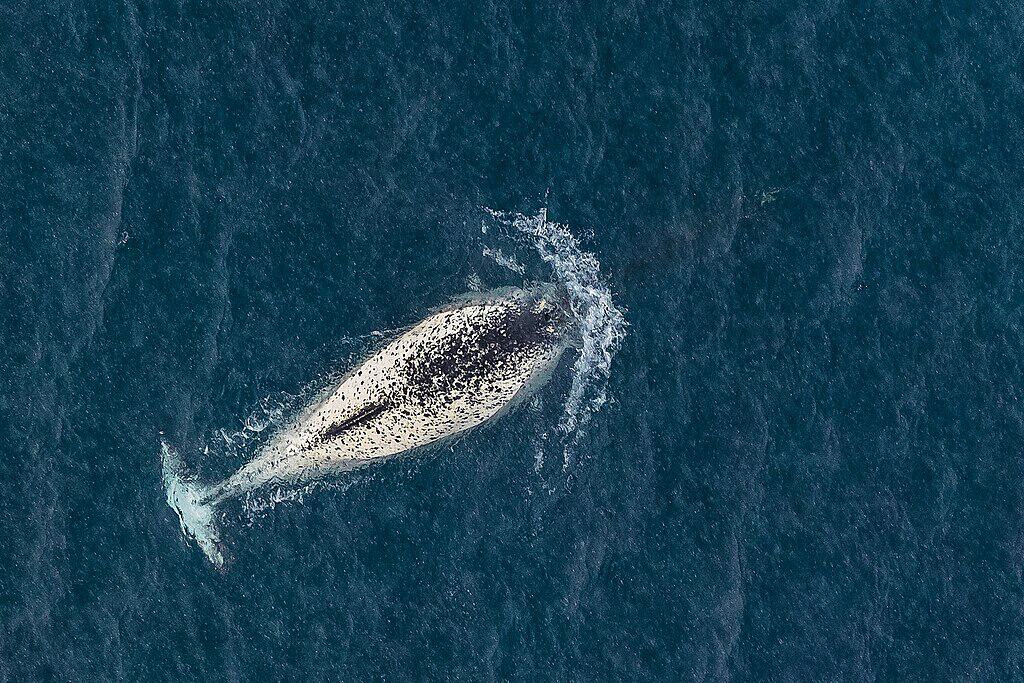
While the tusk dominates discussions about narwhals, these marine mammals possess numerous other fascinating physical characteristics. Adult narwhals typically reach lengths of 13 to 18 feet (4 to 5.5 meters) and weigh between 1,800 and 3,500 pounds (800 to 1,600 kilograms). Their bodies display a distinctive coloration pattern that changes with age—newborns are a uniform blue-gray, juveniles develop dark speckles, and adults exhibit a mottled pattern with light patches on a dark background.
Unlike many whale species, narwhals lack a dorsal fin, instead having a ridge along their backs that may help stabilize them when swimming under ice. This adaptation, along with their relatively small pectoral fins, allows them to navigate through narrow ice channels. Narwhals also possess a specialized cardiovascular system that enables them to dive to extraordinary depths—up to 5,900 feet (1,800 meters)—and remain underwater for up to 25 minutes. Their ability to slow their heart rate during dives helps conserve oxygen, allowing them to reach deep-water feeding grounds that many predators cannot access.
The Narwhal in History and Culture

Throughout history, the narwhal’s extraordinary tusk has captured human imagination and become integrated into various cultural narratives. In medieval Europe, these tusks were highly prized and often sold as unicorn horns, believed to possess magical properties including the ability to neutralize poison and cure melancholy. These “alicorn” treasures were worth many times their weight in gold, with Queen Elizabeth I reportedly paying £10,000 (equivalent to millions in today’s currency) for a narwhal tusk that was fashioned into a scepter.
Indigenous Arctic peoples, including the Inuit, have a much deeper and more practical relationship with narwhals. These communities have hunted narwhals sustainably for thousands of years, using every part of the animal—the skin (muktuk) for food, the blubber for oil, the meat for sustenance, and the tusks for tools and artwork. In Inuit mythology, narwhals were created when a woman with a harpoon line tied around her waist was dragged into the sea, her long black hair twisting into the spiral tusk we see today. This cultural connection continues to this day, with narwhal hunting remaining an important part of traditional subsistence practices in some Arctic communities.
Narwhal Behavior and Social Structure
Narwhals are highly social animals that typically travel in groups called pods, which can range from a few individuals to several hundred. These pods often segregate by sex and age, with adult males forming their own groups for much of the year and rejoining mixed pods during breeding season. This social structure allows for specialized feeding strategies and may provide protection against predators such as killer whales and polar bears.
Communication among narwhals is sophisticated, involving a complex repertoire of clicks, whistles, and pulsed sounds that can travel long distances underwater. They also use echolocation to navigate and find food in the dark Arctic waters, especially during winter months when they spend up to five months in near-total darkness under the sea ice. Researchers have found that narwhals have unique clicking patterns that may allow individuals to recognize each other, suggesting a level of social complexity that we are only beginning to understand.
Feeding Habits and Diet

Narwhals are specialized feeders with a relatively narrow diet compared to other cetaceans. Their primary food sources include Greenland halibut, Arctic cod, squid, and shrimp. Unlike many toothed whales that use their teeth to capture and process food, narwhals typically perform a specialized form of suction feeding. They approach their prey, open their mouths to create negative pressure, and rapidly suck in their target before swallowing it whole.
The feeding behavior of narwhals changes seasonally and is closely tied to their annual migration patterns. During summer months when they congregate in coastal fjords, they feed less intensively, sometimes going for several months with minimal food intake. Winter represents their primary feeding period, when they dive repeatedly to depths of 800 to 1,500 meters (2,600 to 4,900 feet) to access rich deep-water prey resources. This unique feeding strategy allows them to exploit food sources that are inaccessible to potential competitors, giving them an ecological niche in the harsh Arctic environment.
Conservation Status and Threats

The global narwhal population is estimated at approximately 123,000 individuals, with the majority living in Canadian waters. The International Union for Conservation of Nature (IUCN) currently lists narwhals as “Least Concern,” but this status masks significant regional variations and growing threats. Some subpopulations, particularly those in East Greenland, have experienced dramatic declines and face serious conservation challenges.
Climate change represents the most significant long-term threat to narwhal survival. As Arctic sea ice rapidly diminishes due to global warming, narwhals lose crucial habitat and face increased competition and predation. Their specialized adaptations and limited range make them particularly vulnerable to environmental changes. Additional threats include industrial activities such as oil and gas exploration, which create noise pollution that can disrupt narwhal communication and navigation, and increasing shipping traffic through the Northwest Passage as ice retreats, which further fragments their habitat. Sustainable hunting by indigenous communities is carefully managed through quotas, but illegal poaching for tusks continues to pose a threat in some regions.
Scientific Research Challenges

Studying narwhals presents unique challenges that have contributed to their mysterious reputation. Their remote Arctic habitat, often covered in ice and experiencing extreme weather conditions, makes field research logistically difficult and expensive. Additionally, narwhals are notoriously shy around vessels and tend to avoid areas with human activity, making direct observation challenging. Unlike many whale species, narwhals do not thrive in captivity—none have survived more than a few months outside their natural environment—further limiting research opportunities.
Despite these obstacles, scientists are developing innovative approaches to study these elusive creatures. These include non-invasive tagging technologies that track migration patterns and diving behavior, passive acoustic monitoring to record vocalizations, and genetic analysis of tissues collected from hunted animals or naturally deceased specimens. Drone technology has revolutionized narwhal research by providing aerial perspectives of behavior that was previously impossible to observe. Collaborative research programs that incorporate traditional ecological knowledge from indigenous communities are also providing valuable insights into narwhal biology and ecology, creating a more comprehensive understanding of these fascinating marine mammals.
The Future of the Sea Unicorn

The narwhal’s future remains uncertain as the Arctic environment undergoes rapid transformation due to climate change. Scientific models predict that by 2100, summer sea ice in the Arctic could disappear completely, fundamentally altering the ecosystem that narwhals have evolved to inhabit. Their specialized adaptations, while perfect for the traditional Arctic environment, may become liabilities in a warming world with less ice cover and more competition from temperate species expanding northward.
Conservation efforts are increasingly focused on understanding how narwhals may adapt to these changes and identifying critical habitats that should receive special protection. International agreements like the Arctic Council’s framework for marine protected areas offer some hope for preserving key narwhal territories. Additionally, improved monitoring of population trends and health indicators will be essential for detecting problems before they become critical. The narwhal’s continued survival will likely depend on a combination of direct conservation measures, successful climate change mitigation efforts, and the remarkable animal’s own capacity to adapt to changing conditions—a test that will determine whether this living legend continues to patrol Arctic waters for generations to come.
Conclusion: More Than Just a Mythical Creature
The narwhal stands as one of nature’s most extraordinary creations—a real-life unicorn that has adapted to one of Earth’s most extreme environments through remarkable specialization. What appears at first glance to be a fantastical horn is actually a testament to the power of evolution to shape teeth into sensory organs, social tools, and possibly hunting implements. Far from being merely a curiosity or a living myth, the narwhal represents the culmination of millions of years of specialized adaptation to a unique ecological niche.
As we continue to study these elusive creatures, each discovery reveals new layers of complexity in their behavior, physiology, and social structures. The narwhal reminds us that truth can indeed be stranger and more wonderful than fiction, with adaptations that no human imagination could have invented. Their existence challenges us to protect not just an iconic species, but the entire Arctic ecosystem they depend upon—an environment undergoing unprecedented change due to human activity.
In preserving the narwhal, we safeguard not only a biological marvel but also a living connection to human history, indigenous culture, and the age of exploration. These remarkable animals, with their spiraling tusks and mysterious ways, continue to capture our imagination while reminding us that even in our modern world of instant information and satellite imagery, some of Earth’s most extraordinary creatures remain partially shrouded in mystery, waiting for us to understand their secrets.
The narwhal’s story is still being written, both in the scientific literature and in the Arctic waters where they continue their ancient way of life. As research technologies improve and our understanding deepens, we can hope that this knowledge will translate into effective conservation, ensuring that future generations can look northward and know that unicorns do exist—swimming beneath the ice of the Arctic seas, their extraordinary teeth spiraling through the cold, clear waters of their ancestral home.

From exploring the marine wonders in the Azores and witnessing the vast savannas of Kenya, to delving deep into the rich biodiversity of South Africa and traversing iconic landscapes in Australia and the US like Yellowstone, Chris's experiences are vast.
With a penchant for diving alongside sharks, the ocean holds a special place in his heart.
Through his academic insights, he champions wildlife conservation, striving with 'Animals Around The Globe' to cultivate a profound connection between humans and animals, enhancing our mutual appreciation.
Connect with him at Feedback@animalsaroundtheglobe.com.
- How Bald Eagles Choose a Lifelong Mate - June 27, 2026
- Fastest Reptile Runs on Water - June 27, 2026
- This Lizard Shoots Blood From Its Eyes - June 26, 2026