


In what has become one of the most unusual scientific discoveries in recent years, marine biologists have reported finding what appears to be an exceptionally large bat species off the Oregon coastline. The discovery, initially made by researchers conducting routine marine mammal surveys near Cannon Beach, has generated significant interest from the scientific community worldwide. This finding challenges our understanding of bat habitats and behaviors, as no known bat species has previously been documented to establish a permanent presence in marine environments. The scientific community initially approached the reports with skepticism, but photographic evidence and multiple sightings have prompted a more thorough investigation into this unprecedented phenomenon.
Understanding the Hoary Giant: Physical Characteristics

Preliminary observations suggest this bat species displays remarkable physical adaptations that distinguish it from any previously cataloged chiropteran species. Researchers have temporarily classified it as “Lasiurus oregonensis giganteus,” though formal taxonomic designation awaits further study. The specimen measures approximately 1.2 meters in wingspan—nearly three times larger than the common North American hoary bat.
Its fur appears waterproof with a distinctive silver-gray coloration on its back transitioning to a lighter cream underbelly. Perhaps most striking are the enlarged rear feet with semi-webbed structures that researchers speculate may assist with surface swimming or snatching prey from water. Tissue samples collected from molted fur indicate genetic markers consistent with the Vespertilionidae family but with significant adaptations that suggest either rapid evolution or a previously undiscovered evolutionary branch.
Habitat and Range: The Coastal Connection

Unlike traditional bat species that typically roost in caves, trees, or human structures, these giant bats appear to have established roosting sites in the sea caves and cliff formations along Oregon’s rugged coastline. Primary observation areas include the basalt formations near Ecola State Park and the remote sea caves south of Cape Perpetua. Marine biologists have documented small colonies ranging from 20-30 individuals, with evidence suggesting their range may extend from northern California to the southern Washington coast.
The Pacific Northwest’s unique combination of abundant sea caves, moderate coastal temperatures, and rich marine ecosystems appears to provide an ideal habitat for this unusual species. Researchers believe the coastal fog provides additional protection from predators and helps maintain the humidity levels these bats seem to prefer.
Dietary Patterns: Ocean Hunters

Perhaps the most fascinating aspect of these giant bats is their feeding behavior. While traditional bats primarily consume insects or, in some tropical species, fruits and nectar, the Oregon coastal bat demonstrates a remarkable preference for small fish and crustaceans. Using specialized echolocation adapted for detecting movement beneath water surfaces, these bats have been observed diving from heights of up to 10 meters to snatch small fish, particularly anchovies and smelt.
Analysis of guano samples reveals a diet consisting of approximately 65% fish, 25% crustaceans (primarily krill and small crabs), and 10% large flying insects. This marine-focused diet represents a significant evolutionary departure from typical bat feeding patterns and may explain their coastal habitat preference. Scientists are particularly interested in understanding how their digestive systems have adapted to process the high salt content of their marine prey.
Evolutionary Origins: Theories and Speculations
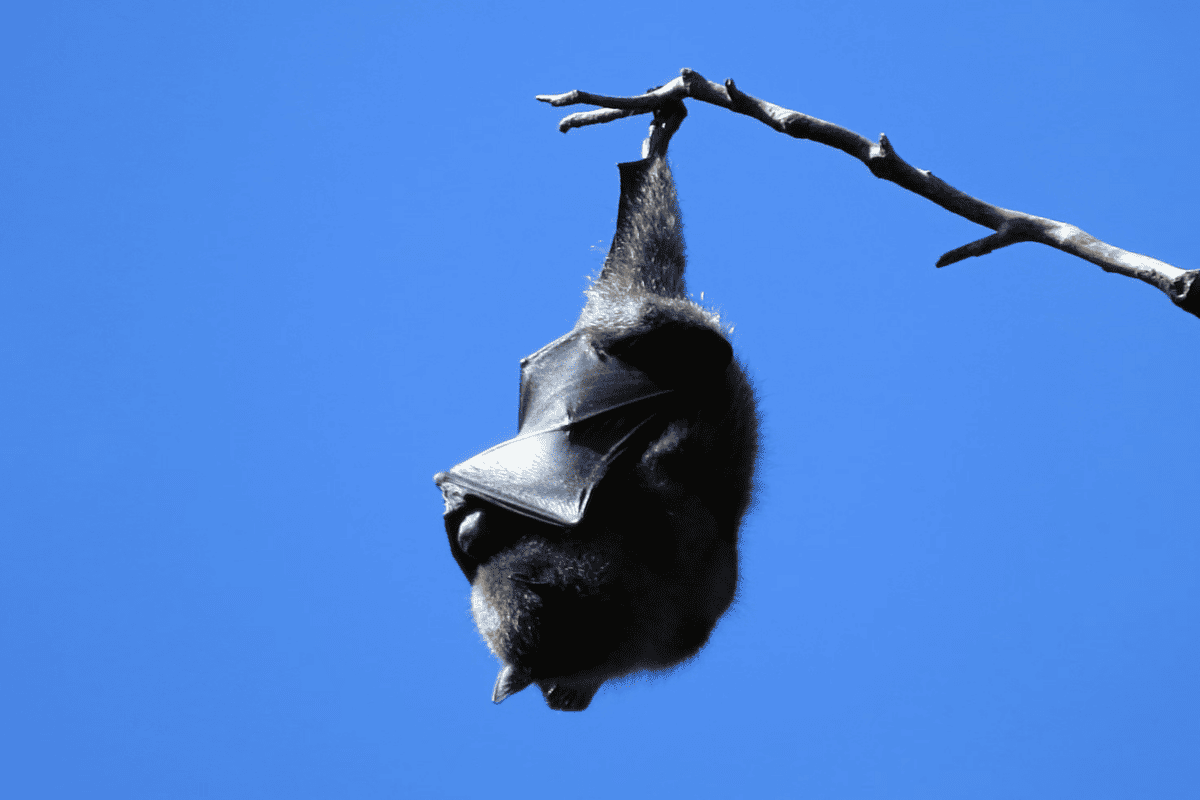
The discovery has ignited debate among evolutionary biologists regarding the origins of this unique species. The leading theory suggests they may be an offshoot of the hoary bat (Lasiurus cinereus) that gradually adapted to coastal environments, potentially during periods of inland habitat pressure or food scarcity. An alternative hypothesis proposes they may represent a relict population of a previously undocumented bat lineage that evolved coastal adaptations during the Pleistocene era.
Preliminary genetic analysis indicates divergence from mainland bat populations occurred approximately 80,000-120,000 years ago, coinciding with significant climate shifts along the Pacific Coast. Scientists are conducting further genetic studies to determine whether this represents a case of convergent evolution with marine mammals or a unique evolutionary pathway. The findings could significantly reshape our understanding of mammalian adaptation to marine environments.
Echolocation Adaptations: Sonar Systems for Marine Hunting

Researchers have documented specialized echolocation patterns unique to these coastal bats. While traditional bat echolocation typically operates between 20-200 kHz, spectrographic analysis of these giant bats reveals they produce lower-frequency calls between 15-35 kHz with distinctive modulation patterns that appear optimized for detecting movement beneath water surfaces.
Additionally, these bats exhibit a unique “double-pulse” echolocation pattern when hunting over water—emitting an initial pulse that penetrates the water surface followed by a secondary pulse that seems calibrated to detect movement responses. This sophisticated echolocation system allows them to locate fish swimming up to 1 meter below the surface, providing a significant hunting advantage in their marine environment. Researchers from Oregon State University’s Marine Mammal Institute are conducting further studies to understand how these echolocation signals interact with water surfaces and penetrate the marine environment.
Reproductive Behaviors and Social Structure
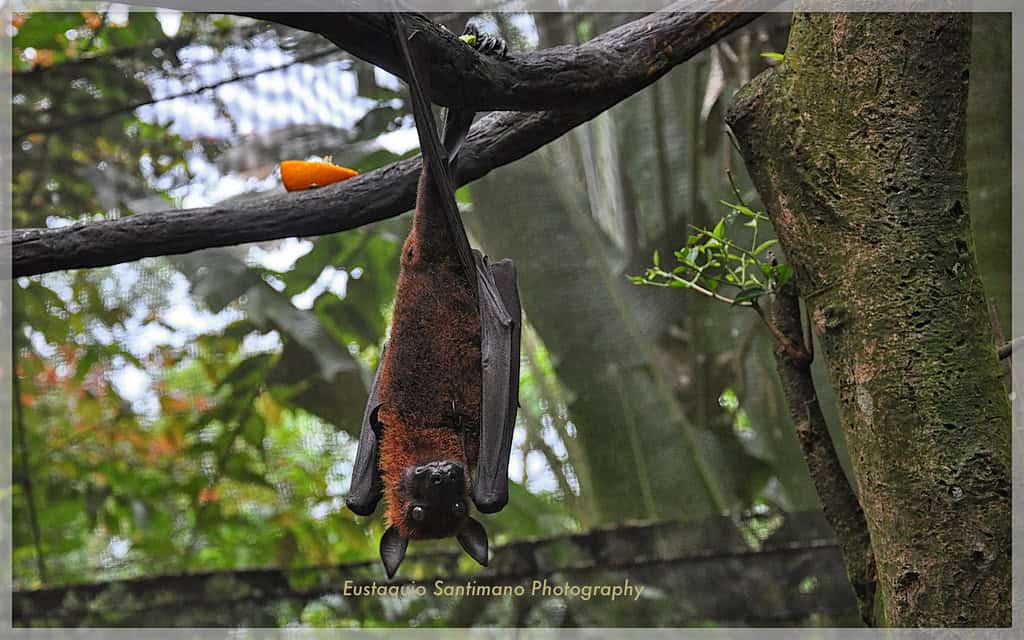
Observation of these bat colonies reveals complex social structures and reproductive behaviors adapted to their coastal environment. The bats appear to live in matriarchal colonies of 20-30 individuals with a dominant female coordinating roosting and hunting activities. Unlike most bat species that produce one offspring annually, females of this coastal species appear to have smaller litters (typically single births) but reproduce twice annually—likely an adaptation to the year-round food availability in their marine environment.
Pups develop rapidly, reaching flight capability within 4-5 weeks, and young females remain with their birth colony while males typically disperse to adjacent colonies upon reaching maturity. Researchers have also documented elaborate courtship displays where males perform complex aerial maneuvers over water surfaces, possibly demonstrating their hunting prowess to potential mates. These social structures and reproductive patterns represent significant adaptations from traditional bat behaviors.
Conservation Implications and Potential Threats

The discovery of this unique bat species raises immediate conservation concerns. With an estimated total population of fewer than 2,000 individuals confined to a limited coastal range, the species is inherently vulnerable to habitat disruption, climate change, and ocean pollution. Of particular concern is their reliance on specific coastal cave formations that could be threatened by erosion, development, or increased human recreational activity.
Additionally, their marine-focused diet makes them susceptible to bioaccumulation of toxins and microplastics increasingly present in marine food chains. The Oregon Department of Fish and Wildlife has already initiated preliminary conservation measures while a more comprehensive protection plan is developed. Scientists emphasize that protecting this unique species requires preserving both their roosting habitats and the health of the nearshore marine ecosystems they depend on for food.
Research Challenges in Studying Marine Bats
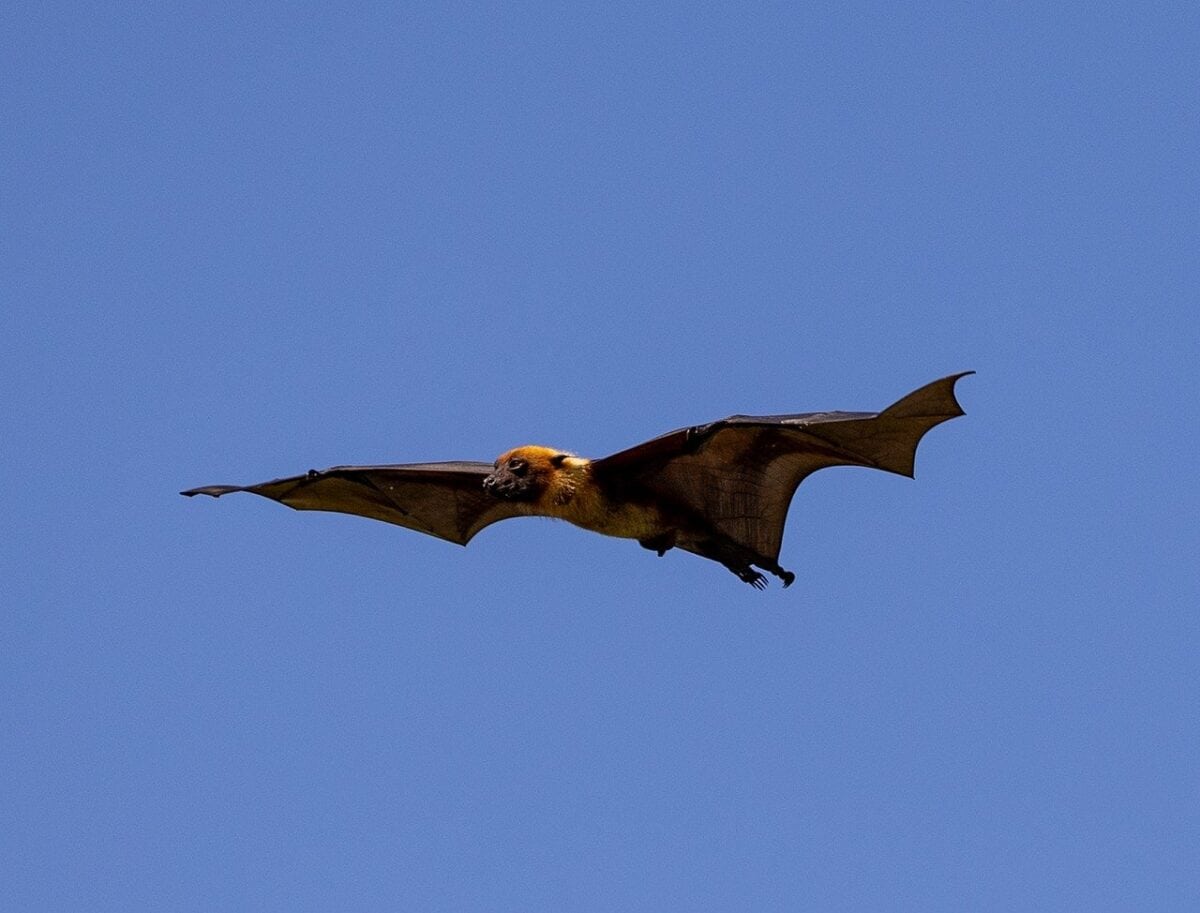
Studying these elusive coastal bats presents unique research challenges. Their preference for remote sea caves, nocturnal hunting patterns, and sensitivity to human presence makes direct observation difficult. Researchers have implemented innovative study methods including specialized infrared cameras mounted near roosting sites, passive acoustic monitoring stations to record echolocation patterns, and satellite tracking devices designed to be minimally invasive.
Marine biologists have also deployed underwater microphones (hydrophones) to capture the sound of bat strikes on water surfaces and correlate these with feeding behaviors. Despite these advanced techniques, researchers estimate they have documented less than 30% of the behaviors and adaptations of this species, highlighting the significant knowledge gaps that remain. The scientific team is particularly interested in developing non-invasive genetic sampling techniques to better understand the population’s genetic diversity without disturbing their sensitive roosting environments.
Historical Context: Why Weren’t They Discovered Earlier?

A question perplexing the scientific community is how such a distinctive species could have remained undocumented until now. Several factors likely contributed to their long-term obscurity. First, their nocturnal nature and preference for remote, difficult-to-access sea caves limited potential human encounters. Second, their physical similarity when observed at a distance to seabirds like cormorants may have led to misidentification by casual observers.
Third, traditional bat researchers typically focus on inland habitats rather than coastal environments, creating a research blind spot. Finally, local indigenous knowledge suggests awareness of these creatures, with Tillamook and Siletz tribal stories referencing “sea wings” or “fish hunters of the night”—indicating the species may have been known to native populations but not formally documented by Western science. This discovery underscores how even in well-studied regions, significant biological discoveries remain possible, especially in transitional ecosystems between land and sea.
Scientific Significance and Future Research Directions

The discovery of the Oregon coastal bat represents one of the most significant mammalian findings in North America in decades. It challenges established understanding of chiropteran evolution and adaptation capacities, potentially providing valuable insights into how mammals can adapt to marine environments. Researchers have outlined several priority research directions, including comprehensive genetic analysis to determine evolutionary relationships, detailed mapping of population distribution, studies of physiological adaptations for saltwater tolerance, and investigation of potential climate change impacts on their habitat.
International research cooperation has already begun, with bat specialists from Australia, Mexico, and South Africa joining the research effort to provide comparative expertise from coastal bat populations in other regions. The scientific community anticipates that studying these bats may yield insights applicable to conservation efforts for other specialized species facing habitat pressures from climate change and human activity.
Public Interest and Educational Opportunities

The discovery has ignited considerable public interest, with the Oregon Coast Aquarium developing an educational exhibit about the species that uses models and video footage to avoid disturbing actual populations. Local conservation groups have organized limited, responsible viewing opportunities during evening hours when the bats begin their hunting activities, with strict guidelines to prevent habitat disruption. Educational materials emphasize the unique evolutionary story these bats represent and their importance to the coastal ecosystem.
Several documentary filmmakers have already begun projects focusing on this discovery, working closely with researchers to ensure their activities don’t negatively impact the bats. This public interest presents both opportunities for conservation awareness and challenges in managing human curiosity without creating additional pressure on a potentially vulnerable species. University programs in marine biology and wildlife management across the Pacific Northwest have also developed specialized courses and research opportunities focused on this unique species.
Conclusion: A Reminder of Nature’s Continuing Mysteries

The discovery of the giant Oregon coastal bat stands as a profound reminder that significant biological discoveries await even in regions we consider well-explored. This finding challenges our understanding of bat evolution, habitat adaptations, and the potential for mammals to develop specialized marine-hunting strategies.
As research continues, the scientific community anticipates that these bats will provide valuable insights into how species adapt to occupy unique ecological niches, potentially informing conservation strategies for other species facing environmental pressures. Perhaps most importantly, this discovery reminds us to approach our natural world with humility and wonder, recognizing that many of Earth’s most remarkable creatures and evolutionary stories remain undiscovered or incompletely understood. The Oregon coastal bat exemplifies nature’s boundless capacity to surprise us, even in our own backyard.

From exploring the marine wonders in the Azores and witnessing the vast savannas of Kenya, to delving deep into the rich biodiversity of South Africa and traversing iconic landscapes in Australia and the US like Yellowstone, Chris's experiences are vast.
With a penchant for diving alongside sharks, the ocean holds a special place in his heart.
Through his academic insights, he champions wildlife conservation, striving with 'Animals Around The Globe' to cultivate a profound connection between humans and animals, enhancing our mutual appreciation.
Connect with him at Feedback@animalsaroundtheglobe.com.
- Why Spiders Don’t Get Stuck in Their Own Webs - July 20, 2026
- What Scientists Found in a 10,000-Year-Old Beehive - July 20, 2026
- This Spider Builds Fake Decoys of Itself - July 20, 2026
Leave a comment
You must be logged in to post a comment.