

Deep in the tropical rainforests of Central and South America, one of nature’s most distinctive creatures hangs from tree branches, moving with deliberate slowness as they have for millions of years. Sloths—those perpetually smiling, moss-covered mammals—have become beloved icons of the animal kingdom, celebrated for their unhurried approach to life. Yet behind their seemingly carefree existence lies a troubling reality: many sloth species are facing an increasingly rapid race against extinction, even as they themselves move at their characteristic leisurely pace.
The contrast is stark and poignant. While a sloth might travel only 41 yards per day, habitat destruction can clear thousands of acres of forest in the same timeframe. As human activity accelerates, these slow-moving creatures find themselves in an uneven race against time, with their survival hanging in the balance just as precariously as they hang from their arboreal homes.
The Slow-Motion Marvels: Understanding Sloth Biology

Sloths are remarkable examples of evolutionary adaptation, with physical and physiological characteristics perfectly suited to their energy-conserving lifestyle. There are six extant species of sloths divided into two families: two-toed sloths (Choloepus) and three-toed sloths (Bradypus). Despite their names, all sloths actually have three toes on their hind limbs; the distinction comes from the number of digits on their forelimbs. Their arms are significantly longer than their legs, with specialized curved claws that allow them to hang effortlessly from branches for extended periods.
Their renowned slowness isn’t laziness but rather an extraordinary survival strategy. Sloths have the slowest metabolic rate of any mammal, about 30% lower than other mammals of similar size. This allows them to subsist on a low-calorie diet of leaves while minimizing energy expenditure. Their specialized stomachs, similar to those of cows and other ruminants, contain multiple chambers filled with symbiotic bacteria that break down the tough cellulose in their leafy diet—a process that can take up to a month to complete. This slow digestion further reinforces their unhurried lifestyle, as rapid movement would require energy they simply don’t have to spare.
Masters of Camouflage: The Sloth’s Hidden Defense System

What sloths lack in speed, they make up for with exceptional camouflage. Their fur grows in the opposite direction from most mammals—from belly to back rather than back to belly—allowing rainwater to run off efficiently while they hang upside down. But what truly makes their fur remarkable is what lives within it. Sloth fur hosts an entire ecosystem of symbiotic organisms, including algae, fungi, moths, and various insects.
The algae that colonize their fur give sloths a greenish tint that provides excellent camouflage in the dappled light of the rainforest canopy. In a fascinating symbiotic relationship, the sloth benefits from camouflage while the algae receive both shelter and nutrients from the nitrogen-rich compounds in the sloth’s skin. Some research suggests that sloths may even consume the algae from their fur during grooming, providing supplementary nutrition. This complex ecosystem-in-fur helps sloths remain virtually invisible to predators like harpy eagles and jaguars, compensating for their inability to flee from danger.
The Silent Decline: Conservation Status of Modern Sloths

Of the six extant sloth species, the pygmy three-toed sloth (Bradypus pygmaeus) is classified as Critically Endangered on the IUCN Red List, with fewer than 100 individuals remaining in the wild. The maned sloth (Bradypus torquatus) is listed as Vulnerable, while the remaining species are classified as Least Concern. However, these classifications can mask the true extent of the threats facing all sloth populations.
Population data for sloths can be challenging to obtain due to their elusive nature and the difficulty of conducting surveys in dense rainforest habitats. What is clear, however, is that all sloth species are experiencing population declines to varying degrees. The primary drivers of this decline include habitat loss, fragmentation of forest ecosystems, collisions with vehicles, electrocution on power lines, and illegal wildlife trafficking. The lack of comprehensive population monitoring means that some species may be declining more rapidly than current conservation assessments suggest, creating an urgent need for improved data collection and protective measures.
Deforestation: The Greatest Threat to Sloth Survival

The single most significant threat to sloth populations is the relentless destruction of their forest habitats. Tropical forests in Central and South America continue to be cleared at alarming rates for agriculture, cattle ranching, logging, mining, and urban development. According to Global Forest Watch, Brazil alone lost 1.7 million hectares of primary forest in 2020. Costa Rica, often celebrated for its conservation efforts, still loses approximately 20,000 hectares of forest annually.
For sloths, deforestation is particularly devastating because of their specialized arboreal lifestyle. Unlike more adaptable species, sloths cannot simply relocate to new territories when their habitat is destroyed. Their slow movement makes long-distance travel nearly impossible, and their specialized diet means they require specific tree species for sustenance. When forests are fragmented by roads or development, sloths face the deadly challenge of crossing open ground where they are extremely vulnerable to predation and vehicle collisions. In some regions, deforestation has created isolated forest fragments too small to support viable sloth populations, leading to local extinctions even when some forest cover remains.
The Fatal Journey: Road Mortality and Power Line Electrocution
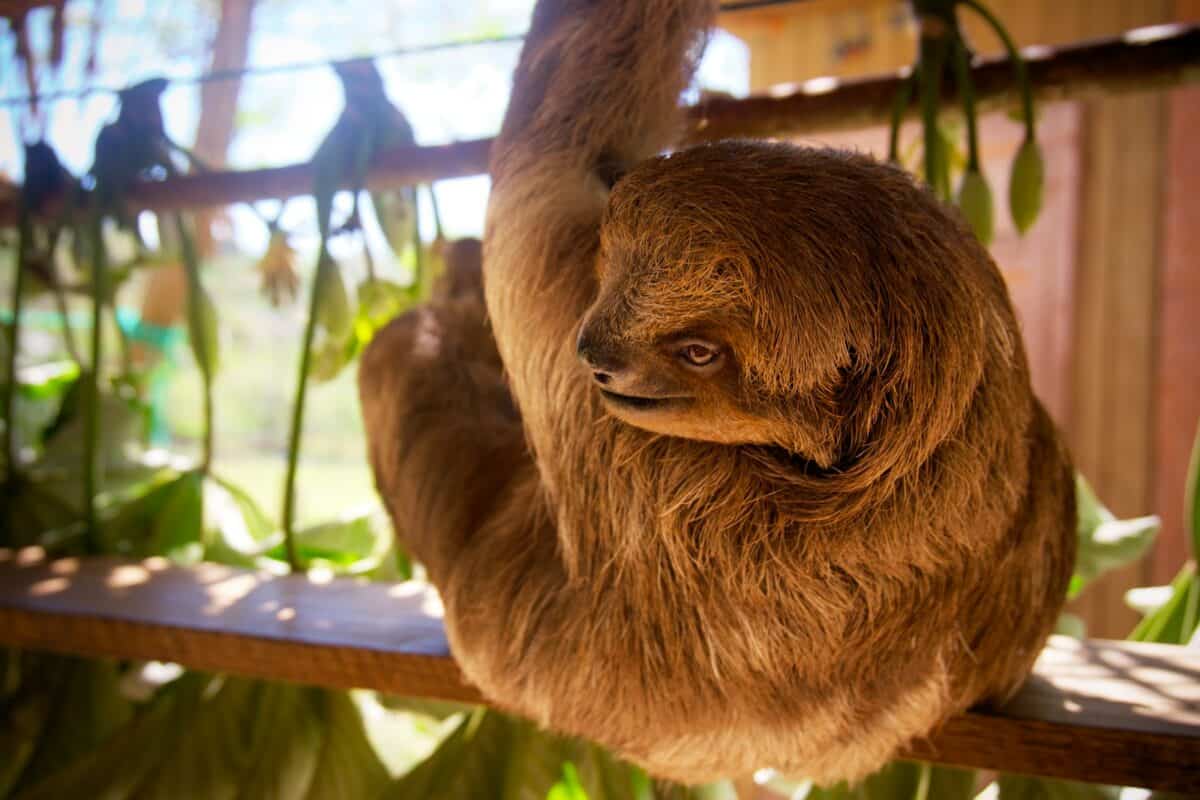
As human infrastructure increasingly fragments sloth habitats, these slow-moving creatures face deadly obstacles when forced to traverse human-dominated landscapes. Road mortality has become a significant cause of sloth deaths in countries like Costa Rica, Brazil, and Panama. With maximum speeds of only about 0.15 miles per hour, sloths are virtually defenseless against oncoming vehicles. According to data from sloth rehabilitation centers in Costa Rica, approximately 30% of sloth admissions are due to vehicle collisions, with most of these animals suffering severe injuries that often prove fatal despite medical intervention.
Equally dangerous are power lines that cut through forest areas. When natural tree corridors are absent, sloths attempt to use power lines as travel routes, frequently resulting in electrocution. The Sloth Conservation Foundation reports that in certain areas of Costa Rica, up to 5-10 sloths per month are killed by electrocution. Some conservation organizations are working with utility companies to install wildlife-friendly insulation on power lines in high-risk areas, but these efforts remain limited in scope. The combination of slow movement and increasing infrastructure development creates a deadly equation for sloth populations throughout their range.
The Illegal Wildlife Trade: Exploitation of the Internet’s Favorite Animal

The sloth’s rise to internet stardom as an adorable, seemingly smiling creature has had an unfortunate side effect: increased demand in the illegal pet trade. Videos and images portraying sloths as cuddly companions have fueled a black market where baby sloths can fetch thousands of dollars. This commercialization ignores the grim reality behind the trade: for every sloth that reaches the illegal pet market, multiple others die during capture or transport. Mother sloths are often killed to obtain their young, and the infants typically perish from stress, improper diet, or disease within weeks or months of capture.
Wildlife authorities in countries like Colombia, Brazil, and Peru regularly intercept attempted smuggling of sloths, but the trade continues to flourish through underground networks. Beyond the pet trade, sloths are also captured for tourist photo opportunities in some areas, where they may be kept in stressful conditions and handled by dozens of tourists daily. Conservation organizations emphasize that despite their apparent calmness when held by humans, sloths experience extreme stress in these situations, with elevated heart rates and stress hormones that can lead to premature death.
Climate Change: The Slow-Moving Threat to Slow-Moving Animals

Climate change represents an emerging threat to sloth populations that may eventually rival habitat loss in its impact. Sloths have evolved to thrive within specific temperature ranges, and their low metabolic rates mean they have limited capacity to adapt to changing conditions. Research indicates that even moderate temperature increases can disrupt sloth physiology, potentially affecting their ability to digest food efficiently and regulate body temperature.
More immediately concerning are the effects of increasingly severe weather events on sloth habitats. Hurricanes, floods, and droughts linked to climate change can devastate forest ecosystems, destroying the trees sloths depend on and further fragmenting their already diminished habitat. The slow reproductive rate of sloths—typically producing just one offspring per year—means populations cannot quickly recover from such catastrophic events. Climate models suggest that some current sloth habitats may become unsuitable within decades, requiring proactive conservation planning to identify and protect potential climate refugia where sloth populations might persist as conditions change.
Technological Solutions: Wildlife Bridges and Conservation Innovation

In response to the challenges facing sloths, conservationists are developing innovative solutions to help these slow-moving mammals navigate an increasingly human-dominated landscape. Wildlife bridges—aerial pathways connecting forest fragments across roads or other cleared areas—have shown particular promise. In Costa Rica, the Sloth Conservation Foundation has installed rope bridges in high-risk areas, documenting successful use by sloths and other arboreal species. These simple structures, often made from fire hoses or ropes, provide safe passage above traffic and have been shown to reduce wildlife mortality by up to 90% in some locations.
Technology is also enhancing conservation efforts through improved monitoring. GPS tracking collars specially designed for sloths allow researchers to study movement patterns and habitat use, generating data that informs more effective conservation planning. Some projects are employing drones equipped with thermal imaging to locate sloths in dense forest canopies, allowing for more accurate population surveys. Additionally, innovative insulation techniques for power lines are being developed specifically to prevent sloth electrocutions, including spiral wraps and covered conductors that make these infrastructure elements safer for wildlife while maintaining utility function.
Conservation Success Stories: Reasons for Hope

Despite the numerous challenges facing sloth conservation, several successful initiatives demonstrate that effective protection is possible with dedicated effort. The Sloth Sanctuary of Costa Rica, established in 1992, has rescued and rehabilitated hundreds of injured and orphaned sloths while developing pioneering veterinary techniques for sloth care. Their research on sloth nutrition, behavior, and health has significantly advanced understanding of these specialized mammals and improved rehabilitation outcomes.
In Brazil, the Urban Sloth Project in Porto Alegre has developed protocols for monitoring and protecting sloths in urban forest fragments, demonstrating that these animals can persist even in partially developed landscapes when given adequate protection. The project has successfully engaged local communities in sloth conservation, creating a model for urban wildlife coexistence. In Panama, the pygmy sloth conservation program on Isla Escudo de Veraguas has established protected status for the entire island habitat of this critically endangered species, though challenges remain in enforcement and monitoring. These success stories provide valuable models and hope for broader conservation efforts, proving that with appropriate interventions, sloth populations can stabilize and recover.
The Ecological Importance of Sloths: More Than Just Cute Faces

While sloths are often valued primarily for their charismatic appeal, their ecological importance extends far beyond their endearing facial expressions. As canopy-dwelling herbivores, sloths help shape forest composition through selective feeding, potentially influencing the distribution and abundance of certain tree species. Their slow-paced consumption of leaves contributes to canopy trimming without causing significant damage to host trees.
Perhaps most importantly, sloths serve as mobile ecosystems, hosting dozens of species in their specialized fur. Research has identified over 120 moth species that live exclusively in sloth fur, along with numerous beetles, mites, and other invertebrates. These specialized arthropods in turn support communities of fungi and algae. Some of these organisms may have potential medical applications; studies have identified compounds in sloth fur fungi with antibacterial and anticancer properties. When a sloth species disappears, it takes this entire ecosystem with it. As seed dispersers, albeit limited ones due to their slow movement, sloths also contribute to forest regeneration, particularly for tree species with small seeds that can survive passage through the sloth’s specialized digestive system.
How Individuals Can Support Sloth Conservation

While the challenges facing sloth conservation may seem overwhelming, individuals can make meaningful contributions to protection efforts. Perhaps the most direct way to help is by supporting reputable conservation organizations working on sloth protection, such as the Sloth Conservation Foundation, The Sloth Institute, or regional wildlife protection groups in sloth habitat countries. These organizations use donations to fund habitat protection, wildlife bridges, rehabilitation programs, and community education initiatives.
Responsible ecotourism provides another avenue for support. Visitors to sloth habitat countries can choose tour operators and accommodations with strong environmental credentials that contribute to habitat protection. However, tourists should avoid operations offering sloth handling or photo opportunities with captive animals, as these practices typically cause significant stress to sloths and may support illegal wildlife capture. Consumers worldwide can help by choosing products certified as deforestation-free, particularly for commodities like coffee, chocolate, and palm oil that are often grown in former sloth habitats. Finally, individuals can serve as advocates by raising awareness about sloth conservation needs and supporting policies that protect tropical forests and wildlife corridors in Central and South America.
Conclusion: Racing Against Time to Save Nature’s Slowest Mammals

The plight of sloths represents one of the most poignant conservation challenges of our time—creatures who have perfected the art of slow living now find themselves in a rapidly changing world where slowness has become a liability. Despite the accelerating threats of habitat destruction, roadway mortality, climate change, and wildlife trafficking, there remains a window of opportunity to ensure these remarkable animals continue their slow journey through the tree canopies of the Americas. The innovative conservation approaches being developed—from wildlife bridges to community engagement programs—demonstrate that solutions exist when sufficient resources and commitment are directed toward sloth protection.
The fate of sloths is inextricably linked to the fate of tropical forests, ecosystems that provide incalculable benefits to humanity through carbon sequestration, watershed protection, and biodiversity maintenance. By protecting sloths, we simultaneously protect these critical habitats and the countless other species that depend on them. Their plight reminds us that in conservation, as in many aspects of environmental stewardship, the pace of our protective actions must significantly exceed the pace of destruction.
As we look to the future of sloth conservation, the greatest hope lies in expanding successful local initiatives to landscape and regional scales, creating connected networks of protected forests where sloths can thrive. With their permanent-seeming smiles and unhurried demeanor, sloths offer a powerful reminder of a different way of being—one that values energy conservation, efficiency, and specialization over constant activity and consumption. By ensuring their survival, we preserve not just an iconic species but also a living symbol of the value of slowness in a world that rarely takes time to appreciate life’s unhurried moments.

- The Comeback of the Bald Eagle: What Made It Work - June 3, 2026
- Top 10 Animals and Wildlife in Oklahoma - June 3, 2026
- Do Conservation Efforts Favor ‘Cute’ Animals Over Ecologically Important Ones? - June 3, 2026