


Worried about unexpected vet bills?
Pet insurance can cover thousands in unexpected vet costs. Get a free quote from Lemonade in under 2 minutes.
Get My Free Quote →Sponsored · Opens Lemonade.com
The animal kingdom is full of remarkable sensory abilities that help creatures survive and thrive in their environments. While humans rely heavily on vision, many animals navigate their world primarily through smell. When it comes to detecting scents over vast distances, certain species possess truly extraordinary olfactory capabilities that far exceed our human limitations. This article explores which animal can detect odors from the greatest distance, examining the remarkable biological adaptations that make such feats possible, and highlighting why these abilities are so crucial for survival in the wild.
The Marvel of Animal Olfaction

Olfaction, or the sense of smell, is one of the most ancient and fundamental senses in the animal kingdom. Unlike humans, who primarily rely on vision, many animals depend on their sense of smell for finding food, detecting predators, locating mates, and navigating their environment. The olfactory systems of animals have evolved over millions of years to become highly specialized tools perfectly adapted to their ecological niches.
What makes certain animals truly exceptional in this realm is not just their ability to detect odors, but to do so over incredible distances. This long-distance olfactory ability requires specialized anatomical structures, unique neural processing capabilities, and often behavioral adaptations that maximize scent detection. The competition for the title of “best smeller from furthest away” involves several remarkable contenders from different animal groups, each with their own specialized adaptations.
The African Elephant: A Strong Contender

African elephants (Loxodonta africana) possess what many scientists consider to be the most powerful sense of smell in the terrestrial animal kingdom. With approximately 2,000 genes dedicated to olfaction—more than twice the number in dogs and five times that of humans—elephants have an extraordinary genetic foundation for scent detection. Their most distinctive feature is, of course, their trunk, which serves as a highly mobile and sensitive olfactory organ.
Research has shown that African elephants can detect water sources from up to 12 miles (19 kilometers) away. They can also distinguish between different human tribes based on smell, even identifying those who may pose a threat. Female elephants in estrus release pheromones that males can detect from several miles away, allowing them to find potential mates across vast distances. This remarkable ability helps these massive creatures navigate and survive in the challenging environments of the African savanna.
The Extraordinary Nose of the Bloodhound

Bloodhounds (Canis lupus familiaris) have earned their reputation as the tracking experts of the dog world. Their exceptional olfactory abilities are reflected in both their anatomy and physiology. With approximately 300 million scent receptors—compared to a human’s mere 5-6 million—bloodhounds possess one of the most sensitive noses in the canine world. Their long, drooping ears actually help to waft scents toward their nostrils, while their loose skin folds trap odors for later reference.
What truly sets bloodhounds apart is their ability to follow a scent trail that is several days old and stretched across many miles. These dogs can track a human scent across complex terrain for distances exceeding 130 miles (209 kilometers), and their evidence is so reliable that it has been admissible in U.S. courts since the 1950s. While they may not detect initial scents from as far away as some other animals, their ability to persistently follow a diminishing scent trail over extraordinary distances earns them a place among the elite olfactory specialists of the animal kingdom.
The Great White Shark’s Underwater Advantage

Great white sharks (Carcharodon carcharias) represent one of the most impressive examples of long-distance scent detection in aquatic environments. These apex predators possess specialized organs called “ampullae of Lorenzini” that can detect minute electrical fields, along with an exceptional olfactory system that can detect a single drop of blood in an Olympic-sized swimming pool. The structure of water actually enhances a shark’s ability to detect scents, as odor molecules disperse more efficiently in liquid than in air.
Scientists have documented great whites detecting blood in water from up to 3 miles (5 kilometers) away, allowing them to locate injured prey across vast stretches of ocean. When a great white detects the scent of potential prey, it can navigate directly toward the source with remarkable precision, even in complete darkness. This extraordinary ability makes them one of the ocean’s most efficient hunters and places them among the animals with the most impressive long-distance scent detection capabilities.
The Surprising Champion: The Silkmoth

When considering which animal can detect scents from the furthest distance relative to its size, the male silkmoth (Bombyx mori) emerges as a truly remarkable champion. Despite their tiny size, male silkmoths possess one of the most sensitive olfactory systems in the animal kingdom, specifically evolved to detect female pheromones. Their large, feathery antennae are covered with thousands of sensory hairs, each containing numerous receptor cells tuned to detect the specific pheromone released by female moths.
What makes the silkmoth truly extraordinary is that males can detect just a few molecules of a female’s pheromone from up to 7 miles (11 kilometers) away. Considering the silkmoth’s tiny size—typically less than an inch long—this would be equivalent to a human detecting a scent from thousands of miles away. The silkmoth’s remarkable ability demonstrates that when it comes to olfactory prowess, anatomical sophistication and evolutionary specialization can sometimes outweigh sheer size.
The Bear’s Remarkable Olfactory Brain
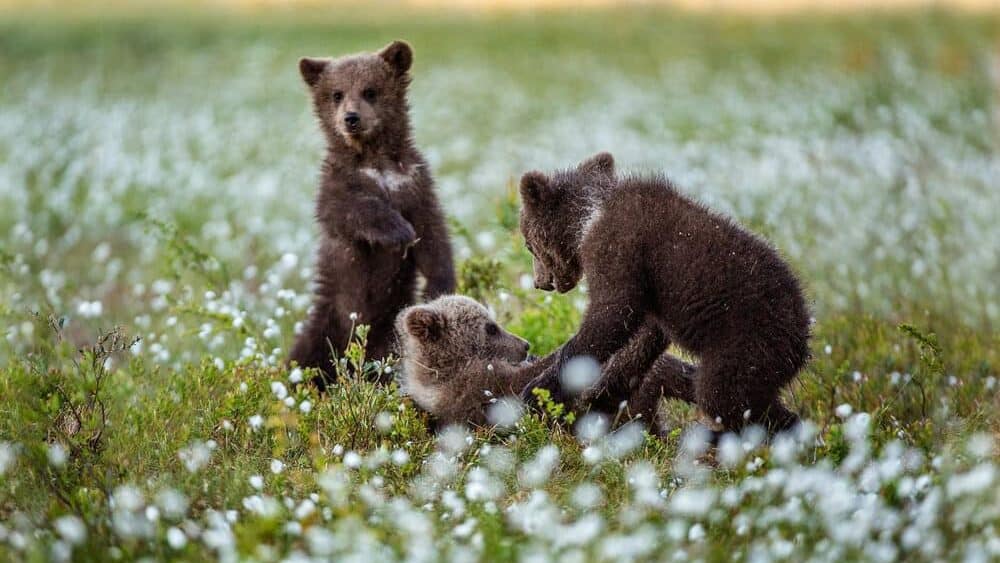
Bears, particularly the grizzly bear (Ursus arctos horribilis), possess one of the most impressive olfactory systems among land mammals. With a sense of smell estimated to be 2,100 times more powerful than humans, bears can detect odors from remarkable distances. Their elongated snouts house an extensive surface area covered with olfactory epithelium, and their brain dedicates an extraordinarily large portion to processing scent information—the olfactory bulb in a bear’s brain is five times larger relative to overall brain size than in humans.
This powerful sensory equipment allows grizzly bears to detect food sources from up to 20 miles (32 kilometers) away under favorable wind conditions. They can smell spawning salmon beneath several feet of water, locate carcasses buried under many feet of snow, and even detect human scents days after someone has passed through an area. This remarkable ability helps bears locate scattered food resources across vast territories, making them one of the most efficient foragers in the forest ecosystem.
The Black Vulture’s Aerial Advantage

Black vultures (Coragyps atratus) and other vulture species represent another category of long-distance scent detection champions. While some vulture species rely primarily on sight to locate carrion, certain species like the turkey vulture have evolved extraordinary olfactory abilities. Their large nasal cavities and specialized brain structures enable them to detect the scent of ethyl mercaptan, a gas produced by the early stages of decay in dead animals.
From their high-altitude soaring positions, vultures can detect carrion odors from up to 1 mile (1.6 kilometers) high in the air. When combined with their ability to cover vast distances while soaring, this means vultures can effectively “scan” hundreds of square miles for food sources each day. This remarkable adaptation allows them to locate hidden carcasses that other scavengers cannot find, giving them access to food resources that would otherwise remain undiscovered beneath dense forest canopies or in remote locations.
The Salmon’s Extraordinary Homing Ability

Salmon exemplify one of the most remarkable applications of long-distance scent detection in the animal kingdom. These fish imprint on the unique chemical signature of their natal streams early in life, creating a detailed olfactory map they will use years later during their spawning migration. Their specialized olfactory rosettes contain millions of receptor cells capable of detecting specific chemical compounds in concentrations as low as one part per billion.
What makes salmon truly exceptional is not just their sensitivity but the distance over which they apply this ability. After spending years in the open ocean, salmon can detect the specific chemical signature of their home stream from over 1,000 miles (1,600 kilometers) away, guiding them back to the precise location where they were born. This remarkable homing ability, based primarily on olfaction, represents one of the most impressive examples of long-distance navigation using smell in the entire animal kingdom.
The Science Behind Extraordinary Scent Detection

The exceptional olfactory abilities of these animals rely on several key biological factors. First is the sheer number of olfactory receptors—animals with superior smell typically have millions or even billions more receptor cells than humans. Second is the dedicated brain processing power, with some species devoting up to 40% of their brain to analyzing scent information, compared to just 5% in humans. Third is the anatomical specialization, with features like the elongated snouts of bloodhounds or the feathery antennae of moths providing vastly increased surface area for scent collection.
Environmental factors also play a crucial role in long-distance scent detection. Wind direction and speed, humidity levels, temperature gradients, and topographical features can all dramatically affect how far an odor plume travels and how detectable it remains. The most successful scent-detecting animals have not only evolved sensitive receptors but also behaviors that maximize their exposure to scent-carrying air currents, such as the zigzag tracking pattern used by bloodhounds or the specific flight patterns employed by moths navigating toward a pheromone source.
How Scent Detection Shapes Survival Strategies

The extraordinary ability to detect scents over vast distances has profound implications for the survival and behavior of these animals. For predators like sharks and bears, long-distance smell translates directly into hunting success, allowing them to locate prey that would otherwise remain hidden. For prey species, detecting predator scents from afar provides crucial early warning systems that can mean the difference between life and death.
Beyond the predator-prey dynamic, long-distance olfaction plays a crucial role in reproduction for many species. The ability of male moths to detect female pheromones across miles ensures successful mating despite low population densities. Similarly, the capacity of salmon to find their home streams ensures they spawn in the precise environments where their offspring will have the best chance of survival. These examples illustrate how superior olfactory abilities have become central to the evolutionary success of many species, shaping their behavior, distribution, and ecological relationships.
Human Applications of Animal Olfactory Abilities

The remarkable scent detection abilities of animals have not gone unnoticed by humans, who have found numerous practical applications for these skills. Working dogs, particularly bloodhounds, have long been used in search and rescue operations, law enforcement, and even medical detection, where they can identify conditions like cancer or diabetes through scent markers. More recently, researchers have begun developing electronic “noses” inspired by animal olfaction to detect everything from explosives to diseases.
Scientists are also studying the genetics and neurobiology behind exceptional animal olfaction to better understand the fundamental mechanisms of smell. This research could lead to improved artificial scent detection technologies or even treatments for human olfactory disorders. By learning from nature’s olfactory champions, humans continue to find new ways to leverage these remarkable abilities for practical applications that benefit society.
Conclusion: Nature’s Olfactory Champions

When it comes to detecting scents from the furthest distance, several animals demonstrate truly extraordinary capabilities that far exceed human limitations. While the male silkmoth can detect specific pheromones from up to 7 miles away despite its tiny size, bears can smell food sources from distances of up to 20 miles, making them perhaps the overall champion in terms of absolute distance. These remarkable abilities are the result of millions of years of evolutionary adaptation, producing specialized anatomical structures and neural processing capabilities perfectly suited to each species’ ecological niche. The extraordinary olfactory prowess of these animals not only ensures their survival but also provides humans with inspiration for technological innovations and a deeper appreciation for the remarkable sensory diversity of the natural world. As we continue to study and understand these olfactory champions, we gain valuable insights into the complex and fascinating ways that animals perceive and interact with their environments.
Worried about unexpected vet bills?
Pet insurance can cover thousands in unexpected vet costs. Get a free quote from Lemonade in under 2 minutes.
Get My Free Quote →Sponsored · Opens Lemonade.com

From exploring the marine wonders in the Azores and witnessing the vast savannas of Kenya, to delving deep into the rich biodiversity of South Africa and traversing iconic landscapes in Australia and the US like Yellowstone, Chris's experiences are vast.
With a penchant for diving alongside sharks, the ocean holds a special place in his heart.
Through his academic insights, he champions wildlife conservation, striving with 'Animals Around The Globe' to cultivate a profound connection between humans and animals, enhancing our mutual appreciation.
Connect with him at Feedback@animalsaroundtheglobe.com.
- The Most Common Backyard Wildlife in Pennsylvania - June 9, 2026
- The Surprising Way Sea Otters Use Rocks as Tools - June 9, 2026
- Squirrels Adopt Orphaned Babies Like Their Own - June 9, 2026