
Picture this. You’re staring at a seemingly ordinary image, calm and unassuming. Then you switch your perspective, and suddenly everything changes. What looked peaceful now appears monstrous, hungry, and absolutely terrifying. That’s exactly what happened when astronomers used the James Webb Space Telescope to observe a galaxy from the dawn of time, and honestly, the discovery is unsettling in the best possible way.
We’re talking about a cosmic shapeshifter that exists nearly at the edge of observable space, a relic from when our universe was barely a toddler. This galaxy existed when the universe was only 800 million years old, yet it hides a secret so extreme that scientists are rethinking everything they thought they knew about how black holes and galaxies grow together.
A Galaxy With Two Faces

The galaxy is called Virgil, and it’s one of the Little Red Dots, a class of object discovered by the JWST. Let’s be real, the name doesn’t exactly scream danger. Yet appearances can be deceiving.
When observed in optical wavelengths, Virgil looked like an ordinary star-forming galaxy, the kind you’d scroll past without a second thought. Nothing particularly special or alarming. Just another distant cosmic dot quietly doing its thing in the depths of space.
Then researchers switched to infrared observations using the telescope’s Mid-Infrared Instrument, known as MIRI. That’s when things got wild. When the JWST observed it in infrared, it appears as a raging, gluttonous beast.
The transformation was so dramatic that astronomers couldn’t help but compare it to the famous Jekyll and Hyde story. The UV and optical show its ‘good’ side – a typical young galaxy quietly forming stars. Switch the lens, however, and the monster emerges.
The Hidden Supermassive Black Hole
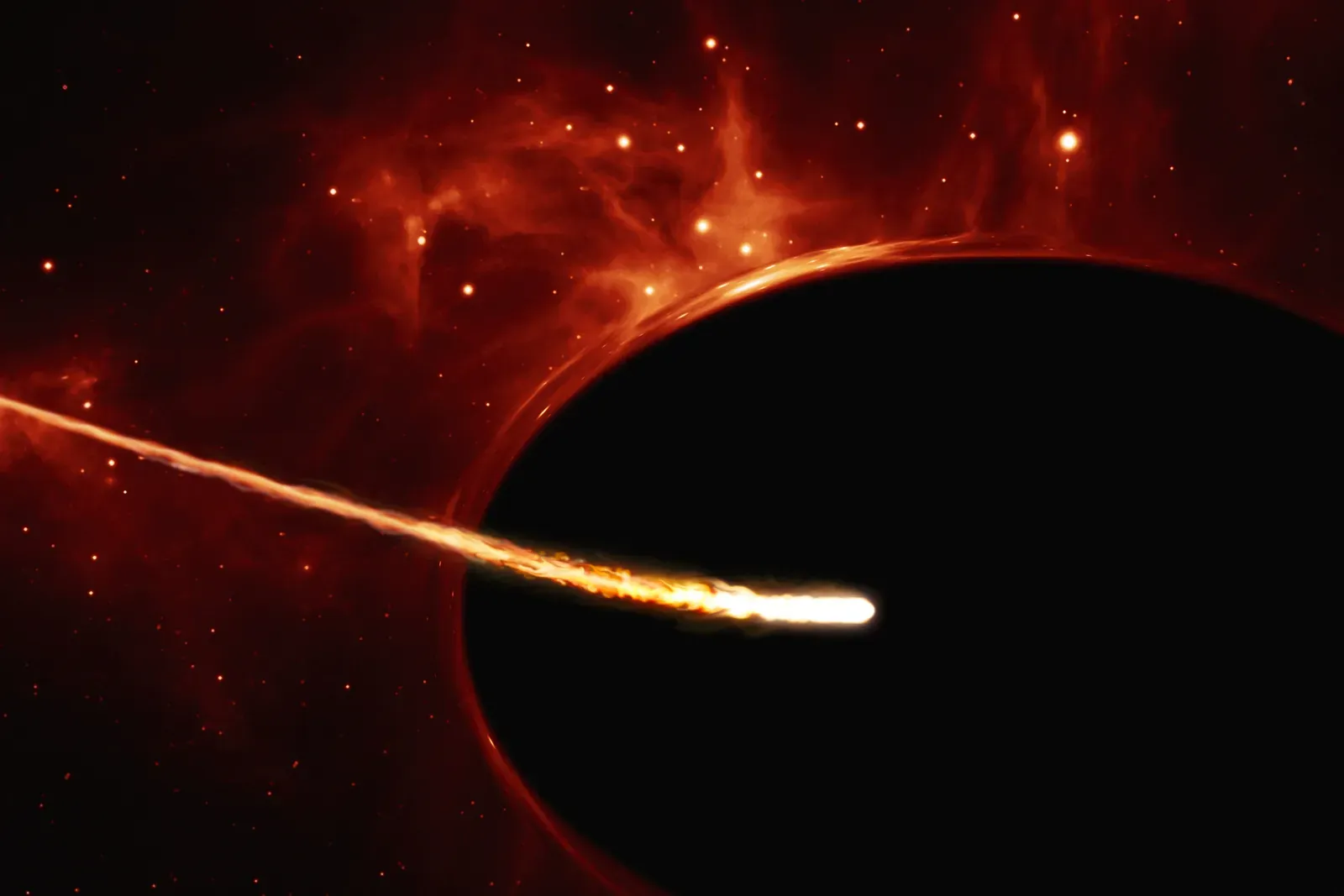
What makes Virgil so terrifying isn’t just its dual nature. It’s what lurks at its heart. The discovery exposes its hidden nature: a supermassive black hole in the galaxy’s center accreting material at an extraordinary rate, with its energy output obscured by thick veils of dust.
Think about that for a second. This black hole is feeding voraciously, devouring matter and pouring out immense quantities of energy. Yet all that chaos was completely invisible when viewed through traditional telescopes.
The one at the center of Virgil was a so-called “overmassive” black hole – meaning a massive black hole that shouldn’t be able to exist in a host galaxy of that size. That’s the kicker. According to everything we thought we understood about galaxy formation, this black hole is breaking the rules.
It’s like finding a full-grown elephant inside a rabbit hutch. The proportions simply don’t add up, and that’s forcing scientists to completely reconsider the cosmic timeline.
Little Red Dots and Their Mysteries
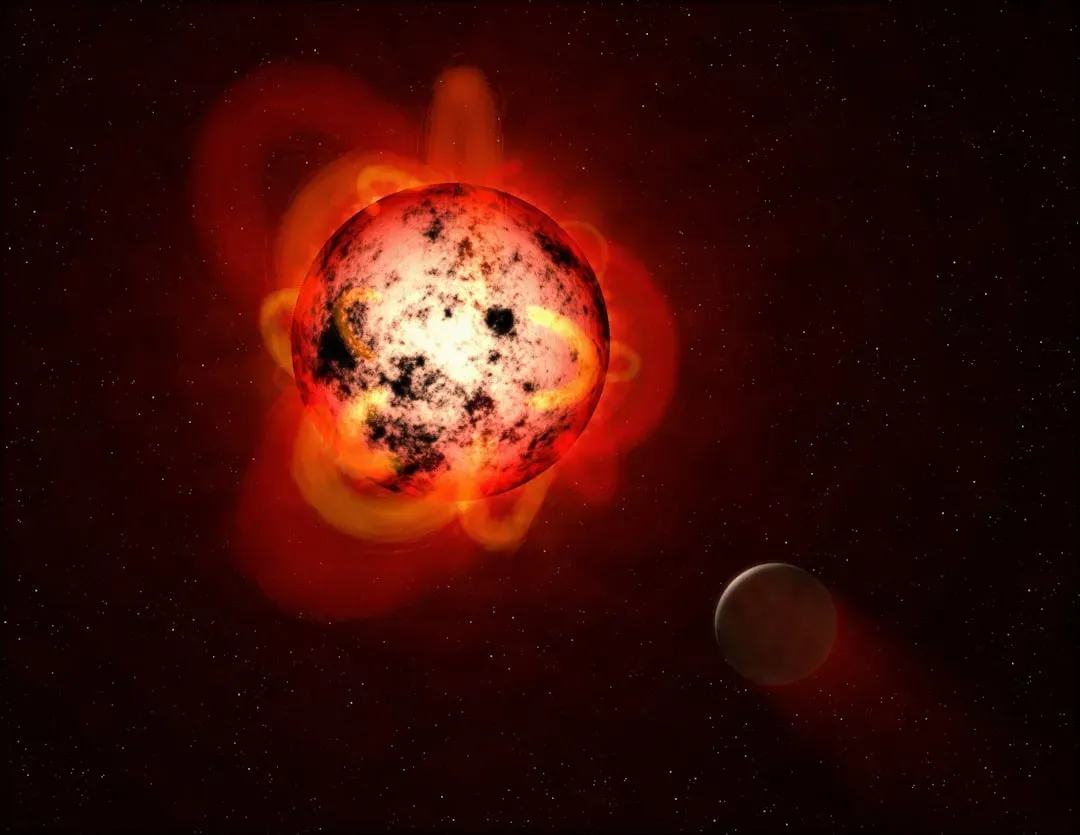
The telescope has found more than 300 of them, these strange Little Red Dots scattered throughout the early universe. They existed between about 600 million and 1.6 billion years after the Big Bang, with most concentrated in the earlier part of that range.
Here’s the thing that puzzles astronomers the most. These objects appeared in massive numbers during a specific window of cosmic history, then largely vanished. These luminous dots appeared in large numbers around 600 million years after the Big Bang, only to all but disappear about 1.5 billion years later.
Where did they go? Did they evolve into something else entirely? Virgil is the reddest of the LRDs discovered so far, making it an extreme example of an already mysterious phenomenon.
Observing galaxies like Virgil should help researchers unravel the mysteries of LRDs, which have been linked to actively feeding supermassive black holes that are heavily obscured by dust. The dust acts like a cosmic disguise, concealing some of the universe’s most violent events from our view unless we know exactly where and how to look.
Overturning Cosmological Theories
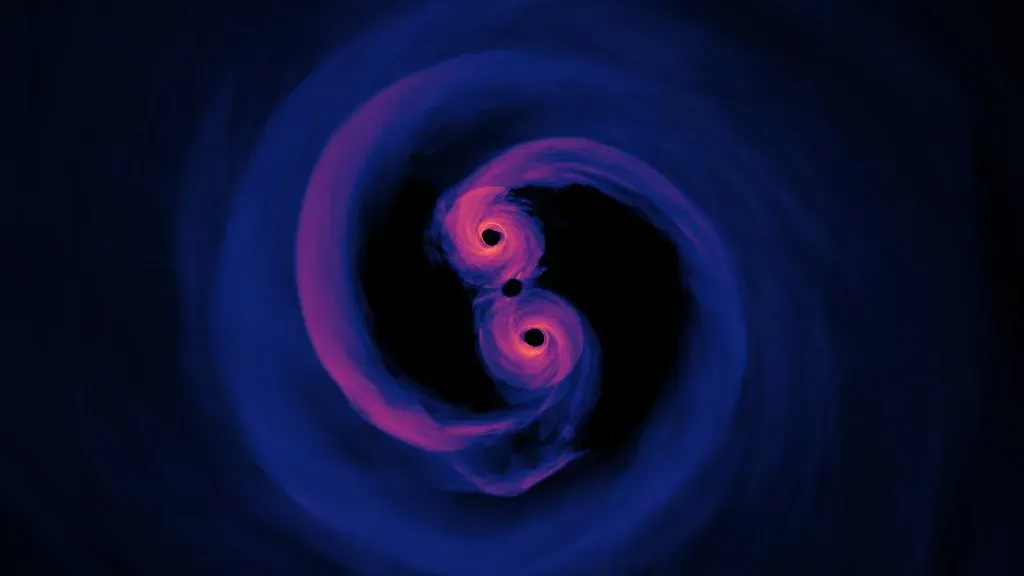
Before JWST revolutionized deep space observation, scientists had a fairly comfortable narrative about galaxy and black hole formation. Before NASA’s James Webb Space Telescope, astronomers believed that galaxies formed first and gradually nurtured black holes in their cores, with both growing in lockstep over cosmic time.
It made sense, really. Galaxies would coalesce from primordial gas and dust, stars would ignite, and eventually, over millions and billions of years, supermassive black holes would accumulate at their centers. Slow, orderly, predictable.
Virgil throws that entire model into chaos. It looks like the black holes actually get ahead of the galaxies in a lot of cases. That’s the most exciting thing about what we’re finding.
Picture that scenario. Black holes forming first, massive and powerful, and then galaxies building up around them. It’s backwards from what generations of cosmologists predicted, and it suggests that the infant universe operated under entirely different rules than we imagined.
The paper shows that some of the universe’s most extreme objects may be hiding in plain sight – detectable only when tuning instruments to detect infrared wavelengths, which is a light spectrum invisible to the human eye. How many more cosmic monsters are out there, lurking just beyond the reach of our optical telescopes?
Technology That Strips Away Disguises
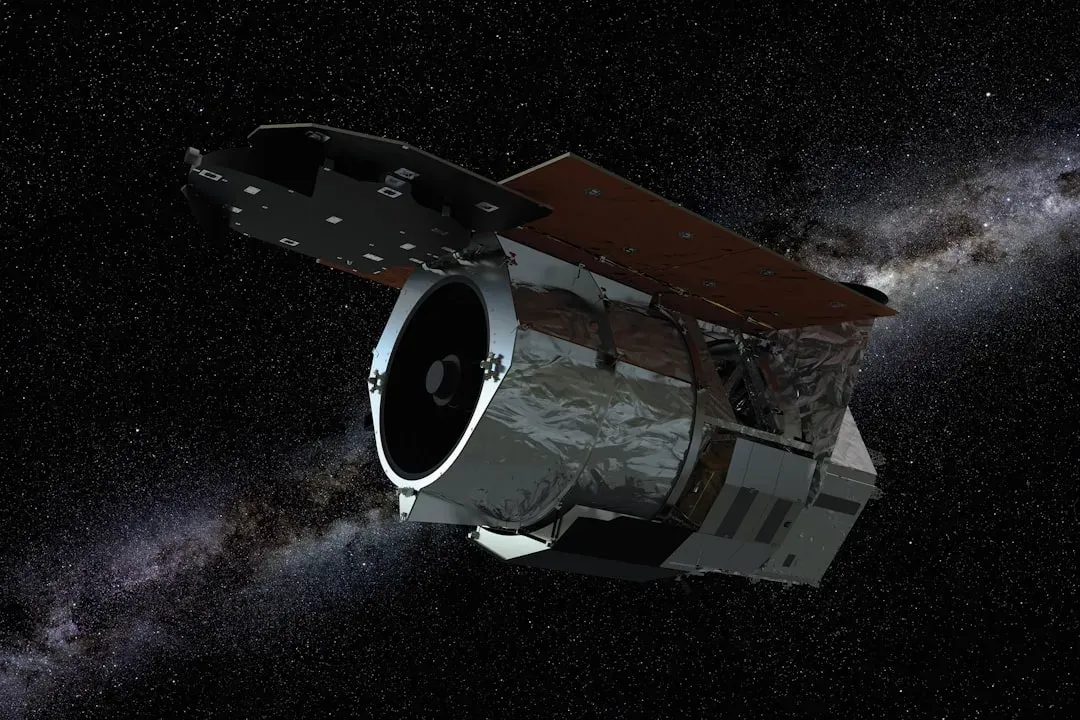
Virgil’s true nature only became apparent through observations with JWST, specifically its Mid-Infrared Instrument, or MIRI. Without this cutting-edge technology, the galaxy would have remained just another unremarkable blip in deep space surveys.
When using data from only JWST’s Near Infrared Camera, or NIRCam, or Near-Infrared Spectrograph, or NIRSpec – both of which cover only up to the optical wavelengths in the early universe – astronomers would classify Virgil as an entirely ordinary star-forming galaxy. The dramatic revelation only emerged when scientists examined the galaxy across the full spectrum of infrared wavelengths.
It’s hard to say for sure, but this discovery raises an intriguing possibility. As of yet, scientists aren’t aware of any other cosmic monsters like Virgil roaming the early universe, but that could be because the way we study the cosmos allows them to fool us with their mild-mannered alter egos.
Maybe the early universe was absolutely teeming with these Jekyll-and-Hyde galaxies, and we simply never had the tools to unmask them until now. The researchers intend to find out by performing more long-exposure observations with the JWST’s MIRI.
What Happens Next
The discovery of Virgil represents more than just an isolated cosmic curiosity. It’s a fundamental challenge to our understanding of how the universe evolved from the Big Bang to the complex cosmic web we observe today.
If they find more of them, a narrative will develop that puts LRDs into the context of the evolution of the Universe. Each new Jekyll-and-Hyde galaxy discovered will add another piece to this puzzle, slowly revealing whether Virgil is a rare exception or the tip of a much larger iceberg.
Think about the implications. If supermassive black holes formed before their host galaxies, what does that mean for our models of structure formation? How did these black holes grow so massive so quickly in the early universe when there simply wasn’t much time for gradual accumulation?
Some of the universe’s most extreme objects may be hiding in plain sight – detectable only when tuning instruments to detect infrared wavelengths. Every time we develop a new way to observe the cosmos, we discover that reality is stranger and more complex than we dared imagine.
The story of Virgil reminds us that the universe still holds countless secrets. Some are disguised in plain sight, waiting for the right perspective to reveal their true nature. What cosmic monsters are lurking out there in the depths of space, wearing the mask of normalcy until someone thinks to look at them differently?
Did you expect the early universe to be hiding shapeshifting galaxies? What else might we discover when we finally strip away all the cosmic disguises?

- What It Means When Your Cat Stares at the Same Empty Corner at the Same Time Every Night – and the Three Explanations Competing for It - July 19, 2026
- What It Means When a Snake Crosses Your Path From Left to Right According to Every Southern Appalachian Tradition That Recorded It - July 19, 2026
- What It Means When Deer Stop Coming to an Area They Have Visited for Years – and What Wildlife Biologists Say They Are Detecting - July 19, 2026