
Worried about unexpected vet bills?
Pet insurance can cover thousands in unexpected vet costs. Get a free quote from Lemonade in under 2 minutes.
Get My Free Quote →Sponsored · Opens Lemonade.com
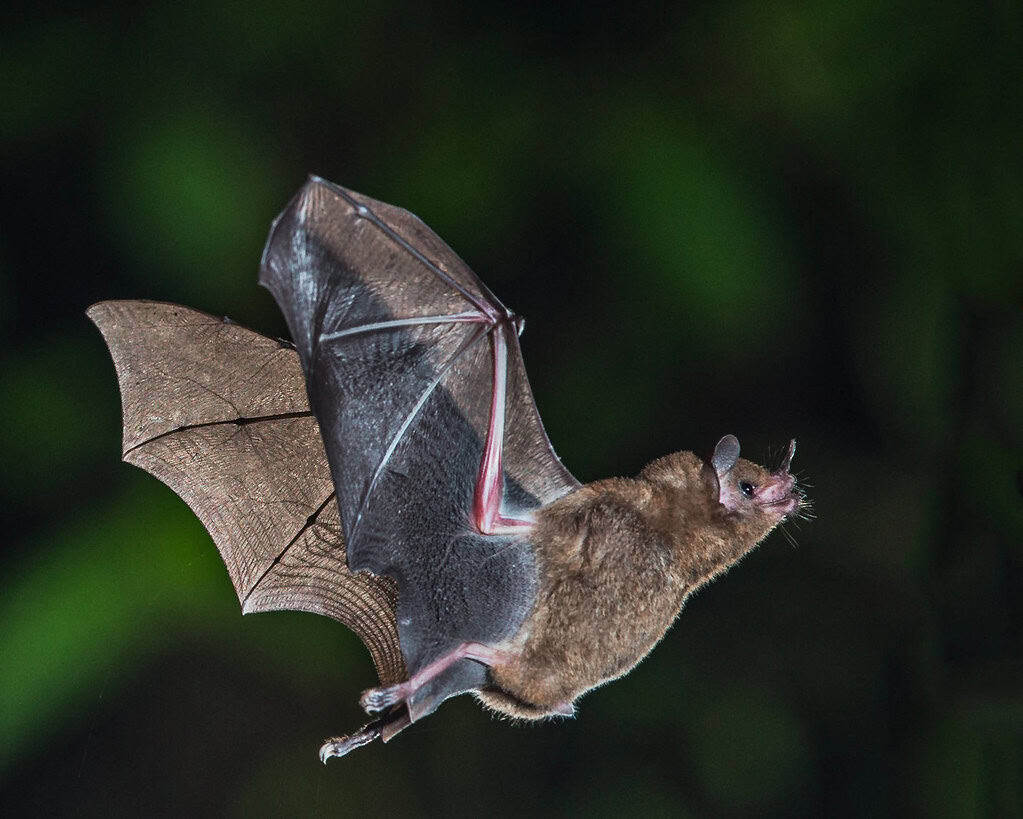
When we think of flying animals, birds and insects immediately come to mind. However, there’s another group of remarkable creatures that have conquered the skies – bats, the only mammals capable of true flight. Unlike flying squirrels or sugar gliders that merely glide through the air, bats have evolved genuine powered flight with wings that allow them to generate lift and propulsion. What makes these nocturnal aviators even more fascinating is their preference for darkness. While birds rule the daytime skies, bats have carved out their niche in the night, a strategic adaptation that has contributed to their extraordinary evolutionary success. This article explores the unique biological adaptations that enable bats to fly, why they predominantly choose to do so under the cover of darkness, and the remarkable diversity of these often misunderstood mammals.
The Evolutionary Marvel of Bat Flight

Bats achieved the evolutionary feat of flight approximately 50 million years ago, making them second only to insects in conquering the skies. Their wings evolved from the same limb structure as human arms and hands, with elongated finger bones connected by thin, flexible membranes of skin called the patagium. This membrane is actually a double layer of skin stretched between the elongated fingers, body, and in most species, the tail. Unlike birds, which fly using feathered wings and have arms modified into wing structures, bats maintain their mammalian five-fingered arrangement, with the thumb remaining free as a small claw used for climbing and handling food.
The evolution of flight in bats represents one of nature’s most remarkable adaptations. Bat wings contain more than 30 different joints and nearly as many independent muscles, giving them exceptional maneuverability. Their wing membranes are packed with sensory receptors that provide constant feedback about airflow, pressure, and even stretching, allowing for rapid adjustments during flight. This neurological feedback system makes bat flight incredibly responsive and efficient, enabling them to perform aerial feats that would be impossible for birds, such as hovering in place, executing tight turns, and even flying upside down briefly. This evolutionary adaptation has allowed bats to exploit ecological niches unavailable to other flying creatures.
Bat Wing Anatomy and Flight Mechanics

The bat wing is a marvel of biological engineering. Unlike bird wings, which are relatively rigid structures, bat wings are highly flexible and can change shape during flight. The wing membrane (patagium) is supported by elongated arm and finger bones. The first digit forms what we might recognize as a thumb, while digits two through five are dramatically extended to support the wing membrane. This unique arrangement allows bats to adjust the camber (curvature) of their wings during flight, providing precise control over lift and maneuverability. The membrane itself is incredibly thin—in some places only a few cells thick—yet remarkably strong and elastic.
Bat flight mechanics differ significantly from those of birds. While birds generally employ an up-and-down flapping motion, bats use a more complex movement that combines both vertical and horizontal components. They pull their wings downward and forward during the power stroke, then fold them partially during the recovery stroke to reduce air resistance. This figure-eight wing pattern allows for highly efficient flight, though it typically requires more energy than bird flight. Bats also possess specialized muscles that prevent their wings from extending too far during the downstroke, protecting them from potential injury. This sophisticated flight system enables bats to achieve speeds of up to 60 miles per hour and perform acrobatic maneuvers that would be impossible for most birds.
Diversity Among Flying Mammals
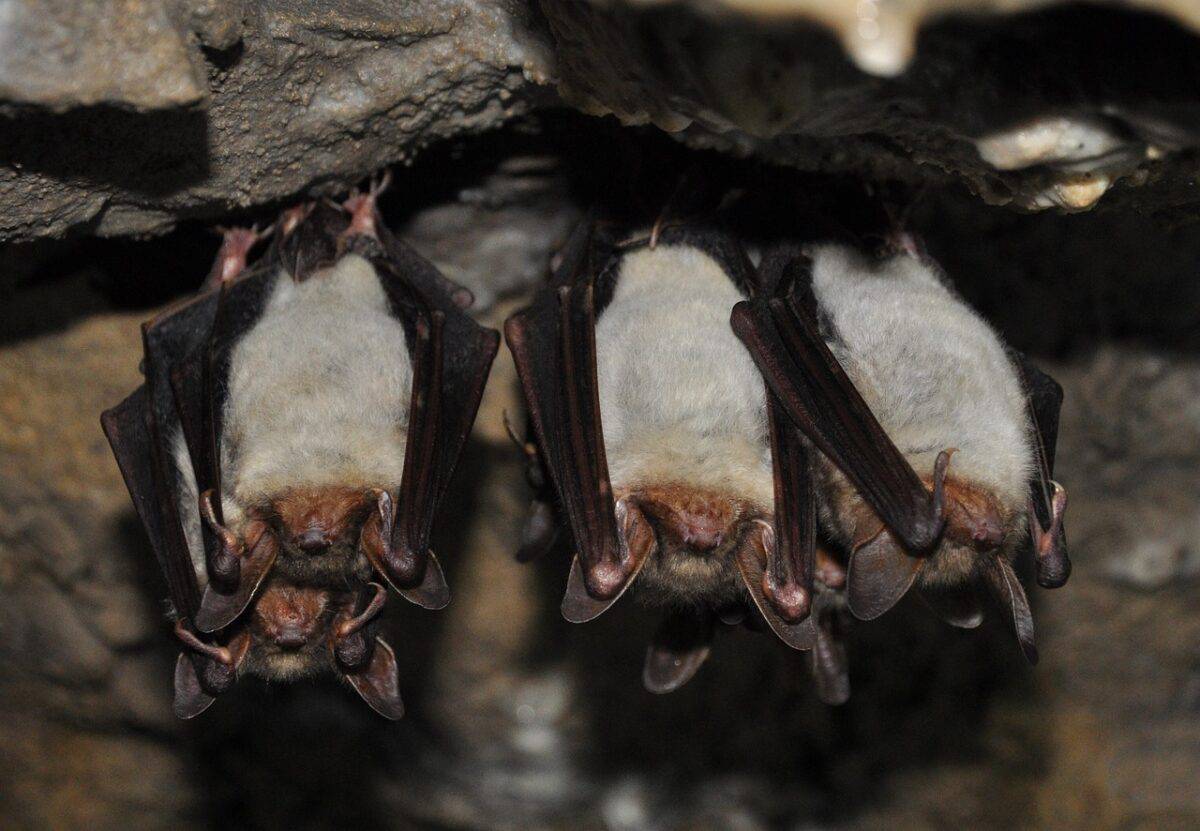
The order Chiroptera (meaning “hand-wing”) includes over 1,400 species of bats, representing about 20% of all mammal species on Earth. This remarkable diversity has allowed bats to colonize nearly every terrestrial habitat except the most extreme polar regions. Bats range dramatically in size, from the tiny Kitti’s hog-nosed bat (also called the bumblebee bat), weighing less than 2 grams with a wingspan of just 15 centimeters, to the giant golden-crowned flying fox with a wingspan exceeding 1.7 meters and weighing up to 1.6 kilograms. This size variation reflects their diverse ecological niches and feeding strategies.
Bats are traditionally divided into two major suborders: Megachiroptera (fruit bats or flying foxes) and Microchiroptera (echolocating bats), though modern classification systems have revised this division based on genetic evidence. Megabats generally feed on fruits, nectar, and pollen, while microbats primarily consume insects, though some specialized species feed on blood (vampire bats), fish, small vertebrates, or even other bats. Flight adaptations vary across species as well. Nectar-feeding bats often have long, narrow wings for hovering, while insect-hunting bats typically have broader wings optimized for maneuverability. Fast-flying open-air hunters like free-tailed bats have long, narrow wings similar to those of swifts, allowing for rapid pursuit of flying insects at high altitudes.
Nocturnal Adaptation: Avoiding Competition
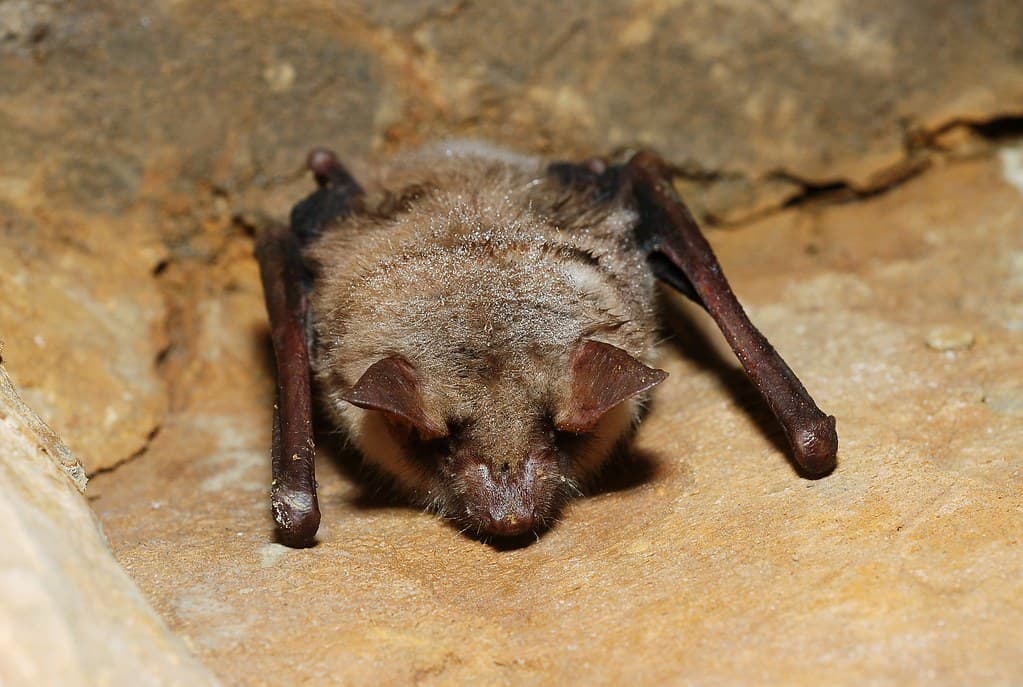
One of the primary reasons bats evolved to be nocturnal flyers relates to ecological competition. By taking to the night skies, bats effectively avoided competing with birds for airspace and food resources. Birds, with their excellent vision and generally superior flight efficiency, dominated the daytime aerial niche. Bats, rather than attempting to outcompete birds directly, evolved to exploit the nighttime hours when most birds are inactive. This temporal niche partitioning has been a key factor in bat evolutionary success, allowing them to access abundant nocturnal insect populations with minimal competition.
This avoidance of competition extends beyond simply flying at night. Many bat species emerge from their roosts during specific windows of time, usually during dusk (crepuscular activity) when light levels are changing but before complete darkness. This timing allows them to avoid both diurnal predators like hawks and nocturnal ones like owls. Different bat species often stagger their emergence times, with some leaving roosts immediately after sunset and others waiting until full darkness, further reducing competition among bat species. Research has shown that when bat populations are experimentally removed from an area, nocturnal insect populations typically surge, demonstrating the ecological importance of bats in controlling night-flying insects and the effectiveness of their nocturnal adaptation.
Echolocation: The Superpower of Darkness

Perhaps the most remarkable adaptation enabling bats to dominate the night skies is echolocation, a sophisticated biological sonar system. Most microchiropteran bats emit high-frequency ultrasonic calls (typically between 20-200 kHz, well above human hearing range) and then listen for the echoes that bounce back from objects in their environment. By analyzing these echoes, bats can create detailed mental maps of their surroundings, detecting objects as thin as a human hair in complete darkness. The neural processing required for echolocation is extraordinarily complex, with specialized brain regions devoted to analyzing the timing, frequency, and amplitude of returning echoes.
Echolocation calls vary tremendously between bat species, reflecting their ecological niches and hunting strategies. Open-air insect hunters typically use relatively low-frequency, narrowband calls that travel farther but provide less detail. In contrast, bats that hunt among vegetation emit higher-frequency, broadband calls that provide exquisite detail about nearby objects but don’t travel as far. Some species can adjust their calls based on the situation, switching from search phase calls (spaced further apart) to approach phase and finally to terminal phase (or “feeding buzz”) as they close in on prey. This remarkable sensory system allows bats to detect, track, and capture flying insects in complete darkness, often achieving success rates exceeding 90% for experienced adults—a hunting efficiency unmatched by most visual predators.
Predator Avoidance in the Dark

Nocturnal activity provides bats with significant protection from predators. Many potential bat predators, particularly birds of prey like hawks and falcons, are diurnal hunters that rely primarily on vision to locate prey. By flying at night, bats effectively avoid these threats. Additionally, darkness makes it harder for even nocturnal predators to spot bats visually, especially when bats fly against the night sky where their silhouettes are less visible. Some bat species have evolved dark or mottled coloration that further reduces their visibility in low light conditions.
Despite these advantages, bats still face predation risks from nocturnal hunters. Owls present a particular threat, as they combine excellent night vision with sensitive hearing that can detect bat movements and sometimes even their echolocation calls. Certain snake species can climb to bat roosts, while mammals like raccoons and opossums may capture bats when they’re vulnerable during roost entry or exit. Fascinatingly, some moths have evolved countermeasures against bat predation, including the ability to hear bat echolocation calls and execute evasive maneuvers, or even produce their own ultrasonic clicks that may confuse bats. These evolutionary arms races highlight the ongoing selective pressures that have shaped bat nocturnal behavior and sensory capabilities over millions of years.
Thermoregulation Benefits of Night Flying

Flying is energetically demanding, and the high metabolic activity required generates substantial heat. For bats, flying during cooler nighttime temperatures helps prevent overheating. Their wing membranes, with their large surface area and rich blood supply, serve as effective radiators for excess body heat. This is particularly important because bats’ high metabolism during flight can raise their body temperature significantly. Research has shown that in some species, body temperature can increase by several degrees Celsius during sustained flight, approaching potentially dangerous levels if not for the cooling effect of night air.
Additionally, many bat species employ torpor—a state of reduced metabolic activity and decreased body temperature—during daylight hours when they’re not flying. This energy conservation strategy allows them to reduce their daytime energy expenditure, saving their metabolic resources for nighttime hunting and flight. The combination of nocturnal activity and daytime torpor creates an efficient energy management system. Some desert-dwelling bat species take this further, flying during the cooler parts of the night and returning to roosts when temperatures drop too low, maximizing their activity during the optimal thermal window. This thermoregulatory aspect of nocturnal flight is especially critical for smaller bat species, which have higher surface-area-to-volume ratios and thus lose body heat more rapidly.
Nocturnal Foraging Opportunities

The night offers a bounty of food resources that bats have evolved to exploit. The most obvious example is nocturnal flying insects, which emerge in enormous numbers after sunset. A single bat can consume up to 1,000 mosquito-sized insects in a single hour, with some colonies consuming tons of insects nightly. This not only provides bats with abundant nutrition but also delivers critical ecosystem services by controlling insect populations. Beyond insects, fruit-eating bats access nectar, pollen, and fruits during the night when competition from diurnal frugivores is reduced. Nectar-feeding bats have co-evolved with night-blooming plants, developing specialized long tongues and snouts to access floral resources.
The temporal partitioning of food resources extends to specialized predatory bats as well. Fishing bats use their echolocation to detect ripples on water surfaces, allowing them to snatch small fish with their enlarged feet and claws. The infamous vampire bats emerge at night to feed on the blood of sleeping birds and mammals, using infrared sensors in their nose to locate blood vessels near the skin surface. This diversity of nocturnal feeding strategies demonstrates how bats have exploited the night to access varied food resources. Interestingly, studies have shown that bat foraging activity often peaks during specific windows, typically shortly after sunset and before sunrise, when insect activity is highest and energy returns for hunting effort are maximized.
Visual Adaptations for Nighttime Navigation
Contrary to the popular saying “blind as a bat,” bats have functional eyes and can see, though their visual capabilities vary significantly across species. Fruit bats (family Pteropodidae), which generally don’t echolocate, have particularly well-developed visual systems with large eyes adapted for low-light conditions. These bats rely primarily on vision and smell to locate fruit and navigate. They possess a high proportion of rod cells in their retinas, which function well in dim light, along with a reflective layer behind the retina called the tapetum lucidum (similar to cats) that enhances light sensitivity by reflecting light back through the retina for a second chance at detection.
Even echolocating microbats, which rely less on vision, have eyes adapted for their nocturnal lifestyle. Research has shown that many microbats use vision for long-distance navigation and orientation to landmarks, while reserving echolocation for detailed obstacle detection and prey capture. Some species have specialized visual adaptations, including sensitivity to ultraviolet light that may help them detect the UV-reflective urine trails of small mammals or navigate using celestial cues. Bats also appear to integrate visual and echolocation information, with neural connections between visual and auditory processing centers in the brain. This sensory integration allows bats to build comprehensive cognitive maps of their environment, combining the strengths of both systems for optimal nighttime navigation.
Social Benefits of Nocturnal Living

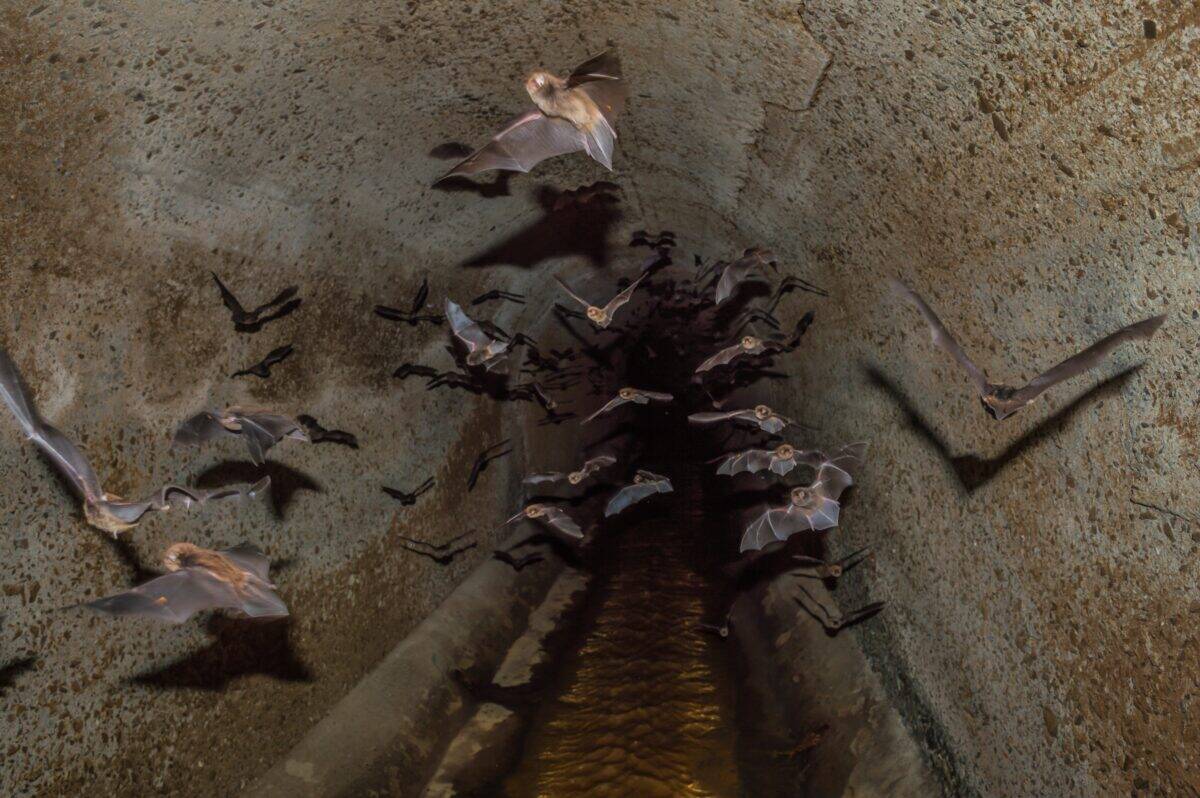
Nocturnal living has shaped bat social behavior in fascinating ways. Many bat species form large colonies, sometimes numbering in the millions, that provide multiple benefits. These social aggregations offer thermal advantages, with body heat from many individuals helping to maintain optimal temperatures within roosts. For reproductive females, colonial living can be particularly beneficial, allowing them to leave their pups in the safety of the colony (often in a “creche” system) while foraging. Some evidence suggests that bats may share information about foraging opportunities, with inexperienced bats following knowledgeable individuals to productive feeding areas.
The social complexity of bat colonies extends to sophisticated vocal communication systems. Bats produce a wide variety of social calls distinct from their echolocation vocalizations, including isolation calls that help mother bats locate their pups among thousands of others, territorial calls that establish and defend resources, and mating calls used during courtship. Recent research has demonstrated that bats engage in complex social learning, with juveniles acquiring foraging techniques and roost preferences from other colony members. Some species even exhibit distinct “dialects” in their vocalizations that differ between colonies, suggesting cultural transmission of vocal patterns. This rich social environment, largely hidden from human observation due to its nocturnal nature, represents one of the most complex social systems among mammals outside of primates.
Exceptions to Nocturnal Activity

While most bat species are predominantly nocturnal, there are notable exceptions that demonstrate the flexibility of bat activity patterns. Several fruit bat species, particularly in the family Pteropodidae, engage in diurnal (daytime) flight, especially when food resources are limited or when traveling long distances between roosts and feeding sites. The Samoan flying fox (Pteropus samoensis) and the Azores noctule (Nyctalus azoreum) are among the few primarily diurnal bat species. These day-flying bats typically have enhanced visual systems and reduced reliance on echolocation, adaptations that support daytime navigation.
Other bat species show flexible activity patterns that respond to environmental conditions. Some desert-dwelling bats adjust their activity timing seasonally, flying earlier in the evening during hot summer months and later during cooler periods. High-latitude bats living in regions with extreme seasonal variations in daylight often adapt their activity to available darkness, sometimes flying during twilight hours in summer when true night is brief or absent. Colonial species may also stagger their emergence times based on age and reproductive status, with juveniles often emerging earlier than adults. These exceptions to strict nocturnality highlight the remarkable adaptability of bats and demonstrate how ecological pressures continue to shape their behavior, even after millions of years of predominantly nocturnal evolution.
Conservation Challenges for Night Flyers

The nocturnal lifestyle of bats presents unique conservation challenges. Because bats are active when most humans are not, their ecological importance often goes unnoticed and underappreciated. This “out of sight, out of mind” situation has contributed to insufficient protection for many bat species and their habitats. Light pollution represents a particularly serious threat to nocturnal bats. Artificial lighting disrupts natural darkness, can delay emergence times from roosts, alter commuting routes, and reduce foraging activity in many bat species. Studies have shown that light-sensitive bat species avoid illuminated areas, effectively reducing their available habitat and fragmenting their foraging landscapes.
Worried about unexpected vet bills?
Pet insurance can cover thousands in unexpected vet costs. Get a free quote from Lemonade in under 2 minutes.
Get My Free Quote →Sponsored · Opens Lemonade.com

- 18 Fascinating Facts About Horses and Weather Instincts - June 9, 2026
- 14 Legendary Horses from History and Their Stories - June 9, 2026
- Can We Save the Snow Leopard Before It Disappears? - June 9, 2026