


When we think of language, we often consider it a uniquely human trait. However, the animal kingdom is filled with remarkable species that demonstrate sophisticated communication abilities that challenge our understanding of language. From primates using sign language to birds crafting complex songs with syntax, these intelligent creatures reveal that the capacity for language exists on a spectrum rather than being an exclusively human domain. This article explores the most intellectually gifted animals whose communication skills have astonished researchers and expanded our understanding of animal cognition.
The Great Apes: Our Closest Linguistic Relatives
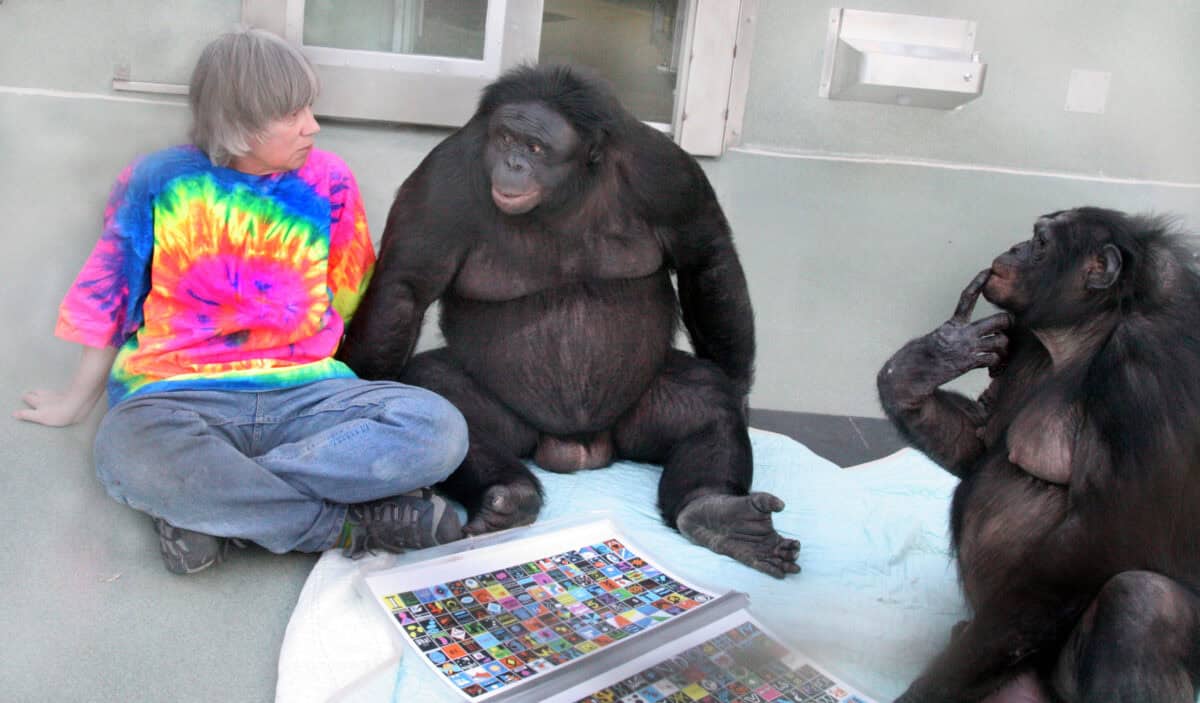
Great apes share up to 98% of our DNA, so perhaps it’s unsurprising they demonstrate remarkable language capabilities. Chimpanzees, bonobos, gorillas, and orangutans have all shown impressive abilities to understand and use symbolic communication systems. The most famous examples involve apes who have learned American Sign Language (ASL) or used lexigrams (symbolic keyboards). Washoe, a female chimpanzee studied by Allen and Beatrice Gardner in the 1960s, mastered approximately 350 ASL signs and even taught signs to other chimps. Similarly, Koko the gorilla reportedly understood over 1,000 signs and 2,000 spoken English words. What’s particularly impressive is that these apes don’t merely mimic—they combine signs creatively, invent new words by combining existing concepts, and use language for various functions including asking questions, expressing emotions, and even making jokes.
Dolphins: The Ocean’s Linguistic Geniuses

Dolphins possess one of the most sophisticated communication systems in the animal kingdom. Their large brains (relative to body size) support complex cognitive abilities, including an intricate language system. Dolphins communicate through a combination of whistles, clicks, and body postures. Each dolphin develops a unique “signature whistle” that functions similarly to a name, which other dolphins can then mimic to address specific individuals—essentially calling them by name. Research by Dr. Denise Herzing and the Wild Dolphin Project has documented over 200 distinct dolphin sounds with specific meanings. In captivity, dolphins have demonstrated understanding of artificial human languages, sentence structure, and abstract concepts. The bottlenose dolphin Akeakamai was taught a gestural language and showed an understanding of syntax, recognizing that “ball fetch surfboard” meant something different from “surfboard fetch ball.” Perhaps most impressively, researchers have recorded dolphins appearing to have conversations, taking turns and adjusting their communication based on what was previously “said.”
African Grey Parrots: Masters of Vocal Learning

African Grey parrots have astounded researchers with their linguistic abilities that go far beyond simple mimicry. The most famous example is Alex, studied by Dr. Irene Pepperberg for 30 years. Alex learned over 100 English words, could identify 50 different objects, recognized numbers up to six, and understood concepts like “bigger,” “smaller,” “same,” and “different.” What made Alex remarkable was his apparent comprehension of what he was saying. When shown objects of different colors and materials, he could answer questions about their properties correctly about 80% of the time. He could also express desires (“want grape”) and would say “I’m sorry” when he recognized he had upset Dr. Pepperberg. Perhaps most impressively, Alex once asked what color he was while looking in a mirror—suggesting a level of self-awareness previously unrecognized in birds. His successor, Griffin, has continued to demonstrate similar abilities, suggesting these skills aren’t anomalous but rather representative of the species’ cognitive potential.
Border Collies: Canine Vocabulary Champions

While dogs can’t speak in the conventional sense, certain breeds, particularly Border Collies, have demonstrated exceptional receptive language abilities. The most remarkable case is Chaser, a Border Collie trained by psychologist John Pilley. Chaser learned the names of over 1,000 distinct toys and could retrieve them by name. Beyond simple object recognition, she understood the difference between nouns and verbs, following complex commands like “nose the ball” (push with her nose) versus “paw the ball” (touch with her paw). Another Border Collie named Rico famously knew the names of over 200 items and could use inference to learn new words—a process called “fast mapping” that was previously thought to be unique to humans and some primates. When presented with a group of objects including one he’d never seen before, and asked to fetch using a word he’d never heard, Rico correctly deduced that the new word must refer to the new object. This sophisticated reasoning ability suggests dogs understand more language than we previously believed possible.
Ravens and Crows: The Linguistic Masterminds of the Bird World

Corvids—the family that includes ravens, crows, and jays—possess some of the most sophisticated communication systems among birds. With brain-to-body ratios comparable to chimpanzees, these birds demonstrate remarkable linguistic capabilities. Ravens have been documented using over 30 distinct vocal calls with specific meanings. They can mimic human speech and other environmental sounds with impressive accuracy. Their communication extends beyond vocalization—they use elaborate body language and can even use tools to communicate, such as dropping stones near humans to get attention. Research by Dr. Bernd Heinrich showed that ravens will recruit other ravens to food sources through specific calls, but fascinatingly, they adjust their communication strategy depending on the audience. If potential competitors are present, ravens will suppress their food calls—demonstrating an understanding of how their communications affect others’ behavior. This awareness of audience and modification of communication is a sophisticated linguistic trait previously thought to be exclusive to primates.
Elephants: Complex Communication Networks
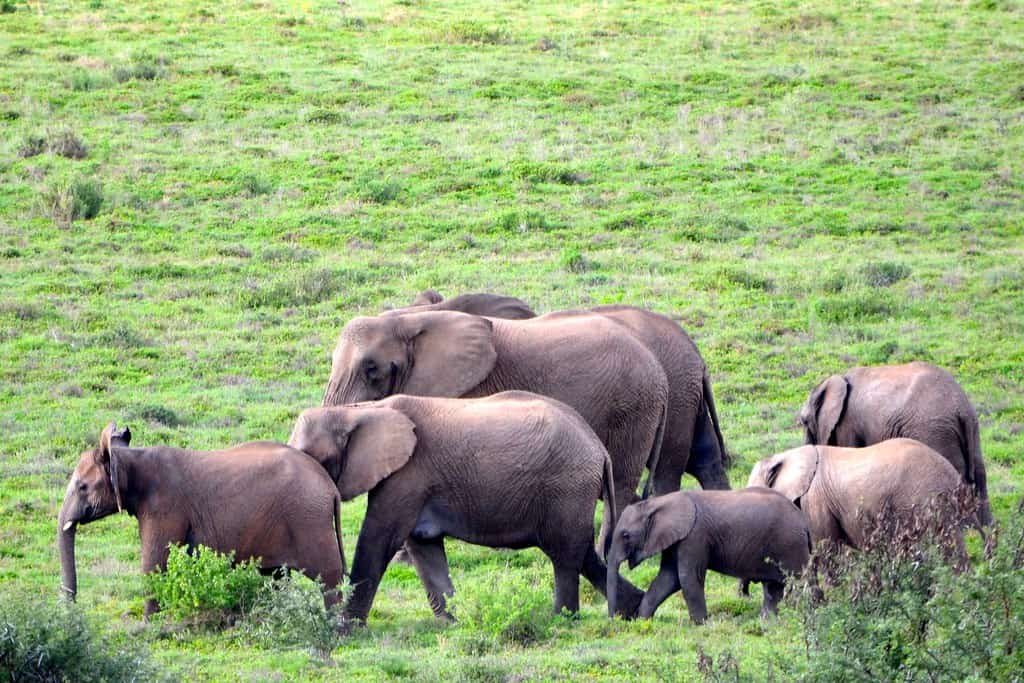
Elephants possess an extraordinarily complex communication system that spans multiple sensory modalities. Their vocal repertoire includes over 70 different kinds of sounds, from the familiar trumpeting to infrasonic rumbles below human hearing range that can travel up to 6 miles. These low-frequency vocalizations allow elephant herds to coordinate movements over vast distances, essentially creating an elephant “telephone network.” Research by Dr. Joyce Poole has shown that elephants use specific rumbles to mean specific things—including distinct alarm calls for bees versus humans. Elephants also communicate through body language, touch, chemical signals, and seismic vibrations detected through their feet. Perhaps most impressively, they demonstrate language-learning abilities similar to humans: they can learn to understand specific human words and commands, with some zoo elephants responding to vocabularies of up to 60 words. What makes elephant communication particularly noteworthy is its cultural dimension—different elephant groups develop distinct “dialects” that are passed down through generations, showing the presence of culturally transmitted language, a feature once thought unique to humans.
Honeybees: Dance Language Pioneers
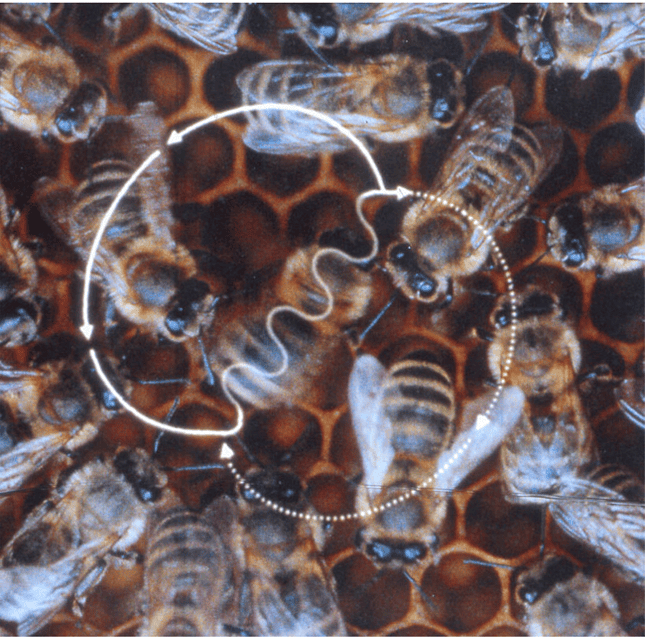
Despite having brains smaller than a grain of rice, honeybees have evolved one of the most sophisticated symbolic communication systems in nature. Their famous “waggle dance,” first decoded by Karl von Frisch (who won a Nobel Prize for this work), is a genuine language that communicates abstract concepts through movement. When a forager bee discovers a rich food source, it returns to the hive and performs a precise dance on the vertical surface of the honeycomb. The dance’s pattern, duration, and orientation convey three critical pieces of information: distance to the food source, direction relative to the sun, and the quality of the food. What makes this truly remarkable is that bees are translating three-dimensional information from the outside world into a symbolic representation inside the dark hive. The dancing bee adjusts for the sun’s movement across the sky, accounting for time elapsed since discovering the food source—essentially a form of astronomical calculation. This symbolic representation of complex spatial information fits many definitions of true language, demonstrating that sophisticated communication systems can evolve even in tiny insect brains when ecological pressures demand it.
Beluga Whales: The “Sea Canaries”

Beluga whales, nicknamed “sea canaries” by early sailors for their extensive vocal repertoire, possess one of the most diverse acoustic communication systems among marine mammals. They produce an extraordinary range of sounds including clicks, whistles, chirps, trills, and mews. Research at the Oceanogràfic aquarium in Valencia, Spain documented a beluga whale named NOC who spontaneously began to mimic human speech patterns, modulating his vocalizations to match the rhythm and frequency of human conversation. What makes belugas linguistically remarkable is their anatomical specialization for communication—unlike other whales, they can change their facial expressions and have flexible necks, allowing for sophisticated visual communication alongside their vocal abilities. They possess a specialized structure called a “melon” (the distinctive bulge on their forehead) that they can reshape to focus sound. This functions like a biological acoustic lens, allowing them to direct their communication with precision. Field studies suggest belugas maintain complex social networks through individualized calls similar to names. Their ability to modify their vocalizations based on environmental conditions—such as changing their frequency when ice cover increases—demonstrates a sophisticated awareness of acoustic principles and communication efficacy.
Prairie Dogs: Sophisticated Alarm Calls

Prairie dogs may seem like simple rodents, but research by Dr. Con Slobodchikoff has revealed they possess one of the most sophisticated alarm call systems in the animal kingdom. After decades of recording and analyzing prairie dog calls, Slobodchikoff discovered these rodents have specific alarm calls that identify different predator types (hawk, coyote, dog, human). More astonishingly, their calls contain descriptive information about the predator’s size, shape, color, and speed of travel. When researchers approached prairie dog colonies wearing different colored shirts, the prairie dogs modified their alarm calls to specify the color—essentially creating “words” for different colors. The alarm calls even differentiate between individual humans who regularly appear near their colonies. Prairie dogs can transmit this detailed information in a single chirp lasting just one-tenth of a second—an incredible feat of acoustic compression. Young prairie dogs learn these calls from adults, showing evidence of cultural transmission. What makes this system particularly noteworthy is that it contains elements of both referential communication (identifying specific predators) and descriptive communication (detailing attributes)—two key features of human language that rarely co-occur in animal communication systems.
Humpback Whales: Composers of the Ocean

Humpback whales produce some of the most complex vocal performances in the animal kingdom through their elaborate songs. These aren’t simple calls but structured compositions that can last up to 30 minutes and be heard up to 20 miles away. The songs follow hierarchical syntax rules, consisting of units combined into phrases, phrases into themes, and themes into songs—paralleling the structure of human language and music. What’s particularly fascinating is that all male humpbacks in a population sing the same song, but this song gradually evolves over time, with all whales adopting the changes. This represents a form of cultural transmission and collective learning previously thought unique to humans. Different populations of humpbacks around the world sing different songs, essentially creating regional “dialects.” Research by Dr. Ellen Garland has documented song transmission between populations, with whale songs spreading like cultural trends across ocean basins over several years. The function of these songs appears to be both reproductive (attracting females) and social (establishing dominance hierarchies). The complexity of humpback whale song demonstrates that sophisticated communication systems with grammatical rules can evolve in species quite distant from humans on the evolutionary tree.
Octopuses: Masters of Body Language Communication

While octopuses are largely solitary creatures, recent research has revealed they possess a sophisticated visual communication system unlike any other in the animal kingdom. With no rigid skeleton and specialized skin cells called chromatophores, octopuses can change not only their color but also their texture and shape in milliseconds. This allows them to produce dynamic visual displays of astonishing complexity. The Larger Pacific Striped Octopus uses specific patterns when approaching potential mates versus rivals. The mimic octopus goes further, impersonating other sea creatures through both appearance and movement patterns—essentially “speaking” the visual language of different species to either intimidate predators or approach prey. What makes octopus communication particularly remarkable is its distributed neural architecture—two-thirds of an octopus’s neurons are located in its arms, allowing each limb to semi-autonomously send and receive information. Research by Dr. David Scheel documented how octopuses in laboratory settings would direct specific patterns toward specific researchers, suggesting they can recognize individual humans and tailor their communications accordingly. While fundamentally different from spoken language, the octopus’s visual communication system demonstrates how evolution can produce alternative but equally sophisticated forms of information exchange optimized for different environmental niches.
The diverse communication systems explored in this article challenge our traditional understanding of language as a uniquely human trait. Instead, we see that language exists on a spectrum, with different species evolving communication systems suited to their ecological needs and cognitive capacities. From the symbolic representations in bee dances to the syntactic structures of whale songs, these examples demonstrate that many key features of language are present throughout the animal kingdom. Perhaps most importantly, these discoveries should prompt us to approach animal communication with greater humility. Many species communicate in modalities we can barely perceive—through ultrasound, infrared, electrical signals, or chemical markers—suggesting the possibility of sophisticated languages that have remained invisible to human observation. As research techniques advance, we continue to discover new depths in animal communication, blurring the once-sharp line between human language and animal signals. Understanding the rich communicative lives of these intelligent species not only expands our scientific knowledge but also raises important ethical questions about how we treat beings with whom we share this fundamental capacity for complex communication.

- How Crickets Chirp Using Their Wings - July 20, 2026
- The Largest Sea Turtle Ever Rescued Off North Carolina - July 20, 2026
- The Ocean’s Escape Artist: Why Octopuses Outsmart Us All - July 20, 2026