

The bald eagle stands as one of the most recognizable and powerful symbols in American culture, embodying the nation’s highest ideals of freedom, strength, and independence. Selected as the national emblem of the United States in 1782, this majestic bird has represented America for over two centuries, appearing on government seals, currency, and countless patriotic imagery. But the story of how this once-endangered species became America’s national bird—and what it has symbolized throughout different eras of American history—reveals a fascinating journey that parallels the nation’s own evolution. From the founding fathers’ debates over its selection to its near extinction and remarkable recovery, the bald eagle’s symbolic meaning has transformed alongside American society while maintaining its core representation of liberty and national pride.
The Selection of America’s National Bird

The decision to adopt the bald eagle as America’s national bird wasn’t without controversy. On June 20, 1782, the Continental Congress approved the Great Seal of the United States featuring the bald eagle as its centerpiece, but this choice emerged after nearly six years of debate and three separate design committees. Benjamin Franklin famously opposed the selection, preferring the wild turkey, which he considered “a much more respectable bird” and a “true native of America.” In a letter to his daughter, Franklin criticized the eagle as “a bird of bad moral character” that “does not get his living honestly” due to its scavenging behavior.
Despite Franklin’s objections, the bald eagle prevailed as the national symbol largely due to its commanding presence, long lifespan, and unique status as a species native to North America. Charles Thomson, Secretary of the Continental Congress, described the eagle in the final design as representing “supreme power and authority” with its outstretched wings symbolizing protection. The founders ultimately saw in the eagle qualities they hoped would define their new nation: independence, strength, and a far-reaching vision—all characteristics that aligned with America’s aspirations as it emerged from British rule.
Ancient Symbolism and Cultural Significance

The symbolic power of eagles extends far beyond American history, reaching back to ancient civilizations worldwide. Eagles were revered as divine messengers and symbols of imperial power across cultures—from the Roman legions who carried eagle standards into battle to the Aztec civilization that founded Tenochtitlan (modern-day Mexico City) where an eagle perched on a cactus with a snake in its beak was prophesied. This widespread admiration for eagles across human history made the bird a natural choice for a nation seeking to establish its place among world powers.
For Native American tribes, the eagle held profound spiritual significance long before European colonization. Many tribes considered eagle feathers sacred items used in religious ceremonies, healing rituals, and as symbols of honor. The Lakota, Navajo, Hopi, and numerous other nations incorporated eagle symbolism into their cultural practices, viewing the bird as a connection between earth and sky—a messenger to the heavenly realm. This indigenous reverence adds a deeper dimension to the bald eagle’s significance in American symbology, representing a connection to the continent’s original inhabitants and their relationship with the natural world.
The Great Seal of the United States
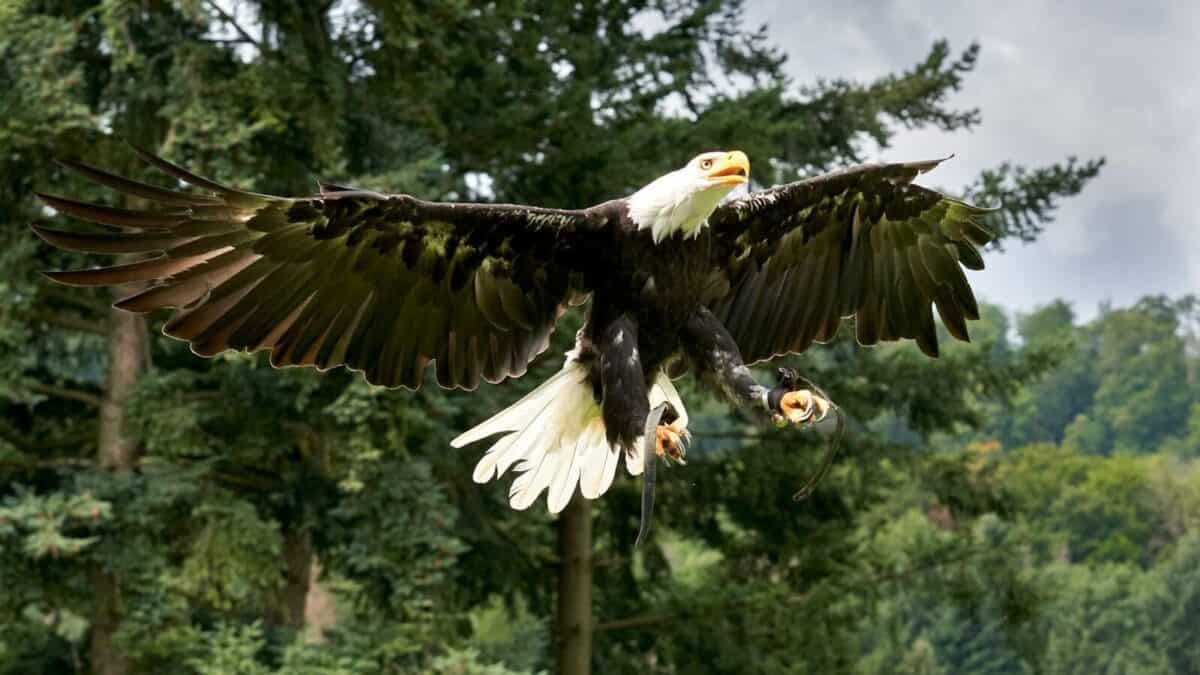
The Great Seal of the United States remains perhaps the most important early use of bald eagle symbolism in American governance. On the seal, the eagle grasps an olive branch in its right talon, symbolizing peace, and thirteen arrows in its left, representing the thirteen original colonies and the nation’s military strength. This dual symbolism intentionally positions peace (the olive branch) in the more favorable position according to heraldic tradition, while maintaining readiness for war when necessary. The eagle faces toward the olive branch, suggesting America’s preference for peace.
Above the eagle’s head on the Great Seal appears a constellation of thirteen stars surrounded by a blue cloud, representing a new constellation taking its place among the nations of the world. In its beak, the eagle holds a scroll inscribed with “E Pluribus Unum”—Latin for “Out of Many, One”—expressing the federal nature of the union. Every element of this design was carefully considered to communicate the foundational values and structure of the new republic. The Great Seal continues to appear on numerous official documents, in government buildings, and most famously on the reverse side of the one-dollar bill, making the eagle emblem a daily presence in American life.
Military and Government Adoption

Following its selection as the national emblem, the bald eagle quickly spread throughout American military and governmental symbolism. The U.S. Army adopted the eagle as part of its insignia in 1780, even before the Great Seal was finalized. The eagle became a common element on military buttons, belt buckles, and flags, representing martial strength and vigilance. By 1794, the newly established U.S. Navy incorporated the eagle into its official seal, and today the eagle appears prominently in the insignia of all branches of the U.S. Armed Forces.
Beyond the military, numerous federal agencies and departments have incorporated the eagle into their official seals and logos. The Presidential Seal features a modified version of the eagle from the Great Seal, as does the seal of the U.S. Congress. The Department of Justice, State Department, and many other governmental bodies use variations of eagle imagery in their official symbols. This widespread adoption across different branches of government has reinforced the eagle’s status as a unifying national symbol that transcends partisan divisions, representing the continuity and authority of American government institutions.
The Bald Eagle on American Currency

The bald eagle has featured prominently on American currency throughout the nation’s history, providing perhaps the most common daily encounter Americans have with their national symbol. The first appearance of the eagle on U.S. coins came with the Coinage Act of 1792, which required the eagle to appear on the reverse side of gold and silver coins. The “Eagle” even became the name of the ten-dollar gold piece first minted in 1795. Through various design changes over centuries, the eagle has remained a constant presence on American coinage, including the popular American Silver Eagle bullion coins first issued in 1986.
Paper currency has similarly featured the eagle in numerous designs. Most notably, the reverse of the one-dollar bill displays the Great Seal with its eagle centerpiece, an image seen by virtually every American. The eagle also appears on the Presidential Seal featured on the reverse of the fifty-dollar bill. These monetary representations serve as constant, tangible reminders of national identity that circulate through the economy, reinforcing the eagle’s place in American consciousness. The ubiquity of these images has helped solidify the eagle as an instantly recognizable symbol of America both domestically and around the world.
Near Extinction and Conservation Efforts

The bald eagle’s symbolic journey includes a dramatic chapter of near extinction followed by one of the greatest conservation success stories in American history. By the mid-20th century, the population of bald eagles in the contiguous United States had plummeted to fewer than 500 nesting pairs. This decline resulted from multiple threats, including habitat destruction, hunting, and most significantly, the widespread use of the pesticide DDT, which caused eagles to lay eggs with shells too thin to support developing embryos. The plight of the national symbol sparked public concern that transcended typical political divisions.
The bald eagle became one of the first species protected under the Endangered Species Preservation Act of 1966, and the subsequent banning of DDT in 1972 marked a turning point in its recovery. The Endangered Species Act of 1973 provided further protection, and dedicated conservation efforts followed, including habitat protection, reintroduction programs, and public education initiatives. These efforts proved remarkably successful—by 2007, bald eagle populations had recovered sufficiently for the species to be removed from the endangered species list, with population estimates now exceeding 300,000 birds. This recovery parallels America’s growing environmental consciousness and demonstrates how the symbolic importance of the eagle motivated concrete conservation action.
The Eagle in American Art and Popular Culture

Beyond official government usage, the bald eagle has permeated American art, literature, and popular culture. Early American artists like John James Audubon created iconic depictions of the bird that combined scientific observation with patriotic symbolism. In the realm of folk art, stylized eagle motifs adorned furniture, quilts, weather vanes, and everyday items throughout the 18th and 19th centuries. These artistic representations helped cement the eagle’s place in American visual culture while expressing regional and personal interpretations of national identity.
In modern times, the eagle continues to appear extensively in commercial branding, sports team mascots, and popular media. The Philadelphia Eagles NFL team, the American Eagle clothing brand, and Eagle Scouts in the Boy Scouts of America all leverage the positive associations of the national symbol. In film and television, the eagle often serves as visual shorthand for American values and institutions. This cultural ubiquity demonstrates how the eagle has transcended its official governmental role to become a versatile symbol that Americans continuously reinterpret and apply to diverse aspects of national life, from the solemn to the commercial.
Regional and Geographic Significance

The bald eagle’s natural habitat spans much of North America, with particularly strong populations in Alaska and the Pacific Northwest. This geographic distribution has created regional variations in how Americans relate to the national symbol. In Alaska, where over 30,000 bald eagles reside, the bird is a common sight rather than a rare emblem, integrated into daily life and local cultural identities. The town of Haines, Alaska, hosts the annual Alaska Bald Eagle Festival, celebrating the thousands of eagles that gather along the Chilkat River during salmon spawning season.
For many communities near major waterways and lakes, eagle watching has become an important form of ecotourism and a source of local pride. Places like the Mississippi River Valley, Chesapeake Bay, and the Great Lakes region have developed eagle-focused conservation areas and viewing platforms that attract visitors and foster appreciation for both the symbolic and ecological importance of the species. These regional connections to the living embodiment of the national symbol create more tangible relationships between citizens and the abstract values the eagle represents, grounding patriotic symbolism in ecological reality.
The Eagle During Times of National Crisis
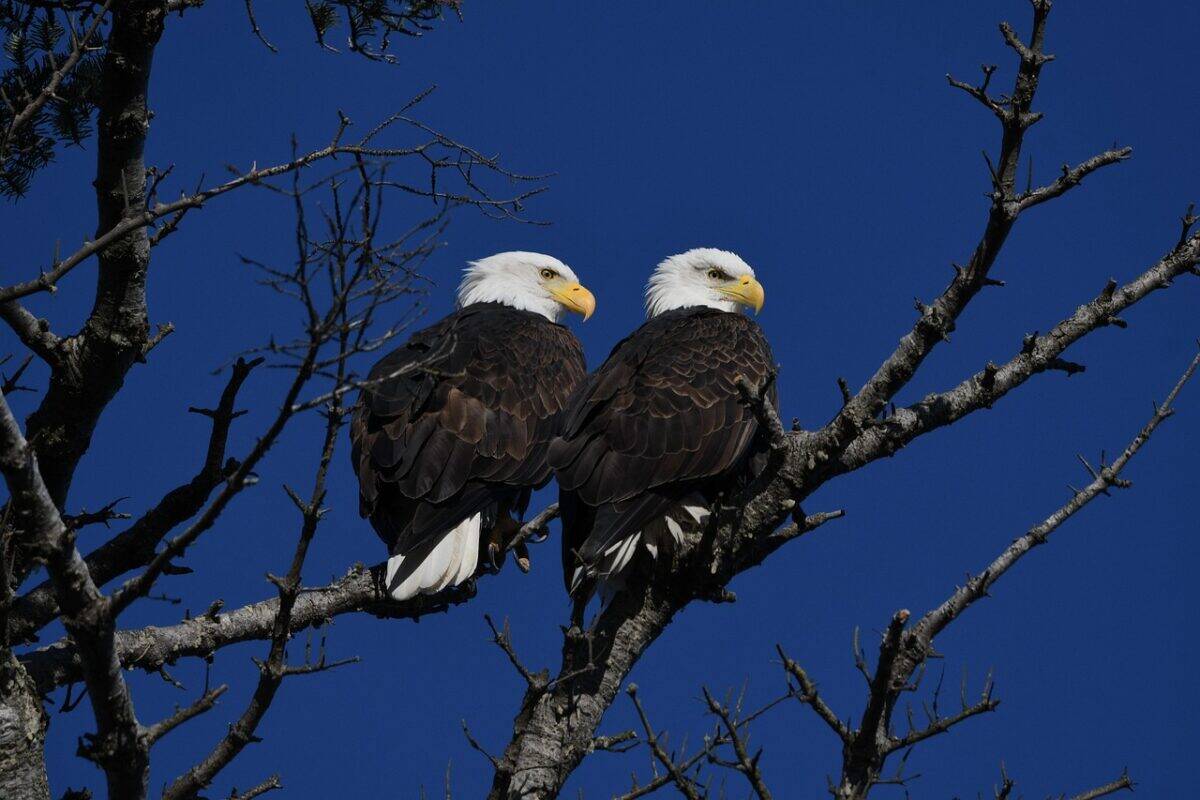
Throughout American history, the bald eagle symbol has taken on heightened significance during periods of national crisis and war. During the Civil War, both Union and Confederate forces incorporated eagle imagery into their military regalia and propaganda, each claiming the national symbol for their cause. World War I and II saw extensive use of the eagle in recruitment posters, war bonds advertisements, and morale-boosting imagery. The eagle became a rallying symbol that transcended political differences, emphasizing national unity in the face of external threats.
Following the September 11, 2001 terrorist attacks, eagle imagery surged in popularity as Americans sought comfort in traditional national symbols. The famous photograph “The American Bald Eagle Cries,” showing an eagle with what appears to be a tear in its eye, went viral despite being manipulated. This response illustrates how in moments of collective trauma, Americans have turned to the eagle as a symbol of resilience and enduring national character. The eagle’s dual symbolism of peace and strength has made it particularly apt for these moments when the nation navigates between expressing military resolve and maintaining commitment to higher ideals.
Controversies and Criticisms

Despite its widespread acceptance, the eagle symbol has not been without controversy throughout American history. From Benjamin Franklin’s early criticism to modern debates about nationalism and imperialism, the eagle has been subject to varying interpretations. Some critics have viewed the predatory nature of the eagle as glorifying aggression and military dominance, particularly during periods of American expansion and military interventions abroad. During the Vietnam War era, counterculture movements sometimes rejected or subverted traditional patriotic symbols, including the eagle, as part of broader criticism of American policies.
Indigenous perspectives on the eagle symbol highlight additional complexities. While many Native American cultures revere eagles, the U.S. government’s adoption of eagle symbolism occurred during periods of displacement and violence against indigenous peoples. The Eagle Feather Law, which restricts possession of eagle feathers to enrolled members of federally recognized tribes for religious purposes, represents an attempt to balance conservation with respect for indigenous cultural practices, but continues to generate debate about cultural appropriation and religious freedom. These tensions remind us that national symbols carry different meanings across America’s diverse communities and historical experiences.
Biological Facts and Natural History

The symbolism of the bald eagle is enhanced by understanding the remarkable biological characteristics that made it an appealing national emblem. Haliaeetus leucocephalus (Greek for “white-headed sea eagle”) is one of the largest birds of prey in North America, with a wingspan reaching up to 7.5 feet and females weighing up to 14 pounds. Contrary to its name, the bird isn’t actually bald—its white-feathered head contrasted against its dark brown body created this impression to early observers. Bald eagles typically mate for life and can live up to 30 years in the wild, with some captive birds reaching 50 years—characteristics that align with ideals of loyalty and longevity desirable in a national symbol.
As apex predators primarily feeding on fish, bald eagles occupy an ecological niche at the top of the food chain, making them important indicators of environmental health. Their recovery from near extinction demonstrates the interconnectedness of ecosystems, as clean water regulations and habitat protection benefit not just eagles but entire watersheds. The eagle’s impressive physical capabilities—flying at speeds up to 40 mph, diving at over 100 mph, and possessing vision estimated to be four to seven times stronger than humans’—provide natural analogies to qualities Americans have traditionally valued: strength, precision, and far-sightedness. Understanding these biological realities adds depth to the symbolic representations that appear throughout American culture and governance.
The Enduring Legacy of America’s National Bird

The bald eagle’s journey through American history reveals a symbol whose meaning has evolved while maintaining remarkable continuity. From the founding debates over its selection to its modern ubiquity across government, commerce, and culture, the eagle has demonstrated unusual staying power as a national emblem. This endurance stems partly from the eagle’s versatility—it can simultaneously represent the federal government’s authority, the natural heritage of the continent, military strength, and peaceful aspirations. Unlike more partisan symbols, the eagle has retained broad acceptance across political and regional divides, serving as common ground in an often divided nation.
The eagle’s recovery from near extinction to thriving population parallels America’s own environmental awakening and capacity for correcting its course. As a living symbol rather than a mere abstraction, the bald eagle connects patriotic sentiment to conservation ethics, reminding citizens that preserving national symbols requires tangible commitments to environmental stewardship. The eagle continues to inspire Americans through its physical majesty and symbolic resonance, embodying both what America aspires to be and what it has achieved. In a nation of diverse peoples, histories, and perspectives, the bald eagle remains one of the most universally recognized and embraced emblems of shared national identity—a powerful symbol whose wings stretch across America’s past, present, and future.

- The Comeback of the Bald Eagle: What Made It Work - June 3, 2026
- Top 10 Animals and Wildlife in Oklahoma - June 3, 2026
- Do Conservation Efforts Favor ‘Cute’ Animals Over Ecologically Important Ones? - June 3, 2026