


When we gaze upon sea turtles gliding through ocean waters, we’re witnessing living relics from an ancient world. These remarkable marine reptiles have survived multiple mass extinctions, including the cataclysmic event that wiped out the dinosaurs 66 million years ago. While dinosaurs vanished from Earth, sea turtles persisted, carrying with them remarkable adaptations that have stood the test of time. Among these survival traits is one particularly fascinating ability that dates back to the Mesozoic Era – the time when dinosaurs ruled the Earth. This article explores the ancient origins of sea turtles’ most remarkable survival trait: their extraordinary navigational abilities that have remained virtually unchanged for over 100 million years.
The Ancient Origins of Sea Turtles

Sea turtles first appeared during the late Jurassic period, approximately 150 million years ago. These prehistoric ancestors evolved from land-dwelling reptiles, gradually developing the streamlined shells and flipper-like limbs that characterize modern sea turtles. Fossil records show remarkable similarities between ancient and contemporary sea turtle species, demonstrating the evolutionary success of their design.
While dinosaurs dominated the land, these marine reptiles were perfecting adaptations that would eventually help them survive the asteroid impact that ended the Cretaceous period. Their ability to navigate vast ocean distances was already developing during this time, a trait that would prove crucial to their long-term survival as a lineage.
Magnetoreception: The Dinosaur-Era Superpower

The extraordinary survival trait that has persisted since the dinosaur era is sea turtles’ ability to detect and navigate using Earth’s magnetic field – a phenomenon known as magnetoreception. Scientific research has confirmed that sea turtles possess specialized cells containing magnetite, a naturally magnetic mineral that acts like a built-in compass.
This biological GPS system enables them to determine their geographic location with remarkable precision, even in the vast, featureless expanse of open ocean. What’s most astonishing is that this magnetic sensing ability hasn’t fundamentally changed since the Cretaceous period, making it one of the oldest preserved navigation systems in the animal kingdom. While the world above water transformed dramatically, sea turtles maintained this critical adaptation that continues to guide their epic migrations today.
How Magnetic Navigation Works

Sea turtles’ magnetic navigation system functions through their ability to detect two components of Earth’s magnetic field: magnetic inclination (the angle at which magnetic field lines intersect Earth’s surface) and magnetic intensity (the strength of the magnetic field). These components vary across different geographic locations, creating a complex magnetic map that covers the entire globe. When combined, these magnetic parameters provide sea turtles with precise positional information.
Research has shown that hatchlings emerge from their nests with this magnetic sensing ability already fully functional, suggesting it’s an innate rather than learned trait. Laboratory experiments have demonstrated that even juvenile turtles with no prior migration experience can detect subtle changes in magnetic fields, orienting themselves correctly when exposed to artificial magnetic conditions mimicking different ocean regions.
The Epic Journey of Natal Homing

Perhaps the most impressive application of sea turtles’ magnetic navigation is their ability to return to their natal beaches – the very shores where they hatched – to lay their own eggs decades later. This phenomenon, known as natal homing, requires extraordinary navigational precision across thousands of miles of open ocean. Female sea turtles imprint on the unique magnetic signature of their birth beach when they hatch.
Years later, after maturing in distant feeding grounds, they use this magnetic memory to navigate back to within a few kilometers of their birthplace. This remarkable journey, repeated across generations for millions of years, demonstrates the reliability and precision of their ancient navigation system. The fact that this behavior has remained consistent since the dinosaur era speaks to its evolutionary importance for the species’ survival.
Surviving the K-Pg Extinction Event
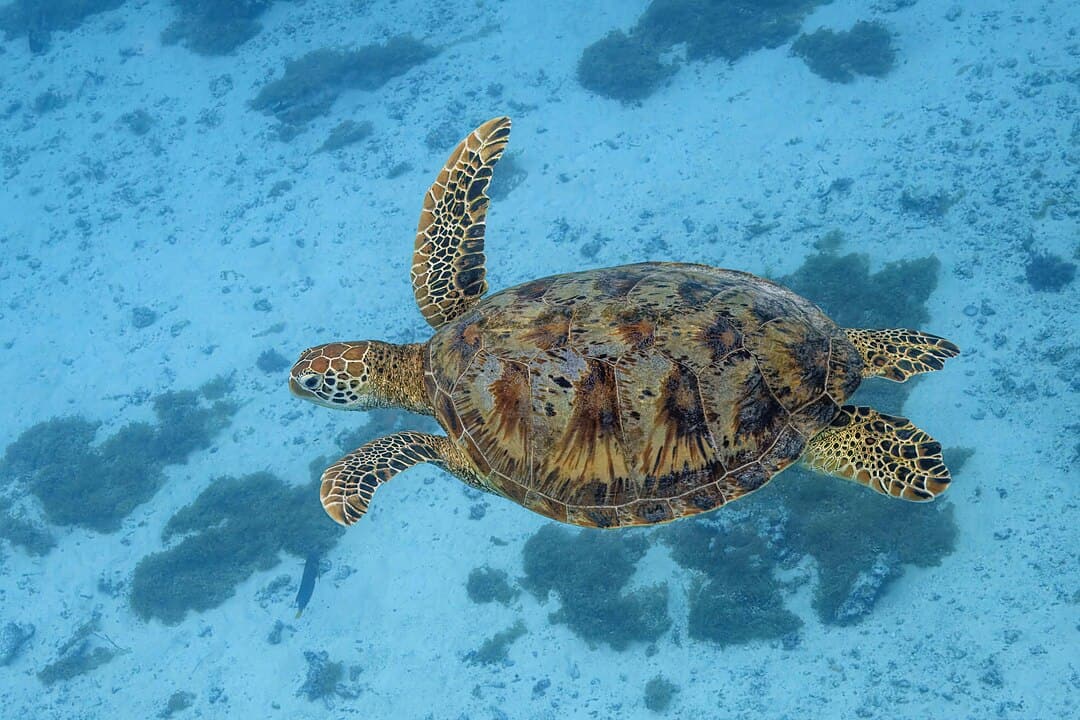
When the Chicxulub asteroid struck Earth 66 million years ago, triggering the Cretaceous-Paleogene (K-Pg) mass extinction, approximately 75% of all species perished – including all non-avian dinosaurs. Yet sea turtles survived. Their magnetic navigation ability likely played a crucial role in this survival, allowing them to locate food resources in changing oceans and maintain breeding populations despite environmental chaos.
The ability to sense magnetic fields may have helped them avoid areas affected by asteroid-induced tsunamis, temperature changes, and acidification. Additionally, their capacity to hold their breath for extended periods and their omnivorous diet provided flexibility during a time when food chains collapsed. While countless other reptile species vanished forever, sea turtles’ ancient navigation system helped guide them through one of Earth’s darkest chapters.
Evolutionary Stability Across Millions of Years

The preservation of sea turtles’ magnetic navigation system over 100+ million years represents an extraordinary case of evolutionary stability. While most traits undergo significant modifications over such vast timescales, the fundamental mechanism of magnetoreception in sea turtles has remained largely unchanged. Comparative studies between modern sea turtles and their ancient ancestors reveal remarkable similarities in brain structure regions associated with spatial navigation.
This evolutionary conservation suggests that their magnetic compass reached a state of optimal efficiency early in their development and has required minimal adjustments since. The trait represents a perfect example of the evolutionary principle that when a trait works exceptionally well, natural selection maintains rather than modifies it – even across geological epochs that witnessed the rise and fall of countless other species.
Modern Research Confirming Ancient Abilities

Modern scientific techniques have provided compelling evidence for the dinosaur-era origins of sea turtles’ magnetic navigation. Using satellite tracking, researchers have documented incredible migration journeys that span thousands of miles, often following remarkably straight paths despite ocean currents and storms. Laboratory experiments have shown that when scientists artificially alter the magnetic field around hatchling turtles, the animals change direction predictably, confirming their reliance on magnetic cues.
Genetic studies have identified the preservation of specific genes related to magnetoreception across sea turtle species that diverged millions of years ago. Perhaps most convincingly, paleomagnetic research has demonstrated that Earth’s magnetic field during the late Cretaceous period, though different in orientation, had similar properties to today’s field – meaning the same biological mechanisms could function effectively then as they do now.
Threats to an Ancient Navigation System

Despite surviving for over 100 million years, sea turtles’ magnetic navigation faces unprecedented challenges in the modern world. Artificial light pollution confuses hatchlings, drawing them away from the ocean. Beach development destroys nesting sites with specific magnetic signatures that female turtles rely on for navigation. Climate change threatens to alter ocean currents that interact with turtles’ magnetic navigation.
Perhaps most concerning, some scientists theorize that human-generated electromagnetic fields from underwater cables, boats, and coastal infrastructure may interfere with turtles’ ability to detect Earth’s natural magnetic field. Unlike the gradual changes that occurred over millions of years, these modern disruptions are happening within decades – potentially too quickly for sea turtles to adapt their ancient navigation system. The trait that helped them outlive dinosaurs may not be enough to overcome human-caused disruptions.
Other Dinosaur-Era Adaptations in Sea Turtles

While magnetic navigation stands out as sea turtles’ most remarkable dinosaur-era trait, these marine reptiles preserve several other ancient adaptations. Their streamlined shells, which reduce drag while swimming, have maintained a similar hydrodynamic design since the Cretaceous period. Their specialized salt glands, which allow them to excrete excess salt and survive in marine environments, evolved during the dinosaur era.
Their unique respiratory system, which enables extended deep dives without requiring frequent surface breathing, has ancient origins. Even their distinctive mating behaviors and nesting strategies date back to prehistoric times. Collectively, these traits represent an evolutionary blueprint that has remained successful across epochs of dramatic planetary change, from the warm greenhouse climate of the dinosaur era to the ice ages of the Pleistocene and now to our current Anthropocene period.
Comparing Sea Turtle Navigation to Other Ancient Species

Sea turtles aren’t the only living creatures with ancient navigation systems, but theirs is among the oldest and most precise. Other examples include salmon, which use magnetoreception combined with olfactory cues to return to natal streams – though salmon evolved this ability much later than sea turtles. Birds also possess magnetic sensing capabilities, with research suggesting this trait appeared independently long after sea turtles developed it.
Some shark species display basic magnetic orientation, but fossil evidence suggests this ability is not as ancient as that of sea turtles. Among ancient navigation systems, sea turtles’ stands out for its remarkable precision over extreme distances and its evolutionary longevity. While many species have developed forms of navigation throughout evolutionary history, few can claim a system that has remained functional and largely unchanged since the time of dinosaurs.
Conservation Implications of an Ancient Trait

The prehistoric origins of sea turtles’ navigation system has profound implications for conservation efforts. Understanding that this trait evolved for specific Earth conditions that remained relatively stable for millions of years helps scientists anticipate how modern changes might impact turtle populations. Conservation strategies now include protecting beaches with historical magnetic signatures, reducing electromagnetic interference in critical migration corridors, and preserving the dark conditions that allowed magnetic navigation to evolve as the primary guidance system.
Some rehabilitation programs for injured sea turtles now consider magnetic imprinting when releasing rehabilitated individuals. The ancient lineage of this trait also provides a compelling narrative for conservation advocacy – these animals have carried this remarkable ability since the time of dinosaurs, yet human activities within just a century threaten to disrupt a system that has guided them for over 100 million years.
Conclusion: A Living Window to the Prehistoric World

Sea turtles’ magnetic navigation system offers us a rare living connection to the world of dinosaurs, a biological time capsule that has remained functional across geological epochs. This remarkable trait helped them survive the catastrophe that eliminated the dinosaurs and countless other challenges throughout Earth’s history. As we work to protect these ancient mariners, we’re not just preserving a species but safeguarding a piece of our planet’s prehistoric heritage.
The story of sea turtles and their dinosaur-era navigation reminds us that some solutions in nature are so perfectly adapted that they remain unchanged for hundreds of millions of years – and that human activities, despite our technological advances, should proceed with respect for the ancient wisdom encoded in the biology of creatures that have far outlasted most species to ever inhabit Earth.

From exploring the marine wonders in the Azores and witnessing the vast savannas of Kenya, to delving deep into the rich biodiversity of South Africa and traversing iconic landscapes in Australia and the US like Yellowstone, Chris's experiences are vast.
With a penchant for diving alongside sharks, the ocean holds a special place in his heart.
Through his academic insights, he champions wildlife conservation, striving with 'Animals Around The Globe' to cultivate a profound connection between humans and animals, enhancing our mutual appreciation.
Connect with him at Feedback@animalsaroundtheglobe.com.
- Why Spiders Don’t Get Stuck in Their Own Webs - July 20, 2026
- What Scientists Found in a 10,000-Year-Old Beehive - July 20, 2026
- This Spider Builds Fake Decoys of Itself - July 20, 2026