

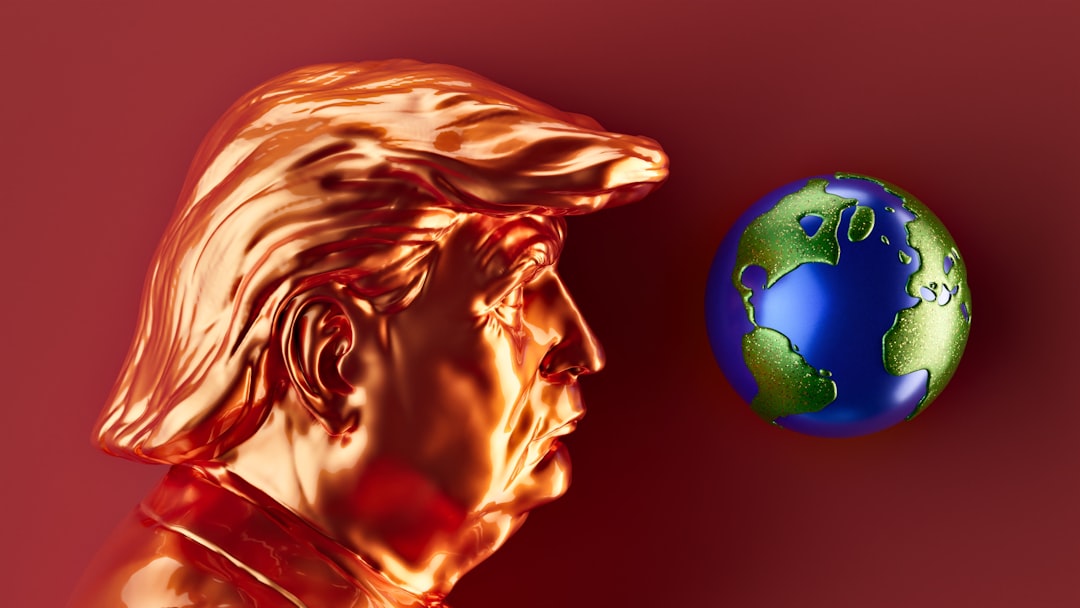
Trump eases curbs on planet-warming gases used in refrigerants – Image for illustrative purposes only (Image credits: Unsplash)
Washington – President Donald Trump announced Thursday that his administration would relax federal requirements governing the use of certain powerful greenhouse gases in refrigerators, air conditioners and other cooling systems. The decision targets hydrofluorocarbons, known as HFCs, which are widely employed as refrigerants and rank among the most effective heat-trapping compounds in the atmosphere. Officials presented the adjustment as a step to ease expenses for companies and consumers at a time when household costs remain a central concern.
The Chemicals at the Center of the Change
HFCs replaced earlier refrigerants that damaged the ozone layer, yet they carry a global warming potential thousands of times greater than carbon dioxide over a 100-year period. These compounds leak during equipment manufacturing, use and disposal, contributing to long-term atmospheric warming even in relatively small volumes. Grocery stores, commercial buildings and residential air-conditioning units represent major sources of emissions because the gases circulate through vast networks of cooling equipment nationwide.
Background of the Regulatory Framework
A bipartisan law enacted during Trump’s first term established a gradual phase-down of HFC production and consumption. Subsequent rules developed under the following administration set specific timelines and technology requirements for sectors including retail food refrigeration and air-conditioning manufacturing. Thursday’s announcement extends several of those deadlines and eases certain transition mandates that had required companies to adopt newer, lower-warming alternatives on accelerated schedules.
Stated Goals and Industry Context
The administration described the prior requirements as unnecessarily costly and disruptive to supply chains. Trump noted that the changes would help lower expenses associated with transporting and storing perishable goods, a point echoed by representatives from major grocery chains present at the White House event. Sectors directly affected include supermarkets, semiconductor fabrication facilities that rely on specialized cooling, and manufacturers of residential and commercial air-conditioning systems. What matters now is how quickly companies adjust their equipment replacement cycles and whether the extended timelines alter the pace of emissions reductions already underway in some markets.
Broader Considerations Moving Forward
The adjustment reflects an ongoing effort to balance environmental objectives with immediate economic pressures. While the original phase-down aimed to curb a significant slice of U.S. greenhouse gas emissions, the new approach gives businesses additional time to adopt alternatives without abrupt capital outlays. Observers note that the long-term climate impact will depend on how rapidly lower-warming substitutes become available at scale and whether states or private companies pursue their own accelerated transitions.

As a little kid, I fell in love with nature, wildlife, and animals. Living in the USA, South Africa, Italy, China and Germany gave me the opportunity to discover the world's Wildlife. My favorite animals are Mountain Gorillas, Siberian Tigers, and Great White Sharks.
I'm a certified PADI Open Water Diver, went to Everest Base Camp and Trekked Gorillas in Uganda. I hold a Master of Science in Economics and Finance.
Please send any feedback to feedback@animalsaroundtheglobe.com
- 13 Animals That Can Kill Without Venom or Claws - July 21, 2026
- 15 Bear Survival Skills You Need to Know - July 21, 2026
- 9 Strategies Wolves Use in Winter And 3 That Do Not Work - July 21, 2026