
Worried about unexpected vet bills?
Pet insurance can cover thousands in unexpected vet costs. Get a free quote from Lemonade in under 2 minutes.
Get My Free Quote →Sponsored · Opens Lemonade.com
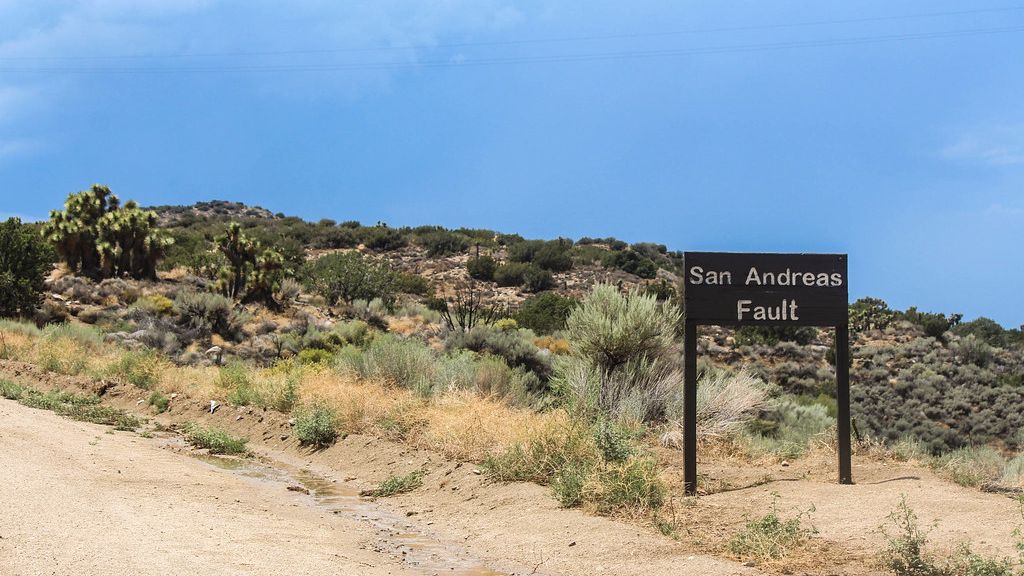
California carries its geology loudly. Drive south from San Francisco and you can see the fault’s scar written across the land itself, a long, unsettling crease in the earth that betrays one of the planet’s most restless boundaries. Most people know the San Andreas Fault as shorthand for disaster, but the physics behind its most destructive moments is far more interesting than the Hollywood version.
Understanding why massive earthquakes happen here means going deeper than a simple crack in the ground. It requires looking at moving continents, locked rock faces, ancient stress, and the surprising ways distant faults can influence one another. The causes are layered, and each one tells part of a genuinely remarkable story.
Two Giant Plates Grinding Past Each Other
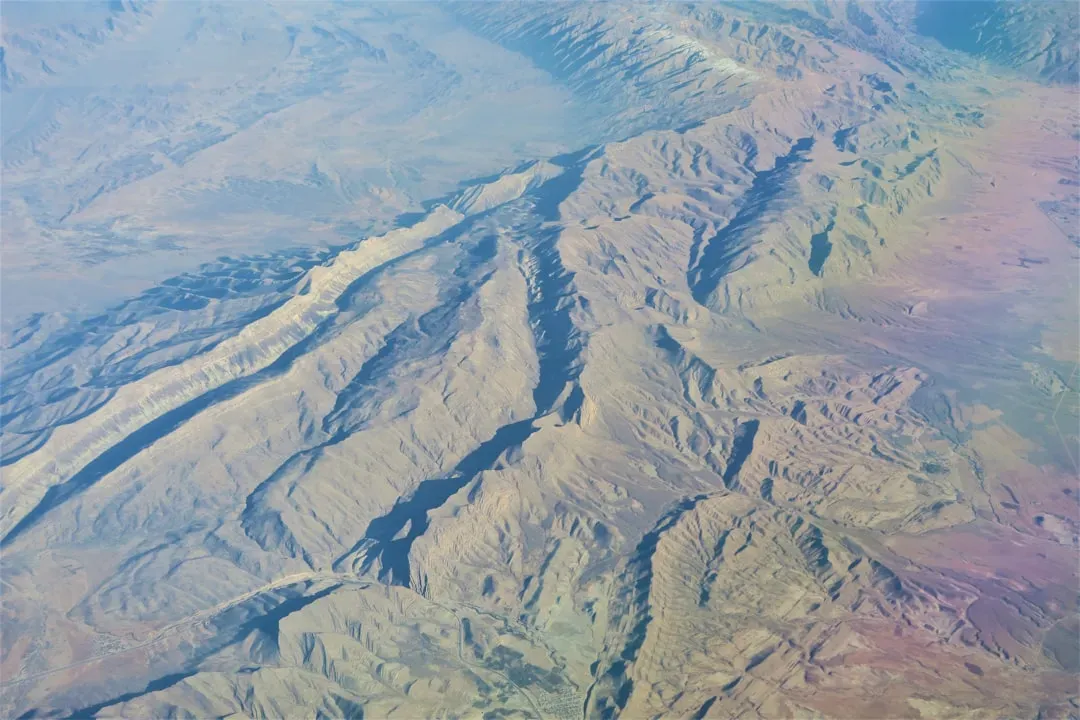
The fundamental engine behind every earthquake along the San Andreas Fault is plate tectonics. At the San Andreas Fault in California, the North American Plate and the Pacific Plate slide past each other along a giant fracture in Earth’s crust. This is not a slow, smooth process. It’s an ongoing tug of war between two enormous masses of rock, each moving in a slightly different direction.
According to the theory of plate tectonics, the San Andreas Fault represents the transform boundary between two major plates of the Earth’s crust: the Northern Pacific to the south and west, and the North American to the north and east. The Northern Pacific plate is sliding laterally past the North American plate in a northerly direction, and hence the San Andreas is classified as a strike-slip fault.
The grinding action between the plates at a transform plate boundary results in shallow earthquakes, large lateral displacement of rock, and a broad zone of crustal deformation. That grinding is not happening gently or evenly. It’s why California shakes.
The Locking Mechanism: When Rock Refuses to Slip
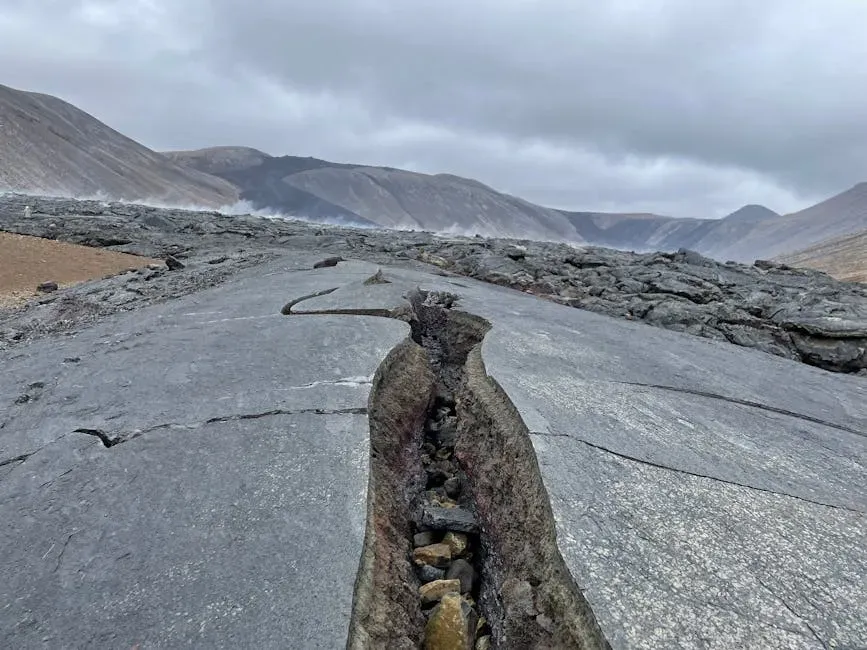
If the plates moved smoothly and consistently, there would be frequent small tremors instead of catastrophic ruptures. The real danger comes from something called locking. In the southern and the northern sections, the plates are locked much of the time, stuck together in a dangerous, immobile embrace. This causes stresses to build over years, decades, or centuries. Finally a breaking point comes; the two sides lurch past each other violently, and there is an earthquake.
The crustal plates of the Earth are being deformed by stresses from deep within the Earth. The ground first bends, then, upon reaching a certain limit, breaks and “snaps” to a new position. That snap is what people experience as shaking. The longer the lock holds, the more energy accumulates, and the more violent the eventual release becomes.
If a segment of the San Andreas Fault is “locked” for a century, then a large earthquake might result in 200 inches of movement along the fault in less than a minute. That kind of sudden displacement is staggering to imagine, yet it has happened before and it will happen again.
The Role of Seismic Gaps and Long Silences
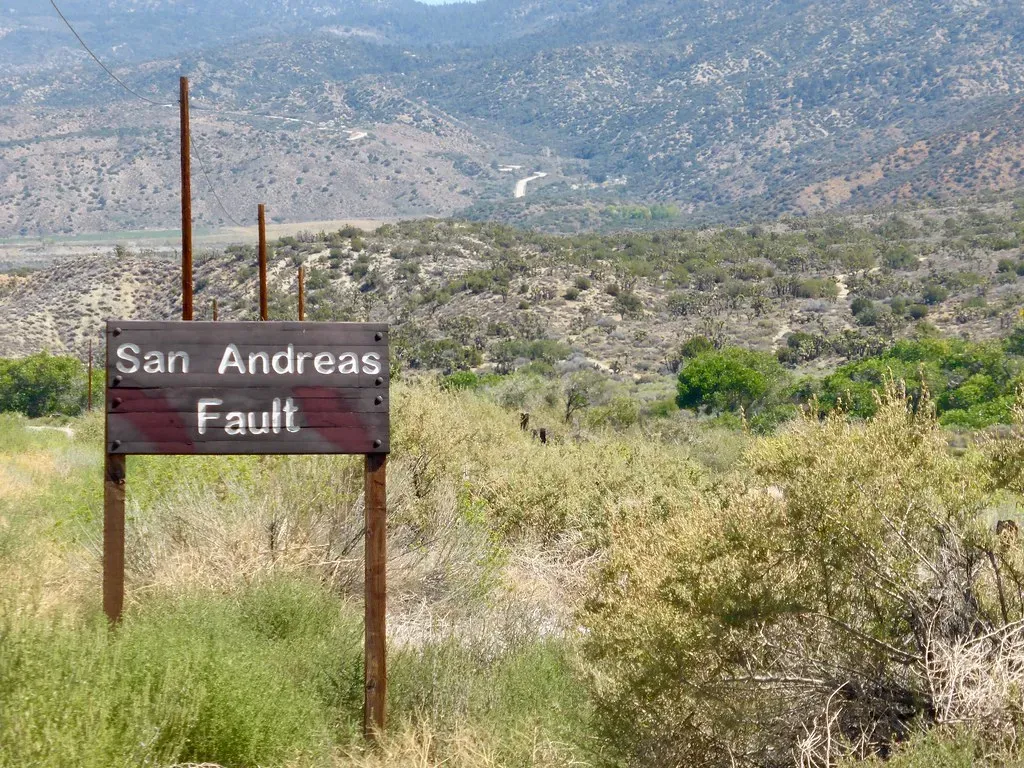
One of the more counterintuitive ideas in earthquake science is that silence is not safety. Along the Earth’s plate boundaries, such as the San Andreas Fault, segments exist where no large earthquakes have occurred for long intervals of time. Scientists term these segments “seismic gaps” and, in general, have been successful in forecasting the time when some of the seismic gaps will produce large earthquakes.
Geologic studies show that over the past 1,400 to 1,500 years, large earthquakes have occurred at about 150-year intervals on the southern San Andreas Fault. As the last large earthquake on the southern San Andreas occurred in 1857, that section of the fault is considered a likely location for an earthquake within the next few decades. That’s not alarmism. That’s pattern recognition backed by deep geological records.
Data show that at many places along the San Andreas Fault, we have gone past the average time between large earthquakes. When a fault goes quiet for too long, it’s often not resting. It’s loading.
The 1906 San Francisco Earthquake: A Case Study in Rupture
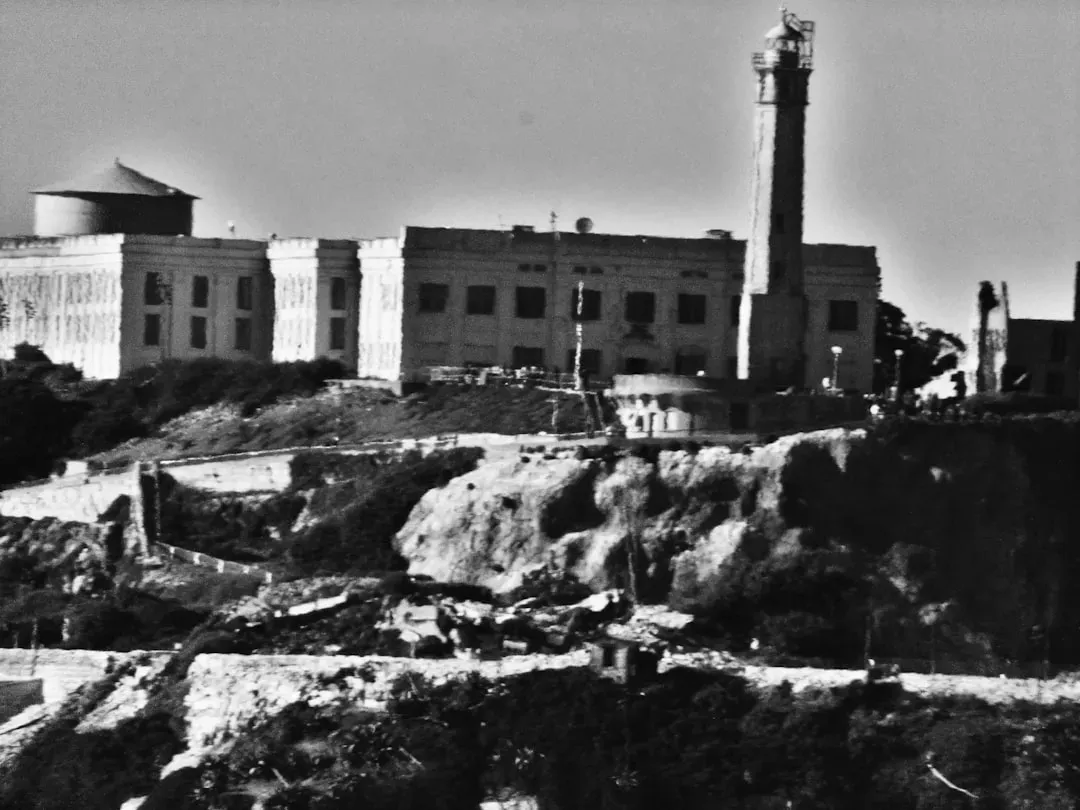
No examination of the San Andreas Fault is complete without pausing at 1906. In 1906, a rupture in the northern section of the fault caused a devastating magnitude 7.9 earthquake that killed more than 3,000 people, according to the U.S. Geological Survey. The scale of destruction was almost incomprehensible for the era, reshaping both the city and the scientific understanding of faults entirely.
During the 1906 earthquake in the San Francisco region, roads, fences, and rows of trees and bushes that crossed the fault were offset several yards, and the road across the head of Tomales Bay was offset almost 21 feet, the maximum offset recorded. In each case, the ground west of the fault moved relatively northward.
The 1906 earthquake is one of the most significant seismic events in American history, not just for its physical destruction but also for changing the way scientists approach earthquake research. The earthquake destroyed over 80% of San Francisco, leaving around 3,000 people dead and tens of thousands homeless. The event also dramatically advanced our understanding of seismic activity and the development of earthquake-resistant building designs.
Creeping Versus Locked: Why the Fault Behaves Differently Along Its Length
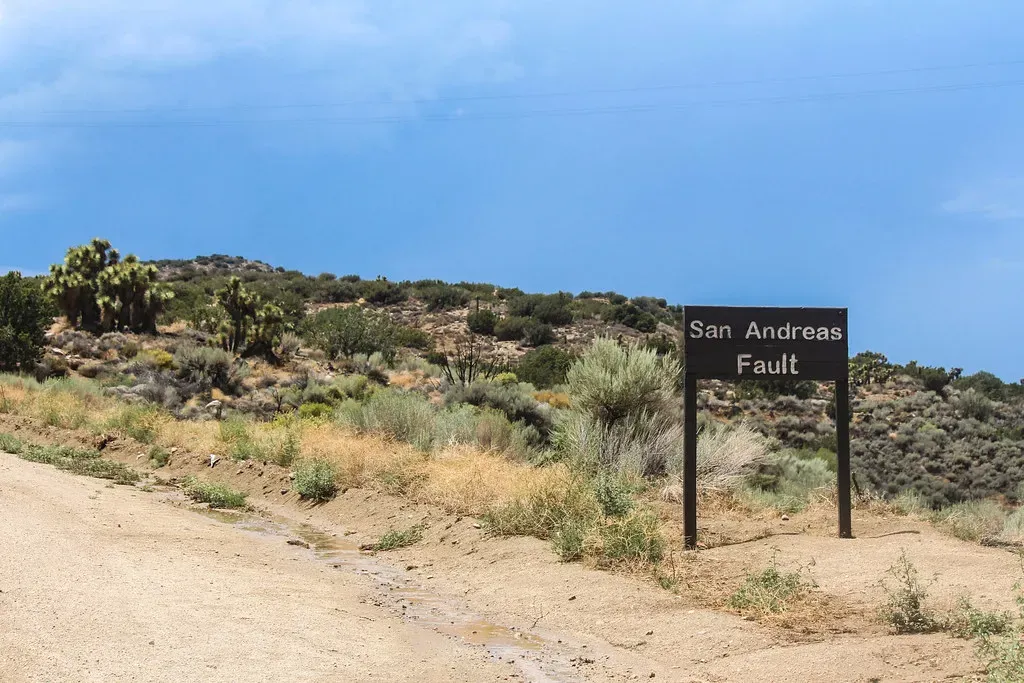
The San Andreas isn’t one uniform crack behaving the same way from top to bottom. It has distinct personalities along its roughly 750-mile length. In the central section, which separates the other two, the plates slip past each other at a pleasant, steady 26 millimeters or so each year. This prevents stresses from building, and there are no big quakes. This is called aseismic creep.
Because creeping faults slip gradually and nearly continuously, they do not build up as much stress as locked faults, which slip infrequently and release a majority of stress in large earthquakes. That distinction matters enormously when assessing where the greatest dangers lie.
However, even the creeping section may not be entirely safe. A study of rocks drilled from nearly 2 miles under the surface suggests that the central section has hosted many major earthquakes, including some that could have been fairly recent. The implication is that the fault’s behavior is more complex and less predictable than any simple model suggests.
The Cascadia Connection: When Distant Faults Trigger Ruptures
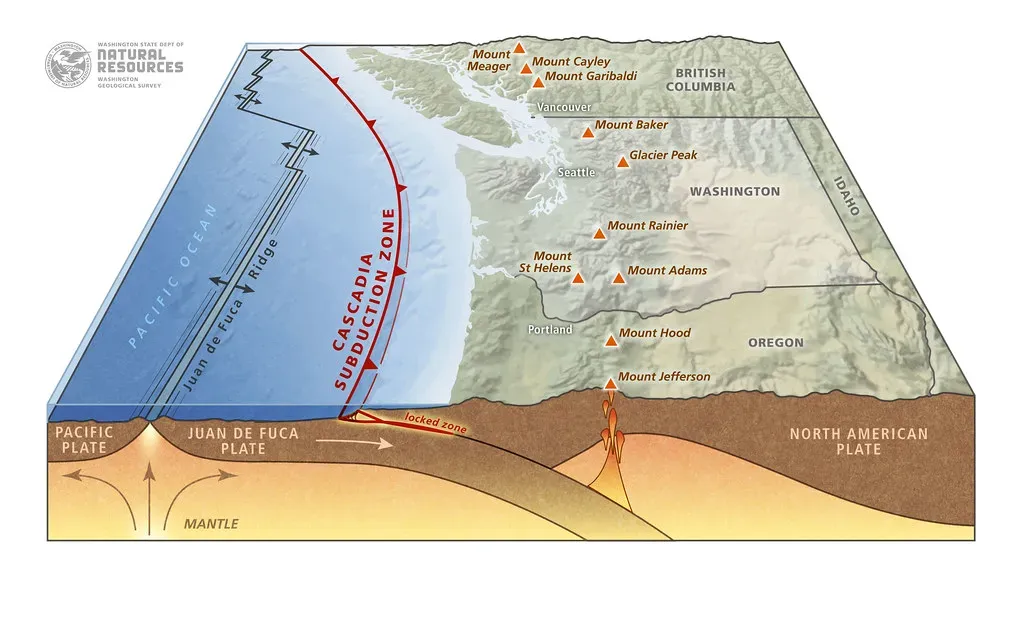
One of the more unsettling discoveries in recent seismic research concerns how far-away faults can influence the San Andreas directly. Scientists have uncovered evidence that megaquakes in the Pacific Northwest might trigger California’s San Andreas Fault. A research ship’s navigational error revealed paired sediment layers showing both fault systems moved together in the past.
A 2008 paper, studying past earthquakes along the Pacific coastal zone, found a correlation in time between seismic events on the northern San Andreas Fault and the southern part of the Cascadia Subduction Zone. Scientists believe quakes on the Cascadia Subduction Zone may have triggered most of the major quakes on the northern San Andreas within the past 3,000 years.
New research from Oregon State University suggests the Cascadia Subduction Zone may be linked to the San Andreas Fault in California, with seismic activity on one triggering corresponding activity on the other. A major Cascadia rupture followed by a San Andreas rupture, even hours or days apart, would present an emergency management challenge with few historical precedents.
What Science Still Cannot Tell Us
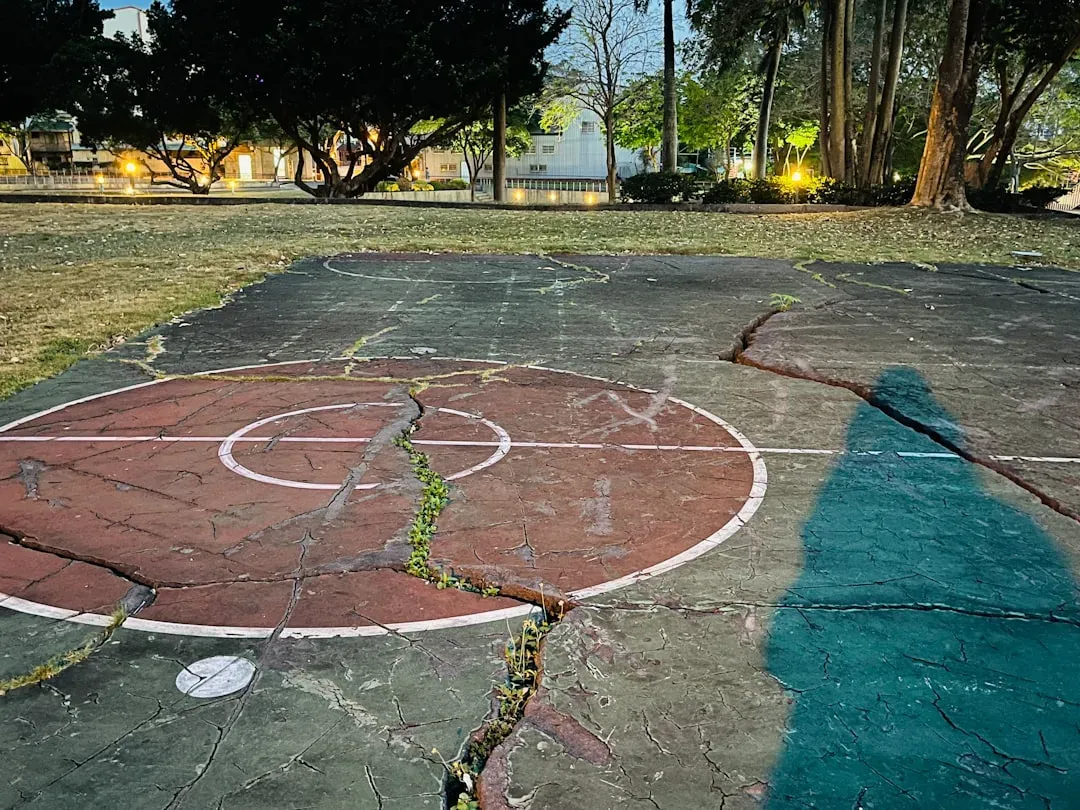
For all the sophisticated monitoring tools, GPS networks, and computer models deployed along the fault, one central question remains frustratingly open: exactly when will the next major earthquake strike? The ability to predict major earthquakes with sufficient precision to warrant increased precautions has remained elusive. That honesty from scientists is worth noting. Probability is not the same as prophecy.
The San Andreas Fault is particularly complex because of its many bends and segments, which affect how and where stress builds up. Understanding these mechanics is critical to predicting future earthquakes. Seismologists use data from past earthquakes and ongoing observations of the fault to model how the fault might behave in the future.
Scientists note that seismic activity in California has been relatively low over the past century. But tectonic forces are continually tightening the springs of the San Andreas fault system, making big quakes inevitable. The science is clear on the certainty of future ruptures. The timing, though, remains nature’s own secret.
Conclusion
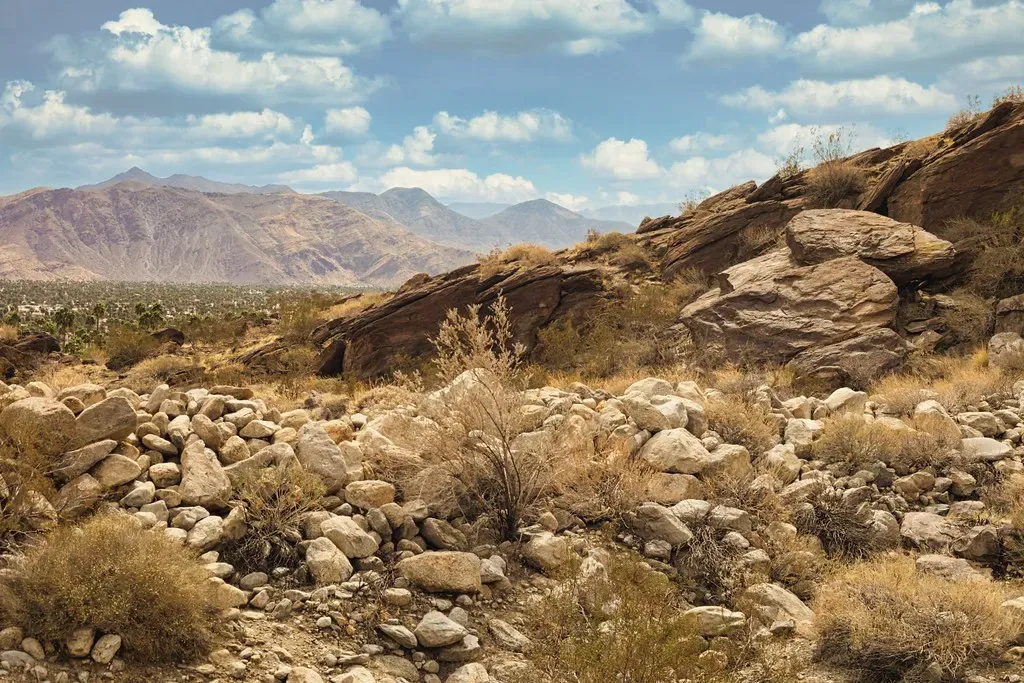
The massive earthquakes that have struck along the San Andreas Fault, and those still to come, are not random or mysterious once you understand the mechanics beneath them. Two tectonic plates in constant conflict, sections of rock locked under centuries of accumulated stress, seismic gaps that grow more dangerous with every passing quiet decade, and the hidden influence of distant fault systems all combine to create one of the most geologically charged environments on Earth.
What the science keeps returning to is this: the fault is not dormant, it is patient. The stress is real, the geological record is clear, and California’s relationship with the ground beneath it will always be defined by that tension between long stillness and sudden, violent release. Preparation, not prediction, is what turns that knowledge into something useful.
Worried about unexpected vet bills?
Pet insurance can cover thousands in unexpected vet costs. Get a free quote from Lemonade in under 2 minutes.
Get My Free Quote →Sponsored · Opens Lemonade.com

- How Muskrat Behavior Can Indicate Climate Change in The Carolinas - June 6, 2026
- What Ancient Animal Symbolizes Prosperity for Your Zodiac Sign? - June 6, 2026
- The US States With the Most Elk - June 6, 2026