
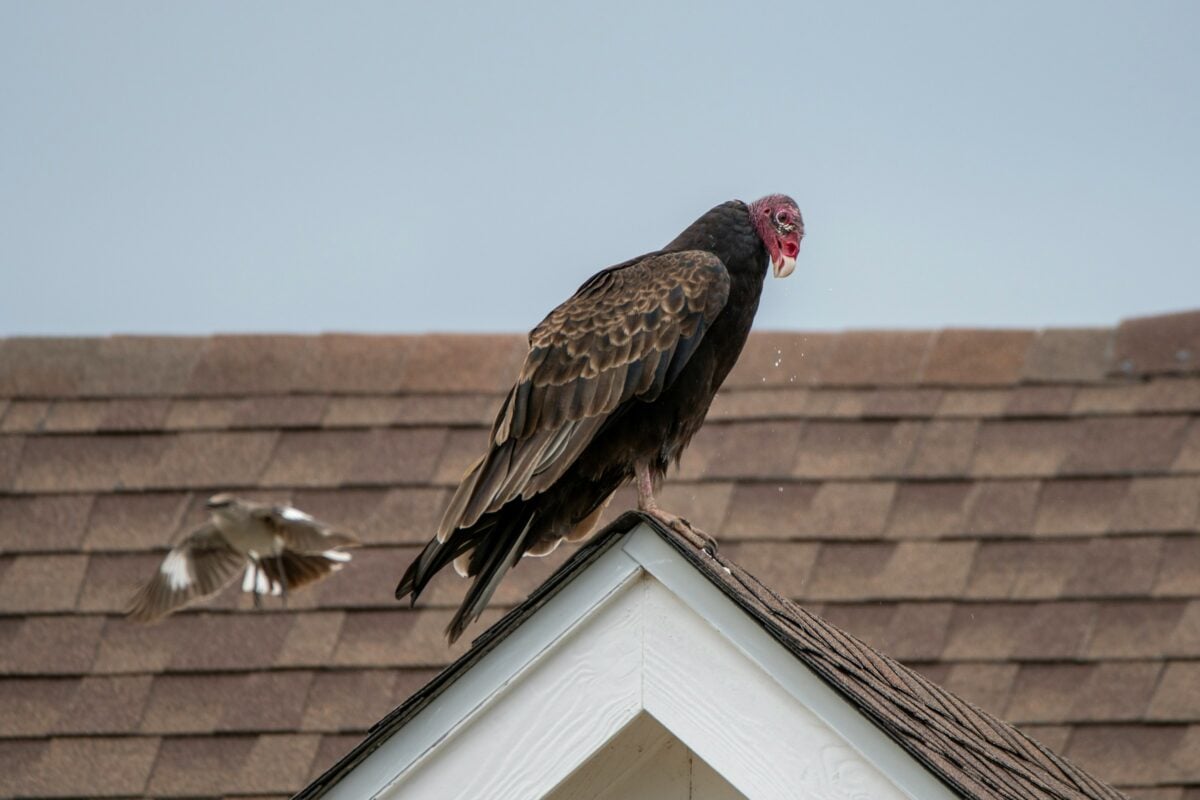
#1 Vultures were built for high, open perches long before rooftops existed
Vultures evolved to use elevated, open perches such as cliffs, dead trees, and rocky outcrops, which provide a wide field of view, allowing them to scan for food while remaining safe from ground predators. That instinct hasn’t changed just because the landscape around them has. A roof ridge does the same job a cliff edge once did: height, an unobstructed view, and no ground-level predator sneaking up from behind.
Rooftops have become extensions of their natural habitat, offering advantages that mimic cliffs, open ground, and sunlit perches, and once you understand why they gather there, the entire scene shifts from eerie to ecological. In areas where natural cliffs are not always available, rooftops offer a nearly perfect substitute, since the flat surfaces of buildings provide stability while the height gives vultures a clear vantage point over surrounding land, letting them monitor movement and detect changes in their environment. In other words, the birds aren’t picking your house at random. They’re reading the terrain the same way their ancestors read a mountainside.
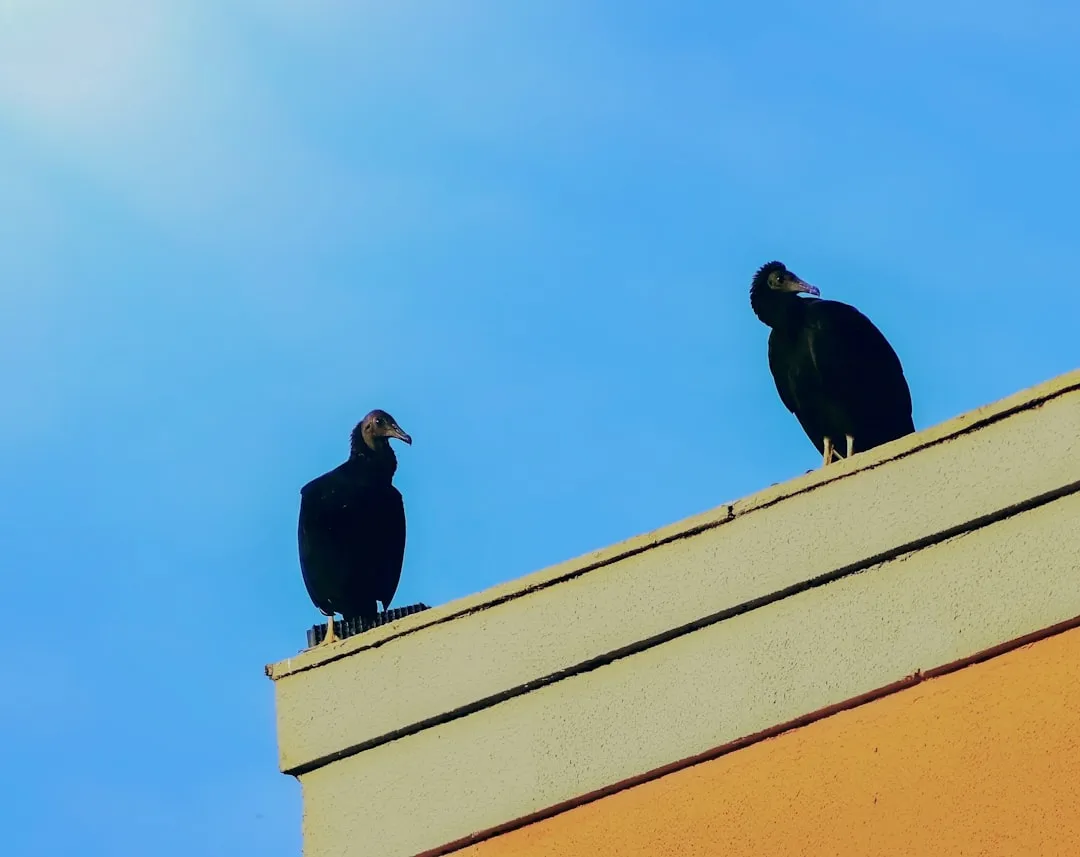
#2 Development has quietly pushed them off trees and onto our buildings
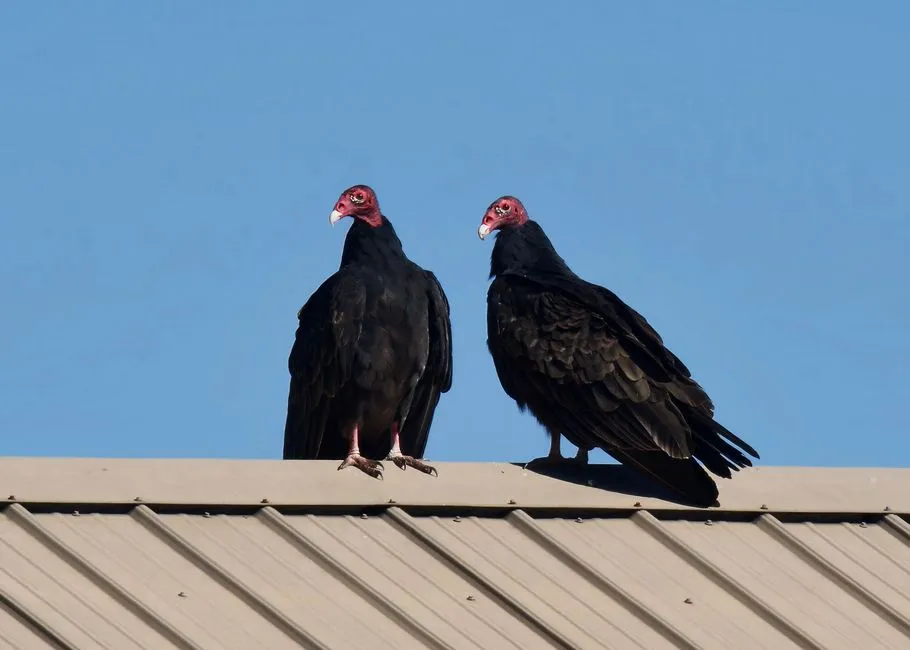
This part surprises a lot of people, because it flips the assumption that vultures are invading our space. The declining availability of large, mature trees in their natural habitats has pushed turkey vultures towards alternative perching spots, such as our roofs. The birds didn’t move into the suburbs out of curiosity. The suburbs moved into their territory first.
The removal of natural habitat to make way for development has not negatively impacted turkey or black vulture populations, and with the expansion of roadways, these birds seem to have increased in number, so where roosting trees are removed, vultures find that they are quickly replaced with rooftops and cell towers as equally suitable roosting structures. It’s less displacement than adaptation. Vultures are remarkably good at making do with whatever tall, stable structure is available, and a subdivision full of two-story roofs turns out to work almost as well as a forest canopy ever did.
#3 The wide-winged pose isn’t a threat display, it’s laundry day
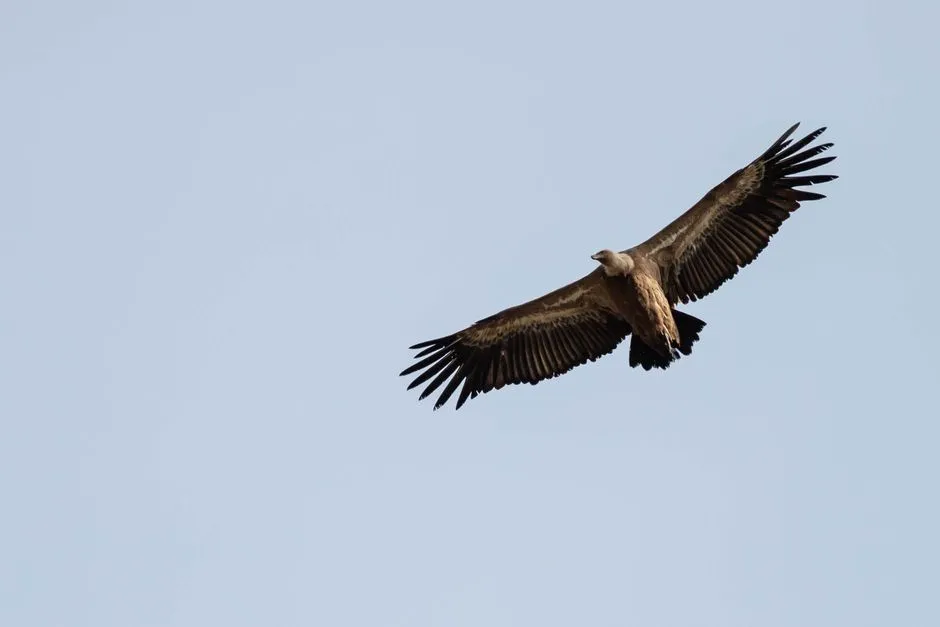
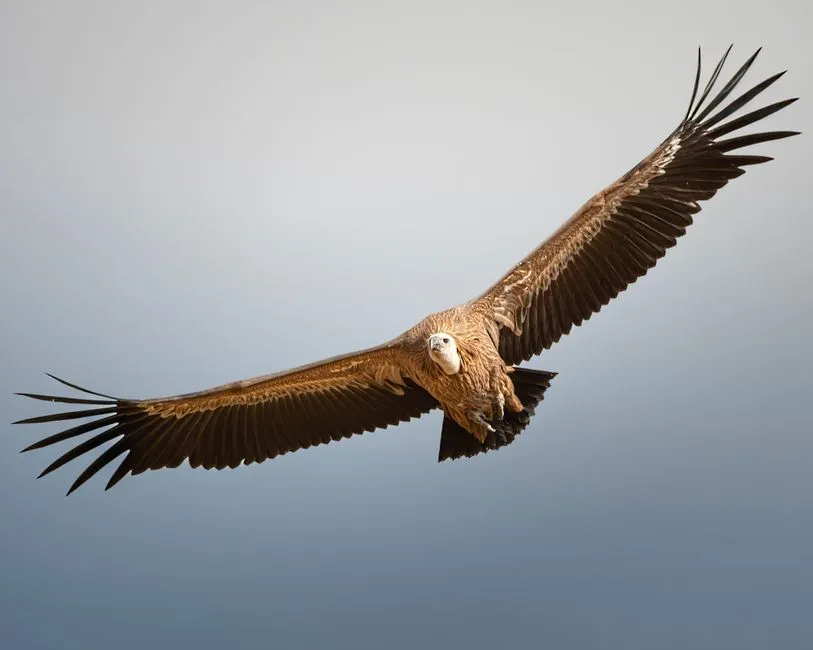
Nothing unsettles onlookers quite like a vulture standing dead still with its wings stretched fully open, head tilted slightly down. It looks deliberate, almost theatrical. The stance is called the horaltic pose, and it shows up constantly in rooftop sightings.
Vultures stand on housetops with their wings extended in a common behavior known as a “horaltic pose,” and while the pose can look majestic or even threatening, it’s actually something vultures do to dry their wings off and help their bodies warm up after it rains. The sunlight and wind can also help get rid of bacteria and parasites hiding in their feathers, and vultures would prefer to do this pose at a high point where the wind flow and sunlight are less likely to be blocked. A rooftop, especially a peaked one with nothing around to block the breeze, happens to be an excellent spot for exactly that kind of feather maintenance.
#4 Roofs act like solar panels for birds that can’t shiver themselves warm
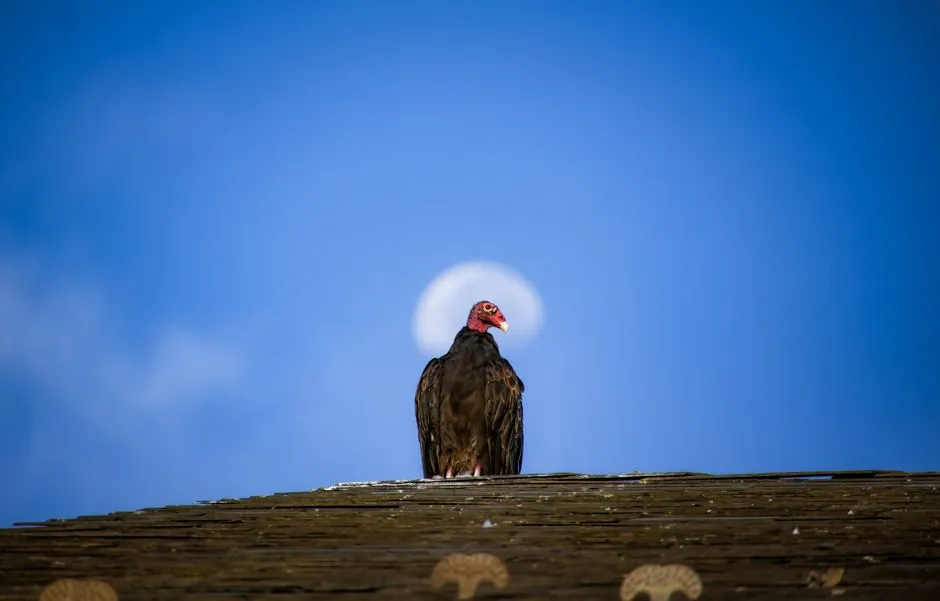
Vultures are gliders, not flappers. Their whole body plan favors soaring on rising air rather than burning energy through constant wing beats, which means mornings after a cool night present a real problem: how do you warm up enough to fly without wasting fuel doing it? One of the most overlooked reasons vultures gather on rooftops is sunlight, since these birds rely heavily on solar warmth to regulate their body temperature, and early in the morning you may see them perched with wings partially spread, facing the sun in a posture that allows them to absorb heat efficiently after a cool night.
Dark shingles make this even easier. Rooftops, especially those with dark surfaces, absorb and radiate heat more effectively than many natural perches. Roof surfaces absorb heat from the sun, particularly during cooler mornings, and vultures, which depend on rising warm air currents to glide efficiently, often use these heated surfaces to help regulate their body temperature before taking flight. It’s essentially a free heating pad, and vultures have figured out exactly which neighborhoods offer the best one.
#5 A rooftop gathering is more social club than warning sign
The image of a lone vulture circling ominously overhead has done a lot of damage to this bird’s reputation. Vultures are frequently painted as lone, brooding figures circling in isolation, but that image doesn’t match how they actually live, since gathering on rooftops is part of a broader social system that includes communal roosting, shared feeding, and information exchange. A dozen birds on a roof isn’t a crowd drawn to tragedy. It’s closer to a regular meetup.
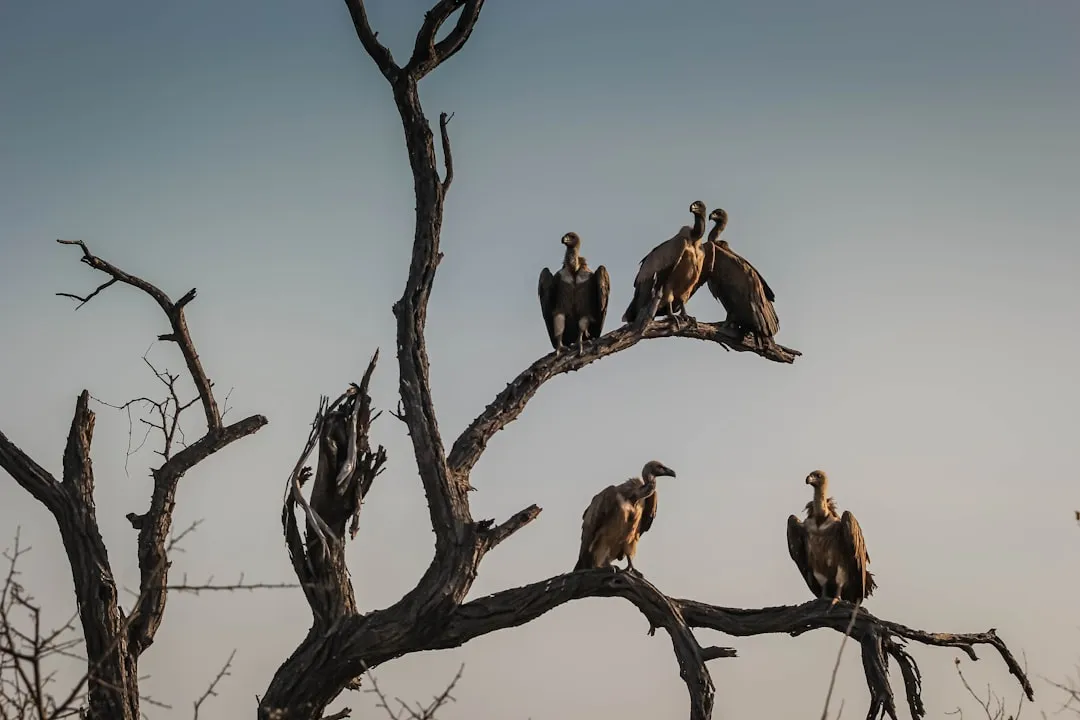
When vultures gather, they are not simply resting; they are observing each other, establishing hierarchy, and maintaining group cohesion, and younger birds learn from more experienced individuals, gaining insight into feeding locations and safe behaviors. They gather in groups since these birds are social by nature and prefer company when settling down for the night, and once a spot proves suitable, more birds tend to join over time as word spreads through their circling flights. That last detail explains why a roof that had two or three visitors last month suddenly has fifteen this week. Nothing dramatic happened. The location just got a good review.
#6 It probably has nothing to do with a death nearby, though species matters
This is the misconception people most want answered, usually with some nervousness. A rooftop full of vultures, in other words, is closer to a neighborhood meeting than a warning sign. Still, the two common species in North America don’t operate identically, and knowing which one you’re looking at changes the picture slightly.
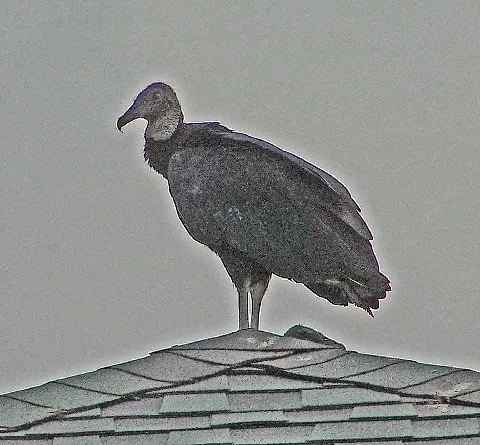
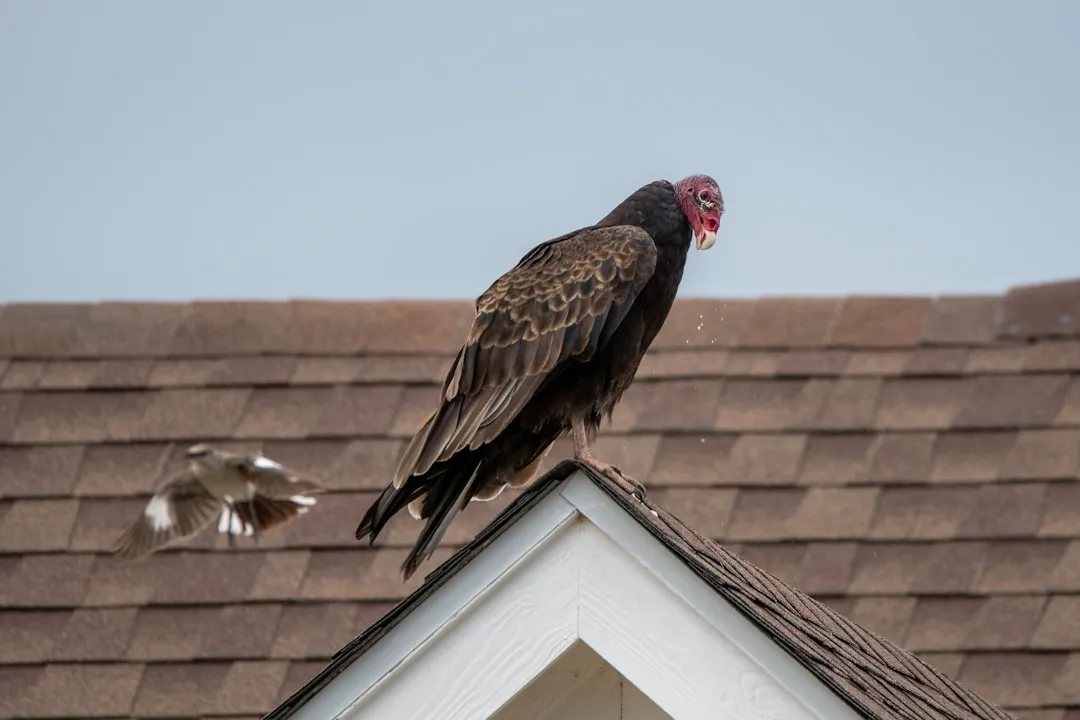
Both black and turkey vultures have excellent eyesight, though turkey vultures also have an incredible sense of smell to find carrion, while black vultures have a much weaker sense of smell. A rooftop full of turkey vultures, then, is a slightly stronger hint that something in the vicinity has died than the same scene made up mostly of black vultures, who are more often just following the crowd or the view. So if you want to know whether to check your yard for a dead squirrel, look at the birds’ bare heads first. Turkey vultures have red skin, black vultures have gray. It’s a small detail that carries real information.
#7 The folklore around this sight is older and stronger than the science
Long before anyone studied thermoregulation or roost fidelity, people had already decided what a rooftop full of vultures meant, and the verdict was rarely cheerful. Long before anyone understood thermoregulation or communal roosting, cultures around the world had already decided what a vulture on a roof meant, and it usually wasn’t good, because vultures devour abandoned corpses rather than killing their prey, so they are held to be an omen of coming death. That association has stuck around for centuries, and it isn’t going anywhere soon.
Modern folklore, especially in parts of Appalachia and the American South, still treats a rooftop full of vultures as a sign worth talking about at length, even when the explanation on offer has nothing to do with biology, and none of that folklore is backed by evidence, though it persists because the image itself is genuinely striking. Elsewhere the symbolism runs differently, tied more to renewal and transformation than to doom, which says less about the birds and more about how differently people process the same unsettling sight. Vultures haven’t changed their behavior in thousands of years. Our stories about them are just slower to catch up with what biologists already know.
Final Thoughts

- What It Means When Vultures Gather on Rooftops Instead of Trees - August 21, 2026
- Animal Science Says Bats Build Detailed Acoustic Maps Instead of Simply Flying by Instinct - August 21, 2026
- What It Means When Bluebirds Suddenly Stop Visiting a Nest Box - August 21, 2026