
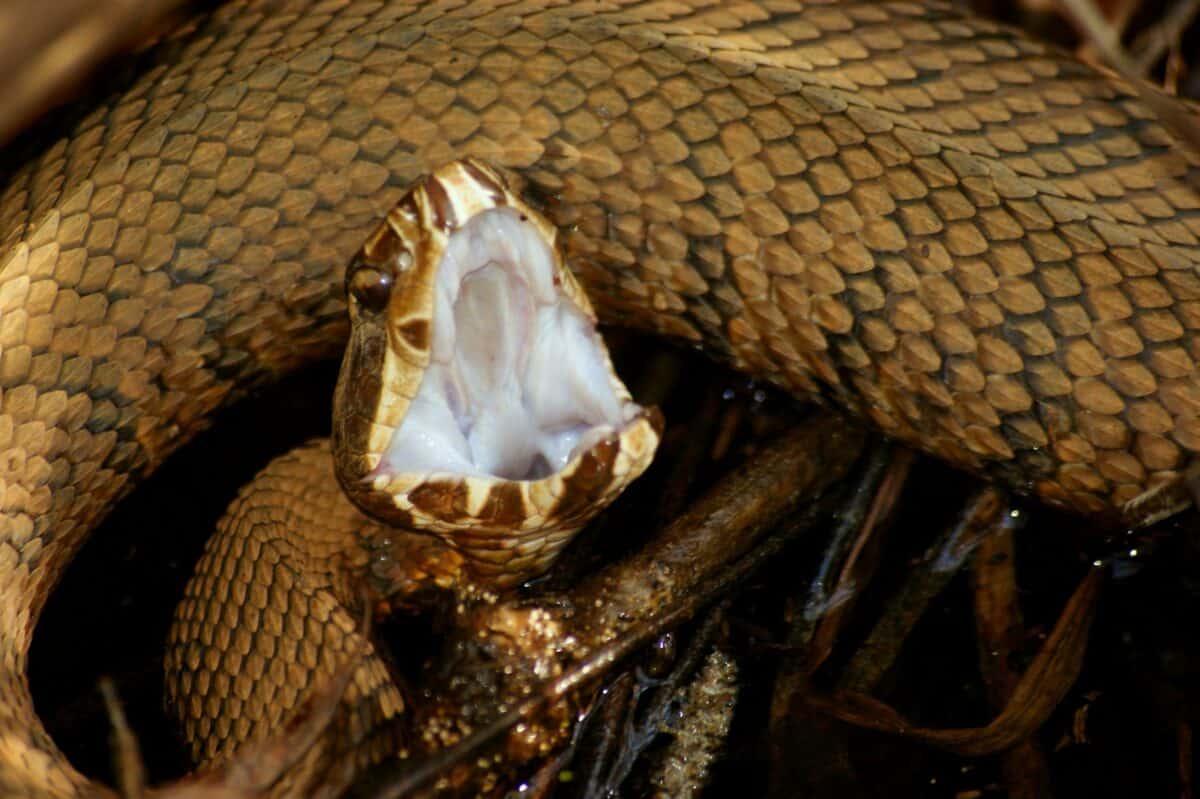
The water moccasin, also known as the cottonmouth, is one of North America’s most feared and misunderstood snakes. With its venomous bite and intimidating defensive display, this semi-aquatic serpent has earned a fearsome reputation that often exceeds the actual threat it poses. Throughout the southeastern United States, stories and myths about aggressive cottonmouths chasing people through swamps have become part of regional folklore. However, the reality of these remarkable reptiles is far more nuanced and fascinating than their menacing reputation suggests. This article aims to shed light on the true nature of water moccasins, exploring their biology, behavior, and the misconceptions that have unfairly painted them as villains in the natural world. By understanding these often-maligned creatures, we can develop a greater appreciation for their ecological importance and perhaps even replace fear with respect.
The Identity Confusion: Water Moccasin vs. Water Snake
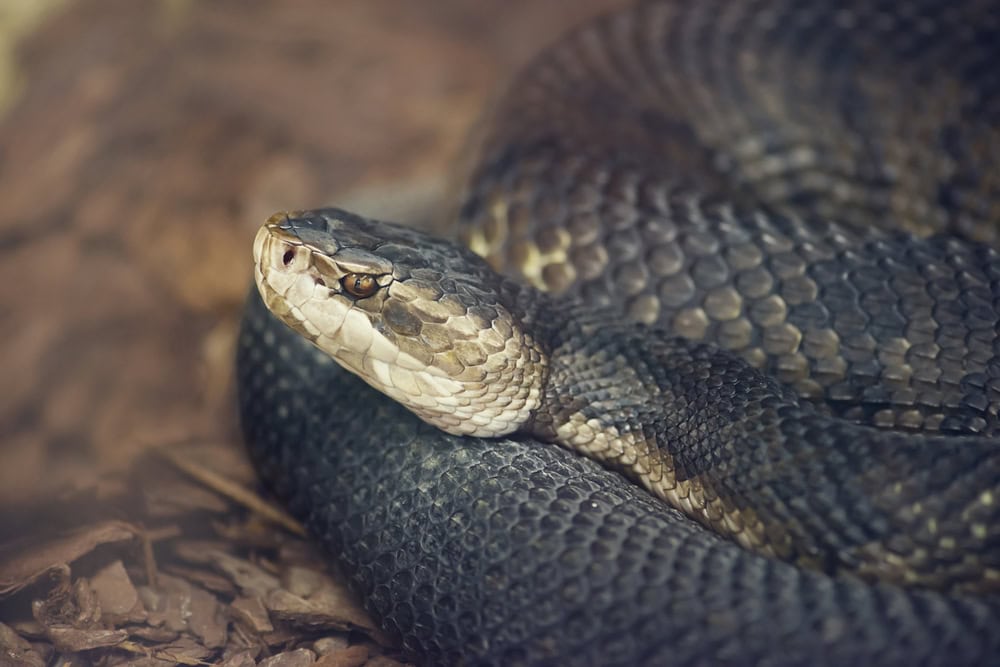
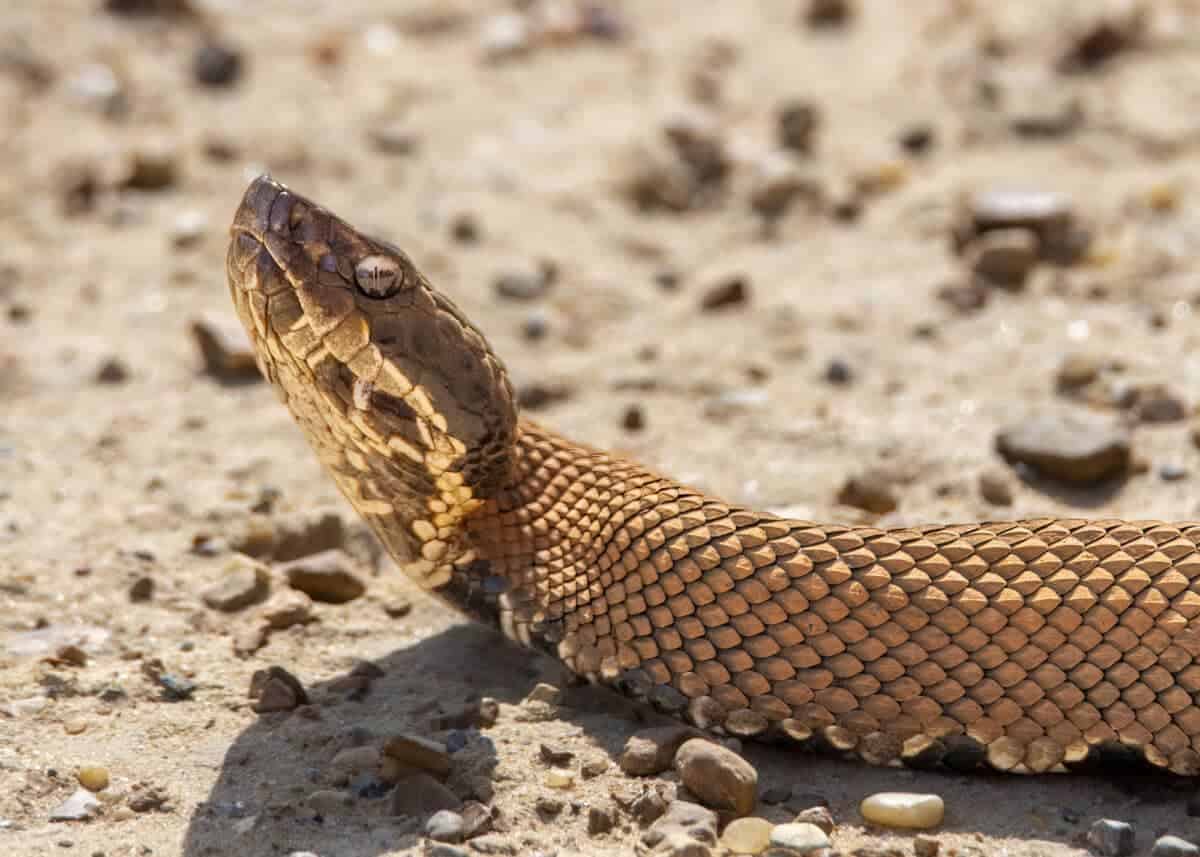
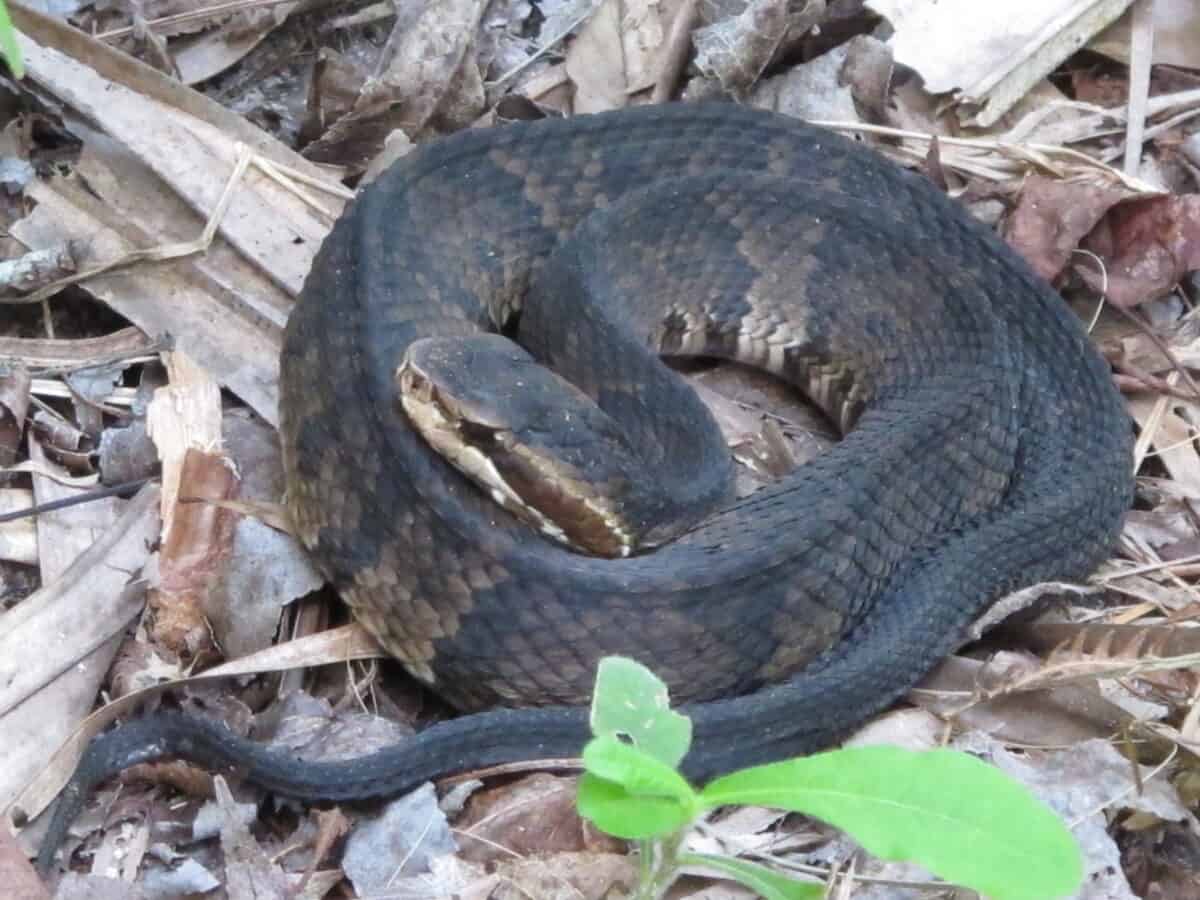
One of the most common sources of misunderstanding surrounding water moccasins stems from mistaken identity. Many non-venomous water snakes (genus Nerodia) share similar habitats and superficially resemble cottonmouths, leading to frequent misidentifications. Unlike the harmless water snakes that have slender bodies and narrow heads, water moccasins (Agkistrodon piscivorus) possess thick, heavy bodies and distinctly blocky heads—characteristics typical of pit vipers. Their eyes also differ significantly; cottonmouths have vertical, cat-like pupils, while water snakes have round pupils.
The consequences of this confusion can be serious, as harmless water snakes are often needlessly killed out of fear they might be venomous cottonmouths. Studies have shown that even people who live in regions where both species coexist frequently misidentify them. A survey conducted among outdoor enthusiasts in the southeastern United States found that water snakes were misidentified as cottonmouths more than 70% of the time. This identity crisis perpetuates the negative reputation of water moccasins and contributes to unnecessary snake fatalities throughout their range.
The Myth of the Aggressive Pursuer
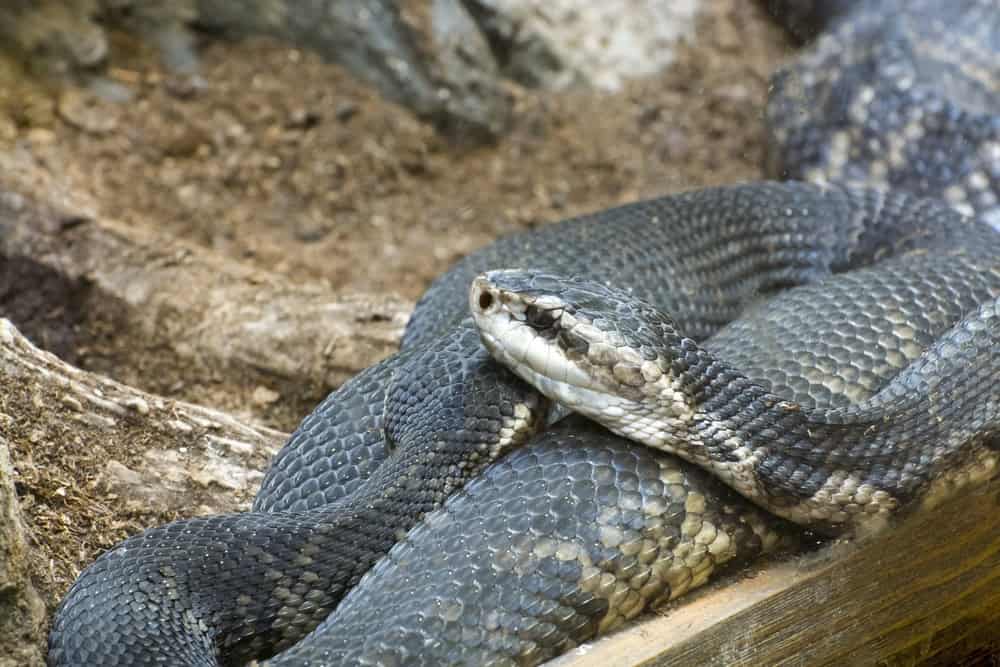
Perhaps the most persistent myth about water moccasins is that they will aggressively chase people who venture near their territory. This misconception has been repeated so often that it’s accepted as fact by many, yet herpetologists and wildlife experts consistently debunk this claim. When a water moccasin appears to be “chasing” a person, what’s actually happening is that the snake is trying to reach the safety of water, which may happen to be in the same direction as the person. Cottonmouths are relatively slow-moving snakes on land, and fleeing is their preferred response to human encounters.
Scientific studies on cottonmouth behavior reveal a very different picture than folklore suggests. In a comprehensive study published in the Journal of Herpetology, researchers approached cottonmouths in the wild 45 times and found that the snakes attempted to escape in 51% of encounters. They displayed threat behaviors in 78% of cases—such as gaping their white mouths—but struck in only 36% of the trials, and those strikes occurred only when the snakes were physically restrained. Not once did a cottonmouth actually pursue the researchers, contradicting the common belief that these snakes will chase humans unprovoked.
Understanding the Defensive Display

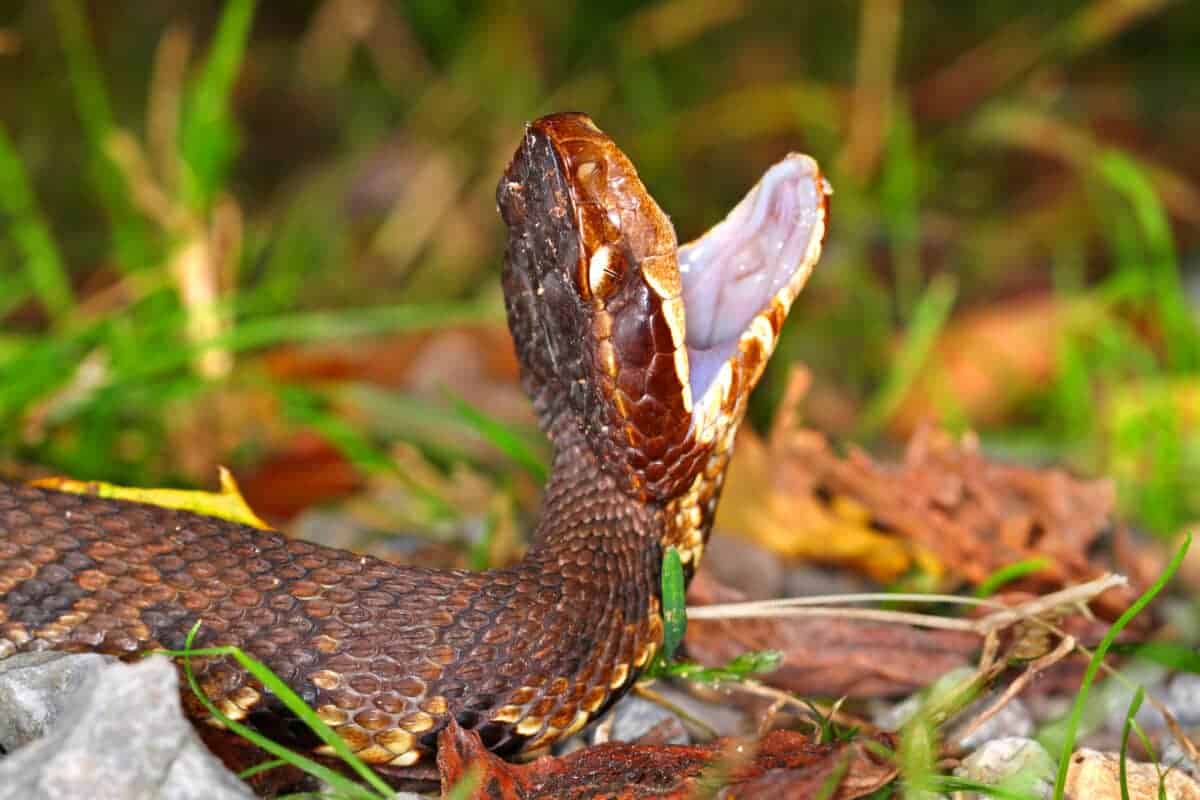
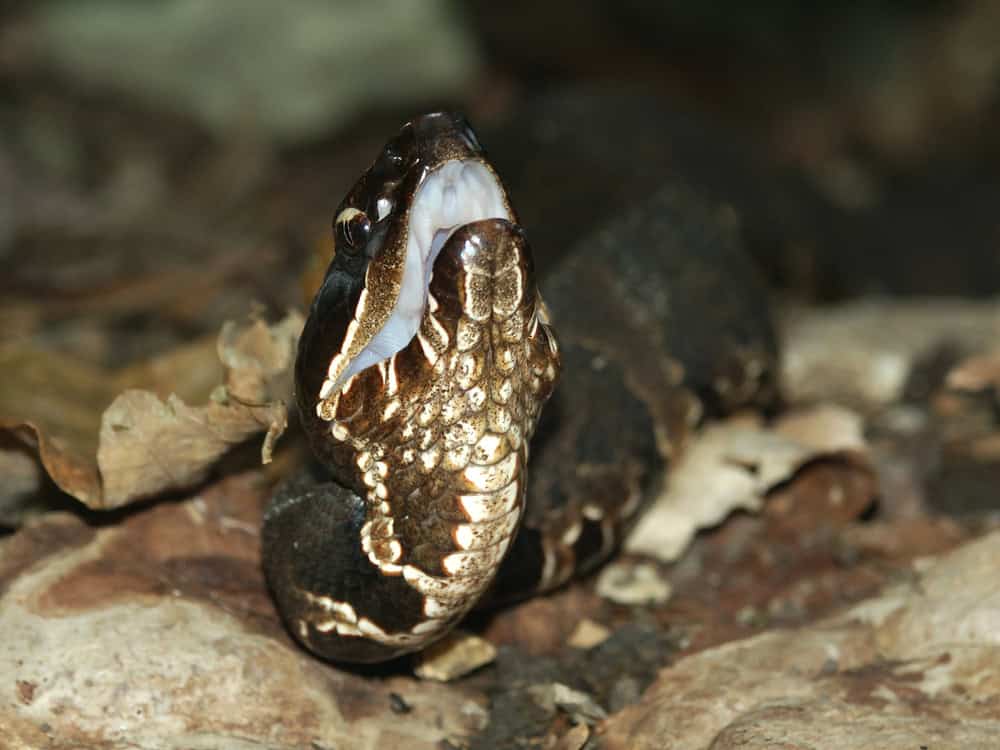
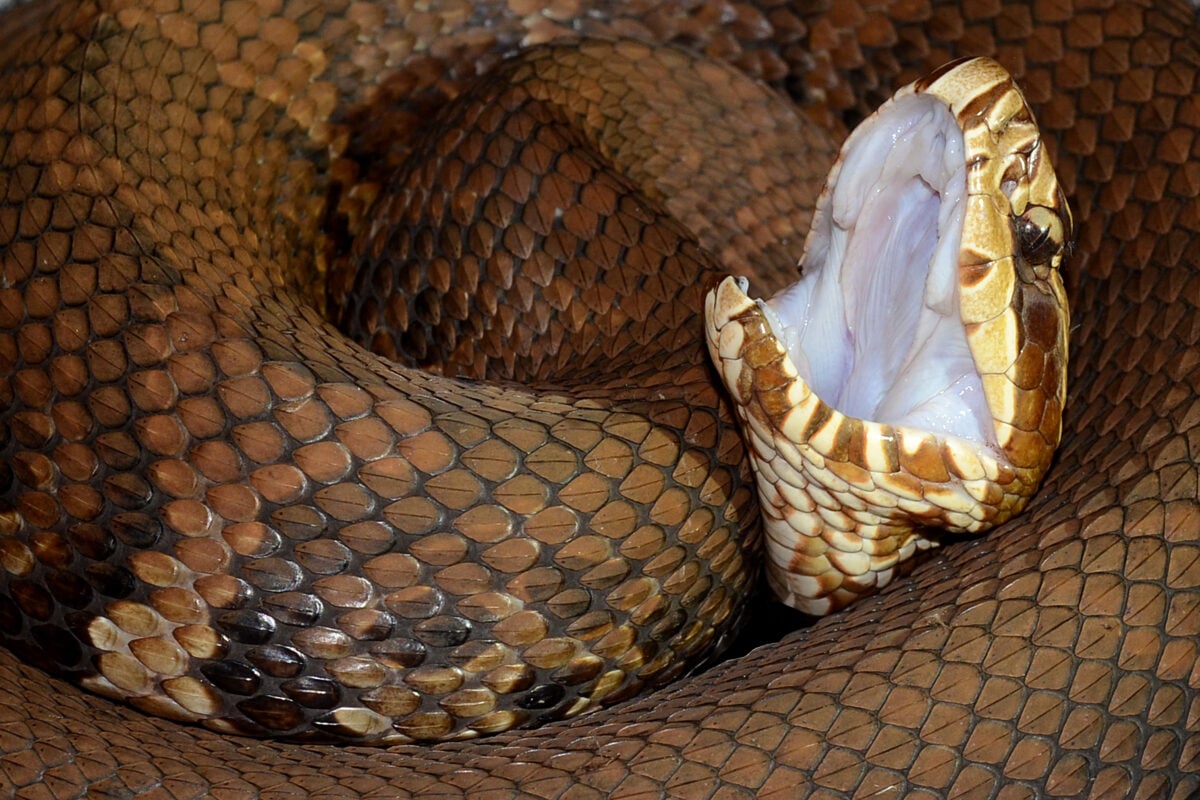
The water moccasin’s most famous behavior—opening its mouth wide to reveal the stark white interior—is actually a defensive warning signal, not an aggressive posture. This “cottonmouth” display, which gives the snake its common name, serves as a clear visual warning to potential threats. Combined with body positioning, tail vibrating, and musking (releasing a foul-smelling substance), this behavior forms a complex defensive strategy designed to avoid conflict rather than initiate it.
Wildlife biologists interpret this display as a last-resort warning before the snake feels compelled to strike. It’s essentially saying, “I am dangerous, and I want you to know it so you’ll leave me alone.” Far from being evidence of aggression, this behavior actually demonstrates that cottonmouths prefer intimidation over confrontation. The snake is attempting to avoid using its venomous bite, which requires energy to produce and is primarily reserved for hunting prey. Understanding this display as defensive rather than aggressive is crucial to appreciating the true nature of water moccasins.
The Ecological Importance of Cottonmouths
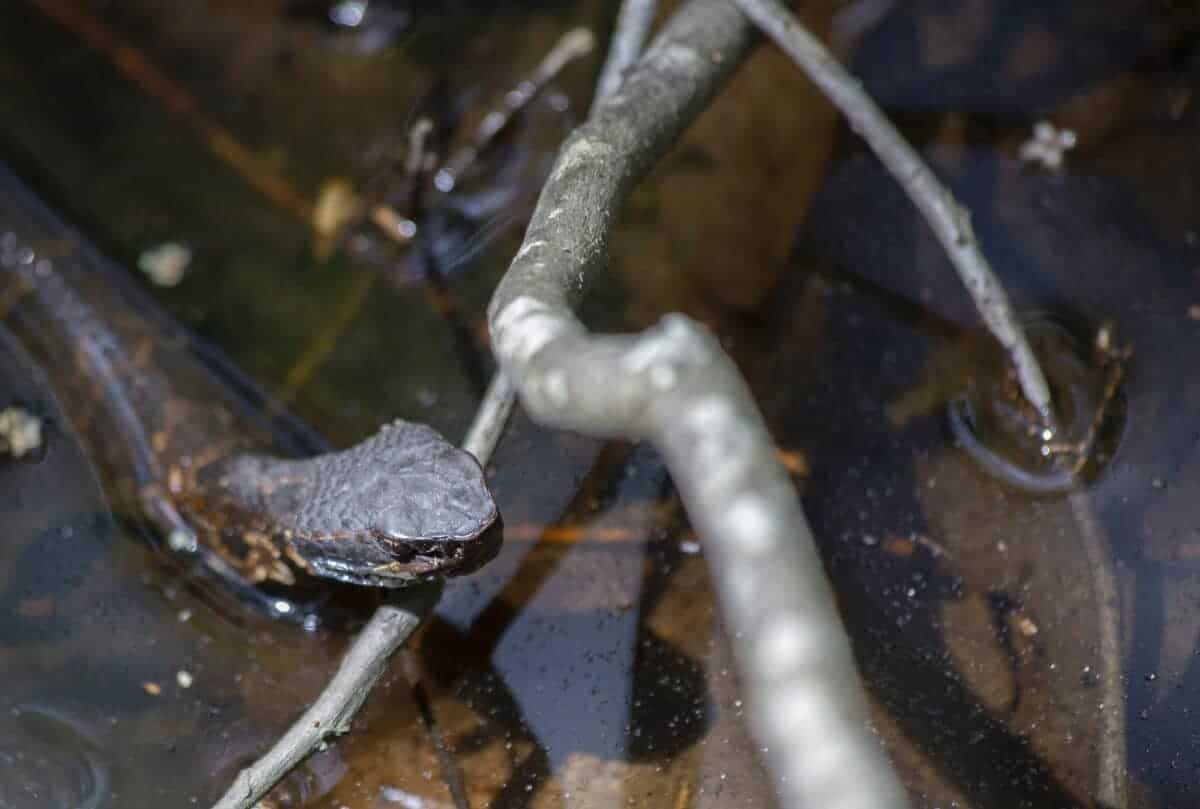
Water moccasins play a vital ecological role in the wetland ecosystems they inhabit. As mid-level predators, they help control populations of small mammals, amphibians, fish, and even other snakes. Their diet is remarkably diverse, including everything from frogs and fish to baby alligators and carrion. This dietary flexibility makes them important regulators of wetland food webs, helping to maintain the balance of these sensitive ecosystems.
Additionally, cottonmouths themselves serve as prey for larger predators like alligators, herons, and hawks, forming an important link in the food chain. Their presence or absence in a wetland can serve as an indicator of ecosystem health, as they require relatively intact habitats with clean water and abundant prey. Despite their fearsome reputation, these snakes contribute significantly to biodiversity and ecosystem functioning in the southeastern United States. Their removal from an ecosystem can have ripple effects throughout the food web, potentially leading to imbalances in prey populations.
The Reality of Cottonmouth Bites
While water moccasin venom is certainly dangerous and requires immediate medical attention, the actual risk of being bitten is much lower than public perception suggests. According to the Centers for Disease Control and Prevention, of the approximately 7,000-8,000 venomous snakebites that occur annually in the United States, cottonmouths account for only a small percentage. Most bites occur when people deliberately handle, harass, or attempt to kill these snakes, not during accidental encounters.
Furthermore, studies of cottonmouth venom delivery show that they don’t always inject venom when they bite defensively. Like many venomous snakes, they can deliver “dry bites” without venom, especially when striking defensively rather than at prey. This venom conservation makes evolutionary sense, as venom is metabolically expensive to produce and primarily used for hunting. While this doesn’t mean their bites should be taken lightly—all suspected cottonmouth bites should receive immediate medical attention—it does indicate that these snakes are not the indiscriminate killers they’re often portrayed to be.
Regional Variations and Habitat Preferences
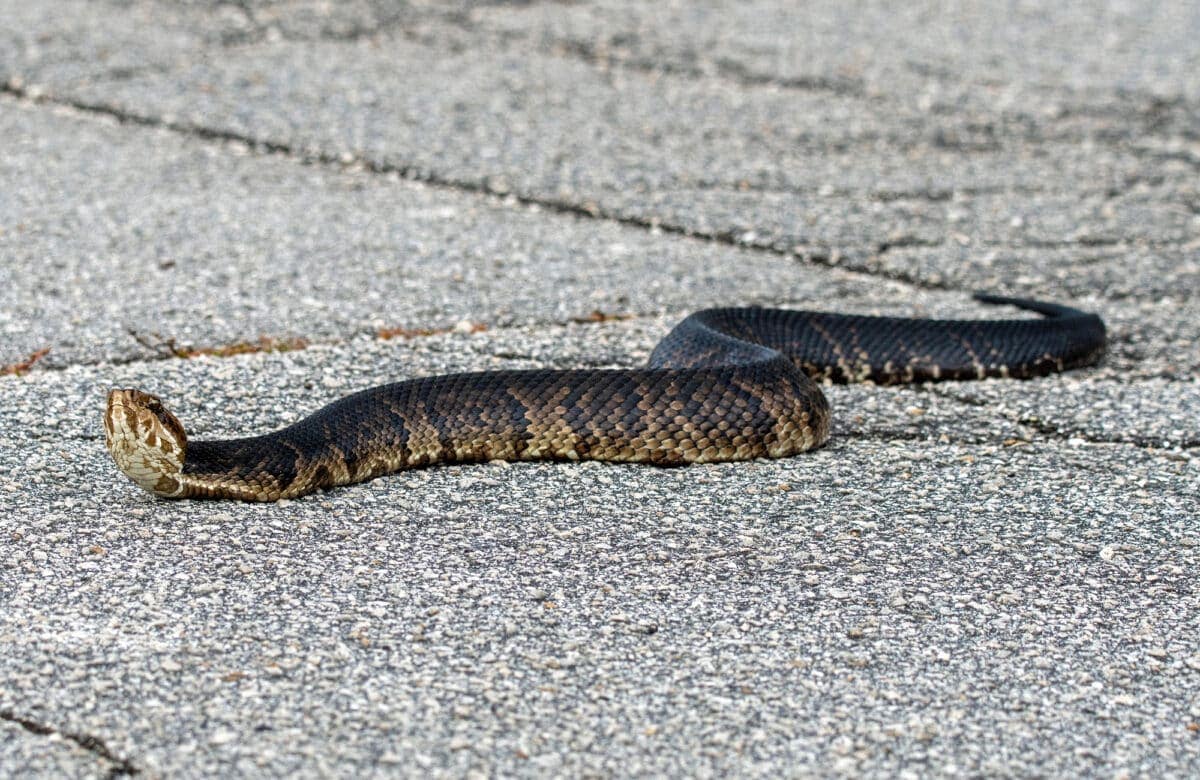
The water moccasin’s range spans from southeastern Virginia to Florida and west to eastern Texas, encompassing much of the southeastern United States. Within this range, they’ve adapted to various aquatic environments, from swamps and marshes to streams and river floodplains. Interestingly, their behavior and appearance can vary somewhat depending on their specific habitat and geographical location, leading to further misunderstandings about their nature.
For example, Florida cottonmouths often appear darker and more aquatic than their western counterparts, while those in the western parts of their range may spend more time on land. These regional variations sometimes lead people to believe they’ve encountered different species entirely. Additionally, juvenile cottonmouths look dramatically different from adults, displaying bold crossbands and a yellow-tipped tail they use to lure prey. These young snakes are frequently misidentified as copperheads or completely different species, adding another layer to the identification confusion that surrounds these misunderstood reptiles.
The Impact of Human Encroachment
As human development continues to expand into natural wetlands, encounters between people and water moccasins inevitably increase. Habitat loss and fragmentation force these snakes into smaller areas, sometimes bringing them closer to human habitation than they would naturally prefer. This proximity often leads to more sightings and encounters, reinforcing their fearsome reputation as people perceive them to be more abundant or aggressive than they actually are.
Conservation biologists note that water moccasins, like many snake species, are experiencing population declines in parts of their range due to habitat destruction, road mortality, and intentional killing. Ironically, while many people fear an “invasion” of cottonmouths, the reality is that these snakes are becoming less common in many areas. This highlights the disconnect between perception and reality when it comes to these misunderstood reptiles. The key to coexistence lies in education, habitat preservation, and developing a more nuanced understanding of these important wetland predators.
Media Portrayal and Cultural Perception

Media portrayals of water moccasins have done little to improve their public image. From sensationalized news reports of “aggressive” cottonmouth encounters to movies and television shows that depict them as villains, popular culture has reinforced negative stereotypes about these snakes. Even nature documentaries sometimes focus disproportionately on their venomous capabilities rather than their ecological importance or true behavioral patterns.
This cultural portrayal has deep historical roots. In many traditional Southern stories and folklore, cottonmouths feature as symbols of danger lurking in swamps and waterways. These cultural narratives, passed down through generations, shape how people perceive these animals before they ever encounter one in the wild. Changing these deeply ingrained perceptions requires not just scientific education but also more balanced media representation that portrays water moccasins as complex animals with important ecological roles rather than one-dimensional threats.
Proper Safety and Coexistence Strategies

Living alongside water moccasins doesn’t have to be fearful or dangerous. Simple precautions can significantly reduce the already low risk of negative encounters. When in cottonmouth habitat, wearing closed-toe shoes, using a flashlight at night, staying on established paths, and watching where you place your hands and feet are all effective strategies. Additionally, leaving these snakes alone if you spot them is the single most important safety measure—most bites occur when people try to kill or handle them.
For homeowners in cottonmouth country, maintaining yards by keeping grass short, removing brush piles near houses, and sealing potential entry points into buildings can discourage snakes from taking up residence close to homes. If a water moccasin is found on private property and poses a concern, contacting local wildlife authorities or professional snake relocators is a safer alternative to attempting removal personally. These professionals can safely relocate the snake to a more suitable habitat, benefiting both the snake and the homeowner.
Scientific Research Challenging Misconceptions
Modern herpetological research continues to challenge long-held beliefs about water moccasin aggression and behavior. Detailed studies using high-speed cameras, radio tracking, and controlled experiments have provided valuable insights into how these snakes actually behave in the wild. This research consistently shows that cottonmouths are more reluctant to bite than popular belief suggests, preferring to flee or display warning behaviors when confronted.
For example, a groundbreaking study by Dr. Whit Gibbons and colleagues involved approaching wild cottonmouths to test their responses to human intrusion. The researchers found that even when stepped on (using a realistic model leg with a boot), many cottonmouths did not immediately bite, instead attempting to escape or using warning displays. Such scientific findings directly contradict the stereotype of hyper-aggressive snakes lying in wait to attack humans. Unfortunately, these studies receive far less public attention than sensationalized stories of snake encounters, allowing misconceptions to persist despite contrary evidence.
Educational Efforts and Changing Perceptions
Conservation organizations, nature centers, and wildlife educators are working to improve public perception of water moccasins through educational outreach. Programs that allow people to safely observe these snakes under controlled conditions can be particularly effective, as they demonstrate the true, generally non-aggressive nature of cottonmouths. Many participants in such programs express surprise at how different the actual animals are from their preconceptions.
Social media has also become an important tool in snake education, with herpetologists and wildlife enthusiasts using platforms like Instagram, TikTok, and YouTube to share accurate information about water moccasins and other misunderstood snakes. These efforts are slowly shifting perceptions, especially among younger generations who may be more open to revising traditional views about these animals. As more people learn to accurately identify cottonmouths and understand their behavior, unnecessary killings decrease, and appreciation for their ecological role increases.
Conclusion: Respect Rather Than Fear
The water moccasin’s fearsome reputation has been built largely on misidentification, exaggeration, and misunderstanding rather than its actual behavior and biological characteristics. While these snakes deserve respect as venomous animals, the irrational fear and hatred they often inspire are unwarranted and counterproductive. By learning to accurately identify cottonmouths, understanding their defensive rather than aggressive behaviors, and appreciating their ecological importance, we can develop a more balanced view of these fascinating reptiles.
Living alongside water moccasins is not only possible but beneficial for the health of our wetland ecosystems. Rather than perpetuating myths that lead to needless killing, embracing education and coexistence strategies allows these important predators to fulfill their ecological roles while minimizing human conflict. The water moccasin doesn’t need to be feared as a villain of the swamp, but rather respected as a remarkable evolutionary success story—a highly specialized predator perfectly adapted to its aquatic niche. As we continue to encroach on natural habitats, developing this respect and understanding becomes not just environmentally important but essential for practical human-wildlife coexistence.

- What to Do If You Encounter a Bear (And What NOT to Do) - July 23, 2026
- Could the Great Plains Could Welcome Elephants by 2035? - July 23, 2026
- 9 Bizarre Sea Creatures Found Off the Oregon Coastline - July 23, 2026