
Every autumn and spring, something quiet and tragic plays out on the sidewalks beneath America’s glittering skylines. Small, feathered bodies lie against the base of glass towers, still warm, sometimes still breathing. Most passersby don’t notice. Conservation volunteers do. They have been doing this grim morning walk for decades.
The scale of it is hard to fully absorb. A groundbreaking research study published in PLOS ONE revealed alarming new evidence that building collisions are killing well over one billion birds annually in the United States alone. That number has only recently come into sharper focus, because researchers have only recently started to systematically document it. The question worth sitting with isn’t just how this happens. It’s why certain birds, on certain nights, seem almost drawn toward the very structures that will kill them.
#1. Nocturnal Migration and the Stars They Follow
Many people assume birds migrate during the day, but a large portion of the avian world does its long-distance traveling after dark. Many species of birds migrate at night, using light from the moon, the stars, and the setting sun to navigate. This is actually a smart evolutionary strategy: the air is cooler, predators are fewer, and the stars serve as a remarkably reliable compass.
While there are various explanations for why nocturnally migrating birds are attracted to artificial lights, it is known that birds rely on a variety of cues for migration, with the orientation of the stars being a major reference for nocturnal migrants. The problem is that this ancient system was calibrated for a world without electricity.
Collisions appear to happen less frequently during the winter and more frequently during peak migration periods, though it is generally understood that there are increases in bird collisions during fall and spring migrations due to greater movement in bird populations, and because birds are less familiar with the landscape along their migratory routes. Unfamiliarity with a new terrain is dangerous enough on its own. Combined with artificial light, it becomes lethal.
#2. The Deadly Pull of Artificial Light
At night, when most birds migrate, lit-up buildings disorient and attract them, luring them not just off their migratory paths, but straight into collisions. It sounds almost cinematic, but the science behind it is fairly straightforward. City light drowns out stellar cues, and birds caught in that glow lose their bearings.
It is speculated that artificially illuminated areas conceal the visual navigation cues that birds rely on, resulting in them becoming disoriented. This hypothesis has been well supported by several observations of birds being attracted to and disoriented by lights, particularly in conditions of poor visibility, which makes them more susceptible to colliding with buildings. Fog, cloud cover, and rain compound everything further.
Studies using radar have shown that, once birds are attracted to a light source, they tend not to want to leave it. Birds may become trapped inside beams of light, flying around inside them until they drop from exhaustion. This circling behavior, documented at some of the most famous structures in North America, represents a kind of neurological capture, where the bird’s navigation system simply stops functioning correctly in the presence of strong artificial light.
#3. The Glass Problem: A Barrier Birds Cannot See
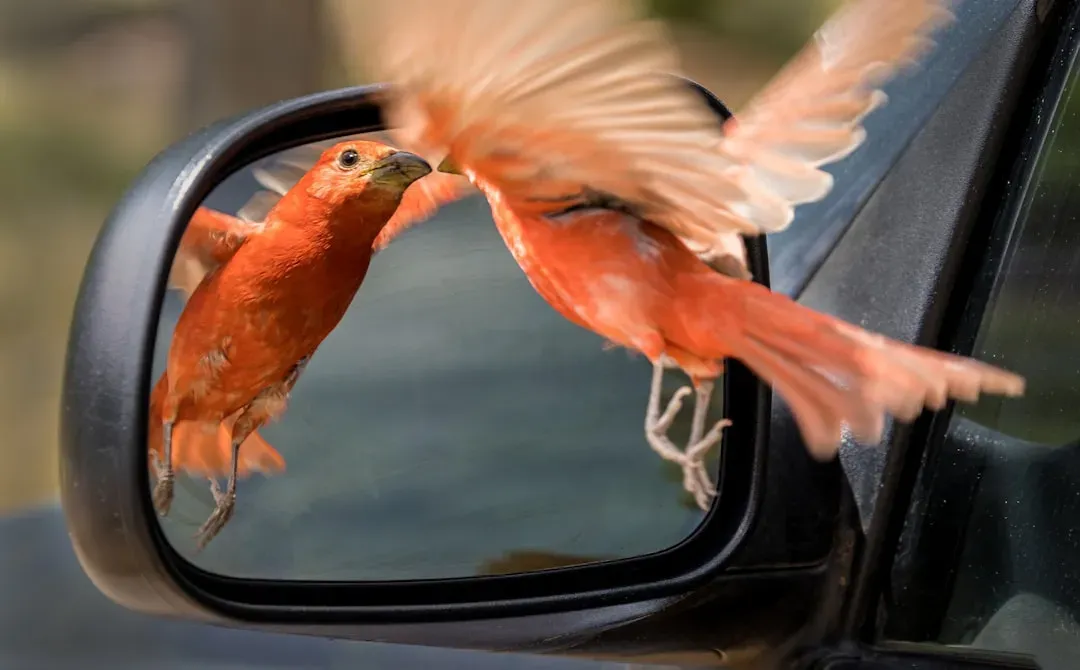
Light draws birds in, but glass delivers the fatal blow. Birds may collide with glass windows because they reflect the surrounding environment or allow birds to perceive a seemingly open pathway to the interior of the building. To a warbler flying at speed in the dark, a lit glass facade doesn’t look like a wall. It looks like open air, or like sky, or like the continuation of a forest.
Birds are attracted by lights, but don’t recognize glass as a barrier. As a result, they fly straight into a building, thinking it’s a clear flight path. This is not a failure of bird intelligence. It is a perceptual mismatch between a material that humans invented and a nervous system that evolved over millions of years without ever encountering it.
Dark, reflective surfaces, including glass, reflect high degrees of polarized light, causing polarized light pollution. Some researchers believe birds may actually be drawn toward polarized reflections because their visual systems interpret these as signals associated with water or open flyways. The glass, in other words, may not just be invisible to them. It may be actively misleading.
#4. Which Birds Are Most Vulnerable, and Why
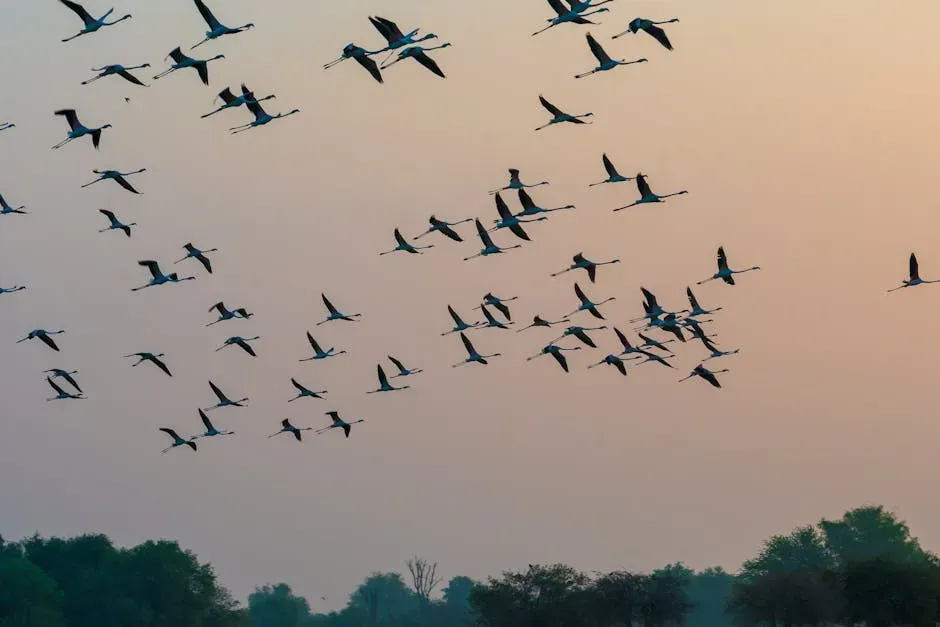
Not all birds face equal risk. Migratory birds, many of which travel in large groups and at night, were more likely to fly into glass buildings than resident birds. The combination of unfamiliar terrain, nighttime travel, and sensitivity to artificial light creates a specific threat profile. Resident birds that know a city’s geography navigate it far more safely.
Among migratory birds, it was the forest-inhabiting and insect-eating species like warblers and flycatchers that took the biggest hit. These birds often fly at high speeds through small openings in the forest canopy hunting for bugs, a feeding method that may put them at greater risk of running into glassy surfaces that reflect vegetation. Their speed and agility, traits perfectly suited to forest foraging, become liabilities in an urban glass canyon.
Songbirds that produce faint chirps called flight calls during nighttime migration collide with lit buildings more often than other species that don’t produce the chirps. This is because data shows the birds disoriented by the artificial light send out flight calls, luring other birds to their inevitable death. One confused bird, in other words, can inadvertently endanger dozens of others following the same acoustic signal through the dark.
#5. What Cities and Scientists Are Doing About It
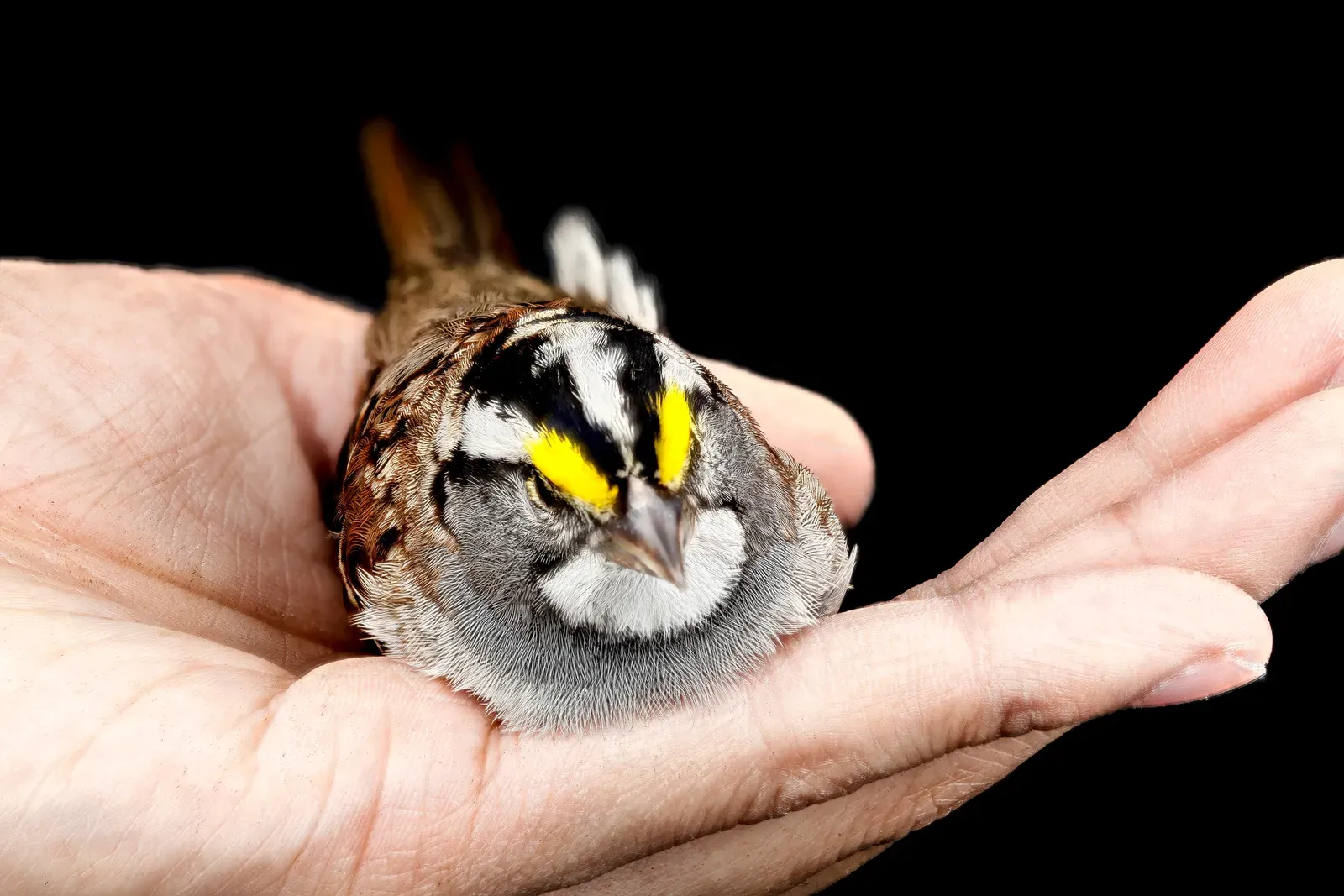
The good news, if there is good news here, is that the solutions are real and measurable. One study conducted by the Field Museum in Chicago showed that in one building, turning the lights off reduced the number of bird kills by an average of 83%. That figure is striking because it requires no technology, no renovation, and no significant cost. Just darkness.
Following the deaths of nearly 1,000 birds at Chicago’s McCormick Place on a single night in the fall of 2023, a new plan was developed to make the building’s windows more visible to birds. Implemented in the summer of 2024, it involved applying small white dots in a 2-inch grid pattern to the surfaces of all its windows. Since the project’s completion, the number of bird deaths at the site has fallen by about 95% compared with migrations prior to the change. A nearly complete turnaround, from one of the most lethal buildings on the continent to something close to safe.
Cities like New York, Toronto, San Francisco, and Oakland are already leading the way by requiring bird-safe building practices, which include adding patterns to glass to help break up reflective surfaces and turning off lights at night during peak migration. These policies are spreading, slowly, but the pace of glass construction in urban cores still outstrips the rate of intervention.
Conclusion
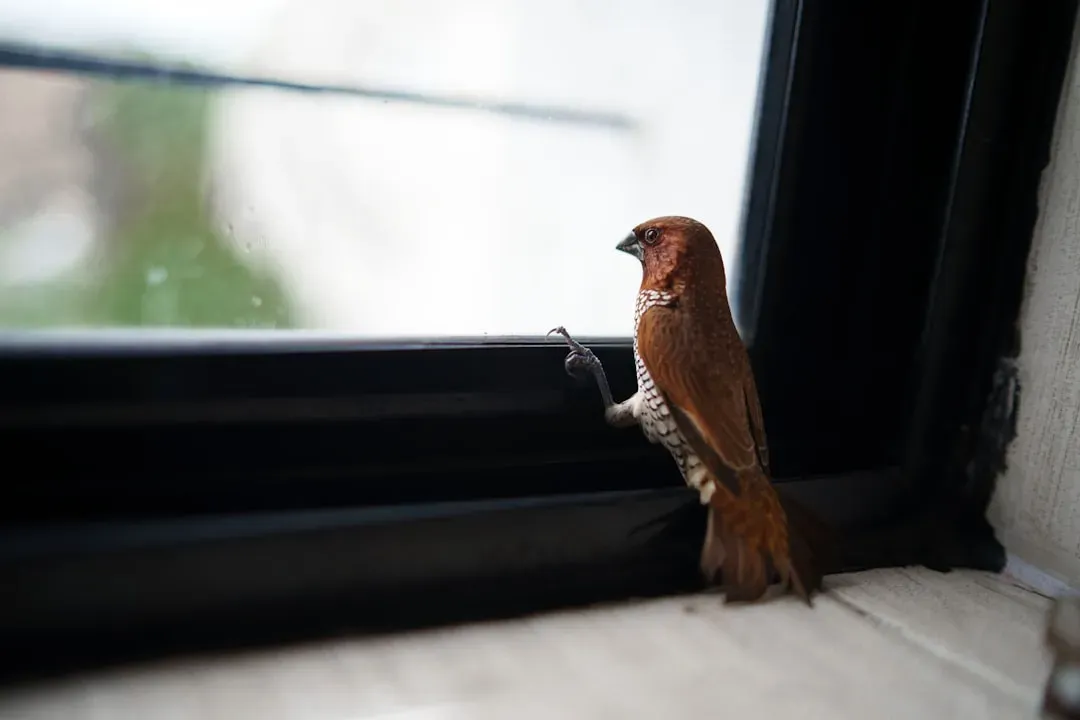
What strikes me most about this issue is how perfectly it captures the gap between intention and consequence. Nobody built a skyscraper to kill birds. Nobody designed a glass facade as a trap. These are simply structures optimized for human aesthetics, human productivity, and human real estate value, without any thought given to the creatures sharing the sky above them.
North America has lost nearly one-third of its birdlife in the last half-century, with migratory species experiencing particularly acute declines. Fatal collisions with built structures represent a major source of direct, human-caused bird mortality across North America, second only to predation by domestic cats. The math here is uncomfortable. We are losing birds at a civilizational scale, and part of the reason is that we keep the lights on.
The solutions exist, they’re affordable, and they work. Turning off unnecessary lights during peak migration periods costs almost nothing. Window treatments that break up reflective surfaces are proven to be effective. What’s missing isn’t knowledge or technology. It’s will. The birds navigating by starlight have been making this journey for millions of years. The least we can do is stop drowning out the stars.
