
Have you ever stopped during a lazy afternoon, looked up, and asked yourself this timeless question? It sounds like such a simple thing. is blue. It always has been, right? Well, sort of. The truth is way more fascinating than you might expect, and the answer involves some genuinely cool science that’ll make you appreciate every sunny day just a little bit differently. It’s one of those questions children ask all the time, and honestly, plenty of adults still don’t really know the answer. Let’s be real, most of us just accept the blueness without a second thought. Let’s dive in.
The Mystery Behind Sunlight’s True Colors
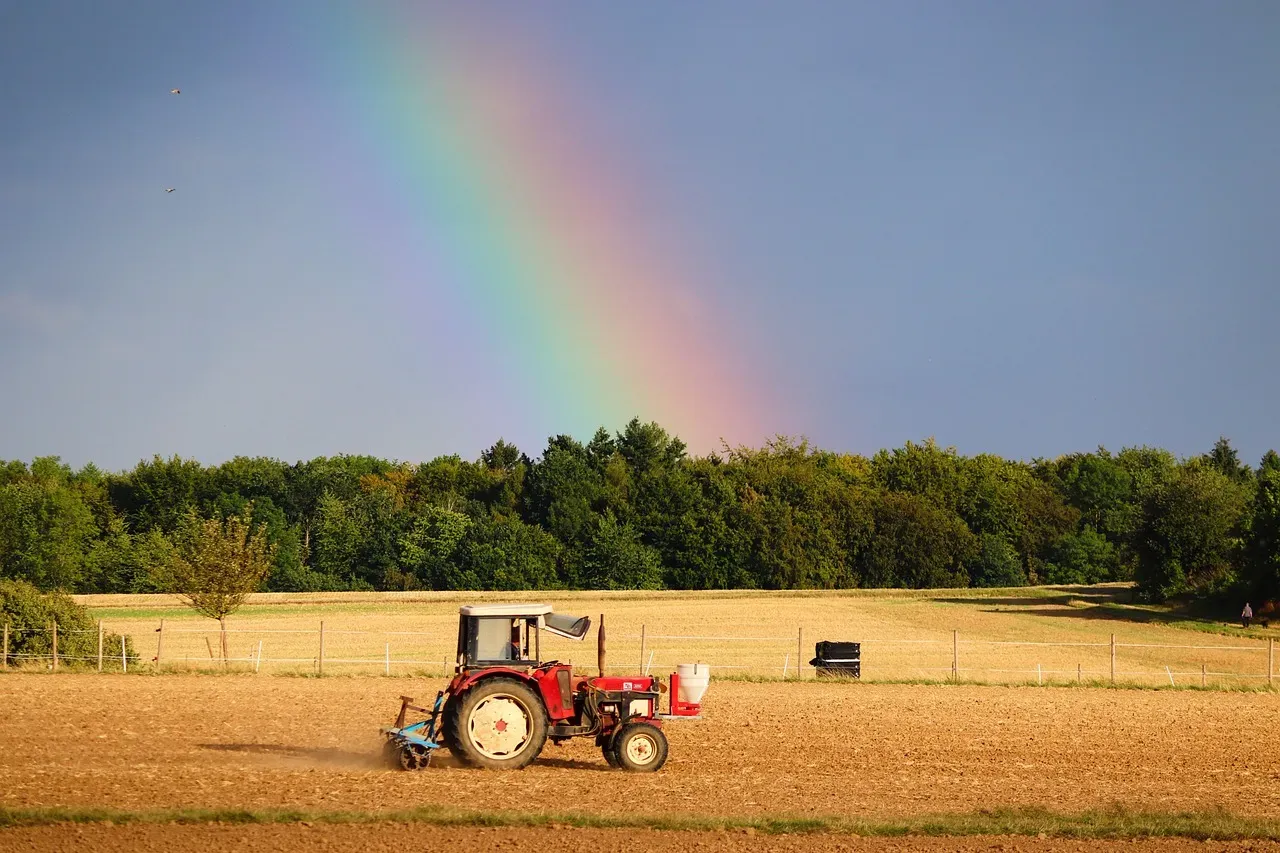
Sunlight might look white to our eyes, but it’s actually made up of all the colors of the rainbow. Think about the last time you saw a prism or a rainbow after a storm. Those vibrant reds, oranges, yellows, greens, blues, and violets aren’t just appearing from nowhere. They were hiding in plain sight all along, bundled together in what we perceive as white light.
This white light is made up of all the colors of the visible spectrum, ranging from red through violet. Each color carries its own unique wavelength, like individual notes in a symphony. Red light has long, lazy wavelengths, while blue and violet zip along with much shorter, tighter waves. This difference in wavelength is absolutely crucial to understanding why our sky isn’t green, or red, or some other random color.
It’s kind of amazing when you think about it. Every beam of sunlight streaming toward Earth is essentially a package deal of every visible color imaginable. The Sun doesn’t play favorites.
What Happens When Light Meets Our Atmosphere
Once white light traveling from the sun reaches Earth, some of the colors begin to interact with molecules and small particles in the atmosphere. Our atmosphere isn’t empty space. It’s packed with nitrogen, oxygen, carbon dioxide molecules, water vapor, dust particles, and all sorts of tiny stuff floating around.
The atmosphere is made mostly of the gases nitrogen (78%), and oxygen (21%), with argon gas and water the next most common things. When sunlight barrels through this invisible obstacle course, something interesting happens. The light doesn’t just pass through cleanly like it would through empty space. Instead, it bumps into these molecules constantly.
Imagine you’re trying to walk through a crowded room. Sometimes you slip through gaps easily, other times you bump into someone and change direction. Light does something similar when it encounters atmospheric molecules.
The Science of Rayleigh Scattering

Around 1870, British physicist John William Strutt, better known as Lord Rayleigh, first found an explanation for why the sky is blue: Blue light from the Sun is scattered the most when it passes through the atmosphere, and his discovery is why the scientific term for this effect is called Rayleigh scattering. Here’s the thing: this wasn’t just some guy making wild guesses. He did the math.
Blue light is scattered more than other colors because it travels as shorter, smaller waves. The technical explanation gets a bit heady, but basically the shorter the wavelength, the more likely it is to bounce off atmospheric molecules. The amount of scattering is inversely proportional to the fourth power of the wavelength. That’s a fancy way of saying blue light gets scattered way more intensely than red light does.
Think of it like this: blue light is the overenthusiastic kid at a party who talks to everyone, while red light is the quiet one who slips through unnoticed. The blue light ricochets all over the place, filling the entire sky with its color. Red light? It mostly travels straight through without causing much fuss.
Why Not Violet Instead of Blue

You might be wondering something smart right now. If violet light has an even shorter wavelength than blue, shouldn’t the sky look purple? That’s a completely legitimate question, and the answer reveals something fascinating about human biology.
The sun doesn’t produce equal illumination in all colors; it contains more blue light than violet light, so more blue light is scattered, and additionally, our eyes are not equally responsive to all colors, being less sensitive to violet light. Our eyes are basically better at detecting blue than violet. Evolution didn’t optimize us for seeing violet hues as clearly.
The midday sky appears blue, rather than a combination of blue and violet, because our eyes are more sensitive to blue light than to violet light. It’s a combination of what’s actually up there and how our biological hardware interprets it. Nature and biology teaming up to give us that classic blue we know and love.
So the sky could theoretically look different to creatures with eyes built differently than ours. Wild to think about.
Why Sunsets Paint the Sky Red and Orange

When the sun is near the horizon at dawn and dusk, the sun’s rays strike the atmosphere at more oblique angles, and thus these rays must travel a greater distance through the atmosphere than they would at midday, resulting in more nitrogen and oxygen molecules and other particles that can block and scatter incoming sunlight. Picture the sunlight having to trudge through way more atmosphere to reach your eyes.
During this long passage, incoming radiation in the shorter blue and violet wavelengths is mostly filtered out, and what remains are the longer wavelengths, with some of these rays striking dust and other particles near the horizon to create the red, orange, and yellow tints we enjoy at sunrise and sunset. By the time the light reaches you, most of the blue has been scattered away completely, leaving only the reds and oranges to dominate.
That’s why photographers obsess over golden hour. The light quality genuinely changes because of physics, not just romantic notions. The atmosphere becomes a natural filter, removing the blues and amplifying the warm tones.
A Sky of a Different Color on Other Worlds

Mars has a very thin atmosphere made mostly of carbon dioxide and filled with fine dust particles, and these fine particles scatter light differently than the gases and particles in Earth’s atmosphere. Earth’s blue sky isn’t some universal constant. Change the atmosphere, change the sky.
During the daytime, the Martian sky takes on an orange or reddish color, but as the Sun sets, the sky around the Sun begins to take on a blue-gray tone. It’s basically the opposite of what we experience here. Imagine stepping outside and seeing an orange sky during the day and blue during sunset. That’s the Martian experience.
Other planets don’t have an atmosphere exactly like ours, and Mars’s atmosphere is much thinner than Earth’s at less than one per cent, meaning the Rayleigh scattering that causes our skies to be blue on Earth has a very small effect on Mars, with the daytime sky on Mars appearing more yellow due to haze of dust suspended in the air. Different atmospheric composition, different visual show. Makes you realize just how special and specific our blue sky really is.
Conclusion

So there you have it. The sky is blue because of Rayleigh scattering, a phenomenon where shorter blue wavelengths of sunlight get bounced around by atmospheric molecules far more than longer red wavelengths. It’s a beautiful accident of physics, chemistry, and biology all working together. Next time you’re outside on a clear day, take a moment to really look up and appreciate that brilliant blue. It’s not just pretty, it’s a visible reminder of invisible forces constantly at work above us.
What do you think about it? Does knowing the science make the sky more or less magical?

- What It Means When Your Cat Stares at the Same Empty Corner at the Same Time Every Night – and the Three Explanations Competing for It - July 19, 2026
- What It Means When a Snake Crosses Your Path From Left to Right According to Every Southern Appalachian Tradition That Recorded It - July 19, 2026
- What It Means When Deer Stop Coming to an Area They Have Visited for Years – and What Wildlife Biologists Say They Are Detecting - July 19, 2026