


In the sunless depths of the ocean, where darkness reigns supreme and food is scarce, one of nature’s most remarkable evolutionary adaptations comes to life. The anglerfish, a creature of nightmarish appearance but fascinating biology, employs a bioluminescent lure that dangles from its forehead like a fishing rod—hence its apt name. This glowing appendage serves as both beacon and bait in the midnight realm of the deep sea. But what makes this light-producing strategy so effective? Why has evolution favored this particular adaptation in one of Earth’s most extreme environments? Let’s dive into the mysterious world of the anglerfish and uncover the scientific marvels behind its famous glowing lure.
The Challenging Environment of the Deep Sea

To understand the anglerfish’s luminous strategy, we must first appreciate its habitat. The deep sea begins at roughly 1,000 meters below the surface, extending to the ocean floor at depths that can exceed 11,000 meters in trenches. At these depths, sunlight is completely absent, creating a world of perpetual darkness. Water pressure is crushing, temperatures hover just above freezing, and oxygen levels are significantly lower than in surface waters.
This harsh environment houses relatively few creatures, making food incredibly scarce. It is estimated that less than 1% of the organic material from the surface makes its way to the deep sea floor, creating an ecosystem where efficiency in finding food isn’t just advantageous—it’s essential for survival. The anglerfish has evolved in this challenging environment, developing specialized adaptations that allow it to thrive where other creatures cannot.
The Biology of Bioluminescence

The anglerfish’s famous lure, scientifically known as the “esca,” is a modified dorsal spine that extends from the fish’s head. What makes this appendage special is its ability to produce light—a phenomenon called bioluminescence. Unlike the light we create with electricity, bioluminescence is produced through a chemical reaction. Most remarkably, the anglerfish doesn’t generate this light itself. Instead, it maintains a symbiotic relationship with colonies of bioluminescent bacteria that live within the esca.
These bacteria, primarily from the genus Photobacterium, produce an enzyme called luciferase that reacts with a substance called luciferin in the presence of oxygen, creating the characteristic blue-green glow. The fish provides these bacteria with nutrients and a protective environment, while the bacteria provide the light that makes the anglerfish’s hunting strategy possible—a perfect example of mutualistic symbiosis in the deep.
A Deadly Game of Deception

The primary function of the anglerfish’s glowing lure is deception. In the pitch-black depths, any light source becomes an immediate point of interest. The anglerfish exploits this by dangling its illuminated esca above its mouth, creating a deadly trap. Potential prey—typically small fish and crustaceans—are attracted to this rare light source, possibly mistaking it for bioluminescent plankton or other small light-producing organisms that might represent food.
As curious creatures approach the light, they swim directly toward the source of their demise. The anglerfish’s enormous mouth and expandable stomach allow it to consume prey up to twice its own size. Some species can even unhinge their jaws, similar to snakes, further expanding their feeding capabilities. This method of passive hunting is remarkably energy-efficient, allowing the anglerfish to conserve precious energy while waiting for meals to literally swim into its mouth.
Different Species, Different Lures
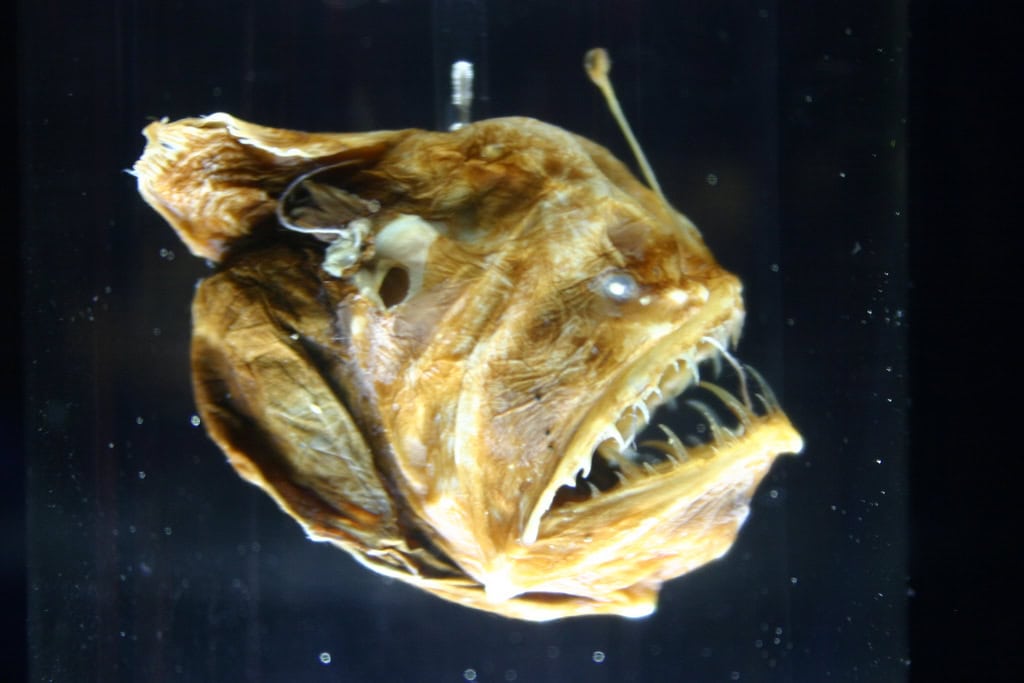
There are more than 200 species of anglerfish, and they display remarkable diversity in their lures. The deep-sea ceratioid anglerfish females typically possess the classic fishing rod-like appendage, but the size, shape, and even movement of the esca vary significantly between species. Some resemble small fish, while others mimic crustaceans or worms. The black seadevil (Melanocetus johnsonii) features a relatively simple lure that produces a steady glow, while the triplewart seadevil (Cryptopsaras couesii) has a complex esca that can flash or pulse to attract different types of prey.
The humpback anglerfish (Melanocetus johnsonii) can wiggle its lure in a manner that mimics the movement of small swimming creatures. This diversity suggests that different species have specialized to attract particular types of prey, further refining their hunting strategy for maximum efficiency in their specific ecological niches.
Sexual Dimorphism and Parasitic Males

Among deep-sea anglerfish, the glowing lure isn’t the only extraordinary adaptation. These fish exhibit extreme sexual dimorphism—differences between males and females—that borders on the unbelievable. Female anglerfish can be up to 60 times larger than males and are the only ones that possess the famous fishing lure. Males, on the other hand, are tiny, simplified creatures whose sole purpose is to find a female.
Once a male locates a female, he bites into her body and releases an enzyme that dissolves his mouth and her skin, fusing their tissues together. The male eventually becomes little more than a parasitic appendage on the female’s body, receiving nutrients through their shared circulatory system while providing sperm when the female is ready to reproduce. This bizarre reproductive strategy ensures that when a female is ready to spawn in the vast, sparsely populated deep sea, she already has a mate attached and ready to fertilize her eggs. Some female anglerfish have been found with multiple males attached to them, forming a truly unusual family unit.
Controlling the Light

One of the most sophisticated aspects of the anglerfish’s luring strategy is its ability to control when the light shines. Although the bacteria are constantly capable of producing light, the fish can regulate the oxygen supply to the esca, effectively turning the light on and off as needed. This control mechanism allows the anglerfish to conserve energy when not actively hunting and prevents unnecessary attraction of larger predators.
Some species can even modulate the intensity of the light or create pulsing patterns that may be particularly attractive to certain prey species. Research suggests that different species may use distinct flashing patterns, similar to a visual language designed to attract specific prey. This level of control transforms what might otherwise be a passive adaptation into an active hunting tool that the anglerfish can deploy strategically.
Beyond the Lure: Additional Adaptations

While the bioluminescent lure gets most of the attention, anglerfish have evolved numerous other adaptations for deep-sea survival. Their bodies are typically dark brown or black, rendering them nearly invisible in the darkness. Many species have expandable stomachs and jaws that allow them to consume prey much larger than themselves—an important advantage when meals are few and far between.
Their teeth are long, transparent, and angled inward, ensuring that once prey enters the mouth, there’s no escape. Some species have sensory pores along their bodies that can detect minute water movements, alerting them to nearby creatures even in total darkness. Female anglerfish also have relatively small eyes, as vision is less important than other senses in their lightless environment. Each of these adaptations works in concert with the glowing lure to ensure the anglerfish’s survival in one of Earth’s most challenging habitats.
The Evolutionary Journey
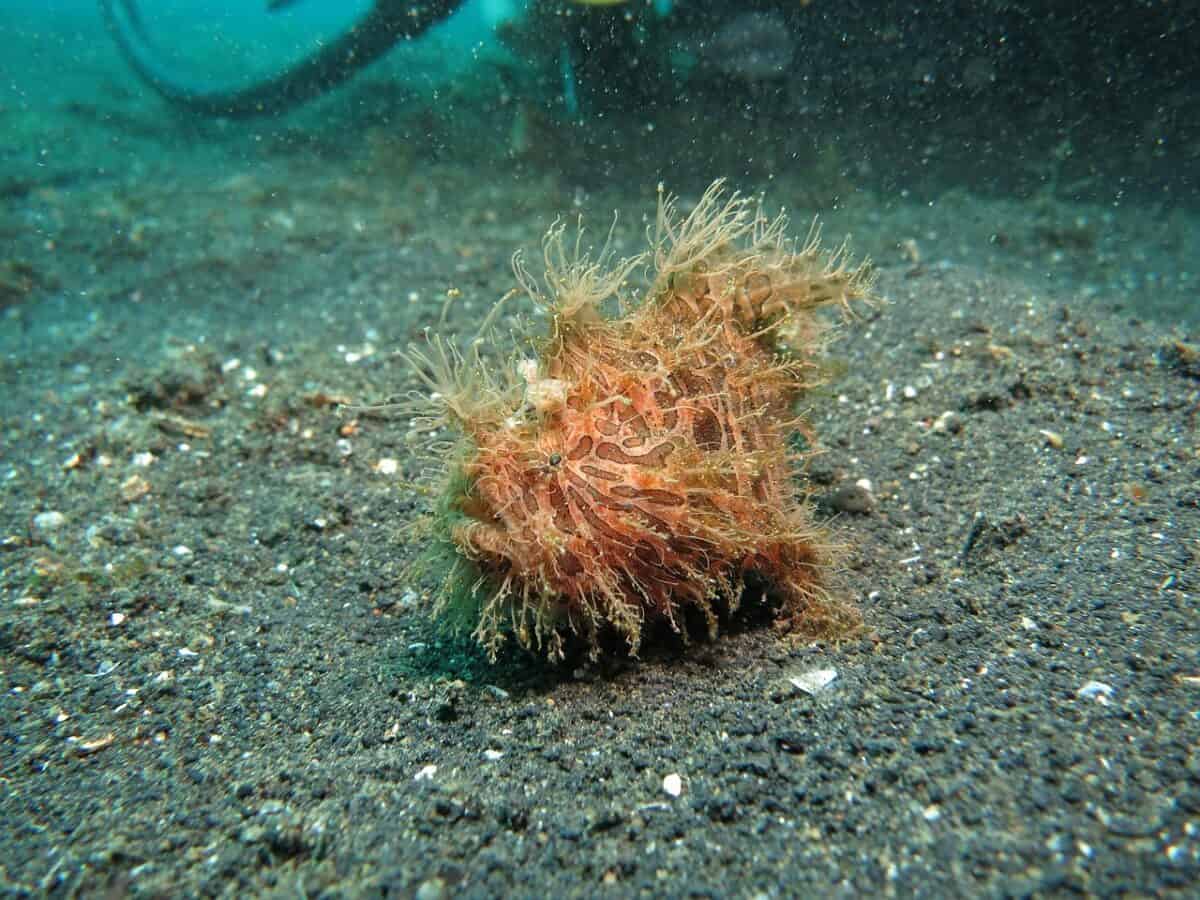
The evolutionary path that led to the anglerfish’s bioluminescent lure represents a fascinating example of natural selection at work. Scientists believe the earliest ancestors of anglerfish likely had a modified dorsal spine that was used for tactile purposes or perhaps to sense water movements. Over millions of years, as these fish ventured into deeper waters, mutations that allowed for hosting bioluminescent bacteria would have provided significant feeding advantages.
Fossil records of anglerfish are scarce due to their deep-sea habitat and primarily cartilaginous skeletons, but molecular clock analyses suggest the luring adaptation may have evolved approximately 100 million years ago during the mid-Cretaceous period. Interestingly, not all anglerfish live in the deep sea or use bioluminescent lures. The goosefish or monkfish, for example, is a shallow-water anglerfish that uses a modified spine to mimic a small fish or worm physically rather than with light. This suggests that the basic luring strategy predates the bioluminescent adaptation and was later enhanced when certain lineages moved to deeper waters.
Challenges in Studying the Anglerfish

Despite their fascinating biology, anglerfish remain among the least understood deep-sea creatures due to the extreme challenges of studying them in their natural habitat. The crushing pressure at depths where anglerfish live—sometimes exceeding 400 times the pressure at sea level—makes direct observation difficult. Traditional fishing methods often damage these delicate creatures as they’re brought to the surface, and their bioluminescent bacteria typically die during the process.
Only in recent decades, with the development of deep-sea submersibles, remote-operated vehicles (ROVs), and pressure-maintaining collection devices, have scientists been able to observe living specimens in their natural environment or study them in laboratory settings. In 2018, researchers captured the first video footage of a live anglerfish pair in the wild—a female with a parasitic male attached—representing a significant breakthrough in our understanding of these elusive creatures. These technological advances continue to reveal new aspects of anglerfish biology and behavior, including the specifics of how they deploy their luminous lures.
Other Deep-Sea Bioluminescent Strategies
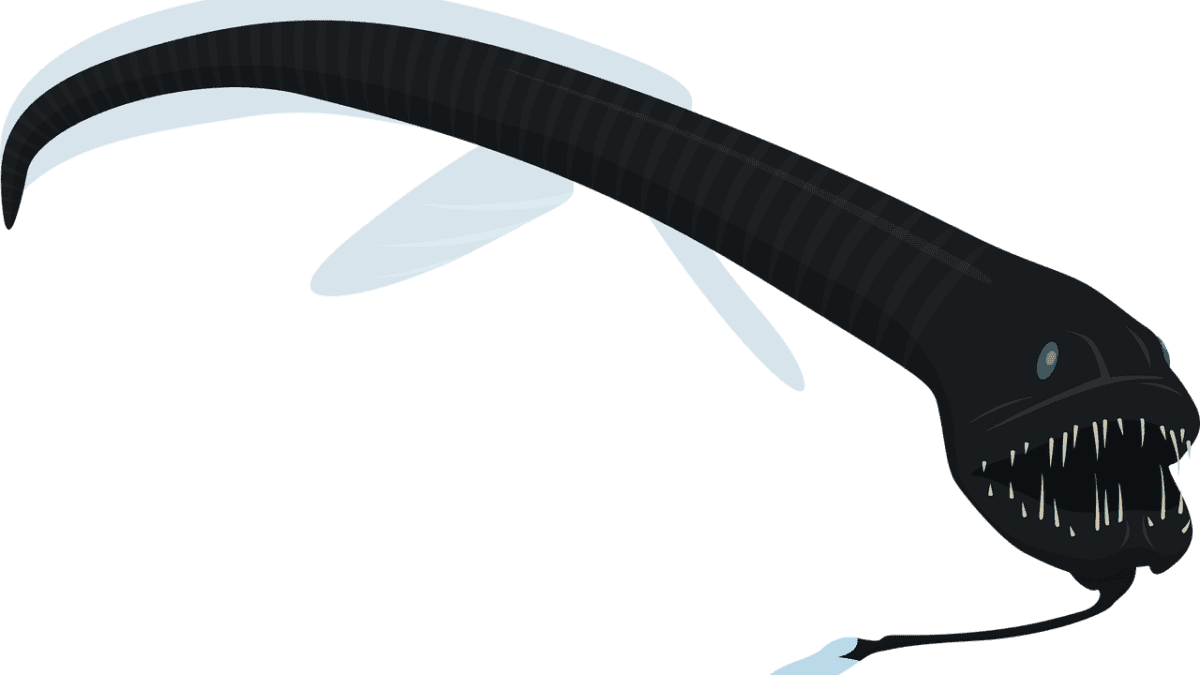
The anglerfish isn’t alone in using bioluminescence in the deep sea. Approximately 90% of deep-sea creatures produce some form of biological light, but they employ this ability in remarkably different ways. The dragonfish, for instance, produces red light that most deep-sea creatures cannot see, essentially giving it a private wavelength for hunting. Viperfish have light-producing photophores along their bodies that may help them recognize members of their own species in the darkness.
Some squid and shrimp species can release clouds of bioluminescent fluid—similar to how squid use ink in shallower waters—to confuse predators. Cookie-cutter sharks have bioluminescent organs on their undersides that help them blend in with the faint light from above, making them nearly invisible to prey below—except for a dark “collar” area that mimics a small fish and attracts larger predators, which the shark then takes a circular bite from. Each of these strategies represents a unique evolutionary solution to the challenges of life in perpetual darkness, highlighting the diversity of approaches to using light as a survival tool in the deep sea.
Anglerfish in Popular Culture and Education

The anglerfish’s otherworldly appearance and fascinating biology have made it an iconic deep-sea creature in popular culture. Its distinctive silhouette—bulbous body, enormous mouth filled with needle-like teeth, and the glowing lure extending from its head—has appeared in films like “Finding Nemo,” where it chases the main characters through the deep ocean. Documentaries by David Attenborough and others have showcased the anglerfish’s remarkable adaptations to millions of viewers worldwide.
Beyond entertainment, the anglerfish serves as an excellent educational example of extreme adaptation, symbiotic relationships, and the ingenuity of natural selection. Many science educators use the anglerfish to illustrate concepts ranging from deep-sea ecology to evolutionary biology and symbiosis. The creature’s bizarre appearance often captures students’ imagination, making it an effective gateway to discussing broader scientific principles. In this way, the anglerfish’s glowing lure continues to serve another purpose—drawing people into the fascinating world of marine biology and deep-sea exploration.
Conservation Concerns

Although anglerfish typically live too deep to be directly targeted by commercial fishing operations, they face growing threats from human activities. Deep-sea trawling, which involves dragging heavy nets across the ocean floor to catch bottom-dwelling species, can inadvertently capture anglerfish as bycatch. Additionally, ongoing climate change may impact deep-sea ecosystems in ways scientists are still trying to understand. Ocean acidification—caused by increasing carbon dioxide levels in the atmosphere being absorbed by seawater—could affect the symbiotic bacteria that produce the anglerfish’s light. Rising ocean temperatures might alter the distribution of prey species, potentially disrupting the delicate deep-sea food webs that anglerfish depend on.
Pollution, particularly microplastics, has been found even in the deepest ocean trenches, indicating that no marine habitat remains untouched by human influence. Because deep-sea ecosystems change very slowly and deep-sea species like the anglerfish typically have long lifespans and low reproductive rates, they may be particularly vulnerable to rapid environmental changes. Conservation efforts for these remarkable creatures require more research and careful management of human activities that impact the deep ocean.
Conclusion: Nature’s Ingenious Solution to Darkness

The anglerfish’s glowing lure represents one of nature’s most elegant solutions to the challenge of finding food in absolute darkness. Through the evolutionary partnership between fish and bioluminescent bacteria, a sophisticated hunting strategy has emerged that perfectly addresses the unique constraints of deep-sea living. This adaptation allows the anglerfish to conserve precious energy while effectively attracting prey in an environment where food encounters are rare.
As we continue to explore the deep sea with increasingly sophisticated technology, we’re likely to discover even more details about how these remarkable fish deploy their living lures and adapt to their extreme environment. The story of the anglerfish reminds us that even in the most challenging conditions on our planet, life finds ingenious ways to not only survive but thrive, often through unexpected collaborations between different organisms.

From exploring the marine wonders in the Azores and witnessing the vast savannas of Kenya, to delving deep into the rich biodiversity of South Africa and traversing iconic landscapes in Australia and the US like Yellowstone, Chris's experiences are vast.
With a penchant for diving alongside sharks, the ocean holds a special place in his heart.
Through his academic insights, he champions wildlife conservation, striving with 'Animals Around The Globe' to cultivate a profound connection between humans and animals, enhancing our mutual appreciation.
Connect with him at Feedback@animalsaroundtheglobe.com.
- The Anatomy of a Spider: What Makes It So Unique? - July 19, 2026
- The Largest Wolf Pack Ever Tracked in the Wild - July 19, 2026
- Saving Manatees in Florida’s Warming Waters - July 19, 2026