

In a shadowed, undisclosed location somewhere in the American interior, three genetically engineered wolf pups are pacing, sleeping, and howling into the void of scientific ambition.
With snow-white coats, heavy jaws, and the frame of something prehistoric, they are the latest spectacle from Colossal Biosciences—a company that claims to be resurrecting the long-extinct dire wolf. But what exactly is rising from the lab? A beast of the Ice Age, or a high-tech illusion clad in fur and folklore?
A Beast Reborn
To make these wolves, scientists cracked open the genetic vault of time itself. They extracted ancient DNA from fossilized dire wolf remains—one a 13,000-year-old tooth from Ohio, the other a skull fragment dating back 72,000 years from Idaho.
Then came the editing: 20 precise modifications made to gray wolf cells using CRISPR, stitched together like a biological patchwork, and implanted into the egg of a domestic dog. Two months later, the pups were born. They may resemble the hulking predators of the past, on track to weigh up to 140 pounds at maturity, but what they truly are is far murkier.
Ghosts in the Genome
The dire wolf—popularized in equal parts by science and the silver screen—was no mere oversized cousin of the modern wolf. It was a distinct species, one that roamed the Pleistocene wilderness with a ferocity and intelligence tailored to its own vanished world.
Biologist Vincent Lynch, unaffiliated with the project, is blunt: “All you can do now is make something look superficially like something else.” These wolves may wear the face of the extinct, but they’re hollowed of its instincts, its purpose, and its place in the wild order.
Born Without a Wilderness
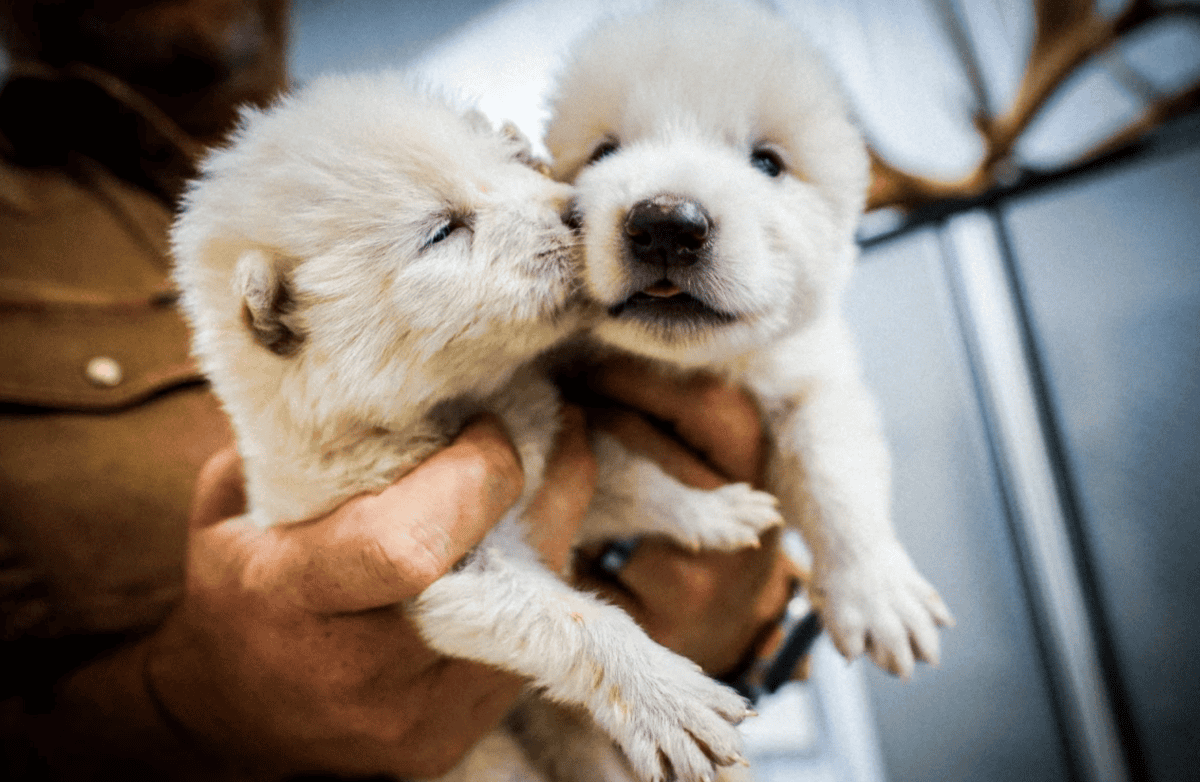
Colossal’s team acknowledges as much. As chief animal care expert Matt James explains, no amount of gene editing can recreate the experience passed from parent to pup in the hunt.
These wolves will never learn how to kill an elk with precision or lead a pack across open grasslands. They are creatures without teachers, ghosts without memories, wolves without wildness.
The Edge of Extinction’s Undoing
Still, the implications are staggering. With mammoths and dodos next in Colossal’s pipeline, the wolf is just the beginning. A future where extinction is no longer final is materializing—not in myth or magic, but in code, petri dishes, and the warm breath of a lab-grown predator. The wolf has always been a mirror—of fear, of wilderness, of ourselves. Now it reflects something new: our boundless reach, and our refusal to let nature close its chapters without us.

Please send any feedback to Feedback@animalsaroundtheglobe.com
- Animals Gearing Up for Hibernation Across America - July 18, 2026
- The Alarming Decline of Animal Populations - July 17, 2026
- Enchanting Wildlife of Europe: A Symphony of Beauty - July 17, 2026