
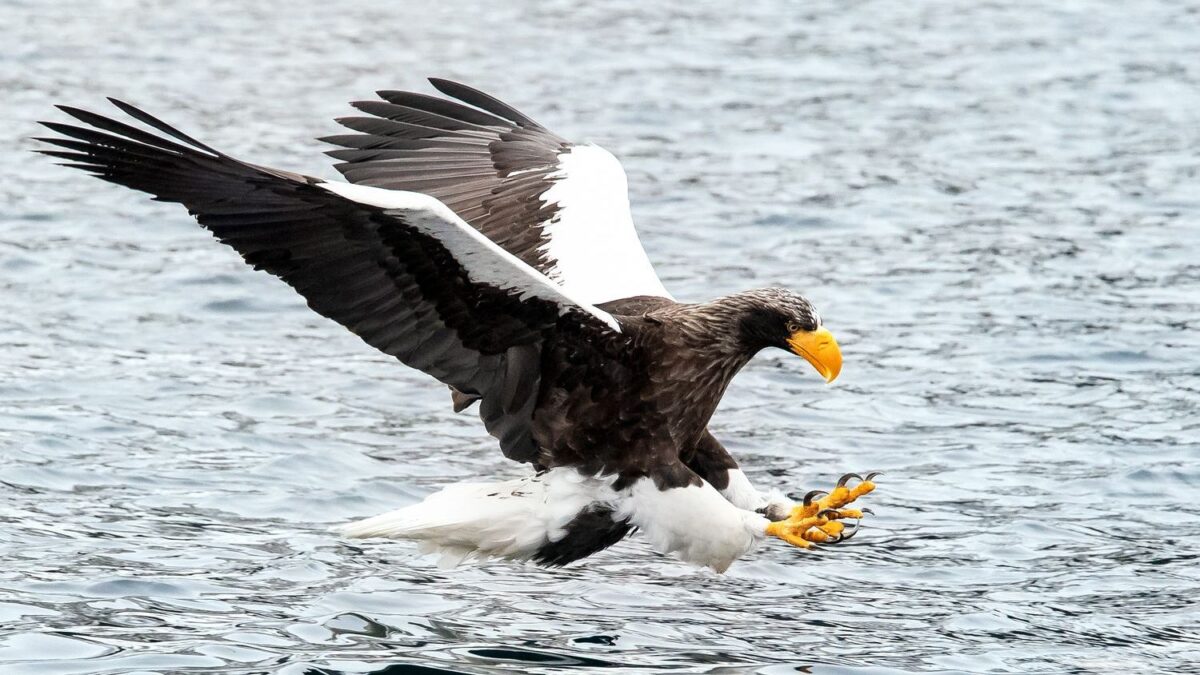
There are birds of prey, and then there is the Steller’s Sea Eagle. Something on an entirely different level. Most people can name a bald eagle or a golden eagle from memory, but this colossal raptor from the frozen coasts of northeastern Asia remains one of the most unknown giants in the natural world. It is the kind of creature that, honestly, looks like it belongs to a different era of Earth’s history.
Think of it as nature’s final word on what an eagle can be. Massive, fierce, breathtaking, and surprisingly threatened. If you have never stopped to learn about this bird, you are in for quite a surprise. Let’s dive in.
Fact 1: It Is Officially the Heaviest Eagle on Earth
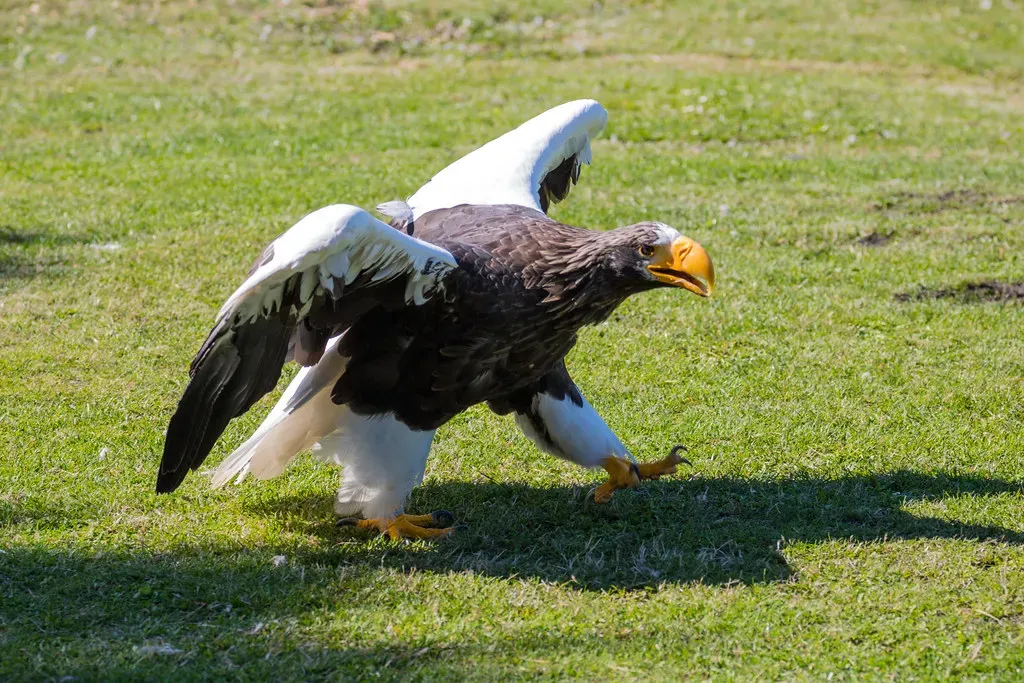
Guinness World Records recognizes this bird as the “largest eagle,” due to its combined wingspan and weight. That alone should tell you everything. We are not talking about a marginally larger bird here. This is a creature in a different weight class entirely.
Females vary in weight from roughly six to nearly ten kilograms, while males are lighter, ranging from just under five to almost seven kilograms. At its average weight, the Steller’s seems to outweigh the average harpy by around half a kilogram and the average Philippine eagle by more than a full kilogram. That gap might sound small, but in the raptor world, it is enormous.
Fact 2: Its Wingspan Is the Stuff of Legends
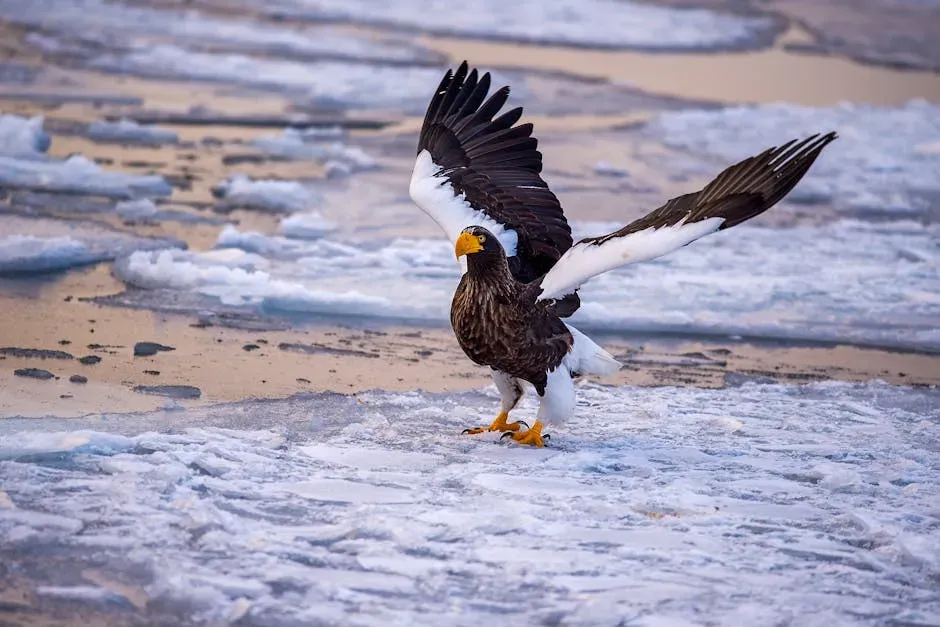
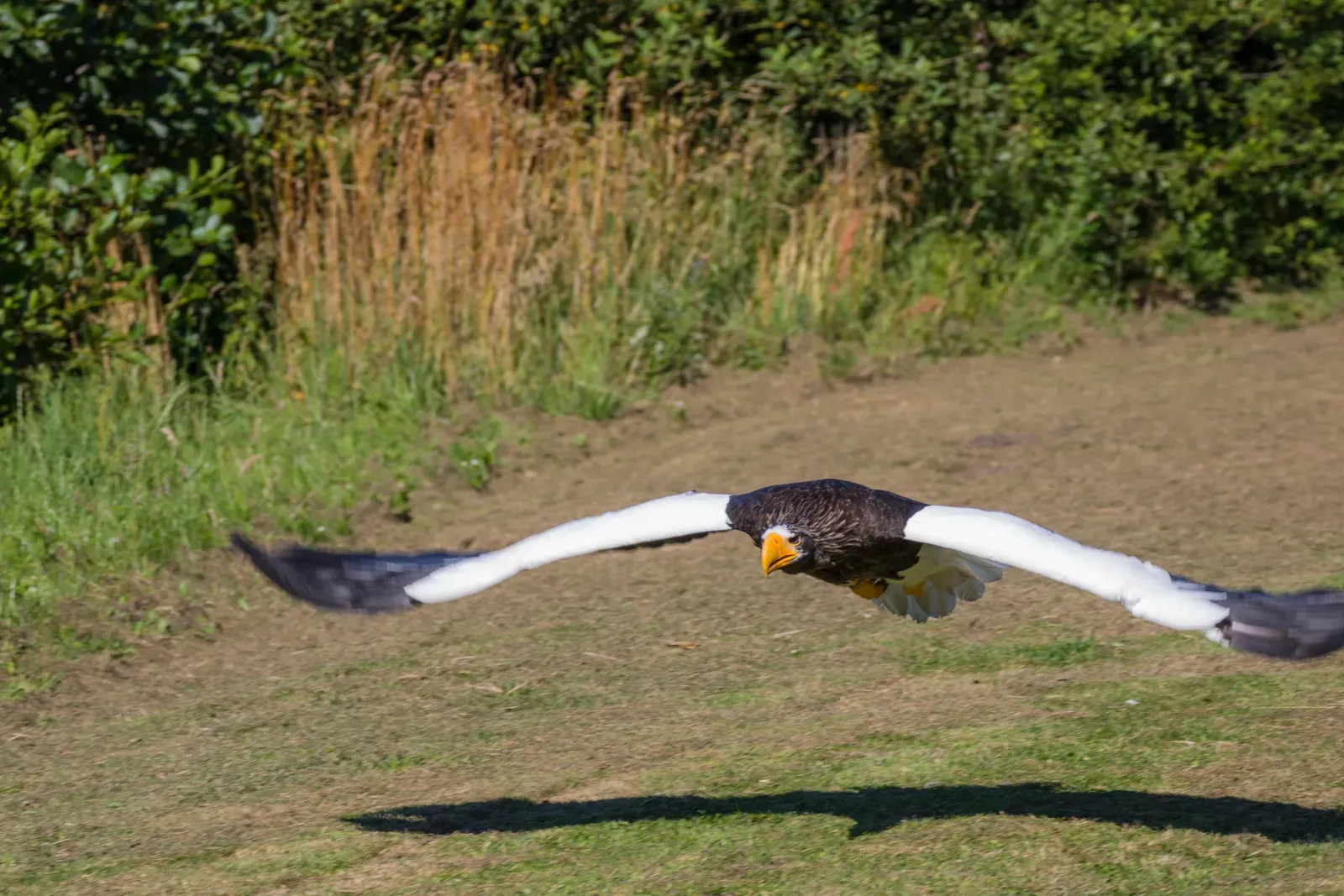
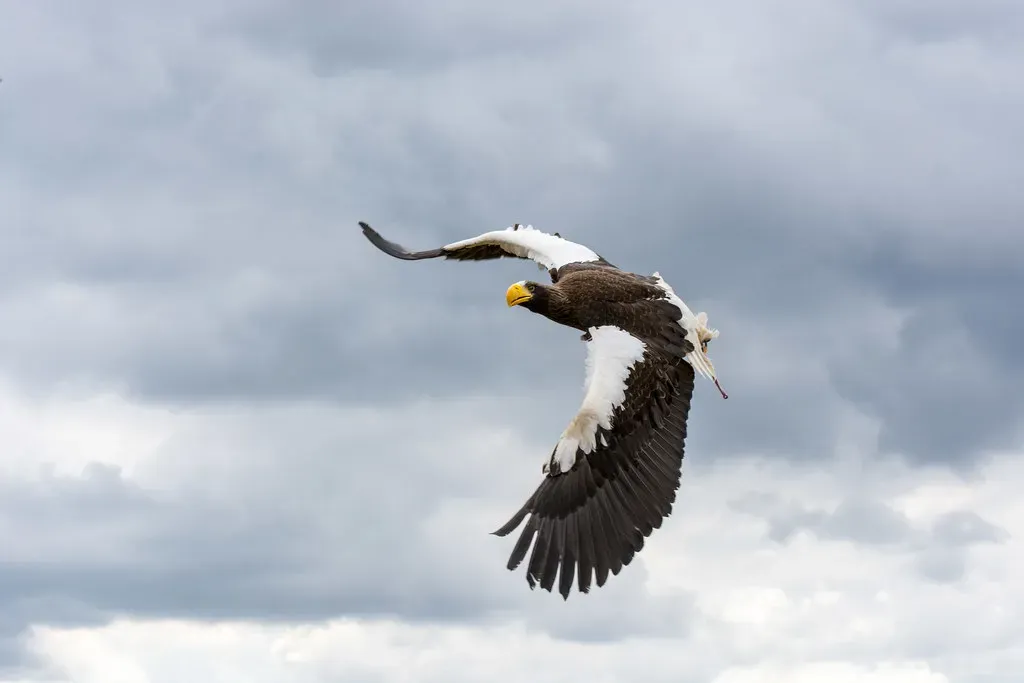
The Steller’s Sea Eagle’s body length ranges from roughly 85 to 105 centimeters, while its wingspan stretches between almost two meters and two and a half meters. To put that into perspective, imagine spreading your arms out wide and then adding another full arm’s length on each side. That is what this eagle opens above its prey.
The largest recorded wingspan ever measured reached an astonishing 287 centimeters. Steller’s Sea Eagles have the largest average wingspan of any eagle species. When one of these birds launches from a cliff edge and spreads those wings over the cold Siberian sea, it must be one of the most jaw-dropping sights in nature.
Fact 3: That Bill Is the Largest of Any Living Eagle
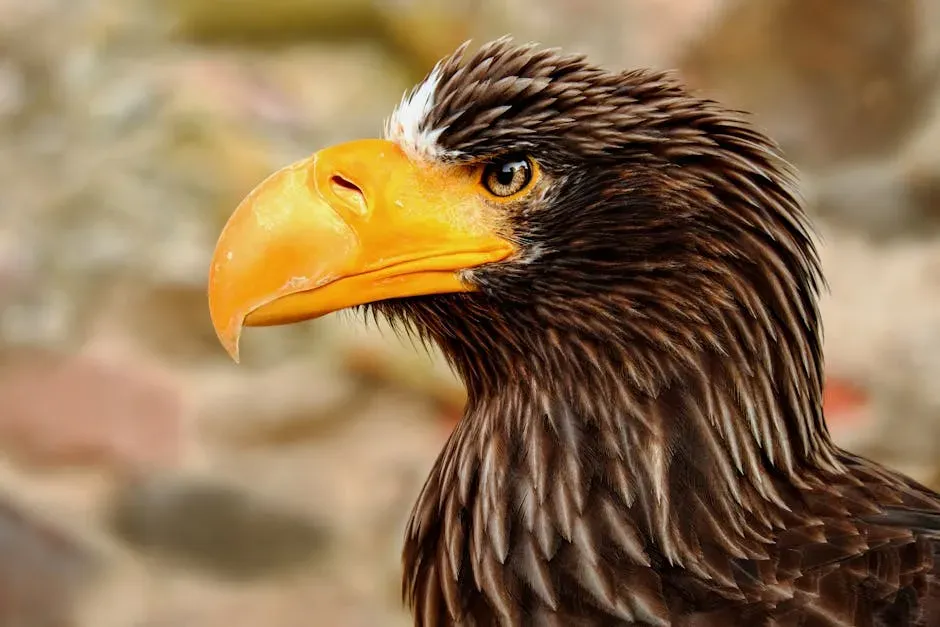
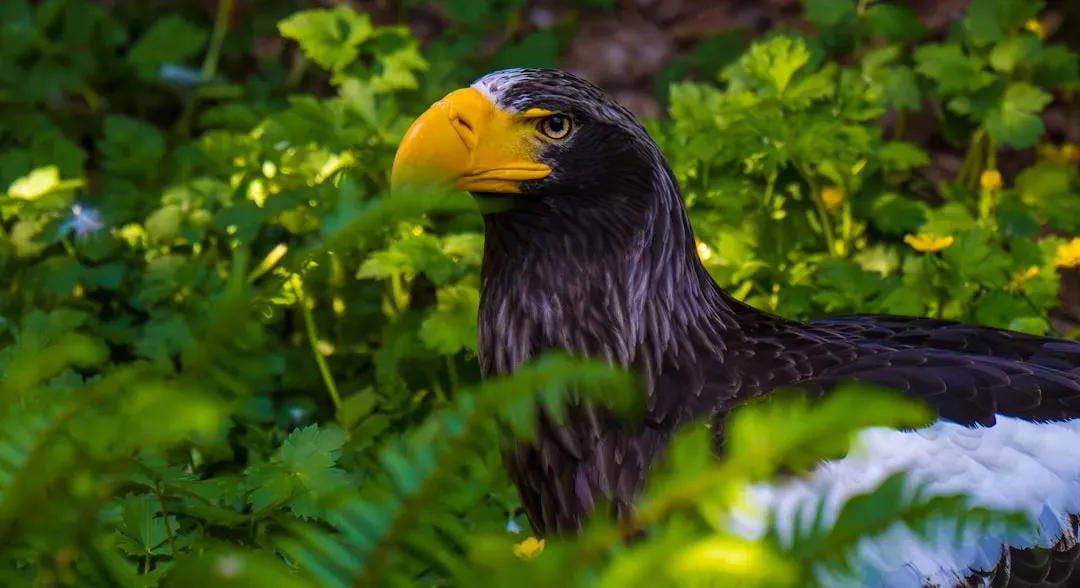
The Steller’s Sea Eagle is the only sea eagle with a distinctive yellow beak even in juvenile birds, and that bill can measure up to around four and a half inches in length, making it the largest of any living eagle species. The beak is so massive and so deeply curved that some researchers compare its bulk to the bills of the largest vulture species. It is a tool built for serious work.
The beak is really impressive, as well as the whole skull, which are so massive they match even the largest vulture species. Honestly, when you see a photo of this eagle head-on, the beak almost looks disproportionate, like something out of a cartoon. Except it is very, very real.
Fact 4: Its Talons Can Pierce Straight Through a Human Arm
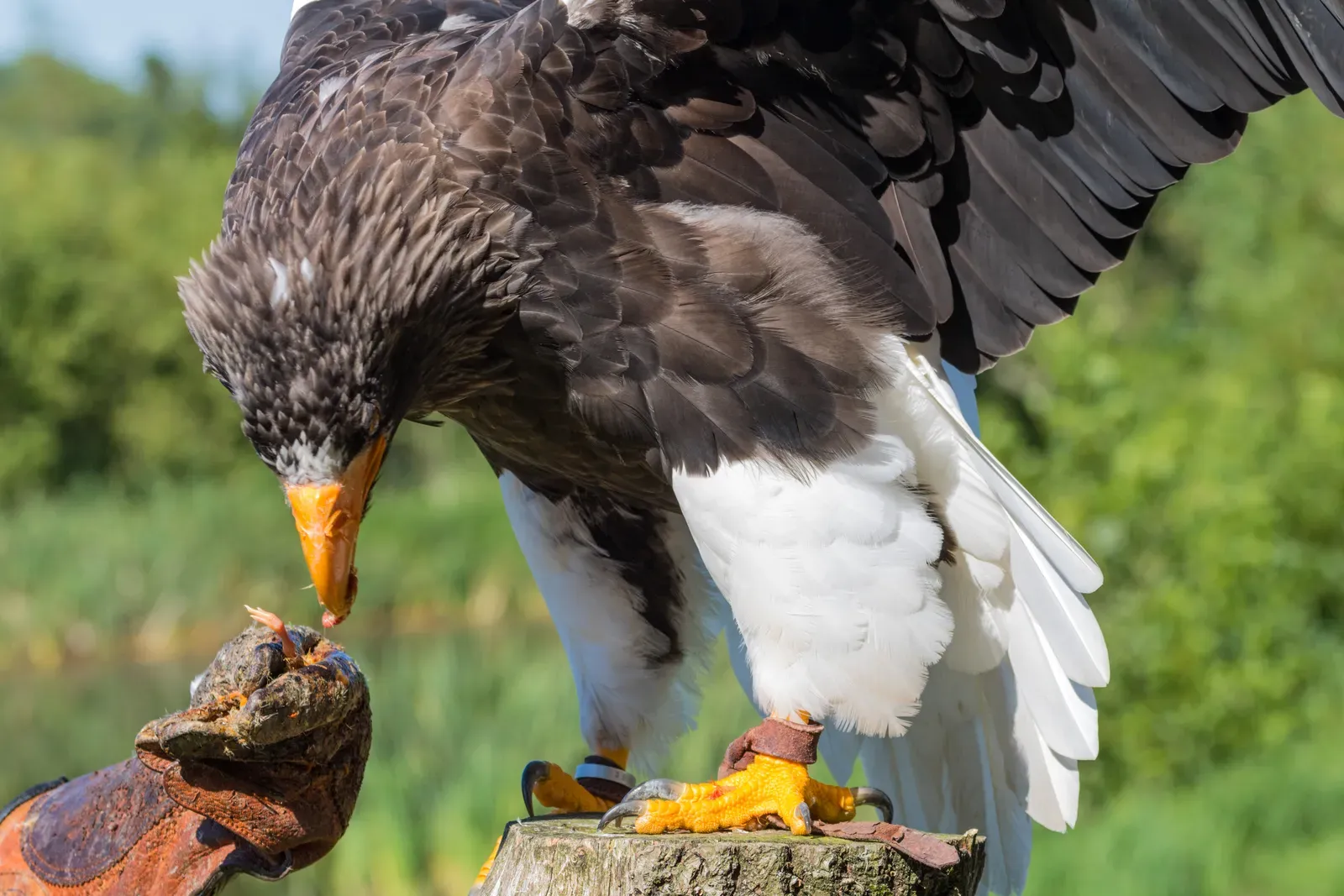
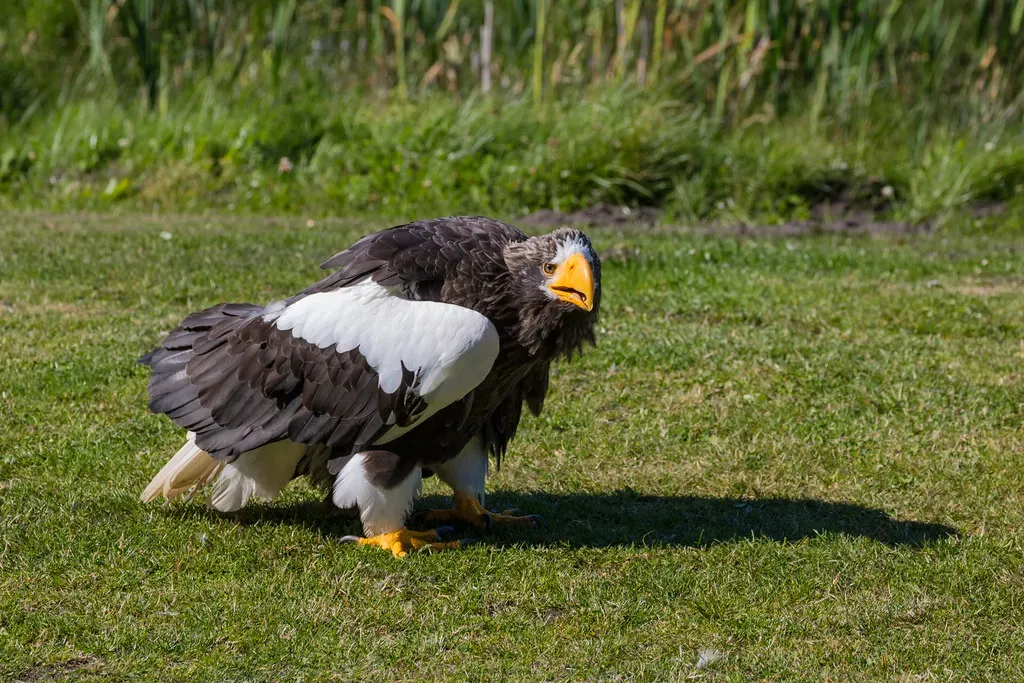
While the talons are not as long as some eagles, they are extremely powerful, and there is a documented case of a talon piercing through to the other side of a wildlife vet’s arm. Let that sink in. Not scratched. Not grabbed. Pierced straight through. The feet of this bird are essentially biological trap mechanisms designed to lock onto struggling, slippery prey with no possibility of escape.
As in all fish and sea eagles, the Steller’s Sea Eagle has spicules, which are bumpy waves all along the bottom of their feet, allowing them to hold fish that may otherwise slip out of their grasp. In all sea and fish eagles, the toes are relatively short and stout, with the bottom of the foot covered in spicules and the talons being relatively shorter and more strongly curved than in comparably sized eagles of forests and fields. A grip you simply cannot break free from.
Fact 5: It Is Named After a Legendary Explorer
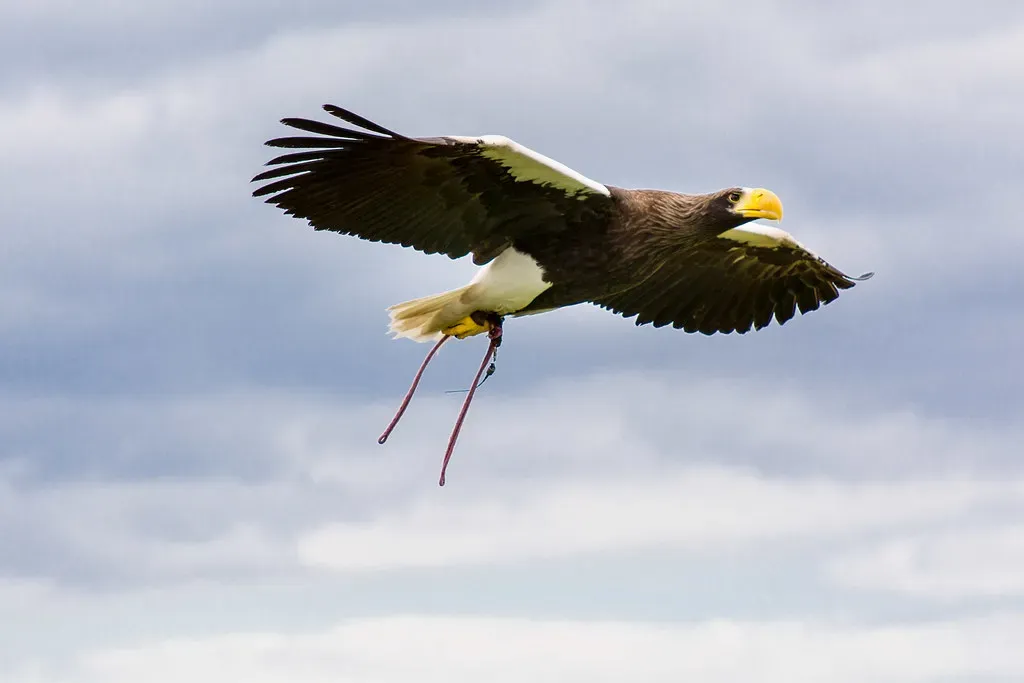
The Steller’s Sea Eagle was named for a noted 18th-century zoologist and explorer, Georg Wilhelm Steller. Steller was a remarkable figure in natural history. On his voyages, he discovered a number of animals, including six species of birds, one of which was named the Steller’s Sea Eagle. He also discovered the similarly named Steller’s Sea Cow, Steller Sea Lion, Steller’s Eider, and Steller’s Jay, among others.
In Mandarin, the eagle is called hǔtóu hǎidiāo, meaning “tiger-headed sea eagle.” Sea eagles are especially revered in Japan, where they’re known as O-washi, meaning “The Great Eagle.” Tiger-headed. The Great Eagle. Every culture that encountered this bird apparently felt compelled to give it a name that matched its presence.
Fact 6: Its Home Range Is Surprisingly Small and Remote
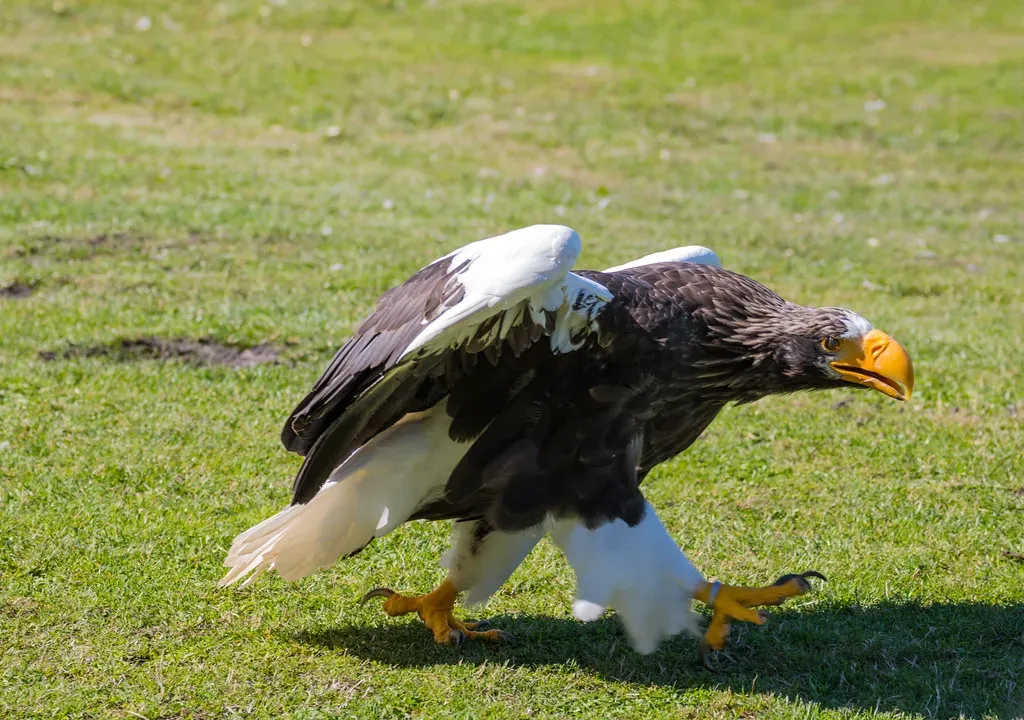
One of the rarest raptors in the world, very little is known about Steller’s Sea Eagles, due to the remote nature of their primary habitat, the rocky seacoasts and rivers of northeastern Siberia in Russia. Think about that for a moment. This is one of the most physically impressive birds on the planet, and we still do not know that much about its private life. It lives in places most humans will never travel to.
Steller’s Sea Eagles breed on the Kamchatka Peninsula, the coastal area around the Sea of Okhotsk, the lower reaches of the Amur River, and on northern Sakhalin and the Shantar Islands in Russia. The majority of birds winter in the southern Kuril Islands and Hokkaido, Japan. The Kamchatka Peninsula in Far Eastern Russia is known for its relatively large population of these birds, with about 4,000 of these eagles living there.
Fact 7: Salmon Is the Cornerstone of Its Diet
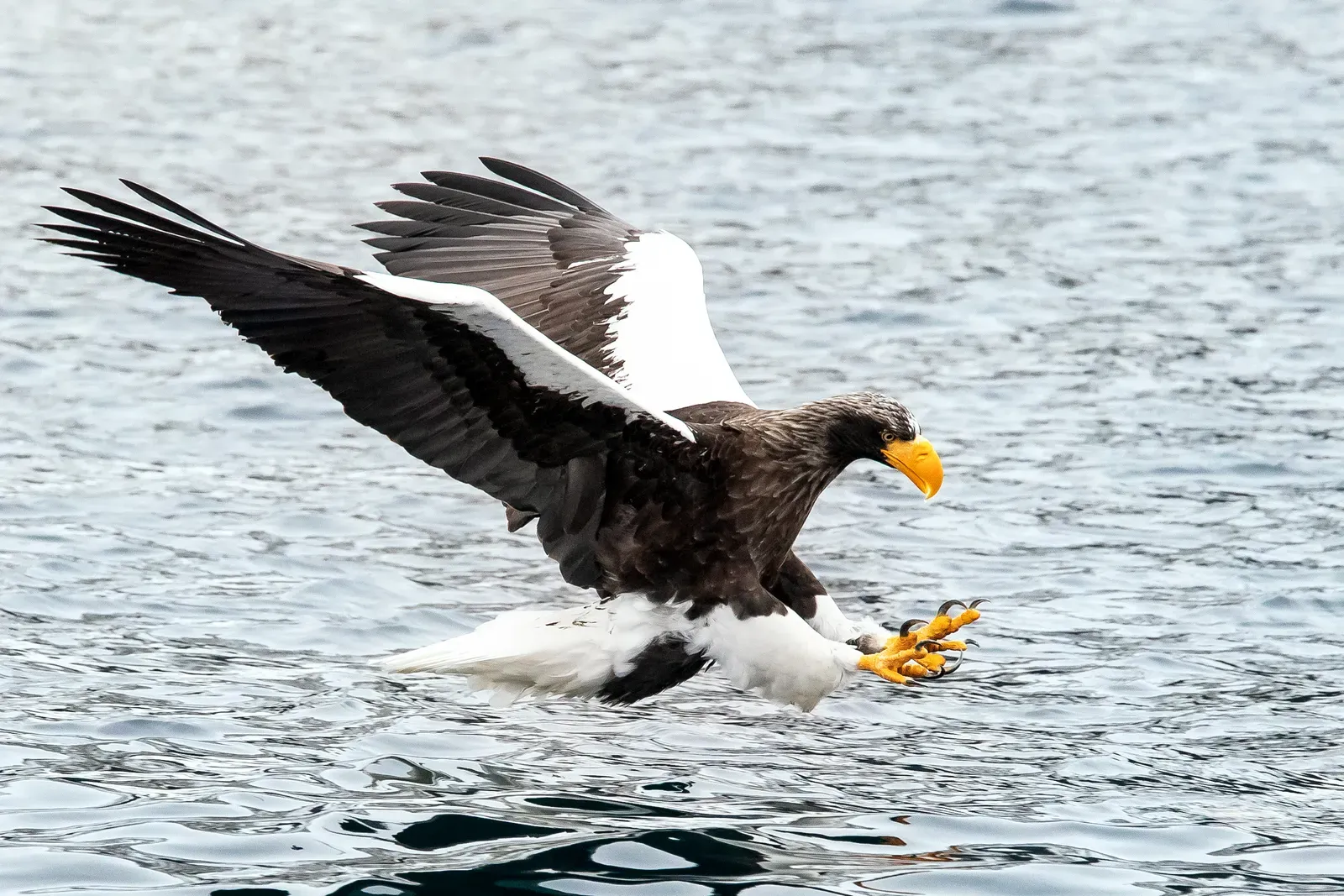
Steller’s Sea Eagles mainly feed on fish and are apex predators of their environment, with their favored prey in river habitats being salmon and trout of the Pacific salmon genus. There is something almost poetic about the world’s heaviest eagle depending on one of the world’s most iconic fish. The two are essentially locked together in an ancient ecological partnership.
Their favored prey are pink salmon and trout, and they have been recorded in groups of up to 700 eagles around the riverbanks when there is an abundant food supply. Seven hundred eagles gathered in one place. That image is hard to fathom. Yet the Steller’s Sea Eagle can be flexible in its dietary habits and is an eater of all things protein, dead or alive, including puffins, fish, crabs, and even deer carcasses. Opportunist to the core.
Fact 8: Its Vision Is Extraordinary, Even by Eagle Standards
Eagle vision can reach up four to five times further than a person with perfect vision. Eagles use both monocular and binocular vision, meaning they can use their eyes independently or together depending on what they’re looking at. Imagine being able to switch between a wide-angle lens and a telephoto lens in real time. That is essentially what this bird does every second of the hunt.
They also have superior color vision and can see ultraviolet light, which allows them to follow urine trails from prey. Like its other close relatives, Steller’s Sea Eagles use binocular vision to precisely pinpoint the location of their prey. Both eyes are set on the front of the bird’s head and focus on the same thing, providing depth perception, which is an important tool if you are diving more than 100 feet while trying to catch your food.
Fact 9: It Is in Serious Trouble, Despite Being Protected
Steller’s Sea Eagles are classified as vulnerable by the IUCN. They are legally protected, being classified as a national treasure in Japan and mostly occurring in protected areas in Russia, but many threats to their survival persist, mainly including habitat alteration, industrial pollution, and overfishing, which in turn decrease their prey source. Protection on paper does not always equal safety on the ground.
Recent heavy flooding, which may have been an effect of global climate change, caused almost complete nesting failure for the eagles nesting in Russian rivers due to completely hampering the ability of the parents to capture the fish essential to their nestlings’ survival. According to the IUCN Red List, the total population size of Steller’s Sea Eagle is around 4,600 to 5,100 individuals, including roughly 1,830 to 1,900 breeding pairs. Those are not comforting numbers for a species this spectacular.
Fact 10: Monogamous, Devoted, and Built to Last as a Parent
Breeding season for Steller’s Sea Eagles typically begins in late March or early April. Pairs are monogamous and often return to the same nesting site year after year. There is something surprisingly tender about that, given how fearsome this bird appears. They mate for life and return home faithfully, season after season, like they are maintaining a family estate.
Nests are massive structures made of sticks and lined with softer materials. They are built in large trees or on coastal cliffs. Females lay one to three eggs, which are white with a bluish tinge. Incubation lasts about 39 to 45 days, shared by both parents. Eaglets fledge around ten weeks of age. For such a powerfully built creature, the dedication it shows to raising its young is genuinely moving.
Conclusion: A Giant Worth Knowing and Worth Saving
The Steller’s Sea Eagle is one of those rare animals that exceeds every expectation the moment you learn about it. The size, the strength, the sheer physical drama of its presence in the wild. It is the kind of creature that makes you feel grateful the natural world still contains something this extraordinary.
It is hard to say for sure what the future holds for this species. The numbers are fragile, the threats are real, and much of its world remains poorly understood. What is certain is that losing this bird would mean losing something that can never be replaced. A titan of the sky that has ruled the coasts of northeastern Asia for millions of years deserves more than a slow, quiet disappearance.
Next time you think of iconic eagles, spare a thought for the one that actually claims the crown. What would you have guessed weighed more, the bald eagle or the Steller’s? The answer might surprise a few people still.
