
Ever wondered what happens when the sun dips below the horizon? While most of us settle in for the evening, a secret society of creatures emerges from the shadows, ready to claim the night as their own. The natural world transforms after dark into something entirely different, a hidden stage where the most extraordinary performers take center stage. You might think you know nocturnal animals, sure, owls and bats come to mind immediately. Yet there exists a vast collection of nighttime wanderers far more bizarre than anything you’ve encountered in a nature documentary.
These creatures have evolved in ways that seem almost alien, developing abilities that stretch the boundaries of what we typically associate with survival. I think what makes them truly captivating is how they’ve turned darkness from a limitation into their greatest advantage. Let’s be real, the nocturnal world is weirder and more wonderful than most people realize. So, be surprised by what lurks beyond your porch light, and prepare to discover ten remarkable animals that rule the night in ways you never imagined.
1. Aye-Aye: Madagascar’s Midnight Oddity
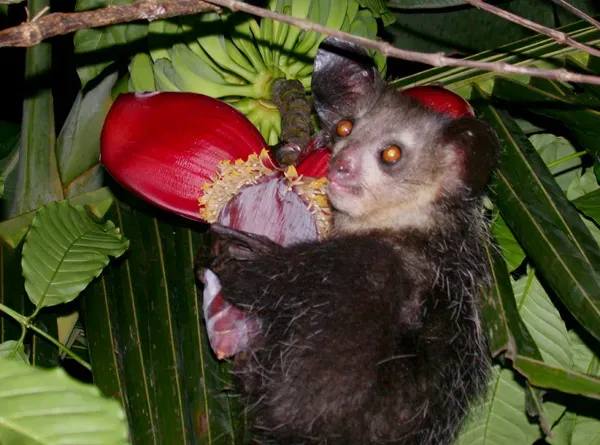
The Aye-Aye is a highly unusual and rare primate native to Madagascar. Honestly, the first time I saw one in photographs, I couldn’t believe it was real. Recognised for its distinctive appearance, the Aye-Aye is characterised by its large, bat-like ears, bushy tail, and prominent eyes, perfectly suited for its nocturnal lifestyle.
Here’s the thing, though. Perhaps its most unique feature is its elongated middle finger, which it uses to tap on tree bark and locate insect larvae hiding within. They tap on wood, listening for echoes that reveal larvae, highlighting a remarkable adaptation for nocturnal foraging. Think of it as nature’s version of echolocation, but conducted through percussion instead of sound waves.
Once detected, it uses this finger to extract the larvae, making it one of nature’s most skilled foragers. Locals in Madagascar sometimes fear this creature, associating it with bad omens. Many local Malagasy people believe the aye-aye is a harbinger of misfortune, bad for crops, fertility or even causing the death of a villager; this means they’ve been persecuted and killed, and are now listed as Endangered. It’s hard to say for sure, but superstition may pose a greater threat to this animal than habitat loss.
Although it may appear somewhat eerie due to its odd features, the Aye-Aye plays a crucial role in maintaining the ecological balance of Madagascar’s forests. Without this peculiar primate, insect populations could spiral out of control.
2. Tarsier: The Bug-Eyed Hunter
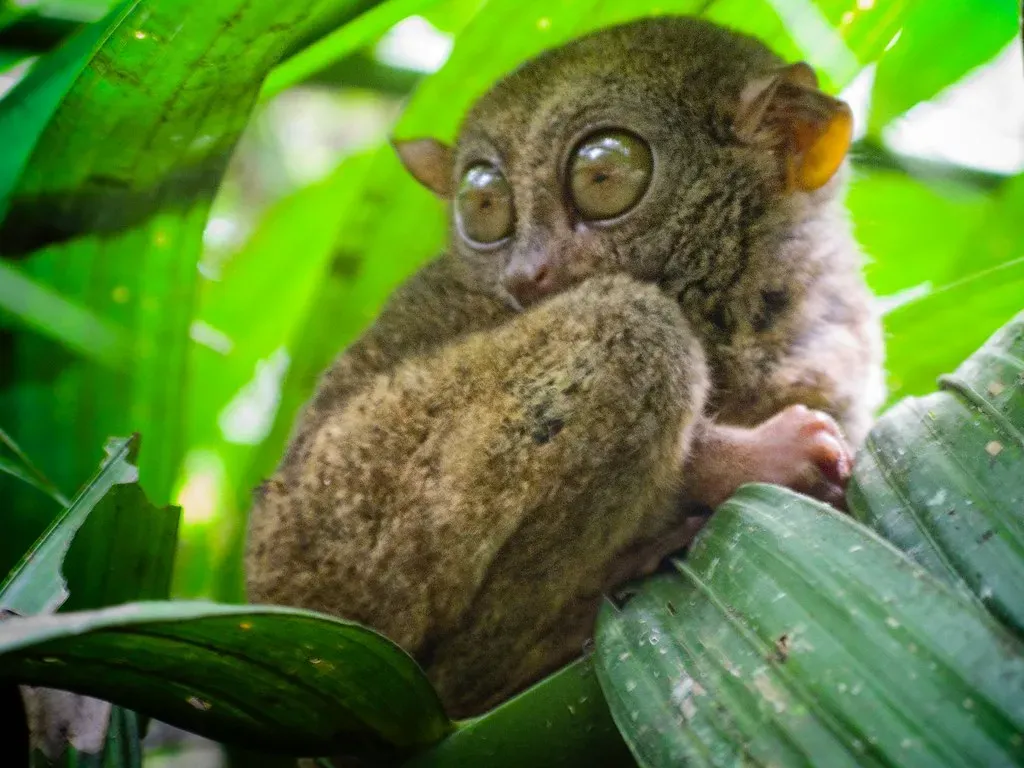
Tarsiers are tiny primates with enormous eyes, found in Southeast Asia, particularly the Philippines. Their eyes are so large that they cannot move them, so they turn their heads nearly 180 degrees to look around. Imagine having eyes that are bigger than your brain. That’s the reality for these palm-sized hunters.
Tarsiers are small primates distinguished by their enormous eyes, which are essential for their nighttime hunting activities. Found in Southeast Asia, these creatures have large visual fields that enable them to detect movement and pounce on their prey with precision. Their vision is so acute that they can spot a single insect moving in near-total darkness.
Tarsiers are exceptional jumpers, leaping from tree to tree to catch insects, their primary diet. They are nocturnal and spend the daylight hours hiding in dense vegetation. Tarsiers are unique in the primate world due to their complete carnivorous diet, feasting on insects and small animals.
What truly sets them apart is their silent approach. Unlike most primates, tarsiers don’t announce their presence with calls or chatter while hunting. They move like ghosts through the branches, striking with lightning speed before their prey even knows danger is near.
3. Kinkajou: The Honey Bear of the Canopy
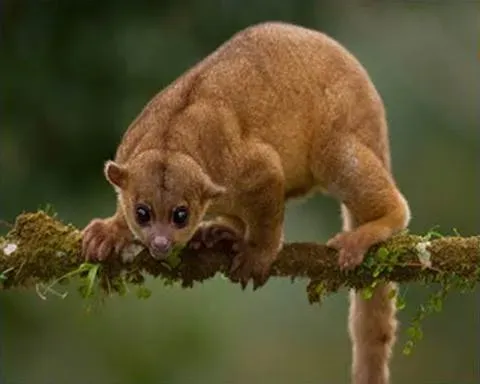
The kinkajou is a small, arboreal mammal native to Central and South American rainforests. It has a long, prehensile tail that helps it move effortlessly through trees. Also known as “honey bears” due to their fondness for nectar, kinkajous use their prehensile tails for balance and maneuverability. This tail essentially acts as a fifth limb.
Its big eyes are adapted for night vision, allowing it to see in the dark. Kinkajous are frugivores, mainly eating fruit, but they also enjoy nectar and insects. They possess an incredibly long tongue that can extend several inches, perfect for reaching deep into flowers or beehives.
As gregarious creatures, they roam the canopies in groups at night, playing and feeding on fruit and insects. Their playful nature makes them seem almost mischievous as they swing through the trees. Despite their cute appearance, they are skilled climbers and can be quite elusive in the wild.
The kinkajou’s role as a pollinator shouldn’t be underestimated. As they feed on nectar throughout the night, they inadvertently transfer pollen between flowers, supporting the rainforest’s incredible biodiversity. Their contribution to the ecosystem is massive compared to their small size.
4. Slow Loris: The Venomous Night Crawler
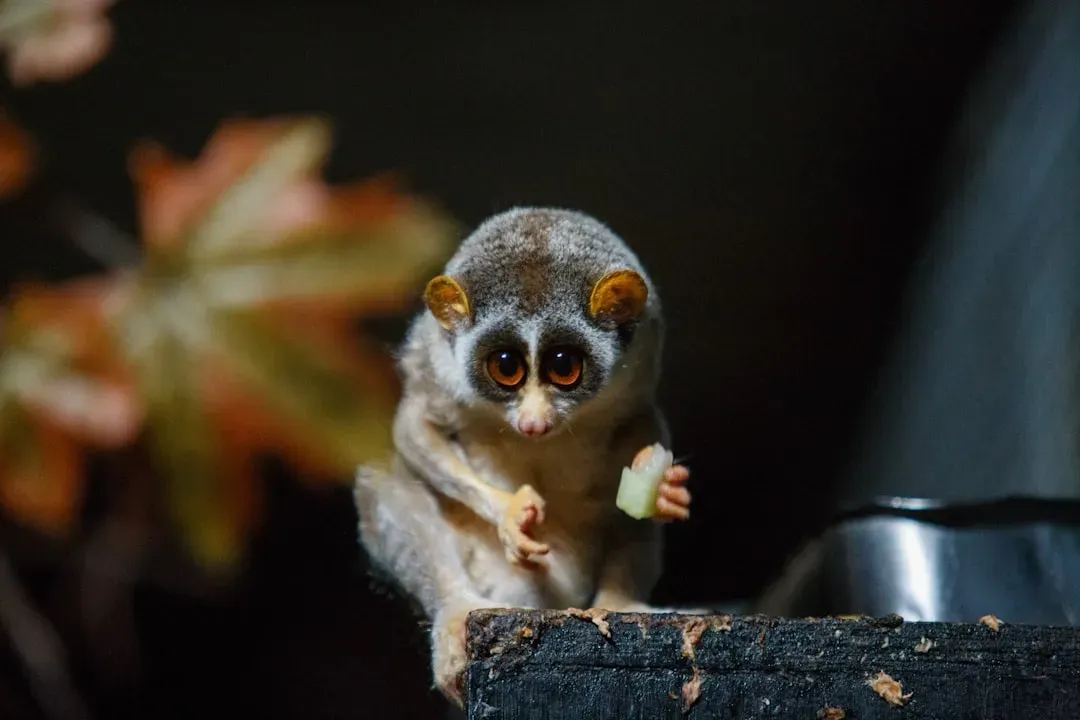
The slow loris is a small, nocturnal primate found in Southeast Asia. It has large, round eyes that are perfectly adapted to seeing in low light. Let’s be real, they look adorable with those enormous peepers, but don’t let appearances fool you.
Slow lorises move deliberately and can remain motionless for hours, blending into the trees. They have a toxic bite, which is rare among mammals, used to defend themselves from predators. It has a venomous bite, because it licks up a toxin secreted by its own glands. This defense mechanism is incredibly unusual in the primate world.
Their slow, deliberate movements serve multiple purposes. Besides conserving energy, this strategy makes them nearly invisible to predators scanning for quick movements. When they do strike at prey, however, their speed increases dramatically.
Unfortunately, they are often captured for the illegal pet trade, which threatens their survival in the wild. The cuteness that makes them desirable as pets is precisely what endangers them. Their specialized nocturnal lifestyle cannot be replicated in captivity, and their venom glands are often cruelly removed.
5. Pangolin: The Armored Insectivore
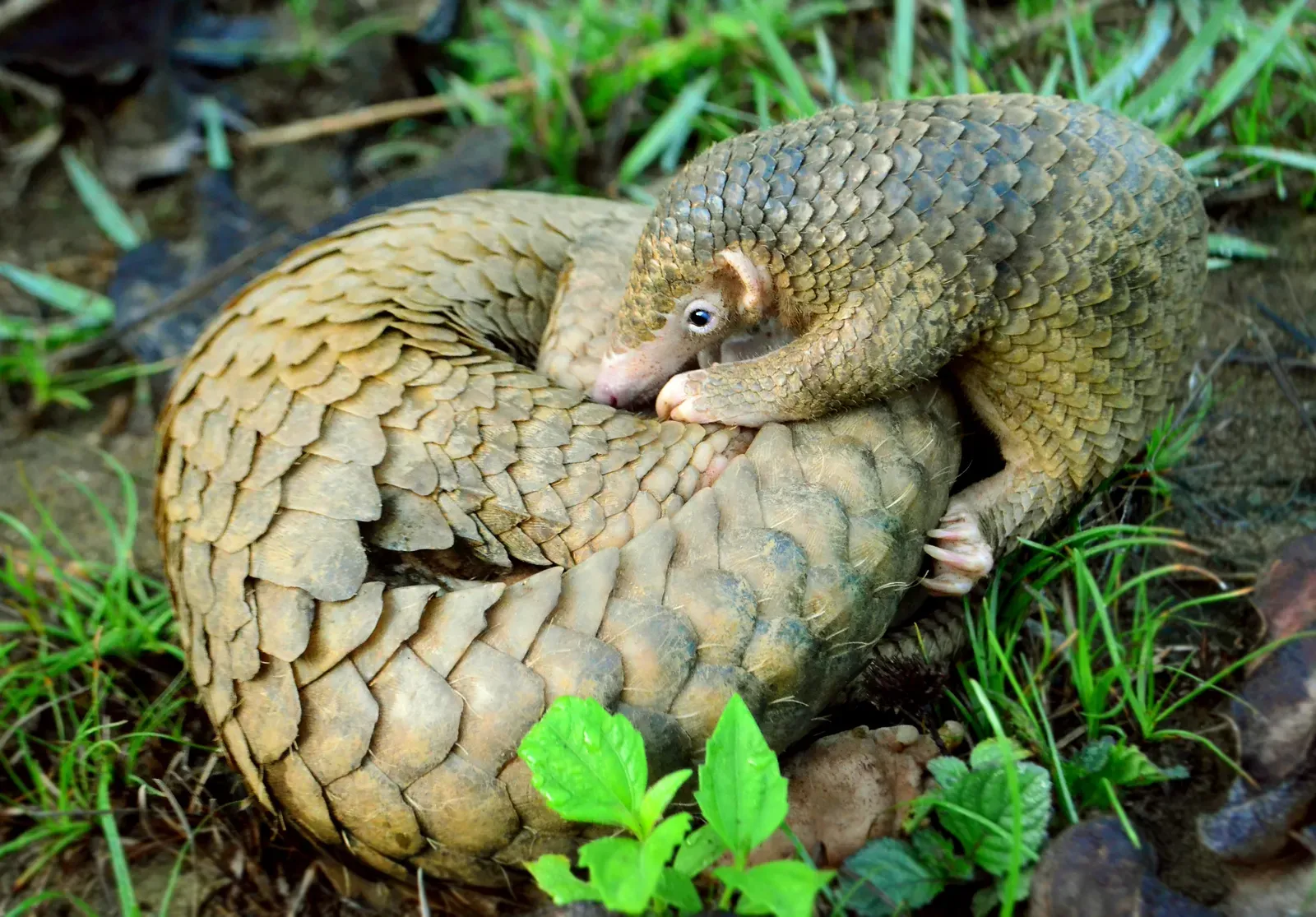
Pangolins are solitary, elusive creatures with bodies covered in protective keratin scales. These scales are made of the same material as human fingernails, yet they form an almost impenetrable armor. When threatened, pangolins curl into a tight ball, presenting only scales to any potential attacker.
They are primarily nocturnal, emerging after sunset to hunt for ants and termites. Their long, sticky tongues can extend to extraordinary lengths, sometimes longer than their entire body. A single pangolin can consume thousands of insects in one night.
Pangolins have no teeth, relying instead on powerful stomach muscles and ingested stones to grind up their food. Their sense of smell is exceptional, allowing them to locate underground insect nests with pinpoint accuracy. They dig with powerful claws that can tear through hardened earth.
Sadly, pangolins are among the most trafficked animals on the planet. Pangolin meat is considered a luxury product in some countries and their scales are used as an ingredient in traditional medicines. Their nocturnal habits make them vulnerable to poachers who hunt under cover of darkness.
6. Nightjar: The Invisible Bird
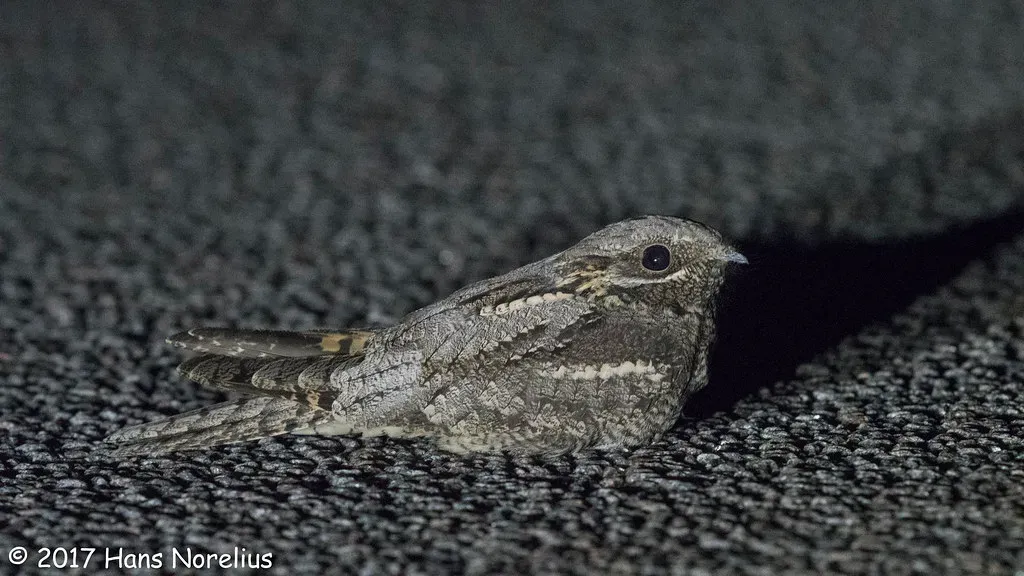
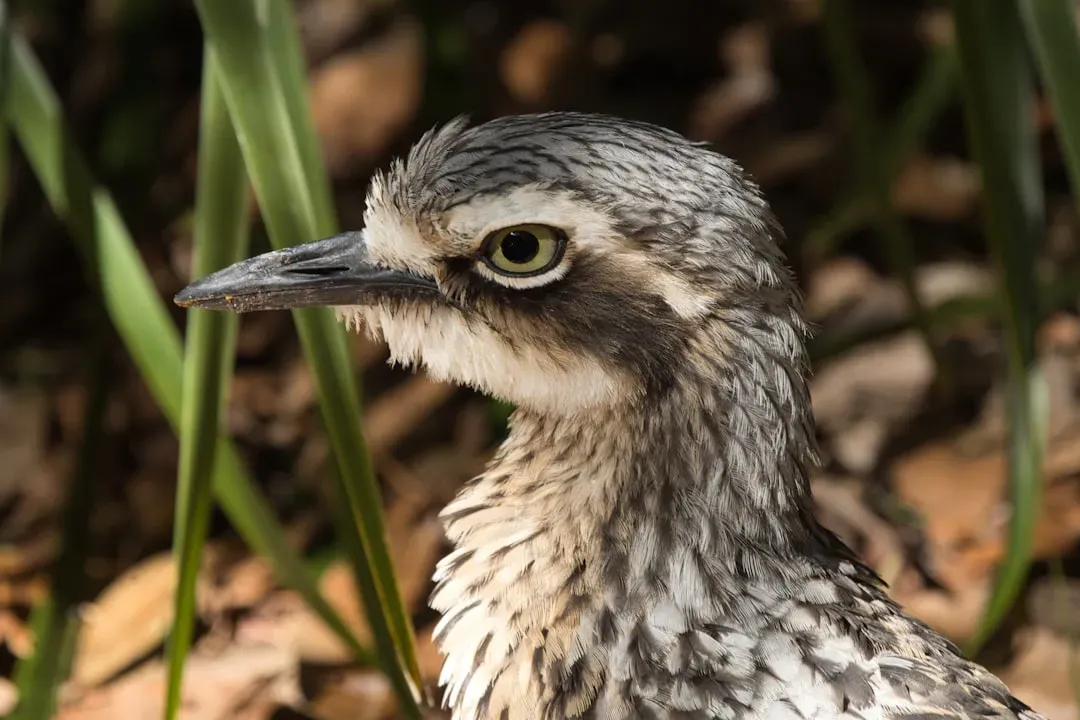
The nightjar is a nocturnal bird found across various continents, including Europe, Africa, and the Americas. Its plumage is cryptically colored, blending seamlessly with the forest floor or tree branches. Finding one during the day is like searching for a ghost that doesn’t want to be found.
Nightjars have wide mouths and sharp, bristle-like feathers around their beaks, perfect for catching insects mid-flight. Their calls are haunting and often echo through the night, making them easier to hear than to see. Some cultures have attached supernatural significance to their eerie vocalizations.
During the day, they remain motionless, relying on their camouflage to avoid predators. Like many nocturnal animals, nightjars are the object of superstitious beliefs. In the past, nightjars were known as “goatsuckers” due to the belief that they fed on the milk of livestock. Of course, this myth has been thoroughly debunked.
Their flight is remarkably silent and erratic, making them effective aerial hunters. They patrol territories at dusk and throughout the night, snapping up moths and beetles with remarkable precision. Their camouflage is so effective that you could stand mere feet away and never notice them.
7. Frogmouth: The Master of Disguise
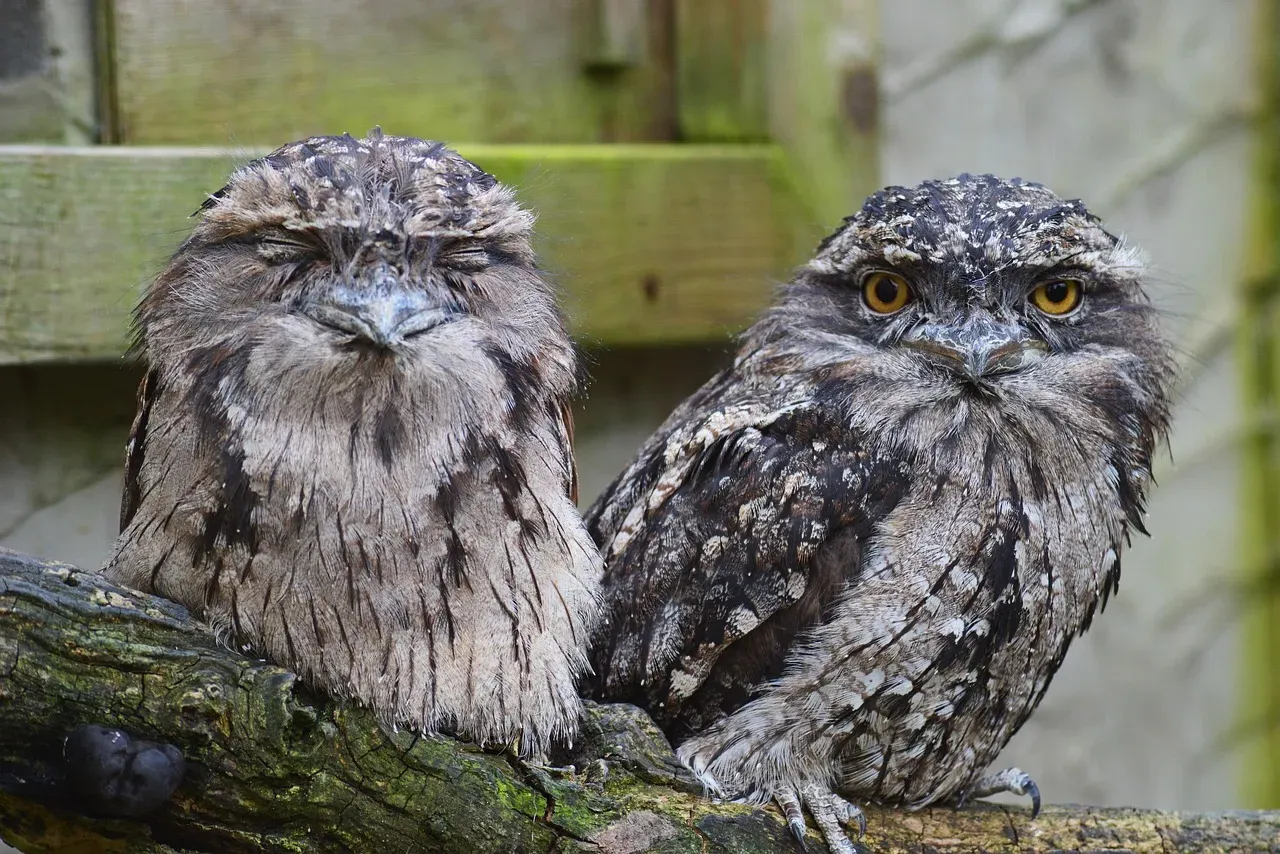
Frogmouths, often mistaken for owls, are nocturnal birds native to Australia and Southeast Asia. During the day, they rely on their outstanding camouflage abilities, resembling broken tree branches while resting motionless. Their mimicry is so convincing that even experienced birdwatchers can walk right past them.
At night, frogmouths become active hunters, using their wide mouths to catch a variety of insects mid-flight. Their enormous gape is one of their defining features, allowing them to engulf prey that would be too large for other birds of similar size.
Unlike owls, frogmouths don’t have powerful talons for gripping prey. Instead, they rely on their impressive mouths to snatch insects directly from the air or pluck them from foliage. Their hunting strategy is all about patience and timing.
They produce soft, repetitive calls during the night that sound almost mechanical. These vocalizations help mated pairs stay in contact while hunting in separate territories. Their bond with their partner is remarkably strong, often lasting for life.
8. Jerboa: The Desert Kangaroo Mouse

The jerboa is a small rodent found in the deserts of North Africa and Asia, known for its long legs and large ears. It has a distinctive hopping gait, similar to a kangaroo, which helps it escape predators. Watching one bound across the sand is truly mesmerizing, almost comical in its exaggerated movements.
Jerboas are nocturnal and emerge from their burrows at night to forage for seeds and insects. Their large ears provide excellent hearing, while their long tail helps them balance while jumping. Those ears also serve another critical function, radiating excess body heat in the scorching desert environment.
Jerboas have adapted well to the harsh desert environment, surviving with minimal water. They extract nearly all the moisture they need from the seeds and plants they consume. Their kidneys are incredibly efficient, producing highly concentrated urine to conserve every drop of water.
Their powerful hind legs allow them to leap several feet in a single bound, a crucial escape mechanism when threatened by snakes or owls. During the hottest part of the day, they seal themselves inside their burrows, creating a microclimate that’s significantly cooler than the surface.
9. Aardvark: The Nocturnal Excavator
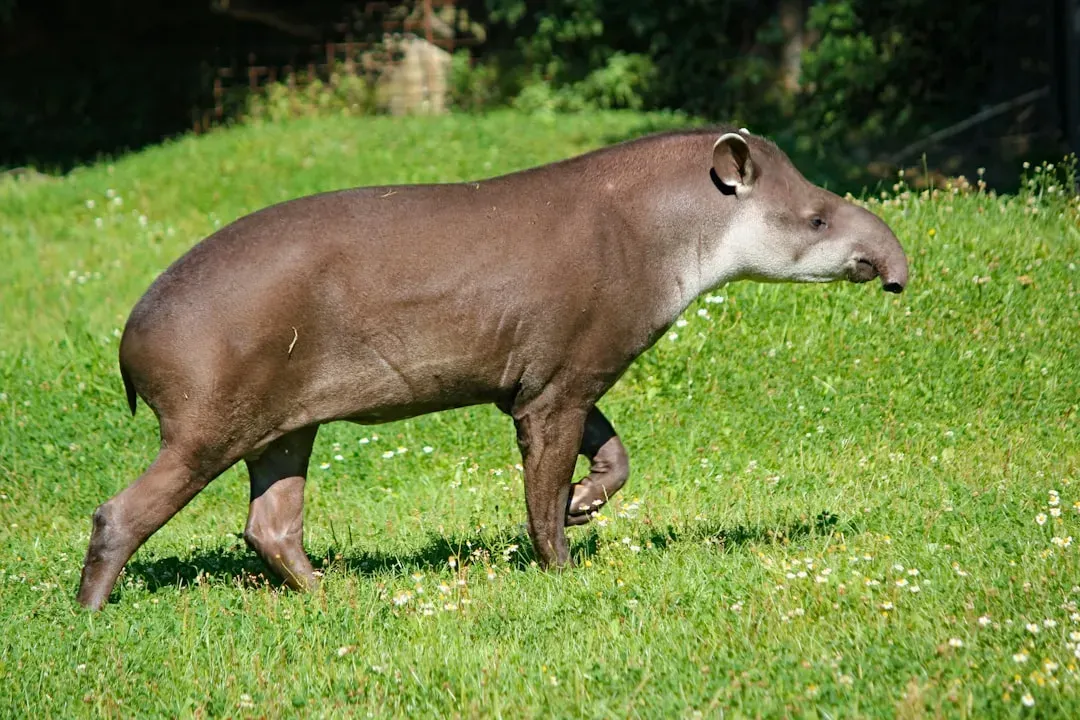
The aardvark is a nocturnal mammal found throughout much of sub-Saharan Africa (the area south of the Sahara Desert). It eats ants and termites, which it locates using its sensitive nose and hearing. Their name literally means “earth pig” in Afrikaans, though they’re not related to pigs at all.
The aardvark uses its powerful claws to break open insect nests and also to dig the burrows in which it lives. These long-snouted insectivores dig through the dirt in search of ants and termites, which they slurp up with long, sticky tongues. A single aardvark can consume tens of thousands of insects in one night.
Their hearing is so acute they can detect the sound of termites moving underground. Once they’ve located a nest, they dig with astonishing speed, their claws tearing through packed earth like it’s made of paper. Their thick skin protects them from angry insect bites.
Aardvarks are solitary creatures, only coming together briefly to mate. The extensive burrow systems they create don’t go to waste, other animals often move into abandoned aardvark homes. Their ecological contribution extends beyond insect control to providing shelter for numerous other species.
10. Night Monkey: The Only True Nocturnal Primate
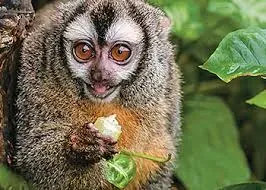
Also known as owl monkeys, these are the only truly nocturnal monkeys in the world. Native to Central and South America, night monkeys have evolved large eyes to see in the dark and are active primarily at night. Among all primates, they stand completely alone in their commitment to the nighttime lifestyle.
They use vocalizations and scent marking to navigate their environment and communicate. Many nocturnal species, like night monkeys, rely on vocalizations to stay in touch. Their calls can echo through the forests of Central and South America, helping family members find each other or warn off rivals.
Night monkeys live in small family groups, typically consisting of a mated pair and their offspring. They’re remarkably social for nocturnal creatures, spending considerable time grooming each other and playing. Their social bonds are critical for survival in the dangerous darkness of the jungle.
Their diet consists mainly of fruits, leaves, and insects, though they adapt based on seasonal availability. Unlike diurnal monkeys, they face less competition for food resources since most other primates are asleep. This niche specialization has allowed them to thrive in environments where other monkeys struggle.
Conclusion: Embracing the Hidden World
The nocturnal realm reveals nature’s incredible capacity for adaptation and specialization. These ten animals represent just a fraction of the extraordinary biodiversity that awakens after sunset. From venomous primates to armored insectivores, each species has carved out its own unique niche in the darkness.
What strikes me most is how these creatures have turned apparent disadvantages into strengths. Limited visibility becomes an opportunity for camouflage. Nighttime heat becomes a chance to avoid daytime predators. The absence of light pushes evolution toward enhanced hearing, smell, and specialized vision.
Yet these remarkable animals face unprecedented challenges. Habitat destruction, light pollution, and climate change all threaten the delicate balance of nighttime ecosystems. Light pollution, in particular, disrupts the natural behaviors of nocturnal animals. Our expanding cities create artificial daylight that confuses navigation, disrupts breeding patterns, and fundamentally alters ecosystems that evolved over millions of years.
Understanding these creatures is the first step toward protecting them. Each species plays an irreplaceable role in maintaining ecological balance, from pollinating plants to controlling insect populations. When we lose nocturnal animals, we lose far more than just individual species.
The night holds mysteries we’re only beginning to understand. These ten fascinating animals remind us that our planet harbors wonders in every shadow, creatures whose existence challenges our assumptions about what’s possible. Next time darkness falls, remember that an entire hidden world is stirring to life just beyond your doorstep. What do you think about these incredible nocturnal creatures? Which one surprised you the most?
