
Most people step outside expecting to see the usual suspects. A robin here, a blue jay there. Maybe a fat mourning dove hogging the feeder. What they do not expect is to suddenly be staring at a bird that has no business being in their neighborhood, let alone their backyard. Yet it happens more than you might think.
In 2026, more than one million people around the world stepped outside to observe and report birds as part of the Great Backyard Bird Count, marking a new record for the number of participants. What stunned many of them was not the common visitors. It was the rare, baffling, beautiful ones that made people grab their binoculars and stare in disbelief. Let’s dive in, because some of these birds are almost too remarkable to believe.
1. The Vermilion Flycatcher: A Flash of Fire on Your Fence
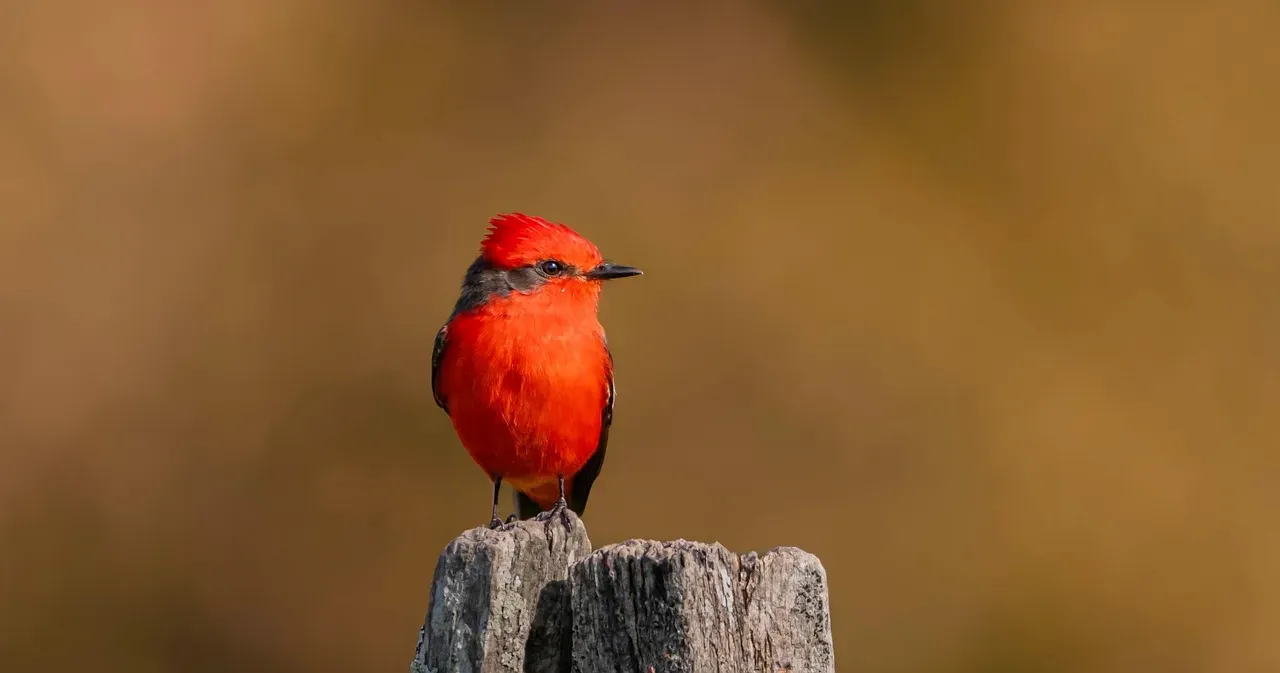
Imagine sitting in your backyard on a quiet morning and suddenly catching a burst of brilliant flame-red perched on a shrub nearby. That is honestly the best way to describe first-time encounters with the Vermilion Flycatcher. Most flycatchers are drab, but the male Vermilion Flycatcher is a brilliant exception, usually seen perched fairly low in open areas near water, gently dipping its tail like a phoebe.
Here is the thing, this bird is not just restricted to the desert Southwest. Like many members of the tyrant flycatcher family, Vermilion Flycatchers are prone to wander, with records of this species way out of their normal range, as far afield as Minnesota, Maryland, and British Columbia. If you live beyond its core range, spotting one in your garden would be genuinely extraordinary. The name even gives it away, coming from the ancient Greek genus name meaning “fire-headed.”
2. The Kirtland’s Warbler: A Conservation Comeback Story
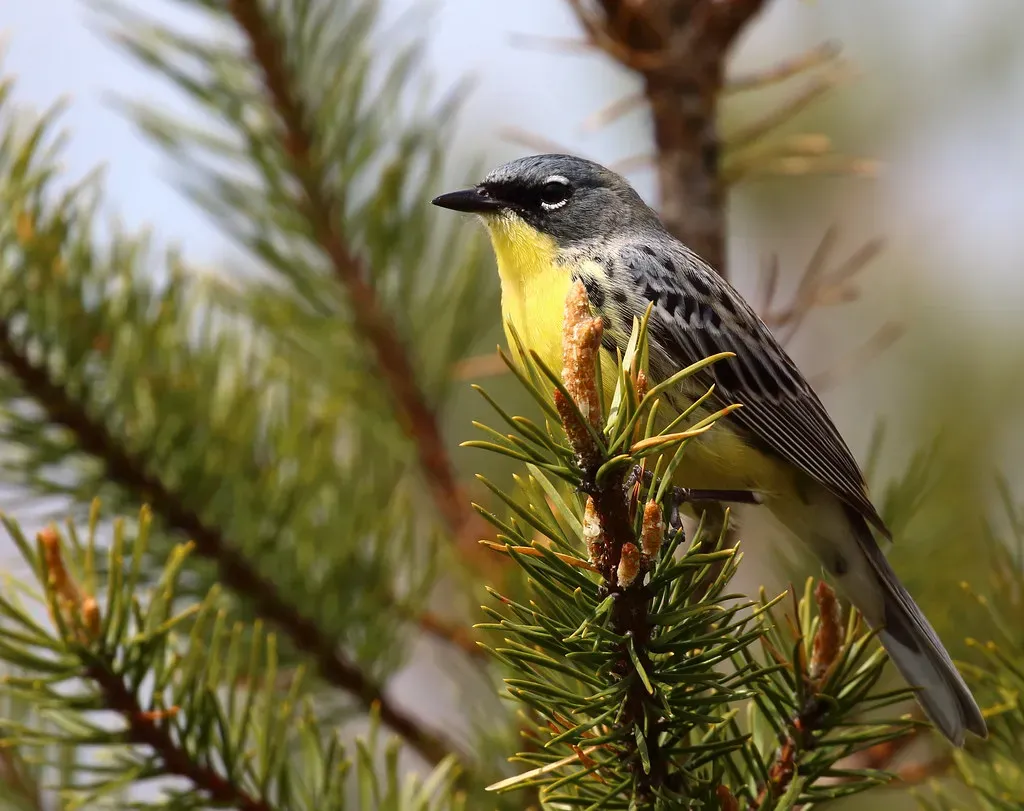
The Kirtland’s Warbler is a neat gray-and-yellow bird and one of the rarest songbirds in North America, a true habitat specialist that breeds only in young jack pine forests in Michigan and adjacent parts of Wisconsin and Ontario. Spotting one on migration, briefly passing through a residential area, would be the kind of event that gets your heart racing.
In the 1970s and 1980s, the number of singing male Kirtland’s Warblers had dipped below 200 birds. Habitat loss was the leading factor in the species’ steep decline, but collisions with windows and human-made structures also posed additional threats. The story of this bird is one of near-loss and careful recovery, and that makes every sighting feel genuinely emotional. The fact that it even exists in strong numbers today is a testament to what conservation can achieve when people genuinely care.
3. The European Robin: A Transatlantic Wanderer
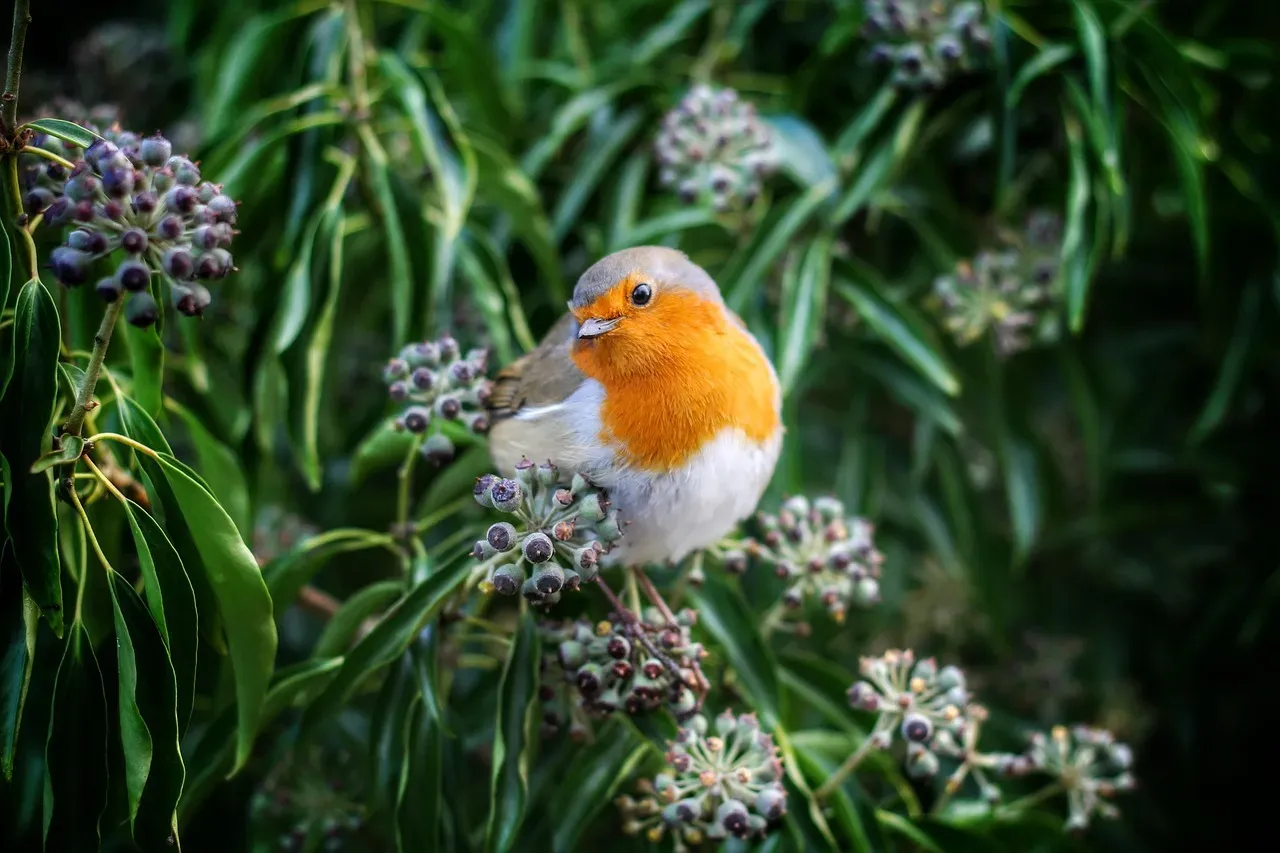
This one sounds outright impossible. A robin from Europe showing up in Canada or the eastern United States. Yet it keeps happening. A Quebec-first European Robin was spotted in Montreal in early 2026, only around the fourth record of this species in the ABA Area, following birds in Pennsylvania in 2015, Florida in 2018, and New Jersey in 2023. Let that sink in for a moment.
One wouldn’t necessarily expect this species to be a regular vagrant to North America, but the many dozen records from both the Azores and Iceland suggest the tantalizing possibility. Tiny and rotund with that iconic rusty-orange breast, the European Robin would be utterly out of place yet completely unmistakable if it showed up in your backyard. Some backyard birders have got very lucky indeed.
4. The Painted Bunting: The Rainbow That Lands in Shrubs
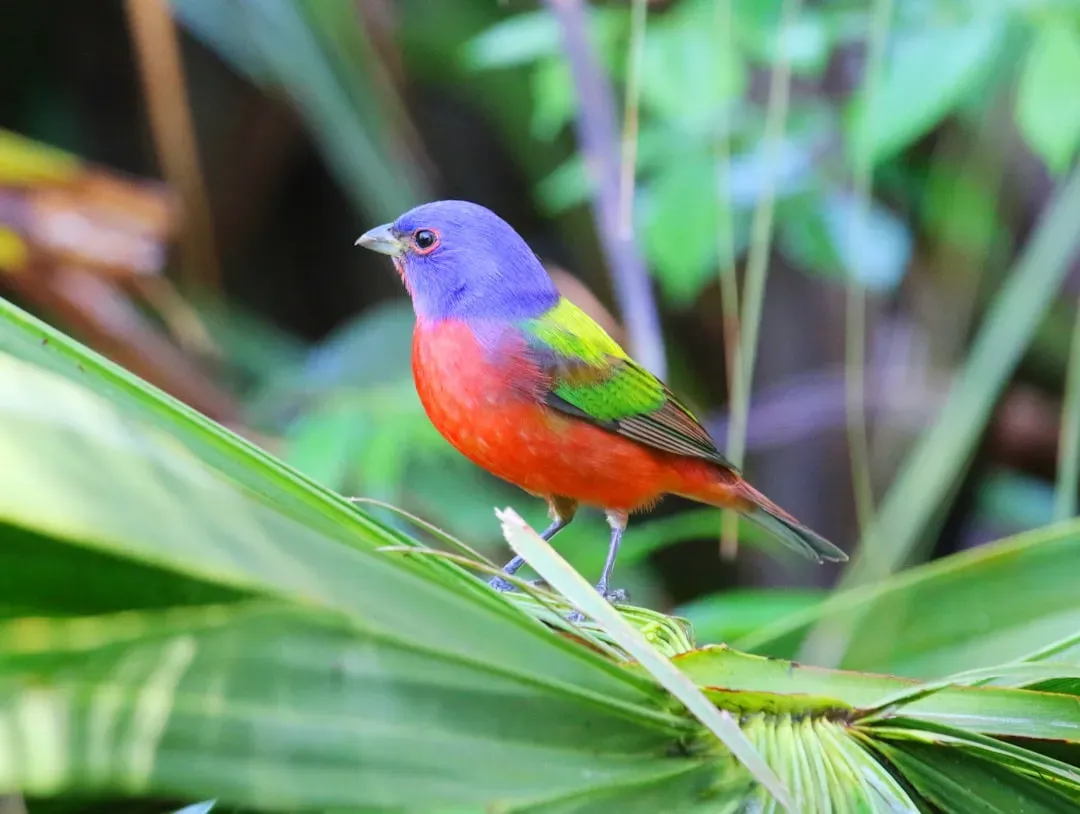
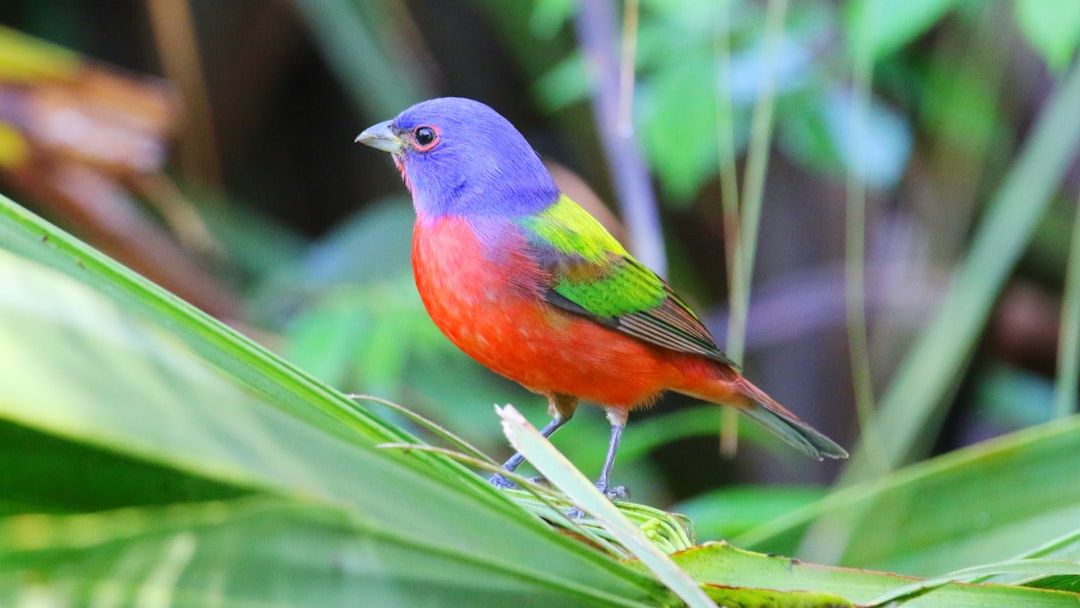
Honestly, the first time anyone sees a male Painted Bunting, they think something has gone wrong with their eyes. The bird looks photoshopped. A brilliant blue head, red underparts, and a lime-green back make it look like it escaped from a children’s painting. It is one of North America’s most breathtaking small birds, and it does occasionally show up well outside its usual southeastern and south-central range.
Notable rarities in the birding community have included a Painted Bunting recorded in Oregon’s Douglas County, a state where it has no business turning up at all. Think of it like finding a parrot sitting on your mailbox in Maine. Completely shocking, completely real. Setting out native seed feeders with millet is your best invitation if you live in or near the bird’s range.
5. The Steller’s Sea-Eagle: The Giant That Crossed a Continent
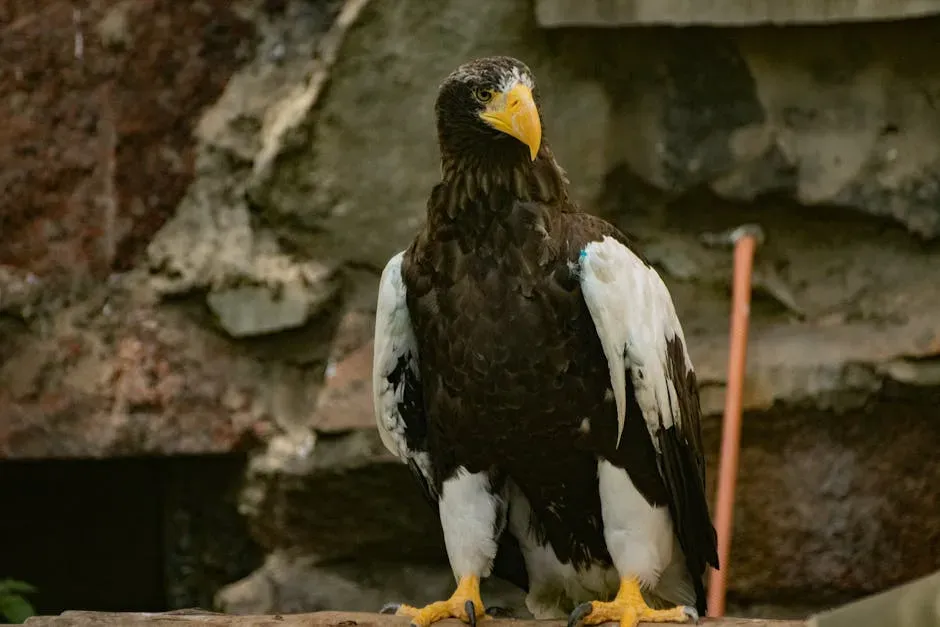
Few bird stories in recent memory have captured the birding world’s imagination quite like the Steller’s Sea-Eagle. It is an awe-inspiring bird, about a foot longer and taller than an adult Bald Eagle and as many as five pounds heavier, with a massive golden bill that looks like pirate treasure. There are only about 4,000 of this vulnerable species left in the wild. And one of them decided to tour North America.
Native to the rugged coastlines of Northeast Asia, the Steller’s Sea-Eagle’s core breeding range is centered on the Kamchatka Peninsula in Russia. During winter, many migrate south to the Japanese island of Hokkaido and the Kuril Islands. Yet rare vagrant individuals have famously appeared across North America, in places as distant as Alaska, Texas, and Maine, sparking massive interest from the birding community. A backyard sighting remains near-impossible, but if you live near a large body of water on the Atlantic coast? Never say never.
6. The Varied Thrush: The Stranger From the Pacific Northwest
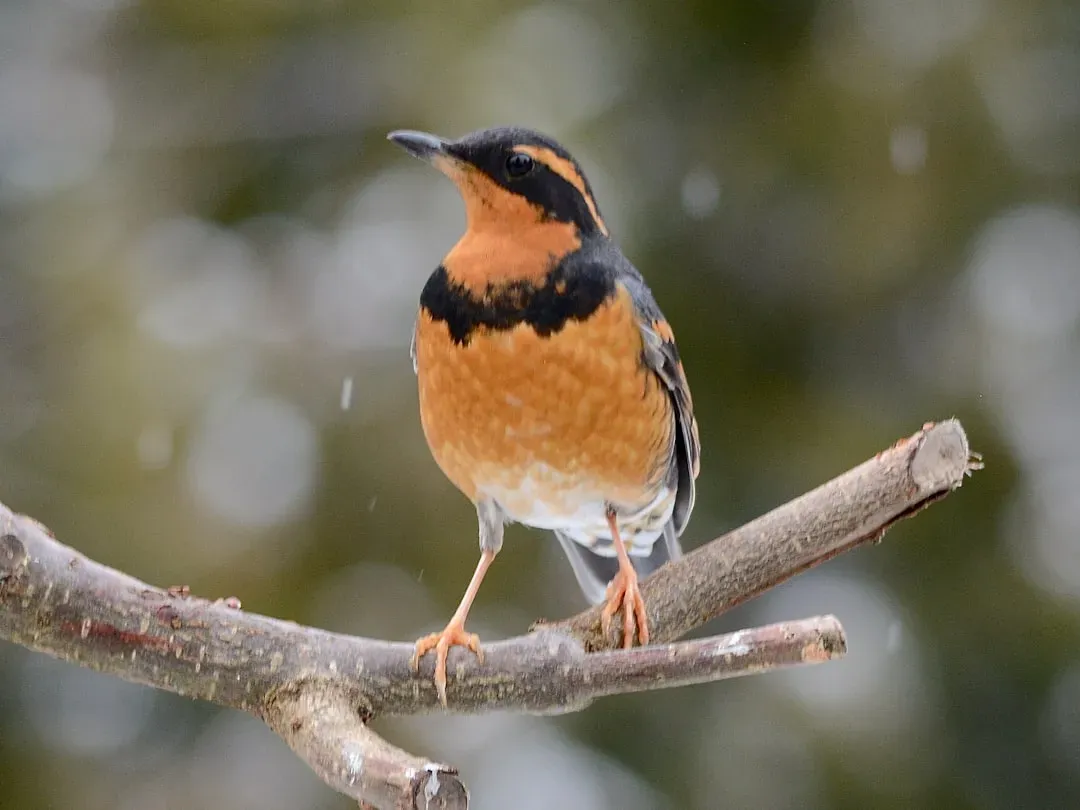
The Varied Thrush looks like someone took a robin, gave it an artistic makeover, and added an orange eyebrow stripe for good measure. It is one of the most underrated-looking birds in North America. Native to the wet, mossy forests of the Pacific coast, from Alaska down to northern California, this bird is almost ethereal in its appearance. Most people in the East have never even heard of it.
It is possible to see one on its breeding grounds in wet forests before it migrates south. During autumn, Varied Thrushes usually head to lower levels and can be spotted in parks or even gardens. It’s hard to say for sure how often they wander, but documented cases appearing far outside their typical Pacific Northwest range are well established. Stock your garden with fruit-bearing plants in late autumn, and there’s a slim but real chance one might drop in to surprise you.
7. The Tufted Duck: A Diving Duck Far From Home
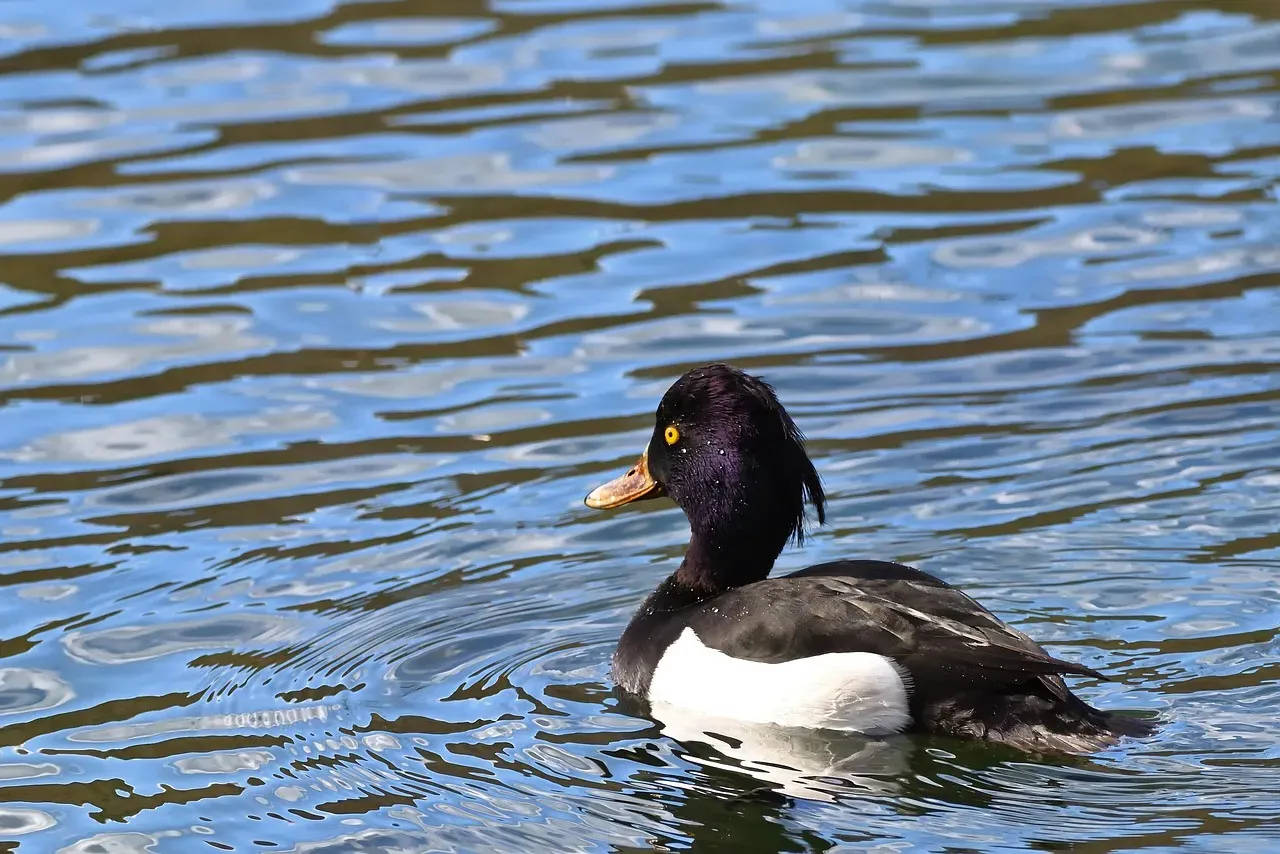
The Tufted Duck is a neat little diving duck, deeply familiar to birdwatchers across Europe, Africa, and Asia. Seeing one in North America is another matter entirely. The Tufted Duck, normally seen in parts of Africa, Europe, and Asia, was seen in various places in the United States and Canada during the 2025 Great Backyard Bird Count, delighting North American birders. Something about that is just wildly exciting, isn’t it?
The male sports a glossy black and white plumage with a distinctive drooping crest on the back of its head, giving it a somewhat aristocratic look. If you have a pond, a lake, or even a large garden water feature nearby, it’s worth scanning any gathering of diving ducks carefully. These birds tend to blend in with similar-looking Ring-necked Ducks, which makes identification a rewarding puzzle. The small tuft is your key.
8. The Island Scrub-Jay: A Bird Found Nowhere Else on Earth
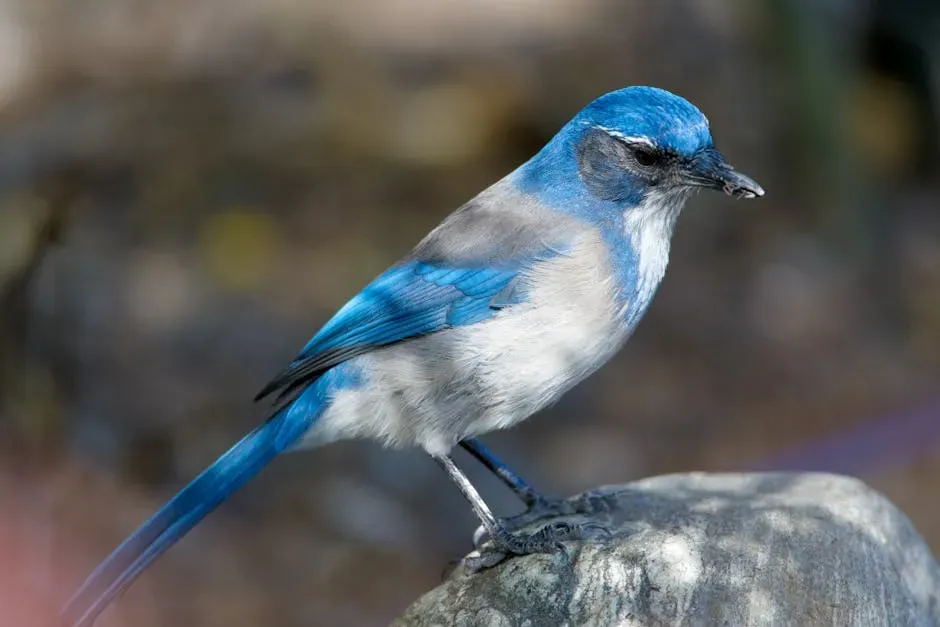
The bird with the most limited range in North America is the Island Scrub-Jay, found only on Santa Cruz Island within California’s Channel Islands National Park. Island Scrub-Jays are bigger and a bolder blue than their mainland relative, the California Scrub-Jay. This is not a bird you’ll stumble upon in a typical backyard, but for those who make the short boat trip to Santa Cruz Island, seeing it is a life-defining moment.
A study led by the Smithsonian Institution’s Migratory Bird Center discovered that the number of Island Scrub-Jays was much lower than previously thought. The population of the rare bird is at about 2,500 rather than the previously estimated 10,000. That revelation changes everything about how we understand its vulnerability. Calling this one rare is actually an understatement. This bird exists nowhere else on the planet, on a single island off Southern California.
9. The Red-flanked Bluetail: An Asian Gem Going Viral in America
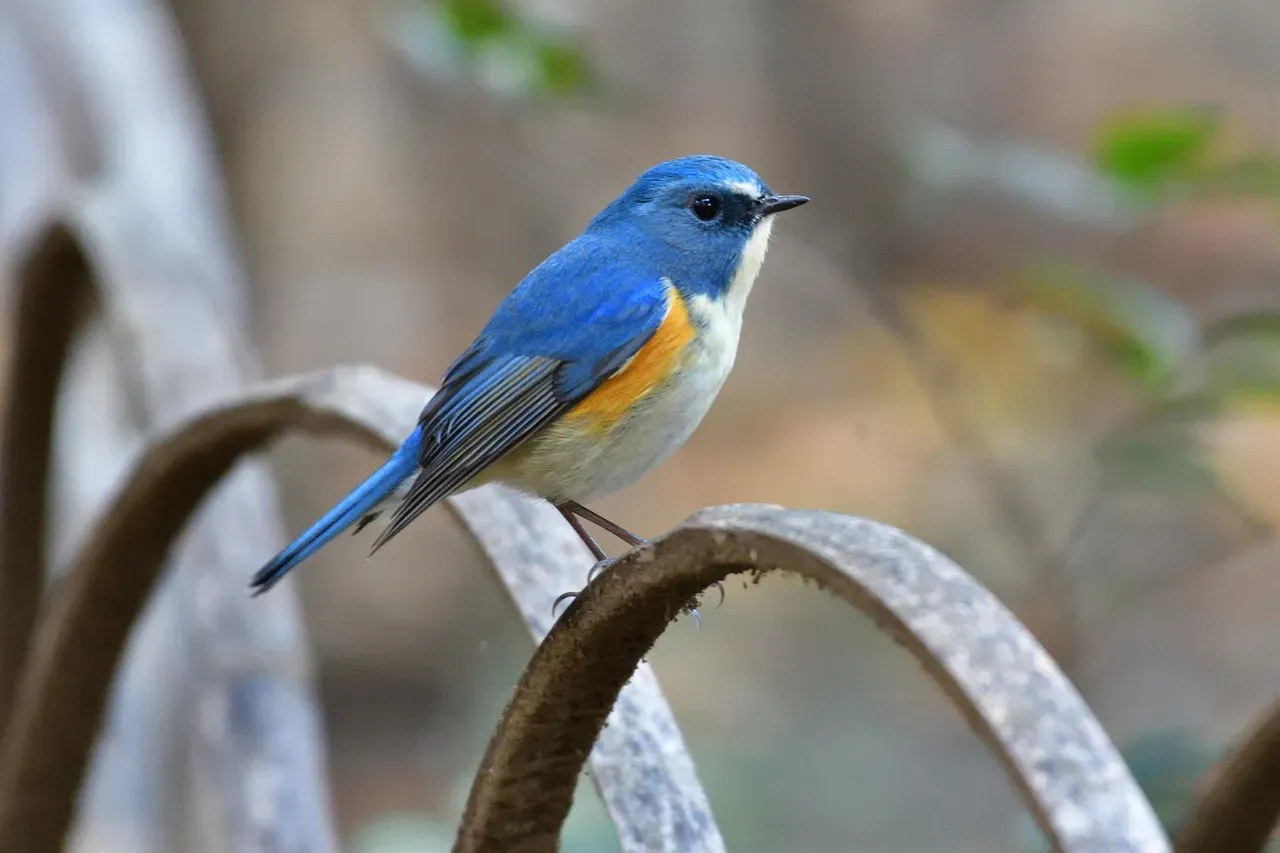
This tiny songbird is the kind of thing that stops experienced birders dead in their tracks. In January 2026, a state-first Red-flanked Bluetail was spotted in Fairfax County, Virginia. This East Asian songbird is somewhat regular in western Alaska, but records elsewhere on the continent are quite uncommon, and records in the east even more so. The species looks impossibly delicate, with deep blue upper parts and a vivid orange flank that seems to glow.
A Red-flanked Bluetail had previously shown up in New Jersey, the furthest east ever recorded for this primarily Asian migrant. The chances of it being identified in the backyard of a housing development seem vanishingly small. Even an experienced birder could have easily assumed that the little bird bopping about in the bushes was just another sparrow. That’s the terrifying and wonderful truth of backyard birding. The extraordinary is sometimes hiding in plain sight.
10. The Northern Goshawk: The Silent Predator That Visits Woodlands
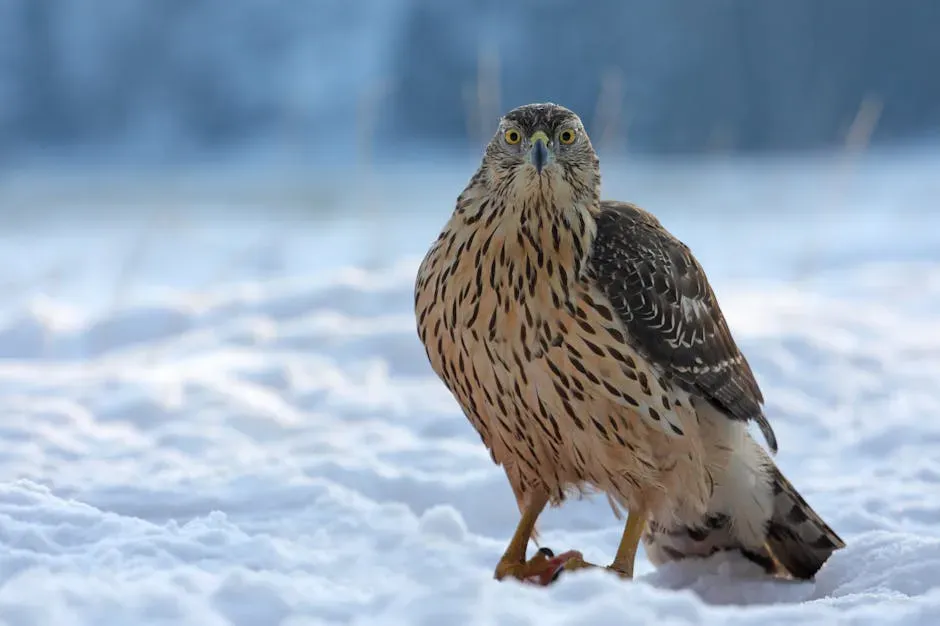
The Northern Goshawk is a powerful and elusive raptor known for its breathtaking agility, with fierce orange eyes and broad wings built for speed, gliding silently through forests in pursuit of prey. This is the kind of bird that seems almost mythological. It doesn’t announce itself. One moment the yard is quiet, the next there’s a hawk the size of a small goose surveying everything from a high perch.
Northern Goshawks are so fiercely territorial that they’re known to dive-bomb intruders, including humans, if they get too close to an active nest. They’re one of the few raptors bold enough to defend their territory with such intensity, which is why forestry workers in breeding areas sometimes wear helmets or eye protection during nesting season. In irruption years, when prey populations crash in their northern forest homes, Goshawks push south into suburban areas and can appear in gardens bordered by mature trees. Consider yourself warned, and fortunate, if one drops in.
The Magic Is Closer Than You Think
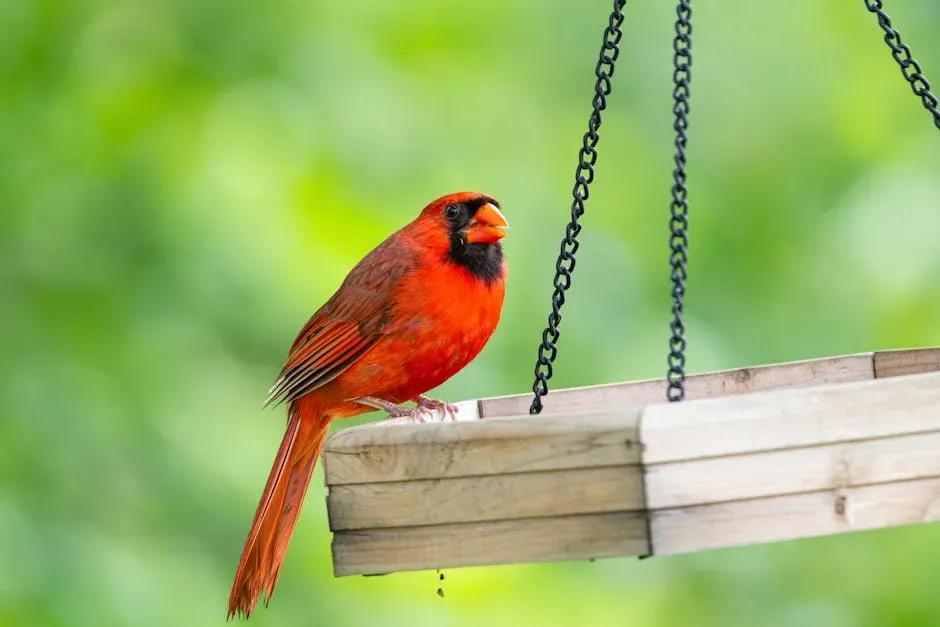
Backyard birdwatching is one of those hobbies that looks casual from the outside. You sit, you watch, you maybe write something down. It sounds simple. Yet the truth is, participation in events like the Great Backyard Bird Count has steadily increased, and in 2026 an estimated 1,146,284 people took part, submitting nearly 468,000 checklists of sighted birds. Those are not just hobbyists. Many of them are people who realized, sometimes accidentally, that the world just outside their door is wilder than they imagined.
Every rare bird on this list has genuinely been recorded in residential or near-residential environments at some point. The question is not whether it could happen. It is whether you’ll be ready when it does. Combined with other bird counts, backyard observations help create a clearer picture of how birds are faring – whether individual species are declining, increasing, or holding steady in the face of habitat loss, climate change, and other threats. Your garden, your feeder, even your window ledge could play a small role in something much bigger.
So keep your binoculars close. Look twice at that unfamiliar silhouette on the fence. The bird of a lifetime might already be in your backyard, waiting to be noticed. What unexpected visitor has shown up in yours? Tell us in the comments.
