


In the natural world, hunting strategies vary widely among predators. While some animals rely on speed and endurance to chase down their meals, others have evolved sophisticated ambush techniques that allow them to conserve energy while maximizing hunting success. These stealthy predators use camouflage, patience, and specialized anatomical features to surprise their unsuspecting victims. From the depths of the ocean to tropical rainforests and even our own backyards, ambush predators demonstrate nature’s ingenuity in the eternal dance between hunter and hunted. This article explores eleven remarkable creatures that have mastered the art of the ambush, revealing the fascinating adaptations and behaviors that make them some of nature’s most effective hunters.
The Trapdoor Spider Nature’s Underground Sniper

Trapdoor spiders represent one of the most patient and precise ambush predators in the arthropod world. These arachnids create intricate burrows in the ground, complete with a camouflaged door made of soil, vegetation, and silk. The spider’s engineering prowess is remarkable—the hinged door fits perfectly into the burrow’s entrance and can be held tightly shut with the spider’s claws and fangs when threatened. When hunting, the trapdoor spider waits just beneath this partially opened door, with its front legs extended outside to detect vibrations from passing prey. When an unsuspecting insect ventures too close, the spider erupts from its hiding place with astonishing speed, grabbing its victim before retreating back into the safety of its burrow. Some species can wait motionless for hours or even days until the perfect opportunity presents itself, demonstrating extraordinary patience in their hunting strategy.
The Anglerfish Deep-Sea Deception
Perhaps one of the most bizarre and specialized ambush predators dwells in the perpetual darkness of the deep ocean. The female anglerfish possesses a modified dorsal spine that extends over its head like a fishing rod, complete with a bioluminescent lure at the tip. This natural “fishing pole” contains light-producing bacteria that create a glow irresistible to curious prey in the lightless depths. The anglerfish’s method is deceptively simple yet incredibly effective: it remains motionless in the dark water, dangling its glowing lure to attract smaller fish. When prey approaches to investigate this potential meal, the anglerfish strikes with lightning speed, expanding its massive jaw to engulf victims that can be up to twice its own size. With rows of needle-like teeth that angle inward, escape is virtually impossible once the prey has been captured. This remarkable adaptation allows the anglerfish to conserve precious energy in the food-scarce deep sea environment while maximizing its hunting success.
The Alligator Snapping Turtle The Living Lure

North America’s largest freshwater turtle is a masterful ambush predator that has perfected the art of patience. The alligator snapping turtle possesses a pink, worm-like appendage on its tongue that serves as a natural fishing lure. When hunting, these prehistoric-looking reptiles lie motionless on river or lake bottoms with their mouths agape, wiggling their specialized tongue appendage to mimic the movements of a worm or small fish. This remarkable mimicry attracts curious fish directly into the turtle’s open jaws. Once prey ventures close enough to investigate this “easy meal,” the turtle’s powerful jaws snap shut with incredible force—up to 1,000 pounds of pressure—making escape impossible. What makes this strategy particularly effective is the turtle’s ability to remain completely still for hours or even days, conserving energy while waiting for prey to approach. Their mottled, algae-covered shells provide perfect camouflage against the muddy bottoms where they hunt, making them nearly invisible to unsuspecting prey swimming above.
The Praying Mantis Lightning-Fast Assassin

The praying mantis earned its name from the prayer-like posture of its prominent front legs, but there’s nothing contemplative about this insect’s hunting strategy. These remarkable predators are among the fastest strikers in the animal kingdom, capable of snatching prey in just 50-70 milliseconds—a movement so rapid it often cannot be tracked by the human eye. A praying mantis will remain perfectly still, blending into its environment thanks to evolved camouflage that mimics leaves, flowers, or branches depending on the species. When suitable prey comes within striking distance, the mantis unleashes its specialized raptorial legs in a movement powered by a complex system of exoskeletal springs, muscles, and trigger mechanisms. These front limbs are equipped with sharp spines that help secure struggling prey while the mantis begins to feed—often while its meal is still alive. Perhaps most unnerving is the mantis’s ability to rotate its head 180 degrees, providing a wide field of vision to spot potential meals while maintaining its camouflaged position. Female mantises are even known to occasionally practice sexual cannibalism, ambushing and consuming their mates during or after copulation.
The Frogfish Master of Disguise
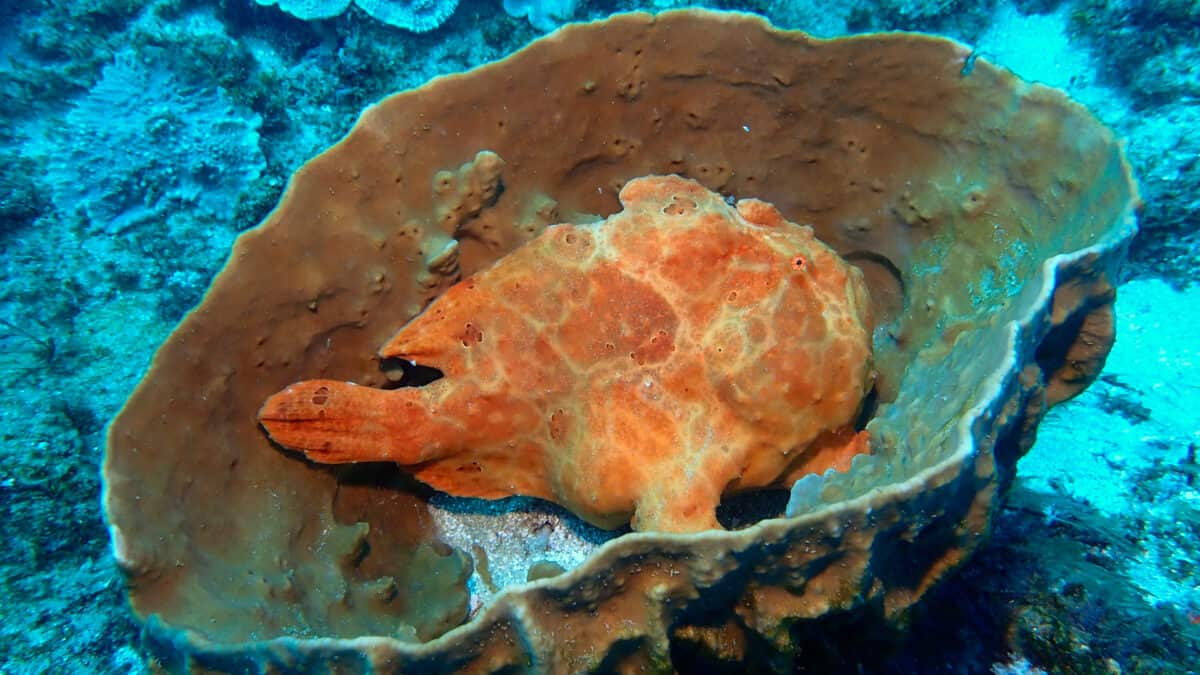
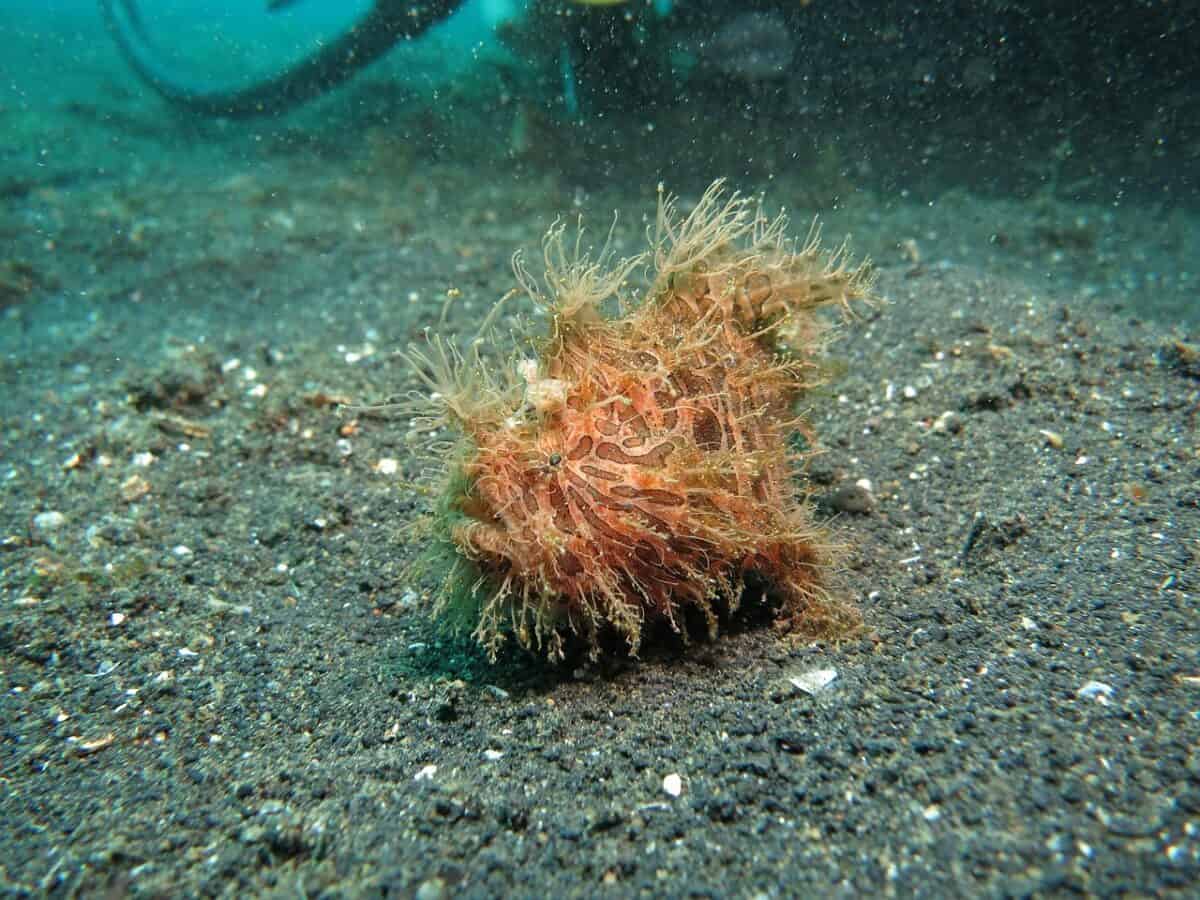
Frogfish have elevated camouflage and mimicry to an art form, making them among the ocean’s most remarkable ambush predators. These members of the anglerfish family come in an astonishing variety of colors and textures that allow them to blend seamlessly with coral, sponges, and algae-covered rocks. Some species even grow skin appendages that mimic marine plants or sessile invertebrates. This exceptional camouflage is complemented by the frogfish’s hunting strategy, which relies on a modified dorsal fin spine called an illicium that acts as a fishing lure. The tip of this lure, called the esca, can mimic small fish, crustaceans, or worms, and some species can even change the shape and color of their esca to match local prey types. When a potential meal approaches the lure, the frogfish strikes with one of the fastest feeding mechanisms known—expanding its mouth to create a powerful vacuum that sucks in prey in less than 6 milliseconds. This explosive technique allows frogfish to capture prey up to their own body size, making them highly efficient hunters despite their relatively poor swimming abilities.
The Dragonfly Nymph Underwater Ambush Artist
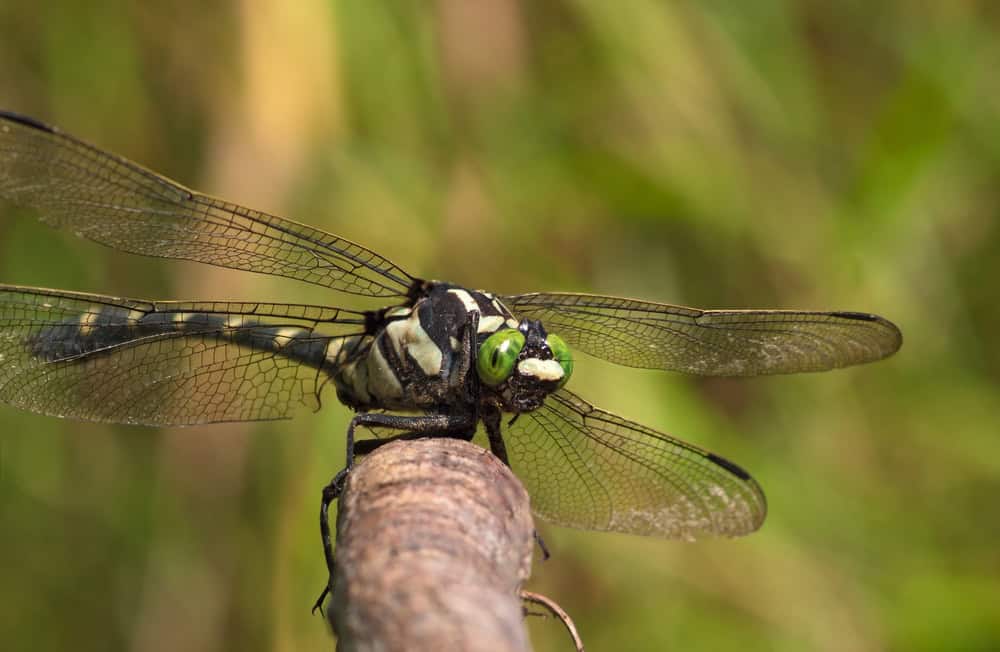
While adult dragonflies are renowned for their aerial hunting prowess, it’s the aquatic nymph stage that showcases one of nature’s most remarkable ambush mechanisms. Dragonfly nymphs possess a unique anatomical feature called a labial mask—essentially a modified lower lip that can be hydraulically extended at incredible speed to capture prey. This specialized structure remains folded beneath the nymph’s head until prey comes within striking distance. When a small fish, tadpole, or aquatic insect passes by, the nymph explosively extends its labial mask, which is equipped with sharp, pincer-like structures to grab prey. This strike occurs in just milliseconds, making it one of the fastest movements in the animal kingdom. What makes dragonfly nymphs particularly effective ambush predators is their ability to remain motionless for extended periods, partially buried in sediment or hidden among aquatic vegetation. Their drab coloration provides excellent camouflage, and their ability to jet-propel themselves by expelling water from their rectal chamber allows for quick bursts of movement when necessary. These adaptations make dragonfly nymphs formidable predators in freshwater ecosystems, capable of capturing prey much larger than themselves.
The Margay Arboreal Ambush Specialist

The margay, a small wild cat native to Central and South American rainforests, employs one of the most sophisticated ambush strategies among mammals. Unlike many feline hunters that rely on ground-based stalking, the margay is almost exclusively arboreal, with anatomical adaptations that make it spectacularly equipped for life in the trees. Its ankles can rotate up to 180 degrees, allowing it to run head-first down tree trunks, grasp branches with its hind feet, and even hang by a single paw—abilities shared only with the similarly specialized clouded leopard. This extraordinary mobility enables the margay to position itself perfectly for overhead ambushes. The cat will often wait motionless on a branch, using its spotted coat as camouflage among dappled forest light, before pouncing on prey passing below. Perhaps most remarkably, researchers have documented margays mimicking the vocalizations of prey species—particularly the distress calls of baby pied tamarin monkeys—to lure curious adults within striking range. This form of hunting, known as acoustic mimicry, represents a rare example of predatory deception among mammals and demonstrates the sophisticated cognitive abilities that complement the margay’s physical adaptations for ambush hunting.
The Crocodile Ancient Ambush Tactician

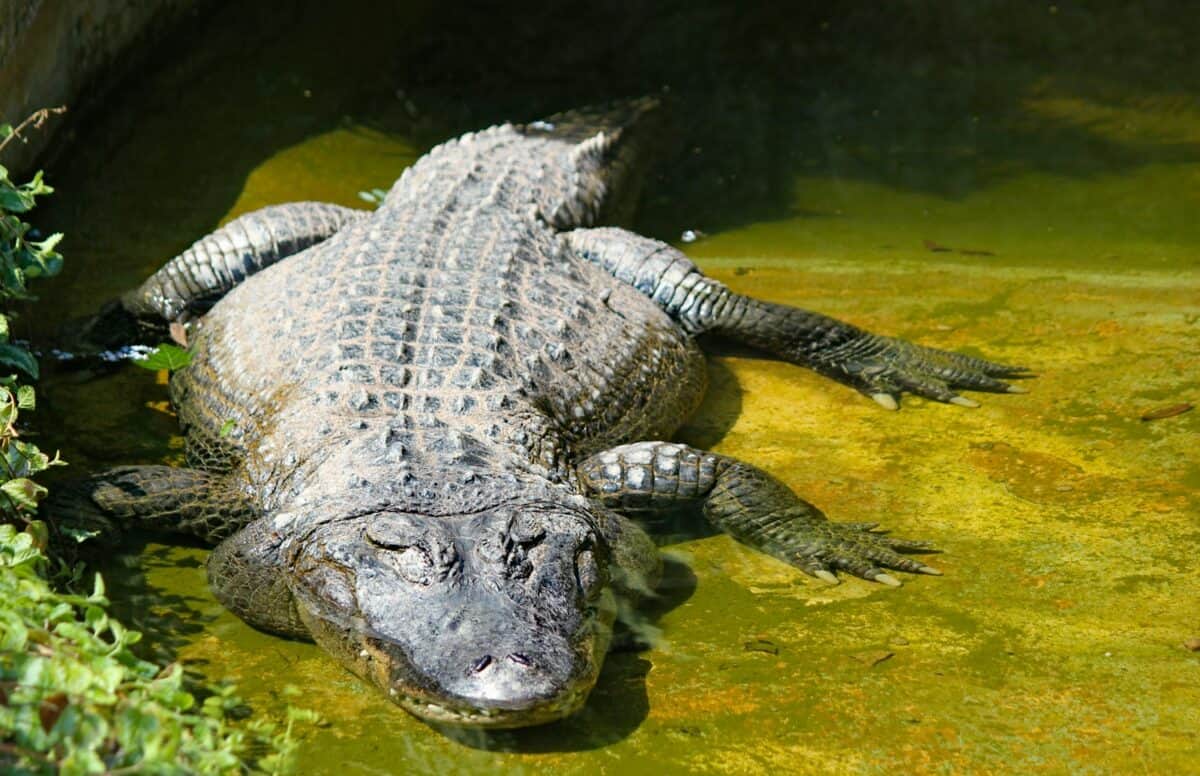
Crocodiles have perfected their ambush strategy over 200 million years of evolutionary history, becoming one of the most successful predators on Earth. These ancient reptiles combine patience, power, and precision when hunting at the water’s edge. A hunting crocodile submerges itself with only its eyes and nostrils visible above the surface—specialized adaptations that allow it to see, breathe, and smell while remaining virtually invisible to animals approaching the water to drink. The crocodile’s scaly hide, often covered with algae, provides excellent camouflage in murky waters. When prey comes within striking distance, the crocodile explodes into action with astonishing speed, capable of launching two-thirds of its body out of the water in a fraction of a second. This explosive movement is powered by the crocodile’s massive tail muscles and can generate acceleration forces that can exceed 5g. Once the crocodile seizes prey in its powerful jaws—which can exert bite forces exceeding 3,700 pounds per square inch—it employs the infamous “death roll,” rapidly spinning its body to tear manageable pieces from larger victims. The crocodile’s sensory adaptations further enhance its ambush capabilities, with pressure receptors on its face that can detect the slightest water movement from potential prey, allowing it to strike accurately even in complete darkness.
The Tentacled Snake Aquatic Ambush Engineer

The tentacled snake of Southeast Asia demonstrates one of the most sophisticated prey-capture systems among reptiles. This fully aquatic snake possesses two fleshy tentacles on its snout that serve as sensory organs, helping it detect the movements of nearby fish even with its eyes closed. But what truly sets this remarkable predator apart is its unique hunting strategy that actually manipulates the escape response of its prey. When a fish approaches, the tentacled snake assumes a distinctive J-shaped posture underwater and remains perfectly still. When ready to strike, the snake moves not toward the fish but away from it, creating a pressure wave that triggers the fish’s instinctive C-start escape response—a reflexive movement where fish rapidly bend their bodies into a C-shape to propel themselves away from danger. The genius of the tentacled snake’s strategy is that it has evolved to predict exactly where the fish will be after initiating this escape response. By the time the fish reacts to the pressure change and attempts to flee, the snake’s head is already positioned at the exact location where the fish will end up. This predictive strike is so precisely timed that the snake’s mouth arrives at the future position of the fish’s head within milliseconds, allowing it to capture prey with remarkable accuracy. This sophisticated hunting technique represents a rare example of a predator that has evolved to exploit the hardwired escape behaviors of its prey.
The Assassin Bug Toxic Ambush Predator

Assassin bugs employ a gruesome but effective ambush strategy that combines stealth, chemical weaponry, and digestive innovation. These predatory insects typically hide under leaves or in crevices, waiting for prey to pass by before launching their attack. What makes assassin bugs particularly formidable is their specialized rostrum—a modified mouthpart that functions like a hypodermic needle. When prey comes within range, the assassin bug quickly stabs its victim with this rostrum, injecting a potent cocktail of enzymes and neurotoxins that simultaneously paralyzes the prey and begins liquefying its internal tissues. This chemical attack allows the assassin bug to feed by essentially drinking its prey’s liquefied innards through its rostrum, leaving behind only an empty exoskeleton. Some assassin bug species enhance their ambush capabilities through elaborate camouflage or even active disguise. The masked hunter, for example, covers itself with dust and debris to blend into its surroundings, while certain ambush bug species perfectly mimic flowers to attract pollinating insects. Perhaps most macabre are the corpse-carrying assassin bugs, which attach the drained husks of their victims to their backs, creating a “backpack” of corpses that serves both as camouflage and as a chemical shield against certain predators.
The Venus Flytrap Plant Ambush Predator

The Venus flytrap (Dionaea muscipula) represents an evolutionary marvel as one of the few plants that has developed an active ambush predation strategy. Native to the nutrient-poor boglands of the Carolinas in the United States, this remarkable plant has evolved to supplement its diet by capturing and digesting insects. The trap itself consists of modified leaves that form two lobes hinged along the midrib. The inner surface of each lobe contains sensitive trigger hairs and digestive glands. When an insect lands on the open trap and touches two trigger hairs within about 20 seconds (or the same hair twice), an action potential is generated that causes the trap to snap shut in less than a tenth of a second—one of the fastest movements in the plant kingdom. This rapid closure is made possible by a complex mechanism involving elastic energy storage and water movement between cells. Once closed, the trap forms a sealed digestive chamber where the plant secretes enzymes to break down its prey over several days, absorbing the resulting nutrients. What makes the Venus flytrap’s ambush strategy particularly sophisticated is its ability to “count” stimuli using electrical signals, effectively distinguishing between actual prey and false alarms like raindrops. This rudimentary form of memory allows the plant to conserve energy by only fully activating its digestive processes when actual prey has been captured.
Conclusion: The Remarkable World of Ambush Predators
The diverse ambush predators examined in this article showcase nature’s incredible evolutionary ingenuity in developing efficient hunting strategies. From the engineering prowess of trapdoor spiders to the predictive striking behavior of tentacled snakes, these creatures demonstrate how patience, specialized anatomy, and behavioral adaptations can create highly successful hunting techniques that minimize energy expenditure while maximizing prey capture success. What unites these varied predators is their ability to turn waiting into a weapon, often employing sophisticated sensory systems and rapid-strike mechanisms that operate at the very limits of biological possibility. As we continue to study these remarkable creatures, we gain deeper insights not only into the mechanics of predation but also into the evolutionary forces that shape these complex interactions between predator and prey, reminding us that nature’s most effective hunters aren’t always the fastest or strongest, but often the most patient and precisely adapted to their ecological niche.

From exploring the marine wonders in the Azores and witnessing the vast savannas of Kenya, to delving deep into the rich biodiversity of South Africa and traversing iconic landscapes in Australia and the US like Yellowstone, Chris's experiences are vast.
With a penchant for diving alongside sharks, the ocean holds a special place in his heart.
Through his academic insights, he champions wildlife conservation, striving with 'Animals Around The Globe' to cultivate a profound connection between humans and animals, enhancing our mutual appreciation.
Connect with him at Feedback@animalsaroundtheglobe.com.
- This Lizard Shoots Blood From Its Eyes - June 26, 2026
- The Fastest Land Animal You’ve Never Heard Of (It’s NOT a Cheetah!) - June 26, 2026
- 10+ Joyful Reasons Why Life Is Better With a Pet in Your Golden Years - June 26, 2026