


Australia’s coastline stretches over 25,000 kilometers, surrounding a continent renowned for its unique terrestrial wildlife. However, the marine ecosystems surrounding this island nation harbor equally remarkable creatures that often defy imagination. From the depths of the Great Australian Bight to the tropical waters of the Great Barrier Reef, Australia’s oceans are home to some of the most bizarre, fascinating, and sometimes alarming creatures on Earth. These unusual marine animals have evolved extraordinary adaptations to survive in their underwater environments, resulting in appearances and behaviors that seem otherworldly. Let’s dive beneath the waves to discover 15 of the strangest ocean creatures found in Australian waters.
12. Giant Spider Crab (Leptomithrax gaimardii)
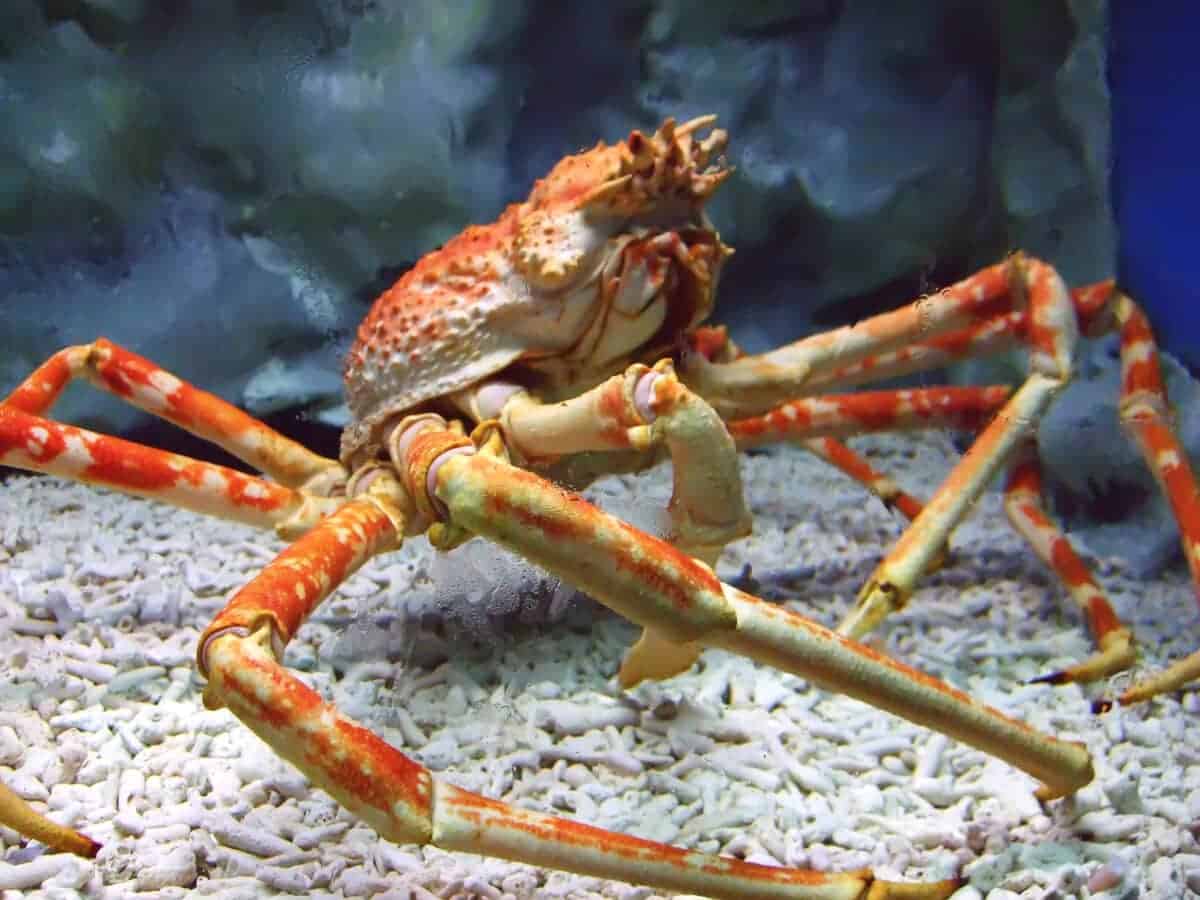
Off the southern coast of Australia, particularly in the waters of Victoria and Tasmania, lurks one of the most imposing crustaceans in the ocean. The Giant Spider Crab can reach a leg span of up to 70 centimeters, making it one of the largest crabs in Australian waters. These armored arachnid-like creatures are masters of disguise, decorating their spiny shells with sponges, algae, and other marine debris to blend seamlessly with their surroundings.
What makes these crabs particularly unusual is their annual mass migration. During winter months, thousands of Giant Spider Crabs march into Port Phillip Bay near Melbourne to molt their shells in a spectacular gathering. This event, where they pile on top of each other in mounds sometimes several meters high, creates an otherworldly underwater landscape that attracts divers from around the world. Despite their intimidating appearance, these crabs are generally not aggressive toward humans and primarily feed on algae, mollusks, and carrion.
11. Leafy Seadragon (Phycodurus eques)

Perhaps one of Australia’s most fantastical marine creatures, the Leafy Seadragon looks like something from a fairy tale. Endemic to southern Australian waters, particularly around South Australia and Western Australia, these delicate creatures are related to seahorses but have evolved extraordinary leaf-like appendages that serve as perfect camouflage among seaweed and kelp forests. Growing up to 35 centimeters in length, their yellowish-brown to olive-green bodies blend so perfectly with their surroundings that they’re nearly impossible to spot without a trained eye.
The Leafy Seadragon’s unusual biology extends beyond its appearance. Like their seahorse relatives, male Leafy Seadragons are responsible for carrying eggs, but rather than having a pouch, the males carry up to 300 bright pink eggs on the underside of their tails. They move through the water using nearly invisible fin movements, creating the illusion that they’re simply floating seaweed. Due to their specialized habitat requirements and slow reproduction rate, Leafy Seadragons are protected under Australian law and have become iconic symbols of marine conservation efforts.
10. Goblin Shark (Mitsukurina owstoni)

Occasionally found in deep waters off Australia’s east coast, the Goblin Shark has earned its name through its nightmarish appearance. This rare deep-sea predator features a distinctively elongated, flattened snout above a protrusible jaw that can rapidly extend outward to capture prey. With pale pink skin, beady eyes, and nail-like teeth, the Goblin Shark is often described as a “living fossil” because it belongs to a family of sharks that has remained relatively unchanged for 125 million years.
Typically dwelling at depths between 270 and 1,300 meters, these prehistoric-looking creatures grow up to 6 meters in length and rarely encounter humans. Their unusual feeding mechanism involves sensors on their elongated snout that detect the electrical fields of prey animals. When prey is detected, the shark’s jaw can snap forward with remarkable speed—a specialized adaptation for catching fast-moving prey in the darkness of the deep ocean. Despite their fearsome appearance, Goblin Sharks pose no significant threat to humans due to their deep-water habitat and rarity.
9. Australian Mantis Shrimp (Odontodactylus scyllarus)

The waters around Australia are home to the Peacock Mantis Shrimp, also known as the Australian Mantis Shrimp, which is one of the most extraordinary creatures in the ocean despite its relatively small size of 10-18 centimeters. Don’t let its vibrant rainbow coloration fool you—this crustacean packs what might be the most powerful punch in the animal kingdom. Its specialized forelimbs can strike with the force of a .22 caliber bullet, accelerating at over 10,000 times the force of gravity and creating cavitation bubbles that can stun or kill prey even if the punch misses.
Beyond their remarkable striking ability, these mantis shrimp possess the most complex eyes in the animal kingdom. While humans have three types of color-receptive cones in our eyes, mantis shrimp have 16 types of photoreceptors, allowing them to perceive ultraviolet and polarized light invisible to most other creatures. Found primarily in coral reef environments along Australia’s northern coasts, these territorial creatures live in burrows and can be dangerous to handle—there are reports of them breaking aquarium glass with their powerful strikes. Their combination of deadly hunting adaptations and psychedelic appearance makes them one of the most bizarre creatures in Australian waters.
8. Blobfish (Psychrolutes marcidus)

Often voted the world’s ugliest animal, the Blobfish inhabits the deep waters off Australia’s southeastern coast at depths between 600 and 1,200 meters. However, its famously gelatinous, droopy appearance is somewhat misleading. In its natural habitat, where the pressure is up to 120 times greater than at sea level, the Blobfish appears much more like a conventional fish. It’s only when brought to the surface that decompression causes its body to lose shape, resulting in the blob-like appearance that has made it an internet sensation.
The Blobfish’s unusual physiology is actually a remarkable adaptation to deep-sea living. Rather than having a gas-filled swim bladder like most fish (which would collapse under extreme pressure), the Blobfish’s body consists primarily of a gelatinous mass with a density slightly less than water, allowing it to float just above the seafloor without expending energy on swimming. This energy-conservation strategy helps it survive in the deep ocean, where food is scarce. The Blobfish feeds primarily by simply opening its mouth and allowing edible particles to float in. Despite its internet fame, the Blobfish is rarely seen by humans and remains poorly studied.
7. Box Jellyfish (Chironex fleckeri)

Perhaps the most dangerous marine creature in Australian waters, the Box Jellyfish is found primarily in the tropical northern waters around Queensland, the Northern Territory, and Western Australia. What makes this jellyfish so unusual is not just its lethal venom—which is among the most potent in the animal kingdom—but its advanced nervous system and sensory capabilities that are extraordinary for a jellyfish. Unlike most jellyfish species that drift passively, Box Jellyfish can actively swim at speeds up to 7.5 kilometers per hour and can navigate around obstacles thanks to 24 eyes grouped into four clusters.
The Box Jellyfish’s body is cube-shaped rather than round, with tentacles that can grow up to 3 meters long and contain millions of specialized stinging cells called nematocysts. A single Box Jellyfish contains enough venom to kill 60 adult humans, and stings can cause cardiac arrest in as little as 2-5 minutes. What makes them particularly weird is their combination of primitive and advanced features—they lack a brain but possess complex eyes with lenses, corneas, and retinas similar to human eyes. They can even sleep and show evidence of learning, blurring the line between simple and complex organisms in a way that challenges our understanding of evolutionary development.
6. Weedy Seadragon (Phyllopteryx taeniolatus)

The cousin of the Leafy Seadragon, the Weedy Seadragon is equally bizarre but sports slightly less elaborate appendages. Found in the waters of southern and eastern Australia, these fish grow to about 45 centimeters in length and showcase vibrant reddish coloration with yellow spots and purple stripes. Like their leafier relatives, Weedy Seadragons have evolved specialized appendages that mimic the appearance of seaweed, providing exceptional camouflage among the kelp forests and seagrass meadows they inhabit.
What makes Weedy Seadragons particularly unusual is their mating ritual and reproductive biology. During breeding season, females produce up to 250 bright pink eggs that are then transferred to specialized cups on the underside of the male’s tail during an elaborate synchronized swimming dance. The male carries these eggs for about 6-8 weeks until they hatch, but unlike seahorses, the eggs are carried externally rather than in a pouch. Weedy Seadragons feed by sucking small crustaceans, plankton, and larval fish through their tubular snouts. Like their leafy cousins, they’re protected under Australian law due to their limited range and vulnerability to habitat destruction.
5. Frill-necked Shark (Chlamydoselachus anguineus)

Sometimes called the “living fossil,” the Frill-necked Shark or Frilled Shark appears virtually unchanged from its ancestors that swam the oceans 80 million years ago. Occasionally found in the deep waters off southern Australia, this primitive-looking shark has an eel-like body growing up to 2 meters in length, with the males typically smaller than females. Its most distinctive feature is its unusual mouth arrangement—it has 300 trident-shaped teeth arranged in 25 rows, giving it an almost reptilian appearance that seems straight out of prehistory.
The Frilled Shark gets its name from its six pairs of gill slits that create a frilled appearance around its neck. Unlike most modern sharks with five gill slits, this additional pair is just one of many primitive features that have led scientists to classify it as a “living fossil.” The shark typically dwells at depths between 120 and 1,500 meters, which explains why it’s rarely encountered. Its flexible jaw and unique dentition allow it to capture and consume prey whole, including squid, fish, and other sharks. Its ancient appearance and deep-sea habitat make it one of the most mysterious creatures in Australian waters, with much of its lifecycle and behavior still poorly understood by scientists.
4. Blue-ringed Octopus (Hapalochlaena species)

The Blue-ringed Octopus might be small—typically only 12 to 20 centimeters in length—but it ranks among the most venomous marine animals on the planet. Found in tide pools and coral reefs throughout the Australian coast, these octopuses are normally yellowish-brown or beige in color. However, when threatened, they display their trademark bright blue rings or lines as a warning signal—one of nature’s most beautiful and effective warning colorations. This rapid color change is achieved through muscle contractions around specialized pigment sacs.
What makes these octopuses particularly weird is the potency of their venom relative to their tiny size. Their venom contains tetrodotoxin, a neurotoxin 1,200 times more powerful than cyanide, with no known antivenom. A single Blue-ringed Octopus contains enough venom to kill 26 adult humans within minutes. Despite this deadly arsenal, they’re remarkably docile and only bite when directly provoked or handled. Adding to their unusual nature is their short lifespan—they live only about two years, with females dying shortly after their eggs hatch. Their combination of deadly toxicity, warning coloration, and small size makes them one of the ocean’s most deceptively dangerous creatures.
3. Dumbo Octopus (Grimpoteuthis species)
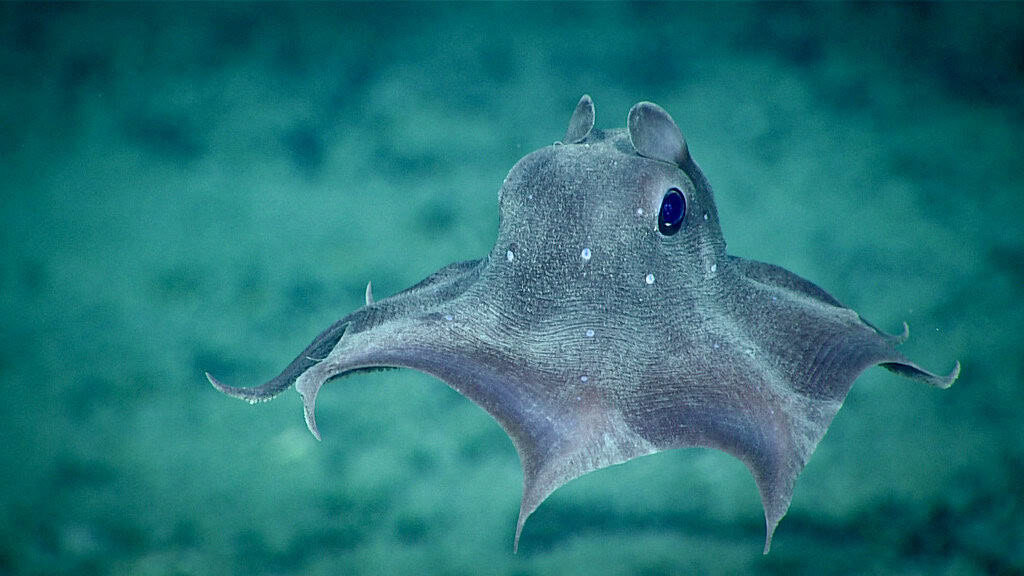
Occasionally found in the deep waters off Australia’s continental shelf, the Dumbo Octopus is named for its distinctive ear-like fins that protrude from the top of its mantle, resembling the ears of Disney’s elephant character. These rare deep-sea dwellers typically live at extreme depths of 3,000 to 4,000 meters, making them some of the deepest-living octopuses known to science. Unlike most octopuses that have a somewhat flattened appearance, Dumbo Octopuses have umbrella-shaped bodies that give them a more rounded, cartoonish look.
These unusual cephalopods have evolved several adaptations for deep-sea living that make them truly weird creatures. They lack the ink sacs that most octopuses use for defense, as ink would be useless in the dark depths they inhabit. Instead of hunting by pouncing on prey like shallow-water octopuses, Dumbo Octopuses hover above the seafloor using their ear-like fins and umbrella-shaped mantle to swim in a manner more similar to jellyfish than typical octopuses. They primarily consume worms, bivalves, and small crustaceans by enveloping them with their webbed arms. Due to the extreme depths at which they live, Dumbo Octopuses are rarely encountered and remain poorly studied, adding to their mysterious nature.
2. Irukandji Jellyfish (Carukia barnesi)

The Irukandji Jellyfish defies expectations about dangerous marine creatures through its diminutive size. Found primarily in the tropical waters of northern Australia, this tiny jellyfish measures only about 1-2 centimeters in diameter—roughly the size of a fingernail—making it almost invisible in the water. Despite its minuscule proportions, the Irukandji possesses one of the most potent venoms on the planet, capable of causing what medical professionals call Irukandji syndrome, a condition so painful that victims often beg for death.
What makes the Irukandji particularly unusual is its hunting mechanism. Unlike most jellyfish that simply drift into prey, the Irukandji actively hunts by firing stingers from the tips of its tentacles and body. These stingers are fired like microscopic harpoons containing venom that attacks the nervous system, heart, and blood cells. Even more bizarre is the delayed reaction to its sting—symptoms typically don’t appear until 20-30 minutes after contact, making it difficult for victims to connect their symptoms with the nearly invisible jellyfish. Scientists have discovered that these tiny jellyfish can sense and respond to stimuli in complex ways, showing evidence of more advanced neurological processing than would be expected from such a simple organism. Their combination of invisibility, active hunting, and devastating venom makes them one of Australia’s most disproportionately dangerous marine creatures.
1. Red Handfish (Thymichthys politus)
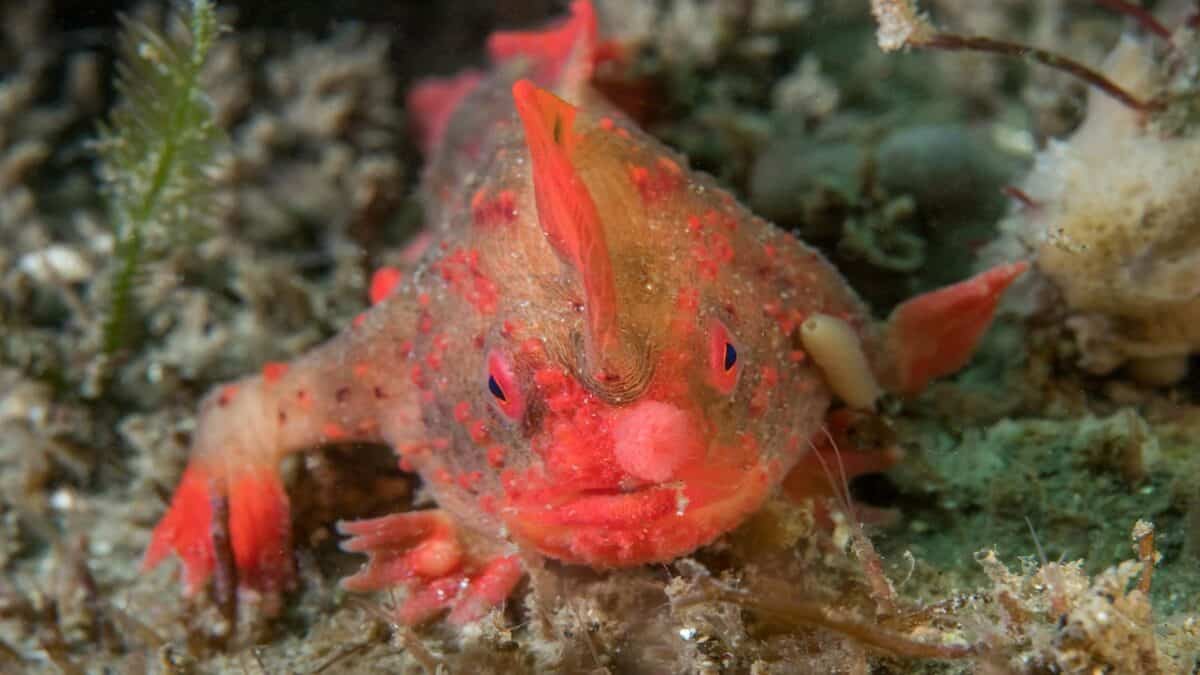
One of the rarest and strangest fish in the world, the Red Handfish is found only in the waters off southeastern Tasmania. With fewer than 100 individuals estimated to remain in the wild, these bizarre fish have evolved a method of locomotion unlike almost any other fish species. Instead of swimming through the water column, Red Handfish “walk” along the seafloor using modified pectoral fins that resemble hands—hence their name. Growing to only about 8-10 centimeters in length, these small, bright red fish with spots and a somewhat grumpy-looking face are critically endangered.
The Red Handfish’s unusual anatomy includes not just hand-like fins but also a mohawk-like crest on its head and an angular, almost faceted body shape that helps it blend in with rocky reef environments. Their peculiar mode of movement—slowly crawling along the bottom rather than swimming—makes them extremely vulnerable to habitat disturbance and predation. Red Handfish lay their eggs on vertical surfaces like seaweed or sponges, with females guarding the eggs until they hatch. Their extreme rarity, limited range (they’re found in areas less than 50 square meters), and bizarre appearance and locomotion make them one of Australia’s most unusual marine creatures and a focus of intensive conservation efforts.
Conclusion:
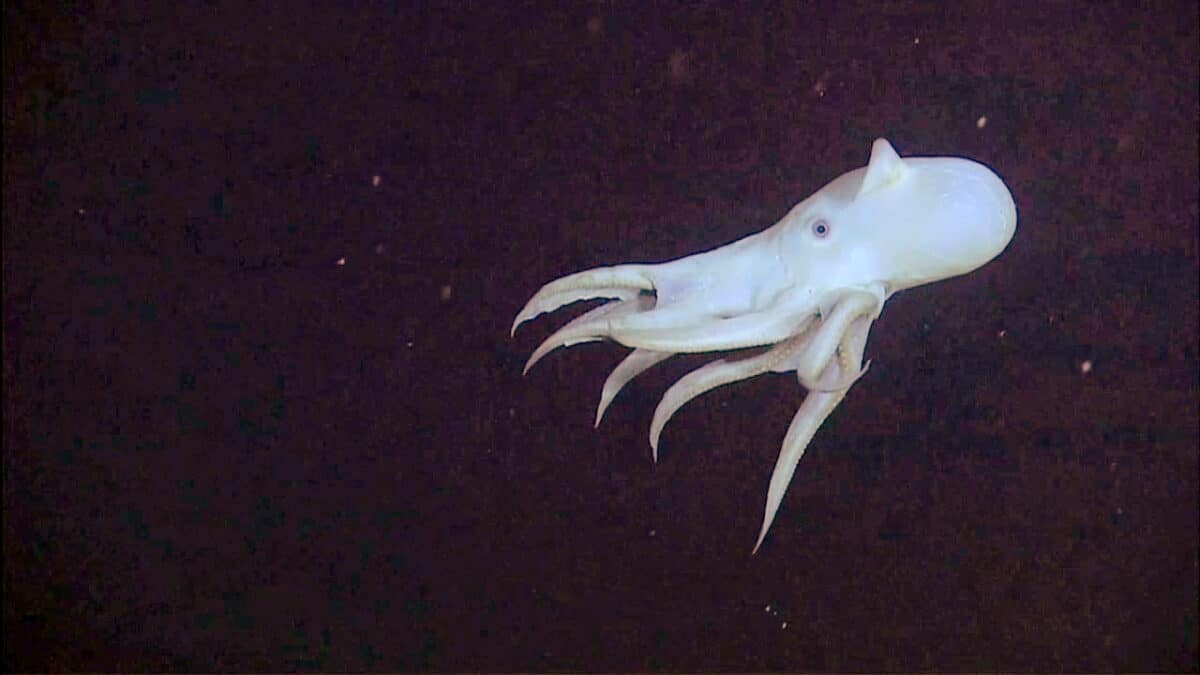
Australia’s coastal waters are teeming with some of the most bizarre and fascinating marine life on the planet. From the alien-like blue dragon and the elusive goblin shark to the glowing comb jellies and pancake-like sea toads, these strange creatures showcase the ocean’s endless capacity for creativity. Shaped by millions of years of evolution and isolation, many of these species are found nowhere else, making Australia a true hotspot for marine biodiversity and scientific discovery.
As unusual as they may appear, these creatures play important roles in their ecosystems—whether as predators, prey, or contributors to nutrient cycles. By studying and protecting them, we not only uncover the mysteries of the deep but also gain insights into the health and complexity of our oceans. These weird wonders remind us just how little we truly know about the sea—and how much more there is left to explore.

As a little kid, I fell in love with nature, wildlife, and animals. Living in the USA, South Africa, Italy, China and Germany gave me the opportunity to discover the world's Wildlife. My favorite animals are Mountain Gorillas, Siberian Tigers, and Great White Sharks.
I'm a certified PADI Open Water Diver, went to Everest Base Camp and Trekked Gorillas in Uganda. I hold a Master of Science in Economics and Finance.
Please send any feedback to feedback@animalsaroundtheglobe.com
- 12 Weird Ocean Creatures Found Off Australia Coast - July 17, 2026
- 10 Animals That Can Change Their Shape to Avoid Predators - July 17, 2026
- 15 World’s Most Expensive Fish to Eat, But are Worth the Price Tag - July 17, 2026
Leave a comment
You must be logged in to post a comment.