Park rangers hear it almost every single day, standing at the same overlook, watching the same reaction cross a stranger’s face: “Okay, but this isn’t real, right?” They point at the water. The water doesn’t care. It just keeps being impossibly blue, impossibly clear, or impossibly pink, daring the next person to accuse it of being edited.
Here’s the part that catches people off guard: you don’t need a passport for any of this. These 18 lakes are scattered across the United States, hiding in plain sight inside national parks, desert canyons, and mountain basins most Americans drive right past. Stick around, because a few of the ones near the end of this list are so strange that even geologists pause before they can fully explain what they’re looking at.
#1 – Crater Lake, Oregon: Blue So Intense It Breaks Phone Cameras
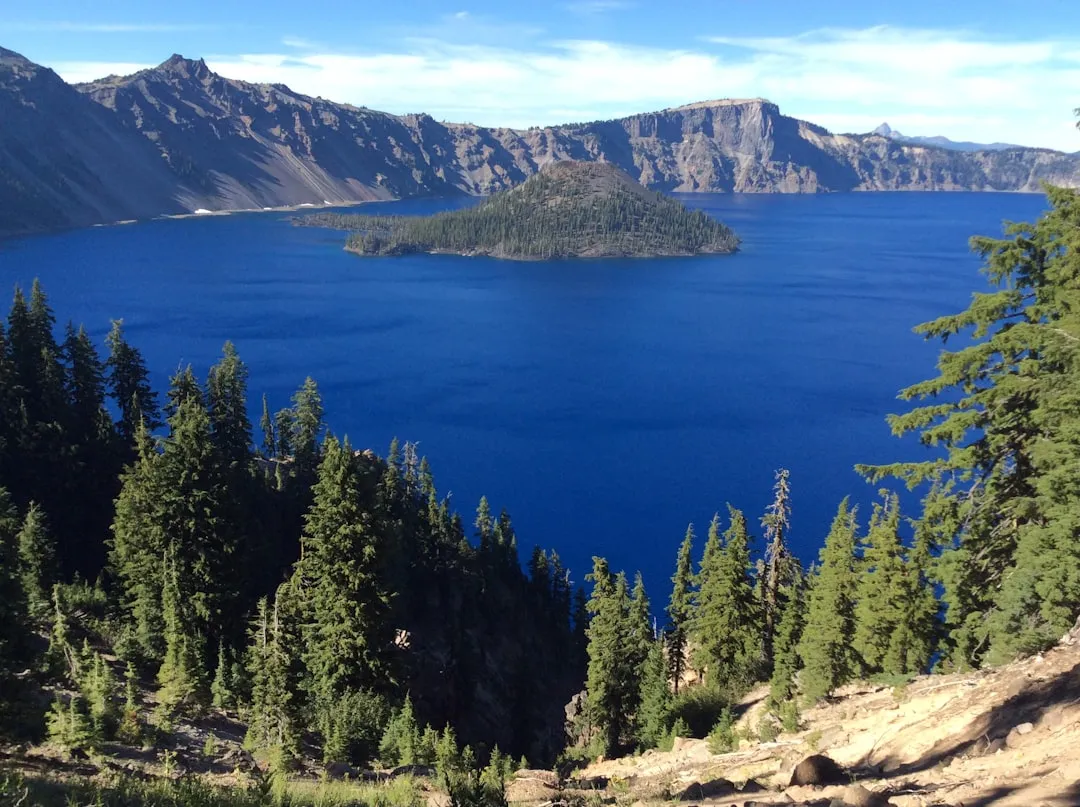
Rangers here joke that Crater Lake comes with a built-in filter installed at birth. The water is so intensely blue that visitors accuse each other of cranking the saturation, only to discover later that their photos were actually underexposed, not edited. Formed inside a collapsed volcano, the lake plunges nearly 2,000 feet, and that depth is exactly why it fools everyone.
Pure, cold water swallows most colors of light and bounces back almost pure blue, turning the whole crater into a giant natural color chip. On calm days you can see down 100 feet or more, so boats look like they’re floating in midair above the sunken caldera walls. In winter, snowbanks hang above that neon-blue water like a bad CGI render. Rangers say they field the same skeptical line on loop: “There’s no way it looks like this in real life.” It does, every single time.
#2 – Havasu Falls Pools, Arizona: Desert Turquoise That Looks Fake
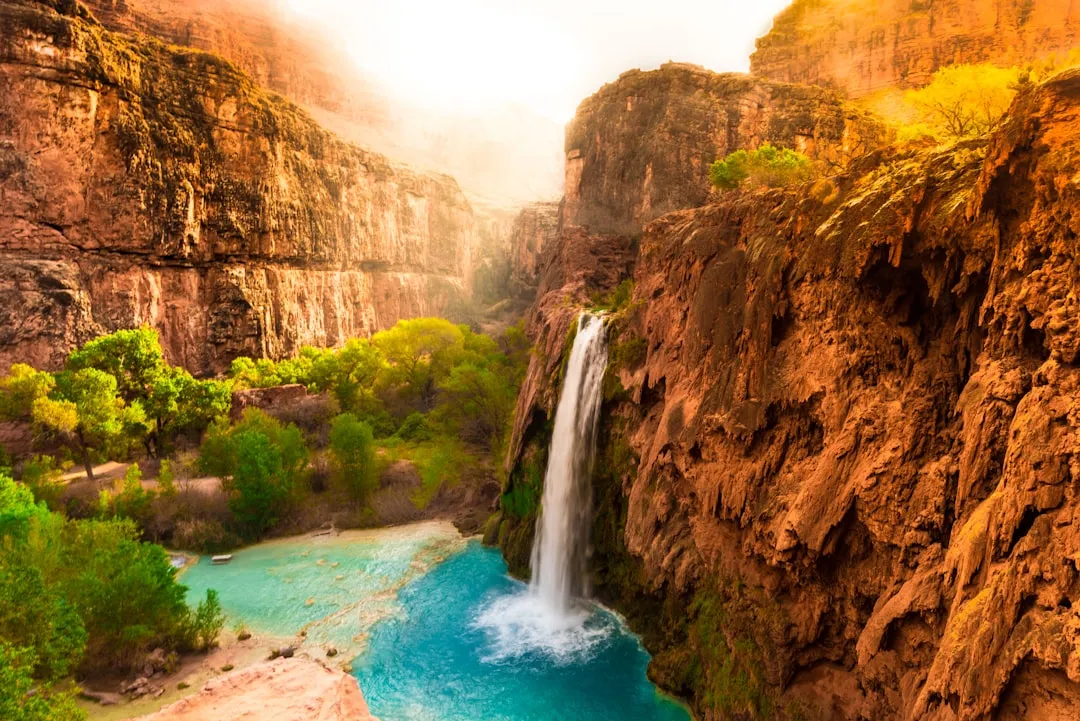
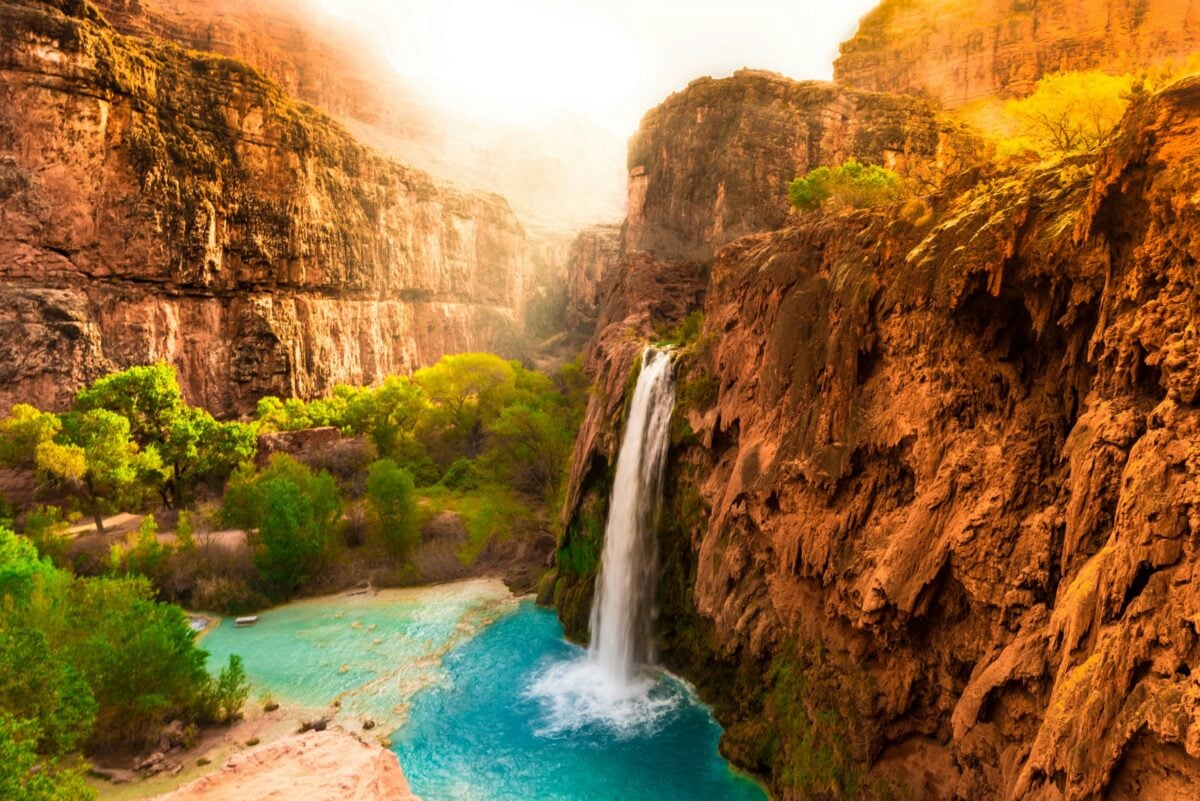
Hidden in a red-rock canyon off the Grand Canyon corridor, the travertine pools below Havasu Falls look like someone dragged the saturation slider to 150 percent. The contrast is almost violent: burnt-orange cliffs, bright green cottonwoods, and water the exact turquoise of a hotel swimming pool advertisement.
The secret is dissolved calcium carbonate. As the water cascades, minerals precipitate out and coat the streambed, reflecting light in that unreal blue-green spectrum. Rangers say the real problem isn’t over-editing, it’s the opposite: most cameras fail to capture how bright the water actually looks at midday. Add in the terraced pools, formed as those same minerals build tiny natural dams, and it’s no wonder plenty of veteran hikers rank this spot above the Grand Canyon itself.
#3 – Mono Lake, California: Alien Spires in Acidic Water
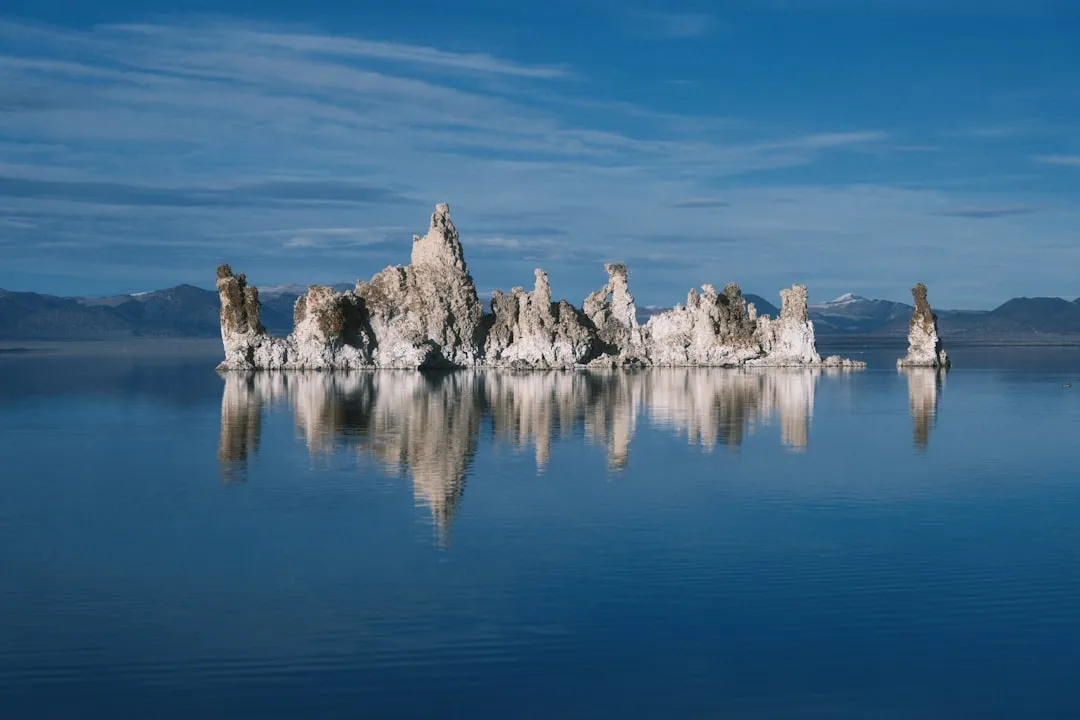
At first glance, Mono Lake looks like a matte painting lifted from a sci-fi movie. Rising out of the water are tufa towers, chalky limestone spires that look almost 3D-rendered. They form underwater when calcium-rich springs collide with carbonate-heavy lake water, building stone “chimneys” that only become visible once water levels drop.
At sunrise, the surface goes mirror-flat and doubles that otherworldly skyline. The water is so salty and alkaline that no fish survive here, just brine shrimp and alkali flies in numbers that feel like a glitch in nature’s code. Between the hyper-saturated sunrises, the high-desert haze, and those ghostly towers, rangers constantly hear the same line: “That can’t be real scale, it looks like a model.”
#4 – Grand Prismatic Spring Runoff, Wyoming: Lakes of Living Color
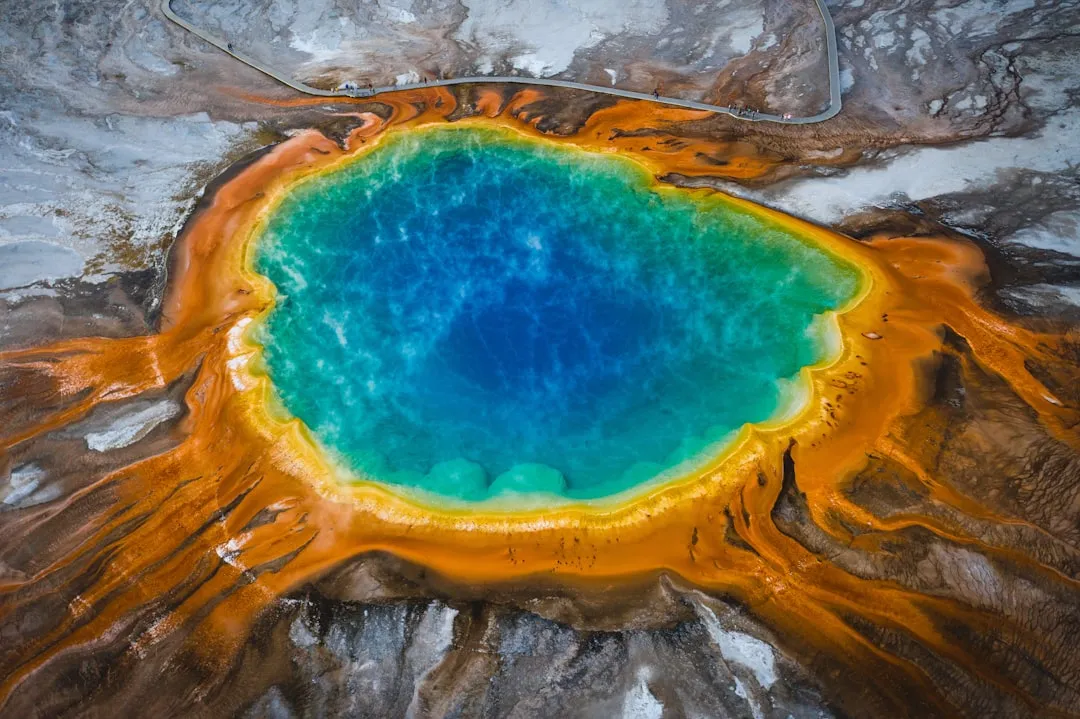
Technically a hot spring rather than a classic lake, the runoff pools around Grand Prismatic in Yellowstone are where park staff say people most loudly accuse them of faking the colors. From the boardwalk you see intense rings of blue, green, yellow, orange, and rust, and there’s no filter involved, just microorganisms doing their thing.
Thermophilic bacteria form pigmented mats, and each color band matches a different temperature zone. The deep center reads an unreal sapphire because it’s too hot for most life, while the cooler edges explode in orange and red as microbial communities thrive. Many visitors assume the official park photos have been digitally enhanced, right up until their own smartphone shots come out looking identical.
#5 – Lake McDonald, Montana: Rainbow Rocks Under Glass
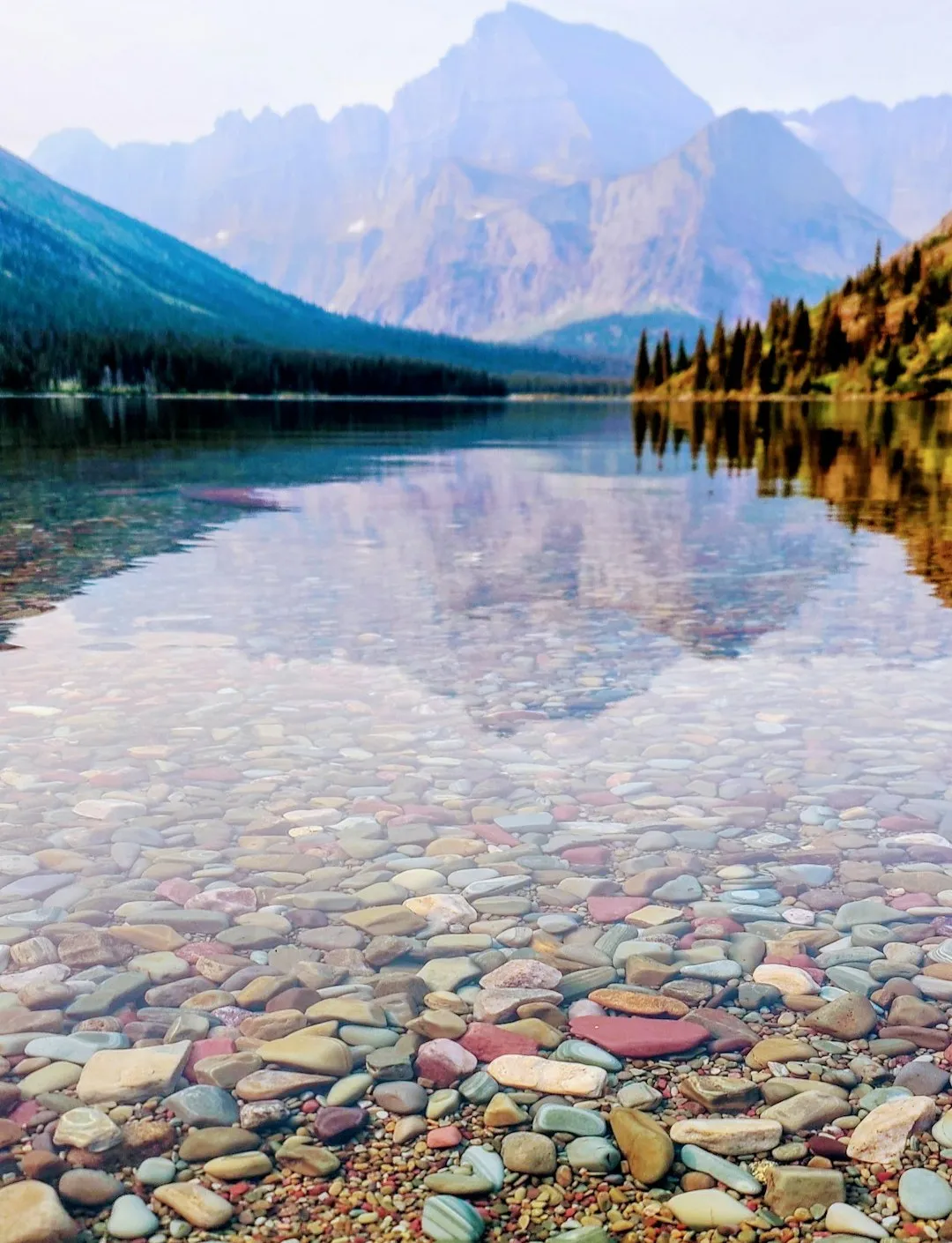
At Glacier National Park’s Lake McDonald, the water sometimes looks less like a lake and more like an aquarium stocked with polished gemstones. The shoreline is covered in smooth, multicolored rocks, reds, purples, greens, and blues, that show through the clear water as if sealed under glass.
On windless days, the lake pulls off a strange double effect: rainbow rocks below, and a perfect reflection of glacier-carved peaks above. Geologists point to varying iron content, different sedimentary layers, and centuries of glacier polishing. Most visitors don’t care about the science, though. They’re too busy insisting someone must have dumped aquarium gravel in there, until rangers point out the stones extend far deeper than anyone could ever stage.
#6 – Lake Powell, Arizona/Utah: The Digital-Looking Desert Reservoir
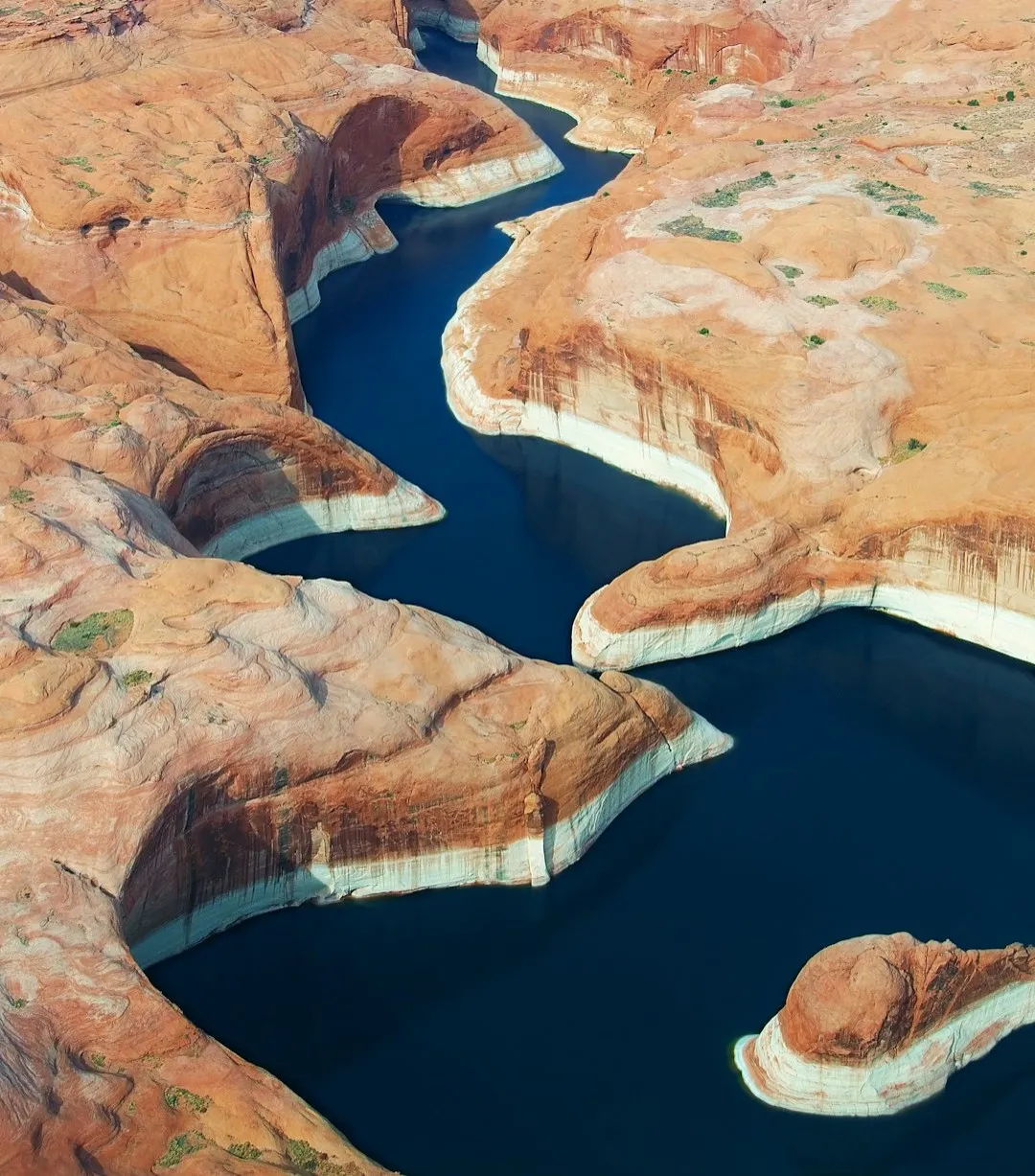
From above, Lake Powell looks like a computer-generated render of water poured into a 3D model of canyons. Its fingers stretch into narrow sandstone slot canyons, creating impossible-looking coastlines where rust-red rock meets deep blue water in razor-sharp lines.
Low humidity and harsh desert light make the contrast feel like a travel ad, even though nothing has been touched up. Fluctuating water levels leave pale mineral “bathtub rings” on the walls, which only adds to the fake-looking effect. By boat, you can glide through stone hallways barely wider than your hull, with reflections so clean you lose track of where the walls end and the water begins.
#7 – Diablo Lake, Washington: The Glacial Twin Nobody Talks About
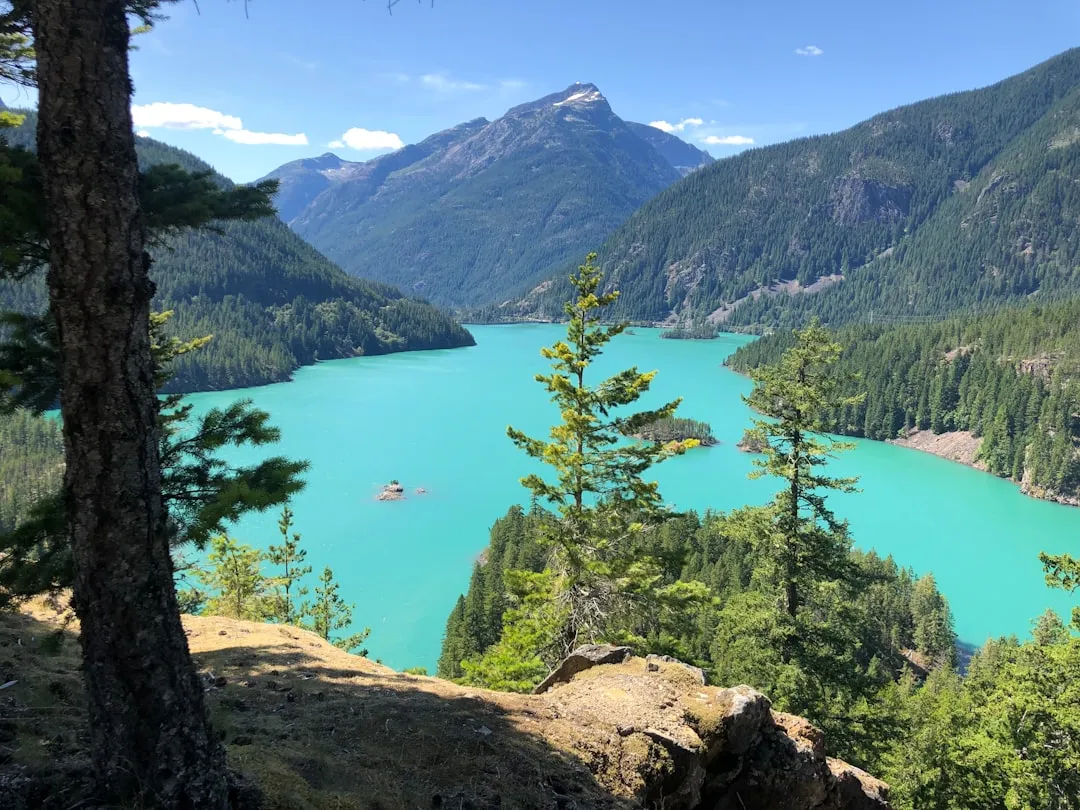
Everyone shares the famous glacial-lake photos from Canada, but rangers in Washington say Diablo Lake causes the exact same “this has to be Photoshopped” reaction, minus the crowds. Fed by glaciers grinding rock into fine “flour,” the color swings from opaque mint-green to electric turquoise depending on the season and sediment load.
On overcast days, the hue is so intense it looks like someone poured liquid sports drink into a mountain bowl. When the wind dies down, you get the classic “upside-down mountain” reflection, except with cartoon-colored water underneath it. Hydrologists explain that glacial flour scatters light in a way that amplifies blue-green wavelengths, meaning your eyes are seeing raw physics, not a filter.
#8 – Great Salt Lake, Utah: The Split-Screen Pink and Green Water
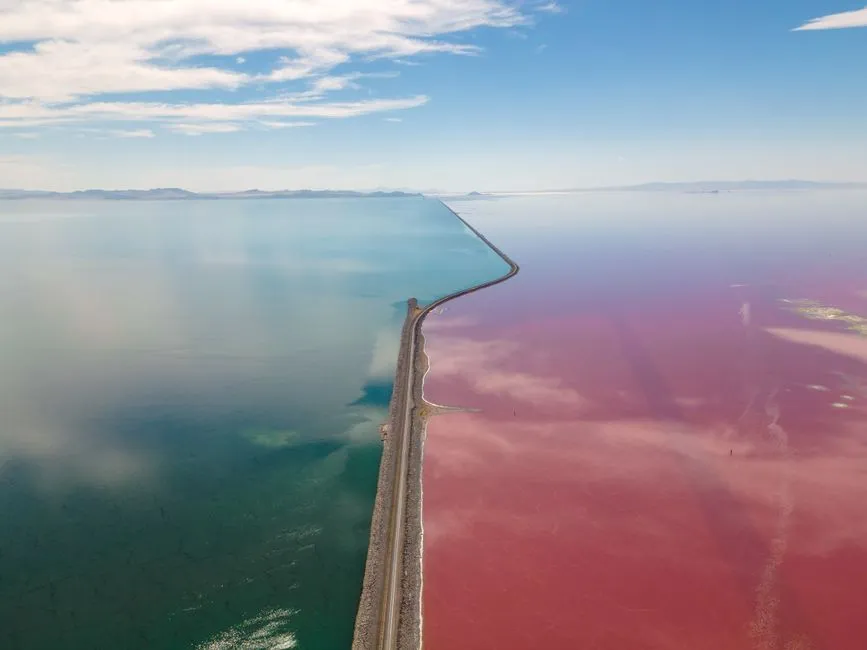
From the air, parts of the Great Salt Lake look like two different photo filters got slammed onto the same frame. On one side of a causeway the water reads deep blue-green, and on the other, straight bubblegum pink.
The explanation sounds almost made up: differences in salinity create entirely different ecosystems, including pigmented salt-loving microbes that literally tint the water. Higher salinity favors algae and bacteria that produce red carotenoid pigments. Pilots report passengers gasping when they spot the sharp color line out the window, and conspiracy theories about hidden dye pop up every few years. The boring, true answer rangers keep repeating is just microbes and salt gradients.
#9 – Jenny Lake, Wyoming: The Glass Mirror Beneath the Tetons
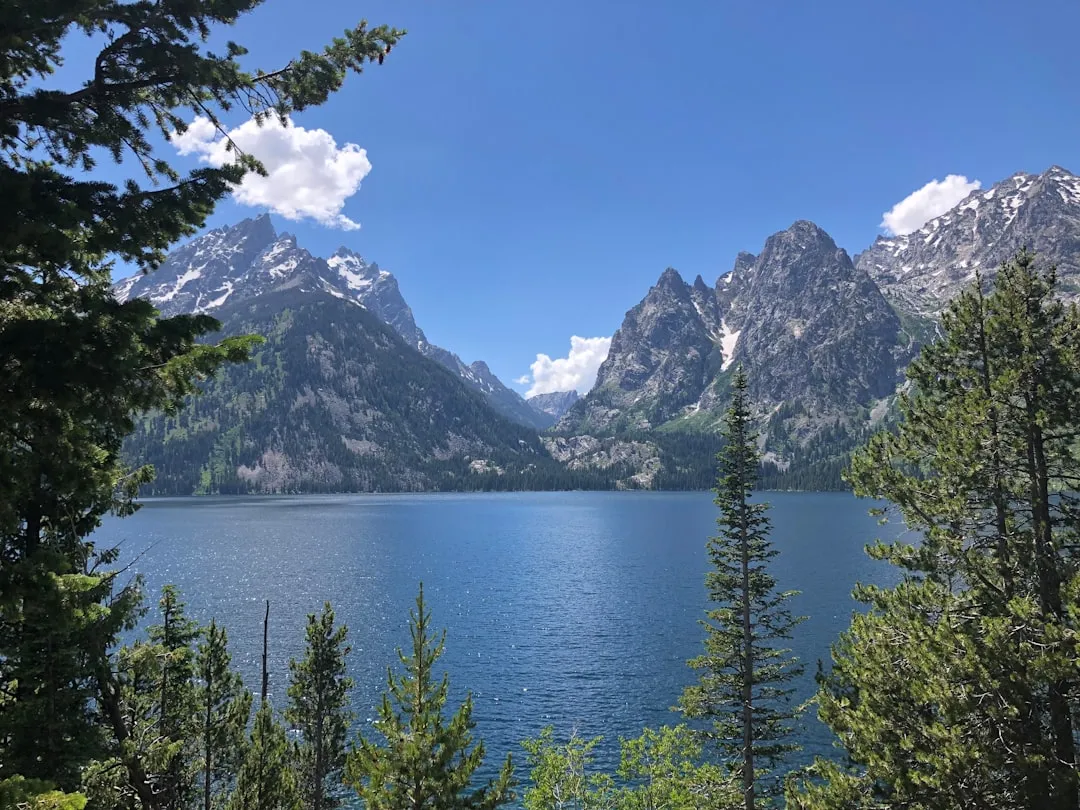
Jenny Lake in Grand Teton National Park pulls off a simpler kind of magic trick. During the first hour after sunrise, the water can go so smooth and dark that it erases the horizon line entirely, turning the Tetons into a perfect upside-down reflection.
Haze-free, high-altitude air and cold, still mornings create ideal mirror conditions. Near the shore you can see rocks, logs, and fish in absurd detail, and just a few yards out, the lake drops off into a pure black-blue mirror. Many photos look like sloppy editing jobs simply because the human brain can’t process transparent foreground water and a flawless reflection in the same frame. Rangers say they routinely hear, “Is this a real photo from today?” from people standing directly in front of it.
#10 – Maroon Lake, Colorado: Postcard Reflections That Look Too Clean
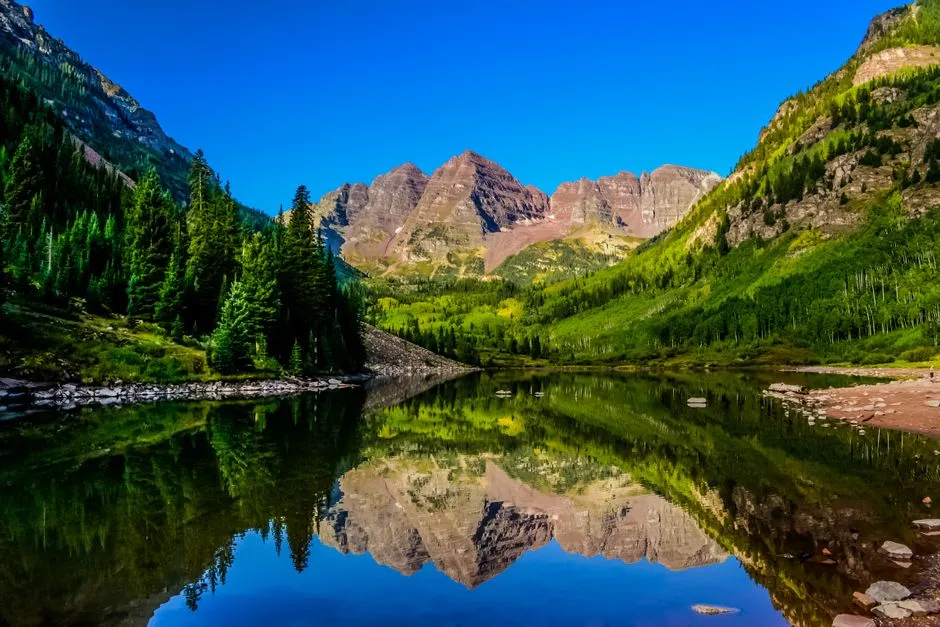
Everyone has seen the Maroon Bells on a Colorado postcard, but what most people don’t realize is that Maroon Lake at their base can look too perfect to be real. On calm autumn mornings, golden aspens, snow-dusted peaks, and razor-sharp reflections combine into images that look like tourism-board composites rather than single exposures.
Rangers quietly admit part of the effect comes from strict access control, since limiting car traffic reduces dust and wake on the water. Nature handles the rest. High altitude and thin air mean reds and golds pop harder here than they would at sea level, which is exactly why people keep accusing each other of “fake HDR” over a scene that came straight out of the camera.
#11 – Lake Superior Sea Caves, Wisconsin: Frozen Theater in Winter
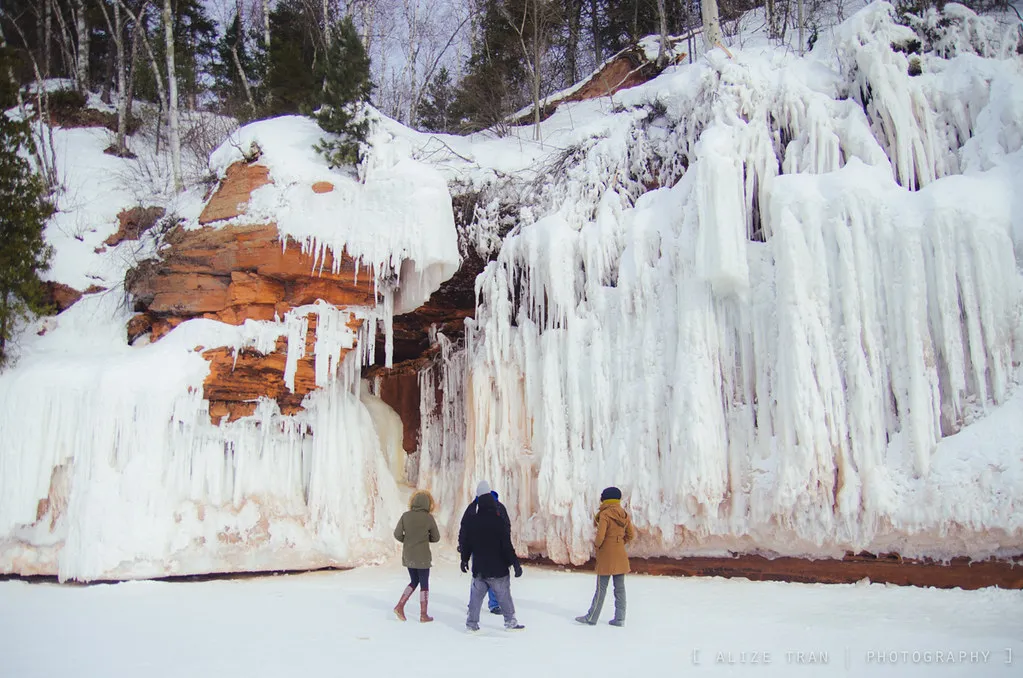
On the south shore of Lake Superior, near the Apostle Islands, winter turns almost theatrical. When conditions line up, waves sculpt ice into translucent curtains and frozen columns inside sandstone sea caves, and the lake itself, already big enough to pass for an ocean, becomes a glassy, frozen floor with blue cracks zig-zagging underfoot.
Rangers say photos of these ice caves rank among the most disbelieved images they share online. Light filtering through blue ice makes the caves glow, and long-exposure shots can look practically CGI. Anyone who has actually made the risky walk over the frozen lake knows the opposite is true, though: many photos don’t even come close to capturing how surreal it feels to stand under a ceiling of icicles taller than you are.
#12 – Lake Tahoe, California/Nevada: The Clarity That Feels Illegal
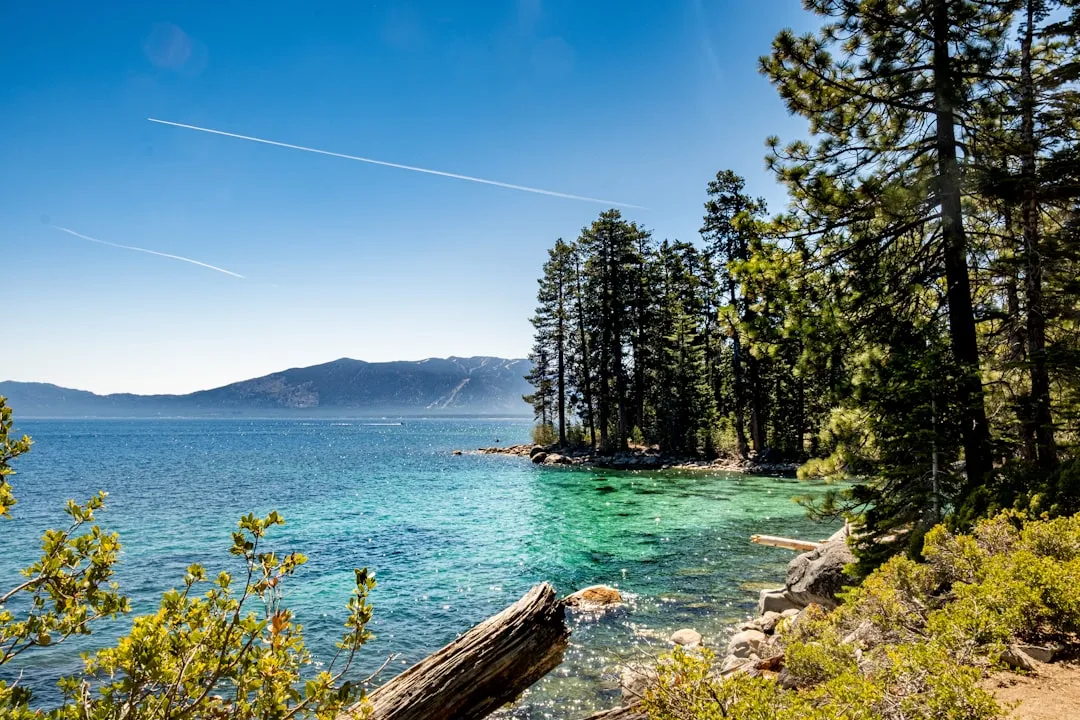
Every tourist brochure calls Lake Tahoe “crystal clear,” but divers and park staff say that description is almost an understatement. On a good day you can see 60 to 70 feet down with ease, and historical records mention clarity over 100 feet in past decades.
Tahoe is one of the clearest large lakes in the world, and that clarity has been slowly declining for decades due to development and runoff.
UC Davis Tahoe Environmental Research Center
From the surface, boulders far below look close enough to touch, which makes swimmers feel like they’re floating over a rendered 3D landscape. Cold, low-nutrient water and a steep, rocky shoreline that minimizes sediment runoff are what give Tahoe this near-impossible transparency. On the east shore, rounded granite boulders and cyan shallows create Caribbean-style color, just framed by pines and snow instead of palm trees.
#13 – Oregon’s Alkali Lakes: Desert Playas That Look Like Digital Art
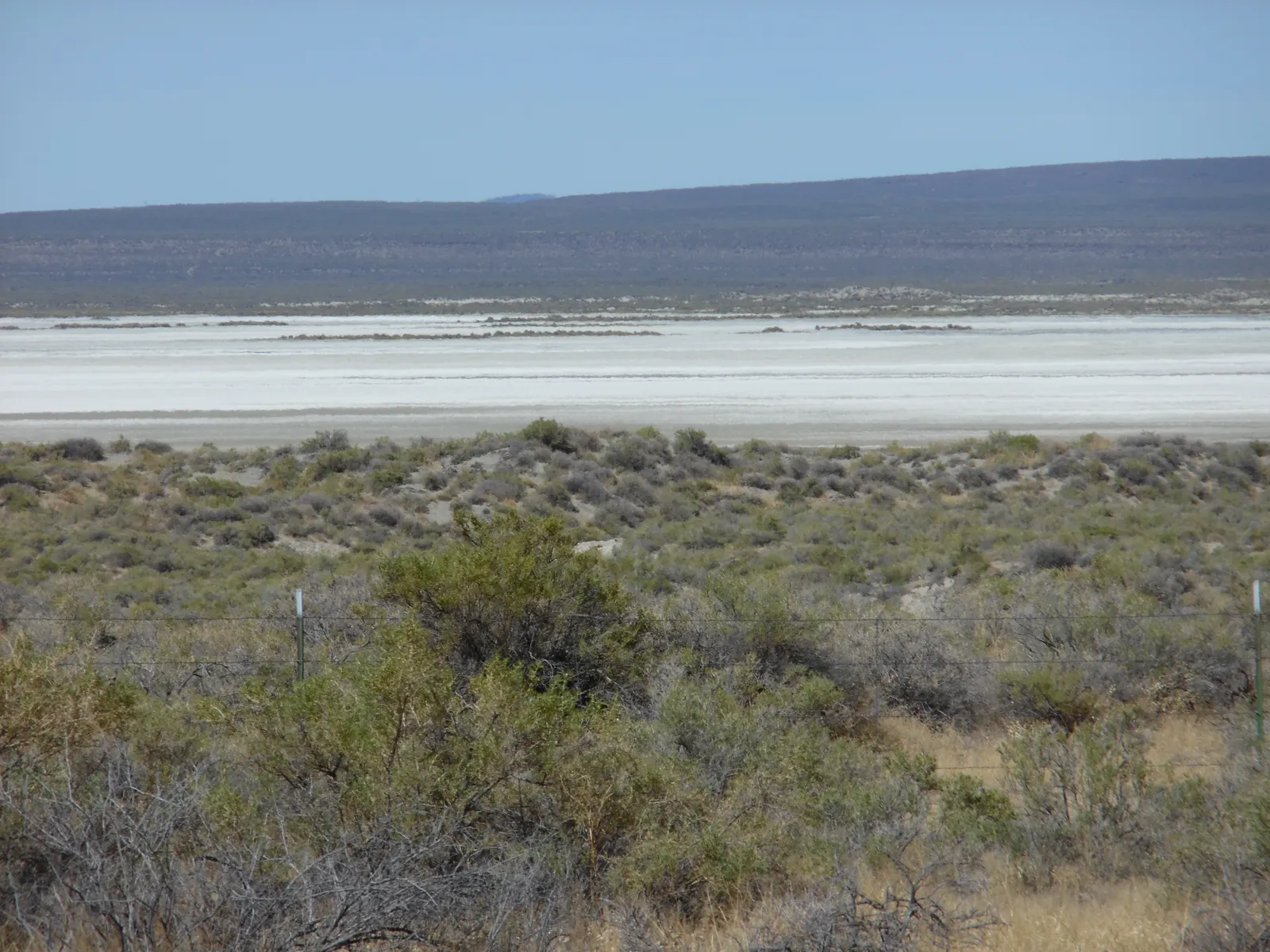
Canada’s Spotted Lake gets most of the international fame, but rangers in Oregon quietly field the same disbelief about smaller alkali lakes and playas scattered through the state’s outback. In dry seasons, shallow, mineral-heavy basins evaporate into patchwork polygons and circular pools, each shaded differently depending on salt concentration.
From above, these basins look like someone tiled the desert with abstract art or a digital skin texture. Drone footage screams “Photoshop brush pack,” especially when rusty reds, whites, and dark greens sit inches apart from each other. Geochemists have a straightforward explanation involving minerals crystallizing at different concentrations, but online these images still get miscaptioned constantly as “alien terrain,” which only fuels disbelief once people learn it’s rural Oregon.
#14 – Blue Lakes of the Sangre de Cristo Range, Colorado: Unlicensed Neon
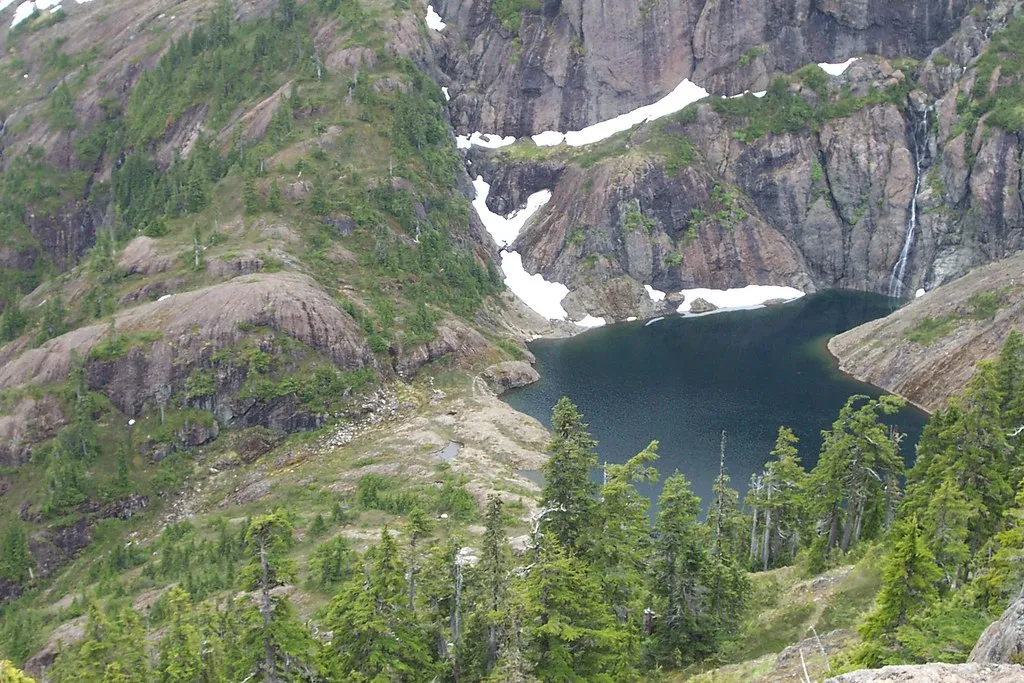
High in Colorado’s Sangre de Cristo Mountains, several small alpine tarns pull off a color hikers describe as “unlicensed neon.” Fed by snowmelt and cradled in pale rock bowls, these lakes can shift from deep cobalt to almost glowing cyan within a single sunny morning.
Because they’re small and wind-sheltered, they often stay mirror-still, turning that intense blue into a pure, uninterrupted color field in every photo. With less atmosphere overhead at elevation, UV and blue wavelengths dominate, and very clear water sitting over light-colored rock becomes a natural reflector. Rangers say it’s common for first-timers to insist the lakes “look fake” while standing right beside them, mostly because they’ve seen that exact shade of blue on a screen far more often than in real life.
#15 – Caddo Lake, Texas: The Haunted Swamp Straight Out of a Movie
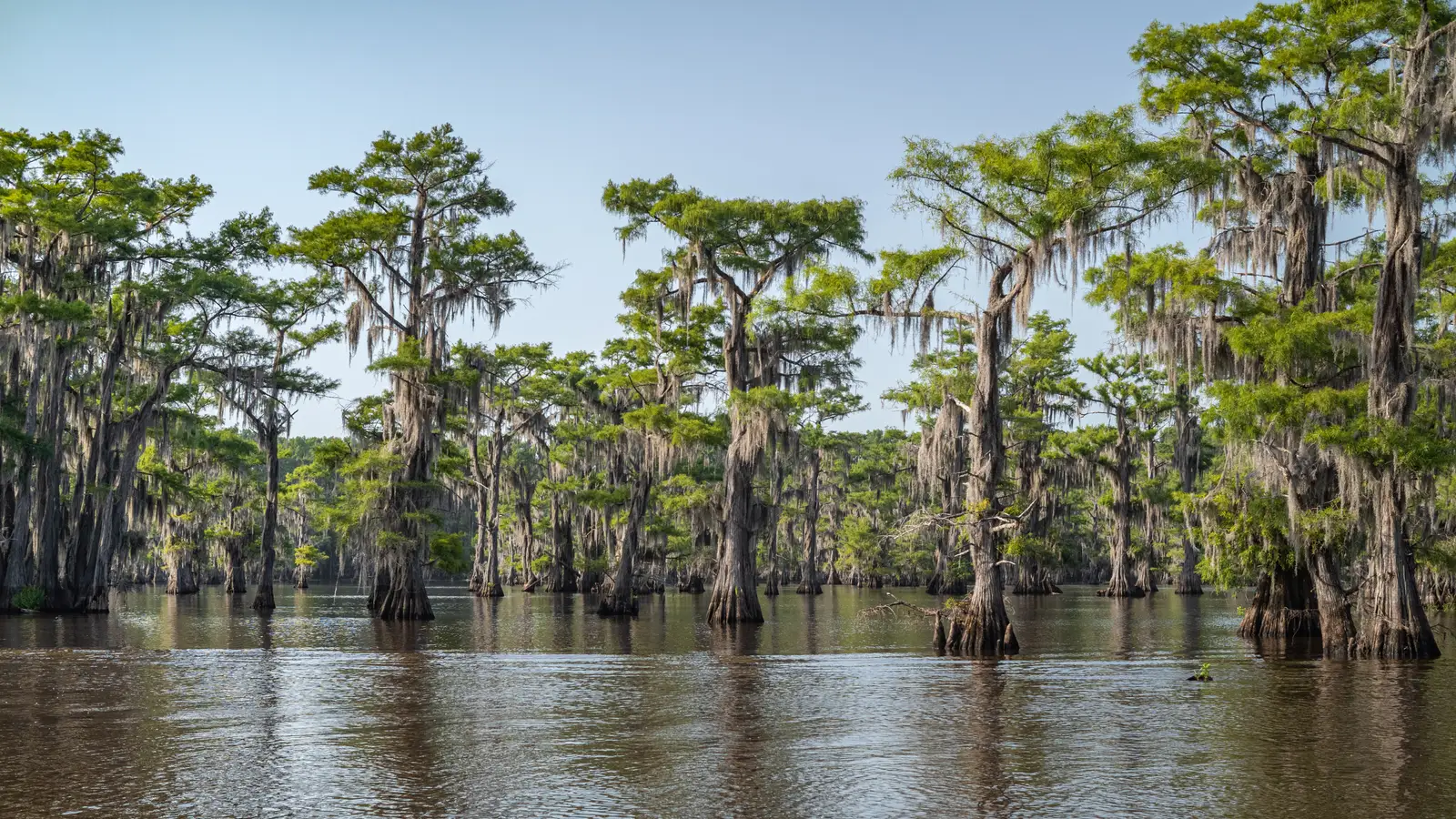
Most people don’t picture Texas when they think “fantasy swamp,” but Caddo Lake on the Texas-Louisiana border looks like it was storyboarded for a gothic film. Bald cypress trees rise straight out of the water, draped in gray Spanish moss that hangs like digital fog, especially on misty mornings.
The water is dark and tannin-stained, so reflections of the trees and moss create an endless forest that seems to repeat itself in every direction. Rangers and local guides say their photos get accused of layering or compositing simply because the repeating tree forms look copy-pasted. In fall, when the cypress needles turn orange and red against the black water, the unreality only ramps up further, even though it’s just century-old cypress and still air.
#16 – Great Sand Dunes Medano Creek Pools, Colorado: The Water That Pulses
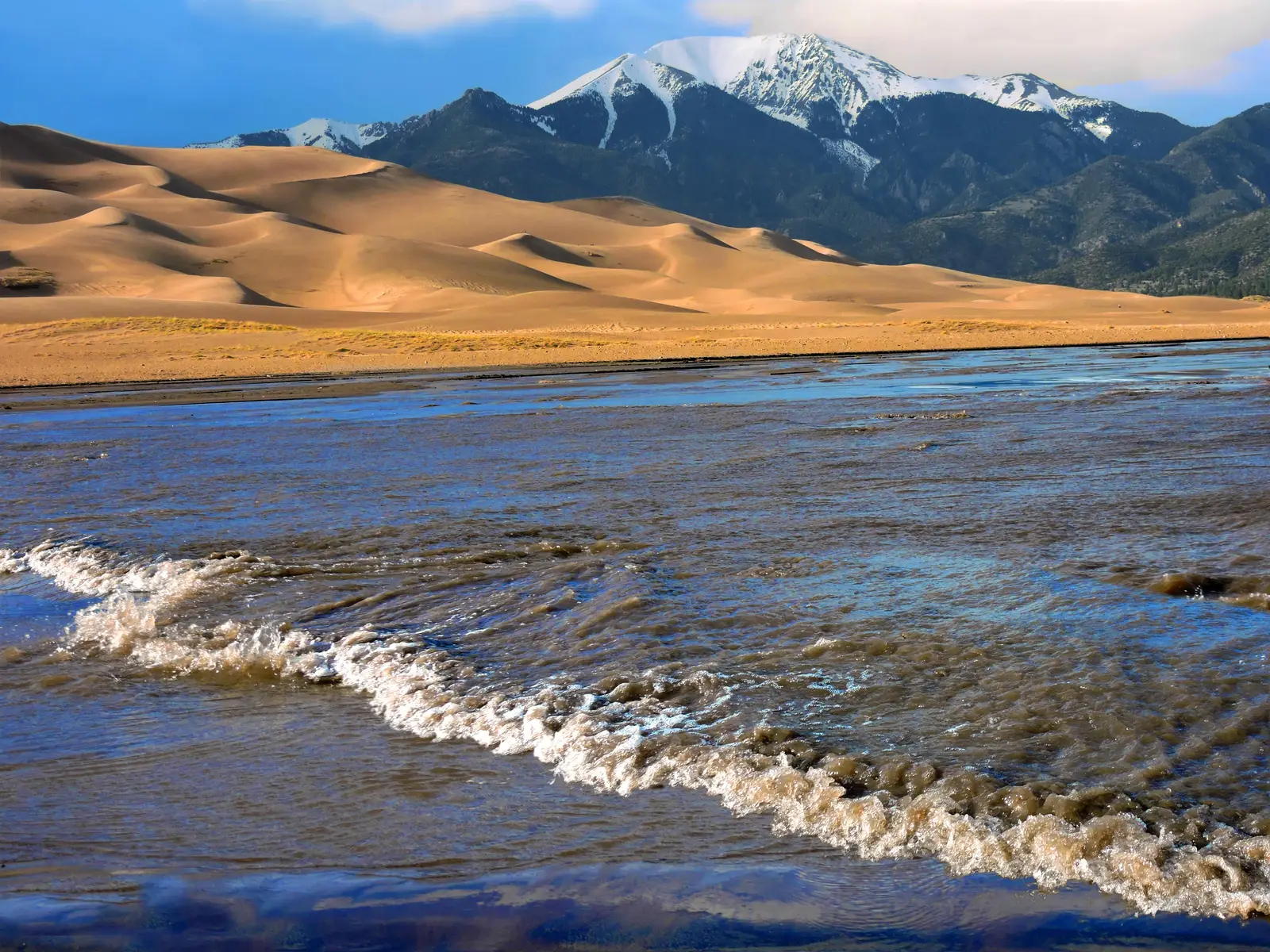
At the base of Colorado’s Great Sand Dunes, Medano Creek does a trick almost no other U.S. waterway pulls off. In late spring and early summer, the shallow creek develops “surge flow” waves that look like a looping video glitch, with water pulsing in rhythmic bursts over a rippled sandbed and creating temporary mini-lakes only inches deep.
Wide shots of kids playing in front of 700-foot dunes, with reflective water at their feet, look almost staged. Scientists explain surge flow as tiny underwater sand dams building and collapsing in sequence, but that doesn’t make the sunset shots any less unreal: pink sky, golden dunes, and mirror-flat sheets of water that exist for minutes, then vanish completely.
#17 – Lake Clark, Alaska: Glacier Milk in a Volcanic Bowl
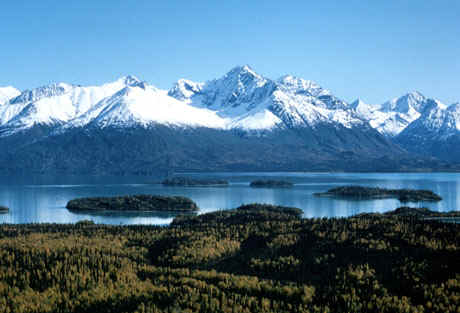
Alaska’s Lake Clark combines two things that already look fake on their own: translucent turquoise “glacier milk” water and a dramatic volcanic backdrop. Fed by glacial rivers, the lake turns an almost opaque blue-green in summer, so dense with rock flour that boats leave chalky wakes like white marker lines across a tablet screen.
Surrounding peaks, some of them volcanic, add snow lines and ash layers that look digitally enhanced in nearly every panoramic shot. Rangers say visitors expecting “normal” blue lake water are often genuinely unnerved by the milky opacity, since your brain associates that color and thickness with paint, not drinking water. Most Instagram comments scream “overedited,” but the uncomfortable truth is that this landscape is simply operating on a scale and palette we rarely see anywhere in the Lower 48.
#18 – Devil’s Bathtub, Yellowstone: Too Perfect to Trust
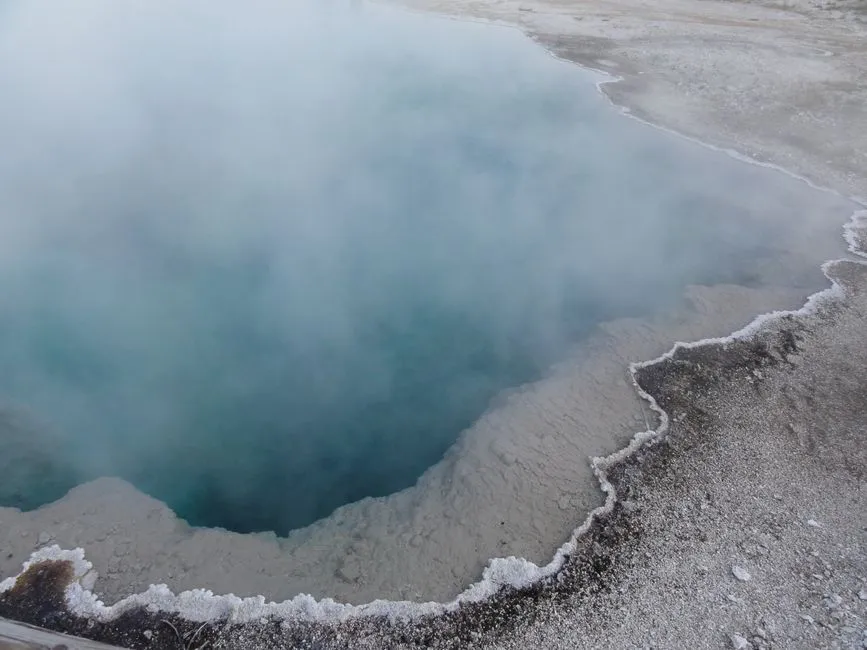
We end where Photoshop accusations never really stop: Yellowstone’s small, unnervingly perfect pools like the so-called Devil’s Bathtub and its brilliantly colored geyser basin neighbors. These features have edges so clean and colors so saturated, pure teal centers, golden rims, rust-red outer rings, that many viewers assume they’re illustrations, not photographs.
The water is so clear that bacterial mats, mineral shelves, and gas bubbles create layered textures like a rendered 3D scene. Rangers describe a strange, repeated reaction: people look at the pool, then back at their phone screen, convinced the live view has somehow been “enhanced” by the camera. If anything, phones underexpose the highlights and deepen the colors, meaning this is one of the rare places on Earth where reality bullies digital imaging into looking honest.
Here’s the uncomfortable truth behind all 18 of these places: our brains are calibrated for average landscapes, not edge-case physics. When light, minerals, microbes, depth, and stillness line up just right, the result looks fake to us, even when it’s the camera struggling to keep up, not the scenery lying.
That’s exactly why rangers spend more time debunking “Photoshop” accusations than actual myths about these parks. My honest take? The more time we spend doomscrolling hyper-edited travel content, the worse our instincts get, to the point where we’re ready to call the real, unfiltered version of nature “fake” and the fake stuff “authentic.” These 18 lakes are the proof that reality still wins, if you’re willing to believe your own eyes over your feed. Did we miss a U.S. lake you swore was edited until you saw it in person? Drop it in the comments and start the argument.