
Earth’s future holds secrets that both fascinate and terrify scientists. While we can look back millions of years into our planet’s history with remarkable clarity, predicting what lies ahead becomes an exercise in educated speculation. From the slow dance of continents to the dramatic shifts in climate, our planet remains in constant flux.
These transformations won’t happen overnight, yet they represent some of the most profound changes our world could ever experience. The possibilities range from gradual transitions that unfold over millions of years to sudden catastrophic shifts that could reshape life as we know it. Let’s explore five of the most compelling scientific hypotheses about Earth’s distant future.
The Great Tipping Point Cascade
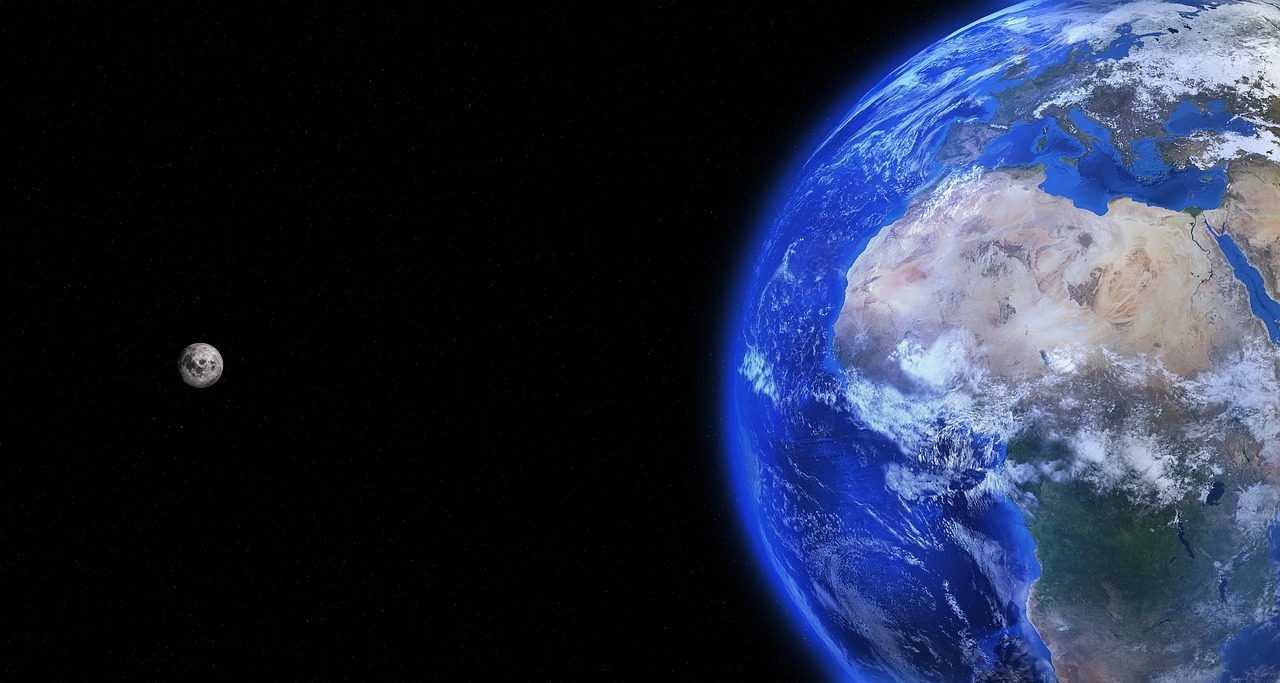
Our planet appears to be approaching multiple climate tipping points simultaneously, creating the potential for what scientists call a “tipping cascade.” Humanity has reached the first Earth system tipping point, the widespread death of warm-water coral reefs, marking the beginning of irreversible planetary shifts. This isn’t just about coral reefs disappearing from tropical waters.
The interconnected nature of these systems means one collapse could trigger another. The Arctic is warming almost four times faster than anywhere else in the world, accelerating ice melt from the Greenland Ice Sheet. This in turn could be what is slowing down the ocean’s circulation of heat, the Atlantic Meridional Overturning Circulation (AMOC), in turn impacting the monsoon system over South America. Monsoon changes may be contributing to the rising frequency of droughts over the Amazon rainforest, lowering its carbon storage capacity and intensifying climate warming.
The speed at which this cascade unfolds could determine whether Earth enters what researchers call the “Hothouse Earth” scenario. Some scholars have proposed a threshold which, if crossed, could trigger multiple tipping points and self-reinforcing feedback loops that would prevent stabilisation of the climate. This scenario is sometimes called the Hothouse Earth scenario. The researchers proposed that this scenario could unfold beyond a threshold of around 2 °C above pre-industrial levels.
Earth’s Next Supercontinent Formation

The slow waltz of continental drift continues beneath our feet, and scientists predict our familiar world map will look completely different in the distant future. At 250 million years in the future, the Atlantic is predicted to have closed, with only small vestiges of the former ocean remaining. North America will have collided with Africa, but be in a more southerly position than where it rifted away. South America is predicted to be wrapped around the southern tip of Africa and Antarctica, completely enclosing the Medi-Pangaean Sea.
This future supercontinent, dubbed Pangaea Proxima, won’t be a hospitable place. The Earth is expected to have a hothouse climate with an average global temperature of 28 °C (82 °F). The only areas likely to be habitable for land mammals are those closest to the poles. The interior regions could become scorching wastelands where temperatures routinely exceed what most life forms can survive.
It has been suggested that the rise in pCO2 and the increased continentality that would accompany the assembly of Pangaea Proxima will result in climatic extremes intense enough to bring about the mass extinction of mammals. Imagine a world where only the polar regions offer refuge from deadly heat, while vast continental interiors become uninhabitable deserts.
The Sun’s Inevitable Brightening

In approximately 1 to 2 billion years, the Sun’s increasing luminosity – rising by about 10% – will trigger a moist greenhouse effect, causing runaway evaporation of the oceans and rendering the surface uninhabitable for complex life. This represents one of the most certain predictions about Earth’s far future, based on our understanding of stellar evolution.
The process begins much sooner than that final catastrophic phase. This main-sequence evolution continues, with models projecting a luminosity rise of approximately 1% every 110 million years. Over the next 1 billion years, solar output will thus increase by about 9%, delivering progressively higher insolation to Earth. Even these seemingly small changes will have dramatic consequences for our planet’s climate systems.
In approximately 500 million to 1 billion years, the level of carbon dioxide will fall below the level needed to sustain C3 carbon fixation photosynthesis used by trees. This means that long before the oceans boil away, Earth’s plant life will begin to struggle and eventually fail, fundamentally altering the biosphere in ways that make complex life increasingly difficult to sustain.
Glacial Cycles and Ice Age Patterns
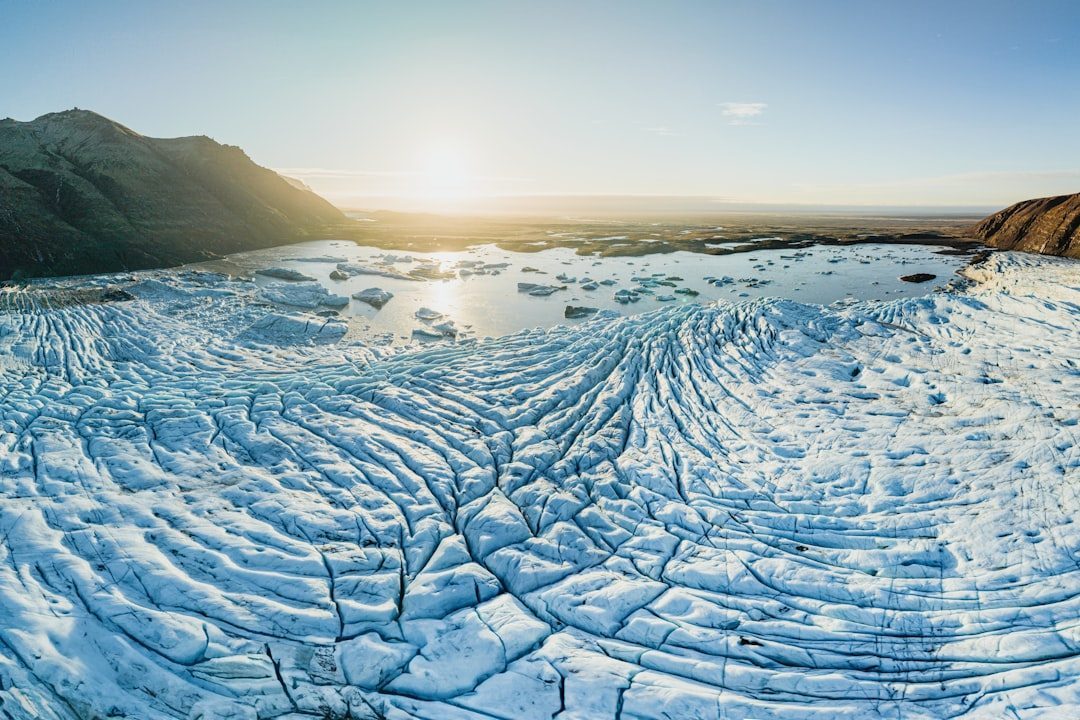
Even as we worry about global warming, Earth’s natural orbital cycles continue their ancient rhythm. Milankovitch’s theory predicts that the planet will continue to undergo glacial periods at least until the Quaternary glaciation comes to an end. These periods are caused by the variations in eccentricity, axial tilt, and precession of Earth’s orbit. These cosmic forces operate on timescales that dwarf human civilization.
The interplay between human-caused warming and natural cooling cycles creates a complex puzzle for scientists. While our current greenhouse gas emissions may delay or prevent the next ice age, the underlying orbital mechanics haven’t stopped. Despite such interactions, highly accurate simulations show that overall, Earth’s orbit is likely to remain dynamically stable for billions of years into the future. In all 1,600 simulations, the planet’s semimajor axis, eccentricity, and inclination remained nearly constant.
The potential for chaotic variations, with changes in the axial tilt of up to 90° in the next few billion years adds another layer of uncertainty. Such extreme tilting could create climate conditions unlike anything in Earth’s recorded history, with one hemisphere experiencing permanent summer while the other endures endless winter.
The Final Stellar Catastrophe
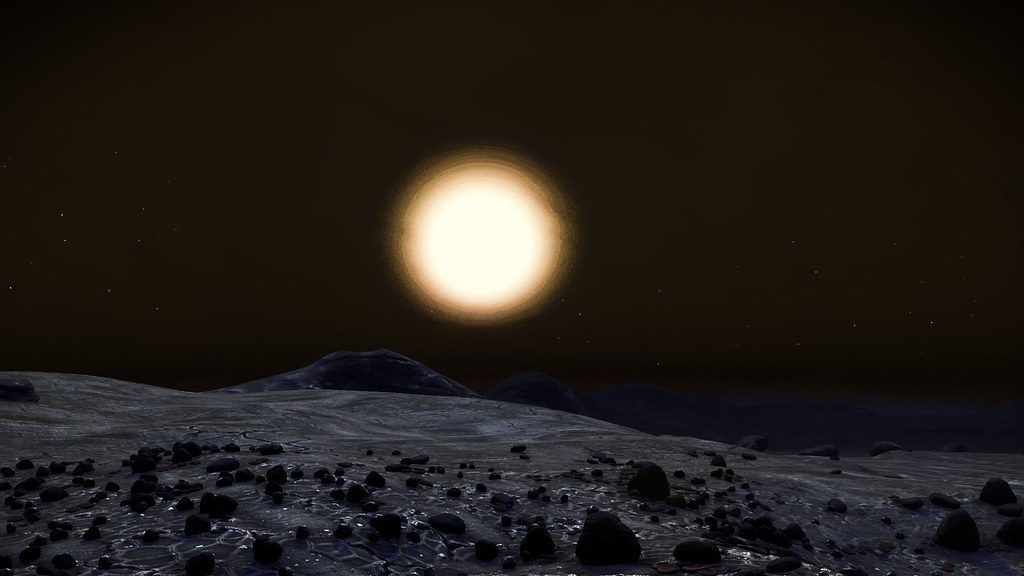
Perhaps the most definitive prediction about Earth’s future involves our Sun’s eventual death throes. Ultimately, in approximately 5 billion years, the Sun will exhaust its core hydrogen, expand into a red giant phase, and likely engulf Earth after shedding substantial mass and altering planetary orbits, ending any possibility of terrestrial existence. This represents the ultimate deadline for life on our planet.
Interestingly, there’s some debate about whether Earth will actually be consumed by the expanding Sun or merely become a charred, lifeless rock orbiting a white dwarf. Observations of white dwarf systems support this scenario, indicating that terrestrial worlds can endure the progenitor star’s red giant evolution and persist in stable orbits around the compact remnant. The planet’s detection implies a composition akin to modern Earth, with iron core and silicate mantle, unaltered significantly post-transition.
Even if Earth survives the Sun’s red giant phase, the aftermath offers little hope for life. Over billions of years thereafter, the white dwarf will cool to a black dwarf, its luminosity fading to negligible levels, rendering Earth a frozen, inert body in perpetual darkness with surface temperatures approaching 3 K. This represents the final chapter in Earth’s story, a frozen tomb drifting through the cosmic dark.
These five hypotheses paint a picture of a planet in constant transformation, shaped by forces both terrestrial and cosmic. While these timescales stretch far beyond human experience, they remind us that our Earth is neither permanent nor static. From climate tipping points that could unfold within centuries to stellar evolution that will play out over billions of years, our planet’s future holds both wonder and warning. What strikes me most is how these various forces interact and overlap, creating a complex web of change that challenges our understanding of permanence itself. What do you think about these cosmic timescales and Earth’s ultimate destiny?
