



Picture two anglers on the same dock at sunrise, same rods, same bait, same stretch of water. One of them reached into his wallet for a license, a stamp, and maybe a small permit. The other, a retired guy with a thermos and a faded ball cap, only had to show a driver’s license.
That gap is real, and it is bigger than most people think. Once you turn 65 (or sometimes 60, or 62, depending on the state), a surprising number of fees can shrink or disappear. Some of the items on this list are obvious. A couple are the kind of fine print most anglers never read until a warden walks up. Keep going, because the numbers get more interesting as the list counts down, and the last item is where the rules get strangest.
#8 – The Annual Resident Fishing License

This is the big one, and the one most seniors already know about. Most states require anglers 16 and older to carry a paid license, but a good number of them lift that requirement for older residents. Florida, Alabama, Mississippi, and Rhode Island are commonly cited examples, and Missouri has its own senior provisions too. In many of these places, a driver’s license or state ID showing age and residency is all you need.
The savings vary, but a standard adult resident license often runs somewhere between $15 and $30 a year. That does not sound like much until you picture a retiree who fishes every week from April to October. Over ten years, that is a few hundred dollars that stay in the tackle budget instead of the state’s general fund.
In coastal states, the exemption sometimes covers freshwater and saltwater together. That matters because younger anglers in those states often juggle two separate licenses. A senior who fishes the bayou on Tuesday and the pier on Saturday may need neither.
- Proof of age and residency is almost always required on the water, so carry it.
- Non-residents rarely get the same break, even if they are well past 65.
- The age cutoff is not universal. Some states start the exemption earlier, and others add birth-date rules.
#7 – Trout, Salmon, and Other Species Stamps
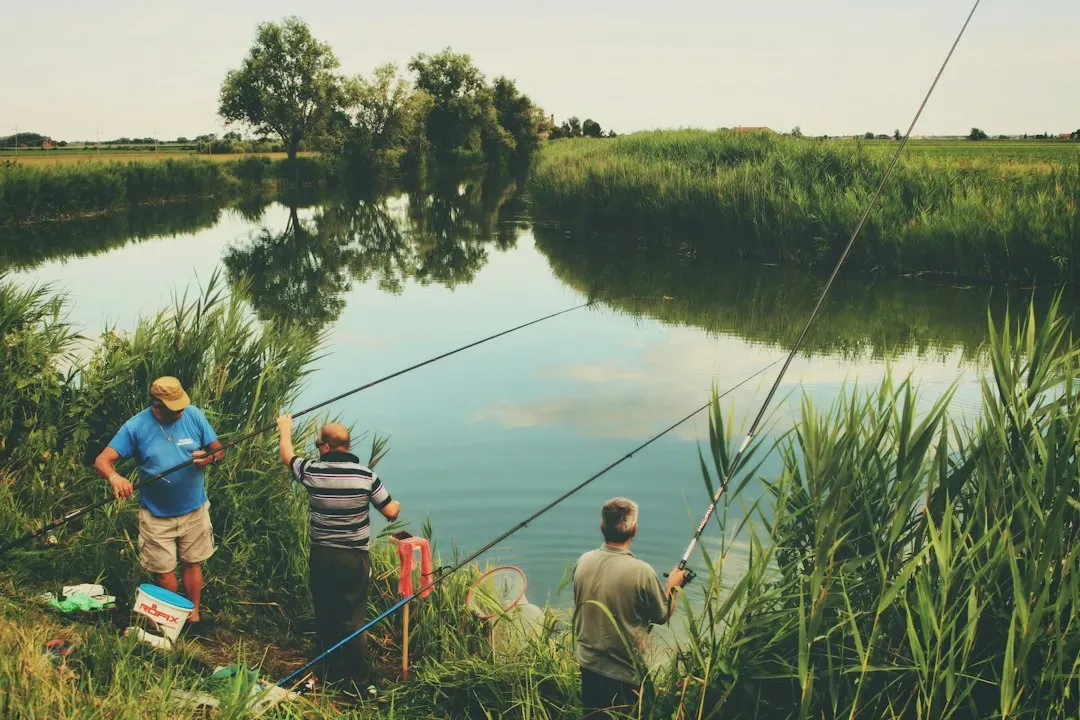
Here is where the fine print starts to bite. Beyond the base license, many states charge extra for the fish people most want to catch: trout, salmon, steelhead, and sometimes walleye or musky. These stamps can quietly double what a younger angler pays, because each one is a separate line item.
In states with comprehensive senior programs, those add-ons can fall away along with the base license. When you add the license and a couple of stamps, a younger angler’s total can climb past $40. A qualifying senior in a generous state may pay nothing at all for the same cold-water access.
Quick Compare
- Generous senior states: the base license and the add-on stamps can both disappear.
- Mixed states: the base license is waived, but the trout or salmon stamp is still on you.
- Younger anglers: a license plus a couple of stamps can top $40.
But this is also the item where exemptions get uneven. Some states fold stamps into a single senior document. Others waive the base license and still expect you to buy the trout or salmon stamp. The only way to know is to read your state wildlife agency’s exemption page before opening day, not after.
Nothing about the rules themselves changes, either. Seasons, size limits, and gear restrictions still apply to everyone. The exemption removes a fee, not a responsibility, and wardens in trout country are not shy about checking.
#6 – Saltwater Permits in Coastal States

Coastal states often split fishing into freshwater and saltwater licenses, and anglers who do both end up paying twice. For older residents in Florida, that second bill can vanish. Florida’s senior exemption is tied to age and residency, and the state’s wildlife agency notes that it extends to certain permits, including the ones for snook and spiny lobster.
Alabama and Mississippi follow similar patterns for older residents, and Louisiana is notable for starting its senior break earlier than most, at 60 rather than 65. That is a small detail that catches people off guard in both directions. Some seniors assume they must wait until 65 and pay for years they did not need to.
A saltwater add-on can cost anywhere from roughly $15 to $30 a year, and specialty permits stack on top of that. For a retiree who fishes inshore flats or piers a few times a month, skipping those charges feels like finding a twenty in an old jacket.
- Check species-specific rules before every trip, because exemptions do not change bag limits.
- Separate federal requirements for certain offshore species can still apply.
- Keep your residency proof current, since a lapsed ID can undo the whole benefit.
#5 – Wildlife Management Area and Restricted Water Permits

Some of the best fishing in a state sits behind an extra gate: a stocked lake, a managed wetland, a special-access reservoir. In certain states, getting in requires a permit on top of the regular license, often a few dollars per trip or per season. These charges are easy to miss because they are tucked into access rules rather than the license page.
In states with broad senior exemptions, those area-specific fees can fall away for qualifying residents. A regular angler who hits several managed waters in a year can easily spend $20 to $50 on layered permits. A senior in an exempt state may spend nothing for the same access.
At a Glance
- Where it shows up: stocked lakes, managed wetlands, and special-access reservoirs.
- Typical cost: a few dollars per trip or season, or $20 to $50 a year when layered.
- Often still owed: parking, boat ramp, and day-use fees.
- Never waived: posted rules, bag limits, and area closures.
This matters most for people on fixed incomes who fish the same few productive spots year after year. They are not chasing trophies in far-off places. They are showing up at the lake that has been theirs for forty years, and the state has decided they should not have to pay at the gate.
One caution: waiving a permit does not erase other charges. Parking, boat ramp, and day-use fees are often handled by different agencies and may still apply. And posted rules, bag limits, and area closures bind everyone equally.

Portable Dog Water Bottle Foldable Dog Travel Water Bottle
Check Price on AmazonAs an Amazon Associate, we earn from qualifying purchases.
10/7/2026 1:29 pm GMTi

Halloween Cat Costume Cloak Witch Hat Pet Accessories
Check Price on AmazonAs an Amazon Associate, we earn from qualifying purchases.
10/9/2026 2:44 pm GMTi

Dog Stairs for Bed 18" H, 4-Step Dog Steps for High Bed
Check Price on AmazonAs an Amazon Associate, we earn from qualifying purchases.
10/9/2026 2:42 pm GMTi

Halloween Dog Collar with Bow, Orange Cute Ghost Collar,
Check Price on AmazonAs an Amazon Associate, we earn from qualifying purchases.
10/9/2026 2:43 pm GMTi

2 Pcs Halloween Pet Hat Bandana Set, Witch Pumpkin Costumes for Dogs
Check Price on AmazonAs an Amazon Associate, we earn from qualifying purchases.
10/9/2026 2:45 pm GMTi
#4 – The Lifetime License Price Tag

Here is where the savings suddenly look dramatic. A standard lifetime fishing license can cost a few hundred dollars in many states, with figures in the $200 to $500 range common for adults. Younger anglers sometimes buy one to dodge annual renewals for good.
Seniors in some states get the same permanent privilege for free or close to it. Georgia is a well-known example, offering a free lifetime option to older residents who meet its age and birth-date requirements. Other states offer heavily discounted lifetime senior cards, often priced well below the regular lifetime rate.
The appeal is obvious. One application, one card, and you are done for the rest of your fishing years. There is no yearly reminder, no renewal window to forget, and no worry about prices creeping up.
- Birth-date cutoffs matter. Some states tie free lifetime status to specific generations.
- An application can still be required even when the fee is zero.
- Lifetime does not always mean every permit and stamp is covered, so read what is included.
#3 – Hunt-Fish Combo Packages

Some states sell combination licenses that bundle hunting and fishing into one purchase. They are convenient for people who do both, and a poor deal for people who only fish. An older angler who has not picked up a shotgun in years can still end up looking at a bundled price above $40.
Senior provisions often fix that mismatch. Depending on the state, the fishing portion of a combo may be waived, the entire fee may be dropped for anglers who only fish, or the senior may simply carry proof of age instead of buying the package. Florida’s senior exemption, for instance, is described as reaching both hunting and fishing licenses along with many associated permits.
Why It Stands Out
- It ends the habit of paying for hunting coverage you will never use.
- The fix can be a waived fishing portion, a dropped fee, or just proof of age.
- The savings are easiest to see against a bundled price above $40.
The savings compound for anglers who stick to the water. They avoid paying for coverage they will never use, which is one of the most irritating ways a license can cost more than it should.
As with everything on this list, residency decides the outcome. Non-residents are generally priced at full rate no matter how old they are, and a combo bought out of state is rarely discounted.

Air Purifiers for Home Pets Large Room Up to 3000 Ft²,HEPA Air Cleaner with Washable Double-Side Filter, PM2.5 Air Quality Monitor,15dB Sleep Mode for Bedroom Odor Dust Pollen,White
Check Price on AmazonAs an Amazon Associate, we earn from qualifying purchases.
10/8/2026 8:23 am GMTi

Smart Bird Feeder with Camera Solar Powered, 2K HD Live Video, 10,000+ Bird Species AI Identification
Check Price on AmazonAs an Amazon Associate, we earn from qualifying purchases.
10/7/2026 1:22 pm GMTi

PetSafe Oasys Pet Fountain, 1/2 Gallon (64 oz), Small Dogs & Cats
Check Price on AmazonAs an Amazon Associate, we earn from qualifying purchases.
10/8/2026 8:14 am GMTi

Earth Rated XL Dog & Puppy Pee Pads, Discreet Top, Max Absorbency
Check Price on AmazonAs an Amazon Associate, we earn from qualifying purchases.
10/7/2026 1:28 pm GMTi

Glass Hummingbird Feeder for Outdoors Hanging
Check Price on AmazonAs an Amazon Associate, we earn from qualifying purchases.
10/7/2026 1:21 pm GMTi
#2 – Renewal and Agent Transaction Fees
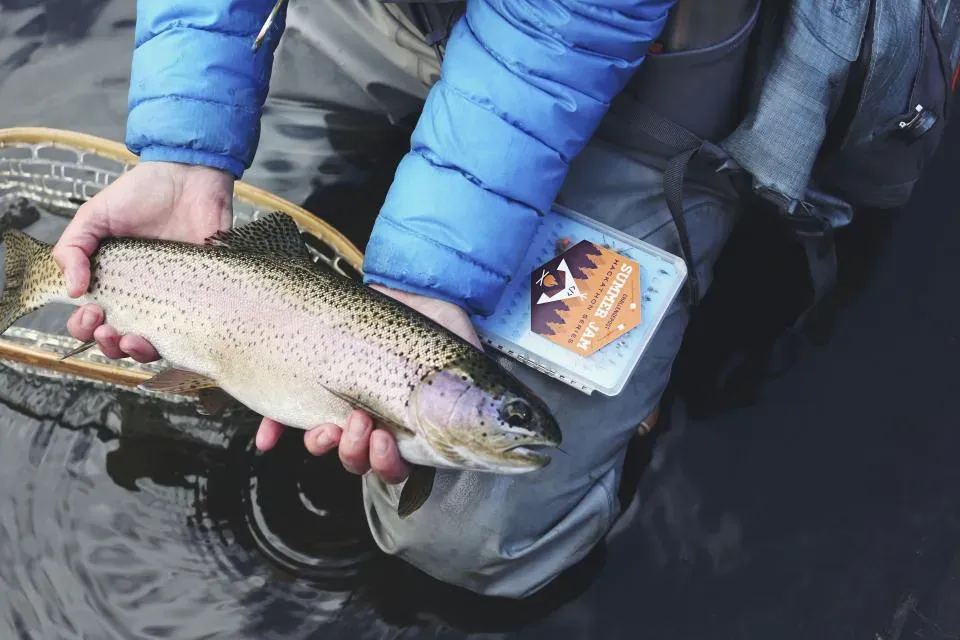
This one is sneaky, because nobody thinks of it as a charge. When you buy a license from a retailer or an online portal, there is often a small agent or processing fee on top, commonly $1 to $5. It feels like pocket change, and it shows up every year.
In full-exemption states, those micro-charges vanish with the base fee. If there is nothing to buy, there is nothing to add a convenience fee to. Over a decade of annual purchases, those small add-ons can reach $50 or more, which is the price of a decent rod and reel.
There is a quieter benefit too: less paperwork. Many states let eligible seniors get a free certificate or simply rely on a valid ID, rather than going through the same renewal ritual each January. No lines, no expired cards, no scramble the night before a trip.
That sounds minor, but it is the kind of thing retirees mention first when asked what they like about their state’s rules. Money matters, and so does not having to think about it.
#1 – Out-of-State and Border Water Fees

This final item is the strangest one, because it is where state lines start to matter more than age. Most states guard non-resident license revenue closely, so older visitors from elsewhere rarely get a free pass. Still, some border waters are covered by reciprocal agreements. Toledo Bend Reservoir between Louisiana and Texas is a well-known example, where anglers can fish across the line with a license from either state.
How a senior exemption fits into those agreements depends on the specific water and the states involved. An angler who is exempt at home may find the exemption stops at the state line, or that the neighboring state treats them as a regular non-resident. That uncertainty is the whole story here, and it catches people off guard because the water looks the same on both sides.
Seniors who fish near borders can sometimes avoid the full non-resident premium that younger anglers pay, but only when the agreement and the home-state rules line up. It pays to call the wildlife agency and ask, instead of assuming.

Orthopedic Extra Large Dog Bed, Waterproof Washable XL Pet Bed 44"
Check Price on AmazonAs an Amazon Associate, we earn from qualifying purchases.
10/7/2026 1:32 pm GMTi

Hand Blown Glass Hummingbird Feeders for Outdoors Hanging, 24oz Wild Bird Nectar Feeder
Check Price on AmazonAs an Amazon Associate, we earn from qualifying purchases.
10/7/2026 1:23 pm GMTi

Professional 7 in 1 Dog Paw Cleaner for Dogs & Cats - Includes 1 Portable Paw Washer, 1 Bath Brush
Check Price on AmazonAs an Amazon Associate, we earn from qualifying purchases.
10/7/2026 1:26 pm GMTi

Glass Hummingbird Feeder for Outdoors Hanging, 16 oz Leak-Proof Nectar Feeder with Bee Guards & Ant Moat
Check Price on AmazonAs an Amazon Associate, we earn from qualifying purchases.
10/7/2026 1:22 pm GMTi
Worth Knowing
- Reciprocal deals like Toledo Bend let anglers cross the line with a license from either state.
- A home-state senior exemption may not carry over to the neighboring state.
- A quick call to the wildlife agency beats guessing at the water’s edge.
My view is that this is the most outdated part of the whole system. People who spent decades buying licenses, supporting conservation through excise taxes, and moving between states for family and retirement deserve a simpler deal. Instead, the current patchwork leaves some seniors paying full price because they crossed an invisible line on a map.
Across all eight items, the pattern is clear. In generous states, a senior can go from a stack of charges to a single piece of ID. In stingier ones, the benefits shrink to a discount, and in states like California and Oregon, most older residents are still expected to pay.
That uneven landscape is hard to defend. If a state can waive fees for a 65-year-old in Mississippi, it can find a way to recognize the same angler on the other side of a river. The rules were built decades ago for a different kind of retiree, and they have not kept pace with the one standing on the dock at sunrise.
Until they do, the smartest move is also the simplest: check your own state’s exemption page, bring proof of age and residency, and never assume the price on the sign is the price you owe.