


Looking for Where to see Gray Whales? Do you want to find out where to see Gray whales? We we have the perfect locations for you! You’ll be ready before the next whale watching season! The gray whale, also known as the grey whale, grayback whale, Pacific gray whale, or California gray whale, is a baleen whale. Baleen whales, also known as whalebone whales. They are a widely distributed and diverse parvorder( taxonomy) of carnivorous marine mammals. Additionally, the gray whale is a remarkable migratory species in the animal kingdom. They travel in pods, with some of these colossal creatures covering a round-trip of 12,430 miles or 22,000 kilometers, journeying from their Alaskan summer habitat to the warmer waters off the Mexican coast.
| Key Point | Description |
|---|---|
| Species | Gray Whale (Eschrichtius robustus) |
| Size | Adults range from 39 to 49 feet (12-15 m) in length |
| Weight | Adults weigh around 30 to 40 tons |
| Lifespan | Average of 55 to 70 years |
| Migration | Undertakes one of the longest mammal migrations, traveling up to 12,000 miles |
| Feeding | Bottom feeder, primarily feeds on small crustaceans and amphipods |
| Benthic Feeding | Known for unique feeding behavior called “benthic feeding,” where they feed by rolling on their sides |
| Behavior | Known for their curiosity and tendency to approach boats |
| Conservation Status | Least Concern |
| Habitat | Eastern North Pacific stock (west coast of North America) and Western North Pacific stock |
| Breeding & Lifespan | Female gray whales tend to birth their young every two to three years. Lifespan is unknown, but estimated 75-80 years |
| Predators | Killer whales are the main predators |
| Friendly Interaction with Humans | Gray whales have become known for their friendly interactions with humans |
| Best Locations to See Gray Whales | 1. Baja California Peninsula, Mexico 2. California, United States 3. Oregon, United States 4. British Columbia, Canada 5. Alaska, United States |
Where to See Gray Whales: Top 5 Locations

Since gray whales migrate relatively close to shore, whale watching is very popular. Many opportunities are available for viewing gray whales from coastal cliffs and headlands or from whale watching boats.
#1 Where to See Gray Whales in Baja California Peninsula, Mexico
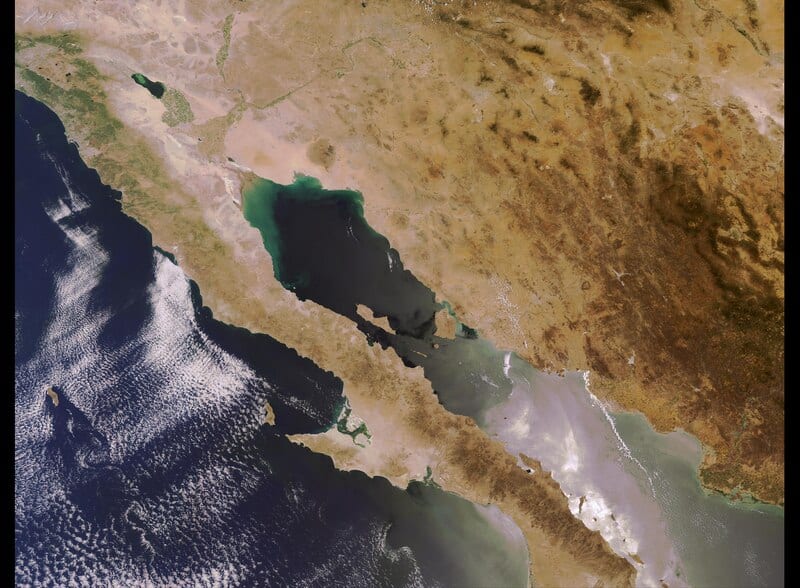
- Bahia de Banderas
- Cabo San Lucas
- Puerto Adolfo Lopez Mateos, Magdalena Bay
- Nayarit
- Reserve of the Biosphere El Vizcaino
- Loreto Bay
- Best times of the year to visit: November/ December- March/ April
#2 Where to See Gray Whales in California

- Palos Verdes Peninsula
- Ventura Pier
- Dana Point
- Los Angeles County
- San Diego
- Channel Islands
- Santa Cruz
- Mendocino
- San Francisco
- Best time: California, your best time to spot gray whales and orcas is December to May.
#3 Where to See Gray Whales in Oregon

The most common whale off the Oregon coast is the gray whale. In addition to the approximately 200 resident gray whales that live nearly year-round off Oregon, a winter and spring migration brings a magnificent number of up to 18,000 gray whales along the coastline.For some of the biggest views in the state, Cape Perpetua State Scenic Area is the place to recommend uninterrupted views, especially for breathtaking whale-watching. Best Times: Mid December- Mid January
#4 Where to See Gray Whales in Canada
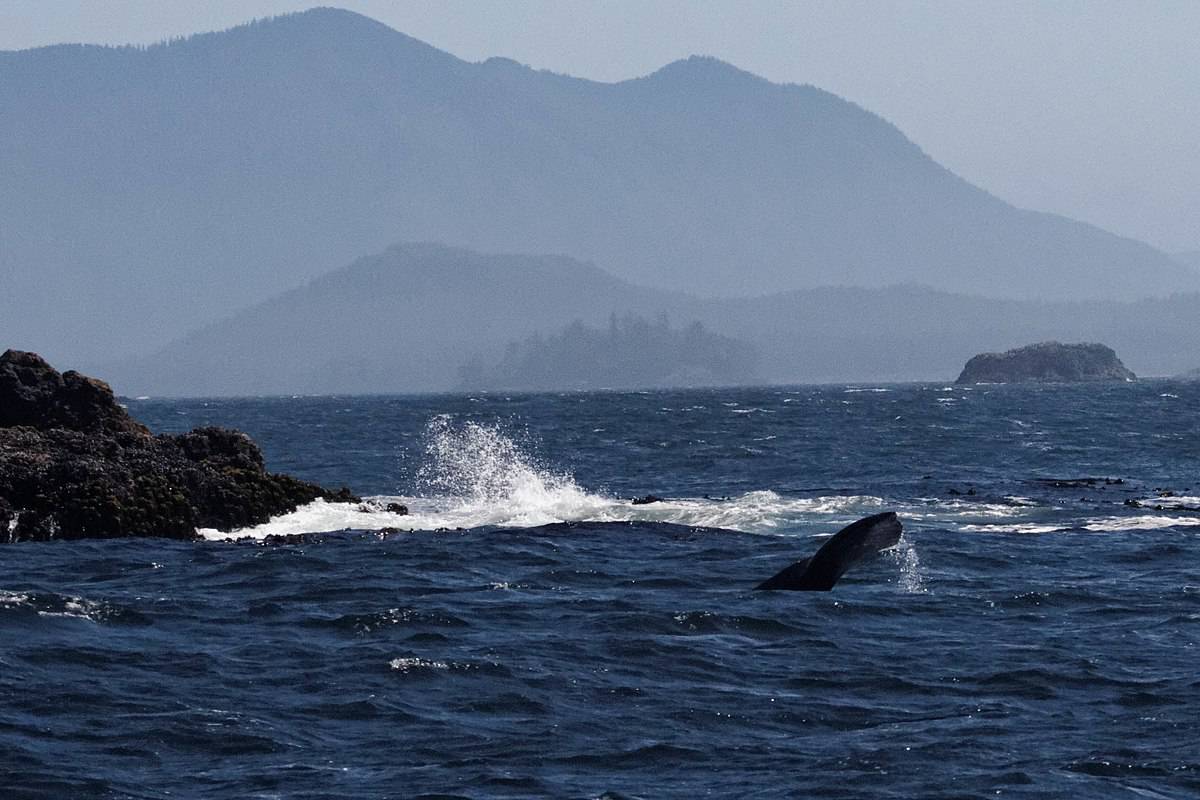
The reach of the gray whales in Canada: Coast of British Columbia to the top of Alaska. The west coast is most famous for viewing the gray whales as they migrate close to the Vancouver Island shore in the spring and fall. On a calm day it is possible to watch whales pass by from the many beaches and trails that extend along much of the coast between Ucluelet and Tofino. Notable Mention: The province of Newfoundland and Labrador, bordering Canada’s Atlantic coast, is widely regarded as one of the finest whale-watching spots worldwide! Best time to visit: June- July
#5 Where to See Gray Whales in Alaska

During summer, Gray Whales be found almost everywhere along Alaska’s coast, from Southeast to the Bering Sea, including Gulf of Alaska areas close to Anchorage. The best time to whale watch: April – November
Size & Appearance

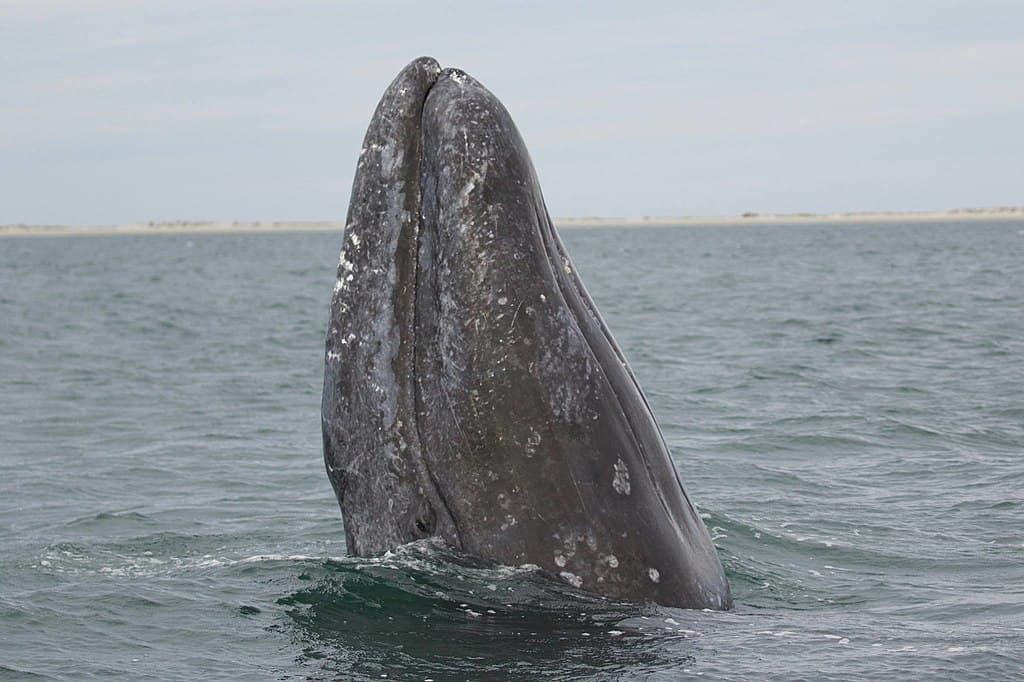
Gray Whales remains the large baleen whales. These whales are of moderate size, growing to a maximum length of 49 feet (15 meters), typically with females surpassing males in size. Appearance: Grey along with white patches, covered in barnacles and sea lice. These whales have been seen bearing an average of more than 400 pounds or 180 kilograms of barnacles and whale lice. Unlike many other whale species, gray whales lack dorsal fins. Instead, they sport a sometimes noticeable low hump along their back.
Diet/ Feeding

Gray whales sits uniquely at bottom-feeding animals. They roll on their side and suck up sediment while slowly swimming along the seafloor. And during their summer, can spend up to 20 hours feeding in arctic waters. So it is very unlikely to hurt humans, but if you want to read about an encounter between a whale and two kayakers, check out one of our other articles.
Habitat
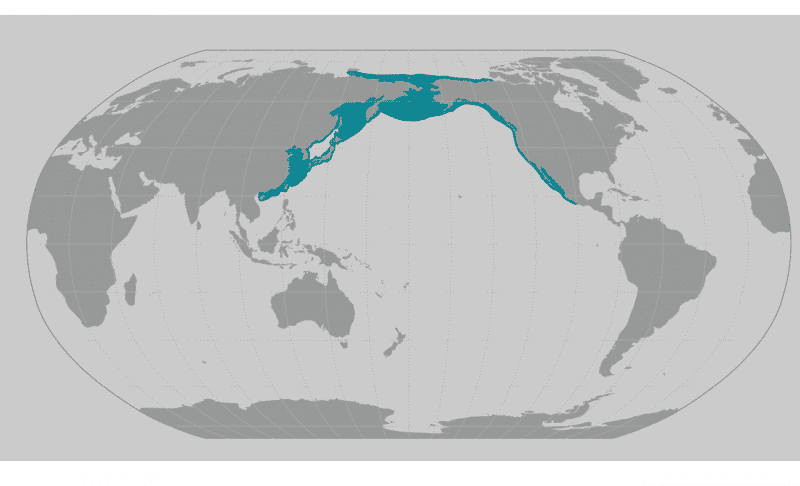
Gray whales above the equator are divided into two geographic distributions: the eastern North Pacific stock, located along the west coast of North America, and the western North Pacific stock is located along the eastern Asian coastline. The majority of gray whales from the eastern North Pacific stock feed in the northern Bering and Chukchi Seas during the summer. However, a portion of these whales also feed along the Pacific coast in summer, ranging from Southeast Alaska down to Northern California, encompassing waters off British Columbia, Washington, and Oregon. North Atlantic populations were extinct on the European coast before 500 AD, and on the American coast around the late 17th to early 18th centuries. Yet there have been recent sightings of whales along the Mediterranean sea, suggesting a repopulation in breeding grounds that were previously abandoned for centuries. In May and June 2013, a gray whale was sighted off the coast of Namibia, the first confirmed sighting in the Southern Hemisphere. This has indicated that new patterns of migration may be arising for these whales. The round-trip journey of one gray whale has set a new record for the longest mammal migration, covering a distance of more than 22,000 kilometers across the Pacific Ocean. In summer, they reside in the Arctic, feeding on bottom-dwelling organisms. With reduced sunlight and food in fall and colder waters, they migrate along the coast to Baja California, Mexico.
Behavior/ Nature
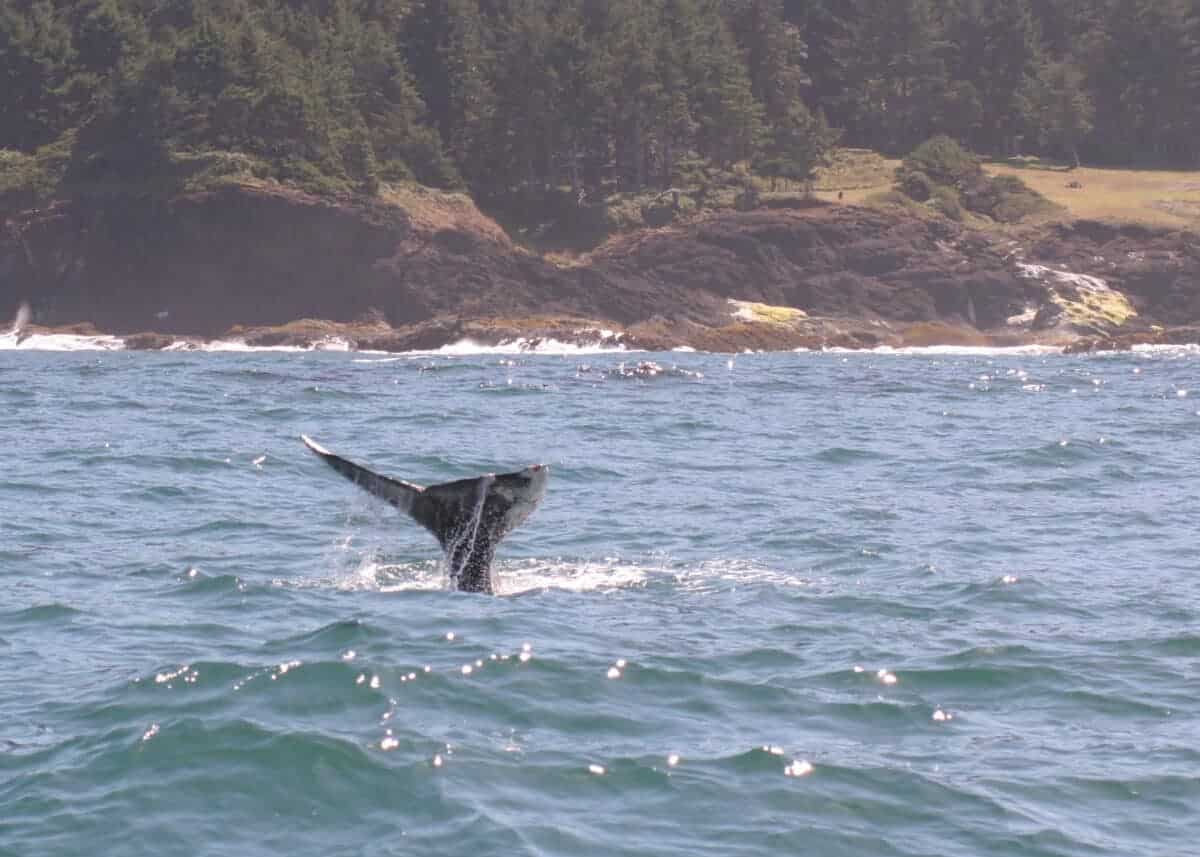
Gray whales turn out to be slower swimmers, despite the distance of migration so killer whales are a common predator. Gray whales were once known as “devil fish” due to their aggressive nature encountering humans who tried to harpoon the whales. However since then have been known to be the friendliest gentle giants of the sea. They usually Travel alone or in small groups besides when feeding or breeding.
Conservation
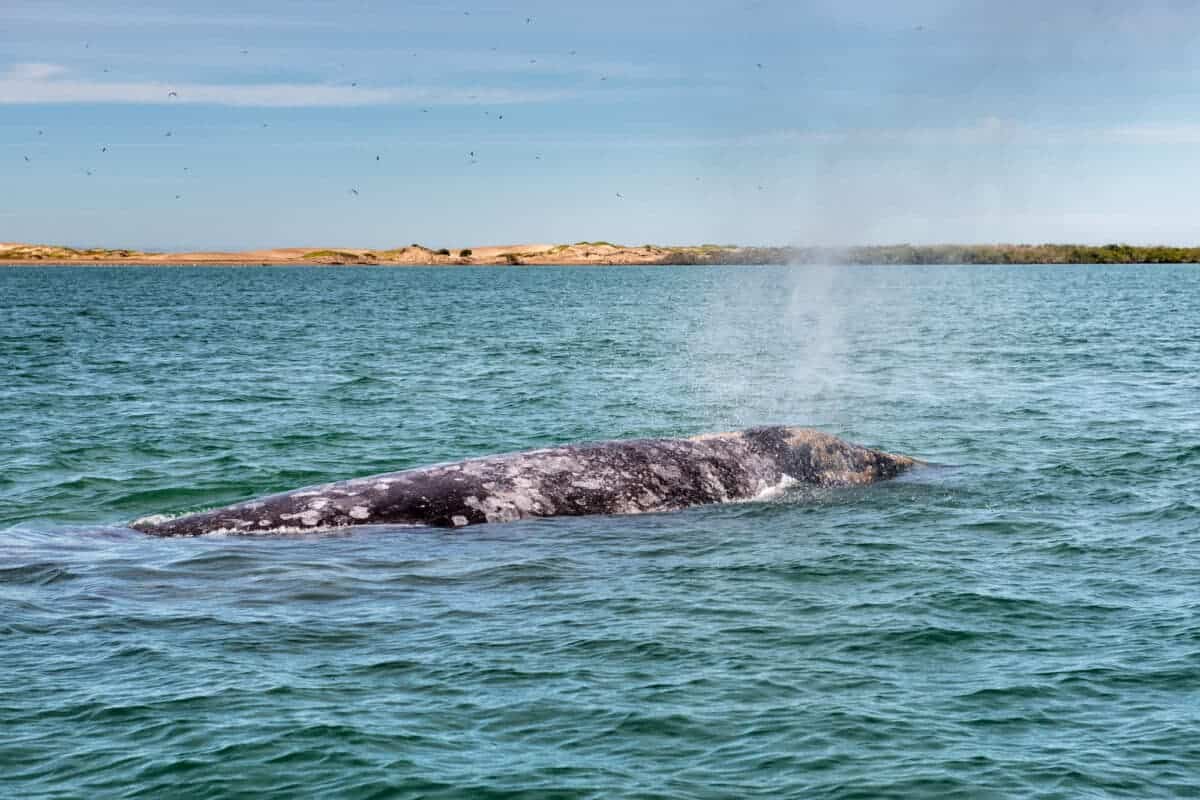
Gray whales neared extinction due to extensive hunting. Initially, the discovery of their breeding grounds in the late 1800s resulted in devastating losses as whalers killed many, making hunting unprofitable and enabling their population to rebound. However, advancements in harpooning technology and factory ships the period between 1900 and 1910 caused a renewed and intensified hunting, leading to a sharp decline to possibly less than 2,000 whales. An international agreement in 1946 halted hunting, aiding the species’ recovery, although the North Pacific population sadly went extinct, likely due to past excessive hunting.
Current Threats
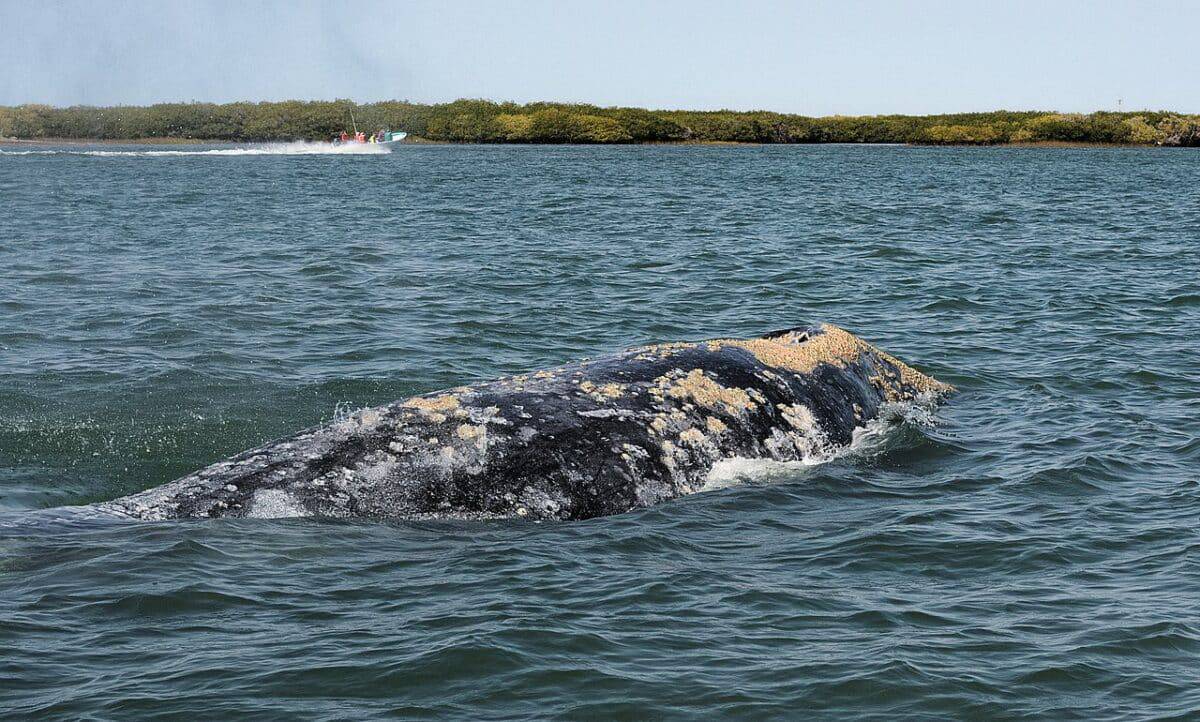
Predators: The most frequent predators of gray whales, particularly calves, are killer whales. Many gray whales display killer whale tooth rake scars and disfigurements on their bodies; particularly on their tail flukes. Attacks are not always fatal, but pods of killer whales regularly attack, kill and consume gray whales, targeting calves, on migration as well as in summer feeding areas. Anthropogenic/ Human threats: Gray whales portray vulnerable to accidental entanglement in fishing gear. The feeding grounds of western gray whales are directly positioned within significant oil and gas fields along the Russian coast, raising considerable concerns about the potential effects of oil and gas exploration and production on the gray whale population and their habitat.
Are Gray Whales Friendly?
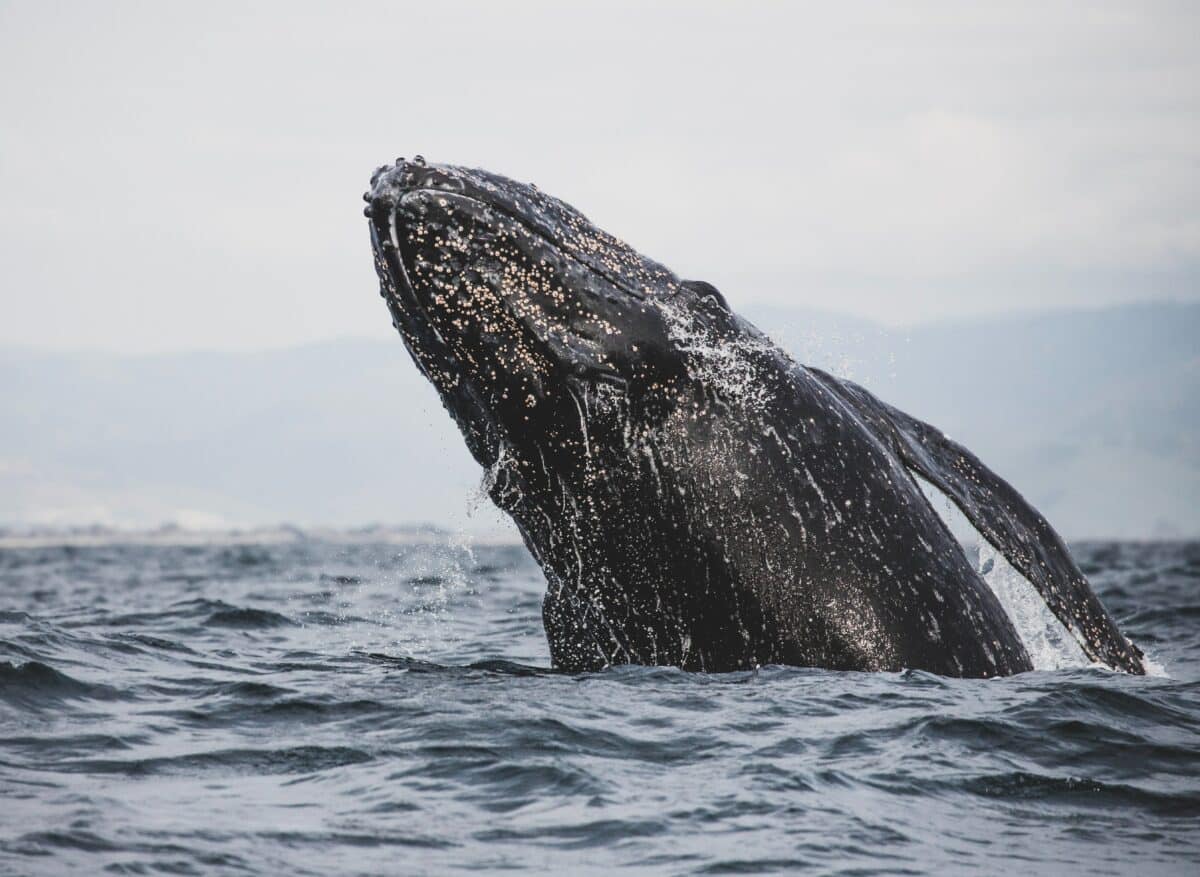
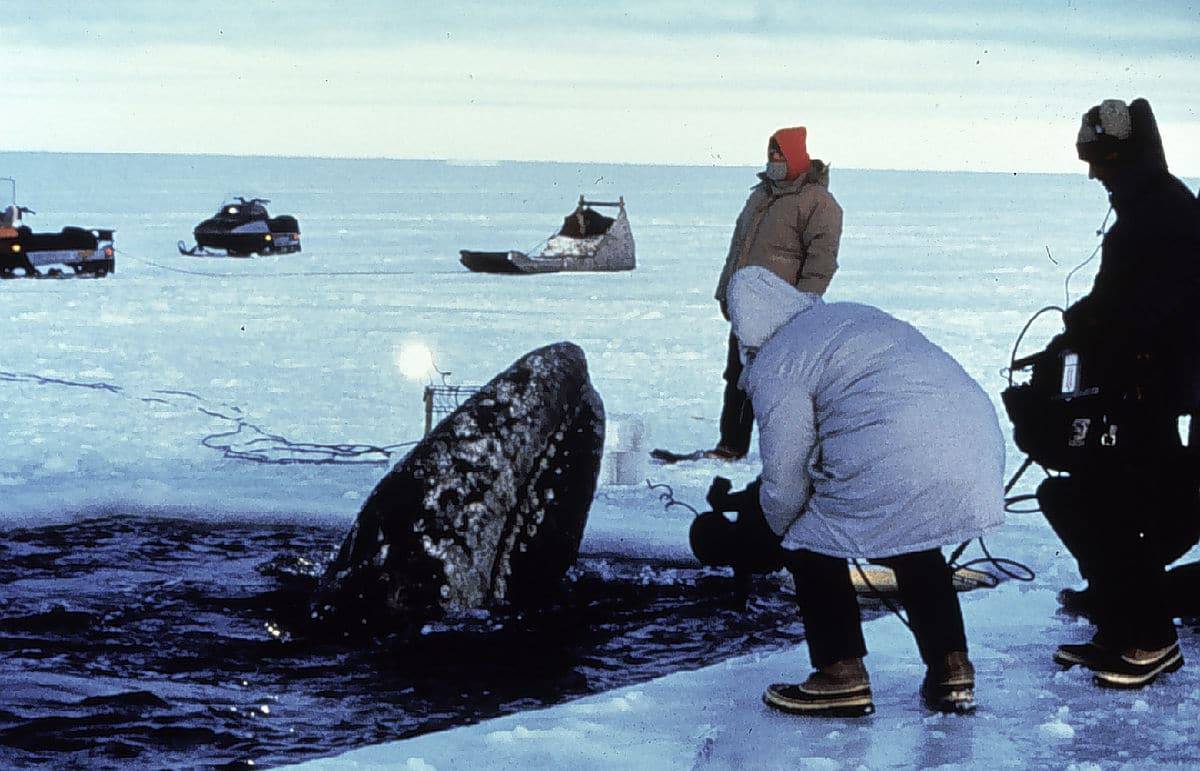
With the end of whaling, most Gray Whales have become best known for their friendly interactions with humans. They generally seem undisturbed by kayakers, even when with calves. In the birthing lagoons, some whales have begun to approach small vessels and allow themselves to be touched by humans, a behavior first reported in 1976. After whaling, whales became friendly to passers by and have even been known to come close to coastline as gentle giants roaming shallow waters. They may even be known as the friendliest whale of all. Can you interact with whales? Despite the gray whale being the friendliest of the gentle giants, it is important to take this into consideration: Generally, swimming with whales is illegal, dangerous and a bad idea to approach this large marine mammals. It is even worse to go close to their calves. Mothers are very protective over their calves.
Disturbance from Whale Watching Activities
Whale watching has become an important recreational industry in several communities along the North American coast from British Columbia, Canada, to the gray whale populated waters of Baja California, Mexico. Whale watching along this route may lead to disturbance and affect gray whale behavior and therefore it is of utmost importance that tourists and operators practice sustainable methods of tourism.
How to practice ethical and sustainable tourism:
- Keep a distance and limit watching time when in proximity to whales.
- Report marine life being disturbed or whales in distress.
- Reduce speed of sea vessel and be on the lookout for marine animals.
- Report a violation to local marine protection ( National Oceanic and Atmospheric Administration (NOAA)) .
Summary on Where to see Gray Whales
Has this whale left you in its awe after learning about its incredible migration, friendly nature, and triumphant growth in population after a history of harpooning? These gentle giants are a privilege to witness along their annual migration. May we continue to celebrate and acknowledge how special gray whales are, following steps to make sure activities of whale watching are always sustainable and ethical. If you are an avid whale watcher and enjoyed reading about the best places to see Gray whales, have a look at our whales category that features blogs about all Whales, Fin and Orca Whales.

As a little kid, I fell in love with nature, wildlife, and animals. Living in the USA, South Africa, Italy, China and Germany gave me the opportunity to discover the world's Wildlife. My favorite animals are Mountain Gorillas, Siberian Tigers, and Great White Sharks.
I'm a certified PADI Open Water Diver, went to Everest Base Camp and Trekked Gorillas in Uganda. I hold a Master of Science in Economics and Finance.
Please send any feedback to feedback@animalsaroundtheglobe.com
- 14 Stunning Animals You Can See in India - July 18, 2026
- The Most Enormous Lobster Ever Pulled From Maine Waters - July 18, 2026
- The Most Dangerous Waters for Sharks in North America - July 18, 2026