

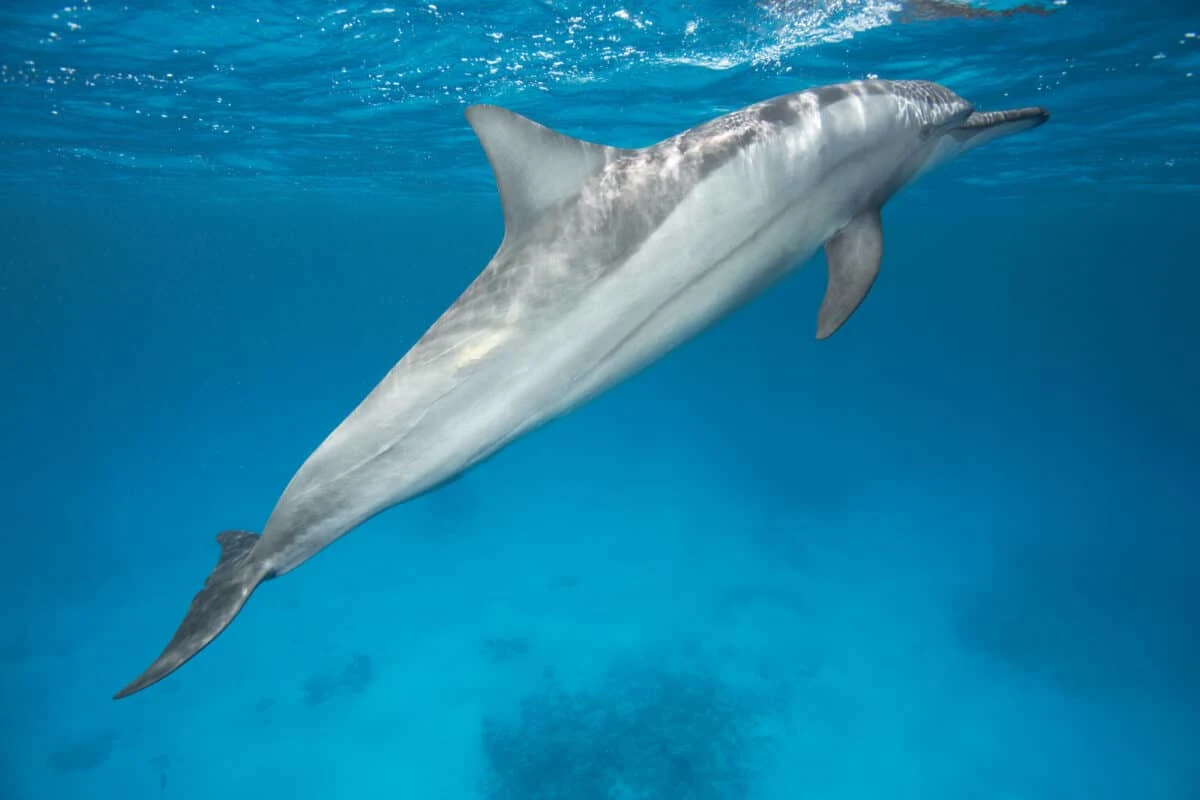
The United States, with its extensive coastlines spanning two oceans and the Gulf of Mexico, provides habitat for numerous marine mammals, including several fascinating dolphin species. These intelligent cetaceans captivate both scientists and the public with their playful behavior, complex social structures, and remarkable cognitive abilities. From the iconic bottlenose dolphin made famous by television and aquarium shows to lesser-known species that inhabit specific coastal regions, U.S. waters support a diverse array of dolphins. This article explores twelve dolphin species found in American waters, detailing their unique characteristics, behaviors, conservation status, and the specific regions where they can be observed. Whether you’re a marine biology enthusiast, a wildlife photographer, or simply fascinated by these charismatic marine mammals, this comprehensive guide will enhance your understanding of the dolphin diversity surrounding the United States.
12. Common Bottlenose Dolphin (Tursiops truncatus)
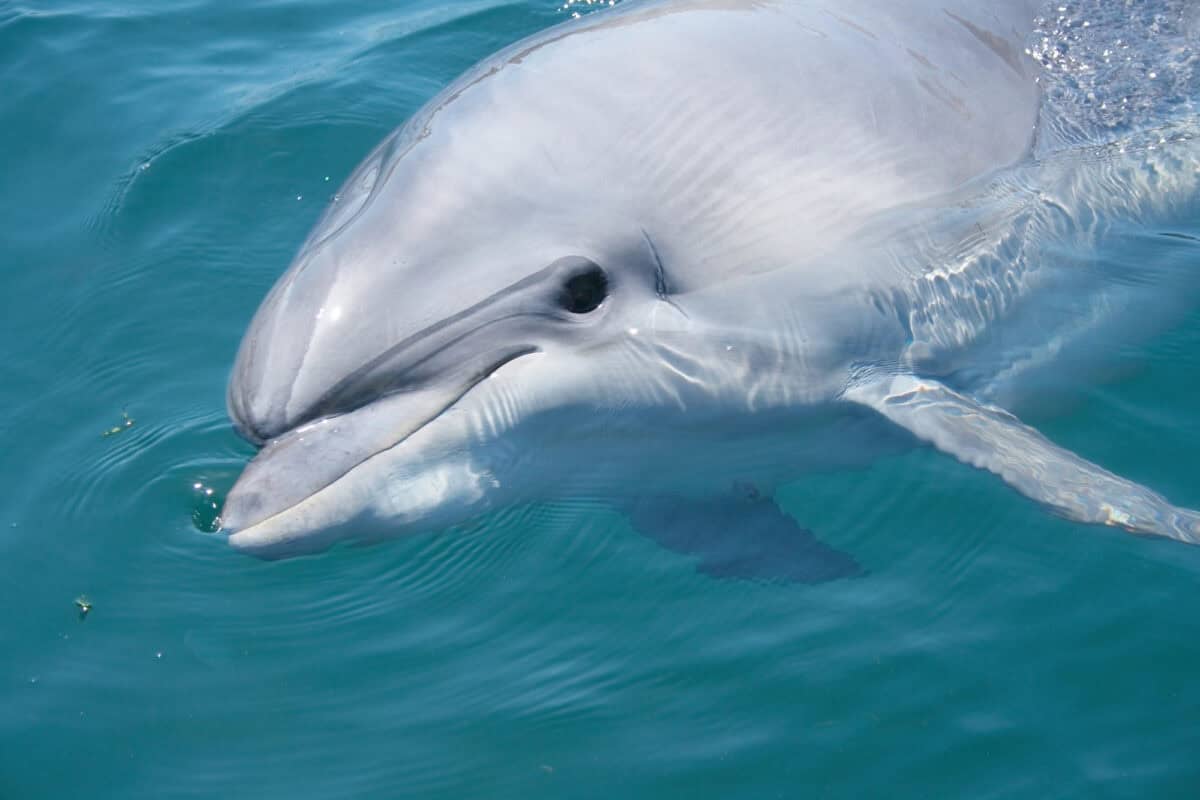
The common bottlenose dolphin is perhaps the most recognizable dolphin species in U.S. waters and worldwide. With their curved “smile” and charismatic behavior, these dolphins have become ambassadors for marine conservation. Bottlenose dolphins inhabit both coastal waters and offshore environments throughout the Atlantic, Pacific, and Gulf of Mexico. They typically grow to 8-12 feet in length and weigh between 300-1,400 pounds, with males generally larger than females.
These highly social mammals live in fluid groups called pods and demonstrate remarkable intelligence, including the ability to use tools, recognize themselves in mirrors, and develop unique communication patterns. Bottlenose dolphins are also known for their adaptive hunting techniques, sometimes coordinating to herd fish onto shorelines or following fishing vessels to capitalize on discarded catch. Their conservation status is currently listed as “Least Concern” by the IUCN, though specific coastal populations face threats from habitat degradation, pollution, and fishing gear entanglement.
11. Pacific White-Sided Dolphin (Lagenorhynchus obliquidens)
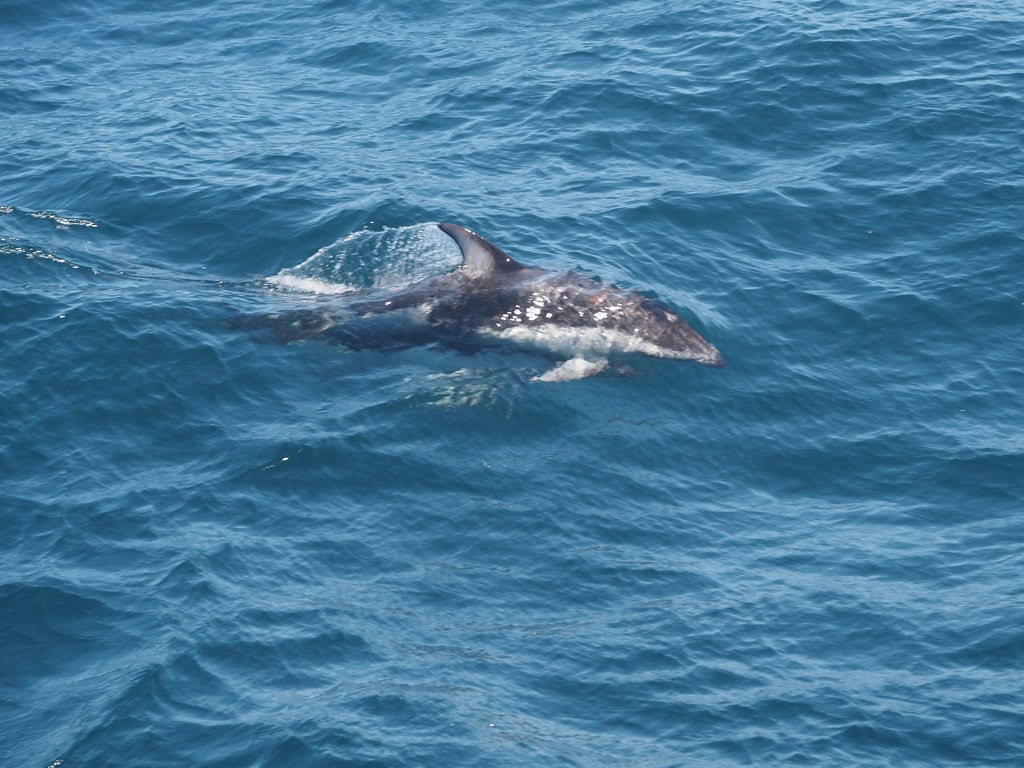
The Pacific white-sided dolphin is a strikingly patterned species found in the temperate waters of the North Pacific Ocean, including along the western coast of the United States from Washington to California. These dolphins are easily identified by their distinctive coloration: a dark gray or black back, light gray sides with a white “suspender” stripe extending from the eye to the tail, and a white belly. Growing to approximately 5.5-8 feet in length and weighing between 300-400 pounds, they are medium-sized compared to other dolphin species.
Known for their acrobatic abilities, Pacific white-sided dolphins often perform impressive aerial displays, including high leaps and somersaults. They typically travel in large, energetic pods of 10-100 individuals, though groups of several thousand have been observed during seasonal migrations. These dolphins are opportunistic feeders, primarily consuming small schooling fish such as herring, anchovies, and squid. While currently listed as “Least Concern” by the IUCN, they face threats from commercial fishing operations, habitat pollution, and noise disturbance from shipping traffic.
10. Atlantic Spotted Dolphin (Stenella frontalis)
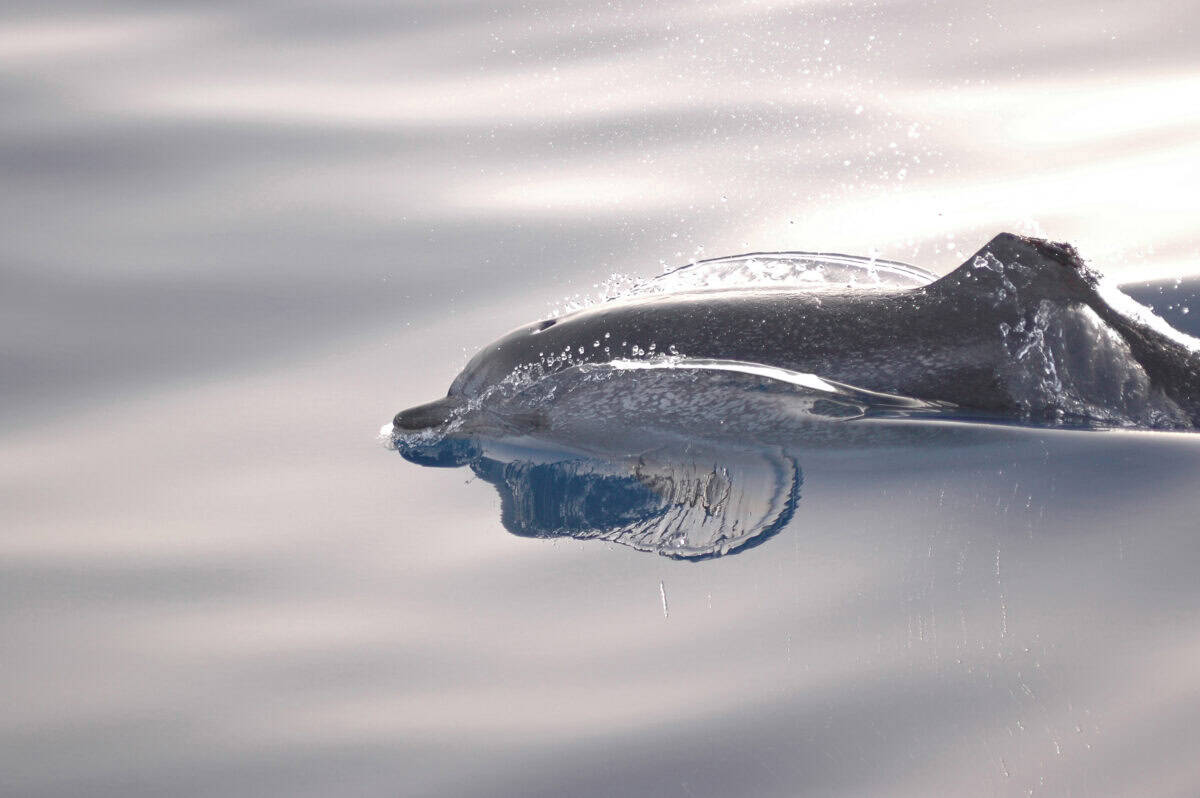
The Atlantic spotted dolphin, as its name suggests, inhabits the tropical and warm-temperate waters of the Atlantic Ocean, including along the southeastern coast of the United States and throughout the Gulf of Mexico and Caribbean Sea. This species is known for its distinctive spotted pattern that develops with age—juveniles are born without spots, gradually acquiring them as they mature, with older individuals displaying the most pronounced spotting. Adults typically grow to 5-7.5 feet in length and weigh between 220-315 pounds.
These dolphins are exceptionally social and often approach boats with curiosity, making them popular among wildlife watchers. They typically form pods of 5-50 individuals, though larger groups may gather temporarily. Atlantic spotted dolphins are known for their varied vocalizations and complex social behaviors, including elaborate courtship rituals. They primarily feed on small fish, squid, and bottom-dwelling invertebrates, often hunting cooperatively to maximize efficiency. The species is currently listed as “Least Concern” by the IUCN but faces regional threats from fishing interactions, pollution, and habitat disturbance from coastal development.
9. Spinner Dolphin (Stenella longirostris)

The spinner dolphin earns its name from its remarkable behavior of leaping from the water and spinning multiple times along its longitudinal axis—a display that can include up to seven complete rotations in a single jump. Found in tropical and subtropical waters worldwide, including Hawaii and the Gulf of Mexico, these slender dolphins have a distinctive three-part color pattern consisting of a dark gray back, light gray sides, and white belly. Adults typically reach 4.5-7 feet in length and weigh between 130-170 pounds, making them relatively small compared to many other dolphin species.
Spinner dolphins are highly social, often traveling in pods of dozens to hundreds of individuals. They exhibit a unique daily pattern in Hawaiian waters, resting in shallow, protected bays during daylight hours and moving offshore at night to feed. Their diet consists primarily of small mesopelagic fish, squid, and shrimp that rise toward the surface at night. While globally listed as “Least Concern” by the IUCN, certain subpopulations face significant threats from tourism disturbance, fishing gear entanglement, and habitat degradation. In Hawaii particularly, concerns about human disturbance of critical resting habitats have led to management measures to protect these charismatic dolphins.
8. Rough-Toothed Dolphin (Steno bredanensis)
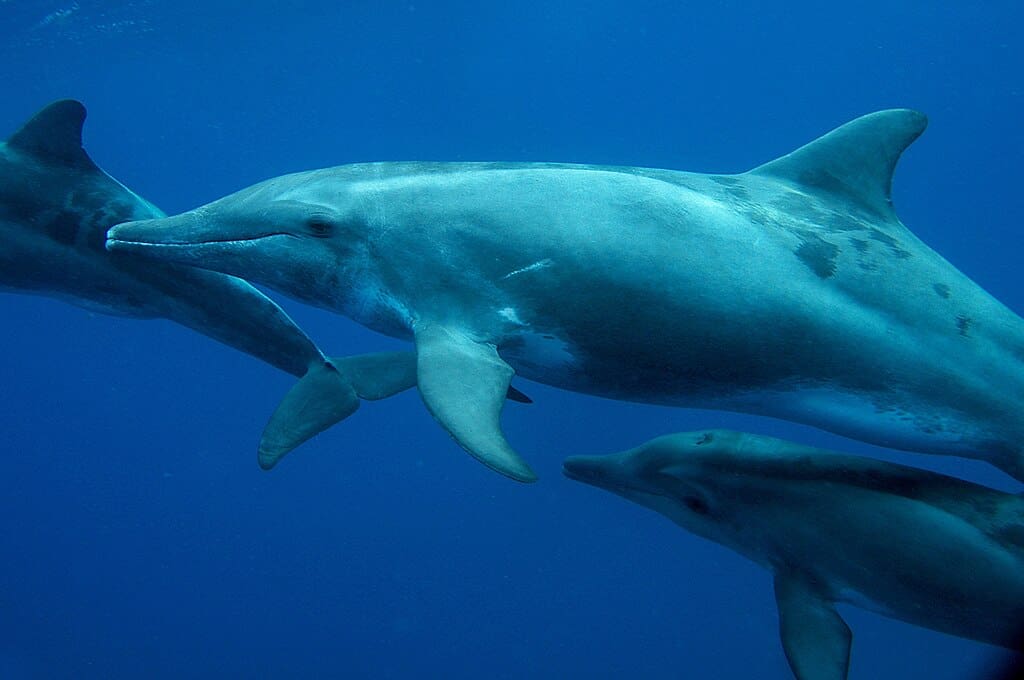
The rough-toothed dolphin is a distinctive species found in deep, tropical, and warm-temperate waters worldwide, including the Gulf of Mexico and waters off Hawaii. Unlike most dolphins with clear delineation between the rostrum (beak) and melon (forehead), rough-toothed dolphins have a uniquely conical head with virtually no demarcation between these features, giving them a reptilian appearance. Their name derives from the vertical ridges present on their teeth. These dolphins typically grow to 6.5-8.5 feet and weigh between 300-350 pounds.
Rough-toothed dolphins are known for their tendency to swim in a less organized fashion than other dolphin species, often surfacing at different angles and directions within the same pod. They typically form groups of 10-20 individuals but have been observed in larger aggregations of up to 100. These dolphins are skilled hunters that primarily target fish and cephalopods in deep water, sometimes working cooperatively to herd prey. They’re also known to follow and feed behind tuna fishing vessels. While listed as “Least Concern” globally, rough-toothed dolphins face threats from fishing gear entanglement, plastic ingestion, and ocean noise pollution, with limited population data making conservation assessment challenging in U.S. waters.
7. Risso’s Dolphin (Grampus griseus)
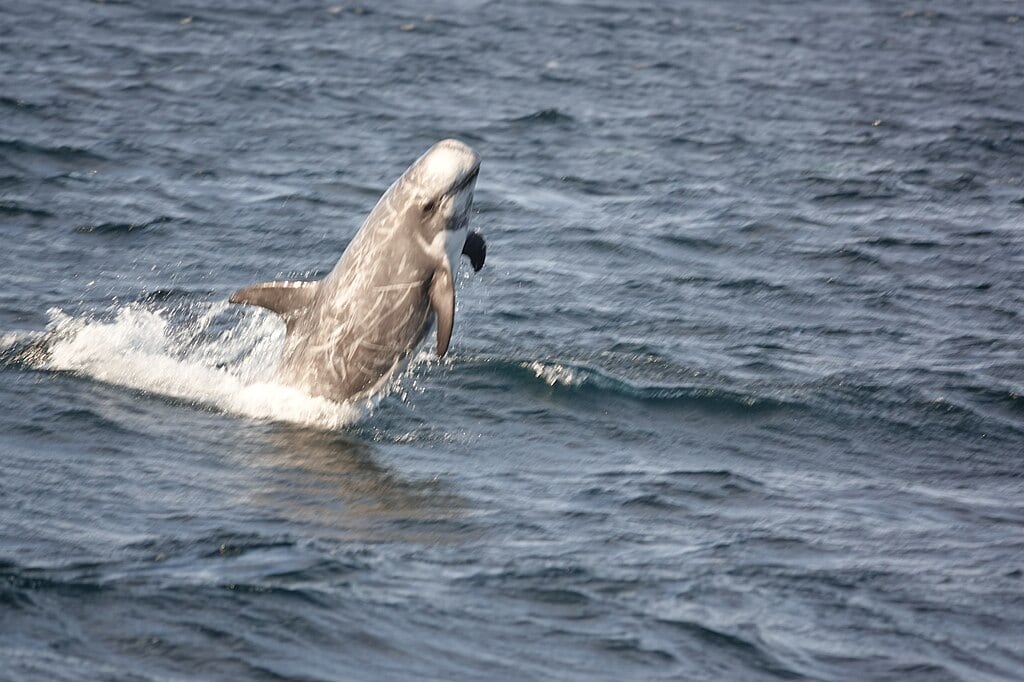
Risso’s dolphins are distinctive medium-sized cetaceans found in temperate and tropical waters worldwide, including both the Atlantic and Pacific coasts of the United States. Perhaps their most striking feature is their appearance—with bulbous heads lacking a prominent beak and bodies that become increasingly covered with white scars as they age. Young Risso’s dolphins are dark gray, but older individuals can appear almost white due to accumulated scarring from social interactions with other dolphins and encounters with squid prey. Adults typically grow to 10-13 feet in length and can weigh up to 1,100 pounds.
These deep-diving specialists prefer continental shelf edges and steep underwater canyons where they hunt primarily for squid during nighttime hours. Risso’s dolphins typically travel in pods of 5-50 individuals, though groups of several hundred have been documented. They’re known for their spectacular breaching behavior and tendency to “spy-hop” (rise vertically with their heads above water). While classified as “Least Concern” by the IUCN, Risso’s dolphins face threats from noise pollution that may interfere with their echolocation, fisheries bycatch, and environmental contaminants. Their preference for deep offshore waters means they’re less frequently observed than coastal dolphin species.
6. Short-Beaked Common Dolphin (Delphinus delphis)
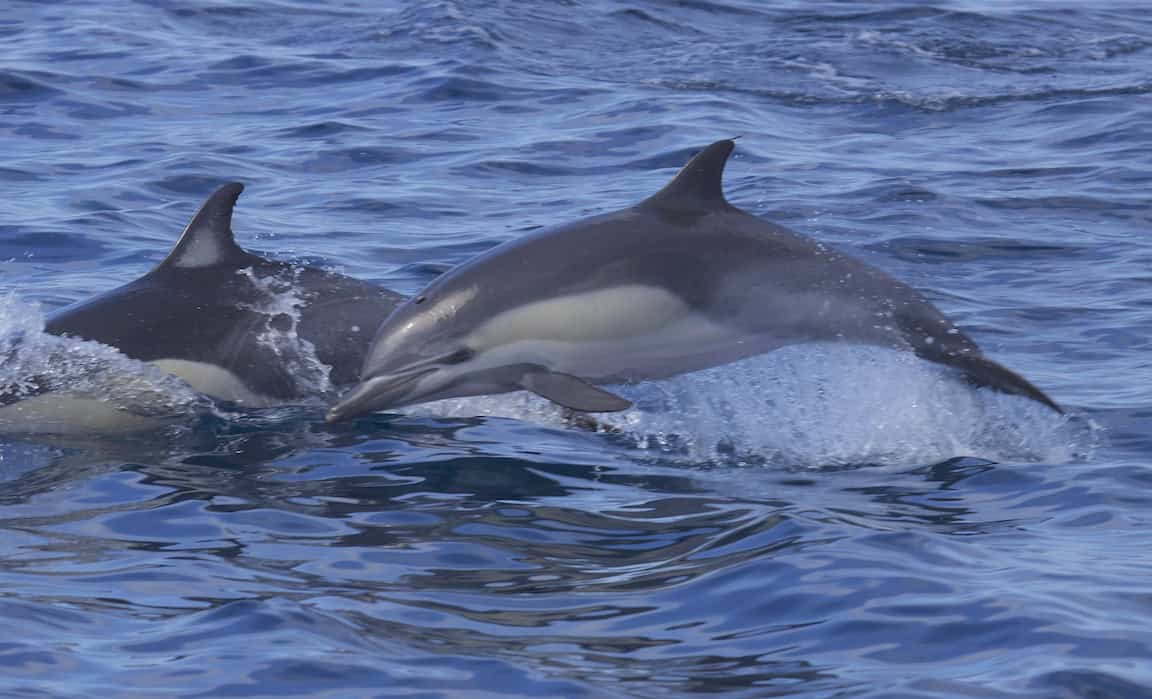
The short-beaked common dolphin, despite its name, is not the most common dolphin in all U.S. waters but is abundant in specific regions, particularly off the California coast and in parts of the northwestern Atlantic. These dolphins are easily identified by their distinctive hourglass pattern—a yellow/tan patch on the sides that forms an ‘X’ when viewed from above, dividing the dark back from the white belly. Adults typically reach 6.5-8.5 feet in length and weigh between 160-500 pounds, with males slightly larger than females.
Known for their high energy and acrobatic displays, short-beaked common dolphins are often seen “porpoising” (making low, quick jumps) at high speeds and riding the bow waves of vessels. They form large, dynamic pods ranging from dozens to thousands of individuals, particularly when following large schools of prey fish. These dolphins are rapid swimmers, capable of sustained speeds of 20 knots. Their diet consists primarily of small schooling fish like anchovies, sardines, and hake, as well as squid. Though globally listed as “Least Concern,” they face significant bycatch issues in some commercial fisheries and are vulnerable to pollution, particularly in coastal waters near urban centers.
5. Long-Beaked Common Dolphin (Delphinus capensis)
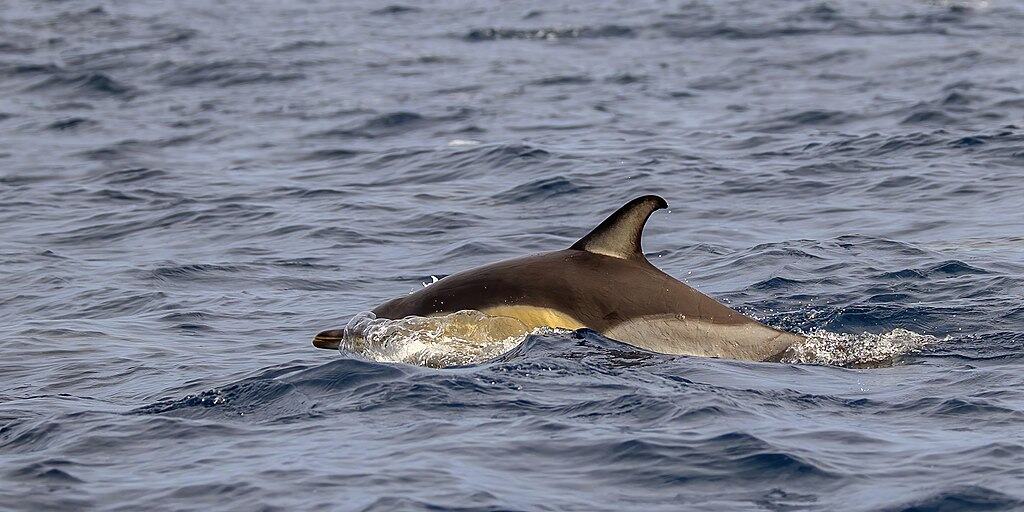
The long-beaked common dolphin is closely related to the short-beaked variety but has a noticeably longer rostrum (beak) and tends to prefer more coastal habitats. Found primarily in warm, shallow waters along the California coast in the United States, these dolphins share the distinctive hourglass color pattern of their short-beaked cousins but typically have more muted yellowing on the sides. Adults reach approximately 6-8.5 feet in length and weigh between 160-500 pounds, with males generally larger than females.
These social mammals typically form pods of 100-500 individuals, though groups numbering in the thousands have been documented during large feeding aggregations. Long-beaked common dolphins are vocal and energetic, producing a variety of clicks, whistles, and pulse sounds for communication and echolocation. They primarily feed on schooling fish such as anchovies, sardines, and hake that concentrate in coastal upwelling zones. Their conservation status remains complex; while originally classified separately, recent genetic studies suggest they may be a variant of the short-beaked common dolphin rather than a distinct species. Regardless of taxonomy, populations along the California coast face threats from fishing gear entanglement, ocean pollution, and habitat degradation.
4. Pantropical Spotted Dolphin (Stenella attenuata)
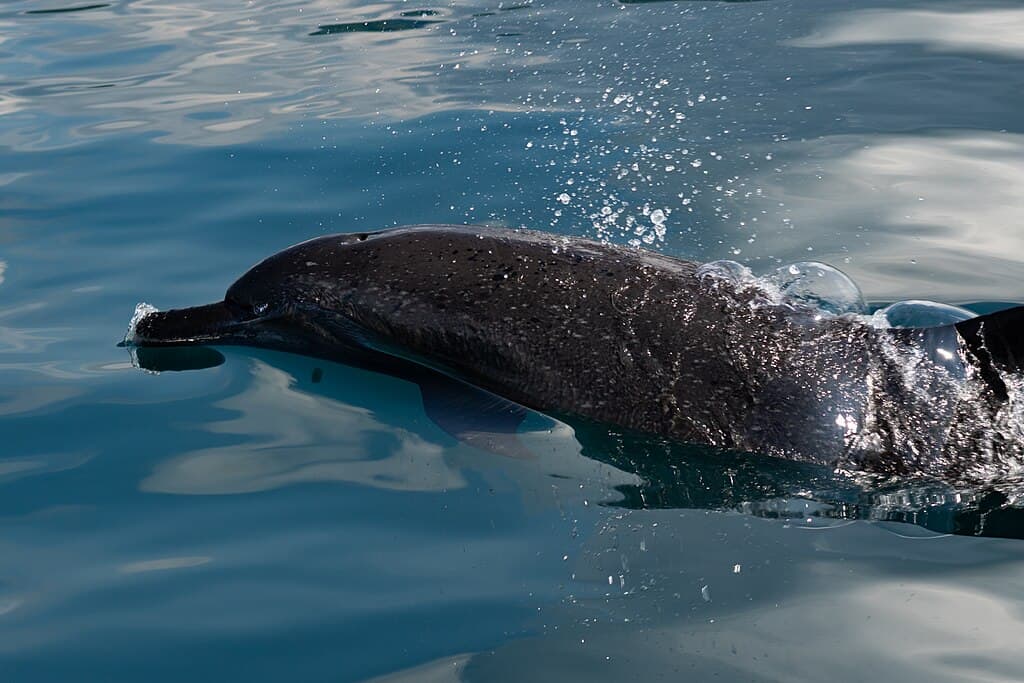
The pantropical spotted dolphin, as its name suggests, inhabits tropical and subtropical waters worldwide, including the Gulf of Mexico and waters surrounding Hawaii. Similar to Atlantic spotted dolphins, these cetaceans develop spots as they age—born spotless, they gradually acquire dark spots on their white ventral side and white spots on their dark dorsal side. Adults typically grow to 6-7 feet long and weigh between 250-270 pounds, with a slender build and a long, thin beak that distinguishes them from some other spotted dolphin species.
These highly social dolphins often travel in large, energetic pods of hundreds or even thousands of individuals. They’re known for their acrobatic behaviors, including high leaps, spins, and bow-riding in front of vessels. Historically, pantropical spotted dolphins suffered significant population declines in the eastern tropical Pacific due to mortality in tuna purse-seine fisheries, where they were encircled to locate and catch the tuna swimming beneath them. While fishing practices have improved and some populations have shown signs of recovery, the species still faces threats from bycatch in fishing gear, ocean pollution, and habitat degradation. In U.S. waters, they receive protection under the Marine Mammal Protection Act, with special focus on the still-recovering eastern tropical Pacific populations.
3. Striped Dolphin (Stenella coeruleoalba)

The striped dolphin is named for its distinctive coloration pattern that includes a dark stripe running from eye to anus and another from eye to flipper, creating a striking appearance against its light gray sides. Found in temperate and tropical waters worldwide, including both Atlantic and Pacific waters off the United States, these dolphins typically grow to 7-9 feet in length and weigh between 300-350 pounds. They have a robust body with a long, well-defined beak and tall dorsal fin.
Known for their energetic behavior and remarkable speed—capable of swimming at over 20 miles per hour—striped dolphins often perform spectacular acrobatic displays, including high jumps, somersaults, and a unique behavior called “roto-tailing” where they rapidly rotate their tail while leaping. They typically form pods of 25-100 individuals, though aggregations of thousands have been observed. These dolphins are primarily deep-water feeders, preying on a variety of small, mesopelagic fish, squid, and crustaceans. While globally abundant and classified as “Least Concern” by the IUCN, striped dolphins have been severely impacted in some regions by viral epidemics, contaminants, and interactions with fisheries. In the Mediterranean Sea, populations have suffered major die-offs due to morbillivirus infections, highlighting their vulnerability to emerging diseases.
2. Fraser’s Dolphin (Lagenodelphis hosei)
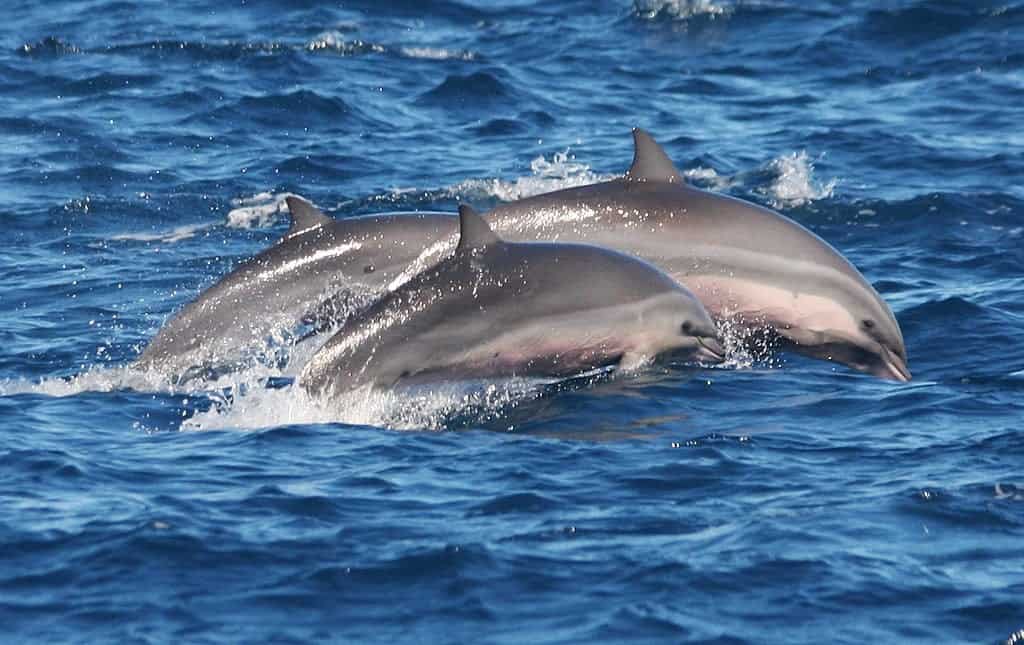
Fraser’s dolphin, sometimes called the Sarawak dolphin, remained unknown to science until 1956 when it was identified from a skeleton found on a beach in Borneo. In U.S. waters, this relatively rare species is primarily found in the deeper waters of the Gulf of Mexico and around Hawaii. Fraser’s dolphins have a stocky body with a very short beak, small flippers, and a small dorsal fin. They display a distinctive coloration pattern featuring a dark stripe running from face to anus, separating the darker back from the cream-colored belly. Adults typically grow to 6.5-9 feet in length and weigh between 350-450 pounds.
These deep-water dolphins typically travel in large, tightly packed groups of 100-1,000 individuals, often mixing with other cetacean species such as melon-headed whales or short-finned pilot whales. Fraser’s dolphins are fast swimmers known for creating a distinctive “roostertail” splash when surfacing at speed. They primarily feed on deep-water fish, squid, and crustaceans, diving to depths of at least 1,500 feet. Due to their preference for deep offshore waters, Fraser’s dolphins are rarely encountered and remain one of the least studied dolphin species in U.S. waters. While currently listed as “Least Concern” globally, their true population status is poorly understood, and they face potential threats from deep-sea fishing operations, noise pollution from naval exercises, and seismic exploration.
1. Clymene Dolphin (Stenella clymene)

The Clymene dolphin, sometimes called the “short-snouted spinner dolphin,” inhabits tropical and subtropical waters of the Atlantic Ocean, including the Gulf of Mexico and southeastern U.S. coast. This species wasn’t scientifically recognized as distinct until 1981, previously being confused with spinner and common dolphins. Clymene dolphins have a streamlined body with a moderately long beak and tall dorsal fin. Their coloration follows a three-part pattern with a dark gray back, light gray sides, and white belly, along with a distinctive dark “mustache” marking and eye-to-flipper stripe. Adults typically reach 5.5-7 feet in length and weigh between 165-200 pounds.
These agile dolphins are known for spinning behavior similar to but less elaborate than their spinner dolphin relatives. They typically form groups of 60-80 individuals, sometimes joining larger aggregations with other dolphin species. Clymene dolphins primarily feed on small fish and squid in deep water, often hunting at night when their prey migrates toward the surface. As one of the least studied dolphin species in U.S. waters, information about their population status, life history, and specific threats remains limited. They are currently listed as “Data Deficient” by the IUCN, highlighting the need for further research. Potential threats include incidental capture in fishing gear.
Conclusion:
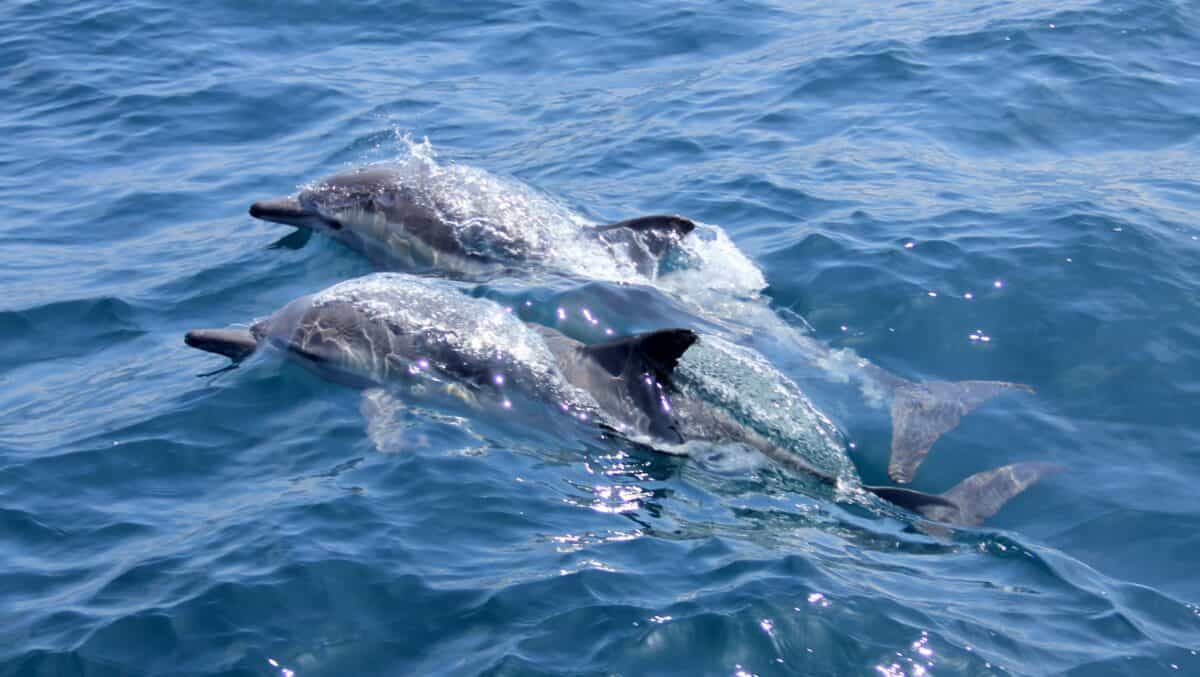
The rich variety of dolphin species found in U.S. waters is a testament to the country’s vast and diverse marine ecosystems. From the playful bottlenose dolphin along the Atlantic coast to the elusive Fraser’s dolphin in deep offshore habitats, each species brings its own unique behaviors, adaptations, and ecological roles. These intelligent and social creatures not only captivate human interest with their charisma and complexity but also serve as indicators of ocean health.
As human activities continue to impact marine environments—through pollution, overfishing, climate change, and noise disturbance—understanding and protecting dolphin populations becomes increasingly important. Continued research, public awareness, and strong conservation policies are essential to ensure that these remarkable animals remain a thriving part of America’s coastal and offshore waters. By appreciating the diversity and resilience of these twelve dolphin species, we also reaffirm our responsibility to safeguard the oceans they call home.

As a little kid, I fell in love with nature, wildlife, and animals. Living in the USA, South Africa, Italy, China and Germany gave me the opportunity to discover the world's Wildlife. My favorite animals are Mountain Gorillas, Siberian Tigers, and Great White Sharks.
I'm a certified PADI Open Water Diver, went to Everest Base Camp and Trekked Gorillas in Uganda. I hold a Master of Science in Economics and Finance.
Please send any feedback to feedback@animalsaroundtheglobe.com
- 10 Most Popular National Parks to See Wildlife - July 28, 2026
- 14 Most Dangerous Predators Roaming North America - July 28, 2026
- 9 Times Snakes Stay Silent And 3 They Hiss Loudly - July 28, 2026