

It’s almost impossible to imagine a place darker, deeper, and more mysterious than the Mariana Trench. Plunging nearly seven miles beneath the surface of the Pacific Ocean, this trench is the deepest part of Earth’s oceans—a realm where sunlight never shines, pressure crushes like a thousand elephants stacked on your chest, and life seems impossible. Yet, against all odds, a surprising cast of oddball creatures calls this abyss home. Some are ghostly white, others glow in the pitch-black dark, and a few seem more alien than anything Hollywood could dream up. Let’s plunge into the inky depths and meet twelve truly remarkable animals that defy the limits of survival in the Mariana Trench.
12. Snailfish

At first glance, the snailfish might not look like much. With a body that seems almost jelly-like and a translucent, ghostly appearance, it could be mistaken for a creature from a child’s nightmare. But this little fish is a record-breaker, holding the title for the deepest living fish ever recorded. Scientists have spotted snailfish swimming as deep as 8,000 meters below the surface. Despite the crushing pressure, their bodies are soft and flexible, allowing them to glide effortlessly through their cold, pitch-black surroundings. It’s almost poetic how something so delicate can survive in one of the harshest environments on Earth.
11. Amphipods

Imagine shrimp, but built for the abyss. Amphipods are small, shrimp-like crustaceans that swarm the trench in massive numbers. They’re not flashy, but they’re tough—some have been found as deep as 10,000 meters. What’s truly fascinating is their diet: they feast on the remains of dead animals that drift down from the surface, recycling nutrients in this extreme ecosystem. Their bodies are armored, and some species even produce their own antifreeze proteins, stopping their insides from freezing solid. Talk about adapting to your environment!
10. Deep-sea Cusk-Eel

Cusk-eels look like eels but aren’t true eels at all. These long, slender fish have been discovered lurking along the trench’s muddy floor. With their small, almost useless eyes and soft, scaleless skin, they’re perfectly suited for life in the dark. They use their sensitive bodies to detect vibrations, helping them find food and avoid predators. Some species have even developed special organs to produce sounds—imagine the eerie chorus of cusk-eels echoing through the silent trench.
9. Giant Single-celled Xenophyophores

It sounds like science fiction, but these real-life giants are single-celled organisms the size of dinner plates. Xenophyophores are some of the largest single cells ever discovered, and they thrive in the Mariana Trench’s deepest reaches. Their bodies are soft and fragile, and they build intricate shells out of tiny particles from the ocean floor. These oddballs are crucial for the ecosystem, acting like living sponges that filter and trap organic matter. Who knew a single cell could play such a big role?
8. Deep-sea Dragonfish

If there were a contest for the most intimidating smile, the deep-sea dragonfish would win, hands down. With razor-sharp teeth and a jaw that unhinges, it’s a true predator of the abyss. What’s really wild is its ability to produce its own light using tiny organs called photophores. This bioluminescence helps it lure prey straight into its waiting mouth. The dragonfish is a master of stealth and surprise—a real-life monster hiding in the shadows.
7. Mariana Hadal Snail

Small, unassuming, and often overlooked, the Mariana hadal snail is a type of sea snail found only in the deepest parts of the trench. Unlike its shallow-water relatives, this snail has a shell that can withstand incredible pressure. It feeds on organic debris that settles on the seafloor, quietly doing its part in breaking down and recycling nutrients. It’s a reminder that even in the darkest places, life finds a way to carry on—even in the form of a humble snail.
6. Deep-sea Decapod Shrimp

Decapod shrimp are ten-legged crustaceans that roam the trench’s depths. Their bodies are often transparent or pale, making them almost invisible in the darkness. These shrimp are scavengers, always on the lookout for any morsel of food that drifts down from above. Some have developed special adaptations like highly sensitive antennae, which help them navigate and find food when sight alone won’t cut it. It’s a constant struggle for survival, and decapod shrimp are true masters at making the most of every opportunity.
5. Barreleye Fish

Few creatures look as bizarre as the barreleye fish. Its head is transparent, and you can literally see its eyes and brain through its skin. Those large, tubular eyes are adapted to pick up the faintest traces of light, giving the barreleye an almost supernatural ability to spot prey in the gloom. It’s as if evolution decided to give this fish a built-in pair of night-vision goggles—nature’s own little experiment in deep-sea weirdness.
4. Deep-sea Holothurians

Better known as sea cucumbers, holothurians are soft-bodied animals that slowly crawl along the trench floor. Some species found in the Mariana Trench have adapted to survive at pressures that would crush almost anything else. They feed on detritus, recycling nutrients and cleaning up the ocean floor. Despite their simple appearance, holothurians are essential for keeping the ecosystem healthy. It’s a reminder that even the oddest creatures can play a starring role in the drama of life.
3. Comb Jellies

Comb jellies might look delicate, but don’t let their beauty fool you. Their bodies are covered in rows of tiny, beating cilia, which shimmer and ripple with iridescent colors. These mesmerizing creatures float through the water, capturing prey with sticky tentacles. Some comb jellies in the Mariana Trench are almost completely transparent, making them nearly invisible to predators. Watching them drift in the dark is like seeing a living light show—a reminder that there’s wonder even in the most isolated corners of our planet.
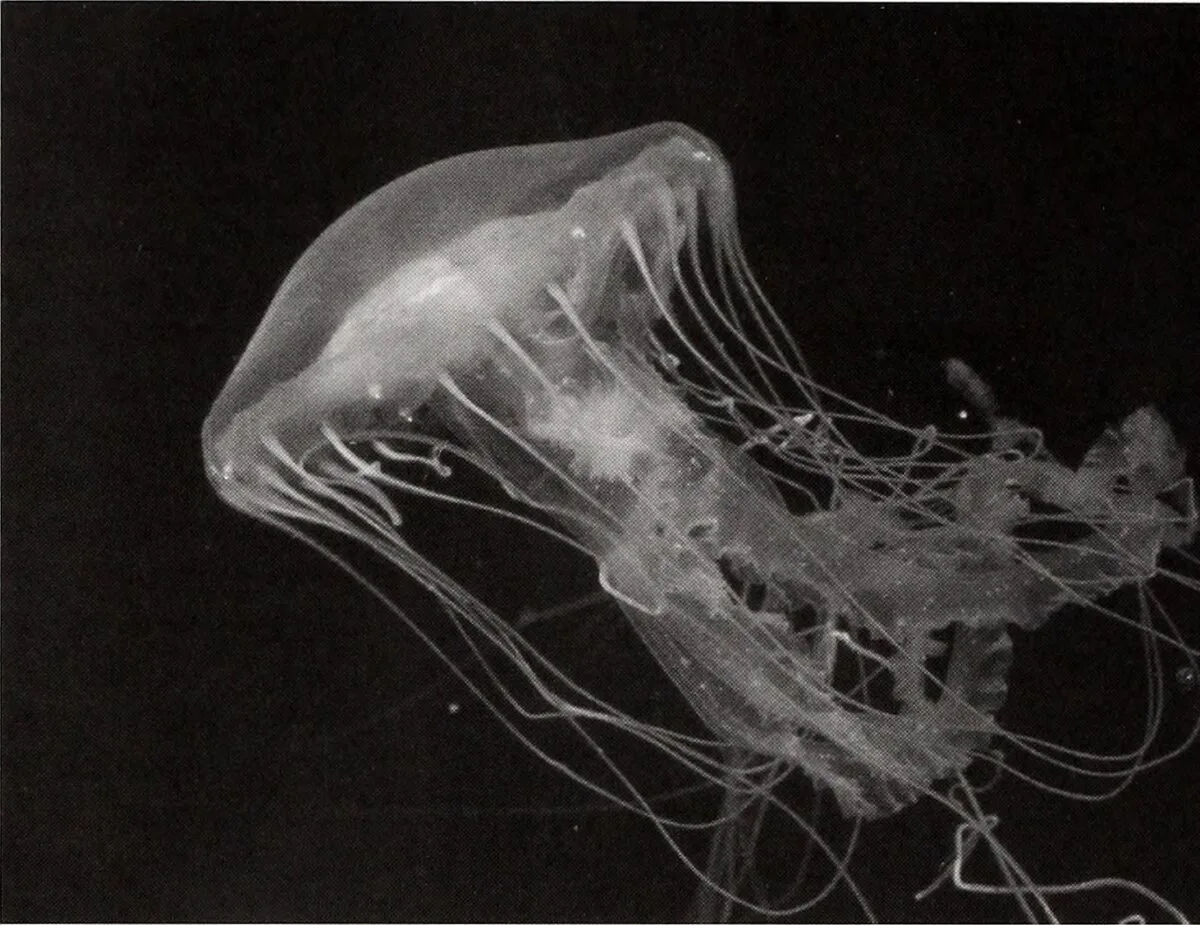
2. Deep-sea Jellyfish

The deep-sea jellyfish living in the Mariana Trench are the stuff of dreams—or nightmares, depending on your point of view. With long, flowing tentacles and bell-shaped bodies, they pulse through the water like ghostly balloons. Many have evolved to glow with eerie, bioluminescent light, creating an otherworldly spectacle in the darkness. These jellyfish are both predators and prey, playing a vital role in the trench’s food web. It’s hard not to be awestruck by their haunting beauty.
1. Giant Amphipod “Alicella gigantea”

Last but certainly not least, the giant amphipod “Alicella gigantea” is a true heavyweight of the deep. Growing up to 30 centimeters long—about the length of a school ruler—this species dwarfs its shallow-water relatives. It’s tough, armored, and perfectly adapted to the crushing pressures of the trench. Scientists were astonished when they first discovered such a large creature thriving so far below the surface. It’s a reminder that the ocean’s depths are still full of surprises, waiting to be discovered.
Conclusion

The Mariana Trench is a place of extremes, home to creatures that seem to defy logic and stretch the boundaries of what life can endure. From ghostly snailfish to hulking amphipods, each animal in these depths tells a story of survival, adaptation, and mystery. Who knows what other strange and wonderful creatures are still hiding in the shadows, waiting to be found?

As a little kid, I fell in love with nature, wildlife, and animals. Living in the USA, South Africa, Italy, China and Germany gave me the opportunity to discover the world's Wildlife. My favorite animals are Mountain Gorillas, Siberian Tigers, and Great White Sharks.
I'm a certified PADI Open Water Diver, went to Everest Base Camp and Trekked Gorillas in Uganda. I hold a Master of Science in Economics and Finance.
Please send any feedback to feedback@animalsaroundtheglobe.com
- 9 Times Snakes Stay Silent And 3 They Hiss Loudly - July 28, 2026
- 12 Animals Found in the Mariana Trench - July 28, 2026
- 14 Earthquakes That Altered the U.S. Landscape - July 28, 2026
Leave a comment
You must be logged in to post a comment.