
While sharks often dominate our fears of the deep blue sea, the ocean harbors numerous other deadly creatures that deserve equal recognition for their lethal capabilities. From microscopic organisms to massive marine mammals, these aquatic predators and venomous beings pose significant threats to humans and other marine life. This comprehensive exploration takes you beneath the waves to discover the most dangerous ocean dwellers beyond the typical shark species that capture headlines. These creatures employ various deadly tactics—from powerful toxins and paralyzing venom to surprising hunting strategies and overwhelming strength—making them formidable inhabitants of our planet’s waters.
Box Jellyfish: The Ocean’s Most Venomous Killer
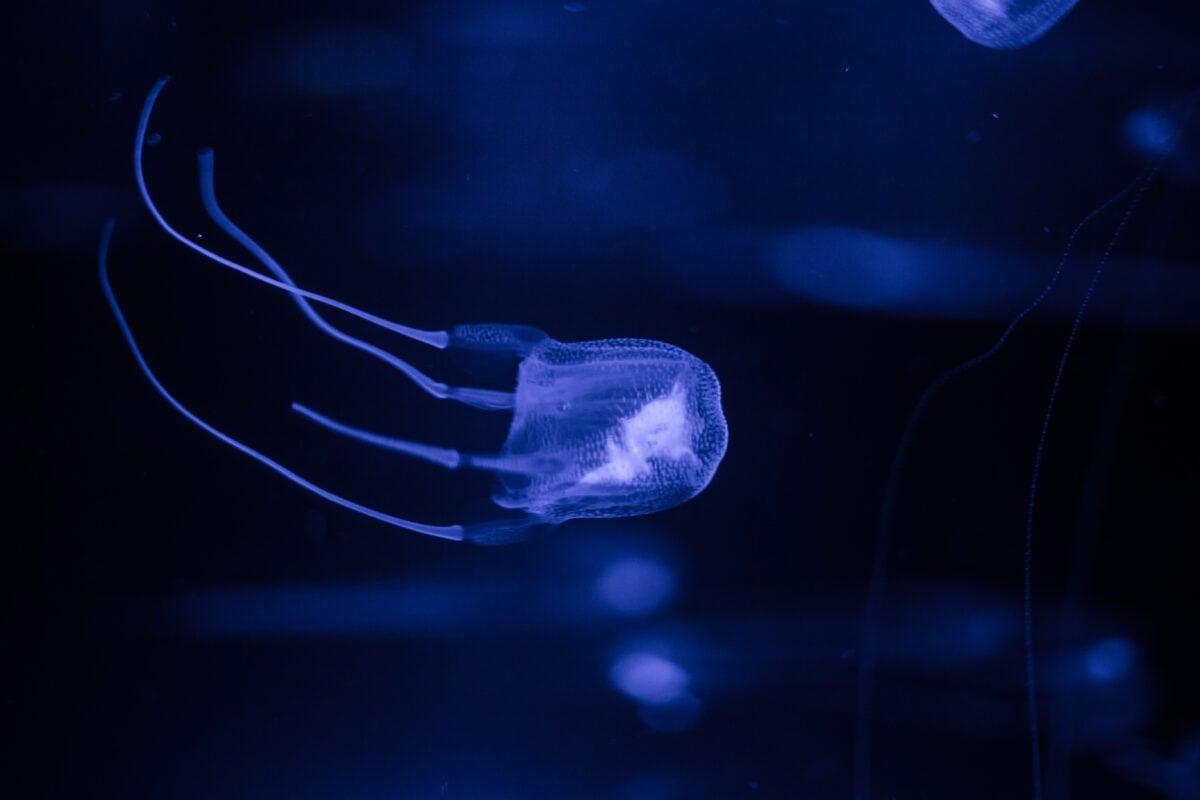
The box jellyfish (Chironex fleckeri) reigns as perhaps the most venomous marine creature on Earth. With nearly invisible, tentacle-lined bodies that can stretch up to 10 feet, these deadly invertebrates patrol the waters of the Indo-Pacific, particularly around northern Australia. Their venom contains toxins that attack the heart, nervous system, and skin cells simultaneously, making their sting exceptionally painful and potentially fatal. A single encounter can induce cardiovascular collapse in humans within minutes, with victims sometimes dying before even reaching shore.
What makes box jellyfish particularly dangerous is their active hunting style, unlike most jellyfish that simply drift. Box jellyfish can swim at speeds up to 4 mph and have 24 eyes arranged in clusters of six on each side of their bell, allowing them to navigate with precision toward prey. Scientists estimate they cause 20-40 deaths annually in the Philippines alone. Their venom is so potent that even tentacle fragments that break off in the water remain dangerous, and antivenoms must be administered quickly to prevent death from severe stings.
Blue-Ringed Octopus: Tiny but Deadly
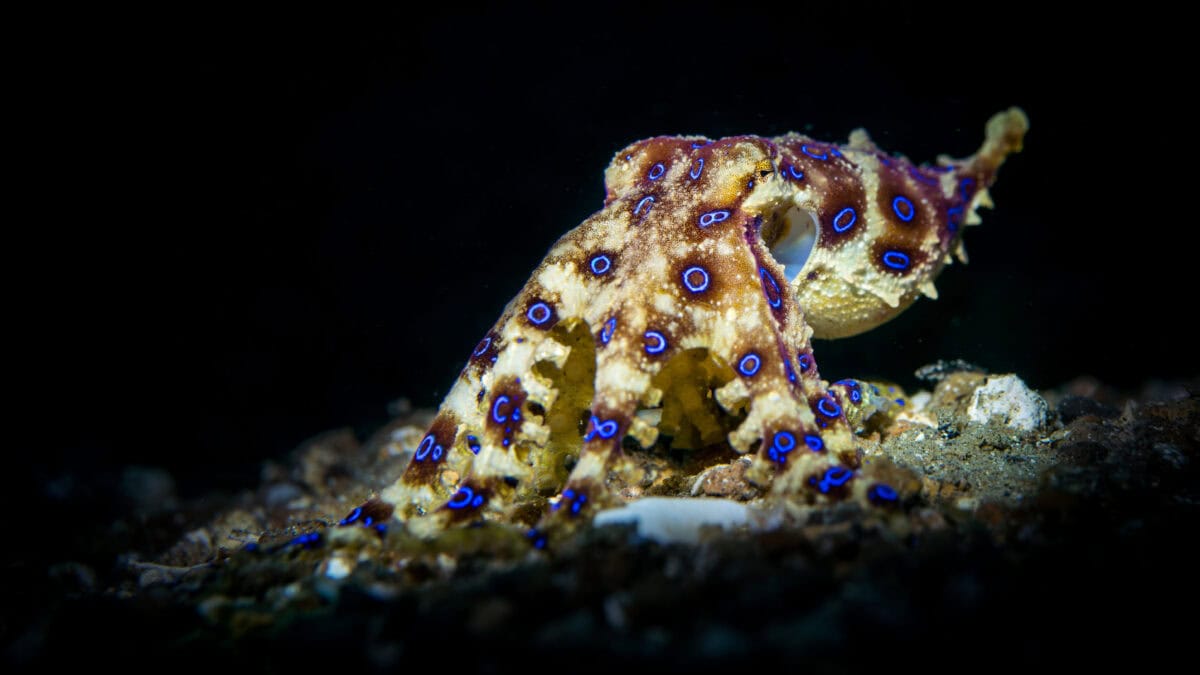
Don’t let its small size fool you—the blue-ringed octopus packs enough venom to kill 26 adult humans within minutes. These diminutive cephalopods, rarely exceeding 8 inches in length, inhabit tide pools and coral reefs in the Pacific and Indian Oceans. When threatened, they display vibrant blue rings across their yellowish skin as a warning sign. Their venom contains tetrodotoxin, a neurotoxin 1,200 times more powerful than cyanide, which causes motor paralysis by blocking sodium channels in nerve cell membranes.
What makes blue-ringed octopus bites particularly insidious is their painless nature. Victims often don’t realize they’ve been bitten until they experience respiratory distress, numbness, and eventual paralysis. There is no antivenin available, and treatment involves keeping the victim on artificial respiration until the toxin wears off—which can take up to 24 hours. During this time, victims remain fully conscious but unable to move or communicate, trapped in a paralyzed body while awaiting medical intervention.
Stonefish: Masters of Camouflage with Deadly Spines

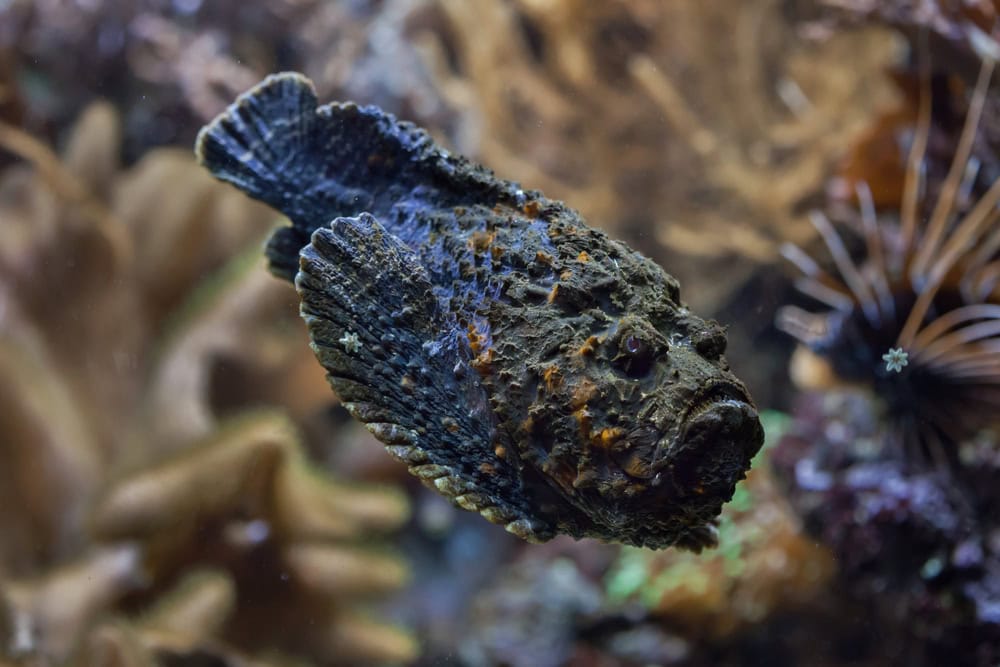
The stonefish has earned its reputation as the most venomous fish in the world. Native to the coastal regions of the Indo-Pacific, these masters of disguise resemble encrusted rocks or coral, making them nearly impossible to spot on the ocean floor. Their exceptional camouflage becomes deadly when unwitting swimmers or divers step on them, triggering the 13 sharp dorsal fin spines to inject a potent neurotoxin. The venom causes excruciating pain often described as feeling like being hit by a sledgehammer, followed by possible heart failure, paralysis, and death if left untreated.
Stonefish venom contains a complex mixture of proteins that affect various physiological systems simultaneously. The toxin damages tissue, disrupts cardiovascular function, and causes profound pain that can last for days. Antivenom exists but must be administered quickly, and traditional treatments in some Pacific islands include applying hot water to the wound, as heat helps denature the protein-based toxins. Despite their dangerous nature, stonefish are considered delicacies in some Asian countries, where specially trained chefs carefully remove the venomous spines before preparation.
Cone Snails: Beautiful Shells with Harpoon-Like Weapons

Cone snails may appear harmless with their attractively patterned shells that collectors prize, but these marine gastropods harbor a sophisticated venom delivery system that has evolved to immobilize fish, worms, and other mollusks. The geographic cone snail (Conus geographus), nicknamed the “cigarette snail” because after being stung, you supposedly only have enough time to smoke a cigarette before dying, is particularly dangerous to humans. These snails hunt by extending a modified tooth called a radula that acts like a harpoon, injecting venom capable of paralyzing prey instantly.
The venom of cone snails contains a complex mixture of hundreds of different toxins called conotoxins, which target the nervous system with remarkable precision. These compounds have become valuable in medical research, leading to the development of non-addictive pain medications. However, for unfortunate beachcombers who pick up these beautiful shells, the encounter can prove fatal, as there is no antivenom available. Symptoms of envenomation include intense pain, swelling, numbness, vision changes, respiratory failure, and potentially death. Approximately 30 human fatalities have been documented from cone snail stings.
Portuguese Man O’ War: Not a Jellyfish but Just as Deadly

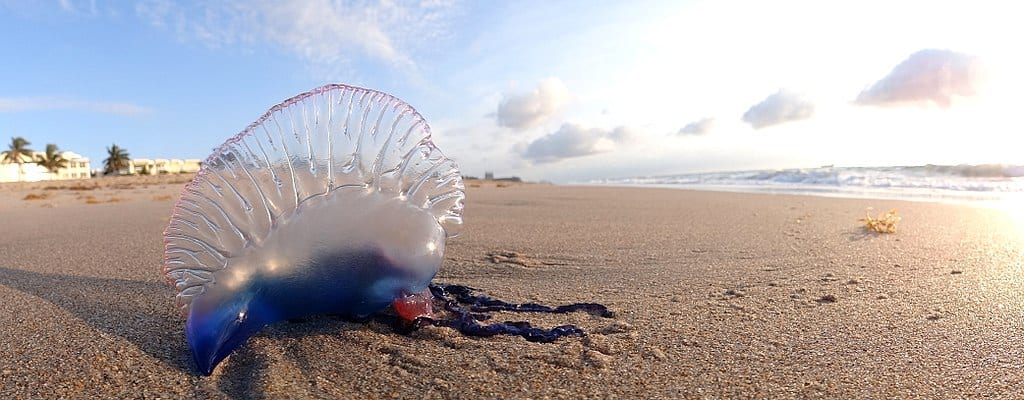
Despite its jellyfish-like appearance, the Portuguese Man O’ War (Physalia physalis) is actually a siphonophore—a colonial organism made up of specialized individual animals called zooids that work together as a single entity. Its distinctive gas-filled bladder, which can reach 12 inches long, floats above the water surface like a sailing ship (hence its name) while trailing venomous tentacles that extend up to 100 feet below. These nearly invisible tentacles contain thousands of microscopic cnidocytes loaded with nematocysts—tiny harpoon-like structures that inject venom upon contact.
While rarely fatal to humans, Portuguese Man O’ War stings can cause excruciating pain, red welts, and in severe cases, shock, respiratory distress, and cardiac complications. What makes these creatures particularly dangerous is their tendency to wash up on beaches where their tentacles remain venomous for days, even when the organism appears dead. They also travel in groups of thousands, creating “floating armadas” that can deliver multiple stings to swimmers. In Australian waters, the closely related Pacific Man O’ War (Physalia utriculus) poses similar dangers to beachgoers and has been responsible for several fatalities when victims suffered massive envenomation.
Sea Snakes: Underwater Serpents with Potent Venom
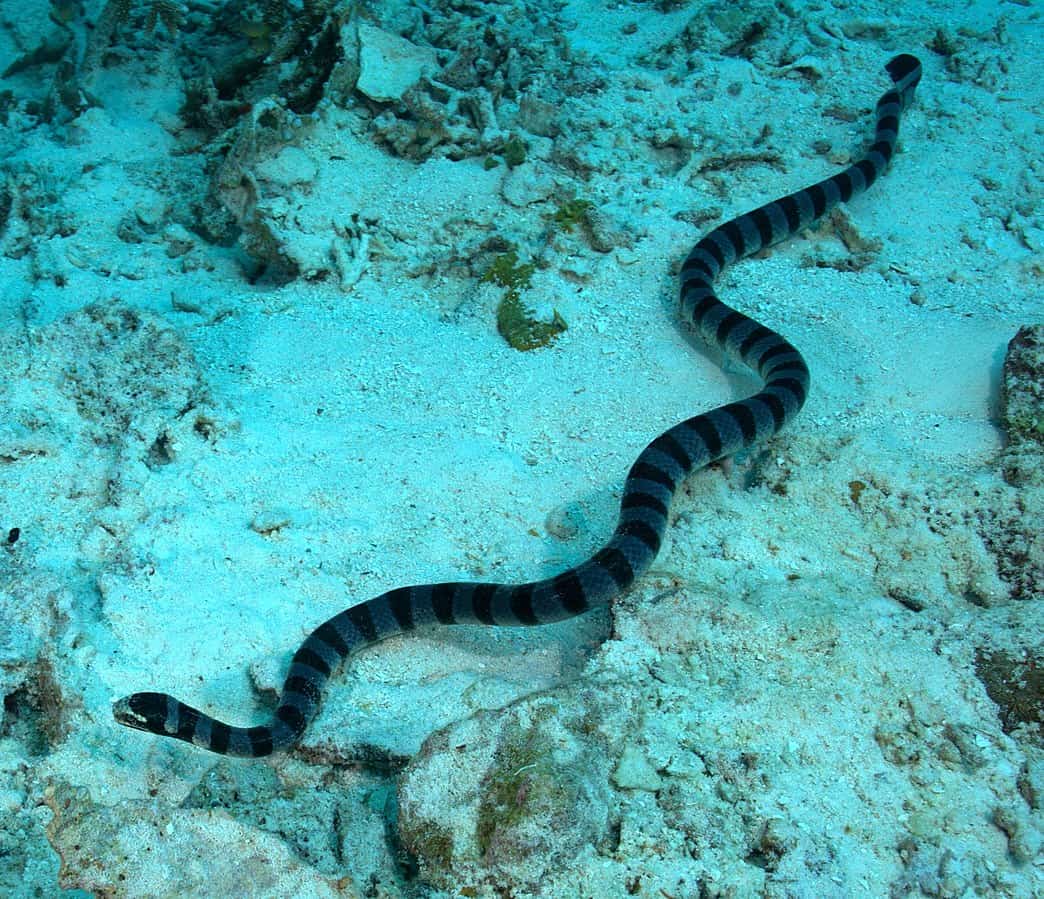
Sea snakes represent some of the ocean’s most venomous creatures, with toxicity that can exceed land snakes by factors of 2-10 times. These marine reptiles, comprising about 70 species, are primarily found in warm waters of the Indian and Pacific Oceans. The beaked sea snake (Hydrophis schistosus), one of the most dangerous, possesses venom so potent that a few milligrams could kill three adult humans. Their fangs are relatively small, but their venom contains powerful neurotoxins and myotoxins that attack the nervous system and muscle tissue, potentially leading to paralysis, muscle damage, kidney failure, and death.
Despite their deadly potential, sea snakes rarely attack humans unprovoked. Their docile nature and the fact that many species cannot open their mouths wide enough to bite larger body parts reduce human fatalities. When bites do occur, they often happen to fishermen handling nets containing trapped sea snakes. What makes sea snake bites particularly dangerous is that they can be painless initially, leading victims to delay seeking treatment until serious symptoms develop. By then, the venom has circulated throughout the body, making treatment more challenging. Antivenom exists but must be administered promptly to prevent permanent damage or death.
Lionfish: Beautiful Invaders with Venomous Spines
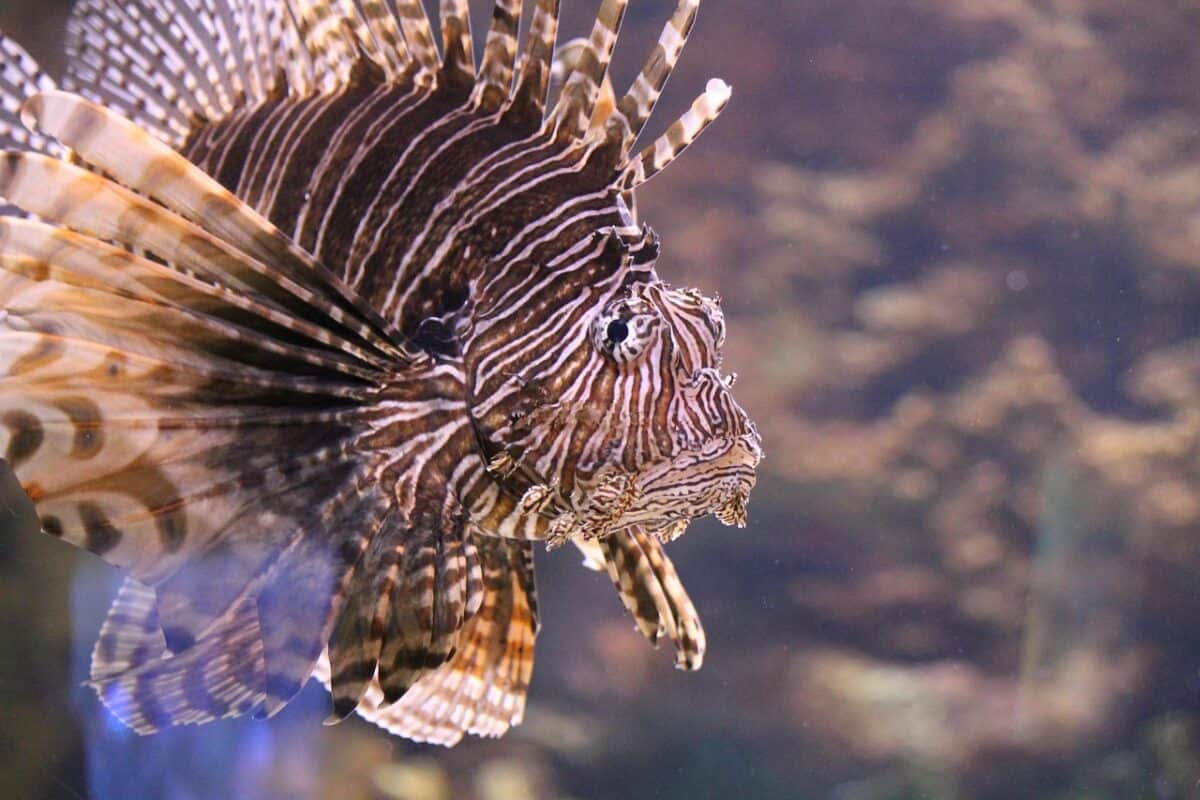
The lionfish (Pterois species) combines stunning beauty with deadly defense mechanisms. Native to the Indo-Pacific region but now invasive in the Atlantic Ocean and Caribbean Sea, these striking fish feature distinctive zebra-striped patterns and fan-like pectoral fins. However, their beauty masks danger: lionfish possess up to 18 venomous spines that deliver a powerful neurotoxin when touched. While rarely fatal to humans, lionfish stings cause intense pain, swelling, respiratory distress, and in severe cases, paralysis and heart failure. The venom targets the neuromuscular junction, disrupting normal nerve function.
What makes lionfish particularly concerning is their environmental impact as invasive predators. With no natural predators in Atlantic waters, they consume over 50 species of native fish and reproduce rapidly, with females releasing up to 30,000 eggs every four days. Their population explosion threatens coral reef ecosystems and commercial fisheries. Ironically, the best control method has become human consumption, as lionfish meat is safe to eat once the venomous spines are removed. Conservation efforts now include lionfish hunting tournaments and promoting them as a sustainable seafood choice to help manage their destructive spread.
Irukandji Jellyfish: Tiny Terrors with Delayed Symptoms

The Irukandji jellyfish stands as one of the ocean’s most insidious killers despite its tiny size—no larger than a cubic centimeter. Found primarily in Australian waters but increasingly documented worldwide, these nearly invisible jellyfish deliver stings that initially cause only minor discomfort. However, 20-30 minutes later, victims develop “Irukandji syndrome,” a constellation of symptoms including excruciating muscle cramps, severe back and kidney pain, nausea, vomiting, sweating, anxiety, and a feeling of impending doom. In severe cases, the syndrome can progress to potentially fatal pulmonary edema and hypertension.
What makes Irukandji particularly dangerous is their ability to fire stingers not just from their tentacles but from their bell as well—a rare trait among jellyfish. They’re also one of the few jellyfish species that appear to actively hunt their prey rather than simply drifting. Scientists have discovered that their venom causes a massive release of catecholamines (stress hormones) in victims, explaining the systemic effects. Treatment involves pain management and blood pressure control, but no specific antivenom exists. Research continues into these mysterious creatures, with new Irukandji species still being discovered and their range expanding, possibly due to warming ocean temperatures.
Blue-Ringed Octopus: Tiny but Deadly

The blue-ringed octopus packs enough venom to kill 26 adult humans within minutes, despite its diminutive size rarely exceeding 8 inches in length. These cephalopods inhabit tide pools and coral reefs in the Pacific and Indian Oceans, displaying vibrant blue rings across their yellowish skin when threatened. Their venom contains tetrodotoxin, a neurotoxin 1,200 times more powerful than cyanide, which causes motor paralysis by blocking sodium channels in nerve cell membranes.
What makes blue-ringed octopus bites particularly insidious is their painless nature. Victims often don’t realize they’ve been bitten until they experience respiratory distress, numbness, and eventual paralysis. There is no antivenin available, and treatment involves keeping the victim on artificial respiration until the toxin wears off—which can take up to 24 hours. During this time, victims remain fully conscious but unable to move or communicate, trapped in a paralyzed body while awaiting medical intervention.
Flower Urchins: Deceptively Colorful Killers

The flower urchin (Toxopneustes pileolus) presents one of the ocean’s most beautiful yet dangerous contradictions. Found in the Indo-Pacific region, these echinoderms feature striking flower-like appendages called pedicellariae that contain venom glands. Unlike typical sea urchins that rely primarily on their spines for defense, flower urchins employ these pedicellariae as their primary venomous weapons. When threatened, they snap shut on the victim’s skin, injecting a potent neurotoxin called pediculin that can cause paralysis, respiratory distress, and in rare cases, death.
What makes flower urchins particularly hazardous is their inviting appearance that may tempt divers or beachcombers to touch them. Contact with their pedicellariae triggers immediate pain, followed by numbness, paralysis, breathing difficulties, and potential cardiac failure in severe cases. There is no specific antivenom, and treatment focuses on managing symptoms until the toxin metabolizes. Japanese fishermen have traditionally feared these creatures more than sea snakes, calling them “bari,” which translates to “needle” in recognition of their painful sting. Recent research into flower urchin venom has identified compounds with potential applications in pain management medicine.
Pufferfish: The Lethal Delicacy
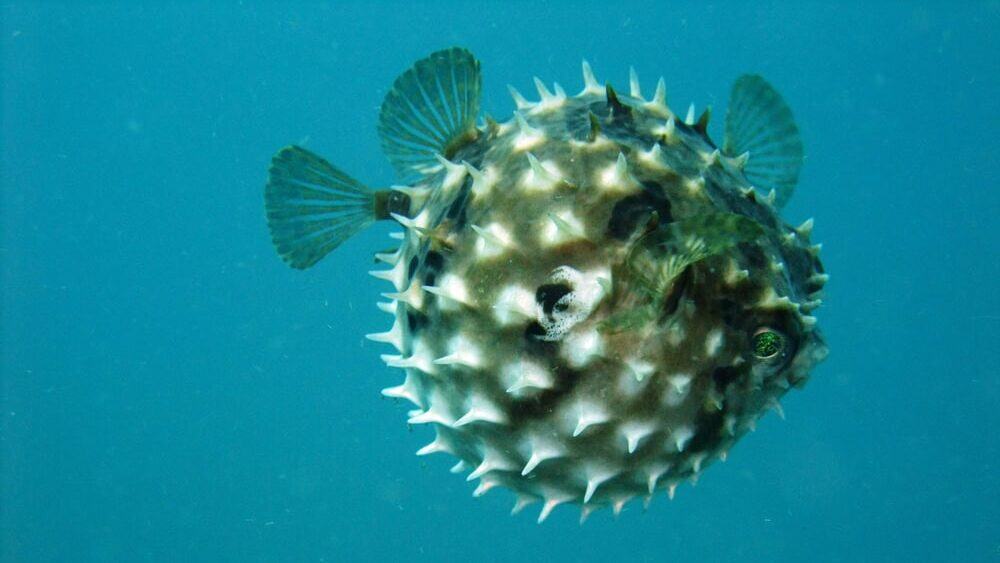
Pufferfish, particularly species from the Tetraodontidae family, contain tetrodotoxin—the same neurotoxin found in blue-ringed octopuses—making them among the most poisonous vertebrates on Earth. One pufferfish contains enough toxin to kill 30 adult humans, with no known antidote. These fish accumulate the toxin primarily in their liver, ovaries, and skin through their diet, though they remain immune to its effects themselves. When threatened, pufferfish inflate by taking water or air into their elastic stomachs, transforming into an intimidating spiny ball too large for most predators to swallow.
Paradoxically, pufferfish (known as fugu in Japan) are considered a delicacy in Japanese cuisine, where specially licensed chefs must undergo years of training before legally preparing the fish. Even with strict regulations, fugu poisoning claims several lives annually. Tetrodotoxin causes progressive paralysis while victims remain fully conscious—first affecting the lips and extremities, then spreading to the diaphragm, eventually leading to respiratory failure. Medical treatment is supportive, focusing on maintaining breathing until the toxin naturally metabolizes. Researchers have discovered that some pufferfish have developed resistance to tetrodotoxin due to mutations in their sodium channels, highlighting the evolutionary arms race between these fish and the bacteria that produce the toxin they sequester.
Killer Whales: The Ocean’s Apex Predators

Despite their misleading name, killer whales or orcas (Orcinus orca) aren’t whales but the largest members of the dolphin family. These intelligent marine mammals earn their place among deadly ocean creatures through their sophisticated hunting strategies and physical power. Growing up to 26 feet long and weighing up to 6 tons, orcas possess 4-inch teeth and can swim at speeds approaching 30 mph. They employ coordinated hunting techniques that demonstrate remarkable problem-solving abilities, including creating waves to wash seals off ice floes and beach themselves temporarily to capture prey on shorelines.
Killer whales have diverse diets depending on their ecotype, with some populations specializing in hunting marine mammals, including great white sharks, whose livers they surgically remove with surgical precision. Others target fish or rays exclusively. While there are no confirmed fatal attacks on humans in the wild (only in captivity), their intelligence and physical capabilities make them formidable ocean predators. Their sophisticated social structures include distinct dialects and hunting techniques passed down through generations, essentially creating unique cultural traditions. Recent research suggests orcas may even be driving great white sharks away from certain habitats, establishing themselves as true apex predators of the ocean ecosystem.
Understanding the Ocean’s Deadly Diversity
The ocean’s deadliest creatures represent nature’s remarkable evolutionary adaptations and the diverse survival strategies that have evolved in marine environments. From microscopic toxins to massive predators, these species have developed specialized mechanisms to hunt, defend, and thrive in aquatic ecosystems. Understanding these dangerous marine inhabitants helps foster respect for ocean environments and promotes safety precautions for those who work or recreate in marine settings. Their existence reminds us that the ocean remains one of Earth’s last true wilderness areas, where humans are not the dominant species.
While sharks often capture our imagination and fear, this exploration demonstrates that many less famous marine creatures that remain as potential killers of human life when encountered.

- What Happens If You Lock Eyes With a Wild Leopard? - July 19, 2026
- 10 Fastest Racing Dog Breeds You Must Know - July 19, 2026
- The Story of the Arctic Fox’s Incredible Seasonal Transformation - July 18, 2026