
Think about your own home for a second. There’s a solid roof, climate control, maybe a fancy security system. Now imagine constructing all that using nothing but your bare hands, a few sticks, and some mud. Sounds impossible, right? Yet across the animal kingdom, creatures are doing exactly that, and they’re doing it with a level of artistry and engineering that would make most architects jealous.
Here’s the thing. Nature didn’t just teach animals to survive in their environments. It taught them to manipulate those environments, to build structures so intricate that scientists are still scratching their heads over how they pull it off. From birds that decorate like interior designers to insects that create natural air conditioning systems, these animal architects are seriously underrated.
Let’s dive into the world of eight extraordinary animals whose homes are nothing short of masterpieces.
The Bowerbird: Nature’s Master Decorator
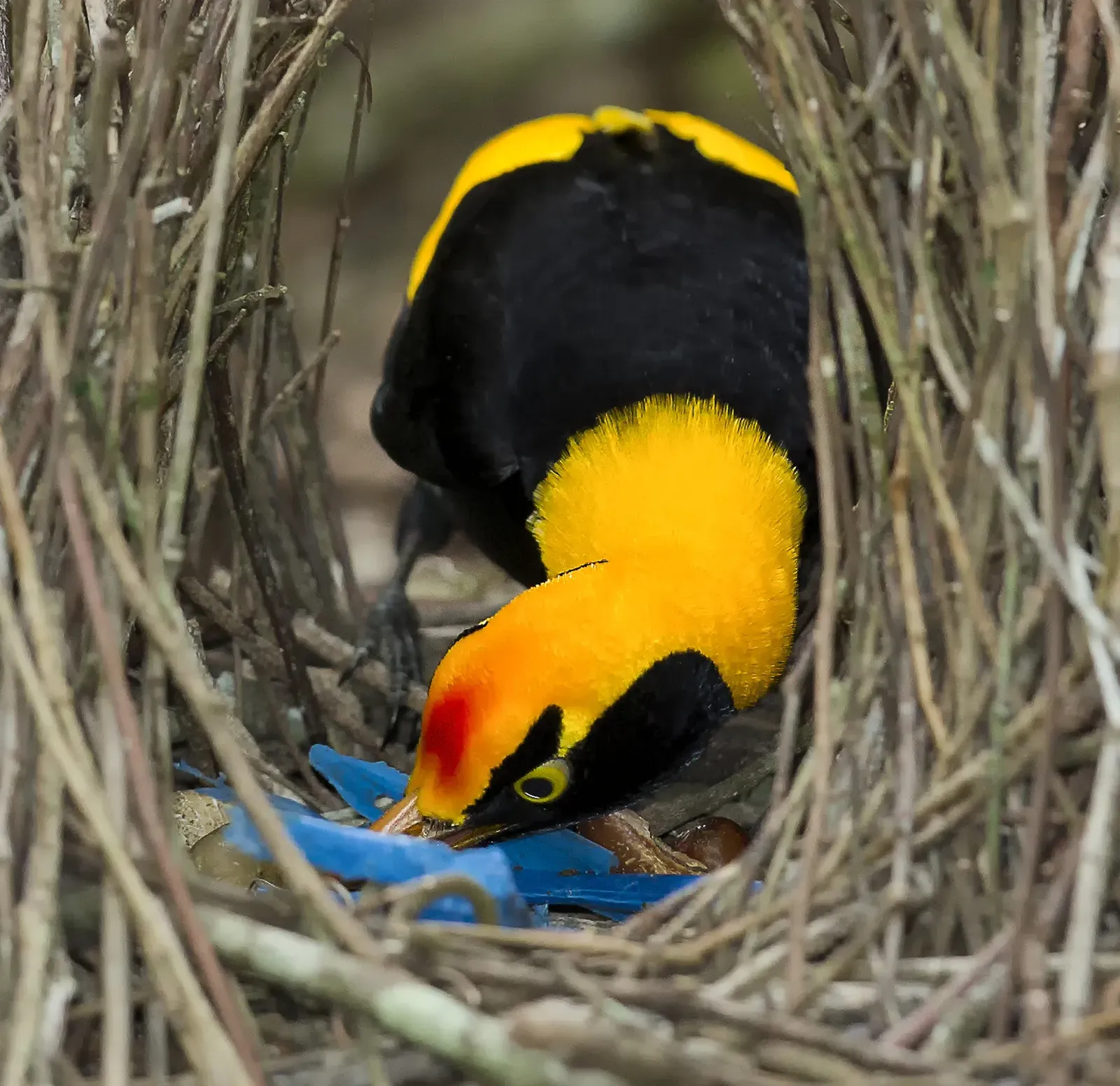
Male bowerbirds construct elaborate structures called bowers purely to woo females, serving as temporary courtship arenas rather than actual nests. These Australian and New Guinea natives spend months perfecting their architectural seductions. They dedicate extensive time constructing woven structures reaching up to half a meter, some conical and lined with moss.
The construction process is genuinely fascinating. It can take up to 500 trips and around 18 days to complete the nest. Males don’t just build though. They become obsessive curators. Satin bowerbirds are particularly famous for their obsession with the colour blue, gathering items like blue flowers, straws, and even pen caps.
What’s wild is the psychological game they play. Items are arranged by size, colour, or type, with some bowerbirds even repainting their bowers using chewed-up berries or charcoal. Think of it as nature’s version of staging a house for sale, except the stakes are evolutionary survival. Great bowerbird males even place objects in a positive size-distance gradient to create forced perspective illusions that females use to choose mates.
Male bowerbirds frequently sneak into one another’s territory to steal trinkets and even destroy other bowers, with juvenile males taking around seven years to reach maturity, practicing by working in gangs to steal from adults. Competition is fierce in the dating world, even for birds.
The Beaver: Engineering Ecosystems One Dam at a Time
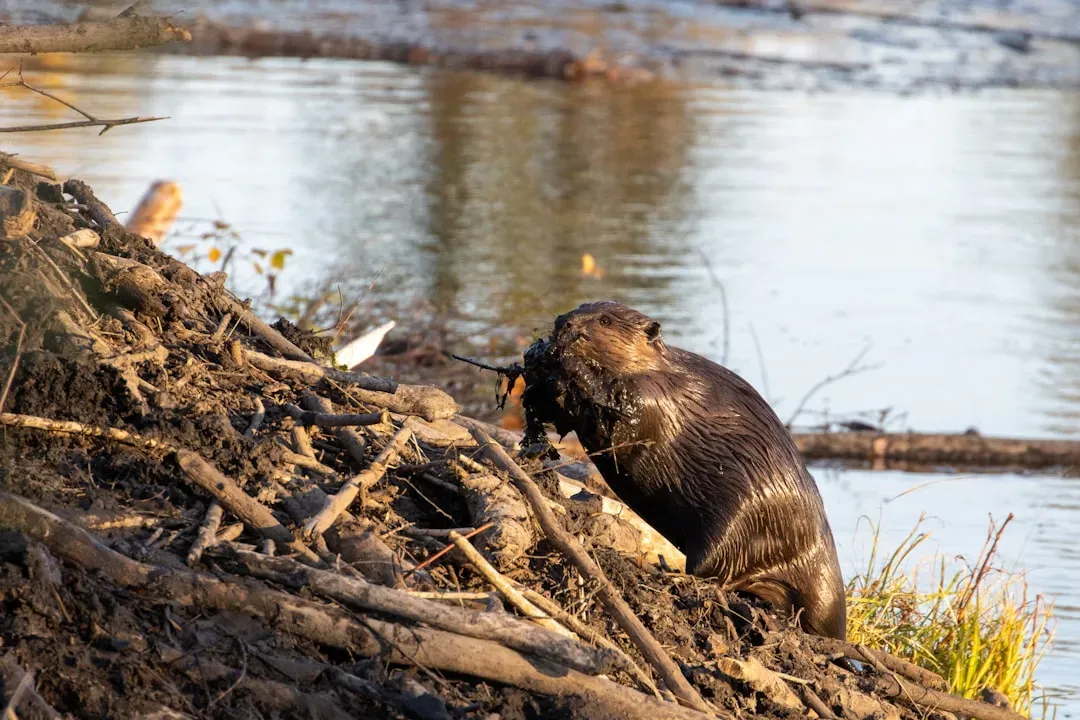
Beavers aren’t just building homes. They’re literally reshaping entire landscapes. The largest known beaver dam is in Wood Buffalo National Park in Alberta, Canada, and measures 775 metres long. That’s longer than several football fields strung together. Honestly, it’s hard to wrap your head around the scale.
Beavers build dams to protect themselves from predators such as bears or wolves, creating deep ponds of water rather than living inside the dams themselves. The underwater entrances to their lodges mean predators can’t easily reach them. Beavers can transport their own weight in material, dragging logs along mudslides and floating them through canals.
The engineering is remarkably sophisticated. Beavers employ interesting construction techniques, creating semi-permeable dams able to withstand flow volumes of up to 1.34 cubic metres per second per metre width for a 1.4 metre high dam. These aren’t random stick piles. They’re calculated structures that regulate water flow. A study in Poland found that beavers could rebuild a destroyed dam and restore water levels in approximately 8 hours.
Let’s be real. Beavers are workaholics. They are one of the most influential mammalian ecosystem engineers, heavily modifying river corridor hydrology, geomorphology, nutrient cycling, and ecosystems. Their construction creates wetlands that benefit countless other species. They’ve basically created their own real estate empire while simultaneously helping the environment.
The Termite: Climate Control Masters
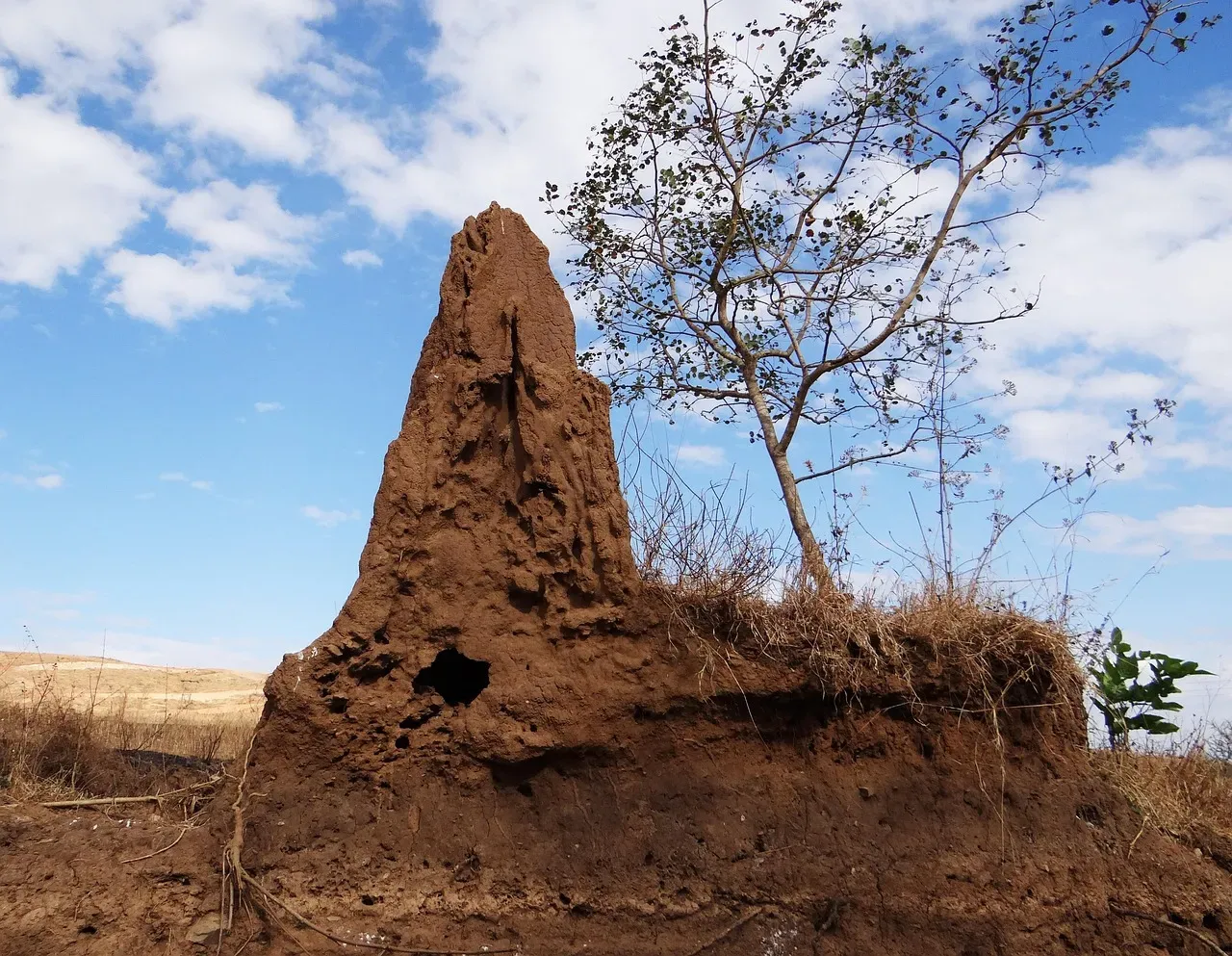
Termites might be tiny, but their architectural achievements are colossal. Termite mounds are natural marvels of engineering, with large structures featuring ventilation systems that maintain optimal temperature and humidity inside the mound. Some species build structures that tower over the African savanna like earthen cathedrals.
Termite mounds maintain stable internal temperatures in their nests with fluctuations of only zero to four degrees Celsius despite fluctuating external conditions, acting as natural climate control systems enabling colonies to thrive in harsh environments. That’s better temperature regulation than many human homes achieve with modern HVAC systems.
The ventilation mechanism is brilliant. Researchers found that fluctuations in outside temperature over the course of the day create convection currents within the mounds that ventilate the termites’ living space. Essentially, they’ve built solar-powered air conditioning. Termites manage airflow within the nest using sunlight, with their climate control being genuinely solar powered.
Inside, the layout is complex and purposeful. There are chambers for the queen, nurseries for the young, and even fungal gardens where food is cultivated. A termite mound can house millions of individuals working in a specially-designed social hierarchy. And they accomplish this entire operation working in total darkness without any blueprint or central architect directing the process.
The Sociable Weaver: Apartment Buildings in Trees
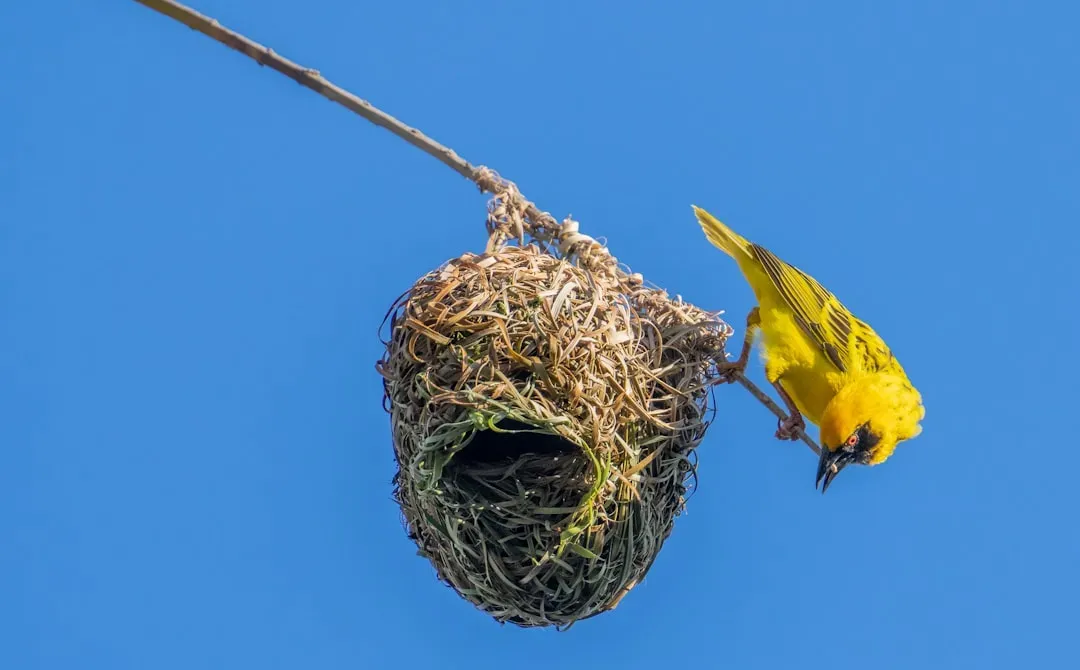
Sociable weavers construct the most elaborate nesting system of any known bird in their South African homeland. These aren’t individual nests. They’re massive communal structures resembling apartment complexes hanging from trees. These nests house up to 100 sociable weaver families year-round, with some remaining occupied for over 100 years.
Construction requires teamwork and different materials for different purposes. Large twigs form the roof of the nest, dry grasses create the separate chambers, and sharp spikes of straw protect the entrance tunnels from predators. It’s strategic building at its finest. Sharp straw spikes line each entrance to keep away predators.
A pair of birds has its own space for nesting, but chambers are also used communally for roosting, with centrally placed ones holding the day’s heat and occupied during night-time roosting. The nest design provides climate control in the harsh Kalahari Desert environment. During freezing nights, birds move to insulated center chambers. During scorching days, they retreat to cooler outer chambers.
The sheer size is staggering. Some sociable weaver nests weigh several tons, with the largest being over 20 feet wide and close to 10 feet tall, containing more than 100 individual nesting chambers. Sometimes these nests get so heavy they knock down the supporting tree.
The Montezuma Oropendola: Hanging Basket Weavers
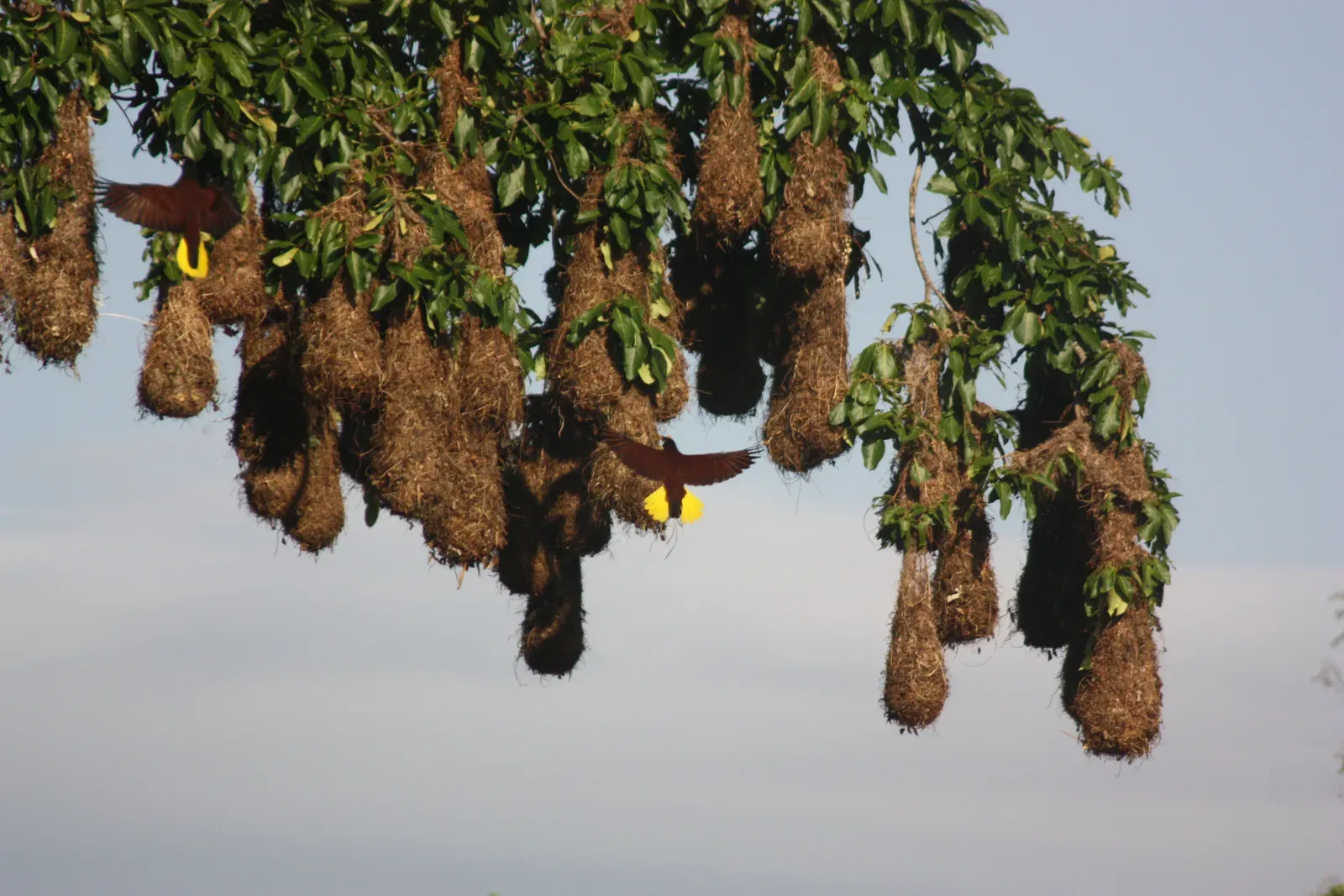
Picture dozens of long, pendulous baskets swaying from tree branches in the Central American rainforest. Montezuma oropendola build elaborate hanging nests in trees, using vines to weave pendulous baskets and grouping the nests together into colonies. These nests can be impressively large. Pendulous nests, often hanging in clusters, are commonly as much as six feet in length.
The construction technique demonstrates genuine skill. They anchor the nests with the strongest vines, adding other vines and fibers bit by bit until the nests are completed. Each nest has a clever design. Each nest is spherical in shape at the end where the female will rest, with the entryway giving it its length, which can reach up to 71 inches long in trees as high as 100 feet tall.
The placement is strategic too. These tropical subdivisions are often located in large, isolated trees, with nests hanging from the flimsy far end of branches, which discourages raiding monkeys from trying to climb out to devour the precious eggs. It’s architectural defense planning. By dangling their homes from precarious positions, they essentially create a natural security system against terrestrial predators.
The Prairie Dog: Underground City Planners
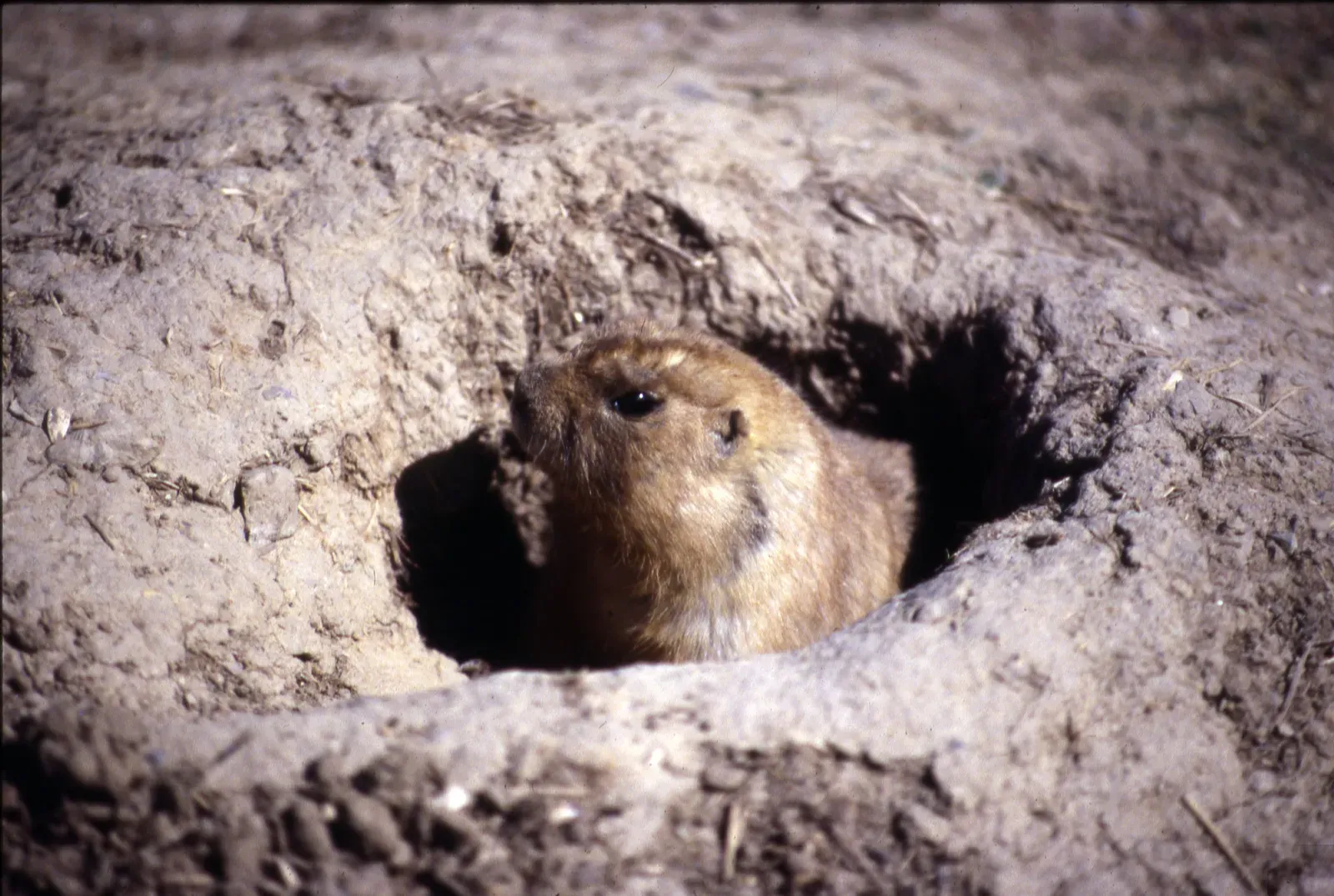
Prairie dogs construct elaborate underground networks that put subway systems to shame. Prairie dogs build big underground burrowing systems, often called towns, with burrows elaborately designed with numerous entrances, listening chambers, nesting chambers, and waste-disposal areas. These aren’t simple holes in the ground. They’re complex urban planning projects.
Chambers located at different depths in the soil serve different purposes, with the nursery located deep where temperature is more stable and young prairie dogs are better protected from predators. The sophistication here is remarkable. Underground rooms are dug at different depths to serve varying functions and are arranged in coteries, with plenty of space for each family group.
Protection is paramount for these rodents. Prairie dogs live in large groups in an elaborate maze of tunnels and chambers. Strength in numbers combined with architectural ingenuity creates safety. The mounds at their entrances prevent flooding and ensure good viewpoints for observing predators.
Let’s be honest. Prairie dogs have essentially created self-sufficient underground cities complete with nurseries, listening posts, and proper waste management. Prairie dog burrows form conurbations covering many acres, with five to 35 dogs per acre.
The Rufous Hornero: Mud Architects
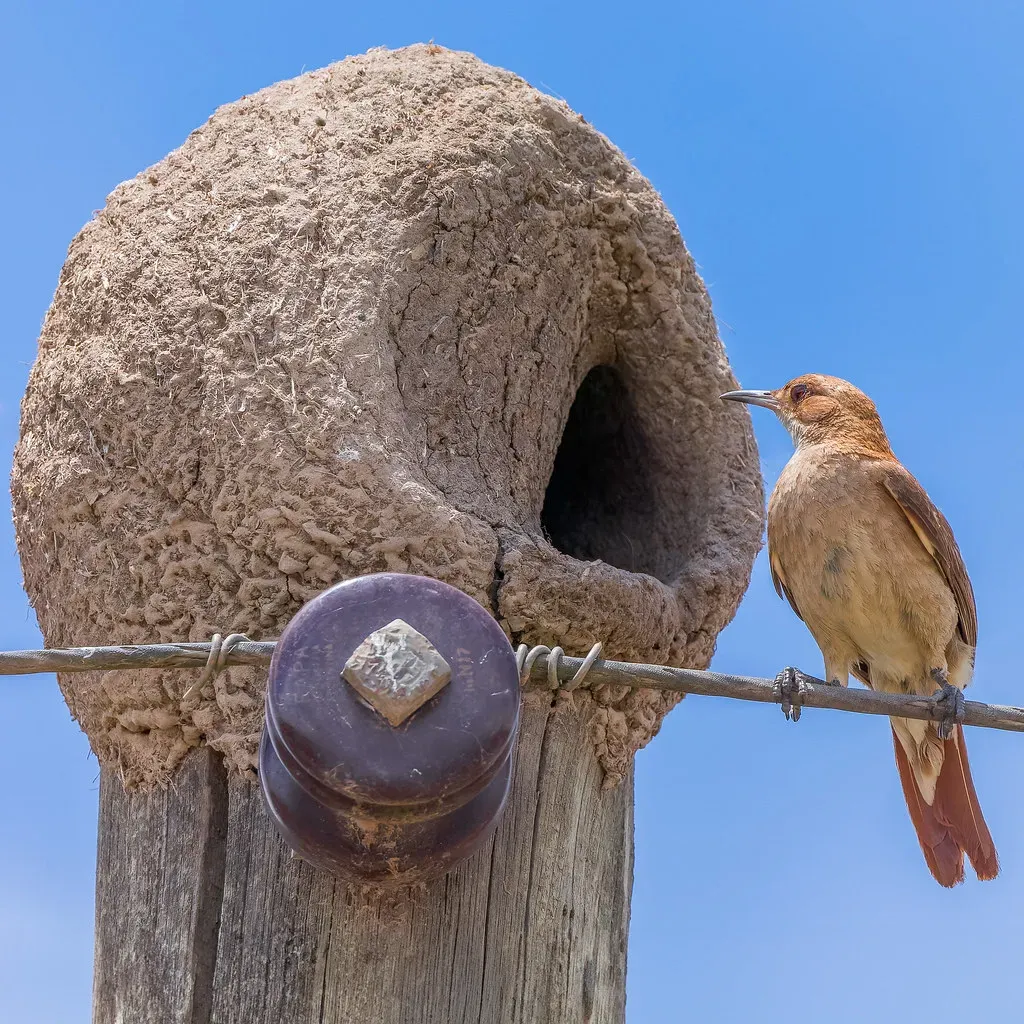
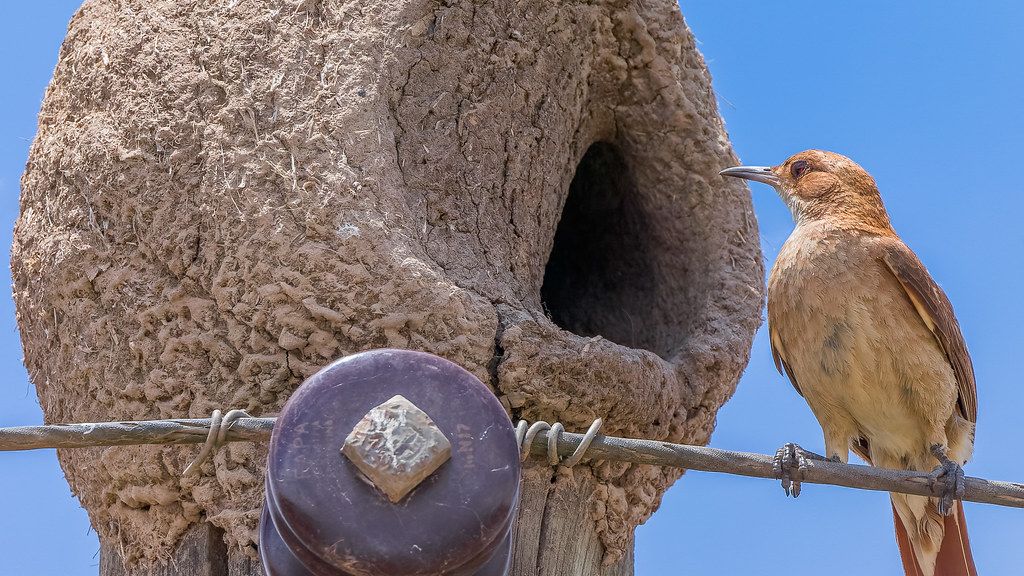
The rufous hornero, a South American bird, builds unusual earthen nests in trees by collecting mud and dung to create a bowl high atop tree limbs. These structures stand out dramatically from typical bird nests. The structures, composed of thousands of mud pellets, resemble the shape and colour of rudimentary clay ovens and are often stacked one on top of another.
The sun bakes the nest to create a hardened shelter where birds can lay their eggs, with the nest oriented to face away from prevailing winds, creating a refuge from the weather. It’s functional design that considers environmental factors. The nests consist of thick, curved walls which spiral towards a central chamber, with the innermost chamber protected by a wall with a small opening just wide enough for the ovenbirds to fit through.
Few predators can squeeze through this tight crevasse, so mama bird can look after her eggs and her chicks in peace. The entrance design acts as a built-in security feature. Their semi-closed structure helps protect ovenbirds from predators, and once the breeding pair who originally inhabited the nest are gone, other birds of different species often take over the safe and comfortable real estate.
The Baya Weaver: Patience and Precision
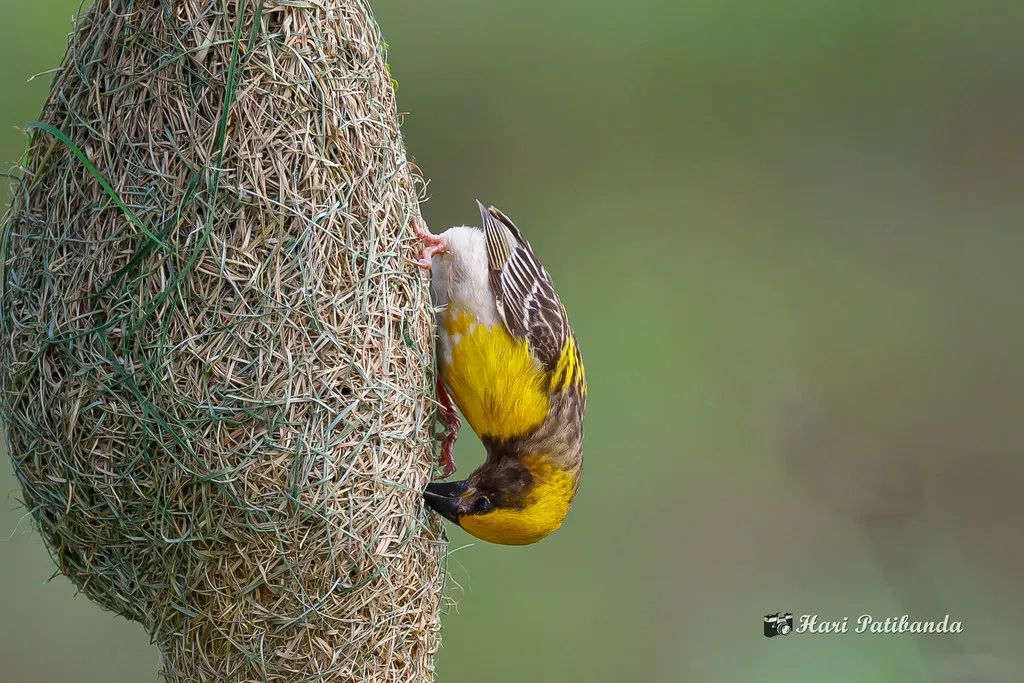
The baya weaver is most notable for the woven nests constructed by males to attract a mate. These small birds from India and Southeast Asia demonstrate patience that would exhaust most humans. A male bird is known to make up to 500 trips to complete a nest.
The materials are carefully selected. The nests are woven with long strips of paddy leaves, rough grasses and long strips torn from palm fronds, with each strip between 20 and 60 centimetres in length. Males use their beaks to strip the material, interlace them together, and knot at the end.
The construction technique reveals genuine craftsmanship. The nest begins with a single strand, knotted to a branch with beak and claw, after which the technique is just like any other weaving pattern with strands threaded through others at opposing angles. Males take about 18 days to construct the complete nest, with the males beginning to display to passing females by flapping their wings and calling while hanging from their nests.
Females inspect the nest and signal their acceptance of a male, and once paired, the male completes the nest by adding the entrance tunnel. It’s architecture as courtship ritual.
Conclusion
After exploring these incredible builders, one thing becomes crystal clear. Animals are far more capable architects and engineers than most people realize. They construct homes that regulate temperature, protect against predators, attract mates, and sometimes even house entire communities. All without blueprints, power tools, or instruction manuals.
These structures represent millions of years of evolutionary refinement. Each design solves specific problems in clever, efficient ways that humans are only beginning to appreciate and mimic in sustainable architecture. From termite-inspired cooling systems in modern buildings to lessons about community living from prairie dogs, nature continues to be our greatest teacher.
Next time you see a bird’s nest or notice a beaver dam, take a moment to really look at it. Behind that structure lies a story of survival, innovation, and instinctive brilliance that rivals anything humans have created. What’s your favorite animal architect? The possibilities across the natural world are truly endless.

- 13 Tender Signs a Horse Is Grieving a Rider It Lost - July 28, 2026
- 11 Small Ways a Rescue Horse Shows It Has Finally Let a Human In - July 28, 2026
- 14 Quiet Ways a Horse Keeps Watch Over the Person It Has Claimed - July 28, 2026