

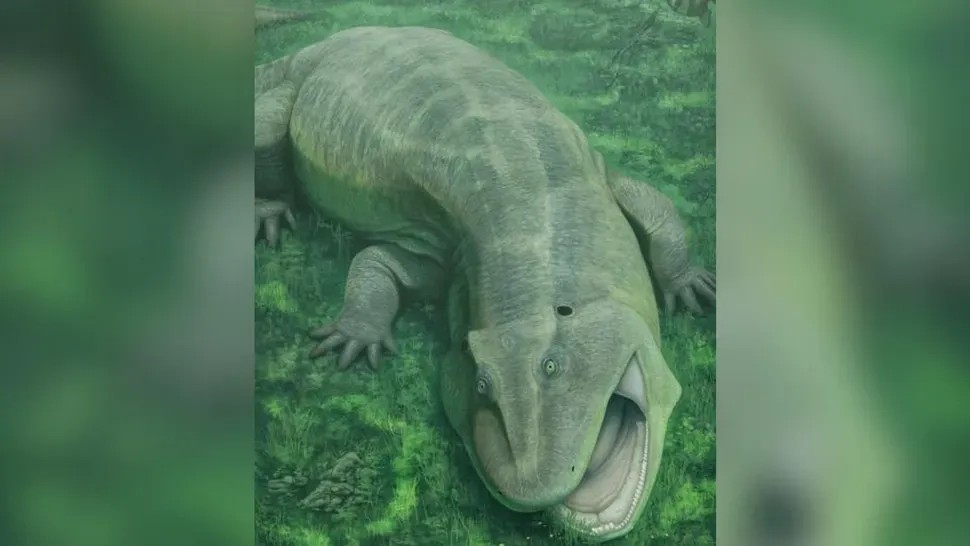
Imagine discovering a creature so strange, so utterly bizarre, that even the scientists who found it had to take a second look. We’re talking sideways teeth, a jaw that twists like something out of a fever dream, and a body plan that had already been frozen in evolutionary time for tens of millions of years before it even went extinct. That’s the kind of discovery that makes you question everything you thought you knew about prehistoric life.
This isn’t your typical dinosaur headline. This is something far older, far weirder, and honestly, far more fascinating. Let’s dive in.
Meet the Prehistoric Oddball Nobody Saw Coming
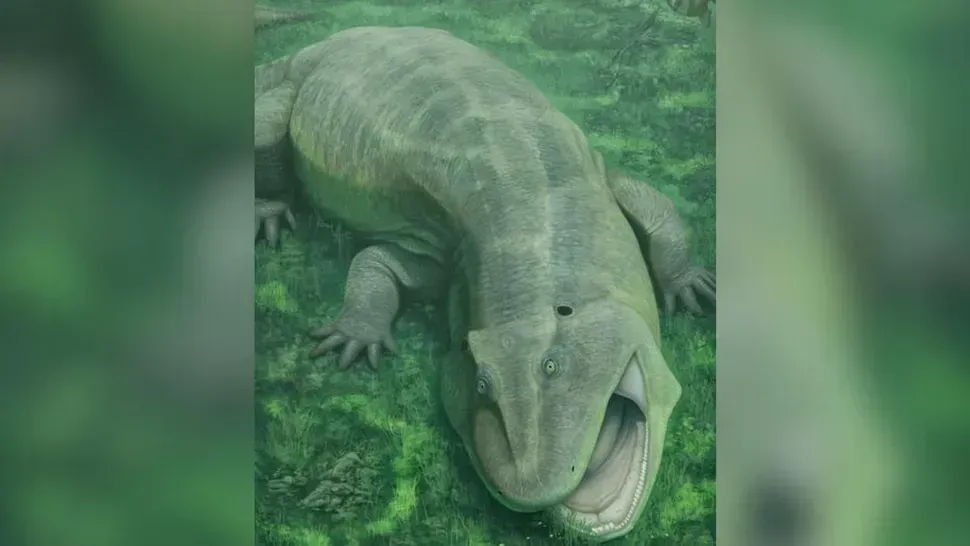
Here’s the thing about paleontology – every so often, a fossil turns up that completely derails your assumptions about ancient life. This creature, a water-dwelling animal from the Permian period, is exactly that kind of discovery. It had sideways-oriented teeth and a jaw structure so anatomically twisted that researchers initially struggled to make sense of what they were even looking at.
The animal belonged to a group called the mesosaurs, some of the earliest known reptiles to return to an aquatic lifestyle after their ancestors had already made the leap onto land. Think of it like nature doing a U-turn. What makes this particular specimen so remarkable is the sheer strangeness packed into its skull alone.
Sideways Teeth and a Jaw That Defied Logic
Let’s be real – teeth that point sideways are not something you see every day, even in the fossil record. For most animals, teeth generally point inward or outward in fairly predictable arrangements. This animal’s dental setup was oriented in a way that looked almost mechanical, like something designed for a very specific, unusual purpose.
Scientists believe the twisted jaw and sideways teeth were likely specialized feeding adaptations, possibly for filter feeding or capturing slippery, small aquatic prey. It’s a bit like finding a pair of scissors in a world where everything else is a spoon. The anatomy was so specialized that it raises real questions about what environmental pressures could have driven such an extreme physical design.
Already a Living Fossil Before It Even Died Out
This is where things get genuinely mind-bending. The creature was already considered a “living fossil” during its own lifetime, roughly 275 million years ago. That means its body plan had remained essentially unchanged for a very, very long time, even by the standards of the ancient world.
Living fossils are animals that persist with little evolutionary change over enormous stretches of time. The coelacanth, discovered alive in 1938 after being thought extinct for 65 million years, is probably the most famous modern example. To find an animal that was already occupying that same peculiar evolutionary stasis in the Permian period is honestly a little eerie. It suggests that this creature had found some kind of ecological niche that demanded very little change from it.
What the Fossil Record Actually Revealed
The fossil evidence comes from careful study of mesosaur remains, and researchers were able to piece together the animal’s anatomy in impressive detail. The twisted jaw structure wasn’t immediately obvious – it took close analysis of bone alignment and tooth positioning to fully understand what was going on morphologically.
What made this discovery particularly exciting for researchers was how it expanded our understanding of mesosaur diversity. These animals were already known to be interesting, but this specimen added a whole new dimension to that story. The fossil essentially confirmed that even within an already-unusual group, nature had found room to push the boundaries even further.
Life in the Water, 275 Million Years Ago
The Permian period, which ran from roughly 299 to 252 million years ago, was a world almost unrecognizable to modern eyes. The continents were locked together into the supercontinent Pangaea, and the oceans and inland seas hosted ecosystems we’re still working to fully understand. This creature would have shared its watery world with a wild cast of ancient characters.
Mesosaurs as a group are believed to have lived in freshwater or brackish environments, possibly shallow coastal regions or large inland lakes. Picturing this twisted-jawed, sideways-toothed animal slipping through murky Permian waters is genuinely atmospheric. It was a world both alien and oddly familiar, and creatures like this one remind us how much life was already experimenting with extreme forms hundreds of millions of years before the first dinosaur ever drew breath.
Why This Discovery Actually Matters for Science
I think it’s easy to read about ancient fossils and mentally file them under “cool but irrelevant.” That would be a mistake here. Understanding living fossils, even ancient ones, helps scientists map out how and why evolutionary stasis occurs. Why do some lineages change rapidly while others freeze in place for tens of millions of years?
This specimen also adds to the growing body of evidence that specialized, even extreme, anatomical features can arise very early in a group’s evolutionary history. It challenges the idea that ancient life was somehow simpler or less varied than modern life. If anything, the deeper we dig into the Permian, the more complexity we find. That’s not just scientifically meaningful – it’s a little humbling.
Conclusion
What strikes me most about this discovery is not just the strangeness of the animal itself, though that is certainly something. It’s the reminder that life on Earth has been running wild evolutionary experiments for far, far longer than we sometimes appreciate. A creature that was already ancient by the standards of its own time, frozen in form, twisted in jaw, sideways in tooth, is a kind of biological time capsule within a time capsule.
The Permian period keeps giving us surprises, and honestly, I hope it never stops. Every fossil like this one rewrites a small corner of the story we thought we knew. It’s worth pausing to appreciate just how strange and spectacular the history of life on this planet truly is. What other evolutionary oddballs are still waiting, buried in rock, for someone to finally dig them up?

- Urban Coyotes Show Remarkable Adaptability, Learning to Thrive in City Environments - July 22, 2026
- Beavers Are Nature’s Engineers, Creating Vital Habitats for Other Wildlife Species - July 21, 2026
- The Recovery of the California Condor Offers Hope for Other Critically Endangered Birds - July 21, 2026